
Introduction
Imagine your child stepping onto the school bus, feeling overwhelmed by the noise and movement around them. But what if we could turn that anxiety into excitement? With the right strategies, we can help our kids grow and gain confidence on this daily journey.
Let’s explore some simple strategies:
- Setting up routines
- Using visual aids
- Teaming up with bus staff to make the ride smoother for our kids
What strategies can we use to help our kids embrace this routine with excitement? Let’s discover them together!
Prepare Your Child for the Bus Ride: Essential Strategies
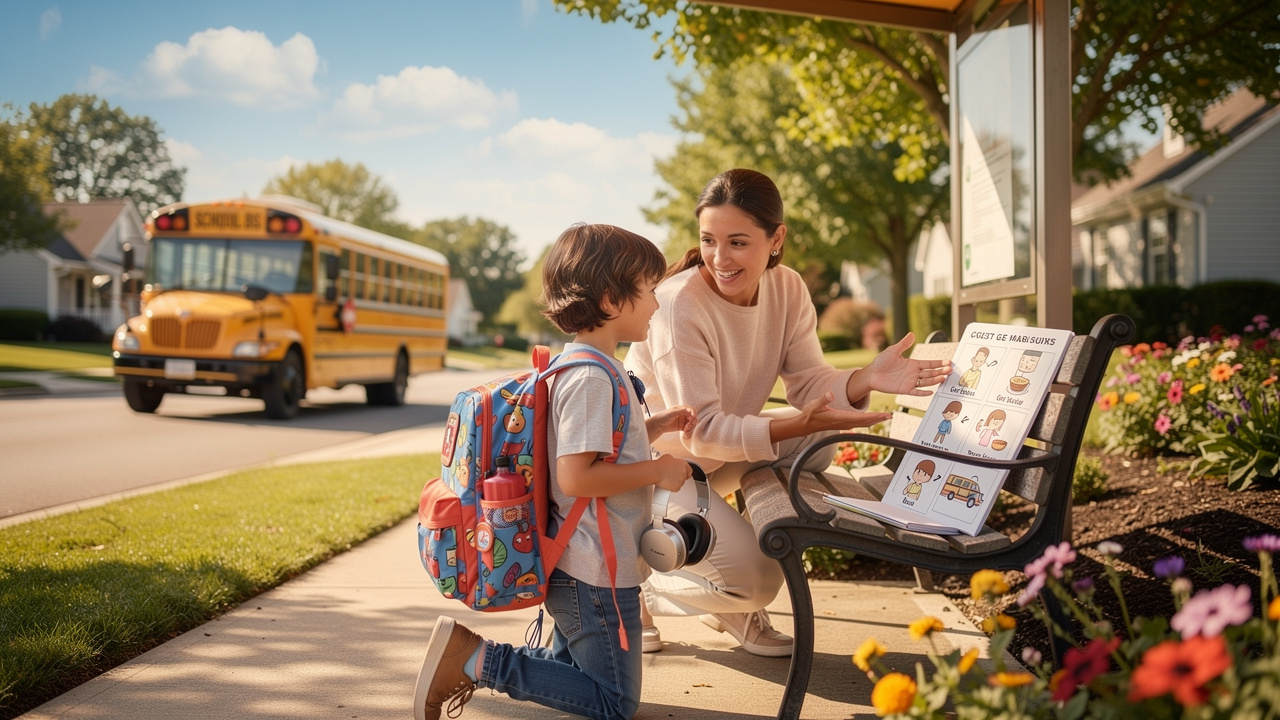
Getting ready for the bus can be a bit daunting for both kids and parents, but with a little planning, it can turn into a fun adventure! Start by creating a consistent routine. Talk about the bus journey in detail, including where the bus will pick them up and drop them off. Visual schedules can be super helpful; they show the order of activities leading up to the bus ride, like getting dressed, having breakfast, and waiting for the bus.
Consider using fun tools like noise-canceling headphones or a favorite fidget toy to help your little one feel more at ease during the ride! Role-playing the bus experience at home can also be a great idea. You can use chairs to simulate bus seats and practice how to board and exit the bus together.
How about setting up a ‘bus buddy’ system? Let your child travel with a sibling or a friend for that extra bit of comfort! This can really help ease any anxiety and make them feel more confident about riding the bus. Also, talk about what might happen on the bus, like if the route changes or if there’s a new driver. It’s a great way to help your child feel ready for anything!
By using strategies for teaching children with autism to get on the bus, you’re not just preparing for a bus ride; you’re building your child’s confidence for new experiences ahead! Empowering caregivers with ABA principles and strategies, like being actively involved and keeping track of progress, can further support your child’s goals and enhance their overall experience. Let’s explore this together!

Identify Challenges: Understanding Bus Ride Difficulties for Children with Autism
Have you ever watched your child struggle with the bus ride? For many kids with autism, it can be a real challenge due to sensory overload from noise and movement, highlighting the need for strategies for teaching children with autism to get on the bus. These challenges can lead to meltdowns or refusal to board, especially when using strategies for teaching children with autism to get on the bus in unfamiliar situations. Understanding that many kids with autism have sensory sensitivities can help in developing strategies for teaching children with autism to get on the bus, making bus rides easier. Addressing these needs can really help!
To tackle these challenges, it’s super helpful to identify strategies for teaching children with autism to get on the bus that trigger your child’s discomfort. For example, if your child is sensitive to loud noises, noise-canceling headphones or earplugs can make a big difference. Practicing the routine of boarding and exiting the bus a few times before the actual ride can also ease anxiety related to transitions, serving as effective strategies for teaching children with autism to get on the bus.
Social dynamics on the bus can be tricky too. Interactions with peers might feel overwhelming. Implementing strategies for teaching children with autism to get on the bus includes preparing your child for potential social scenarios, like sharing space or coping with unexpected changes, which can really boost their confidence. Talking about their experiences and fears can give you valuable insights, helping you tailor your support strategies. And don’t forget, considering an assistant for your child during transportation can provide extra help and reduce stress, particularly when using strategies for teaching children with autism to get on the bus.
At Rori Care, we believe in empowering caregivers with ABA principles and strategies for effective behavioral support. By actively involving caregivers and gathering data, we enhance the effectiveness of strategies for teaching children with autism to get on the bus, ensuring that kids receive the personalized assistance they need to thrive in challenging environments. Imagine the relief of seeing your child step off the bus with a smile, ready to take on the day!
Utilize Visual Supports and Social Stories: Tools for Success
Have you ever noticed how a little preparation can make a big difference for your child on the bus? Visual aids, like picture schedules and cue cards, are super helpful for kids with autism as part of the strategies for teaching children with autism to get on the bus. Creating a visual schedule that details the bus ride – from getting ready in the morning to arriving at school – can be one of the effective strategies for teaching children with autism to get on the bus.
Social stories are another fantastic tool. These narratives can explain the strategies for teaching children with autism to get on the bus, what to expect, the right behaviors, and how to handle different situations. For example, a social story might mention that the bus can be noisy and suggest using headphones to manage that noise, giving your child a sense of control and comfort.
Using these tools in your child’s daily routine before the bus ride can make a big difference! Regularly checking in on the visual aids and social stories helps strengthen their understanding and familiarity, which can ease anxiety and facilitate the implementation of strategies for teaching children with autism to get on the bus. Imagine the peace of mind you’ll feel knowing your child is ready and confident for their bus ride! Plus, those 48 visual cue cards created for common bus challenges can really help kids navigate this experience. By empowering caregivers with ABA principles and strategies, Rori Care – ABA Therapy is here to help families overcome challenges and promote development with expertise and compassion.

Collaborate with Bus Staff: Building a Supportive Network
Have you ever felt a bit anxious about how your child is treated on the school bus? Establishing a connection with bus staff is key to implementing strategies for teaching children with autism to get on the bus, as this ensures that your child’s unique needs are met, especially since many kids spend up to two hours a day on those buses. At Rori Care, we’re all about helping families navigate this process smoothly. Start by introducing yourself and your child to the bus driver and any aides. Share important details about your child’s specific needs, triggers, and the strategies for teaching children with autism to get on the bus that work best for them.
How about putting together a simple summary of your child’s needs? It can really help the bus staff understand them better! This document can include insights on sensory sensitivities, calming techniques, and effective strategies for teaching children with autism to get on the bus that have worked well. By sharing this knowledge, we can create a consistent and supportive environment that maximizes the positive impact of interventions.
Make it a point to check in with the bus staff about how things are going for your child. As Philippa Howell, a parent on the ATN Family Advisory Board, suggested, creating an autism training program for bus drivers can really enhance their understanding of autism-related behaviors. This ongoing partnership fosters a supportive atmosphere, making the bus experience much better for your child. When everyone is on the same page, those bus rides can turn into a much more enjoyable experience for your little one.

Conclusion
Bus rides can feel overwhelming for kids with autism, but they don’t have to be! Preparing children for these journeys involves a thoughtful approach that combines routine, understanding, and support. It’s all about preparing together so your child feels safe and ready to tackle the bus ride!
By using effective strategies, parents and caregivers can turn what might seem like a daunting experience into a manageable and even enjoyable journey. Key strategies include:
- Establishing consistent routines
- Utilizing visual supports
- Role-playing scenarios to help kids get familiar with the bus environment
Addressing sensory sensitivities and potential social challenges also plays a crucial role in easing anxiety and promoting a positive experience.
Plus, fostering a partnership with bus staff ensures that your child’s unique needs are understood and met, creating a supportive atmosphere that enhances their overall bus ride experience. When we empower our kids with the right tools, we’re not just helping them get on the bus; we’re giving them the confidence to take on new adventures!
By embracing these strategies, families can help their children thrive, turning the bus ride into an opportunity for growth and independence. Taking proactive steps today can lead to a brighter, more confident journey for your child as they embark on their daily adventures!
Frequently Asked Questions
What is the first step to prepare my child for the bus ride?
The first step is to create a consistent routine and talk about the bus journey in detail, including the pick-up and drop-off locations.
How can visual schedules assist in preparing for the bus ride?
Visual schedules can help by showing the order of activities leading up to the bus ride, such as getting dressed, having breakfast, and waiting for the bus.
What tools can help my child feel more comfortable during the bus ride?
Tools like noise-canceling headphones or a favorite fidget toy can help your child feel more at ease during the ride.
How can role-playing benefit my child’s bus riding experience?
Role-playing the bus experience at home can help your child practice how to board and exit the bus, making them feel more prepared and confident.
What is a ‘bus buddy’ system and how can it help my child?
A ‘bus buddy’ system involves letting your child travel with a sibling or a friend, which can provide extra comfort and help ease any anxiety about riding the bus.
Why is it important to discuss potential changes during the bus ride?
Discussing potential changes, like route changes or a new driver, helps your child feel ready for anything and reduces anxiety about the unknown.
How do strategies for teaching children with autism apply to preparing for the bus ride?
These strategies not only prepare your child for the bus ride but also build their confidence for new experiences, empowering caregivers with ABA principles and strategies.
What role do caregivers play in preparing children for the bus ride?
Caregivers should be actively involved in the preparation process and keep track of progress to further support their child’s goals and enhance their overall experience.
List of Sources
- Prepare Your Child for the Bus Ride: Essential Strategies
- Autism Quotes (https://kidsclubaba.com/autism-quotes)
- Helping children with autism get ready for the school bus | Autism Speaks (https://autismspeaks.org/blog/helping-children-autism-get-ready-school-bus)
- 10 inspiring quotes from people with autism | Autism Speaks (https://autismspeaks.org/life-spectrum/autism-quotes)
- Helping Your Child with Autism Get Ready for the School Bus – Merlin Day Academy (https://merlindayacademy.com/helping-children-with-autism-on-bus)
- Inspiring Quotes on Child Learning and Development (https://vincegowmon.com/inspiring-quotes-on-child-learning-and-development)
- Identify Challenges: Understanding Bus Ride Difficulties for Children with Autism
- Helping Your Child with Autism Get Ready for the School Bus (https://eyaslanding.com/school-bus)
- Autism on the School Bus: Making it a Good Ride for Everyone – AngelSense (https://angelsense.com/blog/autism-on-the-school-bus-making-it-a-good-ride-for-everyone)
- Data and Statistics on Autism Spectrum Disorder (https://cdc.gov/autism/data-research)
- Sensory Issues and Their Impact Among Autistic Children: A Cross-Sectional Study in Northern Sri Lanka – PMC (https://pmc.ncbi.nlm.nih.gov/articles/PMC11580710)
- Helping Your Child with Autism Get Ready for the School Bus – Merlin Day Academy (https://merlindayacademy.com/helping-children-with-autism-on-bus)
- Utilize Visual Supports and Social Stories: Tools for Success
- Autism Quotes (https://kidsclubaba.com/autism-quotes)
- Making the Bus Ride Easier: Social Stories & Visual Supports for Children with Autism (https://autismlittlelearners.com/bus-social-story)
- Quotes About Autism (https://usevisualstrategies.com/quotes-about-autism)
- The Effectiveness of Visual Supports for Students with Autism Spectrum Disorder – (https://naset.com/publications/autism-spectrum-disorders-series/the-effectiveness-of-visual-supports-for-students-with-autism-spectrum-disorder)
- The use of visual schedules to increase academic-related on-task behaviors of individuals with autism: a literature review (https://tandfonline.com/doi/full/10.1080/20473869.2024.2402124)
- Collaborate with Bus Staff: Building a Supportive Network
- Autism training for school bus drivers | Autism Speaks (https://autismspeaks.org/blog/autism-training-school-bus-drivers)
- Innovative Solutions for Autism and Transportation Challenges (https://crossrivertherapy.com/articles/autism-and-transportation-challenges)