
Introduction
Creating a peaceful sleep environment for children with autism isn’t just a luxury; it’s a must. Did you know that between 50% and 80% of kids on the autism spectrum struggle with sleep? That’s a staggering number! It really highlights how urgent it is to find effective strategies.
In this article, we’ll explore some practical tips to help enhance sleep patterns for these children. We want to offer caregivers valuable insights into:
- Establishing calming routines
- Optimizing sleep environments
- Tackling anxiety
But what if traditional methods just aren’t cutting it? How can parents navigate the tricky waters of sleep challenges with their little ones?
Let’s dive in together and find some solutions that work!
Establish a Consistent Bedtime Routine
Creating a regular bedtime practice provides practical tips for improving in children on the autism spectrum. Did you know that between 50% and 80% of children with ASD struggle with sleep? That’s why having a solid schedule is key!
Think about incorporating into your routine, like:
- Reading a book
- Taking a warm bath
- Practicing some
Experts recommend spending about 20 to 30 minutes on these activities before bedtime. This signals to your little one that it’s time to wind down. Plus, having that predictability can really help them feel safe and reduce anxiety at night. As one expert put it, ” offer consistency and safety, both of which are particularly beneficial for kids with autism.”
can be a game-changer here! By laying out the steps of the , your child can see what’s coming next, which can ease stress and make transitions smoother. And don’t forget about with tools like sleep logs. This way, you can track progress and make adjustments based on what you observe.
Also, can really boost your ability to implement these methods effectively. It empowers you to make informed choices that positively impact your child’s sleep and overall well-being. For instance, you might learn how to tweak evening habits based on your child’s reactions, ensuring the process remains effective and nurturing.
In the end, establishing a regular offers practical tips for in children on the autism spectrum, while also supporting emotional stability and daytime functioning. Let’s explore this together!

Optimize the Sleep Environment for Comfort
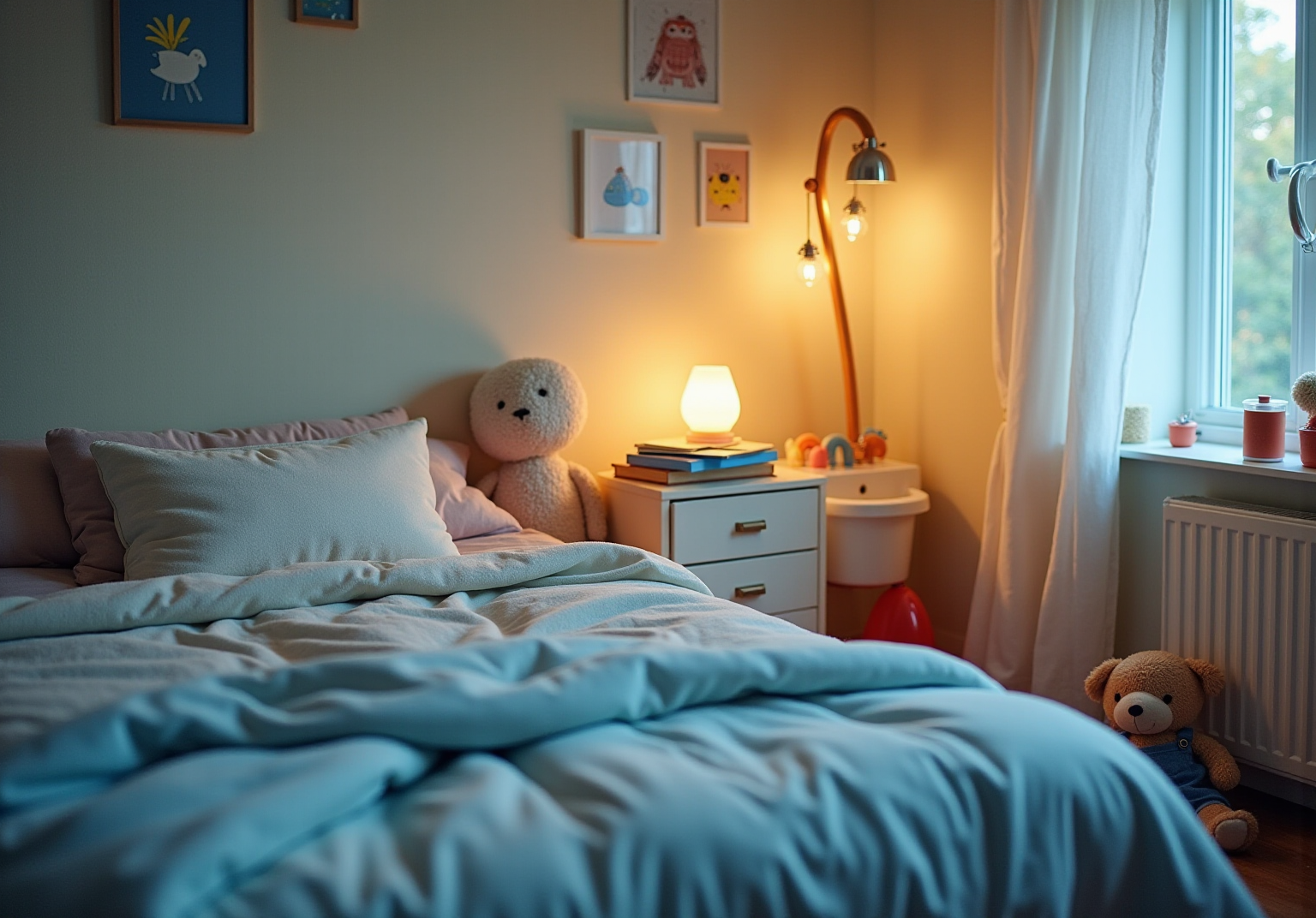
Although creating the perfect resting atmosphere for kids with autism can feel like a challenge, utilizing is crucial! Start by making sure the bedroom is dark, quiet, and at a comfy temperature. are a great way to block out light, and white noise machines can help drown out any disruptive sounds that might keep your little one awake.
When it comes to bedding and pajamas, choosing is key. Many kids on the spectrum can be sensitive to certain textures, so comfort is a must! with can really help your child feel secure, making it easier for them to relax and drift off to sleep.
Pediatricians emphasize that a is one of the . Did you know that over 80% of kids with autism spectrum disorder (ASD) face ? , but for kids with autism, it’s crucial to consider .
By making these simple changes, you can create a comforting environment that encourages peaceful sleep and supports your child’s development. Let’s explore this together! We’re here to help you every step of the way!

Address Anxiety and Overstimulation Before Bedtime
Helping your little one unwind before bedtime can be a game changer! 🌙 Integrating is a great start. Think gentle stretching, soft music, or even some mindfulness techniques. These can really create a soothing environment.
Did you know that over 80% of kids with autism spectrum disorder (ASD) struggle with rest? Often, make it even tougher for them. That’s why it’s super important to limit screen time and other stimulating activities at least an hour before bed. This helps minimize sensory overload and sets the stage for a better night’s sleep.
If your child is dealing with anxiety, try encouraging open discussions about their feelings. You might find that like deep breathing or visualization can work wonders. These strategies offer practical tips for improving by , which is crucial for their health and behavior.
By sharing knowledge and skills rooted in , caregivers can actively . This fosters a more effective and compassionate approach to tackling . Let’s explore this together! We’re here to help you every step of the way!

Mind Diet and Exercise for Better Sleep
Encouraging a can really make a difference, especially when we steer clear of sugary snacks and caffeine, particularly as bedtime approaches. Think about foods rich in magnesium, like bananas and nuts – they can help . This is especially important since around 70% of autistic children may face and unusual eating habits.
Now, let’s talk about ! Keeping active throughout the day is crucial for using up energy and getting the body ready for a good night’s rest. Aim for at least 60 minutes of moderate exercise daily. Studies show that lasting over 60 minutes can significantly improve (p < 0.01). Plus, engaging in three or more times a week has been shown to positively impact rest quality (SMD of -0.81, p < 0.05, I = 95%). Just remember, it’s best to avoid vigorous activities close to bedtime, as they might make winding down a bit tougher.
As Megan Alder, PhD, RN, wisely points out, “The important takeaway is that can enhance the quality of rest.” Implementing a regular schedule that incorporates offers practical tips for in children on the autism spectrum. Let’s explore this together and see how these small changes can make a big difference!

Use Melatonin and Sleep Aids with Caution
Melatonin can be a helpful sleep aid for some kids with autism, but it’s important to think it through. Before introducing any , chatting with a healthcare professional is key. They can guide you on the right dosage and timing that fits your child’s unique needs.
Research shows that and how often they wake up during the night. This makes it a practical option for addressing . However, it’s crucial to keep an eye on how your child responds to melatonin, as there might be some side effects to .
Additionally, combining sleep aids with , like establishing a , offers practical tips for in children on the autism spectrum. This well-rounded approach offers in children on the autism spectrum, while also supporting their .
Let’s explore this together! If you’re considering melatonin for your child, remember that you’re not alone in this journey. We’re here to !

Eliminate Distractions: Noise and Light Control
It is essential to create a for our autistic kiddos by following practical tips for ! 🌟 Did you know that nearly 85% of autistic girls aged 6-12 struggle with rest? That’s a big deal, and it really shows how crucial it is to tackle these challenges head-on.
One great way to help is by using blackout curtains. They can really darken the room, making it a calming space perfect for some much-needed rest. And let’s not forget about white noise machines or soft lullabies! These can work wonders in , helping to create a more peaceful sleeping experience.
It’s also a good idea to switch off and remove electronic devices from the bedroom. Their presence can be super distracting and really get in the way of a good night’s sleep. Keeping things neat and tidy can help too! A clutter-free environment minimizes , which can be a real barrier to relaxation and falling asleep.
Did you know that the for restful slumber is between 65° and 67° F? Keeping this in mind is another key element in . Additionally, implementing in children on the autism spectrum, along with and educating caregivers, can be effective strategies for managing insomnia in autistic youth. It really highlights the need for a .
Let’s explore this together! We’re here to help you every step of the way!

Teach Your Child to Sleep Alone
To help your little ones learn to rest independently, start by creating a that gently nudges them toward self-reliance. You might begin by sitting with them until they drift off, and then, little by little, reduce your presence each night. Celebrate their with some – think verbal praise or maybe a small reward!
, like a , can really help too. They offer clarity and comfort, making it easier for your child to understand the process and feel more secure about their ability to . By using , you’re not just supporting them; you’re also enhancing your role as a caregiver, which can lead to and a more .
Let’s explore this together! Remember, every small step counts, and you’re not alone in this journey.

Incorporate Relaxation Techniques into Bedtime
Integrating into your kid’s can really help them unwind and get ready for sleep. Techniques like and work wonders! calms the nervous system and helps manage , making it easier for little ones to drift off. As Andrew Weil, M.D. says, “If I had to limit my advice on healthier living to just one tip, it would be to simply learn how to breathe correctly.” can whisk your child away to a peaceful place, creating a sense of calm that’s perfect for bedtime.
And don’t forget about ! Research shows that can enhance sleep quality by setting a serene atmosphere. For instance, gentle music can significantly improve how well your child rests. By regularly practicing these relaxation techniques, you’re signaling to your little one that it’s time to , helping to establish a soothing .
Try practicing for just five minutes before bed to customize a routine that fits your child’s unique needs. This can lead to more restful nights for everyone! Let’s explore this together!

Seek Professional Help When Needed
When , reaching out for is so important. Consulting with a pediatrician or a sleep expert who understands autism can provide practical tips for improving . Did you know that studies show 50-80% of kids with autism struggle with ? Insomnia at the start of sleep affects about 65% of this group. These experts can conduct thorough evaluations, often using tools like the and the Family Inventory of Sleep Habits (FISH), to offer in children on the autism spectrum that address the root causes of sleep disturbances.
At Rori Care, we’re here to support you with . We start with an initial meeting to understand your child’s strengths and needs, plus we guide you through navigating insurance services to help cover . Dr. Carin Lamm emphasizes the importance of addressing any medical or psychiatric issues that might interfere with sleep. By collaborating with healthcare providers and utilizing the various mental health support services at Rori Care, such as group therapy and caregiver education, parents can gain practical tips for improving to effectively tackle their children’s . This not only paves the way for better daytime functioning but also helps with . Let’s explore this together!

Leverage Rori Care – ABA Therapy for Personalized Support
At Rori Care, we understand that every child is unique, especially when it comes to sleep. Did you know that up to 80% of kids with autism face some kind of , which makes it essential to explore ? That’s a big challenge for many families, and we’re here to help!
Our dedicated team at Rori Care focuses on individualized and offers . We start by getting to know each child’s specific needs through thorough evaluations. From there, we create tailored strategies that include to address their unique sleep-related issues. For instance, implementing , such as setting up a , can really make a difference in sleep quality.
We also use as to encourage . This helps children learn to rest better, which is so important for their overall well-being. Plus, we believe in empowering parents with , as well as the knowledge and resources they need to support their child’s sleep journey confidently.
By teaching caregivers about ABA principles and strategies, we help them make informed choices that positively impact their child’s progress. For example, establishing a with soothing activities can serve as by signaling that it’s time to wind down.
By consistently applying , families can create effective bedtime routines that enhance sleep quality and lead to better behavioral outcomes. We’re here to help you every step of the way! Let’s explore this together!

Conclusion
Helping children with autism establish effective sleep patterns goes beyond just having a routine; it’s truly essential for their overall well-being and development. By sticking to consistent bedtime practices, creating a cozy sleep environment, and tackling anxiety and overstimulation, caregivers can nurture a space that promotes better sleep. These strategies not only lead to more restful nights but also boost emotional stability and daytime functioning, making a real difference in the lives of children on the autism spectrum.
Key takeaways from this article emphasize:
- The value of a structured bedtime routine
- The importance of a comfortable sleeping environment
- The need to consider dietary and physical activity factors
- Adding relaxation techniques
- Knowing when to reach out for professional help
Each of these elements plays a part in a holistic approach that can enhance sleep quality and overall health for children with autism.
Ultimately, the journey to better sleep for children with autism takes patience, understanding, and the right strategies. Caregivers are encouraged to explore these practical tips and think about seeking personalized support, like ABA therapy, to tailor solutions to their child’s unique needs. By taking proactive steps, families can pave the way for more peaceful nights and brighter days ahead. Let’s explore this together!
Frequently Asked Questions
Why is establishing a consistent bedtime routine important for children with autism?
A consistent bedtime routine is crucial because it provides predictability, which helps children with autism feel safe and reduces anxiety at night. It also offers practical tips for improving their sleep patterns.
What calming activities can be included in a bedtime routine for children on the autism spectrum?
Calming activities that can be included are reading a book, taking a warm bath, and practicing deep breathing exercises. Spending about 20 to 30 minutes on these activities before bedtime signals that it’s time to wind down.
How can visual schedules help children with autism during bedtime?
Visual schedules can help children see the steps of their bedtime routine, easing stress and making transitions smoother by providing a clear expectation of what comes next.
What tools can be used to monitor sleep patterns in children with autism?
Sleep logs can be used to track sleep patterns, allowing caregivers to observe progress and make necessary adjustments based on what they notice.
How can caregiver training improve the effectiveness of bedtime routines?
Caregiver training empowers parents to make informed choices, helping them learn how to adjust evening habits based on their child’s reactions, thus ensuring the bedtime process is effective and nurturing.
What should be considered when optimizing the sleep environment for children with autism?
The sleep environment should be dark, quiet, and at a comfortable temperature. Using blackout curtains and white noise machines can help create a restful atmosphere.
What materials are recommended for bedding and pajamas for children on the autism spectrum?
Soft, breathable materials are recommended for bedding and pajamas, as many children on the spectrum may be sensitive to certain textures.
What strategies can help address anxiety and overstimulation before bedtime?
Strategies include integrating calming activities like gentle stretching, soft music, and mindfulness techniques. Limiting screen time and stimulating activities at least an hour before bed is also important to minimize sensory overload.
How can open discussions about feelings help children with autism at bedtime?
Encouraging open discussions about feelings can help children express their anxieties, and calming techniques like deep breathing or visualization can promote relaxation and enhance overall sleep quality.
Why is quality rest particularly important for children with autism?
Quality rest is vital for everyone, but for children with autism, it is crucial for their health, behavior, and overall development, as many struggle with significant sleep issues.
List of Sources
- Establish a Consistent Bedtime Routine
- How ABA Therapy Can Improve Sleep Patterns in Children with Autism (https://magnetaba.com/blog/how-aba-therapy-can-improve-sleep-patterns-in-children-with-autism)
- Parent-Implemented Bedtime Fading and Positive Routines for Children with Autism Spectrum Disorders – PMC (https://pmc.ncbi.nlm.nih.gov/articles/PMC5861169)
- Establishing Effective Bedtime Routines for Children with Autism – Brightside ABA (https://brightsideabatherapy.com/establishing-effective-bedtime-routines-for-children-with-autism)
- 10 inspiring quotes from people with autism | Autism Speaks (https://autismspeaks.org/life-spectrum/autism-quotes)
- 12 Benefits of Predictable Routines for Kids with Autism (https://aimhigheraba.com/12-benefits-of-predictable-routines-for-children-with-autism)
- Optimize the Sleep Environment for Comfort
- Sleep and Autism: Current Research, Clinical Assessment, and Treatment Strategies | Focus (https://psychiatryonline.org/doi/full/10.1176/appi.focus.20230028)
- Autism Speaks endorses sleep guidelines for children with autism | Autism Speaks (https://autismspeaks.org/science-news/autism-speaks-endorses-sleep-guidelines-children-autism)
- Autism and Sleep. Ten possible strategies. – Living Autism (https://livingautism.com/autism-and-sleep-ten-possible-strategies)
- Address Anxiety and Overstimulation Before Bedtime
- Sleep and Autism: Current Research, Clinical Assessment, and Treatment Strategies | Focus (https://psychiatryonline.org/doi/full/10.1176/appi.focus.20230028)
- Sleep in Children with Autism Spectrum Disorder: A Narrative Review and Systematic Update – PMC (https://pmc.ncbi.nlm.nih.gov/articles/PMC9630805)
- 20 Insightful Quotes About Overcoming a Child’s Anxiety (https://blog.thecrayoninitiative.org/20-insightful-quotes-about-overcoming-a-childs-anxiety)
- 30 Mindfulness Quotes for Kids – Mrs. Moe’s Modifications (https://mrsmoesmodifications.com/mindfulness-quotes-for-kids)
- Mind Diet and Exercise for Better Sleep
- Exercise and Sleep in Children with Disabilities — Helen: The Journal of Human Exceptionality (https://helenjournal.org/january-2023/exercise-and-sleep-in-children-with-disabilitiesnbsp)
- The impact of the physical activity intervention on sleep in children and adolescents with neurodevelopmental disorders: a systematic review and meta-analysis – PMC (https://pmc.ncbi.nlm.nih.gov/articles/PMC11347421)
- Effects of Exercise on Sleep, Melatonin Level, and Behavioral Functioning in Children With Autism – Proof Positive (https://proofpositive.org/bc-science/effects-of-exercise-on-sleep-melatonin-level-and-behavioral-functioning-in-children-with-autism)
- Sleep, diet and exercise | Autism Awareness Australia (https://autismawareness.com.au/navigating-autism/sleep-diet-and-exercise-for-autistic-children)
- Use Melatonin and Sleep Aids with Caution
- Doctors urge caution as more parents use melatonin to help their kids sleep | CBC Radio (https://cbc.ca/radio/thecurrent/doctors-urge-caution-melatonin-1.6879192)
- Efficacy of Melatonin for Insomnia in Children with Autism Spectrum Disorder: A Meta-analysis – PMC (https://pmc.ncbi.nlm.nih.gov/articles/PMC10166641)
- Melatonin in Children with Autism Spectrum Disorders: Endogenous and Pharmacokinetic Profiles in Relation to Sleep – PMC (https://pmc.ncbi.nlm.nih.gov/articles/PMC4372534)
- Pediatrician warns against routine use of melatonin for kids’ sleep issues (https://kutv.com/news/nation-world/health-sleep-pediatrician-warns-melatonin-issues-benadryl-sleepless-aid-phase-disorder-circadian-rhythm-disorders-neurodiverse-wake-daylight-outdoor-bedtime-waketime-screen-use-paradoxical-effect-nights-medical-science)
- Eliminate Distractions: Noise and Light Control
- Sleep and Autism: Current Research, Clinical Assessment, and Treatment Strategies | Focus (https://psychiatryonline.org/doi/full/10.1176/appi.focus.20230028)
- Autism and Sleep. Ten possible strategies. – Living Autism (https://livingautism.com/autism-and-sleep-ten-possible-strategies)
- 10 inspiring quotes from people with autism | Autism Speaks (https://autismspeaks.org/life-spectrum/autism-quotes)
- 107 Favorite Quotes About Autism and Aspergers (https://the-art-of-autism.com/favorite-quotes-about-autism-and-aspergers)
- Teach Your Child to Sleep Alone
- 10 inspiring quotes from people with autism | Autism Speaks (https://autismspeaks.org/life-spectrum/autism-quotes)
- 43 Inspiring Autism Quotes to Uplift and Motivate (https://goldencaretherapy.com/43-inspiring-autism-quotes)
- 107 Favorite Quotes About Autism and Aspergers (https://the-art-of-autism.com/favorite-quotes-about-autism-and-aspergers)
- 30 Quotes from 30 People with Autism (https://elsforautism.org/30-quotes-from-30-people-with-autism)
- hiddentalentsaba.com (https://hiddentalentsaba.com/autism-quotes)
- Incorporate Relaxation Techniques into Bedtime
- Sleep Solutions For Kids With Autism: A Relaxing Bedtime Routine (https://cvlighthouse.com/sleep-solutions-for-kids-with-autism-crafting-a-relaxing-bedtime-routine)
- balancingelephants.com (https://balancingelephants.com/50-breathing-quotes)
- Using ABA Therapy to Improve Sleep Habits in Children with Autism (https://adinaaba.com/post/using-aba-therapy-to-improve-sleep-habits-in-children-with-autism)
- Preparing Children With Autism Spectrum Disorders for Overnight Sleep Studies: A Case Series – Valerie Paasch, Lucy Leibowitz, Jennifer Accardo, Keith Slifer, 2016 (https://journals.sagepub.com/doi/10.1037/cpp0000139)
- Seek Professional Help When Needed
- Sleep in Children with Autism Spectrum Disorder: A Narrative Review and Systematic Update – PMC (https://pmc.ncbi.nlm.nih.gov/articles/PMC9630805)
- Sleep | Autism Speaks (https://autismspeaks.org/sleep)
- pmc.ncbi.nlm.nih.gov (https://pmc.ncbi.nlm.nih.gov/articles/PMC5621998)
- Strategies to Improve Functional Living Skills in Children with ASD (https://mastermindbehavior.com/post/how-to-address-sleep-challenges-in-children-with-autism)
- Autism Speaks endorses sleep guidelines for children with autism | Autism Speaks (https://autismspeaks.org/science-news/autism-speaks-endorses-sleep-guidelines-children-autism)
- Leverage Rori Care – ABA Therapy for Personalized Support
- How ABA Therapy Can Improve Sleep Patterns in Children with Autism (https://magnetaba.com/blog/how-aba-therapy-can-improve-sleep-patterns-in-children-with-autism)
- How ABA Therapy Can Help with Sleep Problems in Children (https://mastermindbehavior.com/post/how-aba-therapy-can-help-with-sleep-problems-in-children)
- How ABA Therapy Helps Children Follow Bedtime Routines (https://newpatternsaba.com/blog/how-aba-therapy-helps-children-follow-bedtime-routines)
- ABA Therapy Outcomes & Family Impact Stories (https://actionbehavior.com/resource/family-stories)