
Introduction
Have you ever felt like your child is just out of reach, especially when it comes to connecting with others? Understanding joint attention is key to building those social connections, particularly for children with autism. This foundational skill not only boosts communication but also opens the door to meaningful interactions and language growth.
In this article, we’ll explore some effective therapeutic methods designed to nurture joint attention. You’ll see how caregivers and therapists can use simple strategies to significantly enhance social engagement. But sometimes, despite our best efforts, we find that traditional methods just don’t resonate with every child.
So, what if there are fresh, creative ways to connect that could truly make a difference? Let’s uncover some exciting new strategies that could help bridge that gap and foster those precious connections.
Define Joint Attention and Its Importance in Autism
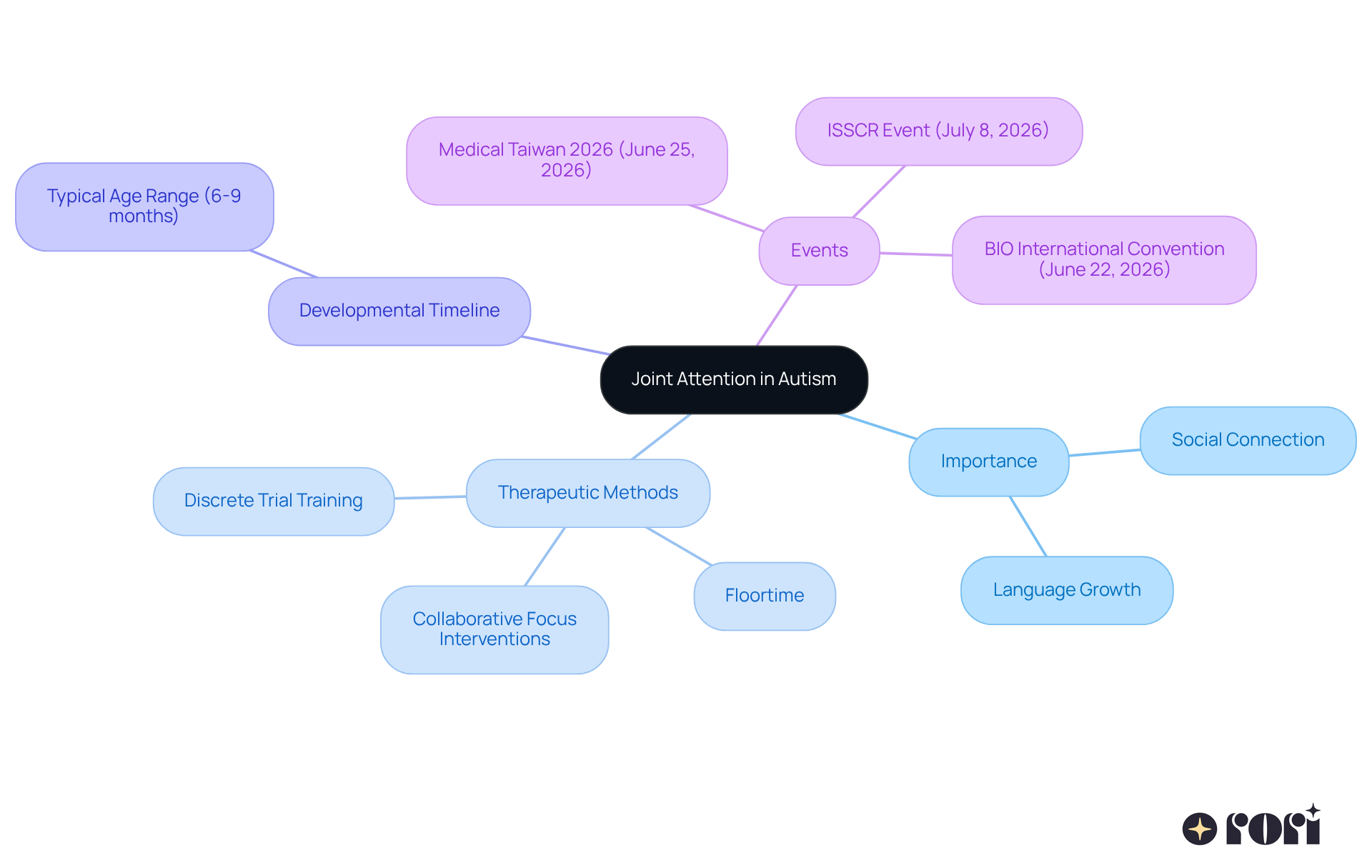
Have you ever noticed how important it is for kids to share a moment together? It’s all about that special connection! For children with autism, starting and reacting to shared focus can be a real challenge, which is where therapeutic methods for fostering joint attention in autism can help improve social interactions and language growth. Research shows that when kids can share their focus, it’s one of the first signs they’re starting to connect socially. That’s why therapeutic methods for fostering joint attention in autism are so important in the context of treatment.
By encouraging shared focus, caregivers and therapists can utilize therapeutic methods for fostering joint attention in autism, which is key for building relationships and enhancing learning opportunities. Kids who show improved collaborative focus often shine in social situations and language development. For instance, a study found that children who participated in collaborative focus interventions saw great improvements in these areas, leading to better social communication outcomes. This really shows how focusing together can significantly impact therapeutic methods for fostering joint attention in autism!
Typically, kids start showing these collaborative focus skills as early as 6 to 9 months, which is why early intervention is so crucial. Plus, Rori Care is here to keep you in the loop about upcoming events, like the ISSCR event on July 8, 2026, where you can learn about the latest in autism care. Staying informed about events like this can empower you to support your child’s journey in autism care.
Implement Effective Therapeutic Strategies to Enhance Joint Attention
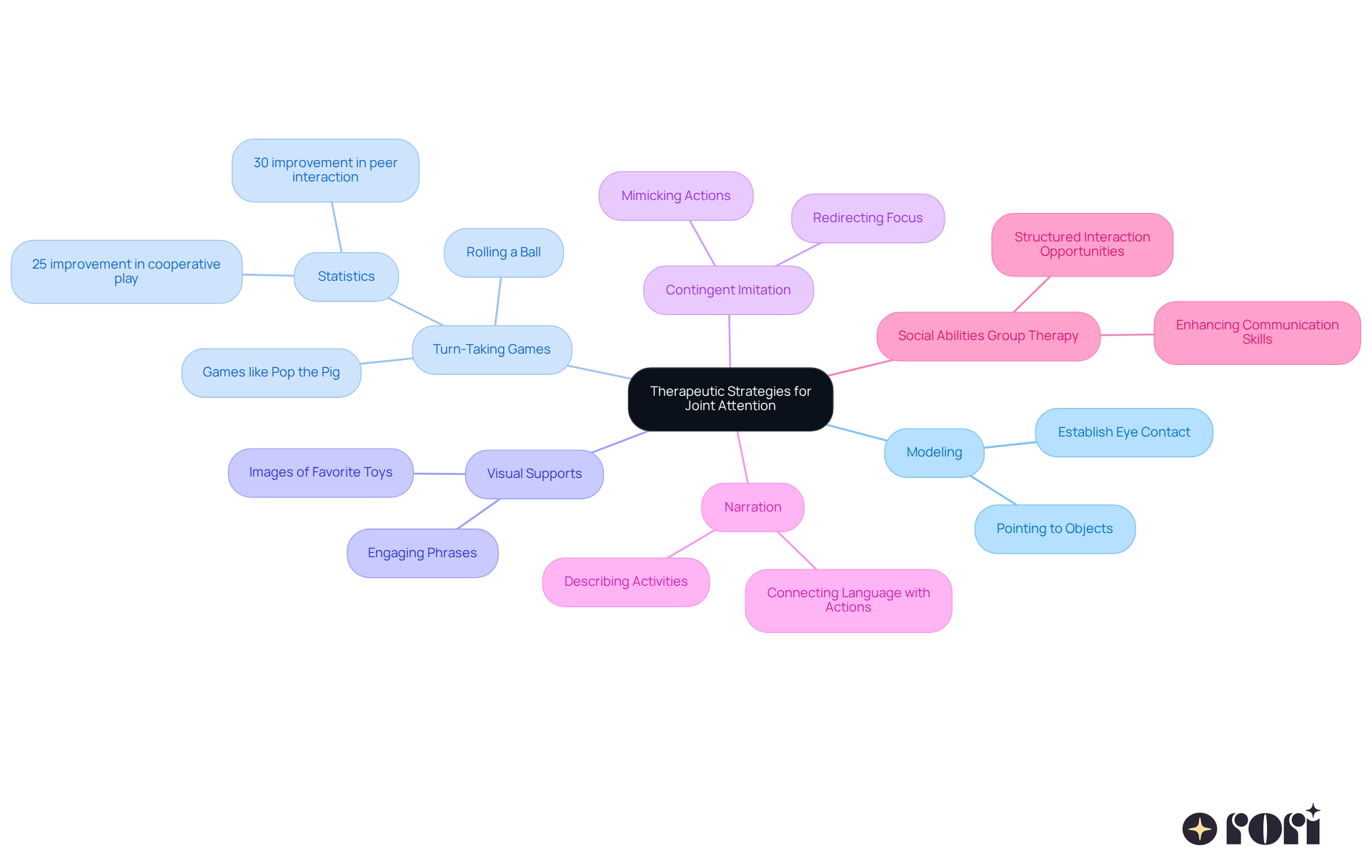
Let’s talk about some fun and effective ways to help kids with autism focus and connect better! One great approach is through Applied Behavior Analysis (ABA) therapy, which focuses on the unique needs of each child and has shown great success in helping them thrive:
- Modeling: Show shared focus behaviors by pointing to objects and establishing eye contact. For instance, while playing with toys, a caregiver can say, ‘Look at the red car!’ while pointing at it, encouraging the young one to follow their gaze.
- Turn-Taking Games: Engage in activities that require turn-taking, like rolling a ball back and forth. These games are considered therapeutic methods for fostering joint attention in autism, as they not only encourage shared focus but also enhance social interaction and collaboration. You know, a recent study showed that kids who practiced turn-taking just three times a week saw a 25% boost in their cooperative play in just two months! Plus, another report noted a 30% improvement in peer interaction among preschoolers with autism due to consistent turn-taking exercises. How cool is that?
- Visual Supports: Utilize images or items to engage the young one. For example, displaying an image of a favorite toy can serve as one of the therapeutic methods for fostering joint attention in autism by helping to direct their focus and encourage shared attention. This approach works wonders for kids who might be more into their toys than chatting with others. Incorporating engaging phrases while redirecting their focus can make this strategy even more effective!
- Contingent Imitation: Mimic the young one’s actions or sounds to promote involvement in shared focus. If a youngster is stacking blocks, imitating their actions can redirect their focus back to you, strengthening that bond.
- Narration: Describe activities during shared moments, like cooking or playing, to create opportunities for mutual focus. For example, saying, ‘I’m stirring the soup. Can you see the bubbles?’ helps the child connect language with actions, enhancing their understanding and engagement.
- Participating in social abilities group therapy that utilizes therapeutic methods for fostering joint attention in autism, led by a qualified therapist, can enhance collaborative focus by providing structured opportunities for interaction with peers. This environment promotes better communication and social connections, which are essential for cultivating shared focus abilities.
Dr. Suzanne Goh reminds us that with a little patience and support, kids can really shine in their social skills! By weaving these strategies into daily life and learning more about ABA, you can create a nurturing space for your child to thrive!
Leverage Technology and Innovative Approaches in Joint Attention Therapy
Navigating the world of autism can feel overwhelming for parents, especially when it comes to finding the right tools to support their child’s development. Let’s explore how technology can help!
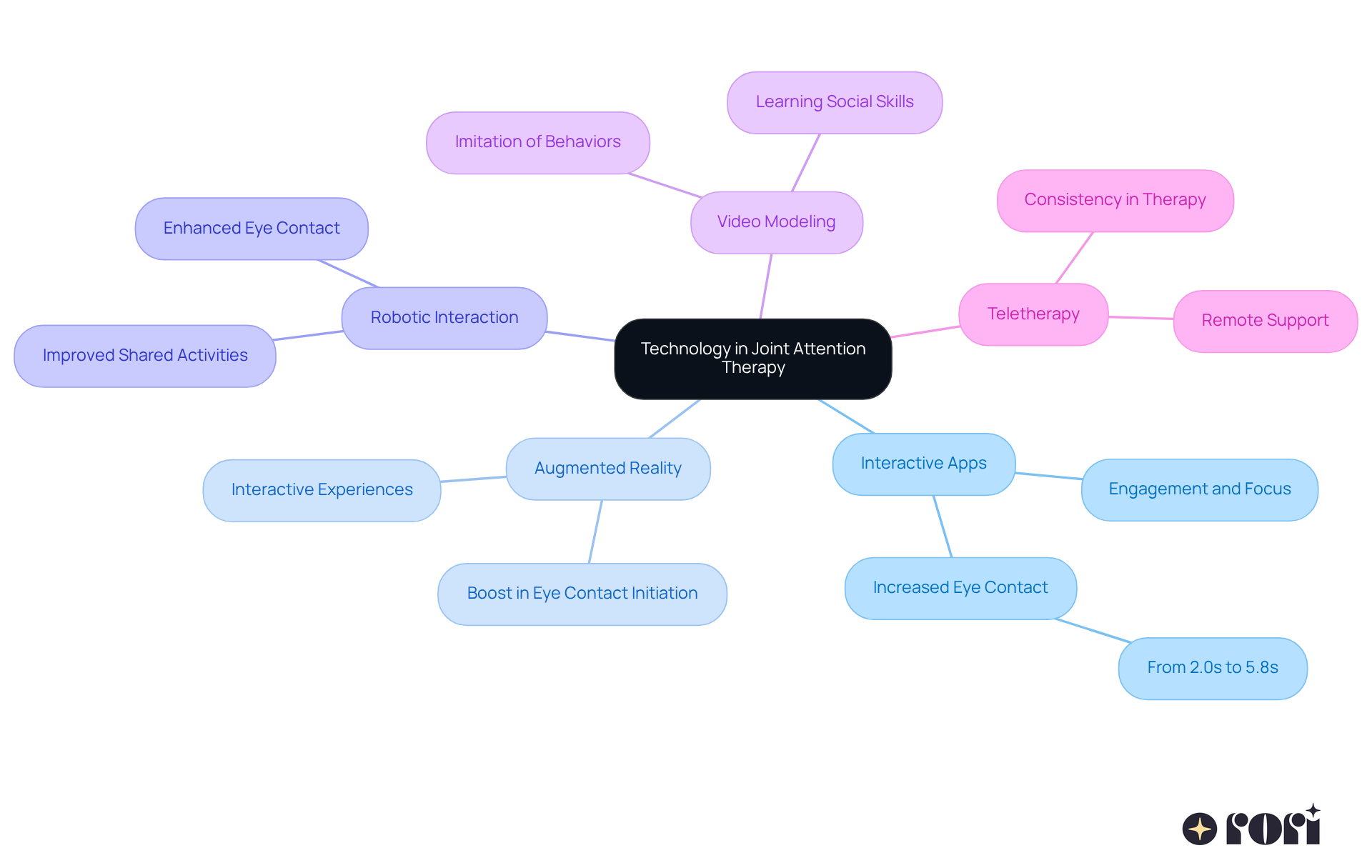
- Interactive Apps: These fun apps can really help kids focus and engage! For instance, apps that encourage little ones to follow visual cues or respond to prompts have shown great results. One study found that kids using these apps increased their eye contact duration from just 2.0 seconds to 5.8 seconds after using them. When caregivers know how to use these tools, they can create a consistent practice at home.
- Augmented Reality (AR): AR tools create exciting experiences that let kids interact with virtual objects while practicing shared focus skills. Research shows that AR can really grab kids’ attention, making it easier for them to engage with others. In one study, kids working with AR tasks showed a big boost in how often they initiated eye contact. When parents understand how to use AR, they can reinforce what their child learns in therapy.
- Robotic Interaction: Kids often respond really well to robots, making it easier for them to focus on shared activities! Research indicates that children engaged in robotic sessions showed significant improvements in their ability to initiate and maintain eye contact. When caregivers are educated about these interactions, they can enhance the overall therapeutic experience.
- Video Modeling: Video modeling is a great way for kids to learn social skills by watching their peers in action! This method helps children observe and imitate shared behaviors. Caregivers who understand this approach can reinforce these behaviors at home, leading to better outcomes.
- Teletherapy: Teletherapy can be a fantastic way for parents and kids to work together, even from home! Therapists can guide parents in promoting shared focus during online sessions, ensuring ongoing support. This method not only keeps therapy consistent but also empowers caregivers with strategies to help their children grow.
By incorporating these technological innovations into therapy, caregivers can implement therapeutic methods for fostering joint attention in autism, creating dynamic and engaging environments that promote collaborative focus development. Imagine the joy of seeing your child engage and connect more with others-these tools can help make that a reality!
Foster Collaboration Between Parents and Therapists for Joint Attention Success
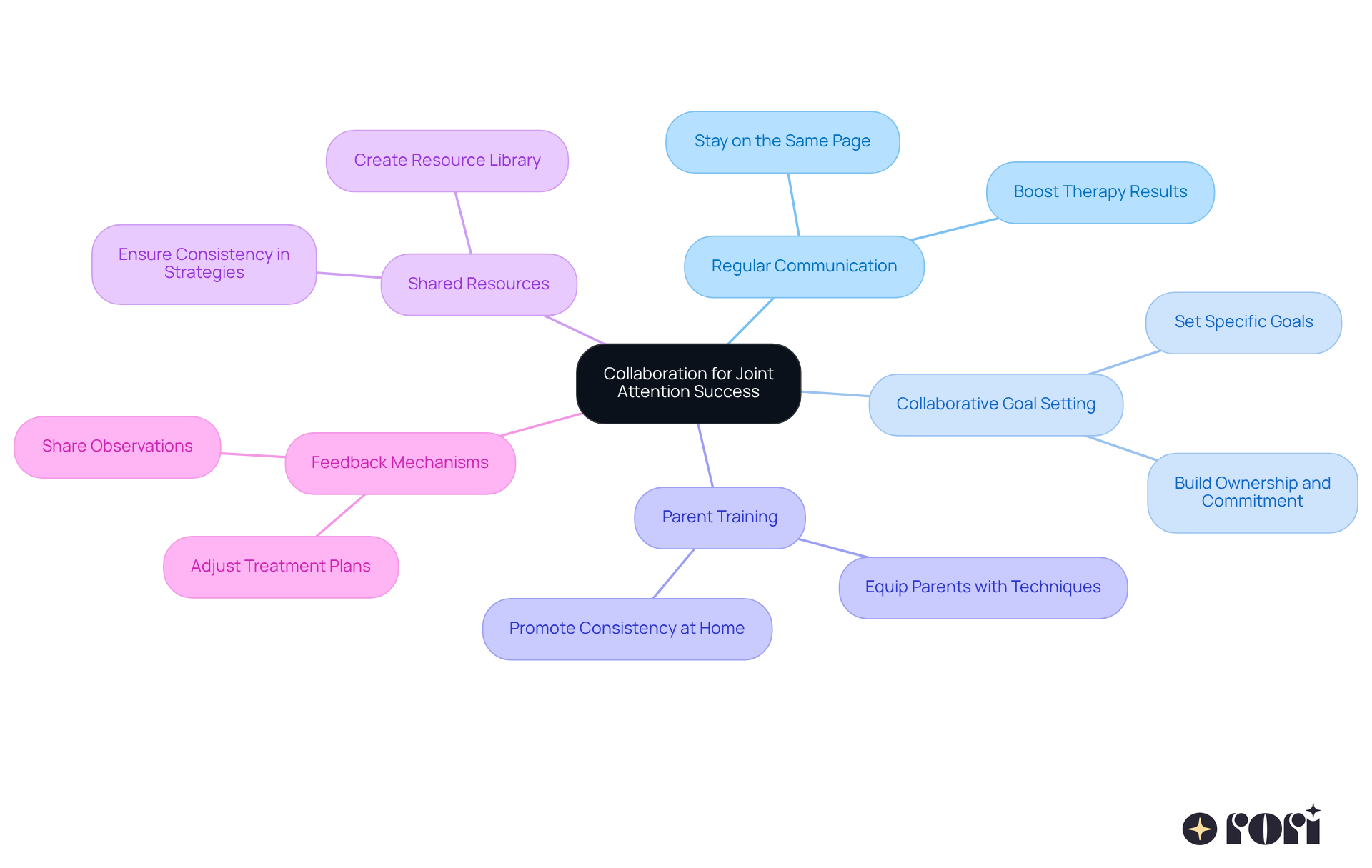
Navigating the world of autism therapy can feel overwhelming for parents, especially when it comes to working with therapists. Effective collaboration between parents and therapists is crucial for implementing therapeutic methods for fostering joint attention in autism. Here are some key strategies to enhance this partnership:
- Regular Communication: Keeping in touch about how things are going helps everyone stay on the same page and boosts therapy results! Kids whose parents are actively involved in therapy often see faster progress – it’s all about teamwork.
- Collaborative Goal Setting: Let’s work together to set specific, measurable goals that we can all focus on. When parents are part of this process, they feel more invested in their child’s therapy and understand the objectives better, which builds a sense of ownership and commitment.
- Parent Training: Offering training sessions for parents can equip them with the techniques needed to strengthen shared focus at home. This can include modeling behaviors, using visual supports, and playing turn-taking games – these are essential for skill development. Empowered caregivers are better equipped to provide the right support at home, complementing professional interventions and promoting consistency.
- Shared Resources: Creating a shared resource library with articles, videos, and tools can be a game-changer for both parents and therapists. This way, everyone is on the same page, ensuring consistency in strategies used at home and in therapy.
- Feedback Mechanisms: Setting up feedback systems where parents can share their observations about their child’s behavior at home is invaluable. This information helps therapists adjust treatment plans and enhance the effectiveness of interventions. Open communication ensures that everyone’s goals align with the child’s specific needs and developmental level.
When parents and therapists work together, they can implement therapeutic methods for fostering joint attention in autism, creating a supportive environment that really helps kids improve their joint attention skills. The knowledge and skills gained through caregiver education not only empower caregivers but also significantly improve behavioral outcomes, ultimately benefiting the child’s development. When parents and therapists unite, the journey toward improved joint attention through therapeutic methods for fostering joint attention in autism becomes not just possible, but truly rewarding.
Conclusion
Many parents find it challenging to foster joint attention in their children with autism, but it’s a crucial step toward enhancing their social skills and language development. By using effective therapeutic methods, caregivers and therapists can create opportunities for meaningful interactions that really make a difference.
Throughout this article, we’ve explored various therapeutic approaches, like modeling, turn-taking games, and even cool tech tools like interactive apps and augmented reality. Each method offers unique benefits that cater to the diverse needs of children with autism, helping them share focus and engage socially. Plus, we’ve highlighted how teamwork between parents and therapists can amplify the effectiveness of these interventions, making the journey smoother for everyone involved.
Improving joint attention skills takes time and patience, but it’s so worth it when you see your child thrive! By embracing the insights and techniques we’ve discussed, you can create a nurturing environment that fosters growth and connection. Remember, you’re not just helping your child; you’re building a brighter, more connected future for your family. Let’s explore this together!
Frequently Asked Questions
What is joint attention and why is it important in autism?
Joint attention refers to the ability to share focus on an object or event with another person. It is crucial for children with autism as it helps them connect socially and improves their social interactions and language growth.
How can therapeutic methods help foster joint attention in children with autism?
Therapeutic methods can encourage shared focus, which is essential for building relationships and enhancing learning opportunities. By improving collaborative focus, children can achieve better outcomes in social communication and language development.
When do children typically start showing collaborative focus skills?
Children usually begin to show collaborative focus skills between 6 to 9 months of age, making early intervention important for supporting their development.
What are the benefits of improving joint attention in children with autism?
Children who show improved joint attention often excel in social situations and language development, leading to better social communication outcomes.
How can caregivers and therapists support joint attention in children with autism?
Caregivers and therapists can utilize various therapeutic methods that promote shared focus, thereby enhancing social interactions and learning experiences for children with autism.
Where can I learn more about autism care and upcoming events?
Rori Care provides information about upcoming events, such as the ISSCR event on July 8, 2026, where you can learn about the latest advancements in autism care. Staying informed can help you better support your child’s journey in autism care.
List of Sources
- Define Joint Attention and Its Importance in Autism
- Improving Joint Attention for Children on the Autism Spectrum | TherapyWorks (https://therapyworks.com/blog/language-development/improving-joint-attention-children-autism)
- What is Joint Attention in Autism? (https://crossrivertherapy.com/articles/joint-attention-autism)
- Meta-Analysis Finds Joint Attention Interventions Improve Social Communication and Language Development in Children with Autism Spectrum Disorder – GeneOnline News (https://geneonline.com/meta-analysis-finds-joint-attention-interventions-improve-social-communication-and-language-development-in-children-with-autism-spectrum-disorder)
- Joint attention and intelligence in children with autism spectrum disorder without severe intellectual disability – PMC (https://pmc.ncbi.nlm.nih.gov/articles/PMC9291323)
- Two to ten years: Developmental trajectories of joint attention in children with ASD who received targeted social communication interventions – PMC (https://pmc.ncbi.nlm.nih.gov/articles/PMC4036529)
- Implement Effective Therapeutic Strategies to Enhance Joint Attention
- Autism Turn-Taking Activities: Fun and Effective Games for Kids | Actify ABA (https://actifyaba.com/autism-turn-taking-activities-fun-and-effective-games-for-kids)
- Strategies to Improve Joint Attention for Autistic Children | Cortica (https://corticacare.com/care-notes/joint-attention)
- Joint Attention Speech Therapy | Activities and Strategies – Speech And Language Kids (https://speechandlanguagekids.com/establishing-joint-attention-therapy-for-children-who-arent-tuned-in)
- Leverage Technology and Innovative Approaches in Joint Attention Therapy
- The Effectiveness of an Augmented Reality-Based Early Intervention Program Using Interactive Games to Enhance Eye Contact as a Nonverbal Communication Skill in Children with Autism: A Single-Case Experimental Design (https://mdpi.com/2079-3200/14/4/64)
- A Robotic Therapy Case Study – Nancy Charron, Lundy Lewis, Michael Craig, 2017 (https://journals.sagepub.com/doi/10.1177/0047239516687721)
- Can Robotic Interaction Improve Joint Attention Skills? – PMC (https://pmc.ncbi.nlm.nih.gov/articles/PMC3949684)
- Virtual/augmented reality for joint attention skills improvement in autism spectrum disorder: a systematic review – PMC (https://pmc.ncbi.nlm.nih.gov/articles/PMC12272668)
- Foster Collaboration Between Parents and Therapists for Joint Attention Success
- The Importance of Collaboration Between Therapists and Parents in Autism Treatment (https://buildingblockstherapy.org/blog/the-importance-of-collaboration-between-therapists-and-parents-in-autism-treatment)
- The Role of Parent Involvement in Autism Therapy Success | Advanced Autism Services (https://advancedautism.com/post/the-role-of-parent-involvement-in-autism-therapy-success)
- Unlocking Potential: How Parental Engagement Enhances ABA Therapy Outcomes | Step Ahead ABA (https://stepaheadaba.com/blog/the-importance-of-parent-involvement-in-aba-therapy-sessions)