

Introduction
Recognizing the unique strengths of individuals with autism isn’t just a kind approach; it’s a powerful strategy that can really enhance their care and development. By focusing on abilities like exceptional memory, creativity, and attention to detail, caregivers can create personalized treatment plans that help young individuals thrive.
But here’s the question: how can caregivers effectively spot and use these strengths to foster growth and confidence? 🤔 This article dives into some best practices for enhancing individual strengths in autism care, offering insights that could reshape the support provided to those on the spectrum. Let’s explore this together!
Understand the Strengths of Autism: A Foundation for Care
It is essential to for and crafting . At Rori Care, our is made up of skilled, empathetic professionals who truly appreciate neurodiversity. They work tirelessly every day to help young individuals find their path to success.
You know, autistic individuals often have some ! Think about it: exceptional attention to detail, strong memory skills, and the ability to focus deeply on specific interests. Many kids with autism shine in areas like mathematics, music, or art, and these talents can really enhance their learning experiences. By understanding and leveraging these strengths, caregivers can create that focus on enhancing individual strengths in autism care while addressing challenges and nurturing the individual’s natural capabilities.
By enhancing individual strengths in autism care, this strengths-focused approach fosters a sense of competence and confidence, encouraging young individuals to thrive in their environments. Studies show that when we acknowledge these abilities, can improve significantly. Young individuals feel empowered to engage more actively in their education and social interactions. Plus, case studies reveal that recognizing abilities leads to better , which means more involvement in .
Ultimately, enhancing individual strengths in autism care not only supports personal growth but also contributes to . So, if you’re curious about how we can assist your student, let’s explore this together! Make an appointment with us today.

Identify and Leverage Unique Strengths in Autism
To truly support individuals with autism, caregivers need to recognize and embrace their unique strengths by . It all starts with keen observation and open conversations with the young person and their family. For example, if a child shows a strong interest in technology, weaving tech-based activities into their learning can really boost their engagement and motivation.
Using tools like is key to pinpointing specific skills. This helps caregivers craft that align with the young person’s interests. Experts agree that enhancing individual strengths in autism care by identifying and nurturing these abilities can lead to and a more fulfilling experience for both the child and their family.
When caregivers actively participate in , studies show that about 90% of young individuals see . By enhancing individual strengths in autism care, caregivers not only build a but also inspire young people to explore their talents in various areas.
It’s also important for caregivers to be aware of , like overlooking the young one’s challenges while emphasizing strengths. A balanced approach fosters overall growth. Active involvement is crucial; research indicates that when caregivers are and strategies, they can make informed choices that positively impact their child’s progress.
This empowerment leads to better behavioral outcomes and enhances family dynamics, making it essential for caregivers to engage fully in the therapeutic journey. Let’s explore this together!

Create Supportive Environments to Foster Strengths
Creating a nurturing atmosphere is essential for enhancing individual strengths in autism care to help young individuals with developmental disorders thrive. Caregivers can really enhance these spaces by using , , and . For example, a calm and orderly environment with minimal distractions can significantly boost concentration, allowing young learners to engage more effectively in activities.
Visual schedules are a game-changer! They help make things more predictable, which can reduce anxiety and promote independence, especially for individuals with autism. When we involve young people in – like art or music – within these thoughtfully designed environments, we encourage exploration and skill development.
By tailoring the surroundings to meet each individual’s unique needs, caregivers can create a that fosters learning and growth, which is essential for enhancing individual strengths in autism care. This approach can lead to better and social interactions. Plus, when caregivers are equipped with , they can make informed decisions that positively impact their children’s progress, enhancing support and empowerment.
transparently is key! It allows caregivers to and adjust strategies as needed. And let’s not forget the importance of flexibility – ensuring that interventions remain effective as young people’s needs evolve. A case study highlighting the significance of routine for adults with developmental differences shows how structured routines can improve quality of life by promoting autonomy and emotional regulation. This really underscores the broader benefits of these strategies.
Let’s explore this together! We’re here to help you every step of the way!

Collaborate with Professionals for Tailored Support
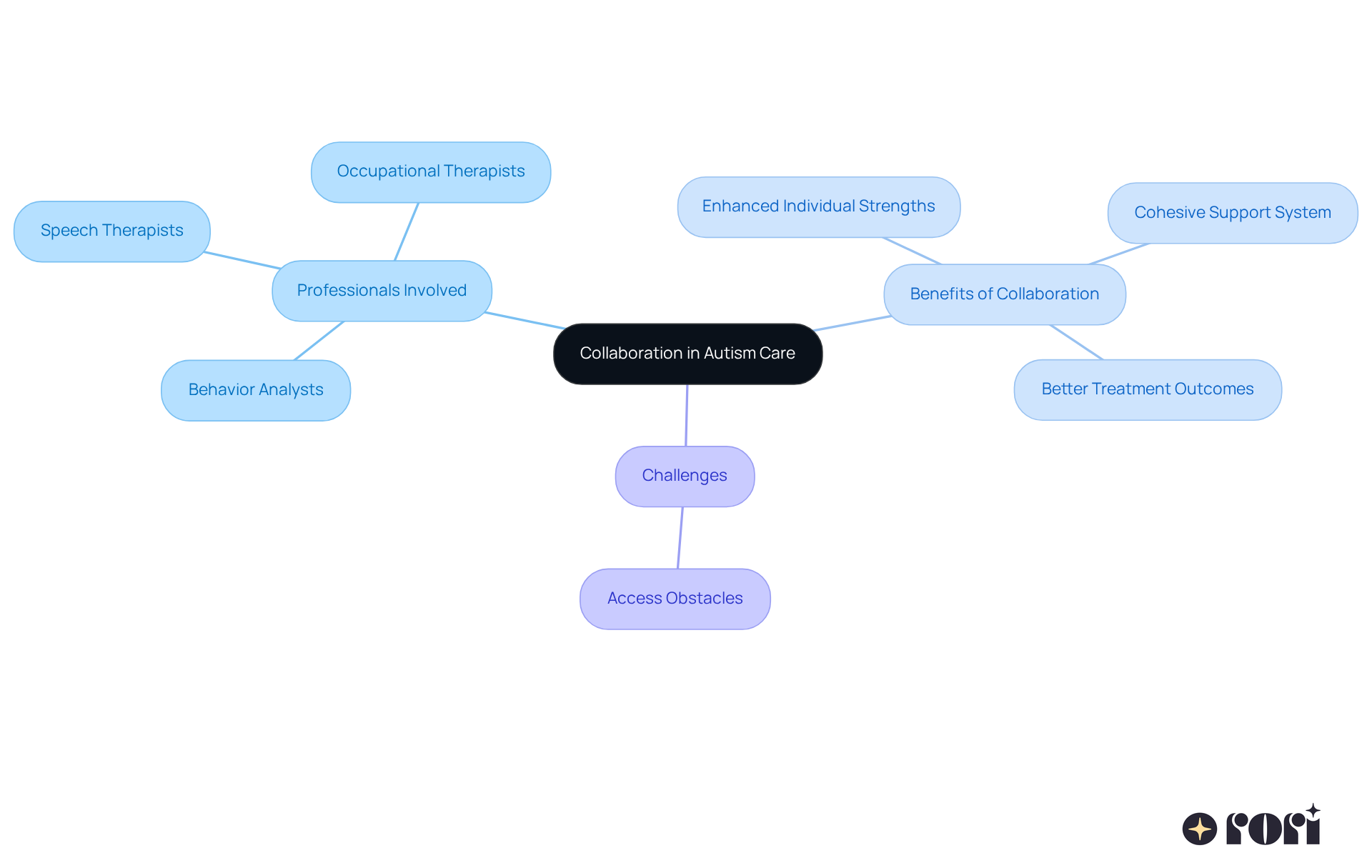
is crucial for when delivering tailored support for individuals with autism. When guardians team up with a multidisciplinary crew-including behavior analysts, speech therapists, and occupational therapists-they can craft a of their loved ones. At Rori Care, our passionate clinicians are here to guide your family through a comprehensive and compassionate , focusing on .
Regular communication and shared goals among team members can really boost the effectiveness of interventions. For instance, imagine a speech therapist teaming up with a behavior analyst to develop communication strategies focused on enhancing individual strengths in autism care. This kind of collaboration is crucial for enhancing individual strengths in autism care, as it ensures that every aspect of the individual’s development is taken into account, leading to and a more cohesive support system.
Research shows that can contribute to enhancing individual strengths in autism care, and reach their full potential. And let’s not forget, the demand for therapy services for those on the spectrum has skyrocketed, highlighting just how crucial these collaborative efforts are.
It’s also vital to tackle , as many young individuals with developmental disorders miss out on the behavioral or medicinal care they need. A case study on the ‘Influence of Collaboration on Treatment Outcomes’ illustrates how enhancing individual strengths in autism care through teamwork can lead to better results for individuals with autism. This reinforces Rori Care’s commitment to and strategies to support their children’s behavioral goals.
Let’s explore this together! We’re here to help you every step of the way!
Conclusion
Recognizing and enhancing individual strengths in autism care is so important for helping young individuals grow and succeed. By shifting our focus from challenges to abilities, caregivers can create personalized strategies that empower autistic individuals to truly thrive. This strengths-based approach not only nurtures confidence but also boosts engagement in educational and social settings, leading to better outcomes overall.
The article shares some great practices for enhancing individual strengths, like:
- Identifying unique talents
- Creating supportive environments
- Collaborating with professionals
By observing and understanding each person’s specific strengths, caregivers can tailor interventions that align with their interests and needs. And let’s not forget the importance of structured routines, sensory-friendly spaces, and effective communication among multidisciplinary teams – these elements work together beautifully to support and nurture growth.
In conclusion, embracing a strengths-focused approach in autism care is essential for building a more inclusive and compassionate society. By actively recognizing and leveraging the unique abilities of individuals with autism, caregivers and professionals can create environments that encourage exploration and personal development. It’s crucial to commit to these best practices, ensuring that every young person has the chance to shine and reach their full potential. Let’s explore this together!
Frequently Asked Questions
Why is it important to recognize the strengths of individuals with autism?
Recognizing the strengths of individuals with autism is essential for enhancing their individual capabilities and crafting effective care strategies. It helps in creating personalized treatment plans that focus on their strengths while addressing challenges.
What are some common strengths of autistic individuals?
Autistic individuals often have exceptional attention to detail, strong memory skills, and the ability to focus deeply on specific interests. Many excel in areas such as mathematics, music, or art.
How can caregivers utilize the strengths of autistic individuals in care?
Caregivers can leverage these strengths by creating personalized treatment plans that enhance individual capabilities, fostering competence and confidence, and encouraging young individuals to thrive in their environments.
What impact does a strengths-focused approach have on treatment outcomes?
A strengths-focused approach can significantly improve treatment outcomes, as it empowers young individuals to engage more actively in their education and social interactions, leading to better emotional regulation and social skills.
How does recognizing strengths contribute to community involvement for autistic individuals?
Recognizing the abilities of autistic individuals leads to improved emotional regulation and social skills, which in turn increases their involvement in community activities.
What is the ultimate goal of enhancing individual strengths in autism care?
The ultimate goal is to support personal growth and contribute to building a more inclusive and compassionate society for individuals with autism.