

Introduction
Chaining in Applied Behavior Analysis (ABA) therapy is such an important strategy for helping children with autism tackle complex tasks. By breaking these tasks down into smaller, more manageable steps, we make learning feel less overwhelming. This approach not only simplifies the process but also builds independence and confidence as each action is learned one step at a time.
But here’s the thing: the effectiveness of chaining can really depend on how each child learns and the complexity of the tasks at hand. So, how can caregivers and therapists team up to make the most of these techniques for each child’s unique needs? Let’s explore this together!
Define Chaining in ABA Therapy
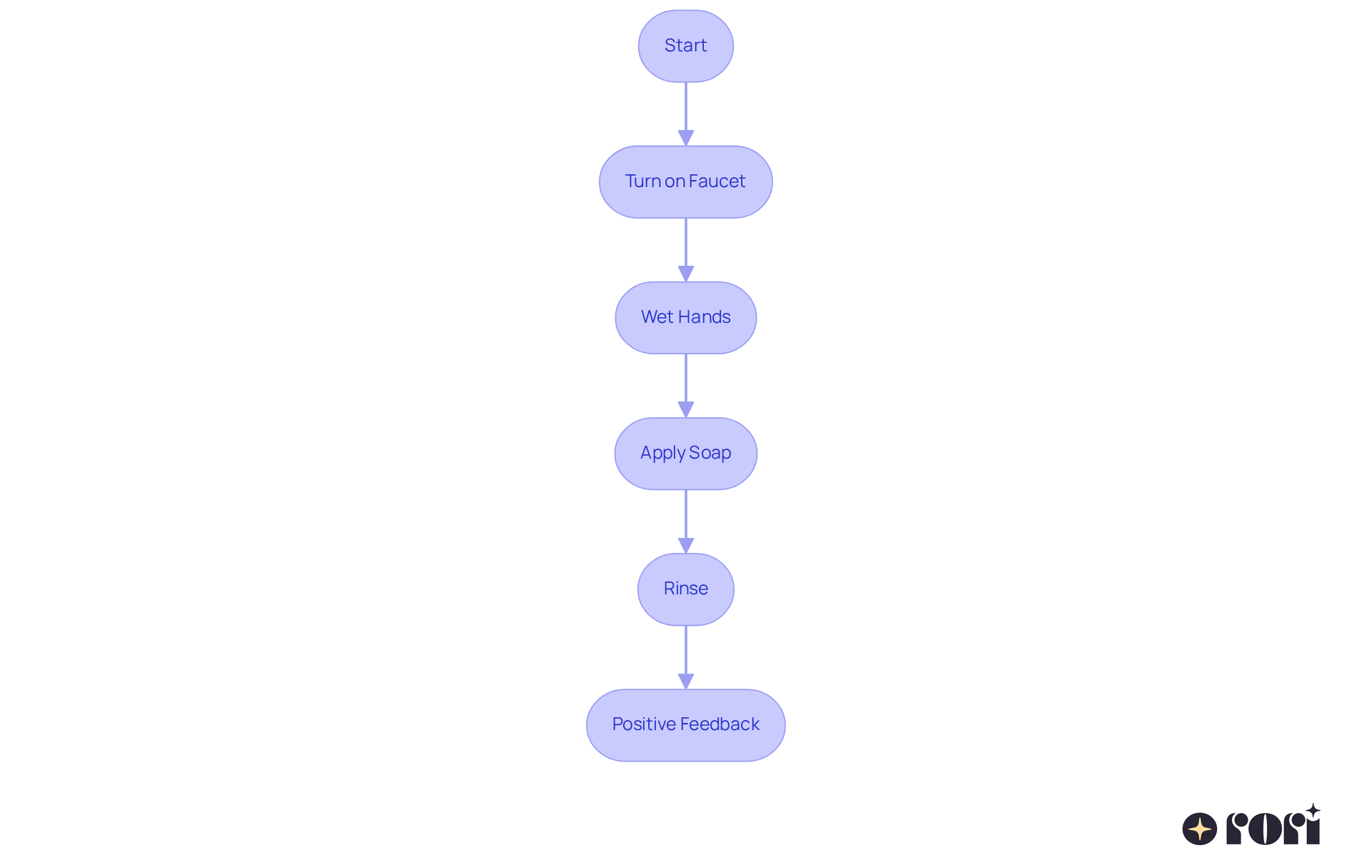
is a wonderful method that helps kids learn . Each part of the process is taught one at a time, allowing children with autism to really get the hang of one action before moving on to the next. This approach makes learning easier by connecting simpler actions into a smooth behavior chain, which helps with both learning and remembering. For example, think about handwashing: the steps can be split into clear phases like turning on the faucet, wetting hands, applying soap, and rinsing. Each step gets a nice boost of —like verbal praise or little rewards—which encourages kids to keep practicing and mastering the skill.
Qualified behavior analysts play a key role in this journey, crafting that include . Research shows that methods can significantly improve , helping kids apply what they’ve learned in various situations. This tailored support, along with active involvement from caregivers, ensures that to the child’s progress. Importantly, is the only that is covered by insurance, making it an essential resource for fostering positive behavior changes and skill development across everyday activities, from getting dressed to tackling schoolwork.
Let’s explore this together! We’re here to !
Contextualize the Role of Chaining in ABA Therapy
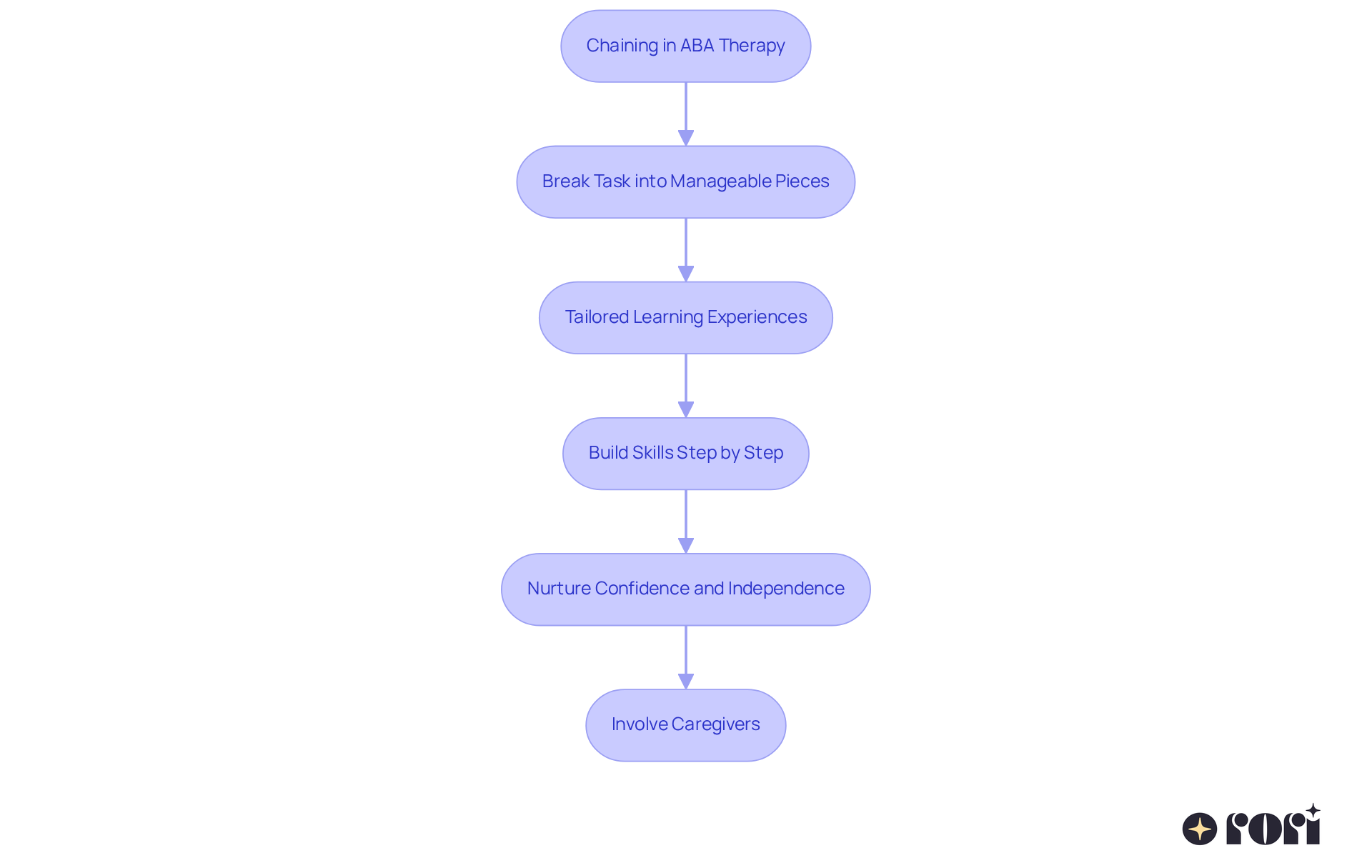
is a fundamental technique focused on breaking tasks into manageable pieces. This approach works wonders for kids with autism, allowing therapists to create that cater to each child’s unique needs. 🌟 Research shows that can really boost learning. In fact, studies have found that lead to better communication and cognitive skills.
When therapists use , they help kids step by step. This not only builds their skills but also nurtures a sense of confidence and independence as they tackle each part. Plus, it makes therapy sessions tailored to specific abilities and challenges, which leads to more .
And let’s not forget about ! When caregivers understand ABA principles and techniques, they can at home much better. This knowledge empowers them to make informed choices and actively participate in their child’s therapy journey. Together, we can create a supportive environment that contributes to . Let’s explore this together!
Explore Types of Chaining: Forward, Backward, and Total Task
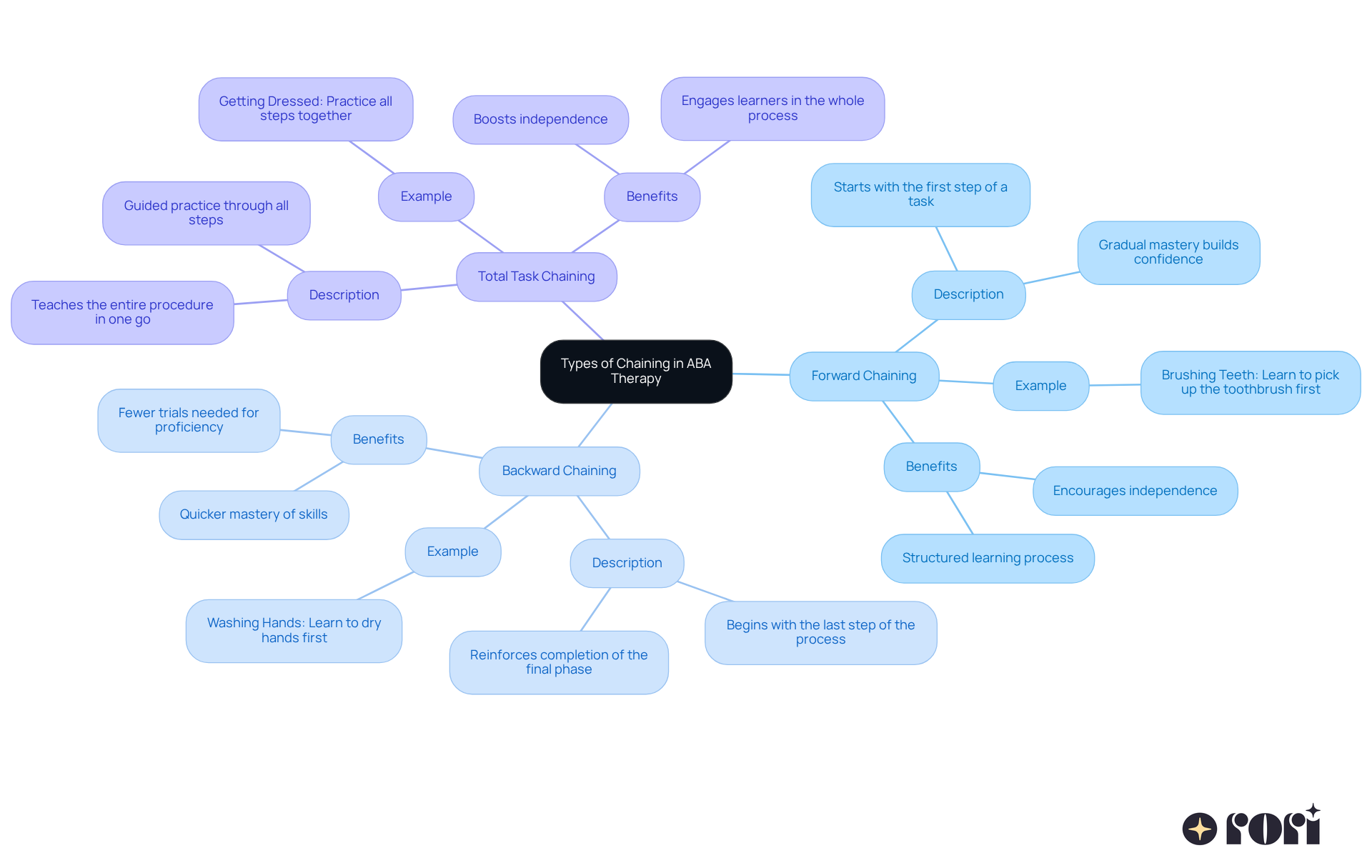
In ABA therapy, includes three main types: , , and total process chaining. Each method offers and the complexity of tasks.
- : This approach starts with the first step of a task. Your little one learns to complete the initial task independently before moving on to the next. For example, when teaching a child to brush their teeth, they might first learn to pick up the toothbrush before applying toothpaste. This method allows for , building confidence as they learn each step in order.
- : Here, we begin with the last step of the process. Your child is guided through the entire task until they reach the final phase, which is then reinforced. This can be particularly motivating, as they get to experience that wonderful feeling of accomplishment right away! For instance, in washing hands, the child would first learn to dry their hands and then work backward through the steps. Research shows that can lead to , often requiring fewer trials to achieve proficiency compared to .
- : This technique involves teaching the entire procedure in one go. Your child is guided through every step, receiving help as needed. This method is especially useful for activities that involve multiple actions, like getting dressed, where they can practice all the steps together. Studies have shown that complete activity chaining can effectively , allowing your little learner to engage in the whole process in a single learning experience.
Each chaining method has its own strengths, and choosing the right one should depend on your child’s learning style and the complexity of the task. can empower parents and clinicians to select the most to individuals with autism. Let’s explore this together!
Illustrate Real-Life Applications of Chaining Techniques
can be a game-changer in real-life situations, especially for children with autism. They not only enhance the learning experience but also empower caregivers to support their development. Let’s dive into some examples:
- : Think about teaching kids to wash their hands. By breaking it down into simple steps—like turning on the faucet, wetting their hands, applying soap, scrubbing, rinsing, and drying—they can learn to do it all by themselves! This fosters independence and helps at home, creating a consistent learning environment.
- : In the classroom, chaining can help students tackle . Each part, from identifying the operation to performing calculations and writing the answer, can be taught one step at a time. Caregivers can use ABA principles to support their children’s academic growth in everyday situations—what a fantastic way to help them thrive!
- Daily Living Abilities: shines when it comes to teaching , such as . Kids can learn to gather ingredients, spread condiments, add fillings, and assemble their creation step by step. This organized approach not only boosts their learning but also gives caregivers confidence in their ability to support their child’s educational journey.
These techniques, including , not only promote skill development but also nurture independence and self-confidence in children as they master complex tasks through . Plus, the involvement of caregivers is crucial in the ABA therapy process. Research shows that when caregivers are actively engaged, a whopping 90% of children show significant progress! This reinforces the of ABA therapy, which is the only covered by insurance.
So, let’s explore this together and see how we can make a difference in our children’s lives!

Challenges and Considerations in Implementing Chaining Techniques
is a powerful technique; however, it does come with some challenges that we should consider together.
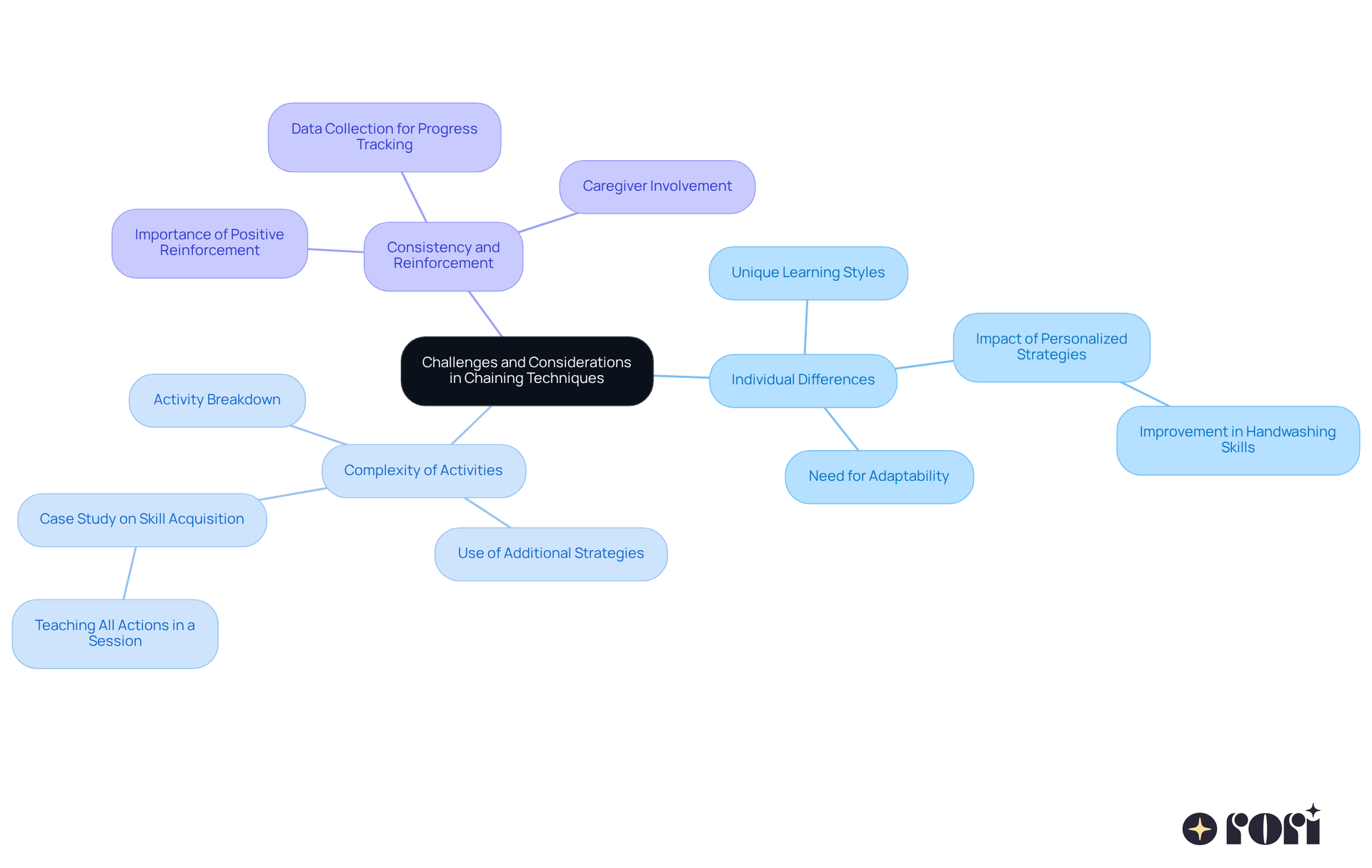
- Individual Differences: Every child is unique, with their own . This can really affect how they progress. For instance, some kids might need extra time to master each step, while others may zoom through quickly. This is why it’s so important for therapists to be adaptable and to fit each child’s needs. A study even showed that children with autism significantly improved their handwashing skills when utilizing techniques. This highlights the importance of ! Informed caregivers can use this knowledge to make choices that positively impact their child’s learning at home.
- Complexity of Activities: Sometimes, the complexity of certain activities can make chaining less effective. If an activity is too complicated, therapists might need to break it down or use additional strategies to help kids learn. For example, a case study found that using to teach all actions in a session can lead to quicker . This helps kids grasp the whole sequence better. , who understand ABA principles, can support their children in mastering these tasks, reinforcing learning outside of therapy sessions.
- Consistency and Reinforcement: is key to the success of . Each step should be positively reinforced to motivate the child to progress through the chain. Research shows that , like verbal praise or small rewards, boosts participation and encourages skill mastery. In practice, therapists can collect data on multiple opportunities to track progress and ensure effective reinforcement throughout the learning process. Caregiver involvement is crucial here, as they can provide at home, further supporting their child’s development and enhancing family dynamics.
By understanding these challenges and adapting their strategies, therapists can make even more effective. This can lead to better outcomes for children with autism. The active involvement of informed and can play a huge role in overcoming these challenges and achieving lasting behavioral improvements. Let’s explore this together!
Conclusion
Chaining in ABA therapy is such a valuable tool for teaching children with autism, breaking down complex tasks into manageable steps. This method not only makes learning easier but also builds independence and confidence as kids master each stage of a behavior. With tailored strategies, skilled behavior analysts create personalized plans that meet each child’s unique needs, ensuring the learning process is both effective and enjoyable.
Throughout this article, we’ve explored various aspects of chaining, including:
- What it is
- The different types—forward, backward, and total task chaining
- How they apply in real life
Each method has its own advantages that can really enhance learning experiences, whether it’s for self-care routines, academic skills, or daily activities. We also highlighted the importance of caregiver involvement, showing how informed parents can reinforce skills at home, amplifying the benefits of ABA therapy.
Of course, there are challenges when it comes to implementing chaining techniques, like individual learning differences and task complexity. This is where adaptability and consistency in reinforcement strategies come into play. By understanding these challenges and actively participating in their child’s therapy journey, caregivers can make a significant impact on their child’s progress. Ultimately, chaining in ABA therapy equips children with essential skills while nurturing a supportive environment that fosters meaningful behavioral improvements and greater independence. Embracing these techniques can truly transform the lives of children with autism and their families. Let’s explore this together and see how we can make a difference!
Frequently Asked Questions
What is chaining in ABA therapy?
Chaining in ABA therapy is a method that helps children learn complex behaviors by breaking them down into smaller, manageable steps. Each part of the process is taught one at a time, allowing children to master one action before moving on to the next.
How does chaining benefit children with autism?
Chaining makes learning easier by connecting simpler actions into a smooth behavior chain, which aids in both learning and remembering. It helps children with autism acquire skills more effectively and encourages confidence and independence.
Can you provide an example of chaining in practice?
An example of chaining is the handwashing process, which can be split into steps like turning on the faucet, wetting hands, applying soap, and rinsing. Each step is reinforced with positive feedback, such as verbal praise or small rewards.
Who is involved in implementing chaining during ABA therapy?
Qualified behavior analysts play a key role in implementing chaining by crafting personalized plans that include measurable goals and evidence-based strategies tailored to each child’s unique needs.
What does research say about the effectiveness of chaining in ABA therapy?
Research shows that chaining methods in ABA therapy significantly improve skill acquisition and generalization, helping children apply what they’ve learned in various situations.
How does caregiver involvement impact the success of chaining in therapy?
Active involvement from caregivers ensures that treatment plans are flexible and responsive to the child’s progress. When caregivers understand ABA principles, they can better support their child’s development at home.
Is ABA therapy covered by insurance?
Yes, ABA therapy is the only scientifically validated treatment for autism that is covered by insurance, making it an essential resource for fostering positive behavior changes and skill development.
List of Sources
- Define Chaining in ABA Therapy
- supportivecareaba.com (https://supportivecareaba.com/aba-therapy/chaining)
- goldenstepsaba.com (https://goldenstepsaba.com/resources/aba-therapy-and-chaining-techniques)
- magnetaba.com (https://magnetaba.com/blog/aba-therapy-and-chaining-techniques)
- supportivecareaba.com (https://supportivecareaba.com/statistics/how-aba-therapy-helps-with-task-completion-for-children-with-autism)
- Contextualize the Role of Chaining in ABA Therapy
- Applied Behavior Analysis (ABA) | Autism Speaks (https://autismspeaks.org/applied-behavior-analysis)
- Autism Therapy: Key Statistics (https://ambitionsaba.com/resources/autism-therapy-statistics)
- Resources | Golden Steps ABA (https://goldenstepsaba.com/resources/success-rates-of-aba-therapy)
- Applied Behavior Analysis in Children and Youth with Autism Spectrum Disorders: A Scoping Review – PMC (https://pmc.ncbi.nlm.nih.gov/articles/PMC9458805)
- Explore Types of Chaining: Forward, Backward, and Total Task
- Inspirational ABA and Autism Quotes – Mrs. Moe’s Modifications (https://mrsmoesmodifications.com/inspirational-aba-and-autism-quotes)
- (PDF) A comparison of forward chaining and backward chaining strategies in teaching activities of daily living to adolescent with intellectual disability (https://researchgate.net/publication/383122676_A_comparison_of_forward_chaining_and_backward_chaining_strategies_in_teaching_activities_of_daily_living_to_adolescent_with_intellectual_disability)
- Quotes About Autism – Arms Wide Open ABA Therapy (https://armswideopenaba.com/blog/quotes-about-autism)
- pmc.ncbi.nlm.nih.gov (https://pmc.ncbi.nlm.nih.gov/articles/PMC3251282)
- Illustrate Real-Life Applications of Chaining Techniques
- yellowbusaba.com (https://yellowbusaba.com/post/aba-therapy-and-chaining-techniques)
- totalcareaba.com (https://totalcareaba.com/autism/aba-therapy-and-chaining-techniques)
- connectncareaba.com (https://connectncareaba.com/blog/chaining-in-aba-therapy)
- ABA Chaining Examples You Should Know About – Golden Care Therapy (https://goldencaretherapy.com/aba-chaining-examples-you-should-know-about)
- Challenges and Considerations in Implementing Chaining Techniques
- connectncareaba.com (https://connectncareaba.com/blog/what-is-chaining-in-aba-therapy)
- Applied Behavior Analysis: The Role of Task Analysis and Chaining (https://iidc.indiana.edu/irca/articles/applied-behavior-analysis.html)
- levelaheadaba.com (https://levelaheadaba.com/blog/what-is-chaining-in-aba-therapy)
- pmc.ncbi.nlm.nih.gov (https://pmc.ncbi.nlm.nih.gov/articles/PMC3251282)