

Introduction
Understanding the dynamics of behavior is crucial in applied behavior analysis (ABA), especially when we consider the concept of motivating operations. These environmental factors really shape how effective reinforcers and punishers can be, influencing the likelihood of certain behaviors. By exploring the intricacies of motivating operations, you’ll discover how these principles can be used to create tailored interventions that promote positive behavioral changes.
But here’s the challenge: how can practitioners effectively identify and adjust these operations to meet the unique needs of each individual? Let’s explore this together! Your insights and experiences are invaluable, and we’re here to help you every step of the way!
Define Motivating Operations in ABA
What are , and how are they that significantly influence the effectiveness of reinforcers and punishers? They play a role in determining the likelihood of certain actions occurring. For instance, when a young person feels hunger, food becomes a powerful motivator, increasing the chances that they will seek it out. On the flip side, if a child has just eaten, the appeal of food decreases, making them less likely to look for it.
In discussing what are , they can be divided into two main types:
- (EAs), which boost the effectiveness of a reinforcer.
- (AAs), which lessen it.
Additionally, understanding what are can further break down MOs into (CMOs), which include subtypes like CMO-R, CMO-T, and CMO-S. This understanding is key for analysts aiming to create .
crafted by skilled specialists take these principles into account. They ensure that each plan includes measurable goals and evidence-based strategies tailored to the unique needs of each young person. For example, think about a locked house; it can heighten the value of a key (CMO-T), illustrating how MOs work in everyday life. By examining individual preferences and physiological needs, behavior analysts can identify what are motivating operations in ABA effectively, thereby maximizing reinforcement strategies.
Moreover, and strategies boosts their ability to support their children’s behavioral goals through active involvement and data collection. This collaborative approach not only enhances behavioral outcomes but also promotes informed decision-making and caregiver confidence. Ultimately, this benefits the child’s development in a holistic way.
B.F. Skinner’s theories guide these interventions, highlighting the importance of to meet the client’s needs. Let’s explore this together! By working hand-in-hand, we can create a supportive environment that truly fosters growth.

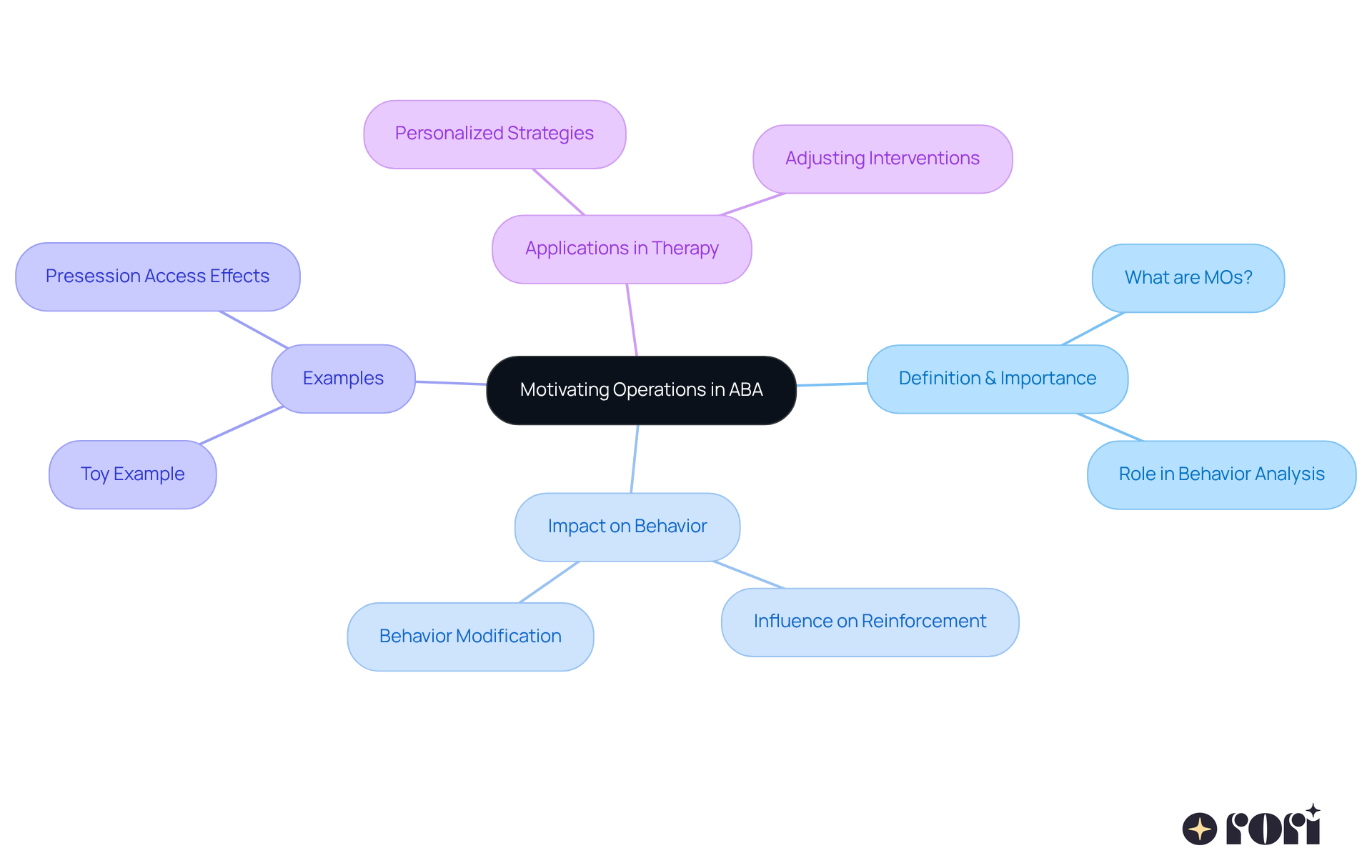
Context and Importance of Motivating Operations
In applied behavior analysis, what are , and how do they play a crucial role in influencing how we reinforce or discourage certain responses? They help us understand the context behind actions, which is so important for clinicians trying to figure out why some activities pop up more often in specific situations.
For example, if a child is missing their favorite toy, that toy suddenly becomes much more valuable as a reinforcer, making it more likely that the child will engage in behaviors aimed at getting it. Research backs this up, showing that can boost and reduce challenging behaviors. This really highlights how MOs can have .
By recognizing and skillfully adjusting MOs, therapists can create that resonate with a child’s current motivations. This approach is key to crafting that truly meet the with autism.
For instance, (AOs), which lower the value of a reinforcer, allows practitioners to tweak interventions as needed, ensuring they remain effective over time. Overall, having a solid grasp of what are empowers clinicians to implement and support the developmental goals of individuals with autism.
Let’s explore this together!
Types of Motivating Operations: Establishing and Abolishing
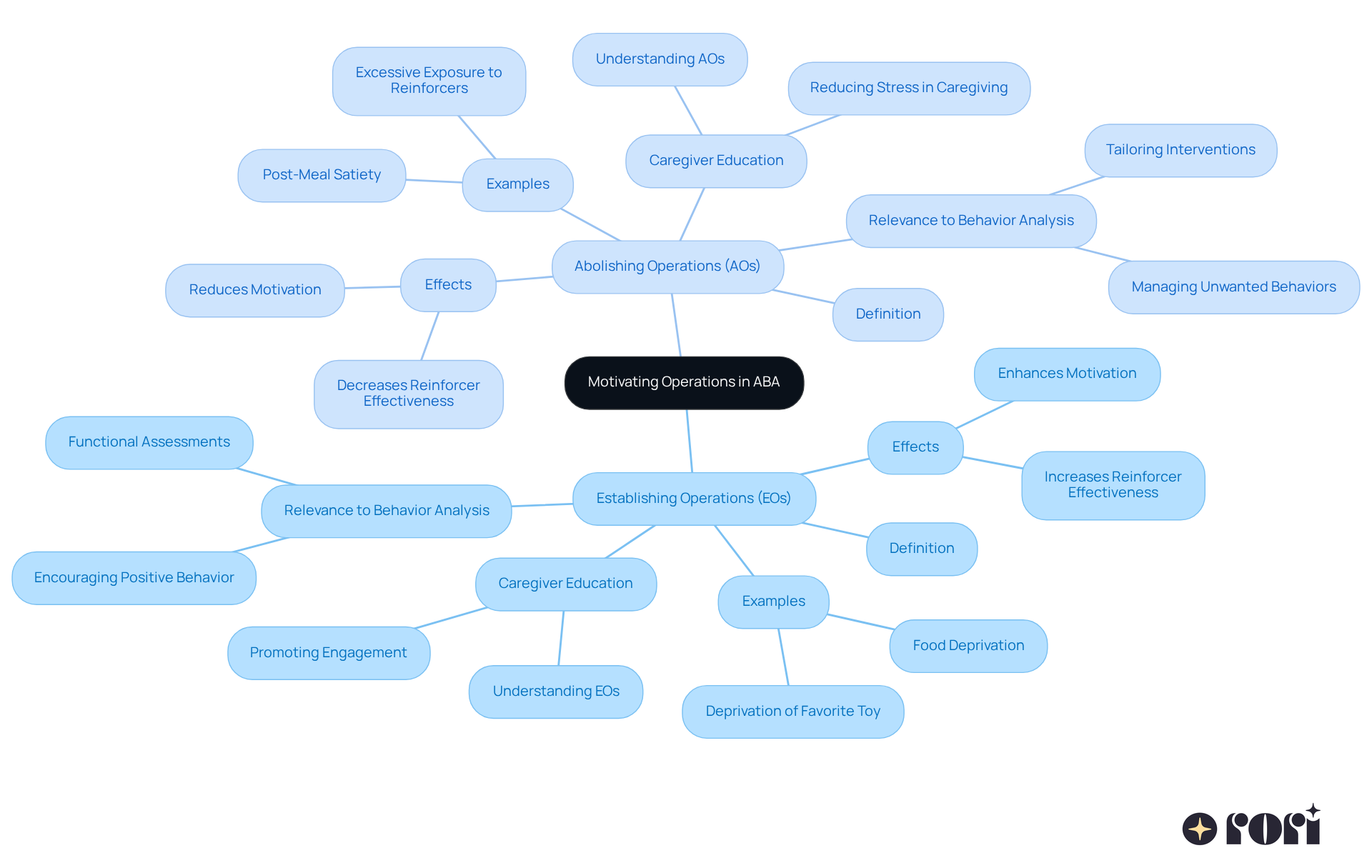
What are , and how do they come in two main types: and ? EOs actually make a reinforcer more effective. Imagine a child who has been kept away from their favorite toy; their desire to play with it grows stronger, making it a more powerful motivator for their actions. Research shows that problem behaviors are often more common during EO presessions than during abolishing operations, highlighting how deprivation can really affect behavior.
On the flip side, AOs reduce a reinforcer’s effectiveness. For instance, think about a child after a big meal; their hunger for food decreases, which means they’re less likely to seek out snacks. For behavior analysts, is super important. They can use EOs to encourage while being aware of AOs to help reduce unwanted behaviors. By skillfully navigating these processes, practitioners can create that truly support growth.
This knowledge also empowers caregivers, helping them make informed decisions that positively impact their children’s development. Educating caregivers not only enhances their support but also eases stress and builds confidence in their ability to contribute to their child’s progress. As one specialist noted, ‘What are are the or punishers, thus influencing actions.’ Plus, when recommended hours are fully implemented with active caregiver involvement, we see ! This really underscores how crucial is for supporting development through ABA. Let’s explore this together!
Applying Motivating Operations in ABA Therapy
Understanding what are is essential for being aware of what’s currently influencing a young person’s actions. This awareness allows clinicians to tailor interventions effectively. For example, if a child is acting out due to frustration from not being able to access a favorite activity, a clinician might implement an . This could mean giving brief access to that activity before guiding the child on the desired behavior, which enhances the activity’s value as a reward. As a result, the child is more likely to engage in the desired behavior to get to that activity.
On the flip side, knowing when to use is key to minimizing unwanted behaviors. If a child has been consistently rewarded with candy for completing tasks, the clinician might introduce a time when candy isn’t available. This approach reduces the candy’s appeal, encouraging the child to engage in tasks for different rewards.
Research shows that ABA therapy is quite effective, with over 89% of studies highlighting . By thoughtfully adjusting what are , therapists can create more that encourage . Real-life examples reveal that kids who receive tailored interventions based on their unique MOs often show remarkable progress. This highlights how essential this method is in shaping behaviors.
At Rori Care, skilled analysts craft these individualized plans with clear goals and . This ensures that caregivers have the knowledge and resources they need to support their children’s developmental goals. Plus, our behavior care engine integrates and automatic progress report generation, allowing for continuous evaluation and adjustment of these plans to meet each child’s specific needs. Let’s explore this together!

Conclusion
Understanding motivating operations in ABA is essential for influencing behavior through tailored interventions. By recognizing how environmental factors can enhance or diminish the effectiveness of reinforcers and punishers, practitioners can create strategies that truly resonate with individual needs. This nuanced approach not only supports the child’s developmental goals but also empowers caregivers to actively engage in the therapeutic process.
Let’s dive into the two primary types of motivating operations:
- Establishing operations, which increase the value of reinforcers,
- Abolishing operations, which decrease it.
By examining real-life examples, we can see how a solid grasp of these concepts enables behavior analysts to craft personalized treatment plans. This understanding fosters improved outcomes by aligning interventions with the child’s current motivations and needs.
Ultimately, the significance of motivating operations in applied behavior analysis is huge! They serve as a foundational element in shaping effective behavior modification strategies. By prioritizing the understanding and application of these operations, clinicians and caregivers can work together to create supportive environments that lead to meaningful behavioral changes and enhanced development for children with autism. Embracing this knowledge opens the door to a more informed and impactful approach in ABA therapy. We’re here to help you every step of the way!
Frequently Asked Questions
What are motivating operations in ABA?
Motivating operations in ABA are environmental factors that significantly influence the effectiveness of reinforcers and punishers, determining the likelihood of certain actions occurring.
How do motivating operations affect behavior?
They affect behavior by altering the appeal of certain reinforcers. For example, hunger increases the motivation to seek food, while having just eaten decreases that motivation.
What are the two main types of motivating operations?
The two main types are Establishing Activities (EAs), which enhance the effectiveness of a reinforcer, and Abolishing Activities (AAs), which reduce it.
What are conditioned motivating operations (CMOs)?
Conditioned motivating operations (CMOs) are a further breakdown of motivating operations, which include subtypes such as CMO-R, CMO-T, and CMO-S.
How do behavior analysts use motivating operations in treatment plans?
Behavior analysts use motivating operations to create personalized treatment plans that include measurable goals and evidence-based strategies tailored to the unique needs of each individual.
Can you give an example of how motivating operations work in everyday life?
An example is a locked house, which can increase the value of a key (CMO-T), illustrating how motivating operations influence behavior in real-life situations.
How do caregivers benefit from understanding ABA principles?
Caregivers benefit by being empowered with ABA principles and strategies, enhancing their ability to support their children’s behavioral goals through active involvement and data collection.
What role does B.F. Skinner’s theories play in ABA interventions?
B.F. Skinner’s theories guide ABA interventions by emphasizing the importance of ongoing evaluation and adjustments to meet the client’s needs effectively.
List of Sources
- Define Motivating Operations in ABA
- Motivating Operations In ABA: Defining And Examples (https://magnetaba.com/blog/motivating-operations-in-aba)
- mastermindbehavior.com (https://mastermindbehavior.com/post/motivating-operations-in-aba)
- Best ABA Quotes (https://testpreptech.com/post/best-aba-quotes)
- ambitionsaba.com (https://ambitionsaba.com/resources/motivating-operations-in-aba)
- Context and Importance of Motivating Operations
- Inspirational ABA and Autism Quotes – Mrs. Moe’s Modifications (https://mrsmoesmodifications.com/inspirational-aba-and-autism-quotes)
- mastermindbehavior.com (https://mastermindbehavior.com/post/motivating-operations-in-aba)
- behavioristbookclub.com (https://behavioristbookclub.com/blog/examples-of-motivating-operations)
- THE INFLUENCE OF MOTIVATING OPERATIONS ON GENERALIZATION PROBES OF SPECIFIC MANDS BY CHILDREN WITH AUTISM – PMC (https://pmc.ncbi.nlm.nih.gov/articles/PMC3469301)
- pmc.ncbi.nlm.nih.gov (https://pmc.ncbi.nlm.nih.gov/articles/PMC3050471)
- Types of Motivating Operations: Establishing and Abolishing
- pmc.ncbi.nlm.nih.gov (https://pmc.ncbi.nlm.nih.gov/articles/PMC2831440)
- Motivating Operations In ABA: Defining And Examples (https://magnetaba.com/blog/motivating-operations-in-aba)
- mastermindbehavior.com (https://mastermindbehavior.com/post/motivating-operations-in-aba)
- behavioristbookclub.com (https://behavioristbookclub.com/blog/examples-of-motivating-operations)
- Applying Motivating Operations in ABA Therapy
- Success Rates of ABA Therapy | Advanced Autism Services (https://advancedautism.com/post/success-rates-of-aba-therapy)
- What Are ABA Therapy Quotes? Understanding Their Role and Importance – Rori Blog (https://rori.care/post/what-are-aba-therapy-quotes-understanding-their-role-and-importance)
- Inspirational ABA and Autism Quotes – Mrs. Moe’s Modifications (https://mrsmoesmodifications.com/inspirational-aba-and-autism-quotes)
- The Numbers Don’t Lie: Revealing Autism Therapy Statistics | Above and Beyond Therapy (https://abtaba.com/blog/autism-therapy-statistics)
- brighterstridesaba.com (https://brighterstridesaba.com/blog/motivating-operations-in-aba)