

Introduction
Understanding the intricacies of behavior modification is essential in educational settings, especially when it comes to Discrete Trial Instruction (DTI). At the heart of this structured approach is the idea of consequences, which are key in shaping a learner’s responses and future actions. By exploring the significance of these outcomes, we can see how thoughtfully applied consequences not only reinforce positive behaviors but also guide learners through corrective feedback.
What challenges might arise when implementing these techniques? And how can caregivers and educators create an effective learning environment? Let’s explore this together! Your experiences and insights are valuable, and we’re here to help you every step of the way!
Define Consequence in Discrete Trial Instruction
In Discrete Trial Instruction (DTI), ? It refers to the outcome that follows a learner’s response after an antecedent is presented. This outcome can either reinforce or adjust the behavior, playing a key role in . For example, when a young child after a cue, the positive response they receive acts as encouragement, increasing the likelihood of them repeating that preferred action. Conversely, if the response is incorrect, a the child toward the right answer.
This organized approach emphasizes what is a consequence in discrete trial instruction, as results are crucial in the learning experience and directly impact whether an action is repeated. Studies suggest that but also foster independence and self-confidence in young individuals with autism. This makes them essential for achieving successful results in therapy!
Certified behavior analysts create that include measurable goals and , ensuring that each child’s unique needs are met. and evaluating what is a consequence in discrete trial instruction. This allows for ongoing assessment and adjustments to treatment plans based on progress.
Real-world examples, like using DTI to teach a young learner to recognize colors, show how immediate reinforcement for correct responses can boost engagement and learning. If you’re a parent seeking support, Rori Care offers a to discuss how these strategies can be tailored to your child’s needs. Let’s explore this together! We’re here to !

Explain the Importance of Consequences in Behavior Modification
Consequences are crucial in shaping our actions, providing immediate feedback that can greatly influence future choices. In , it is important to understand , as using outcomes strategically helps reinforce , making it more likely that they’ll be repeated. For instance, when a young person gets praised or rewarded for a correct response, it strengthens the connection between their action and the positive outcome. Conversely, negative outcomes, like losing a privilege, help discourage unwanted behaviors. This dynamic is key to a child’s learning journey, as it not only aids in but also illustrates what is a consequence in discrete trial instruction, deepening their understanding of how actions lead to results.
Research shows that effective strategies, which involve applying consequences, can lead to . For example, studies reveal that can boost daily living skills by 35%, highlighting the power of . By thoughtfully using feedback, educators and therapists can create an environment that nurtures positive changes and enhances overall learning success. Let’s explore this together! Your involvement can in your child’s growth.

Identify Types of Consequences in Discrete Trial Training
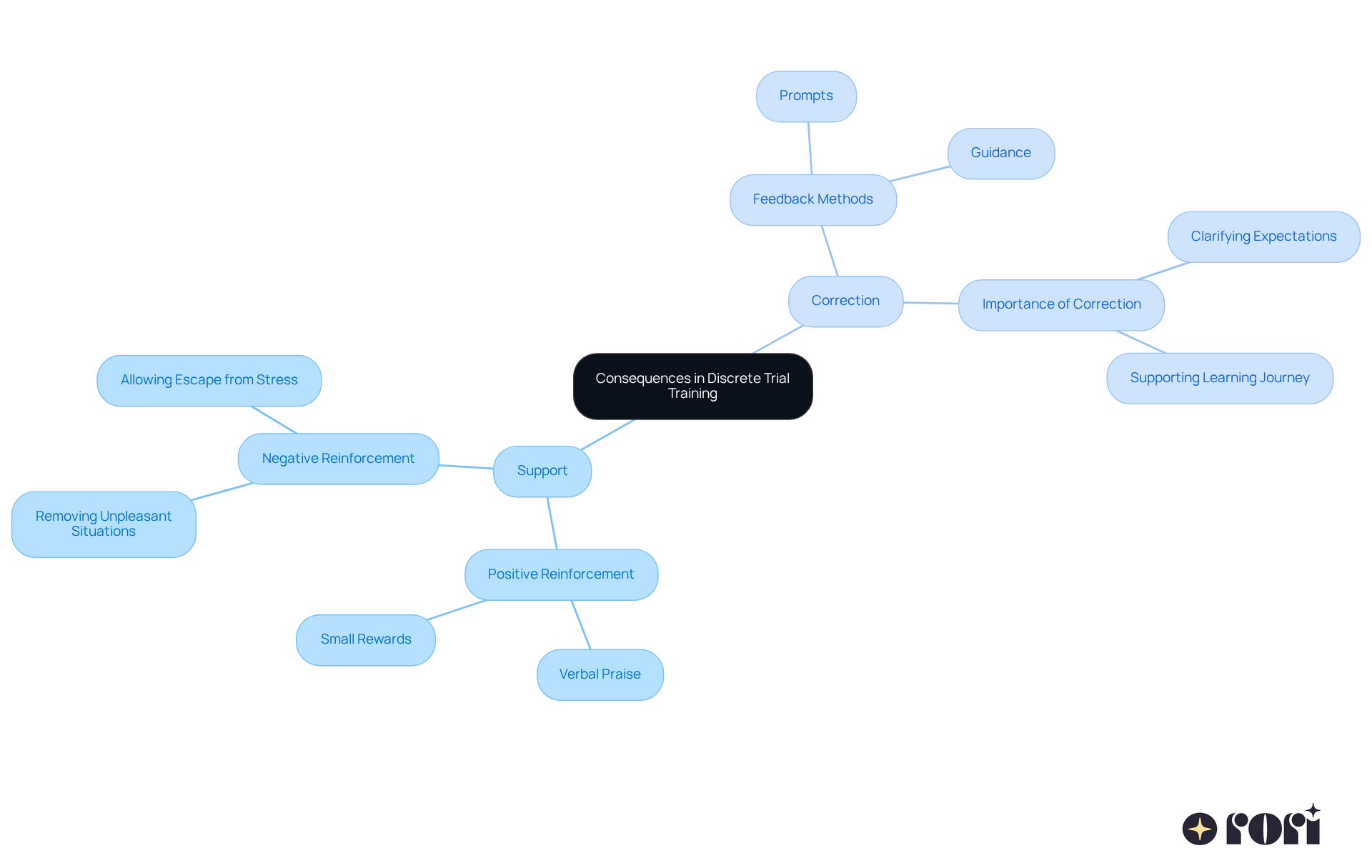
In (DTT), we can think of outcomes in two main categories: support and correction. When it comes to reinforcement, there are positive and negative forms.
- is all about offering a nice boost, like verbal praise or a small reward, right after a correct response. This really helps increase the chances of that action happening again! Research shows that positive encouragement is often more effective for changing behaviors than negative incentives or punishment, leading to great progress in for kids in .
- On the flip side, involves taking away something unpleasant when a desired action occurs. This encourages the child to keep up that . For example, a child might be allowed to leave a stressful situation once they show appropriate behavior, reinforcing that good action.
Correction is another key piece of the puzzle. It refers to the feedback given after an incorrect response, which might include prompts or guidance to help the learner find the right answer. are super important because they clarify expectations and support the learning journey.
Understanding what is a is vital for the . They directly influence how well desired behaviors are achieved. By consistently applying reinforcement and correction techniques, we create a that enhances the effectiveness of ABA therapy. Let’s explore this together and see how these strategies can make a difference!
Illustrate Practical Applications of Consequences in DTT
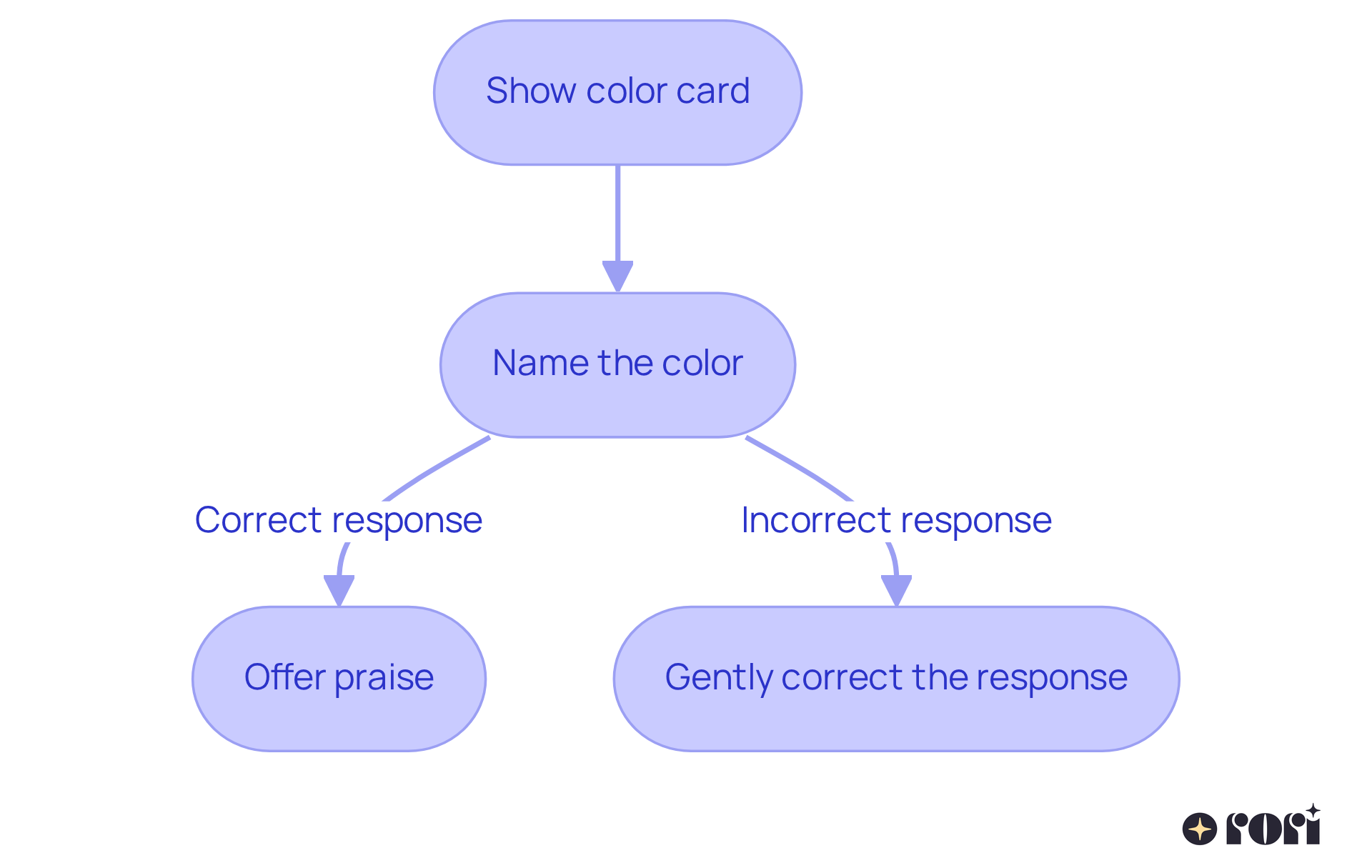
Practical applications of what is a consequence in can be observed in various teaching scenarios. For example, when teaching a young person to recognize colors, a therapist might show a color card (antecedent), prompting the individual to name the hue (action). If they respond correctly, the therapist offers enthusiastic praise, acting as that boosts the desired behavior and encourages the young learner to keep identifying colors accurately. 😊
On the flip side, if a young person misidentifies a color, the therapist gently corrects them by saying, ‘That’s close, but this is actually red.’ This not only helps the student learn the right response but also creates a . To understand what is a consequence in discrete trial instruction, it is important to consistently apply to effectively guide toward desired actions and skills.
Case studies show that these supportive strategies significantly enhance in children undergoing . This really highlights how can promote learning and development! However, it’s important to be mindful of potential pitfalls, like the ‘positive reinforcement trap.’ This occurs when too much attention is given to misbehavior, unintentionally reinforcing those unwanted actions.
By recognizing these challenges, therapists can create a more balanced and effective approach to . Meanwhile, empowered caregivers can make informed decisions that positively influence their child’s progress. Let’s explore this together! We’re here to !
Conclusion
Understanding the role of consequences in Discrete Trial Instruction (DTI) is key to making learning effective and fun! Consequences, whether they’re positive or corrective, are the outcomes that follow a learner’s response, and they play a big part in shaping future behaviors. By using these consequences thoughtfully, educators and therapists can really boost a child’s learning experience, helping them develop skills and encouraging the actions we want to see.
Let’s dive into some key insights! Positive reinforcement, like praise or rewards, makes it more likely that a behavior will happen again. On the other hand, corrective feedback helps guide learners toward the right responses. This combination not only helps kids pick up new skills but also builds their confidence and independence, especially for those with autism. And let’s not forget about the importance of collecting data to monitor progress and tweak strategies—this ensures that every child’s unique needs are met!
In conclusion, implementing consequences effectively in DTI is vital for promoting positive behavior change and enhancing learning outcomes. By recognizing and using different types of consequences, caregivers and educators can create a supportive environment that nurtures growth and development. Engaging with these strategies not only empowers children on their learning journey but also strengthens the partnership between educators and families. So, let’s explore this together and continue fostering success for our little ones!
Frequently Asked Questions
What is a consequence in Discrete Trial Instruction (DTI)?
A consequence in DTI refers to the outcome that follows a learner’s response after an antecedent is presented. This outcome can either reinforce or adjust the behavior, influencing future actions.
How does a positive consequence affect a learner in DTI?
A positive consequence, such as a favorable response after a correct action, encourages the learner and increases the likelihood of them repeating that preferred action.
What happens when a learner provides an incorrect response in DTI?
When a learner gives an incorrect response, a corrective outcome is provided to help guide the learner toward the right answer.
Why are consequences important in the learning experience?
Consequences are crucial because they directly impact whether an action is repeated, shaping the learner’s future behavior and skill development.
How do positive outcomes benefit young individuals with autism in DTI?
Positive outcomes promote skill development and foster independence and self-confidence, which are essential for achieving successful results in therapy.
Who creates the personalized plans for DTI, and what do they include?
Certified behavior analysts create personalized plans that include measurable goals and evidence-based methods tailored to each child’s unique needs.
Why is data collection important in DTI?
Data collection is essential for tracking outcomes and evaluating consequences in DTI, allowing for ongoing assessment and adjustments to treatment plans based on the learner’s progress.
Can you provide an example of DTI in practice?
An example of DTI in practice is teaching a young learner to recognize colors, where immediate reinforcement for correct responses can enhance engagement and learning.
How can parents get support for DTI strategies?
Parents seeking support can contact Rori Care for a free consultation to discuss how DTI strategies can be tailored to their child’s needs.