
Introduction
Navigating the world of Autism Spectrum Disorder (ASD) can feel overwhelming for many children, especially when it comes to making friends. The impact of autism on social development is significant, with many kids often feeling left out, struggling to connect with their peers. In this piece, we’ll explore some friendly strategies that caregivers and educators can use to help kids with autism build those important social skills and connect with others. Let’s think about how the right support can really change the game for these kids!
Understand Autism and Its Impact on Social Development
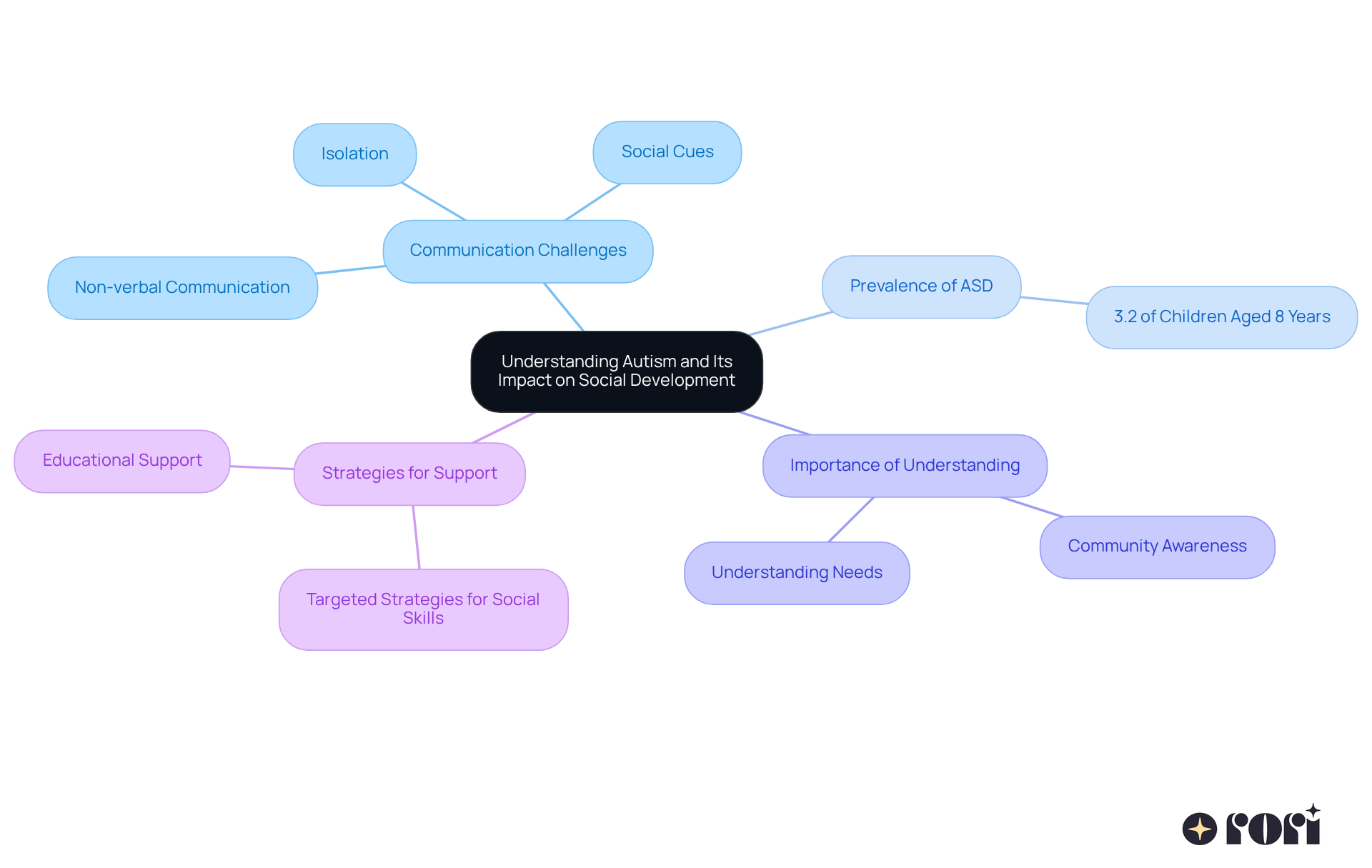
Have you ever watched your child struggle to connect with others, feeling like they’re on the outside looking in? Autism Spectrum Disorder (ASD) can make communication and interaction really tough, which can hold back their social development. Kids with developmental differences often find it tough to read social cues, join in conversations, and build meaningful friendships. Research shows that these challenges often come from how kids process social cues differently, leading to confusion about social norms and expectations.
For instance, many kids with autism have a hard time with non-verbal communication. They might avoid eye contact or miss out on facial expressions. This can leave them feeling isolated and frustrated, especially during playtime when they want to connect with their peers. Did you know that around 3.2% of children aged 8 years are recognized with ASD? That’s a significant number, highlighting just how common these communication challenges are.
Christine Ladd-Acosta, PhD, vice director of the Wendy Klag Center for Autism and Developmental Disabilities, emphasizes the importance of understanding this condition in our communities. She says, “We need to understand who in our community has this condition to better comprehend their needs.” By grasping these elements of developmental disorders, caregivers and educators can come up with effective strategies to help kids develop their social skills.
At Rori Care, our clinical leadership team is made up of skilled, empathetic experts who truly appreciate neurodiversity. They work every day to help young individuals find success. By recognizing the unique challenges faced by kids with developmental disorders, caregivers can improve their efforts in supporting social development in individuals with autism through targeted strategies. It’s also important to note that 8% of autistic students in the U.S. don’t finish high school, which shows how communication challenges can impact educational outcomes.
By understanding these challenges, we can help create a supportive environment for our kids. Let’s explore this together and make a difference in their lives!
Implement Effective Strategies for Social Skills Development
Many parents worry about their child’s ability to connect with others, especially in social situations. To effectively support social skills development in children with autism, several impactful strategies can be employed:
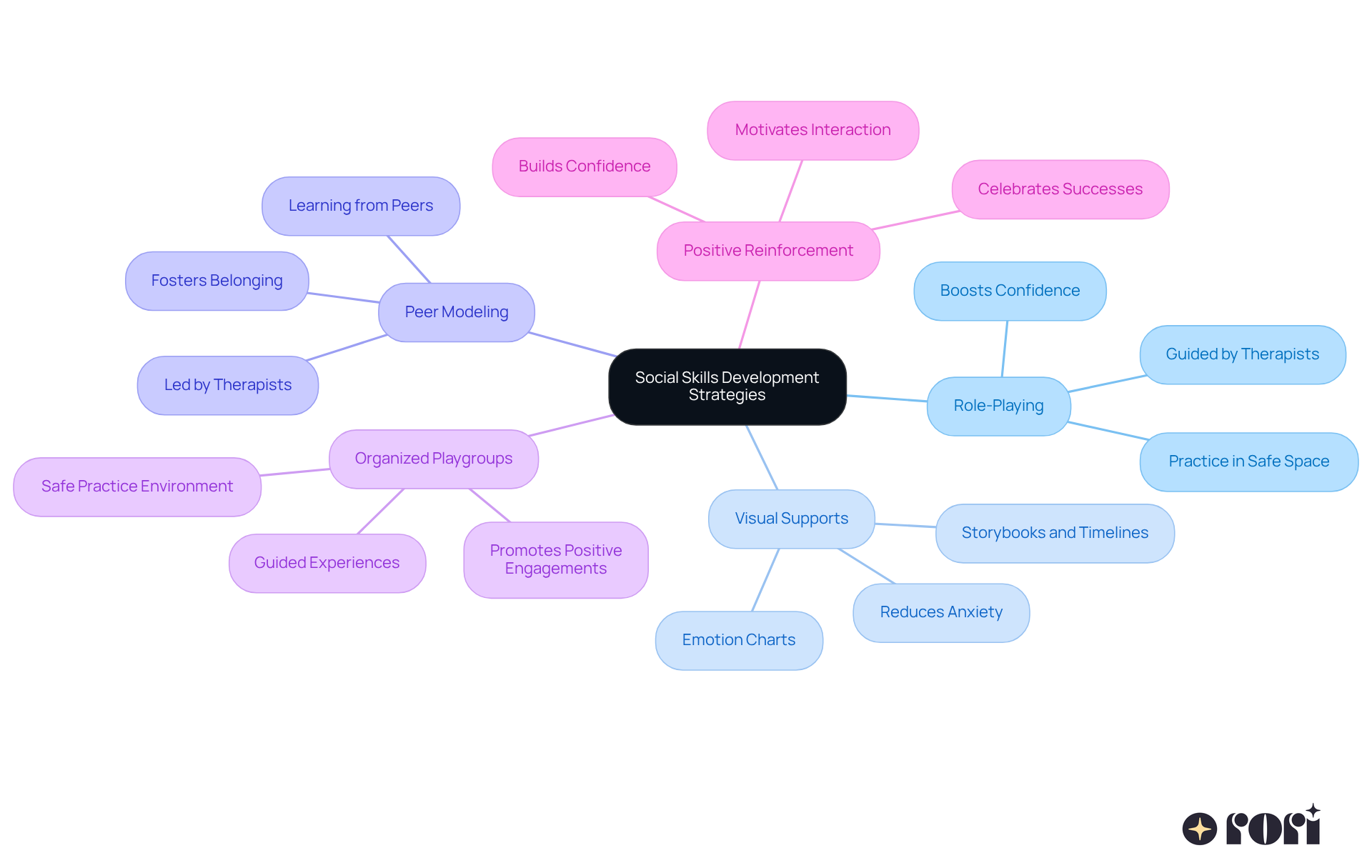
- Role-Playing: Getting kids involved in role-playing can be a fun way for them to practice social interactions in a safe space. This method helps them grasp cues and responses across different scenarios, boosting their confidence in real-life engagements. Trained therapists can guide these sessions to ensure constructive feedback and support.
- Visual Supports: Using visual tools like storybooks, timelines, and emotion charts can really help kids understand what’s expected in social situations. These aids offer clear, tangible examples of suitable behaviors, minimizing confusion and anxiety during engagements. In a group therapy setting, therapists can assist young individuals in interpreting these visuals in context, reinforcing learning.
- Peer Modeling: Encouraging kids to hang out with peers who are great at socializing gives them someone to look up to and learn from. Peer-mediated interventions, often led by skilled therapists, have shown effectiveness in improving interaction and communication skills, fostering a sense of belonging and community.
- Organized Playgroups: Setting up playgroups with simple rules can create a safe space for kids to practice their social skills. These organized settings, supported by skilled therapists, help reduce anxiety and promote positive engagements, enabling young individuals to learn through guided experiences in a nurturing group environment.
- Positive Reinforcement: Praising kids when they try to interact can really motivate them to keep connecting with others. Celebrating small successes builds confidence and encourages ongoing efforts to connect with peers. As Haley Moss asserts, “Different isn’t bad. It’s simply distinct, and that can be remarkable.”
By applying these strategies, caregivers can create significant opportunities for supporting social development in individuals with autism and helping them develop essential social skills. With the right support, your child can thrive in social settings, building friendships that last a lifetime.
Utilize Personalized Approaches and Technology in ABA Therapy
Navigating the world of ABA therapy can be a bit daunting, especially when every child has their own unique needs. Personalization in ABA therapy is key to addressing those needs effectively. Here are some friendly tips for integrating personalized approaches and technology:
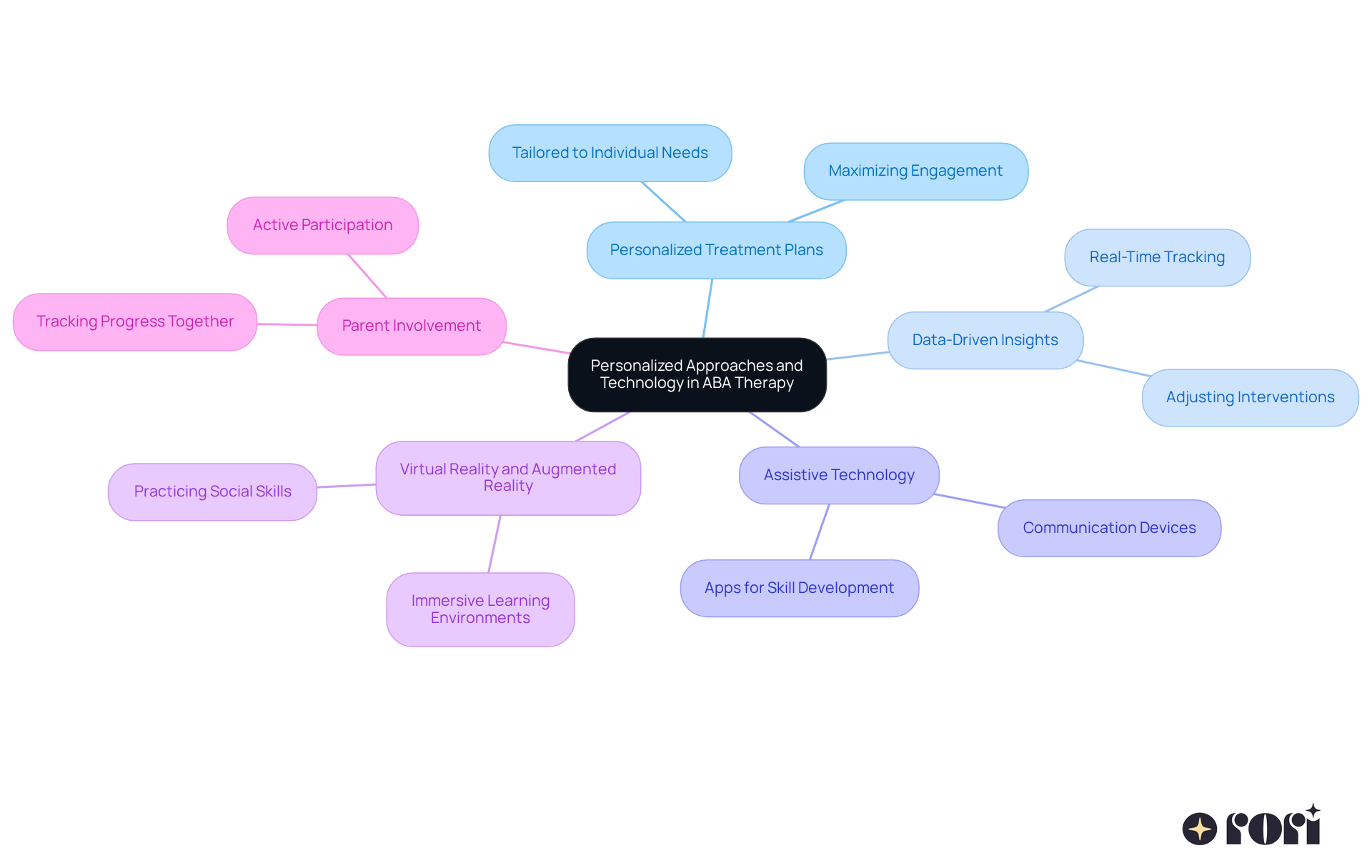
- Personalized Treatment Plans: Think of treatment plans as a tailored outfit for your child-customized to fit their strengths, challenges, and preferences. This way, the interventions feel relevant and engaging, maximizing their potential for success.
- Data-Driven Insights: Using advanced data collection tools can be a game-changer! They help you monitor progress and adjust interventions as needed. With real-time tracking of behaviors, you can make timely modifications to treatment plans that enhance effectiveness.
- Assistive Technology: Incorporating assistive technologies, like communication devices and apps, can really boost your child’s communication skills. These tools offer different ways for them to express themselves and connect with others, which is so important for building relationships.
- Virtual Reality (VR) and Augmented Reality (AR): Have you ever thought about using VR and AR? They can create immersive, interactive situations where your child can practice social skills in a safe environment. These technologies mimic real-life scenarios, helping them build confidence and interpersonal skills.
- Parent Involvement: Your role is vital! Encourage active participation in the therapy process by using technology to share insights and track your child’s progress. This collaboration creates a supportive environment and reinforces learning at home, which is crucial for effective therapy outcomes.
By embracing personalized strategies, you’re not just helping your child; you’re opening doors to a brighter future together.
Create a Supportive Environment for Social Interaction
Many parents worry about how their children will connect with others, especially when developmental disorders are involved. Creating a warm and nurturing space is so important! Here are some key strategies to consider:
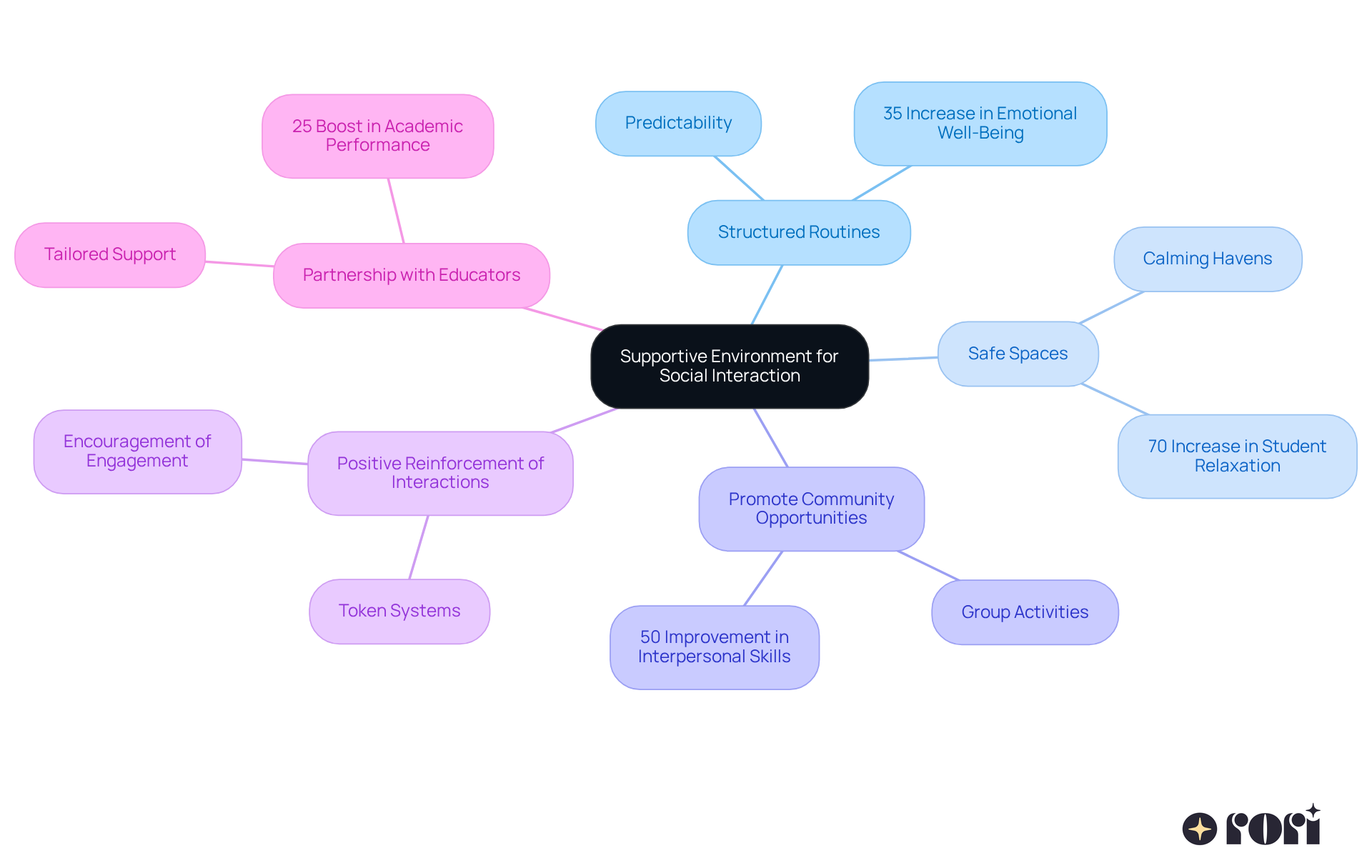
- Structured Routines: Kids with autism really thrive when they have a routine to follow. It gives them predictability and helps ease anxiety. For example, studies show that having a consistent daily routine can lead to a 35% increase in emotional well-being for these youngsters.
- Safe Spaces: It’s essential to have areas where children can retreat if they feel overwhelmed. Think of these safe spaces as calming havens, equipped with sensory tools like weighted blankets and fidget toys. Schools with sensory rooms have seen a 70% increase in student relaxation, proving how effective these environments can be in reducing anxiety.
- Promote Community Opportunities: Let’s create chances for kids to engage through fun activities, like group games or community events. Group therapy focused on interpersonal skills, led by qualified therapists, can really enhance connections and communication. In fact, community initiatives have shown a 50% improvement in interpersonal skills among participants over six months!
- Positive Reinforcement of Interactions: Celebrating positive interactions is key! When we acknowledge these moments, it encourages kids to keep engaging with their peers. Simple techniques like token systems can provide tangible rewards for good behavior, making them feel accomplished and motivated.
- Partnership with Educators: Working closely with teachers and school staff is vital to ensure that our kids’ social needs are met. When parents and educators team up, it can lead to tailored support that really enhances classroom interactions. Schools that actively involve parents often see a 25% boost in academic performance, highlighting the power of a united approach.
With the right support, particularly in supporting social development in individuals with autism, your child can thrive socially and build meaningful connections. Remember, Applied Behavior Analysis (ABA) is a fantastic therapy that adapts to each child’s unique needs, helping them grow and develop in their own way. Let’s explore this together!
Conclusion
Navigating the world of Autism Spectrum Disorder (ASD) can feel overwhelming for parents, but understanding it is the first step toward helping our kids thrive. By recognizing the unique challenges these children face in communication and social interactions, we can implement effective strategies that promote meaningful connections. With the right support, children can truly flourish socially and build lasting friendships.
Let’s talk about some key strategies that can really help!
- Role-playing
- Using visual supports
- Organizing playgroups
These are just a few ways to boost social skills. Plus, integrating personalized approaches and technology within ABA therapy can significantly improve communication and social engagement. Creating a supportive environment with structured routines and safe spaces ensures that children with autism feel secure and encouraged to interact with their peers.
At the end of the day, supporting our kids with autism is a team effort-parents, teachers, and therapists all play a part! By embracing these best practices and fostering an inclusive atmosphere, we can all contribute to building a brighter future for children on the spectrum. By taking these steps today, we’re not just helping our children; we’re creating a community where they can truly belong.
Frequently Asked Questions
What is Autism Spectrum Disorder (ASD)?
Autism Spectrum Disorder (ASD) is a developmental disorder that affects communication and interaction, making it challenging for individuals to connect with others and develop social skills.
How does ASD impact social development in children?
Children with ASD often struggle to read social cues, join conversations, and build meaningful friendships, which can hinder their social development and lead to feelings of isolation and frustration.
What are some common communication challenges faced by children with autism?
Many children with autism have difficulties with non-verbal communication, such as avoiding eye contact and missing facial expressions, which can complicate their social interactions.
What percentage of children are recognized with ASD?
Approximately 3.2% of children aged 8 years are recognized as having Autism Spectrum Disorder.
Why is it important to understand autism in communities?
Understanding autism is crucial for recognizing the needs of individuals with the condition, which can help caregivers and educators develop effective strategies to support social skill development.
What role does Rori Care play in supporting individuals with autism?
Rori Care’s clinical leadership team consists of skilled experts who appreciate neurodiversity and work to help young individuals with autism find success by addressing their unique challenges.
What is the impact of communication challenges on educational outcomes for autistic students?
Communication challenges can significantly affect educational outcomes, as evidenced by the fact that 8% of autistic students in the U.S. do not finish high school.
How can caregivers support the social development of children with autism?
Caregivers can improve their support efforts by recognizing the unique challenges faced by children with developmental disorders and implementing targeted strategies to foster social skills.
List of Sources
- Understand Autism and Its Impact on Social Development
- Data and Statistics on Autism Spectrum Disorder (https://cdc.gov/autism/data-research)
- Autism Stats You Should Know – apricott ABA (https://apricott.com/resources/autism-stats)
- Autism statistics and facts | Autism Speaks (https://autismspeaks.org/autism-statistics-asd)
- Is There an Autism Epidemic? | Johns Hopkins Bloomberg School of Public Health (https://publichealth.jhu.edu/2025/is-there-an-autism-epidemic)
- Autism Diagnosis Among US Children and Adults, 2011-2022 (https://jamanetwork.com/journals/jamanetworkopen/fullarticle/2825472)
- Implement Effective Strategies for Social Skills Development
- Inspirational ABA and Autism Quotes – Mrs. Moe’s Modifications (https://mrsmoesmodifications.com/inspirational-aba-and-autism-quotes)
- Pilot Study of a Novel Role-Playing Game-Based Social Skills Intervention for Autistic Adolescents – Journal of Developmental and Physical Disabilities (https://link.springer.com/article/10.1007/s10882-026-10058-8)
- The Role of Visual Supports in Enhancing Learning for Autism | Advanced Autism Services (https://advancedautism.com/post/the-role-of-visual-supports-in-enhancing-learning-for-autism)
- Quotes About Autism – Arms Wide Open ABA Therapy (https://armswideopenaba.com/blog/quotes-about-autism)
- Utilize Personalized Approaches and Technology in ABA Therapy
- Success Rates of ABA Therapy | Advanced Autism Services (https://advancedautism.com/post/success-rates-of-aba-therapy)
- Applied Behavior Analysis (ABA) Statistics: Data, Effectiveness, and Evidence-Based Practices (https://nexoaba.com/applied-behavior-analysis-statistics)
- The Numbers Don’t Lie: Revealing Autism Therapy Statistics | Above and Beyond Therapy (https://abtaba.com/blog/autism-therapy-statistics)
- Data-driven, client-centric applied behavior analysis treatment-dose optimization improves functional outcomes – PMC (https://pmc.ncbi.nlm.nih.gov/articles/PMC9672611)
- Success Rates of ABA Therapy – Up & Up ABA (https://upandupaba.com/faqs-resources/success-rates-of-aba-therapy)
- Create a Supportive Environment for Social Interaction
- Why Is Routine Important for Autism (https://riseupforautism.com/blog/autism-and-routine)
- The Importance of Routine and Structure in Autism Management (https://royalpediatrics.net/blog/1215119-the-importance-of-routine-and-structure-in-autism-management)
- Uncovering the Benefits of Safe Spaces for Autistic Learning (https://mahfaa.com/post/uncovering-the-benefits-of-safe-spaces-for-autistic-learning)
- The Importance of Routine and Structure for Children with Autism (https://corridorpd.com/blog/1278408-the-importance-of-routine-and-structure-for-children-with-autism)
- The Importance of Structure for Kids with Autism (https://crossrivertherapy.com/articles/autism-and-the-importance-of-structure)