

Introduction
Understanding the principles of reinforcement in Applied Behavior Analysis (ABA) is crucial for parents who want to nurture positive behaviors in their children. 😊 This guide takes a closer look at the core concepts of reinforcement, showing how both positive and negative strategies can be effectively used to encourage desired actions.
However, many parents encounter challenges when trying to implement these techniques consistently and effectively. So, how can they navigate these complexities to ensure their child thrives? Let’s explore this together!
Define Reinforcement in ABA: Core Concepts
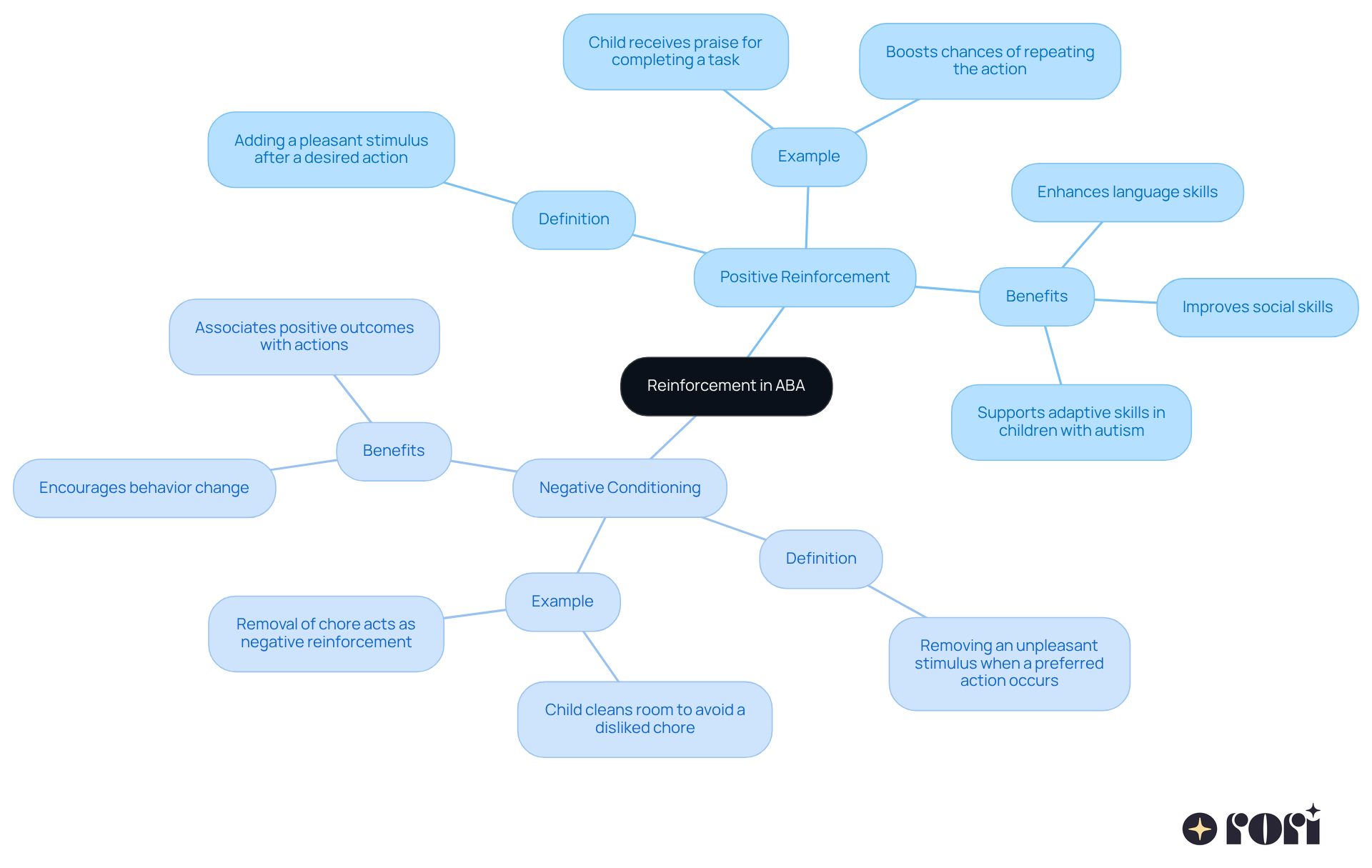
To , one must understand that it is a key process that helps encourage or strengthen the actions we want to see through specific rewards or consequences. Let’s break this down into two main ideas:
- : This is all about adding something nice after a desired action, which makes it more likely that the action will happen again. For instance, when a child receives praise or a small treat for completing a task, it boosts the chances they’ll do it again in the future. Research shows that can greatly enhance language, social, and adaptive skills in children with autism, supporting their overall growth.
- : On the flip side, is about removing something unpleasant when a preferred action occurs, which also encourages that action to be repeated. For example, if a child cleans their room to avoid a chore they dislike, the removal of that chore acts as negative reinforcement. This method can effectively change behavior, as kids learn to associate positive outcomes with their actions.
For parents managing behavior in children with autism, it is vital to understand these basic concepts that help . By using thoughtfully, parents can create an environment that nurtures positive and fosters their child’s growth and independence.
Additionally, incorporating personalized support and clear progress tracking in ABA programs allows parents to closely monitor their child’s development. Flexible approaches ensure that interventions remain effective and responsive to each child’s evolving needs. Plus, when caregivers are educated, they can provide the right , leading to better decision-making and improved behavioral outcomes. Ultimately, effectively implementing these strategies can lead to meaningful improvements in a child’s behavior and overall well-being. As Dr. Temple Grandin, a well-known advocate for , wisely said, “We can’t cure Autism, but we can alleviate some of the suffering.” This highlights how important it is to understand and apply these principles to define reinforcement in ABA. Let’s explore this together!
Explore Types of Reinforcement: Positive and Negative
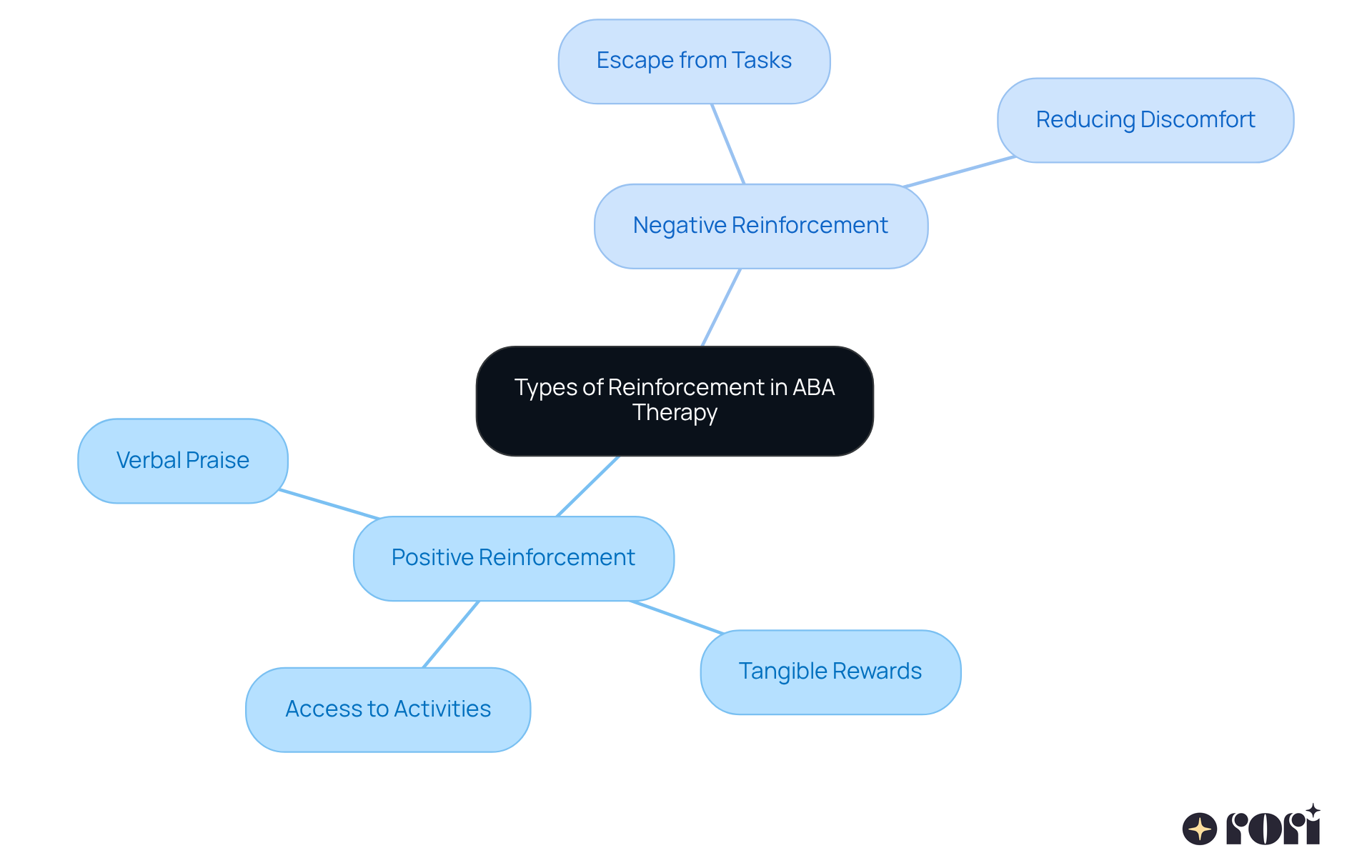
To , it is important to recognize that reinforcement in we all want to see in our children. It’s helpful to think of it in two main categories:
-
: This is a popular method where we offer a reward or a positive outcome right after a desired action occurs. For instance, consider these :
- Verbal Praise: Complimenting your child for sharing their toys can really reinforce that behavior and encourage them to do it again.
- : Think about offering stickers or small toys as incentives for completing homework. It makes the task more appealing!
- : Granting extra playtime after chores are finished links responsibility with enjoyable outcomes, making it a win-win.
-
: This one is often misunderstood. It’s not about punishment; rather, it involves removing an unpleasant condition to encourage compliance. Here are some relatable examples:
- : Imagine allowing your child to skip a chore if they finish their homework on time. This reinforces the importance of getting tasks done promptly.
- Reducing Discomfort: Picture turning off a loud noise when your child complies with a request. It creates a more pleasant environment for everyone.
By understanding how to , parents can effectively inspire their little ones and strengthen those positive actions. This nurturing approach fosters a learning environment where children can thrive. Plus, grasping how these strategies enhance caregiver support empowers parents to make informed choices, leading to . Let’s explore this together and see how these techniques can make a difference in your parenting journey!
Implement Reinforcement Strategies: Practical Steps for Parents
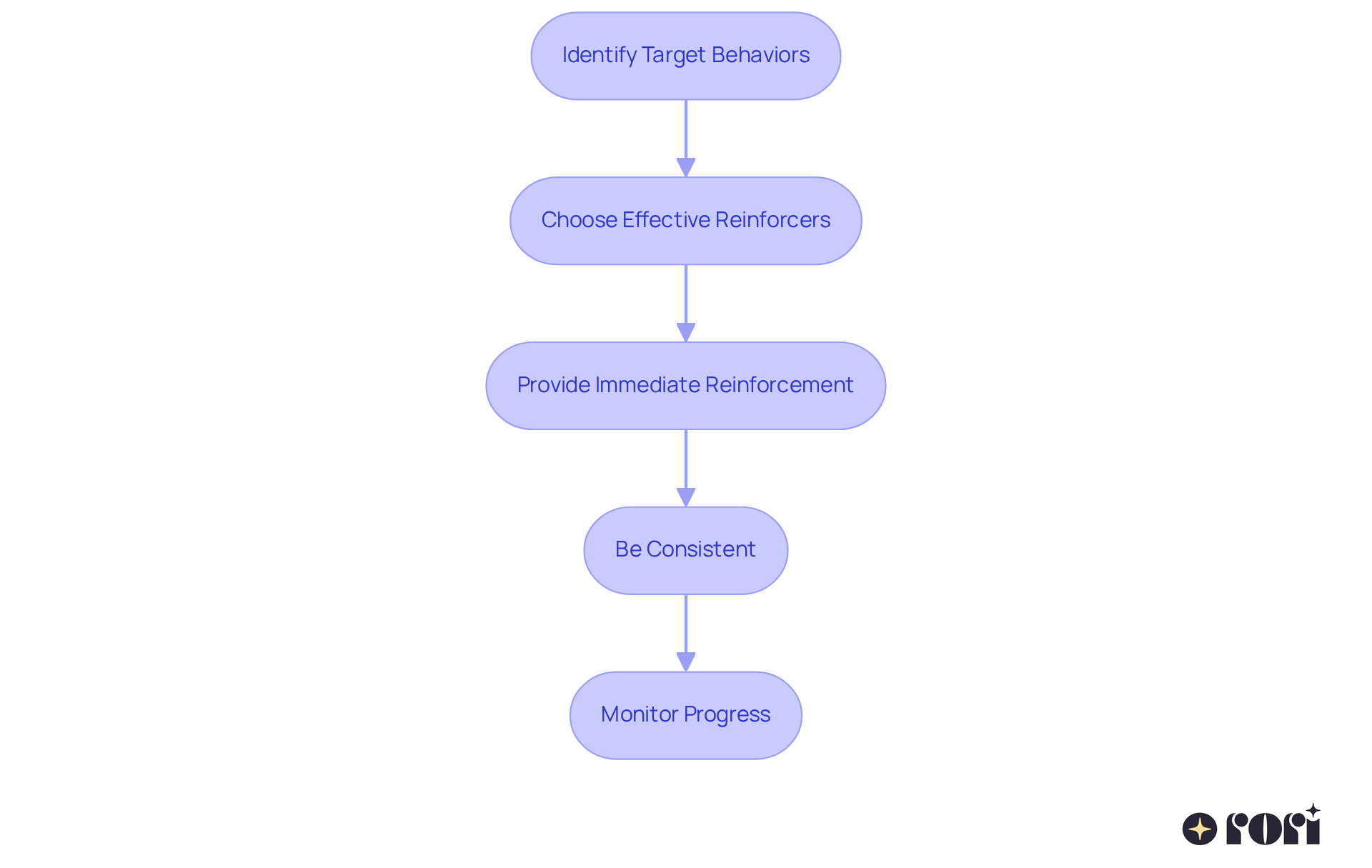
To effectively implement reinforcement strategies at home, parents can follow these practical steps:
- : First things first, figure out which behaviors you want to encourage. Maybe it’s completing homework or sharing toys. Getting clear on this helps you make informed choices that align with your child’s developmental goals.
- : Next, think about rewards that resonate with your child. This could be verbal praise, a favorite snack, or a bit of extra screen time. When you tailor reinforcers to their individual likes, you boost their effectiveness and support better decision-making, leading to improved behavior.
- : Timing is everything! Reinforce the desired action right after it happens. To , this helps create a strong connection between the action and the reward, increasing the chances that your child will repeat the behavior, which is great for their learning journey.
- : Consistency is key in reinforcement. At the beginning, reinforce the action every time it occurs, then gradually reduce the frequency as the behavior becomes more established. Research shows that to , offering praise at least three times more than corrective feedback is ideal for encouraging positive actions. This approach not only empowers you but also reduces stress.
- : Keep an eye on your child’s actions and how well your encouragement strategies are working. Adjust your approach as needed to ensure continued success. Studies suggest that can significantly boost children’s motivation and social skills, strengthening your role in their development.
By following these steps, you can create a nurturing environment that promotes positive behaviors and fosters learning. For example, parents who regularly praise their kids for completing chores often notice greater cooperation and responsibility in their children. Let’s explore this together and see how it can work for your family!
Troubleshoot Reinforcement Challenges: Tips for Success
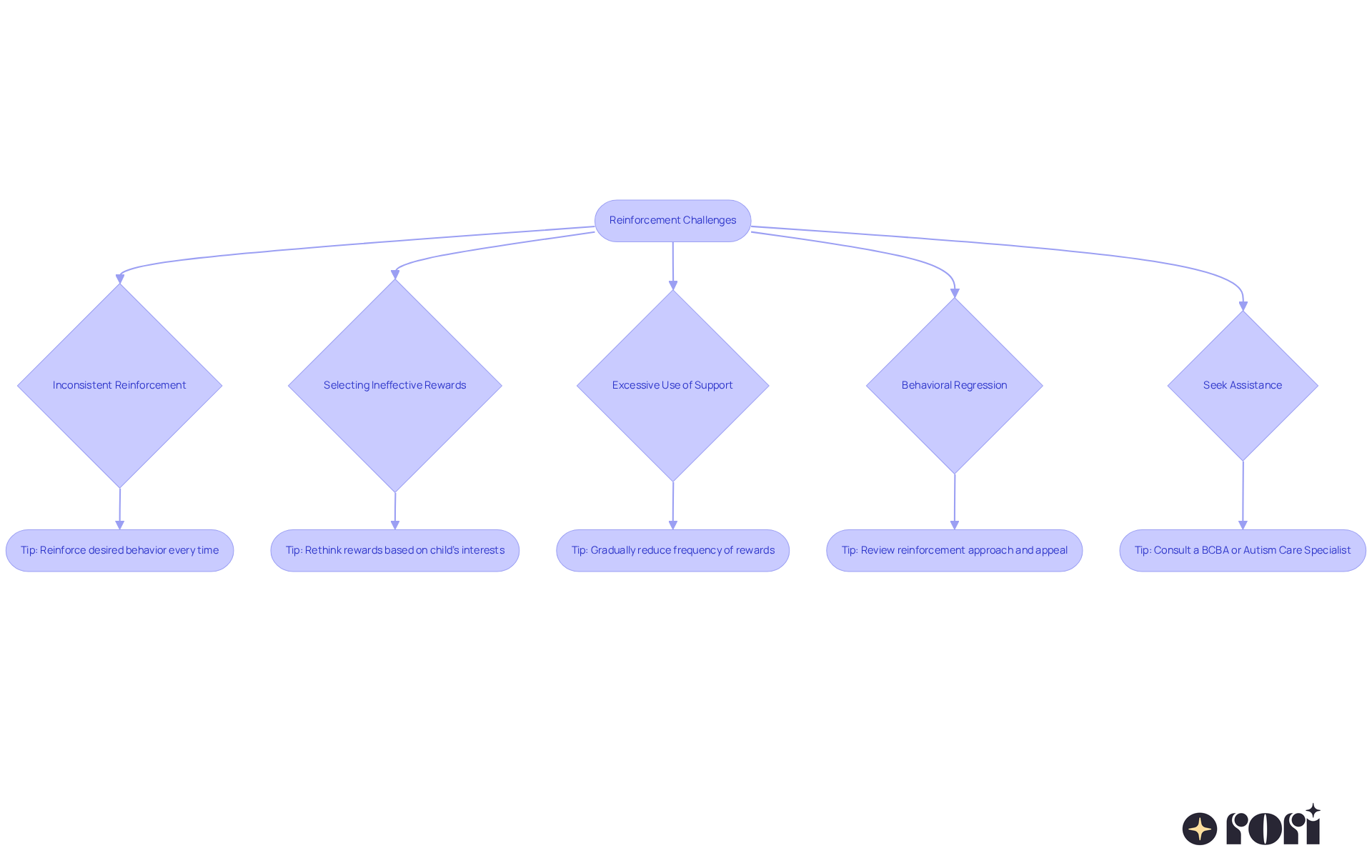
Even with the best strategies, parents can face some challenges when they seek to in their implementation. Let’s dive into some :
- : It can be confusing for kids when reinforcement is inconsistent. To start, make sure to reinforce the desired behavior every time it happens to create clarity.
- : If your child isn’t responding to the incentives, it might be time to rethink those rewards. Consider what truly excites or interests your child to ensure they are genuinely motivating.
- : Too much encouragement can actually lessen its impact. As your child’s behaviors become more established, gradually reduce the frequency of rewards to keep motivation high.
- : If you notice a previously reinforced action fading away, take a moment to review your reinforcement approach. Check if the reinforcer is still appealing and think about other factors that might be influencing the behavior.
- Seek Assistance: If you’re still facing difficulties, don’t hesitate to reach out to a or an Autism Care Specialist. They can provide and support tailored to your needs.
By tackling these challenges head-on, parents can significantly boost their effectiveness in using encouragement to support their child’s development. Research shows that 90% of individuals make notable progress when they fully implement the recommended hours of with active caregiver involvement. This highlights just how crucial it is to strategies that are consistent and effective. Let’s explore this together!
Conclusion
Understanding reinforcement in Applied Behavior Analysis (ABA) is crucial for parents who want to nurture positive behaviors in their children. By grasping the core concepts of both positive and negative reinforcement, caregivers can effectively encourage desired actions and create a supportive environment for growth. This knowledge empowers parents to implement tailored strategies that not only enhance behavioral outcomes but also contribute to their child’s overall development.
In this article, we’ve explored the various types of reinforcement, highlighting the importance of immediate and consistent application to strengthen desired behaviors. Key insights include:
- Identifying target behaviors
- Selecting effective reinforcers
- Monitoring progress to ensure success
Plus, troubleshooting common challenges, like inconsistent reinforcement and ineffective rewards, can help parents refine their approaches and keep their kids motivated.
Ultimately, the principles of reinforcement in ABA are powerful tools for parents navigating the complexities of behavior management. By actively engaging in these strategies, caregivers can significantly improve their child’s behavioral outcomes, leading to a more harmonious family dynamic and greater independence. Embracing these techniques not only nurtures individual growth but also reinforces the importance of understanding and applying effective behavioral strategies in everyday life.
Let’s explore this together! We’re here to help you every step of the way!
Frequently Asked Questions
What is reinforcement in Applied Behavior Analysis (ABA)?
Reinforcement in ABA is a key process that encourages or strengthens desired actions through specific rewards or consequences.
What are the two main types of reinforcement in ABA?
The two main types of reinforcement are positive reinforcement, which involves adding something pleasant after a desired action, and negative conditioning, which involves removing something unpleasant when a preferred action occurs.
Can you provide an example of positive reinforcement?
An example of positive reinforcement is when a child receives praise or a small treat for completing a task, which increases the likelihood that the child will repeat the action in the future.
How does negative conditioning work in reinforcement?
Negative conditioning works by removing an unpleasant stimulus when a desired action occurs. For example, if a child cleans their room to avoid a disliked chore, the removal of that chore serves as negative reinforcement.
Why is it important for parents to understand reinforcement techniques in managing behavior for children with autism?
Understanding reinforcement techniques helps parents create an environment that nurtures positive behavior changes and fosters their child’s growth and independence.
How can personalized support and progress tracking benefit ABA programs?
Personalized support and clear progress tracking allow parents to closely monitor their child’s development, ensuring that interventions remain effective and responsive to each child’s evolving needs.
What is the role of caregiver education in supporting children with autism?
Educated caregivers can provide the right support at home, leading to better decision-making and improved behavioral outcomes for their children.
What is the overall goal of effectively implementing reinforcement strategies in ABA?
The goal is to achieve meaningful improvements in a child’s behavior and overall well-being, as emphasized by advocates for autism awareness.
List of Sources
- Define Reinforcement in ABA: Core Concepts
- adinaaba.com (https://adinaaba.com/post/understanding-reinforcement-a-key-aba-concept-for-parents)
- 81 ABA Therapy Statistics You Need to Know – apricott ABA (https://apricott.com/resources/aba-therapy-statistics)
- Autism Therapy Statistics (https://supportivecareaba.com/statistics/autism-therapy-statistics)
- Inspirational ABA and Autism Quotes – Mrs. Moe’s Modifications (https://mrsmoesmodifications.com/inspirational-aba-and-autism-quotes)
- Explore Types of Reinforcement: Positive and Negative
- 81 ABA Therapy Statistics You Need to Know – apricott ABA (https://apricott.com/resources/aba-therapy-statistics)
- Autism Therapy Statistics | Discovery ABA (https://discoveryaba.com/aba-therapy/autism-therapy-statistics)
- Autism Therapy Statistics (https://supportivecareaba.com/statistics/autism-therapy-statistics)
- rori.care (https://rori.care/post/10-powerful-ableism-quotes-to-inspire-change-and-awareness)
- Implement Reinforcement Strategies: Practical Steps for Parents
- moveupaba.com (https://moveupaba.com/blog/how-to-get-autistic-kids-to-listen)
- positivepsychology.com (https://positivepsychology.com/positive-reinforcement-psychology)
- Autism Therapy Statistics | Discovery ABA (https://discoveryaba.com/aba-therapy/autism-therapy-statistics)
- Autism Therapy: Key Statistics (https://ambitionsaba.com/resources/autism-therapy-statistics)
- Troubleshoot Reinforcement Challenges: Tips for Success
- goldenstepsaba.com (https://goldenstepsaba.com/resources/how-to-deal-with-autism-behavior-problems)
- 10 Positive Proud Autism Quotes to Inspire and Empower Parents – Rori Blog (https://rori.care/post/10-positive-proud-autism-quotes-to-inspire-and-empower-parents)
- Applied Behavior Analysis (ABA) | Autism Speaks (https://autismspeaks.org/applied-behavior-analysis)