

Introduction
Understanding social communication deficits can feel overwhelming for many families. Navigating the complexities of Applied Behavior Analysis (ABA) therapy is no small feat! This article is here to share effective strategies that not only enhance communication skills in children with autism but also empower caregivers to take an active role in the therapeutic process.
What happens when traditional methods just don’t seem to work? How can innovative techniques change the way children engage socially? By exploring core principles and targeted interventions, we’ll uncover actionable insights that can lead to meaningful improvements in your child’s social interactions. Let’s explore this together!
Understand the Core Principles of ABA Therapy
Applied Behavior Analysis (ABA) is built on some core principles that are super important for making a real difference in therapeutic settings. Let’s break them down:
- Reinforcement: This principle is all about by giving a reward afterward. For example, when a child successfully starts a conversation, they might get a compliment or a small treat. This not only reinforces that action but also encourages them to do it again!
- Prompting: Think of this as giving gentle nudges to help kids take the right steps. A therapist might use verbal cues to remind a child to say hello to their friends, making those social interactions a bit easier.
- Shaping: This technique involves gradually reinforcing behaviors that get closer to what we want. If a child struggles with making eye contact, the therapist might first celebrate any attempt to look at someone, slowly raising the bar as they improve.
- Generalization: This principle helps kids use their new skills in different places and situations. For instance, a child might practice greeting classmates during therapy and then use that skill at school.
Understanding these principles is key for both practitioners and families involved in . It helps everyone effectively to enhance communication skills in children with autism. Research shows that kids who engage in early, intensive [[ABA therapy for social communication deficits](https://rori.care/post/10-effective-approaches-for-promoting-executive-functioning-in-asd)](https://rori.care/post/10-powerful-differential-reinforcement-aba-examples-you-need-to-know)-typically around 25 to 40 hours a week-often see within just six months. Plus, using reinforcement methods, like , has proven to be a game-changer in helping kids learn and change behaviors.
At Rori Care, our qualified behavior analysts create that include clear goals and evidence-based strategies to encourage positive behavior changes and skill development. We continuously assess and to meet each child’s unique needs. And let’s not forget about ! It’s crucial for equipping parents with ABA principles and strategies, empowering them to support their child’s behavioral goals through active involvement and informed choices. By grasping these principles and their implications, families can truly enhance their child’s development using ABA therapy for social communication deficits.
Let’s explore this together! We’re here to help you every step of the way!

Implement Targeted ABA Techniques for Social Skills Development
To effectively tackle , offers some great techniques that can really help!
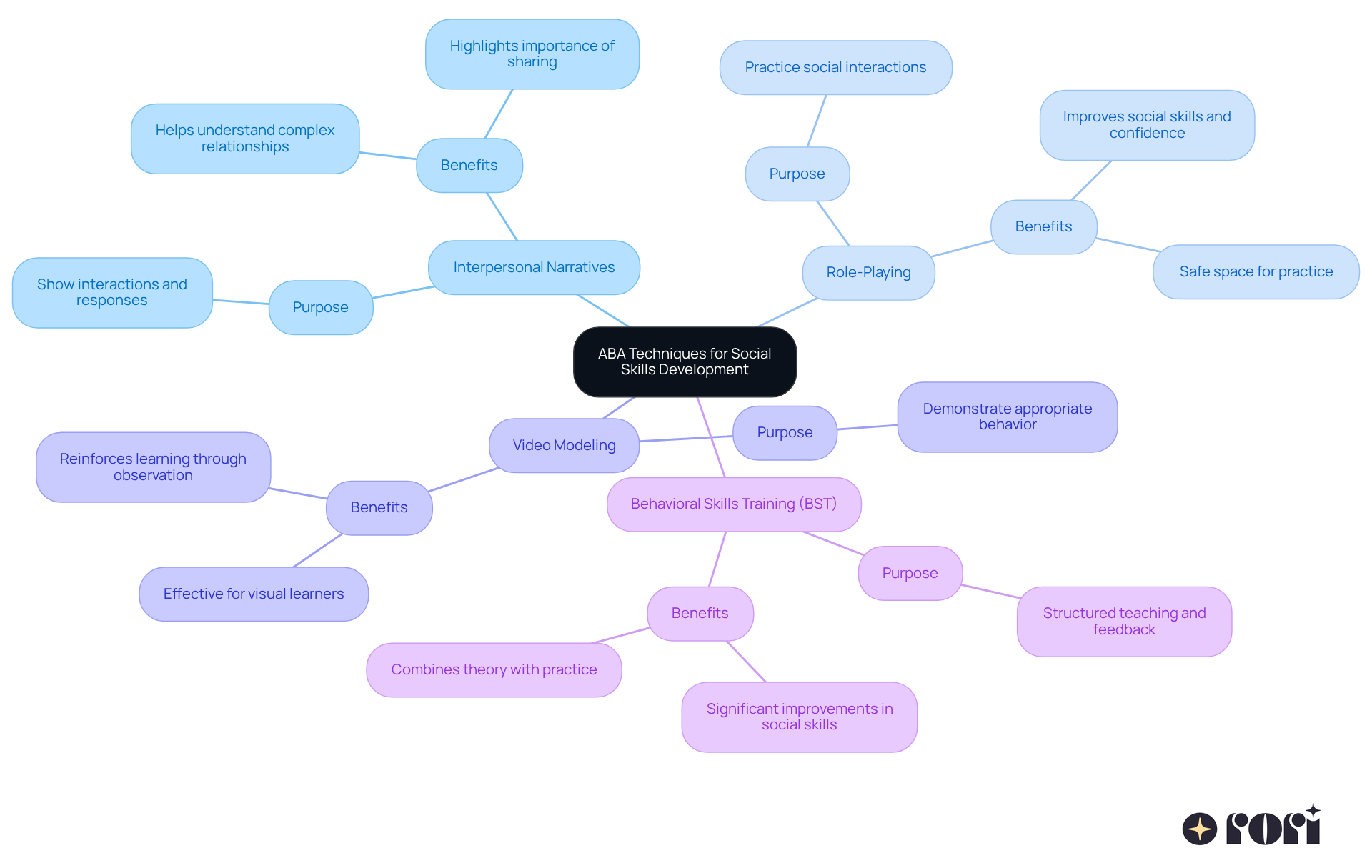
- : Think of these as short stories that show interactions and appropriate responses. They can help kids understand complex relationship ideas. For instance, a story about sharing toys can highlight the importance of taking turns, making it easier for them to connect with others.
- : This fun method lets kids practice social interactions in a safe space. Therapists can act out different scenarios, like starting and keeping a conversation going. This way, children can practice and boost their interaction skills. Research shows that role-playing can significantly improve both social skills and confidence, making it a fantastic addition to ABA therapy for social communication deficits!
- : Kids often learn best by watching their peers demonstrate appropriate social behavior. This technique is especially helpful for visual learners, as it provides clear examples of expected actions, reinforcing learning through observation.
- : This structured approach includes teaching, modeling, practicing, and giving feedback. For example, a therapist might show a child how to greet someone, let them practice, and then offer constructive feedback. Studies indicate that BST can lead to significant improvements in social skills, blending theory with real-life practice.
By using these targeted techniques, therapists can utilize ABA therapy for social communication deficits to create a that fosters , leading to better communication and interaction with peers. , showing their positive impact on the quality of life for youth with autism. Plus, when caregivers are educated about ABA principles, they can better support their children’s development, leading to improved behavioral outcomes and informed decision-making.
Let’s explore this together! We’re here to help you every step of the way!
Conduct Regular Assessments to Tailor ABA Interventions
Regular evaluations are super important for effective ! They help practitioners gather data on how a student is doing and tweak interventions when needed. Let’s dive into some :
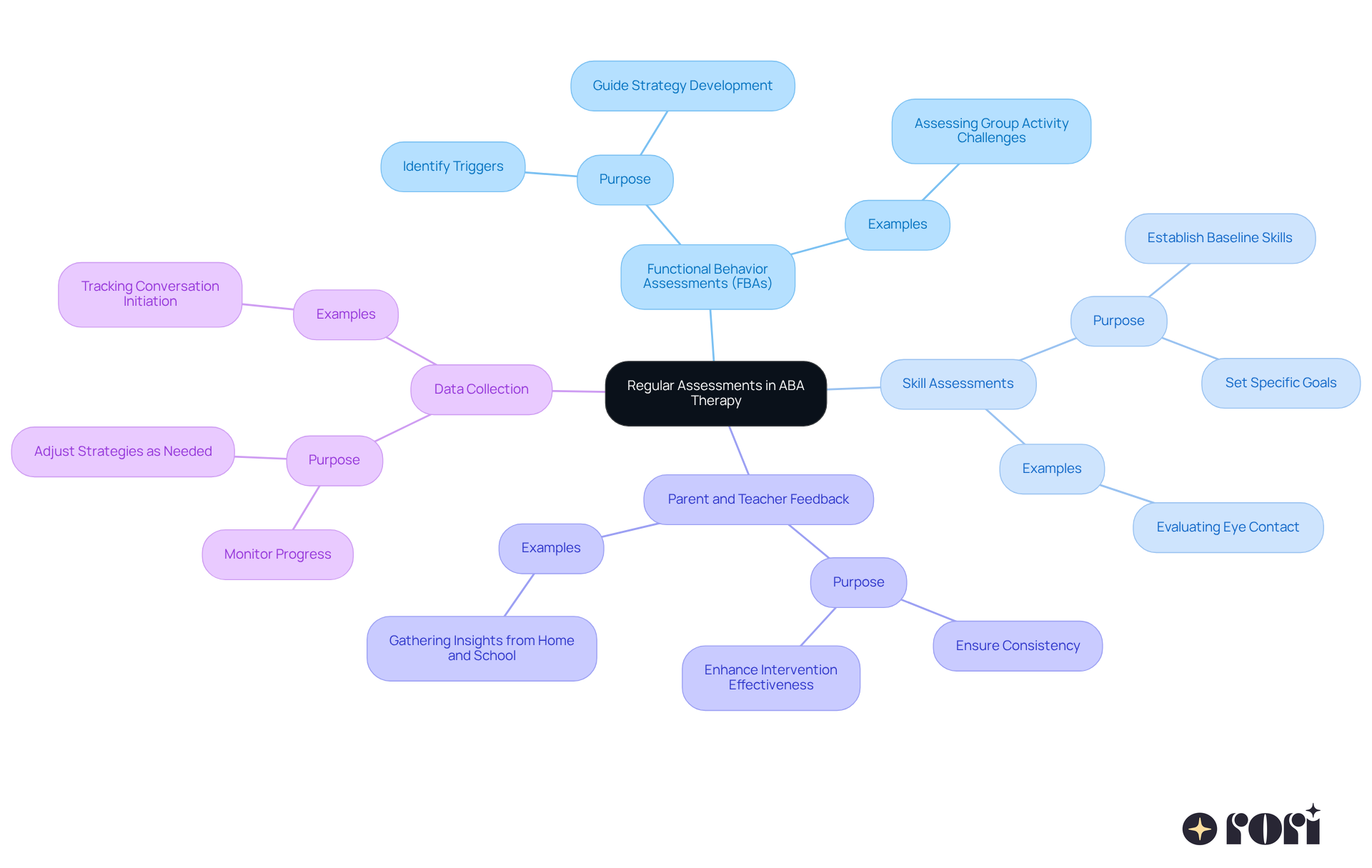
- : These evaluations help us figure out why certain behaviors happen. For example, if a young person struggles during group activities, an FBA can reveal what’s triggering those behaviors and guide us in creating effective strategies to address them.
- : By checking out a young person’s current social skills, we can set a baseline for tracking their progress. Take eye contact, for instance – evaluating this can help us set specific goals for improvement, making therapy more targeted and measurable.
- : Getting parents and teachers involved in the evaluation process is key! Their insights into the student’s behavior in different settings help create consistency in interventions at home and school, .
- : Keeping track of data during therapy sessions is crucial. For example, can show us how well our strategies are working and where we might need to make adjustments.
By regularly assessing progress, therapists can tailor interventions in ABA therapy for social communication deficits to fit each child’s unique needs. This , specifically through ABA therapy for social communication deficits, leads to . Let’s explore this together!
Engage Families in the ABA Process for Enhanced Outcomes
Family participation is so important in the ABA therapy process! It really helps to promote consistency and strengthens the skills kids learn in their daily lives. Here are some :
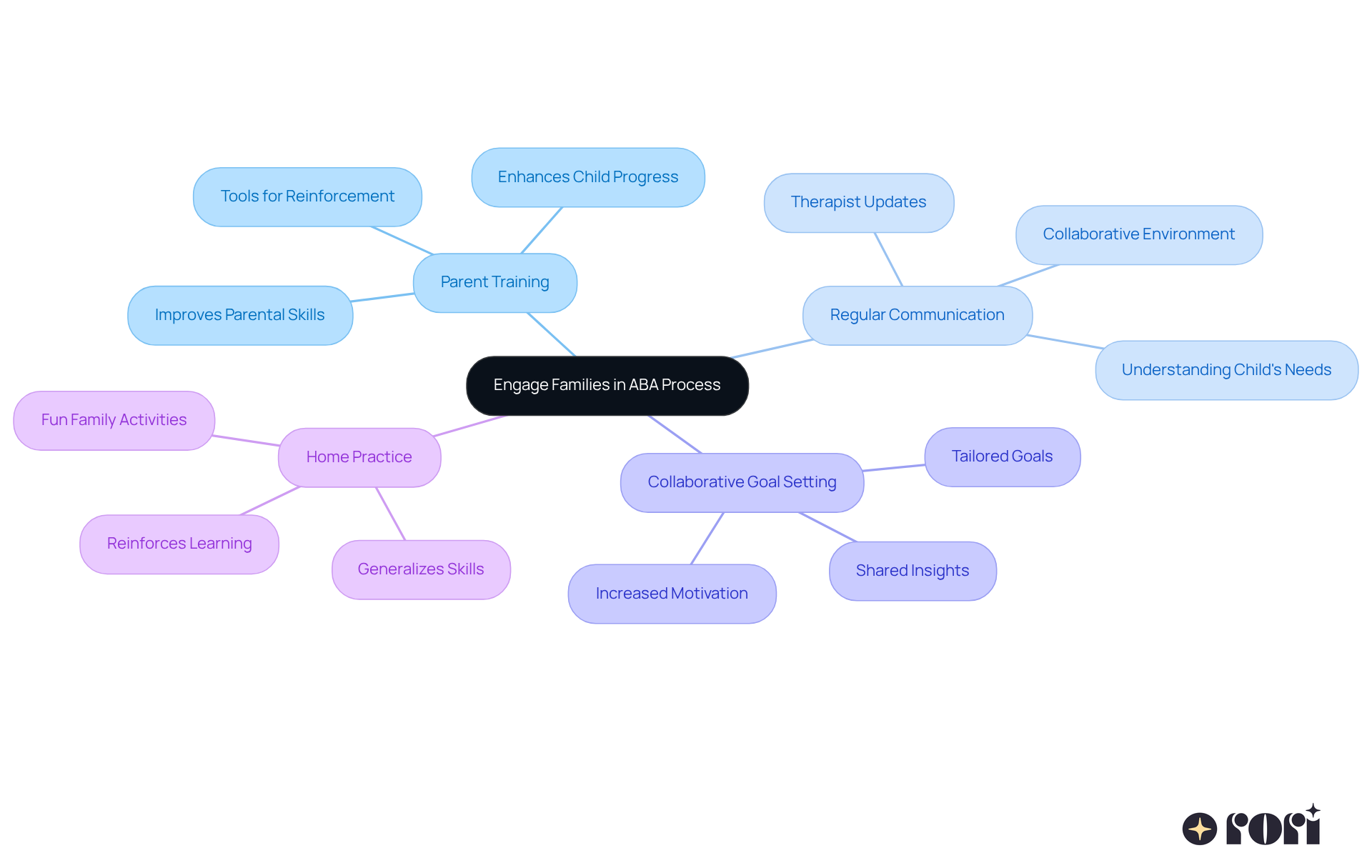
- : Training sessions give parents the tools they need to reinforce strategies at home. For instance, parents can learn how to use effectively, which can really boost their child’s progress!
- : Keeping the lines of communication open between therapists and families is key. Regular updates help parents understand how to best support their child’s development, creating a collaborative environment where everyone is on the same page.
- : When families are involved in setting goals, they can share insights about their child’s strengths and challenges. This teamwork ensures that goals are realistic and , which can really enhance motivation and engagement.
- : Encouraging families to and helps kids generalize what they’ve learned in different settings. For example, parents can create chances for their kids to practice greetings during family gatherings, making it a fun way to apply learned behaviors in real life.
By actively engaging families in the ABA therapy for , therapists can significantly . This leads to better social communication skills and overall development for children with autism when utilizing ABA therapy for social communication deficits. Let’s explore this together! We’re here to help you every step of the way!
Conclusion
Applied Behavior Analysis (ABA) therapy is a fantastic way to tackle social communication challenges, built on key principles that guide effective intervention. By focusing on reinforcement, prompting, shaping, and generalization, ABA therapy helps children with autism develop vital communication skills. It’s so important for both practitioners and families to understand these principles, as they create a collaborative environment that really enhances the learning experience.
This article shines a light on several targeted techniques that can make a real difference in improving social skills. Think of:
- Interpersonal narratives
- Role-playing
- Video modeling
- Behavioral skills training
Each of these methods creates a supportive space where children can practice and refine their social interactions, leading to better communication and engagement with their peers. Plus, regular assessments and family involvement really boost the effectiveness of ABA therapy, ensuring that interventions are tailored to meet each child’s unique needs while equipping families to support their child’s progress.
In conclusion, embracing effective ABA therapy strategies for social communication deficits is key to fostering meaningful growth in children with autism. By implementing evidence-based techniques and actively involving families in the therapeutic process, practitioners can truly make a lasting impact on the social skills and overall development of these children. Remember, the journey toward improved communication is collaborative and ongoing. With the right support and strategies, children can really thrive in their social interactions. Let’s explore this together!
Frequently Asked Questions
What is Applied Behavior Analysis (ABA) therapy?
Applied Behavior Analysis (ABA) therapy is a therapeutic approach that focuses on improving specific behaviors through systematic reinforcement and other techniques to enhance communication and social skills, particularly in children with autism.
What are the core principles of ABA therapy?
The core principles of ABA therapy include reinforcement, prompting, shaping, and generalization. These principles guide the application of ABA techniques to encourage desired behaviors and skills.
How does reinforcement work in ABA therapy?
Reinforcement involves boosting the chances of a desired action by providing a reward afterward. For example, when a child successfully engages in a behavior, such as starting a conversation, they may receive praise or a small treat, encouraging them to repeat the behavior.
What is prompting in the context of ABA therapy?
Prompting refers to providing gentle nudges or cues to help children take the right steps in social interactions. For instance, a therapist might verbally remind a child to greet their friends, facilitating smoother communication.
Can you explain the shaping technique in ABA therapy?
Shaping is a technique where behaviors that progressively get closer to the desired action are gradually reinforced. For example, if a child is learning to make eye contact, the therapist may first celebrate any attempt at looking at someone and then gradually raise the expectations as the child improves.
What does generalization mean in ABA therapy?
Generalization is the principle that helps children apply their new skills in various settings and situations. For example, a child might practice greeting classmates during therapy and then use that skill in real-life school situations.
How effective is early intensive ABA therapy for children with social communication deficits?
Research indicates that children who engage in early, intensive ABA therapy for social communication deficits-typically around 25 to 40 hours a week-often experience significant improvements in communication and social skills within just six months.
What role do behavior analysts play in ABA therapy?
Qualified behavior analysts create personalized plans that include clear goals and evidence-based strategies to encourage positive behavior changes and skill development. They continuously assess and adjust these plans to meet each child’s unique needs.
Why is caregiver education important in ABA therapy?
Caregiver education is crucial because it equips parents with ABA principles and strategies, empowering them to actively support their child’s behavioral goals and make informed choices in their development.
How can families enhance their child’s development using ABA therapy?
By understanding the core principles of ABA therapy and their implications, families can effectively apply these strategies to support their child’s development in communication and social skills.