
Introduction
Have you ever noticed how sharing a moment with your child-like pointing at a bird or watching a train pass-can spark joy? This simple act, known as joint attention, is a key building block for effective communication and social interaction in kids. It often starts in infancy and is especially crucial for children on the autism spectrum, as it sets the stage for language development and forming social bonds.
Yet, many educators find it challenging to nurture joint attention in the classroom. It leaves them wondering: what strategies can truly enhance this essential skill? In this article, we’ll explore practical techniques that not only promote joint attention but also enrich the overall learning experience. Together, we can pave the way for stronger social and cognitive growth in our children. Let’s dive in!
Define Joint Attention and Its Importance in Child Development
Joint awareness is all about that special connection between two people, where both are focused on the same object or event. It usually starts to blossom between 5-8 months of age and is super important for social interaction and communication. For kids with autism, can be a bit tricky, but it’s a key part of building language skills, social connections, and cognitive abilities.
Research shows that children who have strong skills are much more likely to develop as they grow. In fact, difficulties with shared focus can often be one of the , highlighting how crucial early intervention can be. Activities that promote shared focus, such as and , are effective for promoting in the classroom and can significantly boost cognitive and social development. Plus, recent studies suggest that enhancing shared focus not only helps with language development but also fosters problem-solving skills and emotional understanding.
At Rori Care, our clinical leadership team is all about neurodiversity and supporting youth. We empower caregivers with to help meet developmental goals. Here are some fun strategies you can try to enhance with your little one:
- : Play simple games that involve taking turns, like passing a ball back and forth, to encourage shared focus.
- : Choose books with captivating images and ask questions to get your child involved and focused on the story.
- Joint Activities: Work together on tasks that require cooperation, like putting together a puzzle, to foster mutual focus.
- : Use visual aids, like pictures or toys, to grab your child’s attention and promote shared engagement.
As Temple Grandin wisely said, ‘The most interesting people you’ll find are ones that don’t fit into your average cardboard box.’ So, let’s prioritize to improve developmental outcomes for our kids on the autism spectrum. We’re here to help you every step of the way!

Implement Effective Techniques to Enhance Joint Attention Skills
To enhance , educators can use some effective techniques rooted in . This personalized approach adapts to each child’s unique needs and is especially beneficial for individuals with , ADHD, and .
- Follow the Youngster’s Lead: Start by observing what interests the kids and join in their activities. This not only encourages them to share their focus with you but also fosters a connection that’s crucial for in the classroom.
- Use : Incorporate visual aids like pictures or objects to guide their focus. For example, showing an image of a toy while discussing it can really capture a child’s interest and enhance their learning experience.
- Model : Demonstrate by pointing out objects or events and encouraging kids to follow your gaze. Use exaggerated gestures and vocalizations to make the activity more engaging-this is key for .
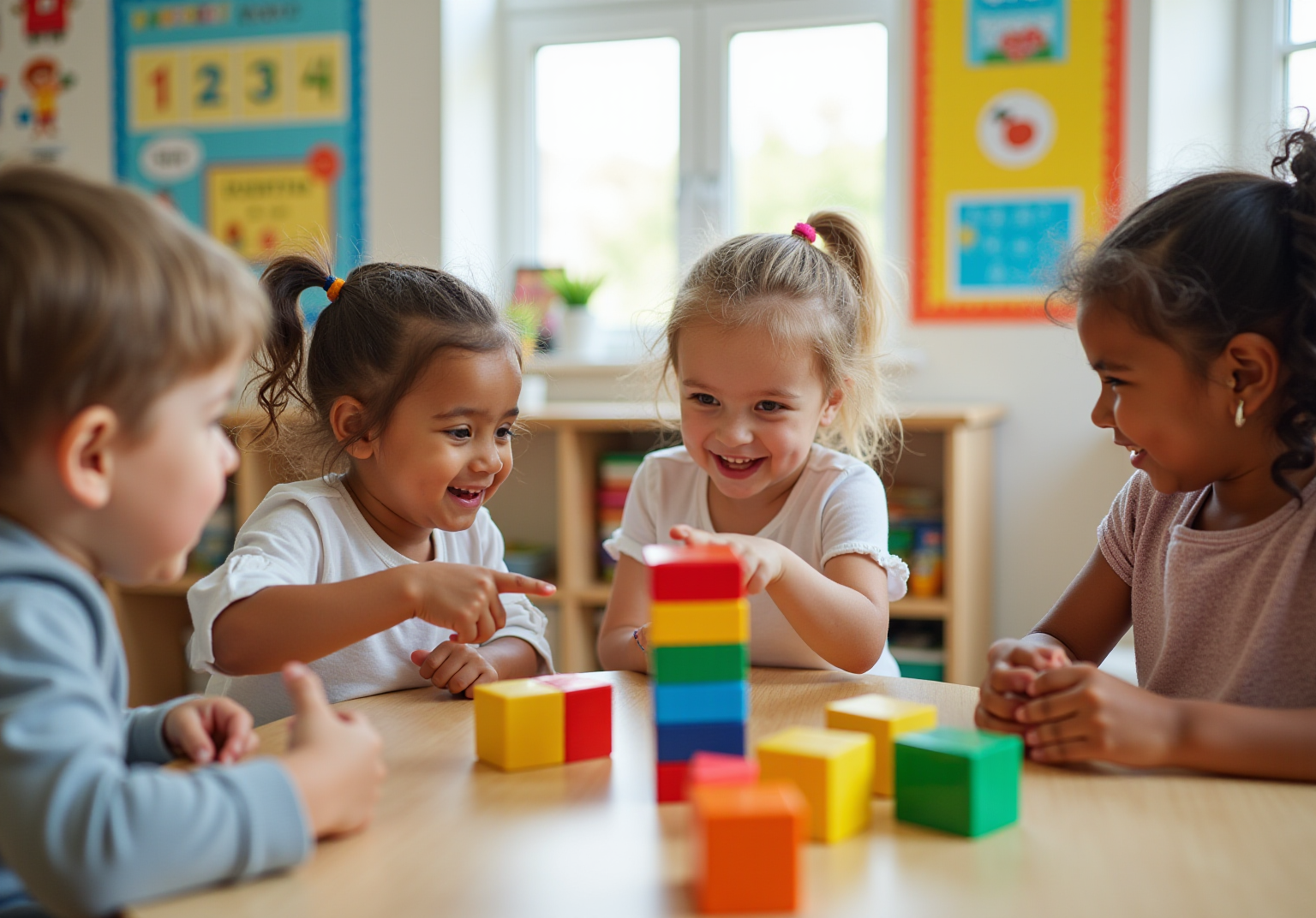
- : Engage in games that require turn-taking and shared focus, like stacking blocks or playing with cars. These activities naturally encourage promoting through shared enjoyment and interaction, which is especially helpful for kids facing behavioral challenges and .
- Generate New Scenarios: Add surprising elements during play to evoke shared focus. For instance, using a toy that makes sounds or lights up can really grab a child’s attention and motivate them to share that experience with you. This highlights the importance of (EIBI) for skill development.
Let’s explore these techniques together and see how they can make a difference in your classroom!

Leverage ABA Therapy Strategies to Support Joint Attention Development
Applied Behavior Analysis (ABA) offers a fantastic way to assist kids in through some . Let’s dive into a few of them!
- : Start with gentle prompts to help little ones engage with others. You can begin with less intrusive cues and gradually offer more support as needed. This way, they can learn to participate independently over time.
- : Positive encouragement goes a long way! When your child successfully shares focus with peers or adults, with praise or small rewards. Recognizing their efforts can really boost their motivation and make them eager to try again.
- : Try incorporating into everyday settings, like during playtime or daily routines. This helps children apply what they learn in real-life situations, making it more relevant and effective. Think about fun turn-taking games or cozy shared reading sessions!
- Modeling: Show your child how to engage in shared focus by demonstrating it in your interactions. Kids learn a lot by watching, so your example can really help them grasp the concept. Remember, joint focus typically starts around 6 to 9 months, so is key!
- Video Modeling: Consider using videos to illustrate shared focus interactions. Watching peers engage can inspire children to mimic those behaviors, making the learning experience relatable and fun. Research indicates that can be linked to later autism risk, so early intervention is crucial.
In summary, through ABA not only enhances social skills but also boosts language development, laying a strong foundation for effective communication. At Rori Care, our skilled analysts create personalized behavior intervention plans tailored to each child’s unique needs. Plus, we empower families with the knowledge to support their loved ones’ behavioral goals. Let’s explore this together!

Explore Long-Term Benefits of Joint Attention for Social and Communication Skills
The long-term benefits of developing are truly remarkable and can make a big difference in your child’s life:
- : When kids master the art of , they really start to get the hang of language. They’re more likely to jump into conversations and express their needs and thoughts clearly. This is super important for their overall communication growth!
- : Joint focus helps kids bond with their peers by sharing experiences and interests. This skill is key for making friends and joining in on group activities, which boosts their .
- : Engaging in sharpens cognitive skills like problem-solving and understanding different perspectives. Kids learn to appreciate what others think, which is essential for navigating social interactions and picking up on social cues.
- : As kids develop their shared focus skills, they become more adept at handling social situations independently. This newfound confidence empowers them to seek out interactions and engage with their surroundings, fostering a sense of autonomy.
- Research shows that children who excel in school often benefit from . Their ability to concentrate and engage with learning materials leads to , emphasizing the importance of .
Let’s explore this together! Encouraging your child to develop these skills can pave the way for a brighter future.

Conclusion
Promoting joint attention in the classroom is so important for helping kids, especially those on the autism spectrum, build their communication and social skills. When educators create shared focus experiences, they can really boost students’ development, encouraging not just language skills but also cognitive and emotional growth.
There are some great strategies to promote joint attention, like:
- Turn-taking games
- Interactive storytelling
- Using visual supports
These techniques come from Applied Behavior Analysis (ABA) and are tailored to meet each child’s unique needs. This way, every child can engage meaningfully with their peers and teachers. By using these strategies, teachers can help kids develop essential skills that will serve them well throughout their lives.
Ultimately, focusing on joint attention in education isn’t just about improving classroom interactions; it sets the stage for long-term success in communication, social relationships, and cognitive development. Embracing these practices can empower children to thrive both in and out of the classroom, helping them understand their social world better and enhancing their overall quality of life. Let’s explore this together and see how we can make a difference!
Frequently Asked Questions
What is joint attention?
Joint attention is the shared focus between two people on the same object or event, typically developing between 5-8 months of age. It is crucial for social interaction and communication.
Why is joint attention important in child development?
Joint attention is vital for building language skills, social connections, and cognitive abilities. Children with strong joint attention skills are more likely to develop effective communication and social skills.
How can difficulties with joint attention be related to autism?
Difficulties with shared focus can be an early sign of Autism Spectrum Disorder (ASD), highlighting the importance of early intervention for children who struggle with joint attention.
What activities can promote joint attention in children?
Activities that promote joint attention include turn-taking games, interactive storytelling, joint activities like puzzles, and the use of visual supports to engage the child’s focus.
What are some examples of turn-taking games to enhance joint attention?
Simple games that involve taking turns, such as passing a ball back and forth, can encourage shared focus between children and caregivers.
How can interactive storytelling help with joint attention?
Choosing books with captivating images and asking questions during storytelling can involve the child and help them focus on the narrative, enhancing joint attention.
What role do visual supports play in promoting joint attention?
Visual aids, such as pictures or toys, can capture a child’s attention and encourage shared engagement, facilitating joint attention.
How does Rori Care support joint attention development?
Rori Care empowers caregivers with ABA principles and strategies to help meet developmental goals, emphasizing the importance of promoting joint attention for children, especially those on the autism spectrum.
List of Sources
- Define Joint Attention and Its Importance in Child Development
- The Role of Joint Attention Activities in Autism Support | Advanced Autism Services (https://advancedautism.com/post/the-role-of-joint-attention-activities-in-autism-support)
- 107 Favorite Quotes About Autism and Aspergers (https://the-art-of-autism.com/favorite-quotes-about-autism-and-aspergers)
- Celebrating Neurodiversity: Inspiring Words on Autism | Step Ahead ABA (https://stepaheadaba.com/blog/autism-quotes)
- 10 inspiring quotes from people with autism | Autism Speaks (https://autismspeaks.org/life-spectrum/autism-quotes)
- Implement Effective Techniques to Enhance Joint Attention Skills
- Interventions Targeting Attention in Young Children With Autism (https://pubs.asha.org/doi/10.1044/1058-0360(2010/09-0081))
- Children with Autism Spectrum Disorders: Three Case Studies (https://leader.pubs.asha.org/doi/10.1044/leader.FTR2.15012010.14)
- The Role of Joint Attention in Language and Social Skills Development (https://mastermindbehavior.com/post/the-role-of-joint-attention-in-language-and-social-skills-development)
- Leverage ABA Therapy Strategies to Support Joint Attention Development
- The Role of Joint Attention Activities in Autism Support | Advanced Autism Services (https://advancedautism.com/post/the-role-of-joint-attention-activities-in-autism-support)
- How to Teach A Child Joint Attention with ABA – How to ABA (https://howtoaba.com/joint-attention)
- Inspirational ABA and Autism Quotes – Mrs. Moe’s Modifications (https://mrsmoesmodifications.com/inspirational-aba-and-autism-quotes)
- How ABA Therapy Encourages Joint Attention Skills (https://magnetaba.com/blog/how-aba-therapy-encourages-joint-attention-skills)
- Explore Long-Term Benefits of Joint Attention for Social and Communication Skills
- 100 Important Quotes on Communication and Relationships (https://marriage.com/advice/relationship/quotes-on-communication-and-relationships)
- Social Connection Quotes | Our 33 Favorite Quotes – Visible Network Labs (https://visiblenetworklabs.com/2020/10/16/thirty-three-best-social-connection-quotes)
- The Role of Joint Attention Activities in Autism Support | Advanced Autism Services (https://advancedautism.com/post/the-role-of-joint-attention-activities-in-autism-support)
- The Role of Joint Attention in Language and Social Skills Development (https://mastermindbehavior.com/post/the-role-of-joint-attention-in-language-and-social-skills-development)
- Joint Attention Autism (https://buildingblockstherapy.org/blog/joint-attention-autism)