

Introduction
Understanding the nuances of applied behavior analysis (ABA) therapy is crucial, especially when we talk about discriminative stimuli, or SD. These cues act as vital signals, letting us know when certain behaviors are likely to be rewarded. They play a significant role in shaping positive actions in children with autism.
But let’s be real—the journey to effectively implementing these stimuli can be quite challenging. How can therapists navigate the complexities of SDs to create meaningful learning experiences and promote independence in their young clients? Let’s explore this together!
Define Discriminative Stimulus in ABA Therapy
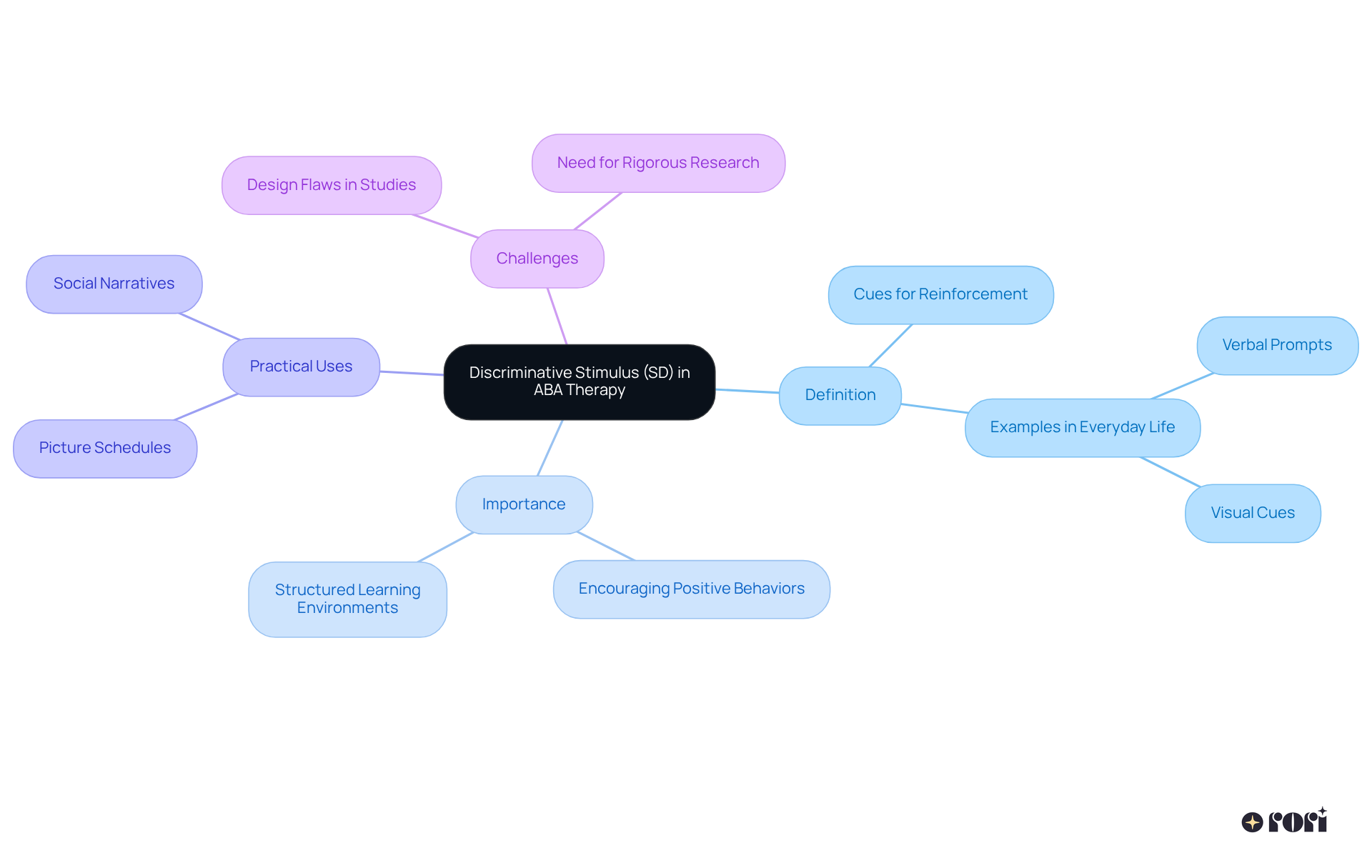
In ABA therapy, SD refers to a specific cue or event in the environment that signals the availability of reinforcement for a certain action. Think of it as a friendly nudge that tells someone that doing a particular thing will likely lead to a reward or a positive outcome. For example, when someone says ‘sit,’ it’s like a little reminder that sitting down will earn praise or maybe even a treat!
It is super important to understand , especially for kids with autism. As Kerry Magro wisely said, ” This highlights how crucial it is to have informed approaches in therapy. By , clinicians can create where , making learning a more enjoyable experience and helping kids develop new skills.
You might find of what SD is in ABA therapy in things like picture schedules or social narratives. These tools help young individuals grasp what’s expected of them and manage their daily activities with a bit more independence. This approach really resonates with the mission of Rori Behavioral Innovations Inc., which focuses on using and technology to enhance ABA therapy outcomes for children.
However, it’s important to note that that can cloud their effectiveness. This just shows how vital it is to pursue rigorous research practices in our field. Let’s explore this together and see how we can make a difference!
Explain the Role of Discriminative Stimulus in Operant Conditioning
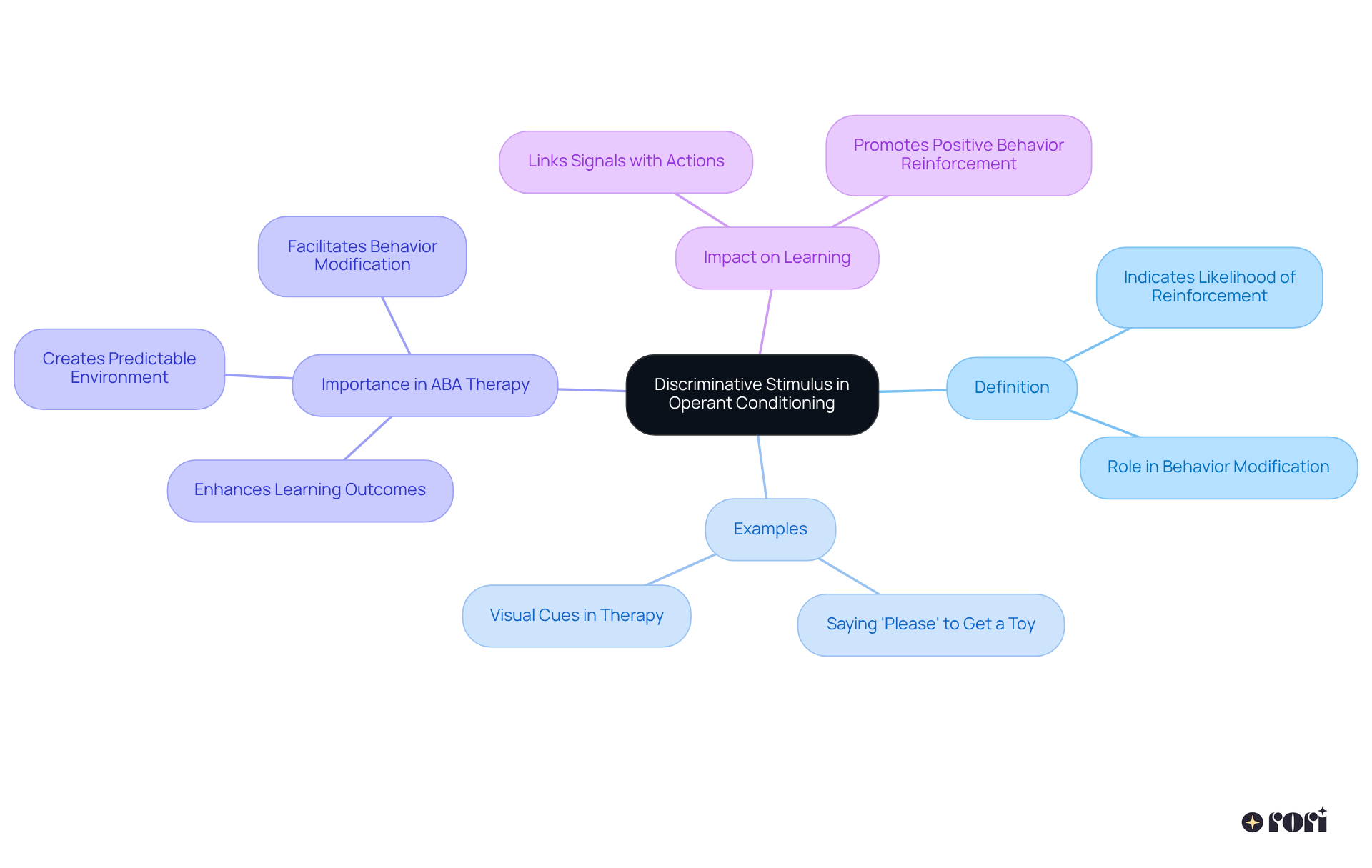
In operant conditioning, refers to a that plays a key role by indicating when a . When an SD is present, it boosts the chances of that action happening because individuals learn from their past experiences that their actions can lead to in that situation. For example, when a child discovers that saying ‘please’ while asking for a toy helps them get it, the word ‘please’ becomes a distinguishing signal that encourages that behavior.
and its is crucial for effectively guiding behaviors. Recent studies highlight that using for children with autism. These cues help link specific signals with certain actions, making it easier to modify behavior effectively. There are many that utilize SDs, showing how consistently pairing cues with desired actions leads to better responses in kids.
By understanding what is SD in ABA therapy and using these distinguishing signals, therapists can create a more consistent environment that promotes . This ultimately supports the growth and development of young individuals. Let’s explore this together and see how we can make a difference!
Provide Practical Examples of Discriminative Stimuli in ABA Therapy
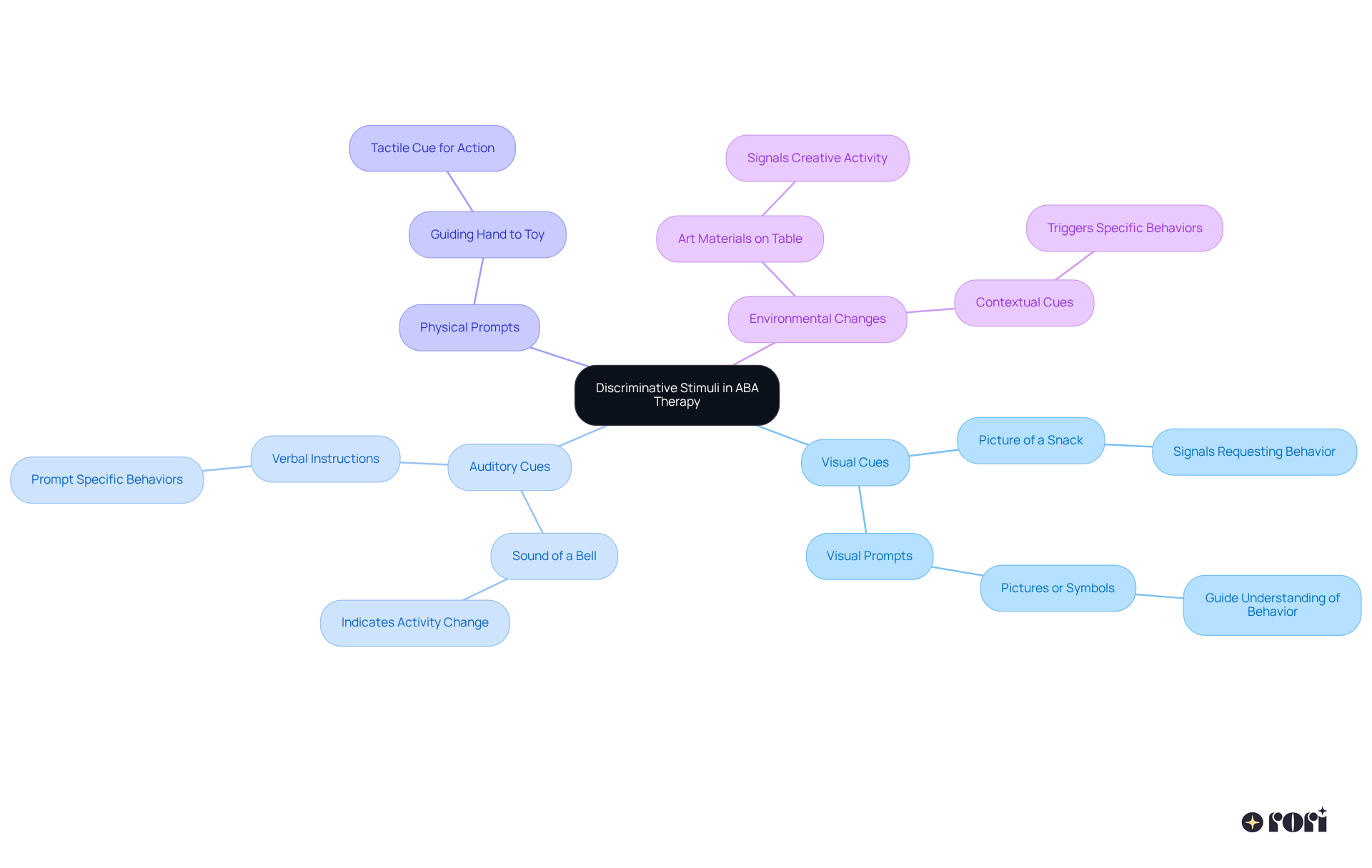
Let’s dive into some practical examples of that can really make a difference:
- : Imagine a therapist showing a picture of a snack. This simple image signals to a young person that they can ask for a snack when they see it. like pictures or symbols help guide individuals in understanding appropriate behavior, boosting their communication skills.
- : Think about the sound of a bell ringing. It can signal to a little one that it’s time to switch activities, nudging them to tidy up their toys. This auditory cue provides a clear indication of change, making it easier for them to follow routines.
- : Picture a therapist gently guiding a young one’s hand to a toy. This tactile cue shows them that they should reach for it when they see it. It’s all about helping them make connections between the prompt and the desired action.
- : Consider a room arranged with art materials on a table. This setup can signal to a young person that it’s time for a creative activity. Such environmental cues create an inviting context that encourages engagement in the planned task.
These examples show what is sd in aba therapy by demonstrating how we can , enhancing the effectiveness of ABA interventions and supporting skill development in various settings. By incorporating different distinguishing signals, we across different situations. Remember, is key to learning, so practicing these discriminative stimuli in various environments is crucial for . We’re here to help you every step of the way!
Discuss Challenges and Effective Strategies for Implementing Discriminative Stimuli
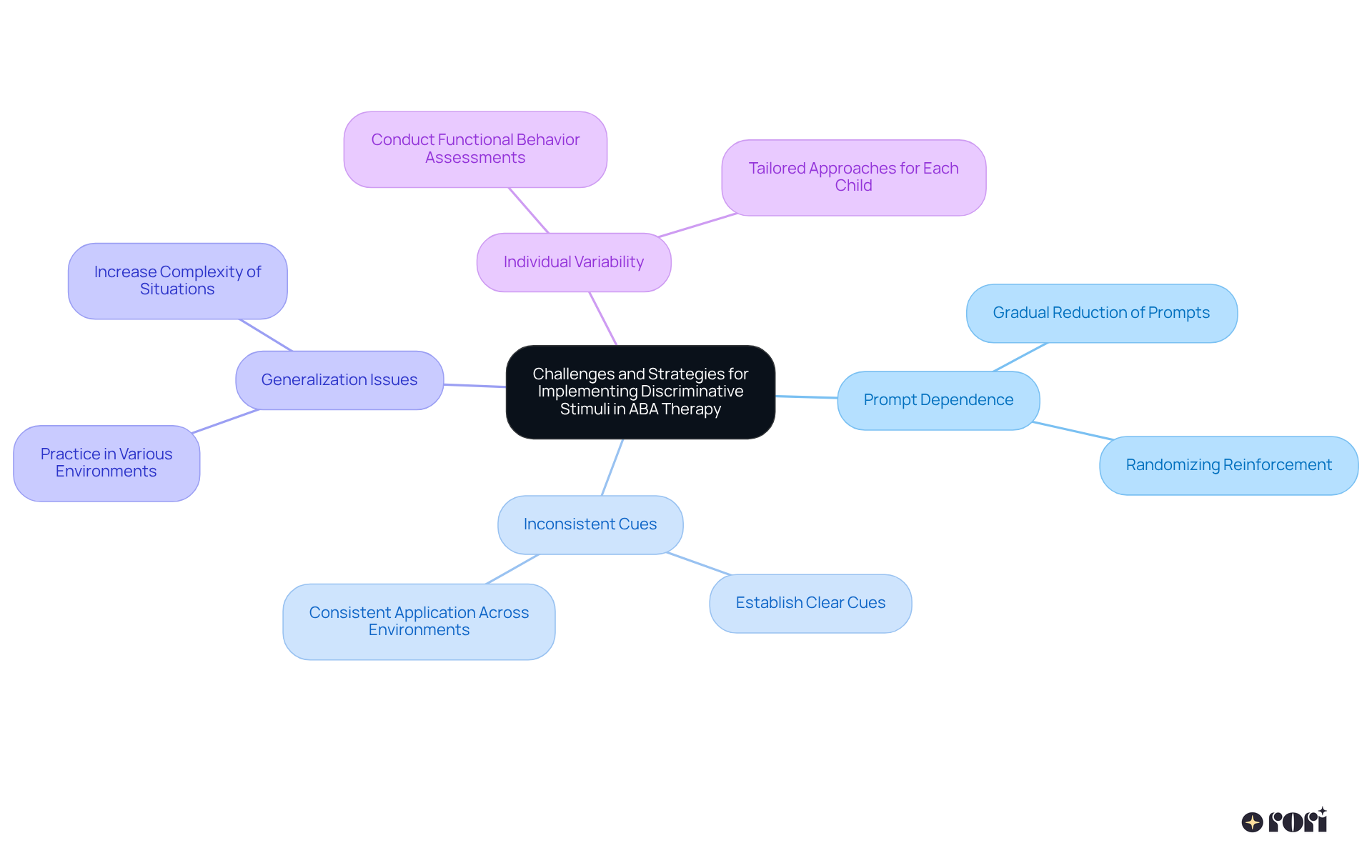
Implementing effectively can sometimes be a bit tricky, right? Here are a few challenges you might encounter:
- : It’s common for kids to lean too much on prompts, which can make it tough for them to pick up on natural cues. To help them become more independent, therapists can gradually reduce those prompts. This way, children can start responding more on their own. Randomizing reinforcement can also keep their motivation high and lessen that reliance on cues.
- : When SDs aren’t used consistently, it can confuse children about when to respond. That’s why it’s super important to establish to understand what is sd in aba therapy. This clarity is key for effective learning and helping kids modify their actions.
- : Sometimes, kids find it hard to apply what they’ve learned in different situations. To encourage , therapists should practice using what is sd in aba therapy across various environments and circumstances. This helps kids transfer their skills to real-life situations, making learning more practical.
- : Every child is unique and may respond differently to various SDs. That’s why a tailored approach is so important! Conducting can help identify the most effective triggers for each child, ensuring that interventions are meaningful and personalized. Plus, parents can play a big role by incorporating effective cues into daily routines at home.
By recognizing these challenges and using —like providing immediate feedback when a child gets it right—practitioners can really boost the success of ABA therapy. This means better outcomes for our kids with autism! Let’s explore this together and find what works best for your little one!
Conclusion
Understanding discriminative stimuli (SD) in ABA therapy is so important for helping children with autism thrive! 🌟 When we recognize how specific cues signal that reinforcement is available, we can create environments that encourage positive behaviors. This leads to better learning experiences for our kids.
Throughout our journey, we’ve shared some key insights about what SDs are and how they play a role in operant conditioning. We’ve looked at practical examples and discussed the challenges we might face in implementing them. From visual and auditory cues to changes in the environment, these stimuli are crucial in guiding behavior and helping children learn new skills. But remember, consistency and individualized approaches are key! They ensure that children can apply what they learn across different situations.
The journey of understanding and applying discriminative stimuli in ABA therapy can truly change the lives of young individuals. By embracing effective strategies and tackling challenges together, therapists, parents, and caregivers can create meaningful learning opportunities. This teamwork not only enhances therapy outcomes but also empowers our children to flourish in their everyday lives. Let’s explore this together and keep supporting each other on this important path! 💪
Frequently Asked Questions
What does SD stand for in ABA therapy?
In ABA therapy, SD stands for “discriminative stimulus,” which is a specific cue or event in the environment that signals the availability of reinforcement for a certain action.
How does a discriminative stimulus work in practice?
A discriminative stimulus acts as a reminder that performing a particular action will likely lead to a reward or positive outcome. For example, when someone says “sit,” it indicates that sitting down will earn praise or a treat.
Why is understanding SD important in ABA therapy, especially for children with autism?
Understanding SD is crucial in ABA therapy for children with autism because it helps clinicians create structured environments that encourage positive behaviors, making learning more enjoyable and aiding in the development of new skills.
What are some practical applications of SD in ABA therapy?
Practical applications of SD in ABA therapy include tools like picture schedules and social narratives, which help young individuals understand expectations and manage their daily activities with greater independence.
What is the mission of Rori Behavioral Innovations Inc. in relation to ABA therapy?
Rori Behavioral Innovations Inc. focuses on using data-driven strategies and technology to enhance ABA therapy outcomes for children, aligning with the goal of improving learning experiences.
Are there any concerns regarding the research on discriminative stimuli?
Yes, many studies on discriminative stimuli have design flaws that can affect their effectiveness, highlighting the importance of pursuing rigorous research practices in the field of ABA therapy.