

Introduction
Supporting a child with developmental challenges can feel overwhelming, but it’s also a journey filled with hope and growth. We know that getting support at the right time can really help your child grow and connect with others. But many parents wonder, how do I choose the right strategies to help my child thrive? Let’s explore some helpful practices and fresh ideas that can empower you and your family to support your child’s journey!
Understand the Importance of Early Intervention
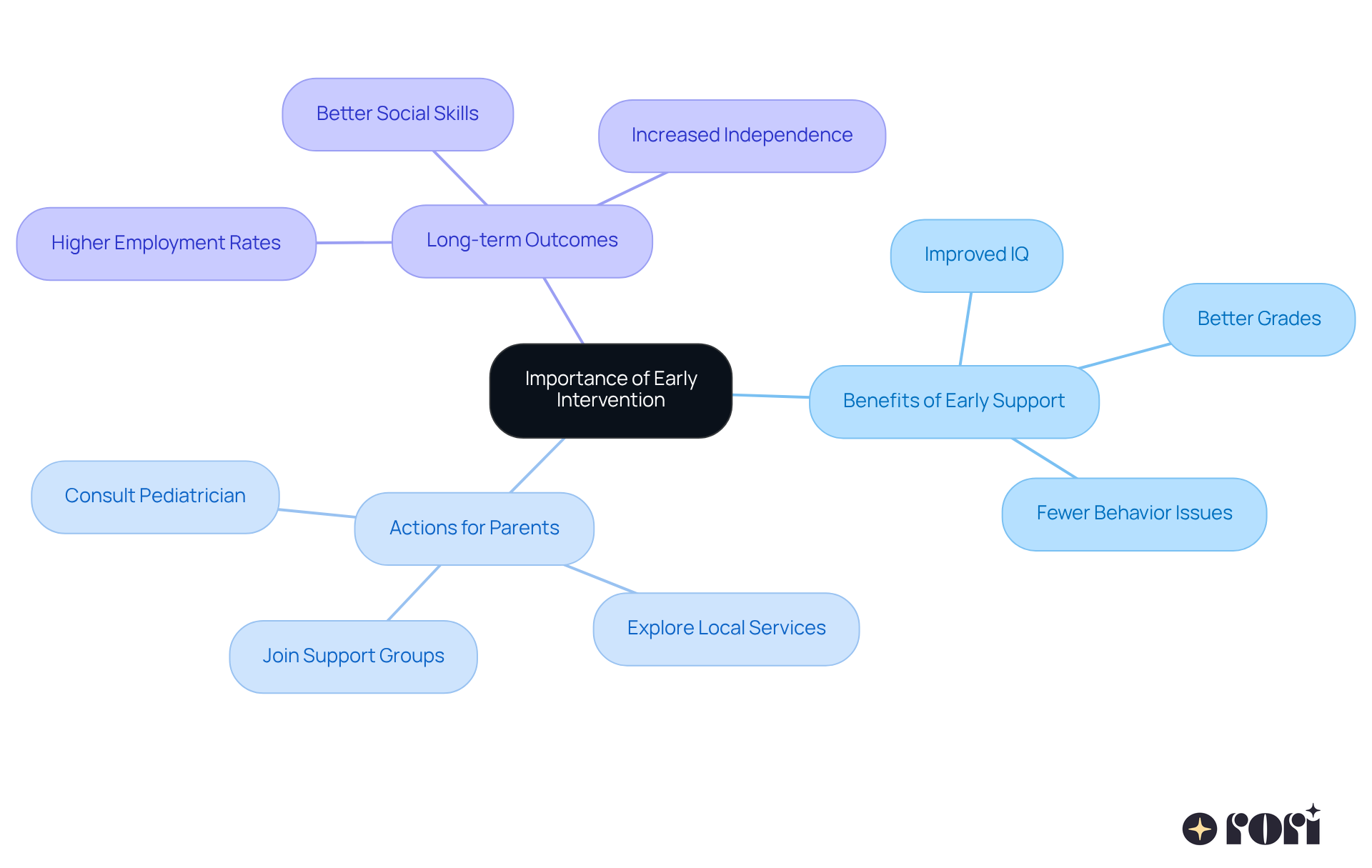
Noticing your child is facing developmental challenges can be overwhelming, but you’re not alone in this journey. Getting help early is essential for long-term success through early intervention in supporting kids with developmental delays, especially those on the autism spectrum. You might be surprised to learn that kids who get early support often see big improvements in their thinking, talking, and even how they move. Research shows that early help can lead to long-term success through early intervention, boosting a young person’s IQ by about 17 points and resulting in better grades along with fewer behavior issues down the line.
The earlier we start, the better! Kids are like little sponges during their developmental years, soaking up everything around them. This just shows how important it is for parents to jump on early support when they notice something isn’t quite right. At Rori Care, we’re here to help you every step of the way. Our caring clinicians provide personalized Applied Behavior Analysis (ABA) treatment tailored to your child’s unique needs.
We encourage you to chat with your pediatrician, look into local services, and connect with support groups. It can be tough to know where to start when you notice your child is struggling. But remember, taking that first step toward support can help achieve long-term success through early intervention in your child’s future. Without timely intervention, these challenges can become more pronounced, making it harder for your child to thrive. Let’s explore this together!
Implement Effective Early Intervention Strategies
Navigating the world of autism can feel overwhelming for parents, but there are effective strategies that can make a real difference! Here are some approaches that can help your child thrive:
- Applied Behavior Analysis (ABA): ABA is all about encouraging the good behaviors while gently guiding away from the not-so-good ones! Research shows that this approach has a fantastic success rate of 89% in helping young people with autism. Plus, the techniques can be tailored to fit each child’s unique needs, helping them learn important skills like communication and social interaction.
- Parent Training Programs: When parents get involved in training, kids often show amazing improvements in how they manage their behavior! These programs not only boost the effectiveness of interventions but also help create a supportive home environment. You become a vital part of your child’s intervention team, and that’s powerful!
- Social Skills Groups: Joining social skills groups gives kids a safe space to practice their social skills and learn from their friends! These groups provide real-time feedback and opportunities for young ones to enhance their interactions, which is so important for their social development.
- Routine-Based Interventions: By weaving these strategies into everyday activities, learning becomes fun and feels less like a chore for kids! For example, using playtime to teach communication skills can really boost engagement and help kids learn in a familiar setting.
By embracing these strategies, you’re not just helping your child; you’re also building a supportive community around them. Together, we can create a nurturing environment that fosters growth and development!

Leverage Technology for Enhanced Intervention Outcomes
Navigating the world of early intervention for autism can feel overwhelming, but technology provides bright spots that can help families achieve long-term success through early intervention. Here are some effective ways to leverage technology:
- Telehealth Services: Being able to schedule appointments from home makes it so much easier for families to get the help they need! Virtual therapy sessions expand access to specialists, especially for those in remote areas. This flexibility in scheduling ensures that young individuals receive the support they need without the stress of travel.
- Mobile Applications: A variety of apps are designed to help kids boost their communication and social skills. For example, apps that use visual schedules can assist youngsters in understanding daily routines, which can really help reduce anxiety and improve compliance. These apps can really help kids connect and communicate better, making a big difference in their daily lives.
- Data Tracking Tools: Software that monitors a youth’s progress enables caregivers and professionals to make informed, data-driven decisions. Rori Care uses advanced AI to automate progress report creation, freeing up 50% more time for youth treatment. This means continuous assessment and adjustment of personalized plans, ensuring that each child’s unique needs are effectively addressed.
- Interactive Learning Platforms: Engaging kids through gamified educational experiences can significantly enhance motivation and participation. Platforms that incorporate interactive elements not only make learning fun but also promote skill acquisition in a playful way, creating a positive learning environment.
When families and professionals collaborate with these tech tools, they can foster a more responsive and effective approach that promotes long-term success through early intervention for kids with developmental challenges. However, it’s important to remember that relying too much on technology without professional guidance can lead to pitfalls. By embracing these tools, you’re not just enhancing outcomes; you’re also empowering your child to thrive in their unique journey.

Foster Collaboration with Professionals for Comprehensive Support
Navigating the world of autism support can feel overwhelming, but collaboration among professionals can make a world of difference! Here are some key strategies to foster effective collaboration:
- Interdisciplinary Teams: Forming teams that include various specialists-like speech therapists, occupational therapists, and behavioral analysts-ensures that all aspects of a child’s development are addressed. This holistic approach can lead to more effective actions. Research shows that programs incorporating neurodiversity perspectives yield 37% better outcomes than traditional methods.
- Let’s Talk About Communication! Keeping everyone in the loop, especially parents, is so important for success. Frequent meetings and updates help maintain alignment on objectives and approaches, enabling a unified intervention plan. When we communicate effectively, we enhance understanding and collaboration, leading to better results for our young ones.
- Shared Goals: Collaboratively establishing clear, measurable objectives for each student enhances accountability and focus. When all team members understand and commit to these goals, it encourages a cohesive strategy for action. Research indicates that young individuals receiving collaborative, coordinated services show more significant progress in targeted behaviors than those receiving separate support.
- Getting Families Involved is Key! When parents actively participate in the support process, it empowers them and offers valuable insights into their child’s needs and progress. At Rori Care, our clinical leadership team is dedicated to equipping caregivers with ABA principles and strategies, ensuring they feel prepared to support their child’s behavioral goals. As one parent beautifully put it, “Raising a kid with developmental differences has shown me to recognize what’s achievable, not what’s usual.” Plus, 92% of parents report that positive perspective shifts help manage challenging days.
By fostering collaboration among professionals and families, we can create a comprehensive support system that ensures long-term success through early intervention for children with autism. When we come together, we can create a brighter future for our children with autism, one step at a time!

Conclusion
Navigating the world of developmental challenges can feel overwhelming for parents, but you’re not alone in this journey! Achieving long-term success for children facing these challenges is all about the power of early intervention strategies. By recognizing and addressing these challenges promptly, you can significantly enhance your child’s developmental path, leading to better cognitive abilities, academic performance, and overall well-being. It’s so important to recognize that getting help early isn’t just a good idea; it’s a game-changer for kids, especially those on the autism spectrum.
Key strategies to consider include:
- Applied Behavior Analysis (ABA)
- Parent training programs
- Social skills groups
- Tech tools that can support your child’s growth
Each of these approaches has its own unique benefits, from boosting communication skills to creating a nurturing learning environment. Plus, working together with professionals and other families is crucial. It ensures that your child gets the comprehensive support they need, tailored just for them.
At the end of the day, early intervention is a powerful tool that can make a real difference! It’s a proactive approach that empowers you as a parent and equips your child with the tools they need to thrive. When you take those first steps and tap into the resources out there, you’re setting your child up for success! Embracing these strategies and fostering collaboration among caregivers and professionals will not only enhance intervention outcomes but also build a supportive community that believes in every child’s potential.
Frequently Asked Questions
Why is early intervention important for children with developmental challenges?
Early intervention is crucial as it can lead to significant improvements in a child’s thinking, talking, and movement. Research shows that children who receive early support often experience long-term success, including an increase in IQ by about 17 points, better grades, and fewer behavior issues.
What kind of improvements can children expect from early intervention?
Children who receive early intervention can see substantial improvements in their cognitive abilities, communication skills, and physical coordination.
How does early intervention affect children on the autism spectrum?
Early intervention is especially beneficial for children on the autism spectrum, as it provides tailored support that can help them overcome developmental delays and thrive in their growth.
What services does Rori Care offer for early intervention?
Rori Care provides personalized Applied Behavior Analysis (ABA) treatment that is specifically tailored to meet each child’s unique needs.
What steps should parents take if they notice developmental challenges in their child?
Parents should discuss their concerns with their pediatrician, explore local services, and connect with support groups to find the right resources and support for their child.
What are the potential consequences of not seeking early intervention?
Without timely intervention, developmental challenges can become more pronounced, making it harder for the child to thrive and succeed in the long term.
List of Sources
- Understand the Importance of Early Intervention
- 10 Quotes to Inspire Early Childhood Professionals (https://zerotothree.org/quotes-to-inspire-early-childhood-professionals)
- Early Intervention for Autism (https://nichd.nih.gov/health/topics/autism/conditioninfo/treatments/early-intervention)
- Study finds autism early intervention highly effective | Autism Speaks (https://autismspeaks.org/news/study-finds-autism-early-intervention-highly-effective)
- Importance of Early Intervention for Kids with Autism (https://behavioral-innovations.com/blog/critical-early-intervention-children-autism-spectrum-disorder)
- Implement Effective Early Intervention Strategies
- The Numbers Don’t Lie: Revealing Autism Therapy Statistics | Above and Beyond Therapy (https://abtaba.com/blog/autism-therapy-statistics)
- Efficacy of parent-training programs for preschool children with autism spectrum disorder: A randomized controlled trial (https://sciencedirect.com/science/article/abs/pii/S1750946719301837)
- Success Rates of ABA Therapy (https://besteveraba.com/blog/success-rates-of-aba-therapy)
- 81 ABA Therapy Statistics You Need to Know – apricott ABA (https://apricott.com/resources/aba-therapy-statistics)
- Training Programs for Parents Tied to Better Behavior in Kids with Autism (https://raisingmultiples.org/training-programs-for-parents-tied-to-better-behavior-in-kids-with-autism)
- Leverage Technology for Enhanced Intervention Outcomes
- 59 Inspirational Quotes About Autism – Hidden Talents ABA (https://hiddentalentsaba.com/autism-quotes)
- 10 inspiring quotes from people with autism | Autism Speaks (https://autismspeaks.org/life-spectrum/autism-quotes)
- 10 Inspiring Quotes from People with Autism (https://aprilaba.com/resources/quotes-from-people-with-autism)
- Autism Apps for Children (https://besteveraba.com/blog/autism-apps-for-children)
- Data and Statistics on Autism Spectrum Disorder (https://cdc.gov/autism/data-research)
- Foster Collaboration with Professionals for Comprehensive Support
- 10 inspiring quotes from people with autism | Autism Speaks (https://autismspeaks.org/life-spectrum/autism-quotes)
- 80 Inspiring Quotes on Autism Awareness and Support – Empower ABA (https://empoweraba.com/80-inspiring-quotes-on-autism-awareness-and-support)
- Autism Quotes (https://kidsclubaba.com/autism-quotes)
- The Numbers Don’t Lie: Revealing Autism Therapy Statistics | Above and Beyond Therapy (https://abtaba.com/blog/autism-therapy-statistics)
- We Get Better Together: What Collaboration Looks Like in Real Life (https://centriahealthcare.com/resources/we-get-better-together-what-collaboration-looks-like-in-real-life)