

Introduction
Navigating the journey of applying Applied Behavior Analysis (ABA) therapy for children can feel overwhelming at times, can’t it? One of the biggest challenges is the need for consistency. This crucial element not only boosts learning but also nurtures emotional stability, helping children flourish in different settings.
When caregivers grasp how a structured approach can make a difference, they can truly tap into their child’s potential for growth. But let’s be real – the road to achieving that consistency is often bumpy. How can caregivers tackle these hurdles while ensuring their child gets the best support possible?
Let’s explore this together! We’re here to help you every step of the way!
Understand the Importance of Consistency in ABA Therapy
The importance of consistency and progress in ABA therapy is significant for many reasons! It helps kids generalize skills across different settings, reinforces positive behaviors, and keeps them from regressing. When children have a , they tend to feel less anxious, which can really boost their learning and engagement.
For example, if a child practices social skills consistently at home, school, and therapy, they’re more likely to use those skills in real-life situations. Social skills group sessions, led by a trained therapist, can really enhance these interactions, helping kids build better relationships with their peers.
Plus, when we empower caregivers with knowledge about ABA principles and strategies, it equips them to provide the right support at home. This not only complements professional interventions but also promotes consistency and progress in ABA therapy.
Let’s explore the benefits of maintaining a consistent approach in therapy sessions and daily practices together! We’ll highlight some research that backs up these claims, so you can feel confident in the path you’re taking.

Establish Effective Routines at Home
Creating efficient practices at home can feel like a challenge, but it’s all about recognizing those essential daily activities that can be organized. Think about your morning routines, mealtimes, and bedtime rituals. Here’s how you can make those routines work for you:
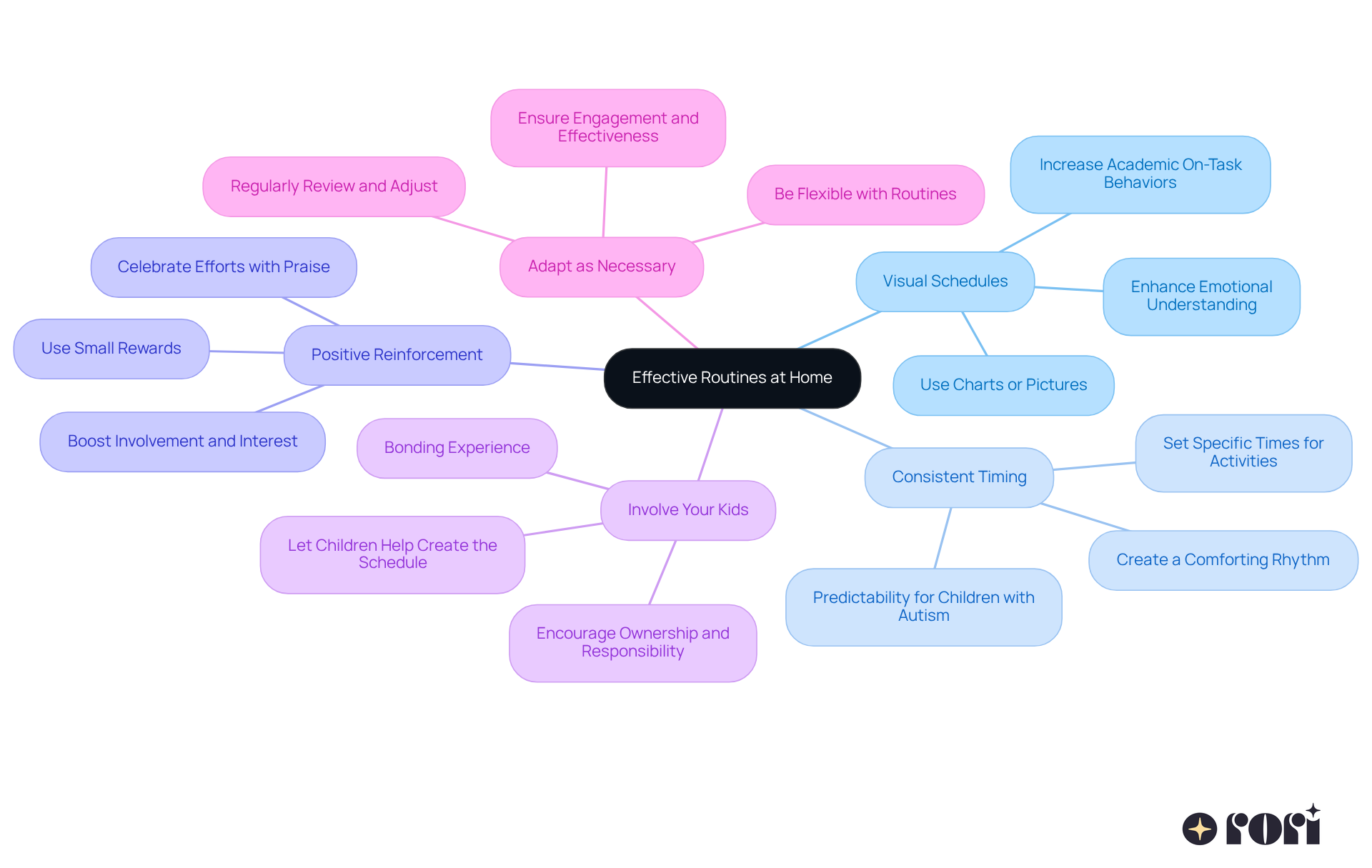
- Visual Schedules: Have you tried using like charts or pictures? They can really help outline daily activities. Studies show that visual schedules can significantly improve adherence, especially for kids. When children engage with these visuals, they often show better emotional understanding and empathy. It’s amazing how something so simple can make a difference!
- Consistent Timing: Setting specific times for each activity can create a comforting rhythm. For instance, breakfast at 8 AM followed by 30 minutes of playtime can work wonders. Predictability is key, especially for kids with autism, as it helps them navigate their day with confidence.
- Positive Reinforcement: Don’t forget to celebrate your child’s efforts! A little verbal praise or a small reward can go a long way in encouraging them to stick to the schedule. Positive reinforcement not only boosts their involvement but also helps maintain their interest in activities over time.
- Involve Your Kids: Let your children help create the schedule! When they have a say in the process, they’re more likely to take ownership and responsibility. Kids who are involved tend to follow the routines more closely, and it can be a fun bonding experience too.
- Adapt as Necessary: Flexibility is crucial. Be ready to tweak the routines based on your child’s needs and responses. Regularly reviewing and adjusting the schedule keeps it fresh and engaging. This adaptability ensures that the routines remain effective and enjoyable for everyone.
By embracing these strategies, you can enhance your support at home, making informed choices that align with ABA principles. This active participation not only encourages consistency and progress in aba therapy but also empowers you as a caregiver, resulting in better behavioral outcomes for your children. Let’s explore this together!
Foster Collaborative Communication with Therapists and Educators
Fostering collaborative communication is all about a few key practices that can make a real difference:
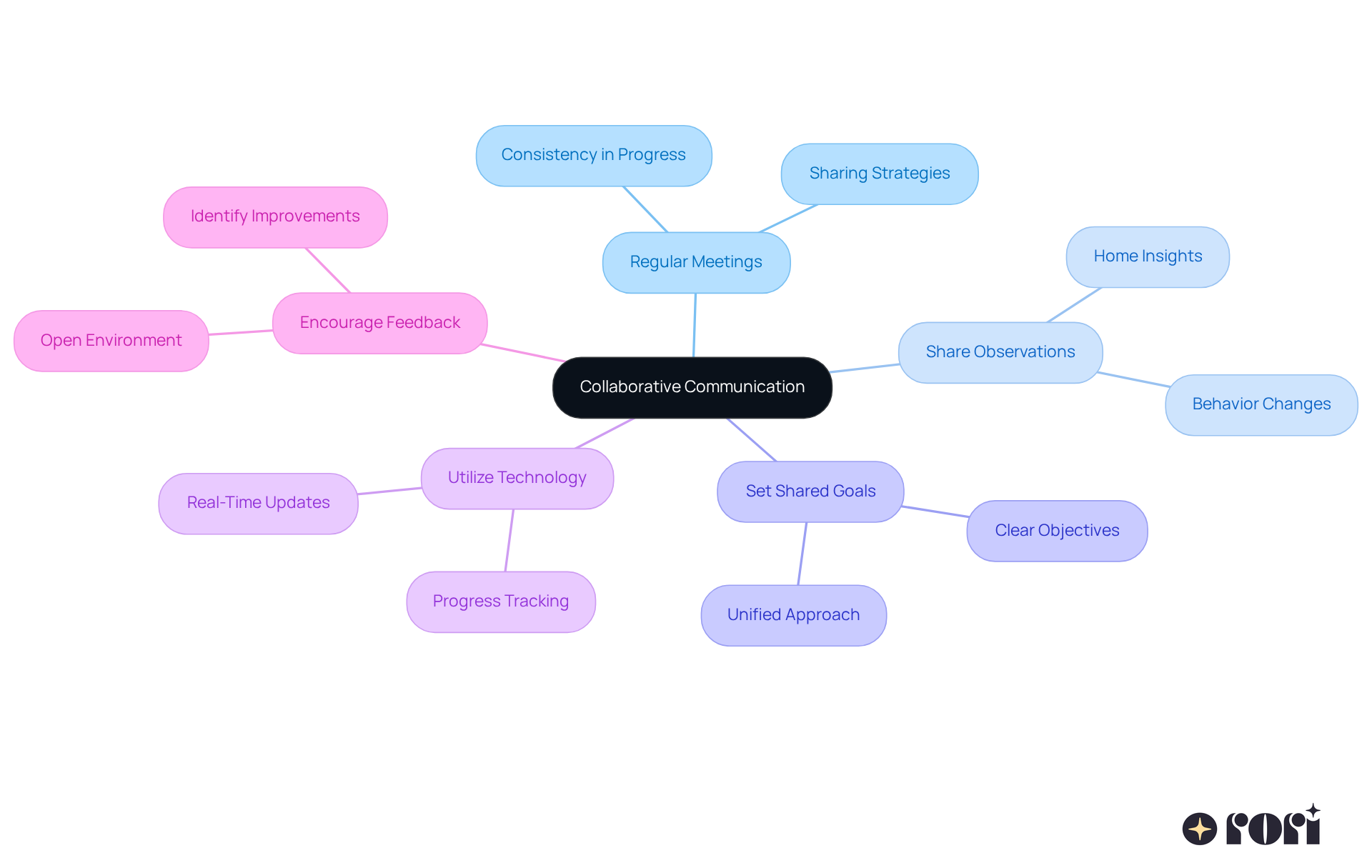
- Regular Meetings: It’s super helpful to set up regular check-ins with your student’s therapist and educators. These chats are essential for maintaining consistency and progress in aba therapy, keeping everyone on the same page about your child’s progress and any challenges they might be facing. Plus, it’s a great way to share strategies that work!
- Share Observations: Don’t hesitate to share what’s working at home or any changes you’ve noticed in your child’s behavior or skills. This kind of information is gold for therapists, helping them tailor their approaches to meet your child’s unique needs.
- Set Shared Goals: Team up to create clear, achievable goals for your student. When everyone is focused on the same objectives, it fosters a , contributing to consistency and progress in aba therapy, making the journey smoother for everyone involved.
- Utilize Technology: Why not take advantage of apps or shared documents to track progress and share updates in real-time? This not only makes communication easier but also allows for quick adjustments to strategies as your child’s needs evolve.
- Encourage Feedback: It’s important to create an open environment where feedback is welcomed. This practice helps identify areas for improvement and celebrates achievements, reinforcing a positive and proactive approach to your child’s treatment journey while ensuring consistency and progress in aba therapy.
Let’s explore this together! By embracing these practices, you’re not just supporting your child; you’re also building a strong network of support that can make all the difference.
Identify and Overcome Challenges to Consistency
It can be tough to maintain consistency and progress in ABA therapy, right? With scheduling conflicts, , and unexpected changes, it’s no wonder parents feel overwhelmed. But don’t worry! Here are some friendly strategies to help you navigate these challenges:
- Plan Ahead: Think about potential disruptions like vacations or family gatherings. By planning ahead, you can keep routines intact during these times. This little bit of foresight can really help minimize the impact on your child’s progress.
- Involve all caregivers: It’s super important that everyone involved in your child’s care – family members, babysitters, teachers – understands the importance of consistency and progress in ABA therapy. When everyone’s on the same page, it creates a unified approach to your child’s development.
- Create Backup Plans: Life happens! So, having alternative strategies ready for when routines can’t be followed is key. For instance, if a therapist is unavailable, have a plan for practicing skills at home. This way, learning continues, no matter what.
- Monitor Progress: Keep an eye on your child’s progress and any setbacks. Regularly tracking this can help you spot patterns and areas where consistency and progress in ABA therapy might be slipping, allowing you to make timely adjustments.
- Seek Support: Don’t hesitate to reach out to your child’s therapist for advice on maintaining consistency, especially during tough times. Their expertise can provide valuable insights and tailored plans for your child’s unique needs.
And let’s not forget about caregiver fatigue! It’s real and can make it hard to stick to routines. So, remember to prioritize self-care and seek support when you need it. By implementing these strategies, you can create a more stable environment that fosters consistency and progress in ABA therapy for your child’s growth and success. Let’s explore this together!

Conclusion
Consistency in ABA therapy is so important for helping our kids make real progress. When caregivers, therapists, and educators work together and establish stable routines, it sets the stage for effective learning and behavioral growth. Just think about it: a consistent approach not only helps kids generalize their skills but also eases their anxiety, making them more engaged and confident.
Throughout this article, we’ve explored various strategies, like using visual schedules, positive reinforcement, and regular check-ins with professionals. These practices empower you, the caregivers, to create supportive environments that encourage sticking to routines, which ultimately benefits your child’s therapeutic journey. And let’s not forget about the challenges – things like scheduling conflicts and caregiver fatigue can pop up, but addressing these issues is key to keeping that consistency alive and ensuring our kids continue to thrive.
So, what can you do? It’s crucial for you to actively implement these strategies and build a supportive network around you. By doing this, you can navigate the complexities of ABA therapy with confidence, ensuring your child gets the consistent care they need for lasting success. Embracing this proactive approach not only enhances your child’s learning experience but also highlights the importance of teamwork in achieving positive outcomes in ABA therapy. Let’s explore this together!
Frequently Asked Questions
Why is consistency important in ABA therapy?
Consistency is crucial in ABA therapy because it helps children generalize skills across different settings, reinforces positive behaviors, and prevents regression. A stable and predictable routine reduces anxiety, enhancing learning and engagement.
How does practicing skills in various settings benefit children?
When children practice skills consistently at home, school, and therapy, they are more likely to use those skills in real-life situations, improving their ability to interact with others.
What role do social skills group sessions play in ABA therapy?
Social skills group sessions, led by a trained therapist, enhance interactions among children, helping them build better relationships with their peers.
How can caregivers support consistency in ABA therapy?
By being empowered with knowledge about ABA principles and strategies, caregivers can provide appropriate support at home, which complements professional interventions and promotes consistency and progress in therapy.
What will the article explore regarding consistency in therapy sessions?
The article will explore the benefits of maintaining a consistent approach in therapy sessions and daily practices, including highlighting research that supports these claims.