

Introduction
Understanding the unique learning needs of children with autism is so important for helping them grow and become more independent. Discrete Trial Training (DTT) stands out as a fantastic tool in this journey, offering structured, evidence-based strategies that really cater to each child’s individual strengths and challenges. But here’s the big question: how can parents and caregivers put these techniques into practice to make sure their children are making meaningful progress?
In this article, we’ll dive into ten practical DTT examples that not only enhance learning but also empower families to actively participate in their child’s educational journey. Let’s explore this together and see how we can support our little ones every step of the way!
Rori Care – ABA Therapy: Personalized DTT Strategies for Autism
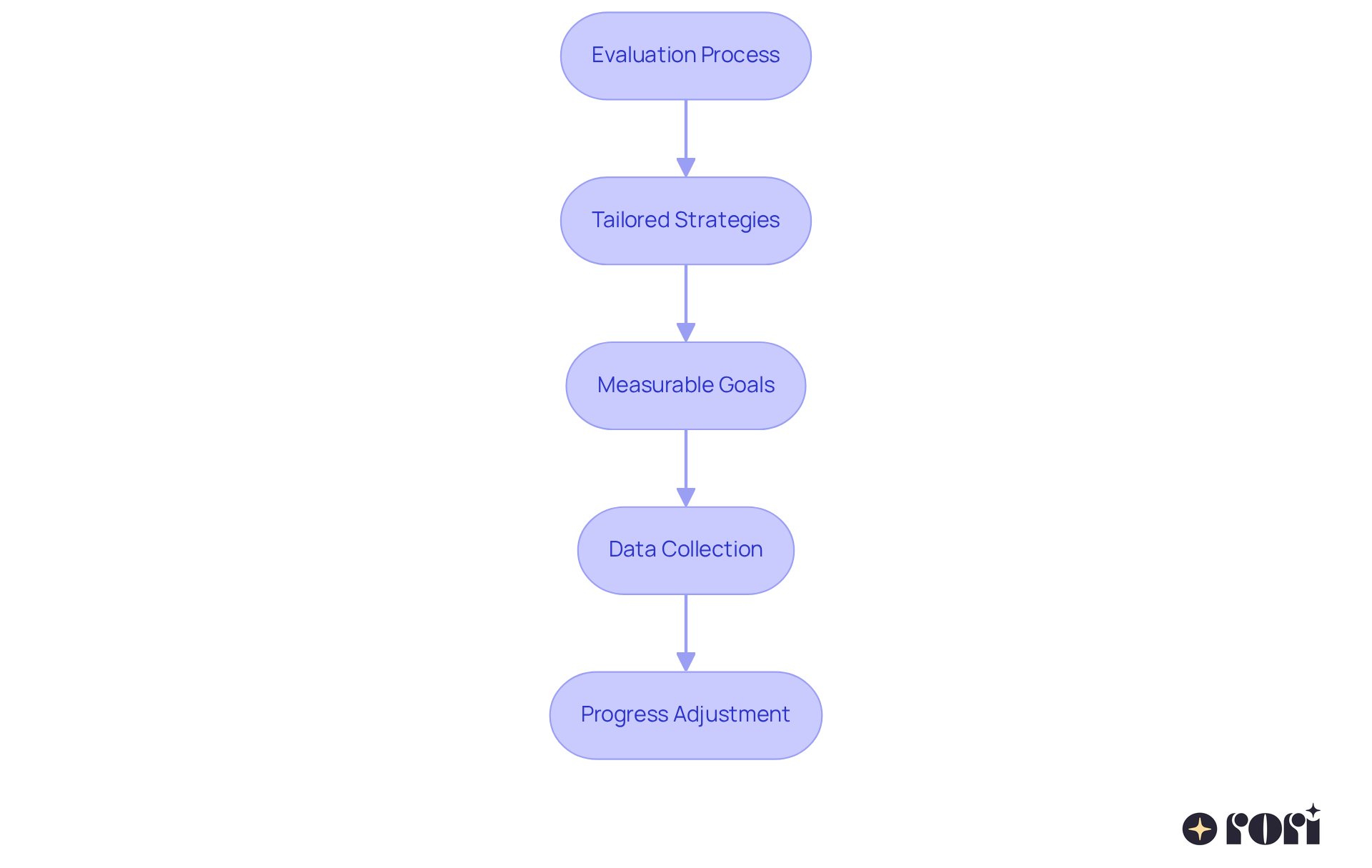
Rori Care – ABA Therapy embraces a personalized approach to the DTT example of , focusing on each child’s unique strengths and challenges. It all starts with a thorough evaluation process where our clinicians gather important data to shape . For instance, if a little one is having trouble with communication, a DTT example might focus on teaching basic vocabulary using visual aids and repetition. This customized approach ensures that every child receives the most effective interventions that align with their , ultimately boosting their educational outcomes.
Key Features:
- Individual Assessments: Each child goes through a to pinpoint specific learning needs, paving the way for .
- : An example of DTT sessions is crafted based on the child’s strengths and areas for improvement, using .
- : We set clear, quantifiable objectives for behavior change and skill development, giving you a transparent benchmark for tracking progress.
- : Ongoing data collection helps us adjust the treatment plan, ensuring optimal progress through continuous evaluation and modification. Notably, we see significant progress in 90% of children when recommended hours are fully implemented with active caregiver involvement. This highlights the .
Let’s explore this together! We’re here to !
Golden Steps ABA: Real-World DTT Examples for Skill Acquisition
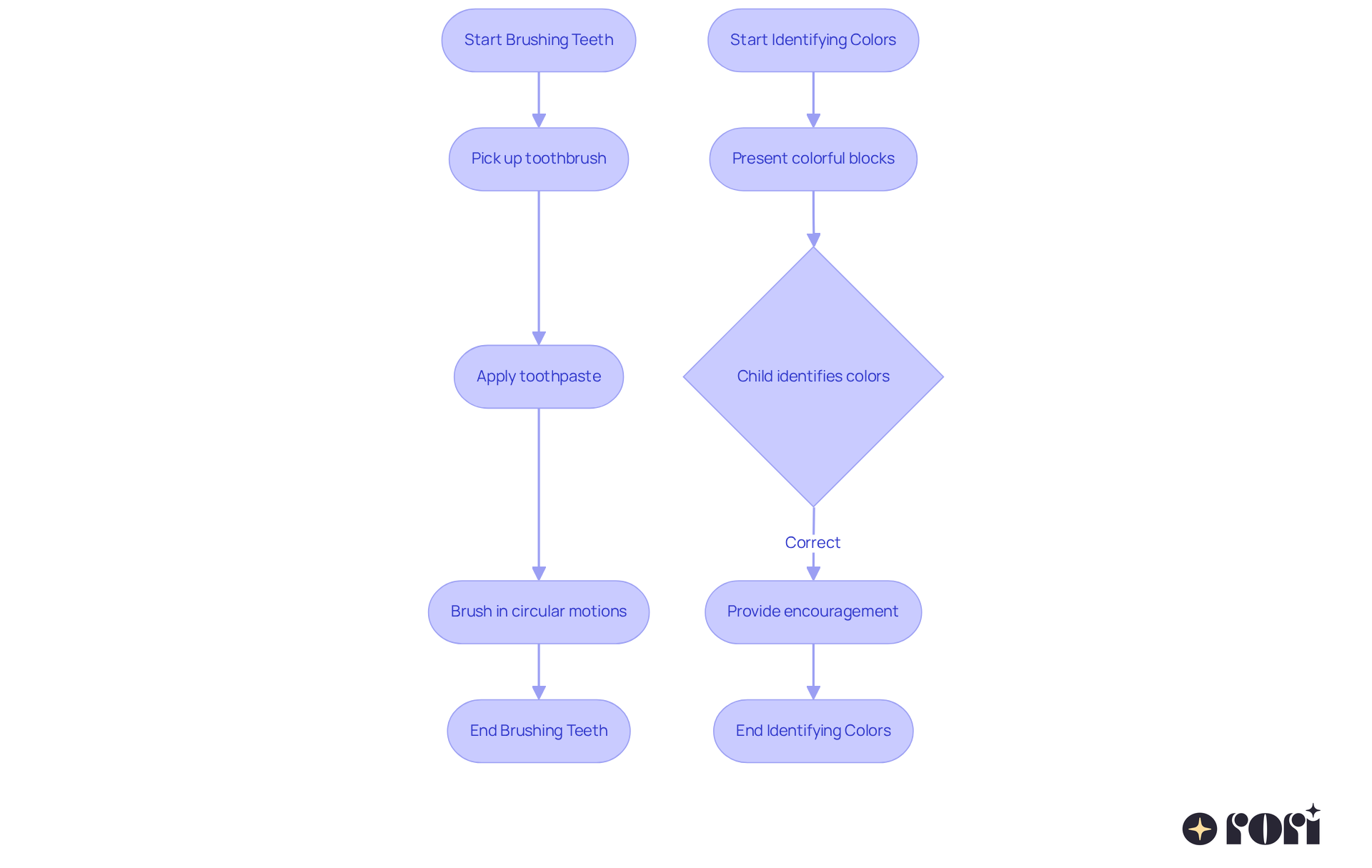
At Golden Steps ABA, we showcase many practical of that can help teach to youth with autism. A key part of this process is the vital role of . Let’s take a look at a couple of examples:
- : Imagine the therapist breaking down the process of into manageable steps. This includes picking up the toothbrush, applying toothpaste, and brushing in circular motions. Each step is taught individually, allowing the student to master one before moving on to the next. This approach ensures a thorough understanding of the entire routine. Caregivers, armed with ABA principles, can reinforce these steps at home, promoting consistency and enhancing the educational experience.
- Identifying Colors: Using colorful blocks, the therapist engages the child in recognizing various colors. When the child gives accurate replies, they’re met with encouragement and incentives. This not only teaches but also nurtures a through effective reinforcement techniques. Caregivers can further support this learning by practicing color identification during daily activities, making informed decisions that positively influence their child’s progress.
These demonstrate how DTT can effectively teach that youngsters can incorporate into their daily lives, boosting their independence and confidence. By actively participating in their child’s education, caregivers empower themselves and contribute significantly to and informed decision-making. We’re here to help you every step of the way!
Links ABA: Step-by-Step Implementation of Discrete Trial Training
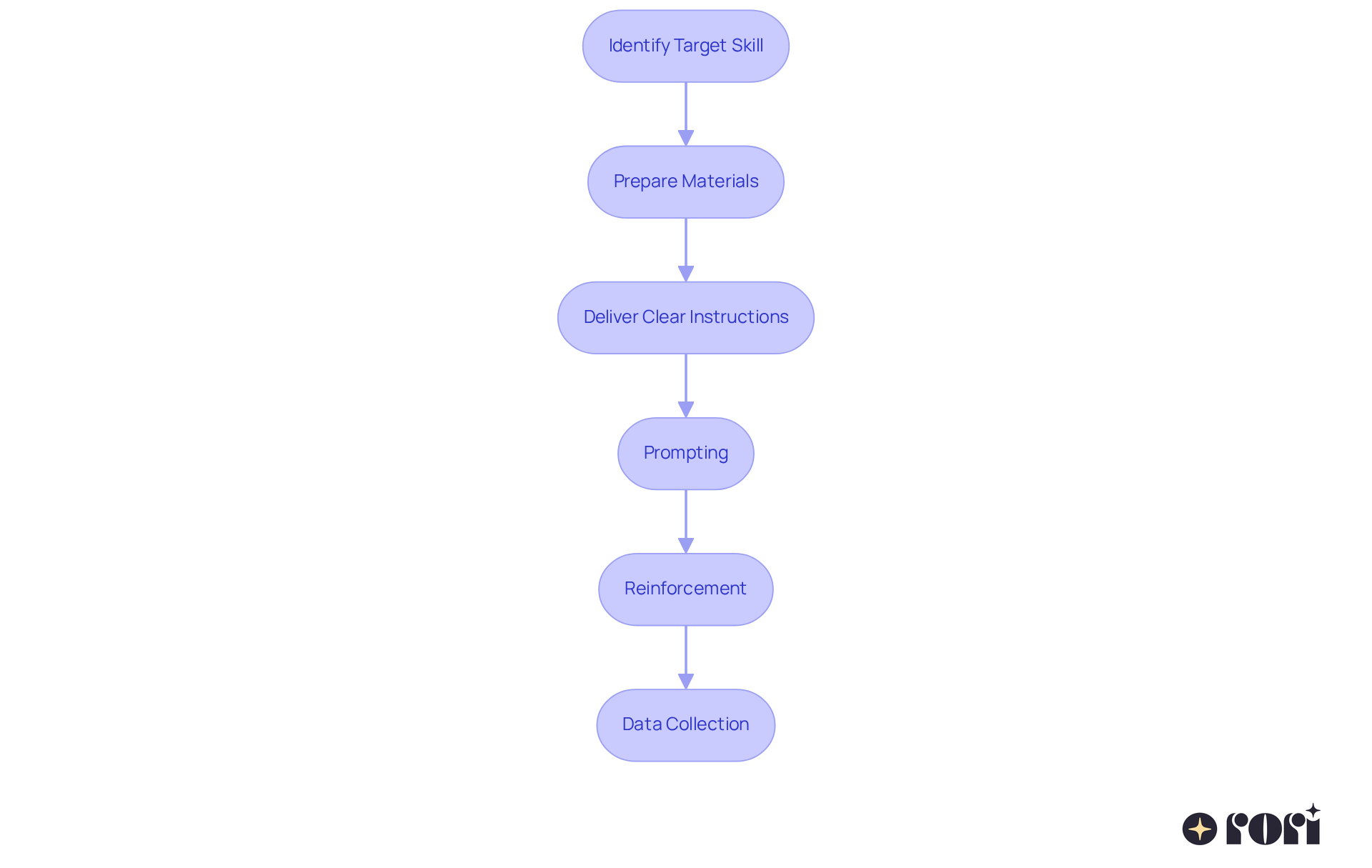
Implementing is all about creating a that feels welcoming and supportive. Here are some essential steps to consider:
- Identify the Target Skill: Start by clearly defining the you want to teach. It could be something simple, like identifying colors or following one-step directions. Keeping it clear helps everyone stay on the same page!
- Prepare Materials: Gather the necessary materials, such as visual aids, flashcards, and fun reinforcers like stickers or snacks. These tools can really help make learning enjoyable.
- Deliver : When it’s time to give directions, keep them straightforward. Using short and simple language ensures that the young one understands what’s expected of them.
- Prompting: If the young one isn’t responding, don’t hesitate to use prompting techniques. This might mean guiding their hand to the correct object or demonstrating the desired response. It’s all about supporting them in finding the right answer.
- Reinforcement: Remember to provide immediate for correct responses! A little praise or a token can go a long way in .
- : Keep a close eye on the student’s responses. This helps you evaluate their progress, identify areas where they might need a little extra help, and adjust your teaching approach as needed.
By following these steps, you can really enhance the effectiveness of the . It encourages the development of abilities and nurtures independence in individuals with autism through a . This organized method not only but also ensures that skills are applied in various settings, like home and school.
Let’s explore this together and make learning a joyful experience!
Autism Speaks: Understanding the Principles of Discrete Trial Training
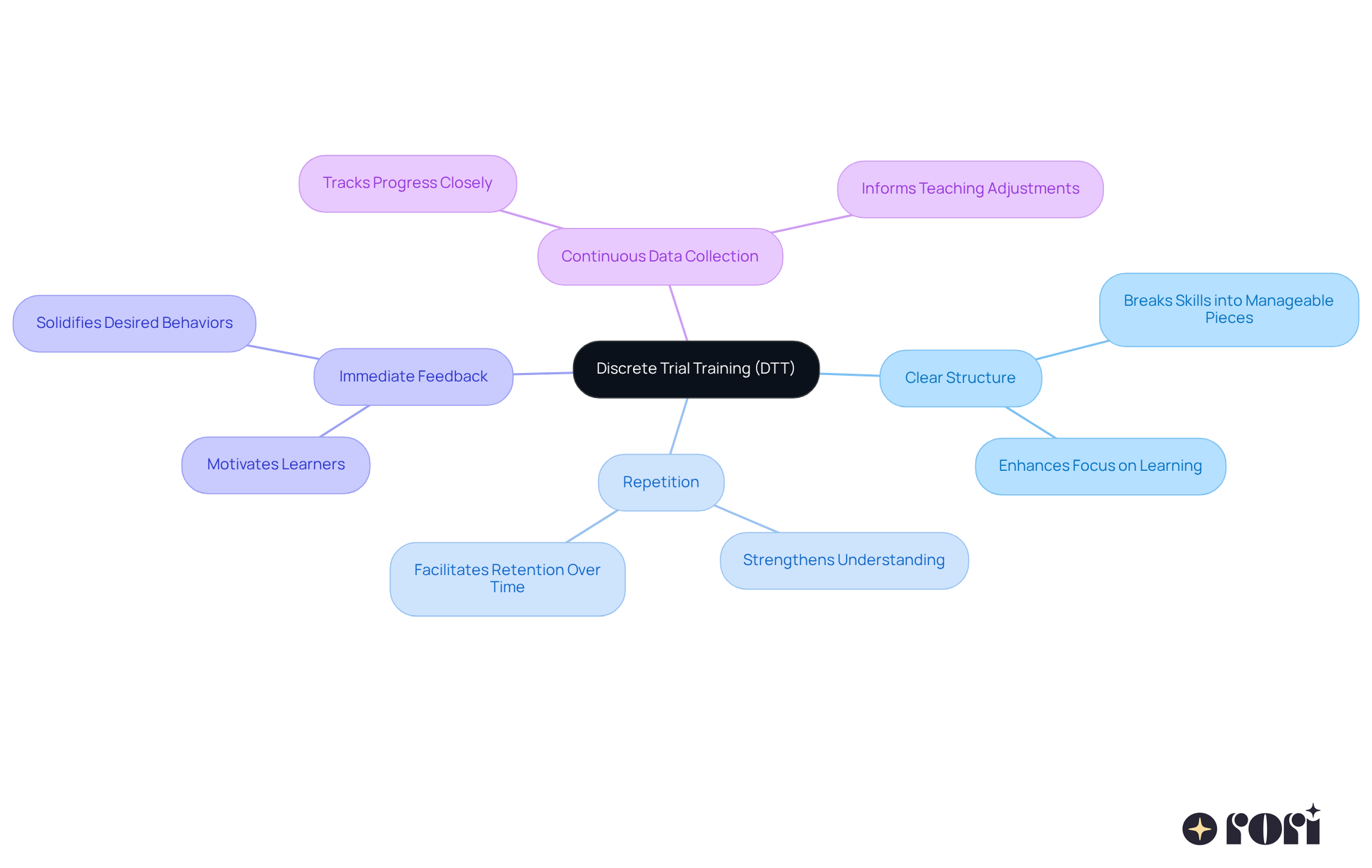
An effective is built on foundational principles that significantly enhance learning for children with autism.
- Clear Structure: DTT breaks down skills into . This makes it easier for kids to and mastering each element one step at a time.
- Repetition: The approach uses multiple trials to strengthen understanding and retention. This way, abilities aren’t just taught; they’re absorbed over time.
- : for correct responses is key. It motivates learners and solidifies those desired behaviors, making the whole much more engaging.
Continuous is a significant aspect of the . It allows educators and caregivers to and make informed adjustments to teaching strategies whenever needed.
These principles are vital for executing . They create an organized setting that encourages successful learning and nurtures independence in individuals with autism. Let’s explore this together and see how these strategies can make a difference!
IIDC: Effectiveness of Discrete Trial Training in Structured Teaching
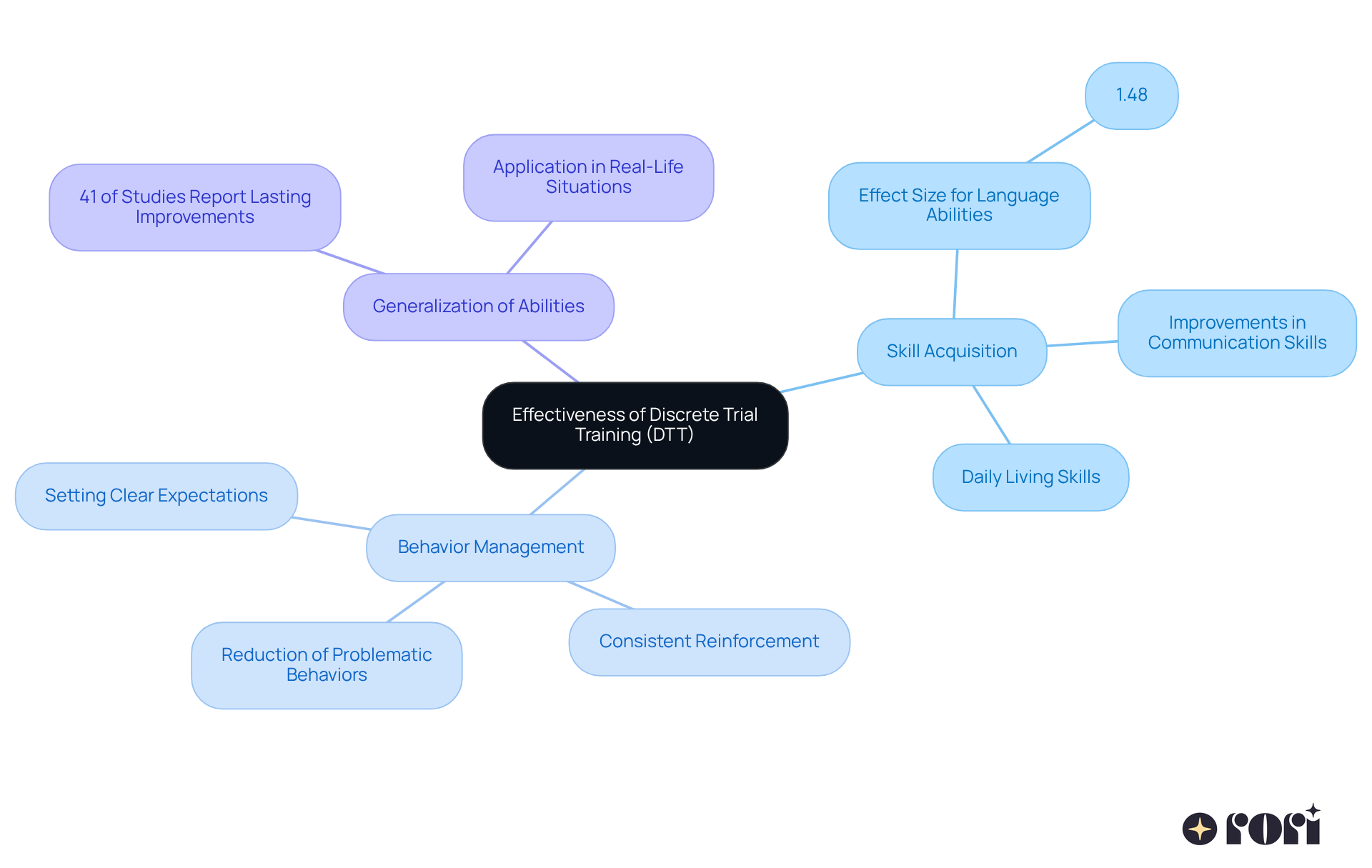
Research shows that the , which refers to , is a fantastic approach for individuals with autism, especially in structured teaching environments. Let’s dive into some key findings together!
- Skill Acquisition: DTT has proven to be a game-changer in helping kids pick up . Many youngsters participating in DTT see remarkable improvements in these areas. In fact, research shows a combined effect size for language abilities of 1.48 in early childhood programs. Isn’t that encouraging?
- Behavior Management: The structured nature of DTT is really helpful for . By setting clear expectations and providing consistent reinforcement, this method not only reduces problematic behaviors but also creates a more . At Rori Care, our clinical leadership team is dedicated to empowering caregivers with essential . This support enhances your ability to help your loved one achieve their effectively.
- Generalization of Abilities: When done right, the , making it easier for individuals to apply what they’ve learned in real-life situations. Research highlights that 41% of studies with follow-up measures reported beyond the training context. That’s a great sign of progress!
These findings really underscore the importance of the as a vital resource for individuals with autism, paving the way for better developmental outcomes. Plus, Rori Care is here to support you through education, boosting your confidence and helping you make informed choices. This ultimately leads to better behavioral outcomes for your child. It’s interesting to note that 76% of study participants had only ASD, while 24% had mixed diagnoses, showing that DTT is applicable across different populations.
Let’s explore this together! We’re here to !
Golden Steps ABA: Benefits of Discrete Trial Training for Autism
The benefits of the are truly remarkable and come in many forms!
- : DTT’s structured approach really helps kids focus, making it easier for them to grasp new concepts. This predictability in their learning environment allows young learners to adapt and thrive.
- : By breaking down communication tasks into smaller, manageable steps, DTT helps kids express themselves more clearly. For instance, they can start with simple commands like ‘Touch blue’ before moving on to more complex tasks, which significantly boosts their .
- : DTT also encourages the development of self-help skills, leading to greater independence in daily activities. As children master specific behaviors, therapists can gradually increase the complexity of tasks, further supporting their growth.
- : The immediate reinforcement used in DTT promotes positive behaviors while minimizing challenging ones. When kids receive and enthusiastic praise for effective responses, it boosts their confidence and motivation!
These advantages really highlight why the is such a valuable resource for individuals with autism, enhancing their and overall development. At Rori Care, we’re passionate about neurodiversity and empowering caregivers with . We invite parents to actively through informed decision-making and consistent involvement. Let’s explore Rori Care’s resources and programs related to caregiver education together to further enrich your child’s learning journey!

Links ABA: Contrasting Discrete Trial Training with Natural Environment Teaching
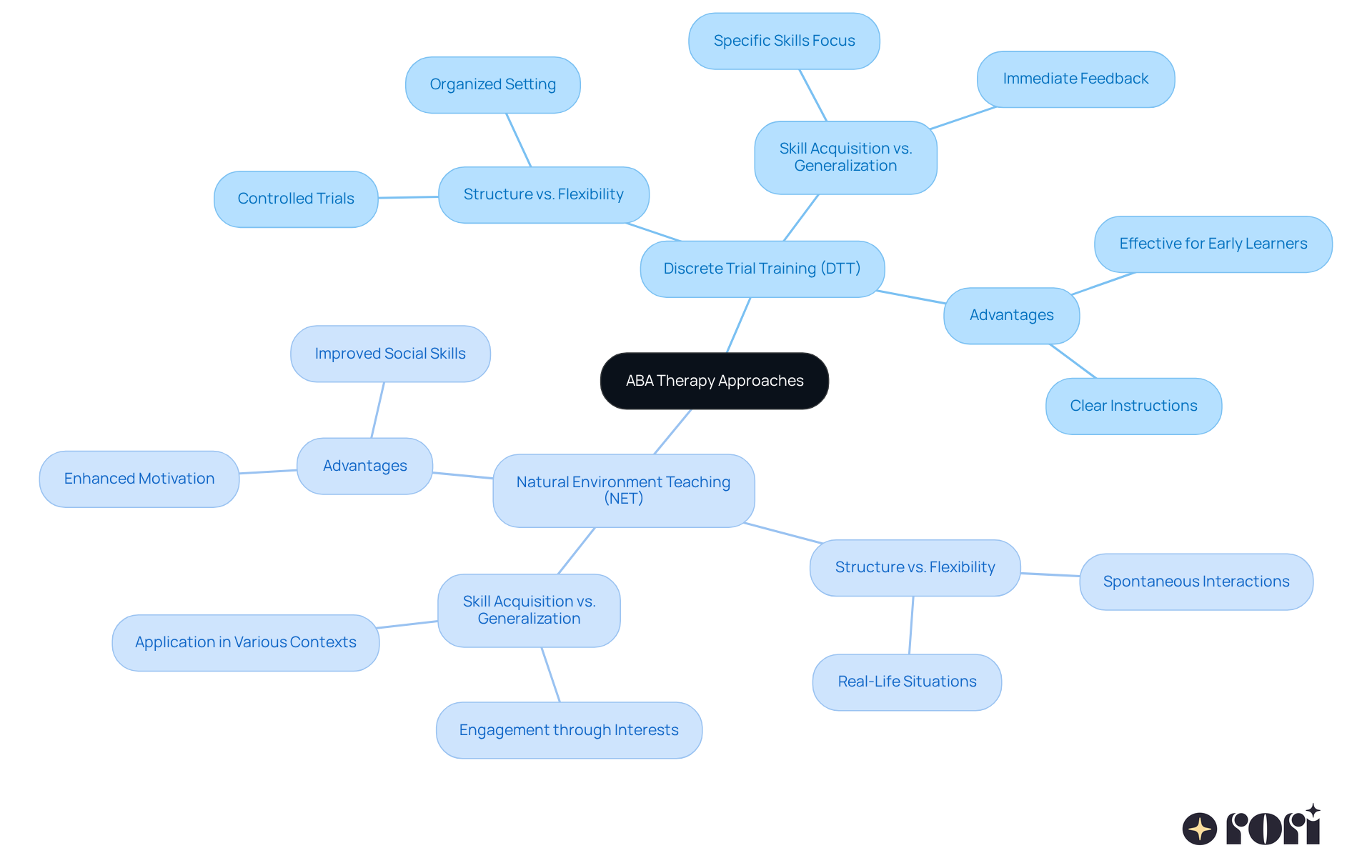
An example of DTT, or , along with (NET), represents two distinct yet complementary approaches within Applied Behavior Analysis (ABA) therapy. Each method has its own unique style, empowering caregivers and enhancing child development in meaningful ways.
- Structure vs. Flexibility: The shines in its organized setting, focusing on specific skills through controlled trials. It breaks tasks down into manageable steps, allowing for clear instructions and immediate feedback. On the flip side, NET embraces to teach through spontaneous interactions and real-life situations. This makes learning feel more engaging and relevant! Caregivers familiar with ABA principles can effectively support their children in both settings, reinforcing the skills learned during therapy.
The teaching methodology includes a that emphasizes systematic , where each trial consists of an instruction, a prompt, and a consequence. This structured method serves as a valuable DTT example for early learners developing basic skills. In contrast, NET taps into a child’s interests and immediate surroundings, promoting learning through play and interaction. This approach enhances motivation and engagement, making learning fun! Caregiver education is key here, as informed caregivers can align their support strategies with these methods, ensuring consistency and effectiveness.
Ability Generalization: While the DTT example focuses on in a controlled way, NET excels in helping children across various contexts. Research shows that children who participate in NET tend to demonstrate improved adaptability and social skills, as they learn to apply their knowledge in practical situations. This generalization is crucial for achieving lasting outcomes in ABA therapy. Empowered caregivers can play a significant role in this process by actively participating in their child’s learning and reinforcing skills in everyday situations.
Both DTT and NET have their unique advantages. Understanding their differences allows for a more to teaching individuals with autism. Choosing between NET and DTT depends on each child’s specific needs, strengths, and goals. By blending both approaches, therapists can create personalized care plans that cater to each individual’s unique requirements, ultimately enhancing their growth and development. Plus, incorporating measurable goals and ongoing evaluation within both methods can further improve learning outcomes. Family involvement is vital in reinforcing the skills learned in therapy. Through caregiver education, families can become empowered partners in their loved one’s ABA journey, leading to better behavioral outcomes and improved family dynamics. Let’s explore this together!
Golden Steps ABA: Data Collection Techniques in Discrete Trial Training
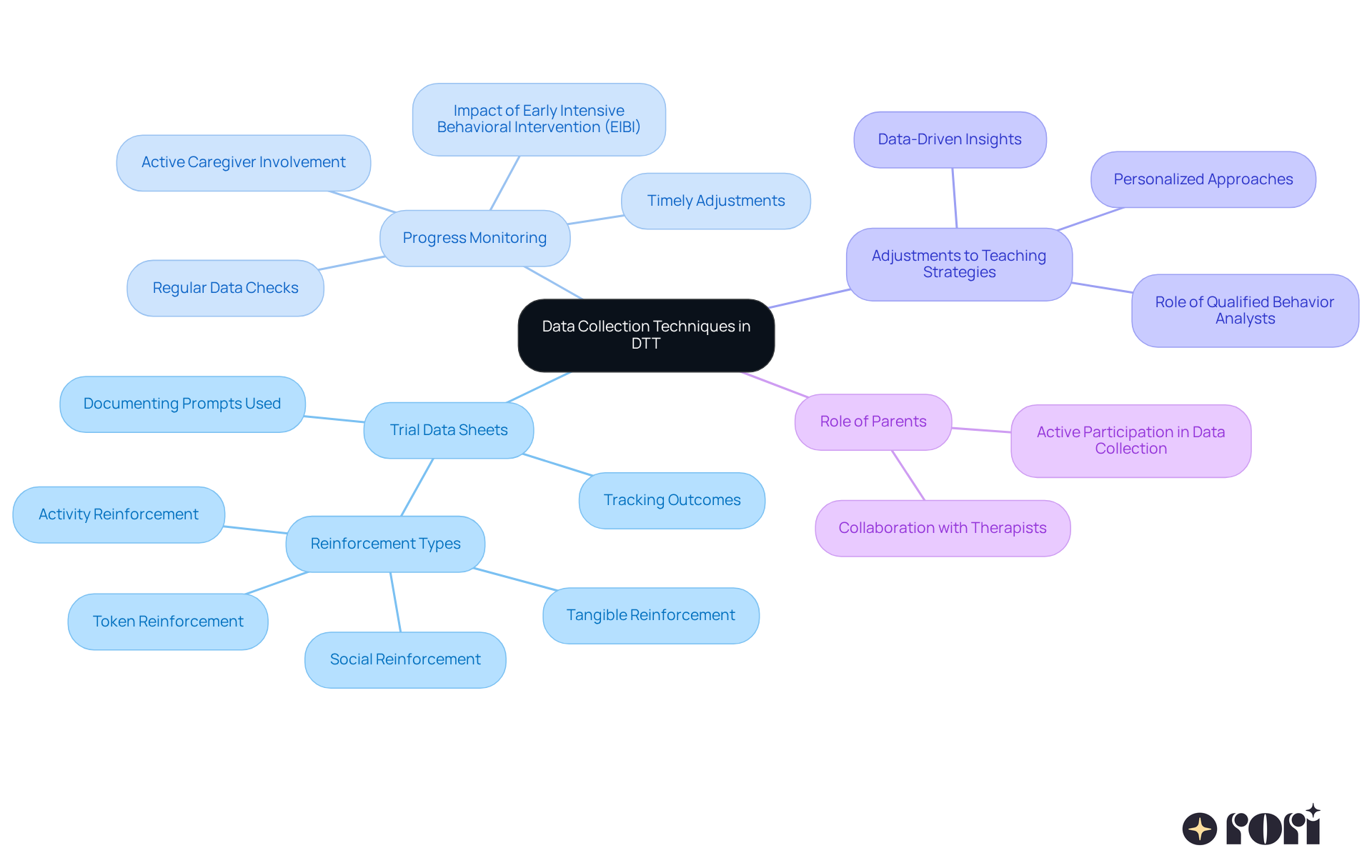
Data collection is super important in Discrete Trial Training (DTT), and a illustrates how it serves as the backbone for effective intervention! Let’s dive into some key techniques that make a difference:
- : These handy sheets keep track of each trial’s outcomes, noting correct responses, prompts used, and the type of reinforcement given. By documenting everything, we can analyze the , which helps us evaluate and tweak treatment plans based on progress reports.
- : Regularly checking the collected data is vital for clinicians to see how the young patient is doing. This ongoing review, along with active caregiver involvement, allows for timely adjustments to the , ensuring it meets the individual’s changing needs. And guess what? When we fully implement the suggested hours, about 90% of youth show significant progress, emphasizing the power of in boosting verbal and social skills for those with autism.
- : Data insights empower therapists to refine their teaching methods based on how the child is performing. This flexibility is crucial for keeping the intervention effective, allowing for that cater to individual styles. Qualified behavior analysts play a key role here, creating tailored plans with measurable objectives and evidence-based strategies.
Also, keeping attention and motivation high during structured sessions is essential, as these factors can greatly impact the effectiveness of DTT. While DTT provides a structured environment that’s great for learning, it’s important to address concerns about how well it . Plus, prompt reinforcement tied to specific behaviors is a core principle in DTT, which helps boost both skill acquisition and motivation.
By using solid , we not only enhance the overall effectiveness of the but also lead to significantly better learning outcomes for individuals with autism. When we create a data-oriented atmosphere, clinicians can make informed choices that support learning and foster independence. Parents can play a big role in this journey by actively participating in data collection and discussing progress with their child’s therapist, ensuring a collaborative approach to their development.
Let’s explore this together! We’re here to help you every step of the way!
Autism Speaks: Variations in Discrete Trial Training for Individual Needs
An effective illustrates how can be through various adaptations.
- Skill Focus: DTT can be tailored to target specific skills based on the child’s unique challenges, such as communication, social interaction, or daily living tasks. This focused method ensures that therapy is relevant and effective. Research shows that DTT significantly improves among youth with ASD. At Rori Care, our qualified create that reflect each individual’s strengths and goals, ensuring the support feels just right.
- : We can use various prompting methods to match the individual’s learning style. By offering just the right level of support, therapists can promote success and enhance the student’s learning experience. The structured nature of ABA therapy allows for these tailored approaches, making sure that interventions are effective and individualized. Our ongoing assessment and adjustment processes enable us to tweak these strategies as needed, boosting results for every student.
- : The kind of reinforcement used in DTT can be adjusted to fit the individual’s preferences, which really helps boost motivation and engagement. Personalized keep interest alive and encourage positive behavior. Plus, using ensures that interventions are grounded in solid evidence, making them even more effective. At Rori Care, we set clear, measurable goals for behavior change and skill development, providing a transparent benchmark for progress.
These variations highlight how the can be, allowing it to meet the specific challenges each individual faces. This ultimately leads to more effective learning outcomes. Parents can play a vital role in supporting their child’s progress by actively participating in the reinforcement process and communicating with about their preferences and challenges. Let’s explore this together!

Links ABA: Generalization Strategies in Discrete Trial Training
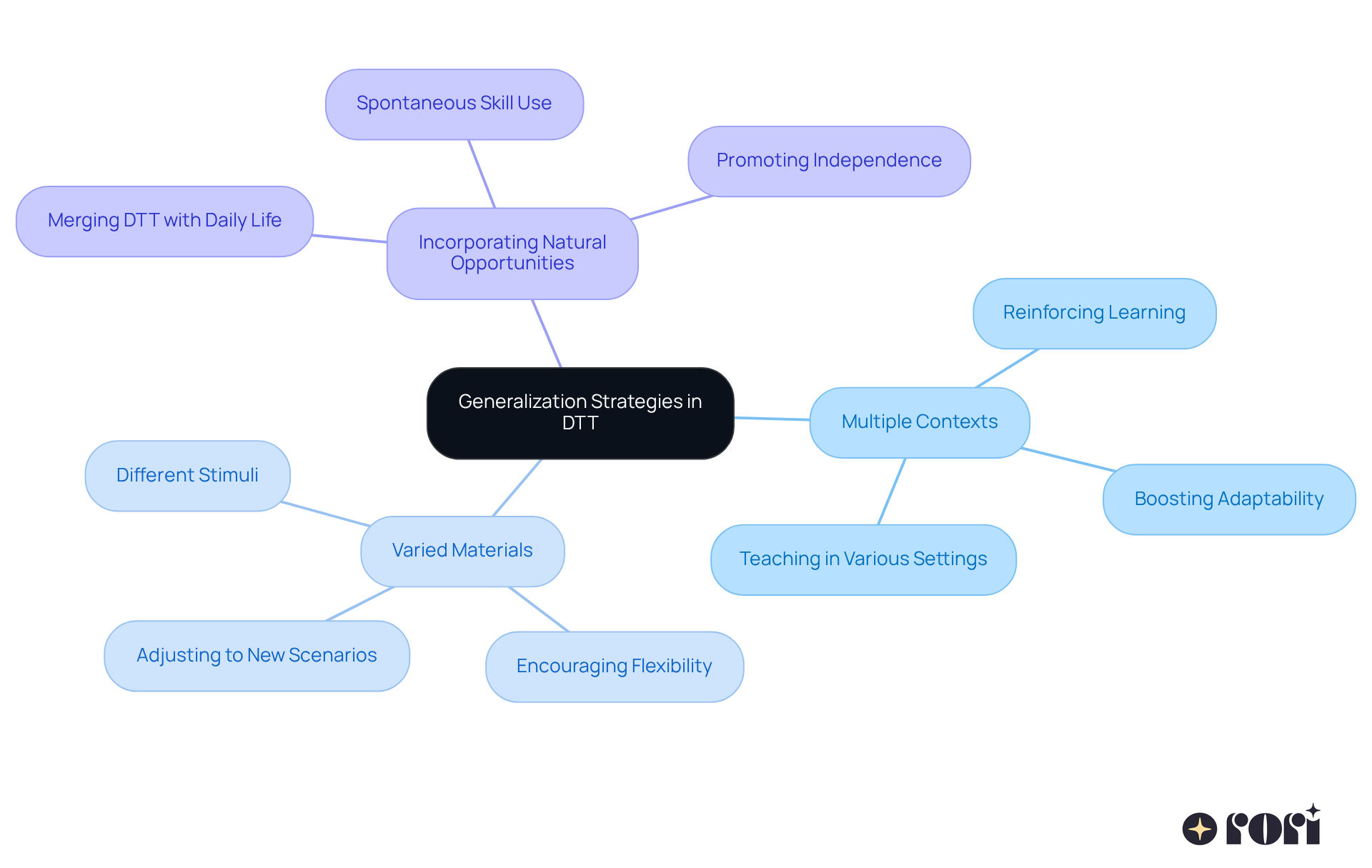
are super important in because they help kids apply what they’ve learned in different situations. Let’s dive into some key strategies that can make a big difference!
- : Teaching skills in various settings—like home, school, and community—helps children use their new abilities in real-life situations. This not only reinforces their learning but also boosts their adaptability.
- : Using different materials and stimuli during DTT sessions encourages kids to . By introducing them to a range of contexts and resources, they learn to adjust to new scenarios, which is crucial for their growth.
- : Merging DTT with everyday chances for practice inspires kids to use their skills spontaneously in daily life. This blend solidifies their learning and promotes .
By implementing these within the , we can effectively prepare children with autism to apply their skills across various environments. This ultimately helps them grow in and confidence. Let’s explore this together and see how we can support our children every step of the way!
Conclusion
Exploring Discrete Trial Training (DTT) truly highlights its amazing impact on helping children with autism learn. By using personalized strategies and structured methods, DTT not only tackles the unique challenges each child faces but also encourages their independence and communication skills. This tailored approach really shows how important it is to understand individual needs, making sure that the interventions are effective and relevant.
One of the key insights from the article is the importance of caregiver involvement, data-driven strategies, and how adaptable DTT can be in different situations. For instance, teaching daily living skills and promoting positive behaviors are practical examples that show how DTT can fit seamlessly into everyday life. Plus, the focus on measurable goals and ongoing evaluation reinforces how effective this method is in fostering meaningful progress.
Ultimately, embracing DTT as a crucial resource for children with autism opens up pathways for better developmental outcomes. By taking an active role in their child’s learning journey, caregivers can significantly enrich the educational experience and overall well-being of their loved ones. Committing to personalized education and applying DTT principles can empower families and create lasting positive changes in the lives of children with autism. Let’s explore this together and see how we can make a difference!
Frequently Asked Questions
What is Rori Care’s approach to ABA therapy?
Rori Care embraces a personalized approach to Discrete Trial Training (DTT), focusing on each child’s unique strengths and challenges through a thorough evaluation process.
How does Rori Care tailor their DTT strategies?
DTT strategies are customized based on individual assessments of each child, addressing specific learning needs and utilizing evidence-based strategies to maximize effectiveness.
What are measurable goals in Rori Care’s therapy?
Measurable goals are clear, quantifiable objectives set for behavior change and skill development, allowing for transparent tracking of progress.
How does Rori Care ensure data-driven decisions in therapy?
Ongoing data collection allows Rori Care to adjust treatment plans based on continuous evaluation, ensuring optimal progress for each child.
What is the significance of caregiver involvement in Rori Care’s therapy?
Active caregiver involvement is crucial, as significant progress is observed in 90% of children when recommended hours are fully implemented with caregiver participation.
What are some practical DTT examples provided by Golden Steps ABA?
Examples include teaching brushing teeth by breaking it down into manageable steps and using colorful blocks to help children recognize colors.
How do caregivers contribute to the DTT process at Golden Steps ABA?
Caregivers reinforce learned skills at home, promoting consistency and enhancing their child’s educational experience.
What are the essential steps for implementing DTT according to Links ABA?
The steps include identifying the target skill, preparing materials, delivering clear instructions, using prompting techniques, providing reinforcement, and collecting data on student responses.
What role does reinforcement play in DTT?
Immediate positive reinforcement for correct responses encourages continued engagement and motivation in the learning process.
How does following structured steps in DTT benefit individuals with autism?
A structured approach enhances the effectiveness of DTT, promotes skill development, nurtures independence, and improves educational outcomes in various settings.
List of Sources
- Rori Care – ABA Therapy: Personalized DTT Strategies for Autism
- The Significance of Statistics in ABA Therapy | All Star ABA (https://allstaraba.org/statistics-in-aba-therapy)
- Inspirational ABA and Autism Quotes – Mrs. Moe’s Modifications (https://mrsmoesmodifications.com/inspirational-aba-and-autism-quotes)
- Resources | Golden Steps ABA (https://goldenstepsaba.com/resources/success-rates-of-aba-therapy)
- Applied Behavior Analysis in Children and Youth with Autism Spectrum Disorders: A Scoping Review – PMC (https://pmc.ncbi.nlm.nih.gov/articles/PMC9458805)
- Patient Outcomes After Applied Behavior Analysis for Autism Spectrum Disorder – PMC (https://pmc.ncbi.nlm.nih.gov/articles/PMC8702444)
- Golden Steps ABA: Real-World DTT Examples for Skill Acquisition
- The Efficacy of Early Interventions for Children with Autism Spectrum Disorders: A Systematic Review and Meta-Analysis – PMC (https://pmc.ncbi.nlm.nih.gov/articles/PMC9457367)
- gratefulcareaba.com (https://gratefulcareaba.com/blog/aba-therapy-and-autism-acceptance)
- researchgate.net (https://researchgate.net/publication/360161458_Development_of_Discrete_Trial_Training_DTT_Procedure_in_Smart_Applied_Behavior_Analysis_Smart_ABA_for_Autism)
- 10 inspiring quotes from people with autism | Autism Speaks (https://autismspeaks.org/life-spectrum/autism-quotes)
- Links ABA: Step-by-Step Implementation of Discrete Trial Training
- mastermindbehavior.com (https://mastermindbehavior.com/post/how-to-implement-discrete-trial-training-dtt-in-aba-therapy)
- mastermindbehavior.com (https://mastermindbehavior.com/post/the-science-behind-discrete-trial-training-in-aba)
- behaviortechcourse.com (https://behaviortechcourse.com/implementing-discrete-trial-training-dtt-a-step-by-step-guide)
- rori.care (https://rori.care/post/mastering-discrete-trial-training-a-step-by-step-guide)
- Autism Speaks: Understanding the Principles of Discrete Trial Training
- The Effectiveness of DTT (Discrete Trial Training) in ABA Therapy (https://mastermindbehavior.com/post/the-effectiveness-of-dtt-discrete-trial-training-in-aba-therapy)
- mastermindbehavior.com (https://mastermindbehavior.com/post/the-science-behind-discrete-trial-training-in-aba)
- Inspirational ABA and Autism Quotes – Mrs. Moe’s Modifications (https://mrsmoesmodifications.com/inspirational-aba-and-autism-quotes)
- What Are ABA Therapy Quotes? Understanding Their Role and Importance – Rori Blog (https://rori.care/post/what-are-aba-therapy-quotes-understanding-their-role-and-importance)
- IIDC: Effectiveness of Discrete Trial Training in Structured Teaching
- mastermindbehavior.com (https://mastermindbehavior.com/post/the-science-behind-discrete-trial-training-in-aba)
- Applied Behavior Analysis in Children and Youth with Autism Spectrum Disorders: A Scoping Review – PMC (https://pmc.ncbi.nlm.nih.gov/articles/PMC9458805)
- The Effectiveness of DTT (Discrete Trial Training) in ABA Therapy (https://mastermindbehavior.com/post/the-effectiveness-of-dtt-discrete-trial-training-in-aba-therapy)
- researchgate.net (https://researchgate.net/publication/389715775_Effect_of_Discrete_Trial_Training_Intervention_on_Social_Skills_Development_of_Children_with_Autism_Spectrum_Disorder)
- Golden Steps ABA: Benefits of Discrete Trial Training for Autism
- risingaboveaba.com (https://risingaboveaba.com/autism-blog/dtt-for-improving-communication-skills)
- mastermindbehavior.com (https://mastermindbehavior.com/post/the-science-behind-discrete-trial-training-in-aba)
- behaviornation.com (https://behaviornation.com/blog/5-reasons-why-discrete-trial-teaching-is-beneficial)
- Comparing the Effectiveness of Discrete Trial Training Delivered via Telehealth and In-Person on Skill Acquisition – PMC (https://pmc.ncbi.nlm.nih.gov/articles/PMC11461439)
- Links ABA: Contrasting Discrete Trial Training with Natural Environment Teaching
- precisionfamilytherapy.com (https://precisionfamilytherapy.com/post/how-to-balance-structure-and-flexibility-in-at-home-aba-therapy)
- crossrivertherapy.com (https://crossrivertherapy.com/articles/the-importance-of-flexibility-in-aba-therapy-for-children-with-autism)
- chicagoabatherapy.com (https://chicagoabatherapy.com/resources/articles/differences-between-natural-environment-training-net-and-discrete-trial-training-dtt)
- stepaheadaba.com (https://stepaheadaba.com/blog/how-to-handle-unexpected-schedule-changes-with-aba-techniques)
- Golden Steps ABA: Data Collection Techniques in Discrete Trial Training
- risingaboveaba.com (https://risingaboveaba.com/autism-blog/how-to-measure-progress-in-dtt)
- What is Discrete Trial Training? Mastering ABA Techniques (https://mastermindbehavior.com/post/what-is-discrete-trial-training-in-aba)
- yellowbusaba.com (https://yellowbusaba.com/post/aba-therapy-for-discrete-trial-training)
- The Effectiveness of DTT (Discrete Trial Training) in ABA Therapy (https://mastermindbehavior.com/post/the-effectiveness-of-dtt-discrete-trial-training-in-aba-therapy)
- amazeaba.com (https://amazeaba.com/discrete-trial-training-in-aba-what-you-need-to-know)
- Autism Speaks: Variations in Discrete Trial Training for Individual Needs
- astroaba.com (https://astroaba.com/blog/how-aba-therapy-is-customized-for-each-child)
- rori.care (https://rori.care/post/master-the-dtt-data-sheet-for-effective-aba-therapy)
- researchgate.net (https://researchgate.net/publication/389715775_Effect_of_Discrete_Trial_Training_Intervention_on_Social_Skills_Development_of_Children_with_Autism_Spectrum_Disorder)
- ABA Therapy for Autism Behavioral Development Centers (https://goldenstepsaba.com/resources/aba-therapy-for-autism-behavioral-development-centers-3bea9)
- The Effectiveness of DTT (Discrete Trial Training) in ABA Therapy (https://mastermindbehavior.com/post/the-effectiveness-of-dtt-discrete-trial-training-in-aba-therapy)
- Links ABA: Generalization Strategies in Discrete Trial Training
- Examining the Effects of Discrete Trials, Mass Trials, and Naturalistic Environment Training on Autistic Individuals Using Repeated Measures – PMC (https://pmc.ncbi.nlm.nih.gov/articles/PMC10907925)
- 20+ Quotes About Learning: Timeless Insights for Modern Learners (https://elmlearning.com/blog/quotes-about-learning)
- researchgate.net (https://researchgate.net/publication/7431837_Parent_training_Acquisition_and_generalization_of_discrete_trials_teaching_skills_with_parents_of_children_with_autism)
- motivity.net (https://motivity.net/blog/generalization-in-aba)
- soeonline.american.edu (https://soeonline.american.edu/blog/25-inspirational-quotes-for-teachers)