
Introduction
Play-based ABA strategies are truly changing the game when it comes to helping kids develop social skills! 🌟 They offer a fun and engaging way for children to learn essential interpersonal skills while enjoying themselves. By tapping into the power of play, these strategies not only make therapy enjoyable but also create natural opportunities for kids to practice and refine their social interactions in a supportive environment.
But you might be wondering, how can you, as a caregiver, weave these techniques into your daily life to really boost your child’s progress? 🤔 This article dives into ten innovative play-based approaches that can enhance social skills, providing valuable insights for parents and educators alike. Let’s explore this together!
Rori Care – ABA Therapy: Personalized Play-Based Strategies for Social Skills
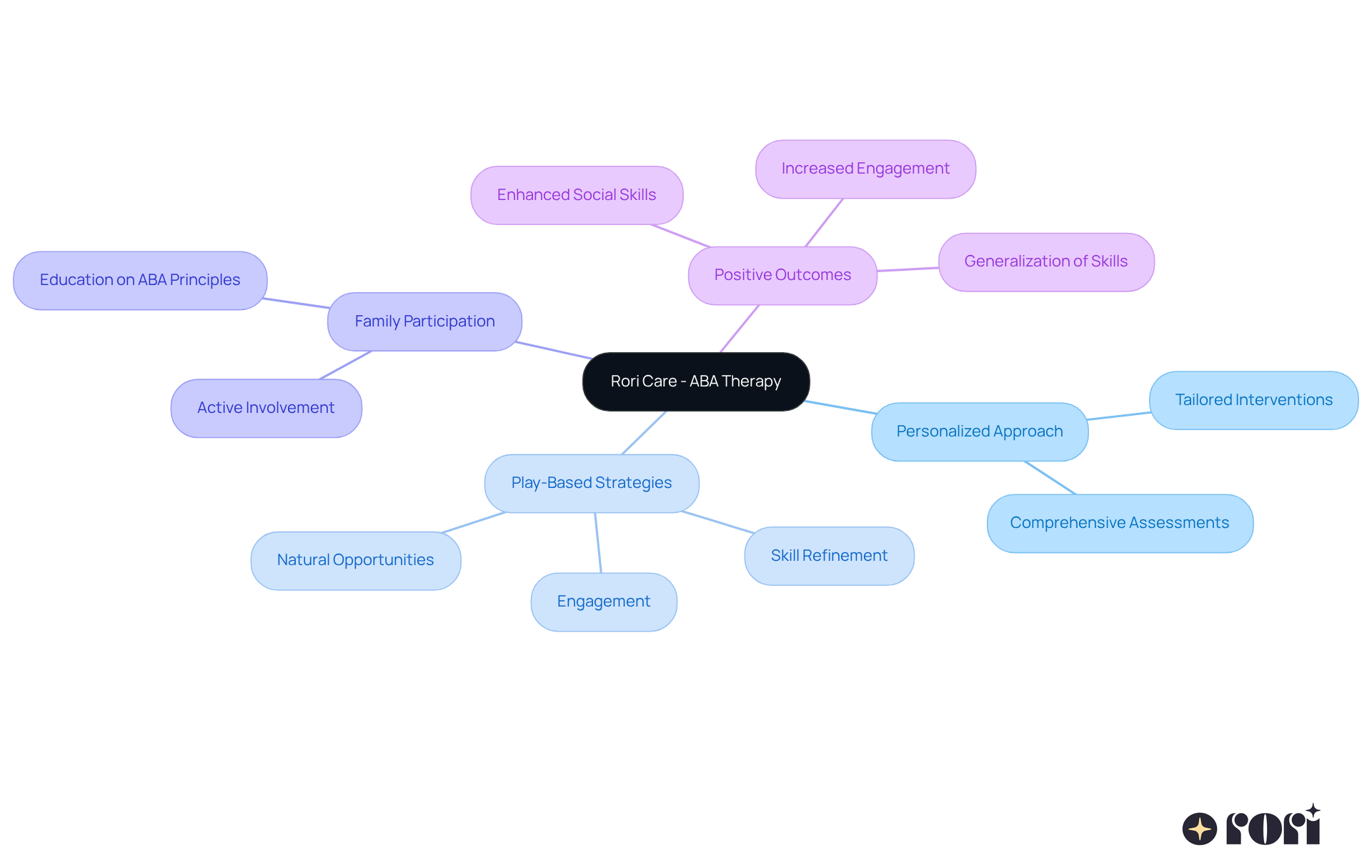
At Rori Care, we believe in a personalized approach to ABA therapy that truly resonates with each child’s unique needs. Our are designed to be , making therapy feel less like a chore and more like an adventure! 🌟 By conducting , our clinicians create that not only enhance interpersonal skills but also spark joy and motivation during sessions.
Research shows that work wonders in enhancing social interactions. They provide in a supportive environment. Clinicians have seen firsthand how lead to greater engagement and better outcomes, reinforcing the idea that .
But it doesn’t stop there! . When caregivers are , they can make . Active involvement not only boosts the effectiveness of therapy but also helps children generalize their skills outside of sessions. This ultimately leads to .
So, let’s explore this together! We’re here to help you every step of the way as you navigate this journey with your child.
Structured Play Activities: Building Social Skills Through Engagement
Organized play activities, like and , are fantastic for kids! They provide clear expectations and chances to practice those all-important . These activities utilize , which really help with , allowing kids to learn how to navigate social situations in a .
For example, games like ‘Simon Says’ or board games can teach kids the value of following rules and taking turns. This is especially beneficial for children with Autism Spectrum Disorders, ADHD, Communication Disorders, and Anxiety Disorders, as help boost their confidence. Integrating tools like during these sessions can further motivate kids and reinforce positive behaviors, demonstrating in therapy.
And let’s not forget about ! It can significantly enhance young people’s , relationship management, and self-esteem. This approach offers a well-rounded method for personal growth. So, let’s explore this together and see how we can support our kids in their journey!
Positive Reinforcement Techniques: Encouraging Social Interaction in Play
Using , particularly during activities, is crucial for helping kids connect with each other! For example, when a child shares a toy or starts a chat, giving them a little or a small reward can really . It also helps them feel more confident when interacting with their peers.
Research shows that , including a simple compliment, can significantly impact how kids behave socially, encouraging them to be more interactive and collaborative. By consistently , caregivers and educators can utilize to where kids feel motivated to engage with others. This not only enhances their social skills but also employs [](https://rori.care/post/10-essential-aba-therapy-resources-for-parents-of-children-with-autism) to .
Let’s explore this together! How have you seen work in your own experiences with kids?

Naturalistic Play Experiences: Enhancing Social Skills in Everyday Settings
Naturalistic recreational experiences, like trips to parks or , are so important for kids to in real-life situations. These settings encourage spontaneous interactions with peers, giving them a chance to apply effective for social skills that they’ve learned in therapy. For instance, at a playground, kids can share equipment and negotiate play situations – skills that are crucial for getting along with others.
Did you know that studies show kids with autism often develop social skills more slowly? That’s why these are key to bridging therapy and everyday interactions using . As one therapist put it, ‘ offer the best opportunities for young people to practice and enhance their social skills using , making learning both meaningful and fun!’
Getting involved in not only boosts interactions with others but also builds confidence, helping kids handle situations more effectively. So, let’s explore this together! How can you encourage your child to engage in these ?
Family Engagement Strategies: Supporting Social Skills Development at Home
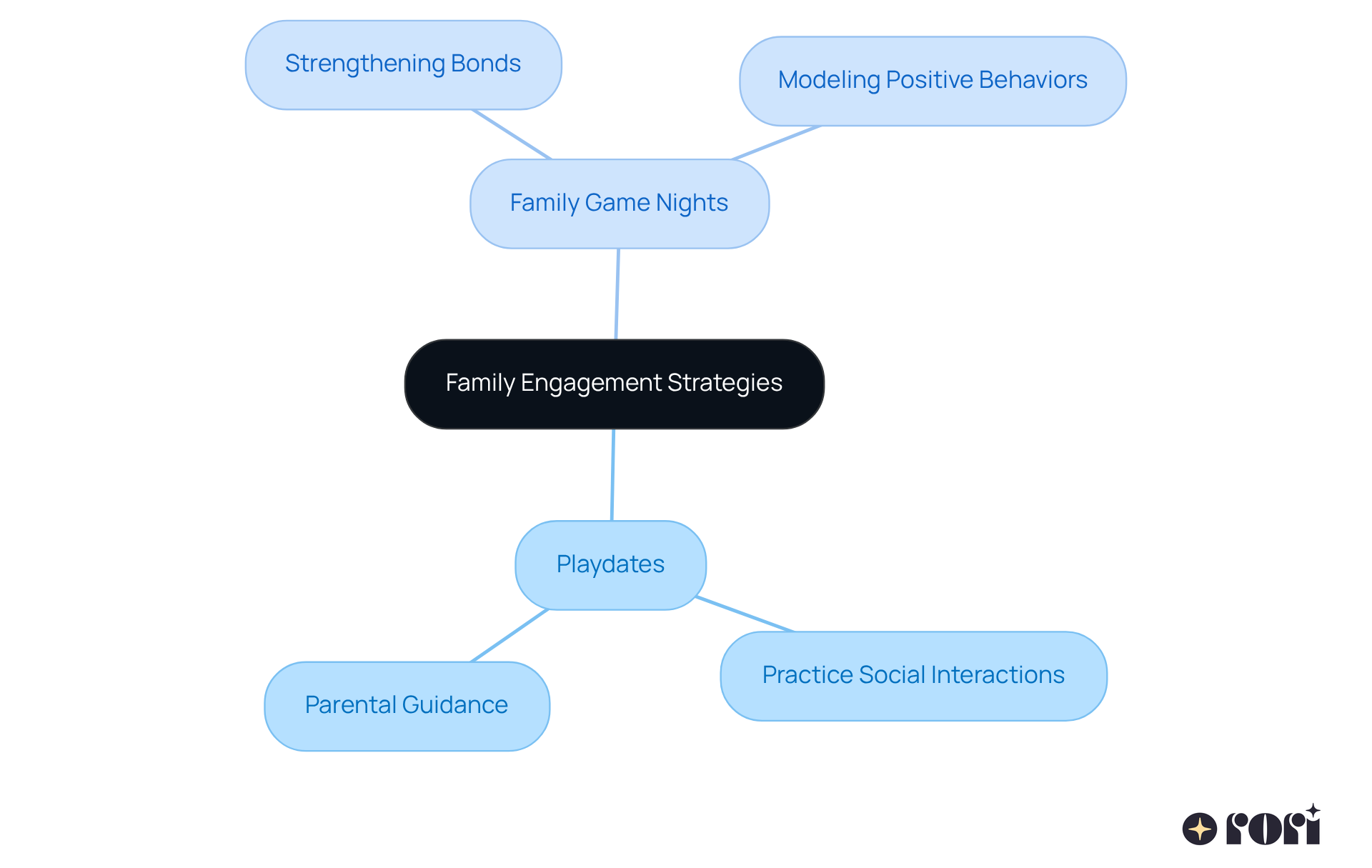
Getting families involved in the therapy process is so important for building those at home! Playdates are a fantastic way for kids to practice their in a relaxed setting while incorporating effective . By setting up dates, parents not only give their kids a chance to connect with friends but also get to observe and guide those interactions.
can really . Plus, when parents model during these fun times, it sets a great example for the little ones. By joining in on their kids’ activities, parents can offer immediate feedback and support, creating a space where those can really thrive.
As parenting experts often remind us, is one of the effective that helps kids pick up on social cues and build meaningful relationships. This, in turn, in social situations. So, let’s explore this together! How can you make playdates a regular part of your family routine?
Data-Driven Interventions: Measuring Success in Social Skills Development
Data-driven interventions in are crucial for tracking the development of children’s through . By gathering information on specific behaviors – like how often a child starts conversations or shares with friends – therapists can really see what’s working and what’s not. Common methods for collecting this data include:
- Frequency counts
- Duration tracking
- Anecdotal notes
All of which give valuable insights into a child’s progress.
This approach allows for quick adjustments to interventions, ensuring they meet each child’s changing needs. As clinicians often point out, is key; it turns personal observations into , helping families witness their child’s growth in social interactions. Plus, with the help of , Rori Care is making even more efficient by automating progress reports. This means therapists can spend 50% more time focused on treatment!
Studies show that hybrid ABA treatment models have led to a 9.7% improvement in achieving goals, highlighting just how effective can be. This ongoing observation creates a culture of progress, where every data point represents a step forward in a child’s development. Parents can play a big part in this journey by working alongside therapists to understand the information collected and by fostering at home using through organized play and interaction.
Let’s explore this together! Your involvement can !

Technology Integration: Enhancing Play-Based Learning in ABA Therapy
Integrating technology, like interactive apps and virtual reality, into ABA therapy really enhances ! These fun tools create where kids can build their social skills in a playful way. For example, there are apps designed to mimic social situations, letting children practice conversations and read cues in a safe space. Research shows that these – some studies even report up to a 30% boost in relational abilities!
And it doesn’t stop there! , guided by skilled therapists, employ to elevate these interactions, helping kids improve their with their peers. Many of these apps come with , making the learning experience even more tailored and effective.
By blending technology with group therapy, therapists implement for social skills, creating lively learning environments that nurture emotional growth. This way, kids can thrive in real-life interactions! Plus, with , therapists can spend 50% more time on direct treatment, making ABA therapy even more effective.
Let’s explore this together! If you’re curious about how these tools can help your child, we’re here to support you every step of the way!

Stages of Play Development: Understanding Growth in Social Skills
Recognizing the – unoccupied, solitary, onlooker, parallel, associative, and cooperative – can really help clinicians tailor their interventions to fit a young person’s current abilities. For example, kids in the associative stage, usually around 3 to 4 years old, thrive in and sharing. Think joint art projects or fun cooperative games!
On the flip side, those in the , generally from ages 4 to 5, can dive into more complex group activities that require negotiation and teamwork, like team sports or role-playing games. Understanding these is super important, especially since individuals with autism might move through these stages at different paces.
Did you know that kids aged 24-30 months often enjoy playing alongside their peers? This insight can be a great way to encourage interactions during therapy. By , we not only boost engagement but also implement effective , laying a solid foundation for future interactions.
And let’s not forget ! Their active participation equips them with ABA principles and strategies, leading to better behavioral outcomes and more support for their child’s development. Remarkably, when caregivers are fully involved and recommended hours are implemented, about 90% of youths show significant progress.
So, let’s explore this together! Your involvement can make a world of difference!

Promoting Spontaneous Play: Fostering Natural Social Interactions
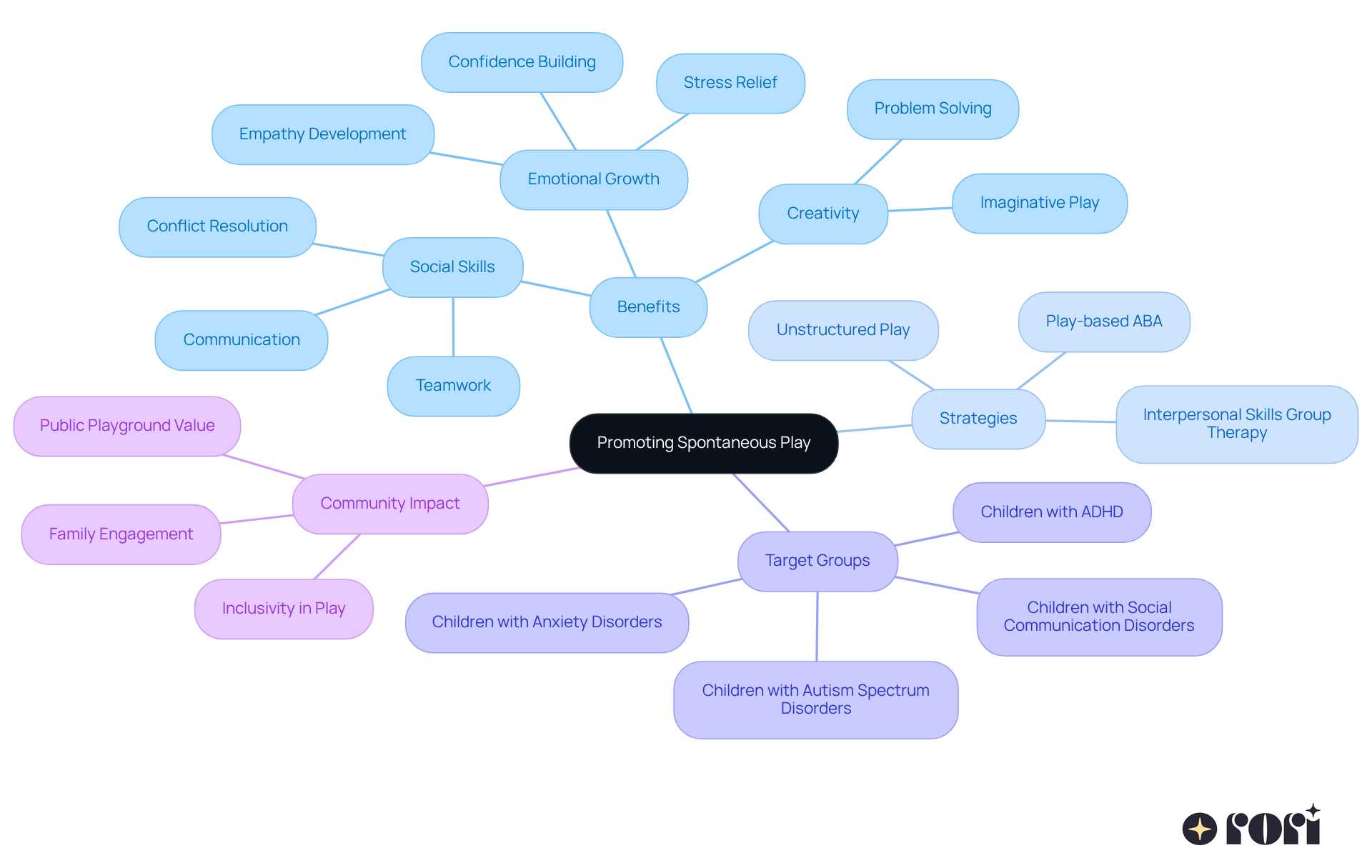
Encouraging spontaneous activities allows kids to engage in free-flowing interactions that naturally boost their social skills. This program utilizes , making it perfect for children of all ages, especially those who might struggle in social situations, including those with Autism Spectrum Disorders, ADHD, Social Communication Disorders, and Anxiety Disorders. Think about it: activities like playing freely in parks or getting creative with friends create spaces where kids can practice vital communication, teamwork, and in a laid-back environment.
When kids take the lead in their play, they and build friendships in a way that feels organic. Research shows that and honing problem-solving skills, both of which are key for successful interactions. Plus, studies indicate that kids who engage in unstructured play are better equipped to , thanks to , enhancing their ability to form and maintain relationships.
This approach not only nurtures emotional growth but also sets the stage for positive interactions as they grow up. And let’s not forget about ! It can really amplify these benefits by providing and refine their social skills using for social skills in a supportive environment.
As Tom Norquist, former president of IPEMA, wisely said, “.” It gives kids the chance to develop empathy and embrace differences. Interestingly, 92% of parents believe that playground with varying abilities, highlighting the community benefits of unstructured play.
So, let’s explore this together! How can we create more opportunities for our kids to play freely and connect with others?
Benefits of Play-Based Learning: Transforming Social Skills Development in ABA Therapy
are a wonderful way to help kids with autism develop their social skills! It makes therapy not just effective but also fun and engaging. Through play, children naturally pick up . This approach not only boosts their motivation but also helps them fall in love with learning, making it easier for them to use these skills in different settings.
Research shows that when kids start early with intensive , particularly using , they see amazing improvements in their . Isn’t that encouraging? Ultimately, for social skills build a solid foundation that helps children .
Let’s explore this together! If you’re a parent looking for ways to , remember that . We’re here to !

Conclusion
When it comes to helping our kids develop social skills, effective play-based ABA strategies really shine. They focus on engaging children in fun activities that not only make learning enjoyable but also promote growth. By using tailored interventions, these strategies enhance interpersonal skills while creating a joyful atmosphere for therapy. It’s a win-win for both kids and their families!
Throughout this article, we’ve highlighted some key strategies, like structured play activities, positive reinforcement techniques, and naturalistic play experiences. Each of these approaches helps foster social interactions and build essential skills in a supportive environment. Plus, family engagement and data-driven interventions are crucial in reinforcing these strategies, ensuring that children can carry their skills beyond the therapy setting.
Ultimately, integrating play into ABA therapy isn’t just about making learning fun; it’s about transforming how children connect with others and navigate their social worlds. Encouraging spontaneous play and family involvement can really boost a child’s confidence and competence in social situations. By embracing these effective play-based strategies, caregivers can empower their children to thrive socially, paving the way for meaningful interactions and relationships in their lives.
So, let’s explore this together! If you’re looking for ways to support your child’s social skills, remember that you’re not alone. We’re here to help you every step of the way!
Frequently Asked Questions
What is the approach of Rori Care towards ABA therapy?
Rori Care employs a personalized approach to ABA therapy that focuses on each child’s unique needs, utilizing effective play-based strategies for social skills that make therapy engaging and enjoyable.
How do play-based ABA strategies enhance social interactions?
Play-based ABA strategies provide natural opportunities for children to practice and refine their social skills in a supportive environment, leading to greater engagement and improved outcomes.
Why is family participation important in ABA therapy?
Family participation is crucial because when caregivers understand ABA principles and strategies, they can make informed decisions that positively impact their child’s progress and help them generalize skills outside of therapy sessions.
What types of activities are used to build social skills?
Organized play activities such as turn-taking games and role-playing scenarios are used, which provide clear expectations and opportunities for practicing interpersonal interactions.
Can you give examples of structured play activities?
Examples include games like ‘Simon Says’ and board games, which teach children the importance of following rules and taking turns, benefiting those with Autism Spectrum Disorders, ADHD, Communication Disorders, and Anxiety Disorders.
How does group therapy contribute to social skills development?
Group therapy focused on interpersonal skills significantly enhances communication abilities, relationship management, and self-esteem among young people, offering a well-rounded method for personal growth.
What role does positive reinforcement play in social interaction?
Positive reinforcement, such as verbal encouragement or small rewards for sharing or initiating conversation, is essential for helping children feel confident and motivated to engage with their peers.
How can caregivers and educators utilize positive reinforcement effectively?
By consistently recognizing and rewarding positive social behaviors, caregivers and educators can create an environment that encourages children to engage more with others, thereby enhancing their social skills.
List of Sources
- Rori Care – ABA Therapy: Personalized Play-Based Strategies for Social Skills
- 81 ABA Therapy Statistics You Need to Know – apricott ABA (https://apricott.com/resources/aba-therapy-statistics)
- The Numbers Don’t Lie: Revealing Autism Therapy Statistics | Above and Beyond Therapy (https://abtaba.com/blog/autism-therapy-statistics)
- Quotes About Autism – Arms Wide Open ABA Therapy (https://armswideopenaba.com/blog/quotes-about-autism)
- The Impact of ABA Therapy on Social Skills Development in Children (https://magnetaba.com/blog/the-impact-of-aba-therapy-on-social-skills-development-in-children)
- Structured Play Activities: Building Social Skills Through Engagement
- mastermindbehavior.com (https://mastermindbehavior.com/post/the-importance-of-teaching-turn-taking-skills-in-autism)
- A Comprehensive Analysis of the Relationship between Play Performance and Psychosocial Problems in School-Aged Children – PMC (https://pmc.ncbi.nlm.nih.gov/articles/PMC9329709)
- Is there evidence that playing games promotes social skills training for autistic children and youth? – PMC (https://pmc.ncbi.nlm.nih.gov/articles/PMC11816463)
- striveabaconsultants.com (https://striveabaconsultants.com/games-for-positive-social-skills)
- sciencedirect.com (https://sciencedirect.com/science/article/pii/S0885200623000108)
- Positive Reinforcement Techniques: Encouraging Social Interaction in Play
- linksaba.com (https://linksaba.com/key-principles-of-aba-reinforcement-prompting-and-shaping)
- Behavior-specific praise: empowering teachers and families to support students in varied learning contexts (https://tandfonline.com/doi/full/10.1080/1045988X.2023.2181303)
- 30 Thought-Provoking B. F. Skinner Quotes to Elevate your Perspective (https://achology.com/psychology/burrhus-frederic-skinner-quotes?srsltid=AfmBOortBKDRbE68Y6F2BfHNa3ggaTtjQEk1XWEYbQesbAMZSHQiJsYo)
- Parent Praise to 1-3 Year-Olds Predicts Children’s Motivational Frameworks 5 Years Later – PMC (https://pmc.ncbi.nlm.nih.gov/articles/PMC3655123)
- Love Means Using Positive Reinforcement | So Much PETential (https://somuchpetential.com/love)
- Naturalistic Play Experiences: Enhancing Social Skills in Everyday Settings
- 72 Inspirational Learning Through Play Quotes — My Teaching Cupboard (https://myteachingcupboard.com/blog/inspirational-learning-through-play-quotes)
- Measuring and Encouraging Playfulness: The Relationships of Environment and Social Skills on Play in Preschool Children – Berna Sicim Sevim, 2025 (https://journals.sagepub.com/doi/10.1177/21582440251382335)
- Examining the Effectiveness of Naturalistic Social Skills Training in Developing Social Skills and Theory of Mind in Preschoolers with ASD – PMC (https://pmc.ncbi.nlm.nih.gov/articles/PMC6606660)
- The Open School- Learning Through Play Quotes (https://openschooloc.com/2020/05/05/learning-through-play-quotes)
- sciencedirect.com (https://sciencedirect.com/science/article/pii/S0885200623000108)
- Family Engagement Strategies: Supporting Social Skills Development at Home
- The Power of Parent Involvement in ABA Therapy Outcomes: Maximizing Success Through Family Engagement – RightWay ABA (https://rightwayaba.com/parent-involvement-in-aba-therapy-outcomes)
- Family Involvement in ABA Therapy | Discovery ABA (https://discoveryaba.com/aba-therapy/aba-therapy-and-family-involvement)
- Family-Centric Applied Behavior Analysis Facilitates Improved Treatment Utilization and Outcomes – PMC (https://pmc.ncbi.nlm.nih.gov/articles/PMC11051390)
- Success Rates of ABA Therapy | Advanced Autism Services (https://advancedautism.com/post/success-rates-of-aba-therapy)
- Autism and Family Involvement in Therapy | Double Cara ABA Blog (https://doublecareaba.com/post/autism-and-family-involvement-in-therapy)
- Data-Driven Interventions: Measuring Success in Social Skills Development
- Applied Behavior Analysis (ABA) Statistics: Data, Effectiveness, and Evidence-Based Practices (https://nexoaba.com/applied-behavior-analysis-statistics)
- The Significance of Statistics in ABA Therapy | All Star ABA (https://allstaraba.org/statistics-in-aba-therapy)
- trueuaba.com (https://trueuaba.com/value-of-tracking-data-to-celebrate-aba-therapy-progress)
- The Numbers Don’t Lie: Revealing Autism Therapy Statistics | Above and Beyond Therapy (https://abtaba.com/blog/autism-therapy-statistics)
- supportivecareaba.com (https://supportivecareaba.com/statistics/autism-therapy-statistics)
- Technology Integration: Enhancing Play-Based Learning in ABA Therapy
- The Significance of Statistics in ABA Therapy | All Star ABA (https://allstaraba.org/statistics-in-aba-therapy)
- The impact of technology on ABA therapy delivery (https://mastermindbehavior.com/post/the-impact-of-technology-on-aba-therapy-delivery)
- ABA and Technology: Innovations in Autism Therapy – Alora Behavioral Health (https://alorabh.com/aba-and-technology-innovations-in-autism-therapy)
- Applied Behavior Analysis (ABA) Statistics: Data, Effectiveness, and Evidence-Based Practices (https://nexoaba.com/applied-behavior-analysis-statistics)
- The Role of Technology in Enhancing Therapy for Children with Autism | Advanced Autism Services (https://advancedautism.com/post/the-role-of-technology-in-enhancing-therapy-for-children-with-autism)
- Stages of Play Development: Understanding Growth in Social Skills
- The power of play – Part 1: Stages of play (https://canr.msu.edu/news/the_power_of_play_part_1_stages_of_play)
- Understanding Childhood Play Levels: A Guide | Playworld (https://playworld.com/blog/levels-of-play-in-childhood)
- 6 Stages of Social Play — Building Brains Together (https://buildingbrains.ca/blog/6-stages-of-social-play)
- Pathways.org | How Kids Learn to Play: 6 Stages of Play Development (https://pathways.org/kids-learn-play-6-stages-play-development)
- playcubed.co.uk (https://playcubed.co.uk/news/40-inspirational-quotes-about-play)
- Promoting Spontaneous Play: Fostering Natural Social Interactions
- 2020 Survey on the Importance of Play and the Mental Impacts of Social Injustice in the U.S. – IPEMA – Voice of Play (https://voiceofplay.org/2020-survey)
- Children & Boredom: Unstructured Playtime Needs Part 2 | Peace Family Counseling | Greenwood, IN (https://peacefamilycounseling.com/children-boredom-unstructured-playtime-needs-part-2)
- Free play predicts self-regulation years later: Longitudinal evidence from a large Australian sample of toddlers and preschoolers (https://sciencedirect.com/science/article/pii/S0885200621001411)
- Play Quotes – The Strong National Museum of Play (https://museumofplay.org/about/play-quotes)
- Benefits of Play-Based Learning: Transforming Social Skills Development in ABA Therapy
- The Numbers Don’t Lie: Revealing Autism Therapy Statistics | Above and Beyond Therapy (https://abtaba.com/blog/autism-therapy-statistics)
- Integrating Social-Emotional Learning Through Play: Perspectives From Early Childhood Educators (https://tandfonline.com/doi/full/10.1080/02568543.2025.2567504)
- Resources | Golden Steps ABA (https://goldenstepsaba.com/resources/success-rates-of-aba-therapy)
- Play Therapy Quotes | Core Wellness (https://corewellceu.com/blog/play-therapy-quotes)
- Play Quotes – The Strong National Museum of Play (https://museumofplay.org/about/play-quotes)