
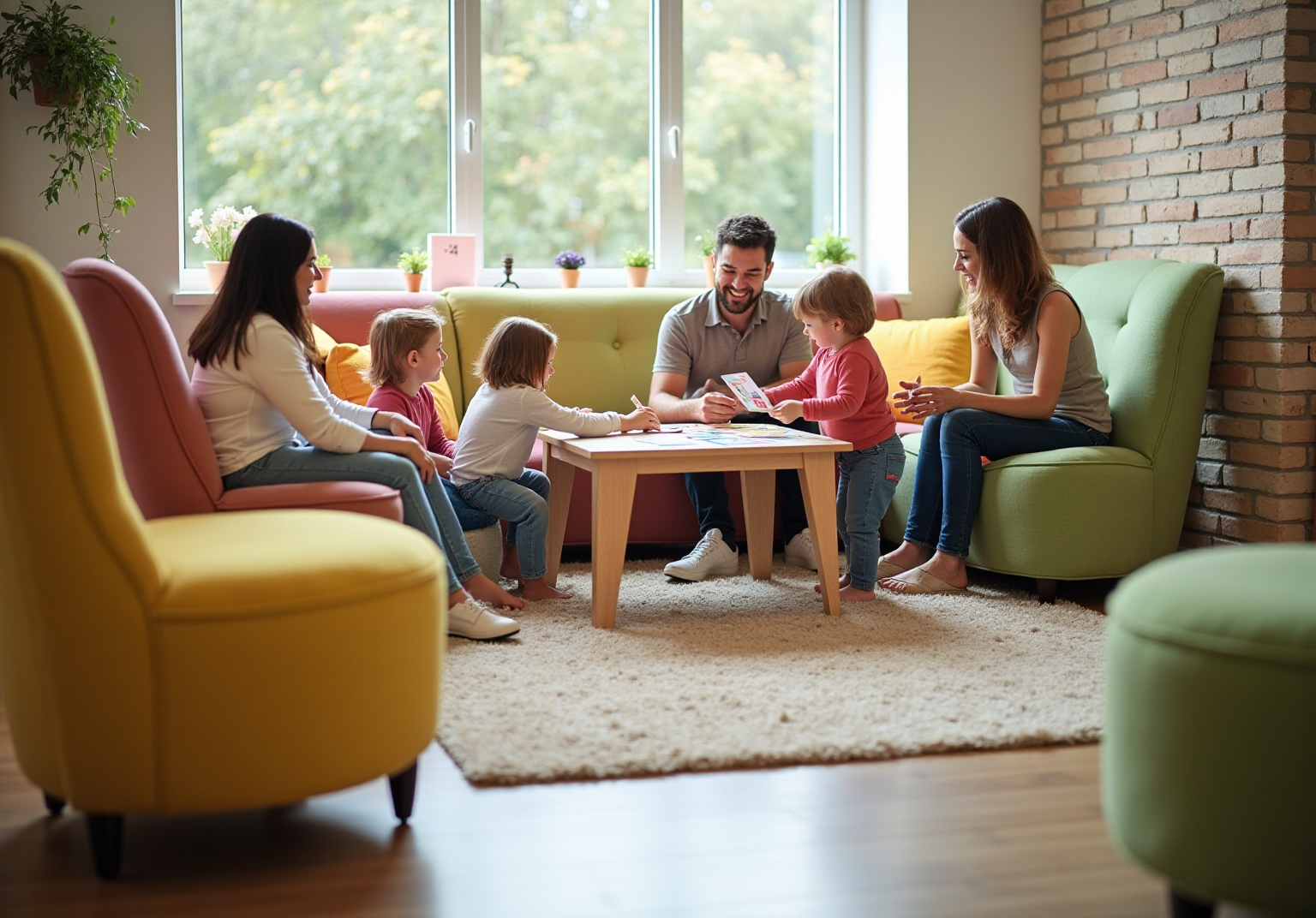
Introduction
Navigating the world of social skills can be quite the journey, especially for children with autism. It often calls for some creative strategies to help foster those meaningful interactions we all cherish. One approach that’s really gaining traction is role-playing. It’s a fantastic way for kids to practice essential communication skills in a safe and structured environment, making it both engaging and effective.
But what specific strategies can parents and therapists use to really make the most of role-playing? And how can these techniques be tailored to fit the unique needs of each child? Let’s explore this together! By understanding these methods, we can create a supportive space where our kids can thrive.
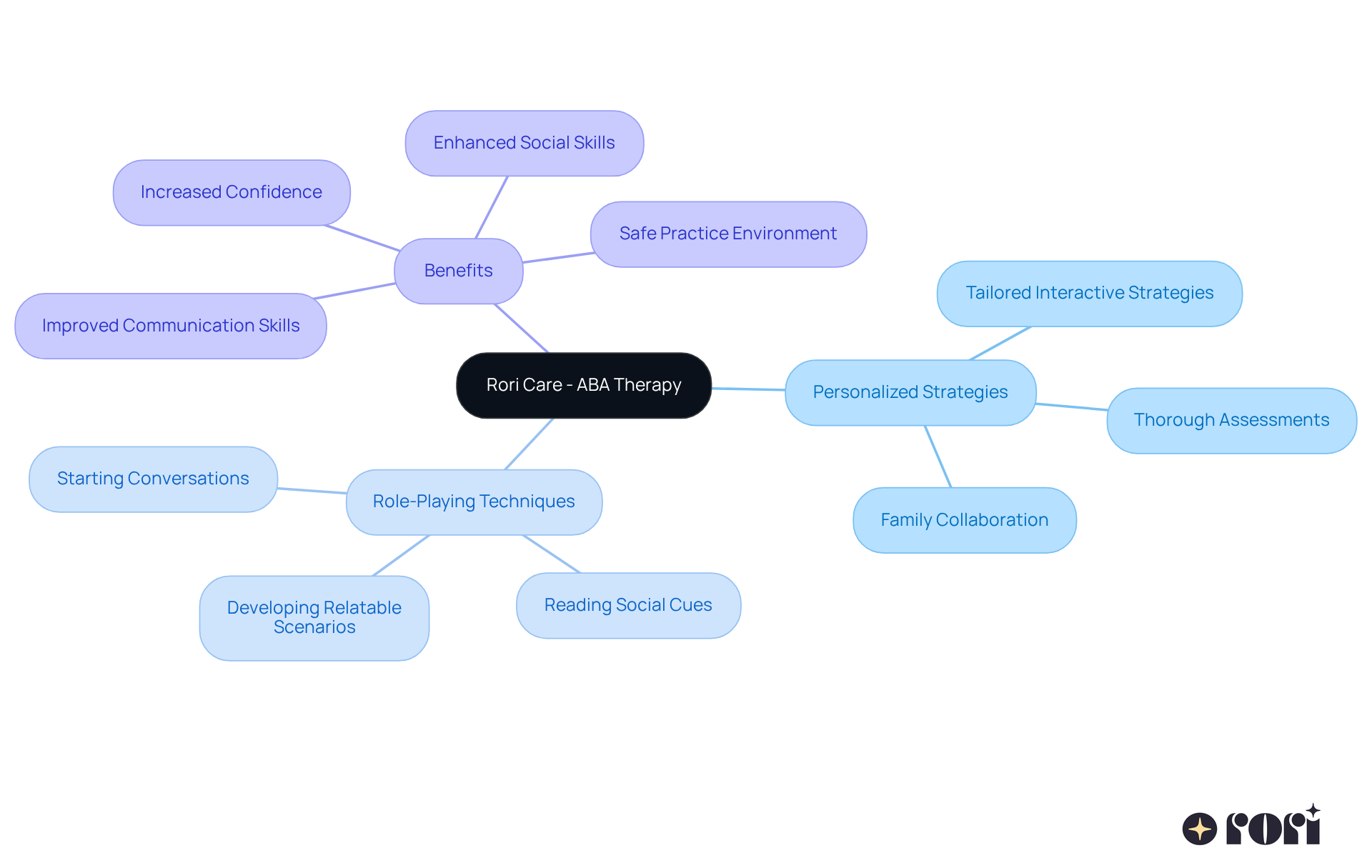
Rori Care – ABA Therapy: Personalized Role-Playing Strategies for Social Skills Development
At Rori Behavioral Innovations, we understand the unique challenges that parents face when it comes to supporting their children with autism. That’s why we’ve developed tailored interactive strategies within our ABA therapy framework to help . Our clinicians conduct , utilizing that mirror real-life interactions.
This not only boosts engagement but also builds confidence in group settings. It gives kids a safe space to practice essential skills. For instance, might include scenarios like:
Both are crucial for .
Research shows that children who regularly participate in imaginative activities see . This really highlights how effective our approach can be in ABA therapy! Plus, we often integrate , like scripts or storyboards, to help young individuals navigate social interactions more easily. These tools improve their understanding of what to expect and how to respond.
Let’s explore this together! We’re here to !
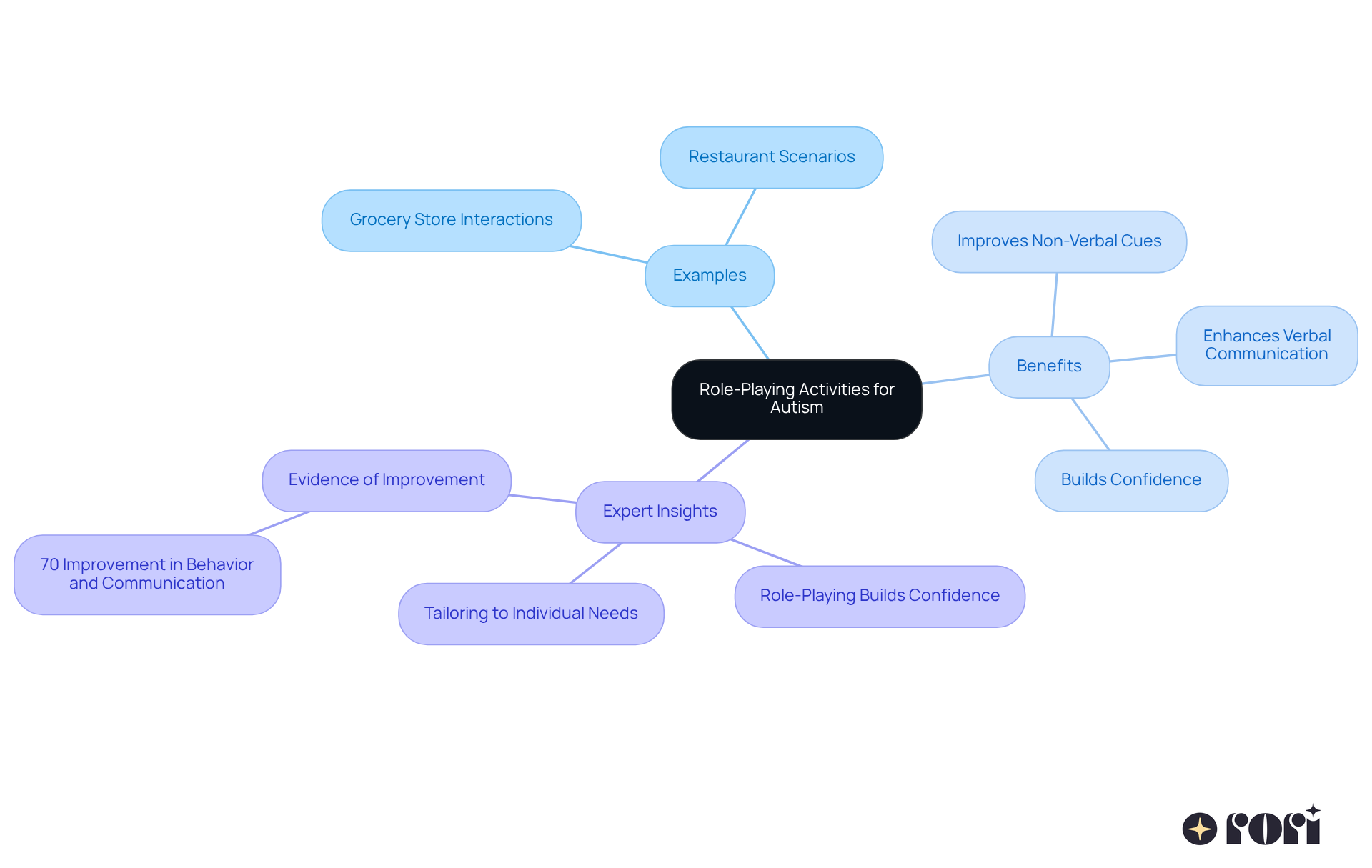
Elevation Autism Center: Engaging Role-Playing Activities to Foster Communication
Organized , like ” and ‘,’ are examples of that play a vital role in helping kids develop their . These fun activities create a safe and playful environment where young individuals can for social skills in autism.
Research shows that not only enhance verbal communication but also assist kids in picking up on , which are vital for social interactions. For instance, kids who regularly engage in see a remarkable 70% improvement in their behavior and communication!
Experts emphasize that build confidence, enhance skills, and , ultimately paving the way for . By tailoring these simulations to each child’s unique interests or sensory needs, therapists can make these experiences even more engaging and effective.
Let’s explore this together! By incorporating , we can support our kids in their journey toward better communication and social skills through interactive exercises.
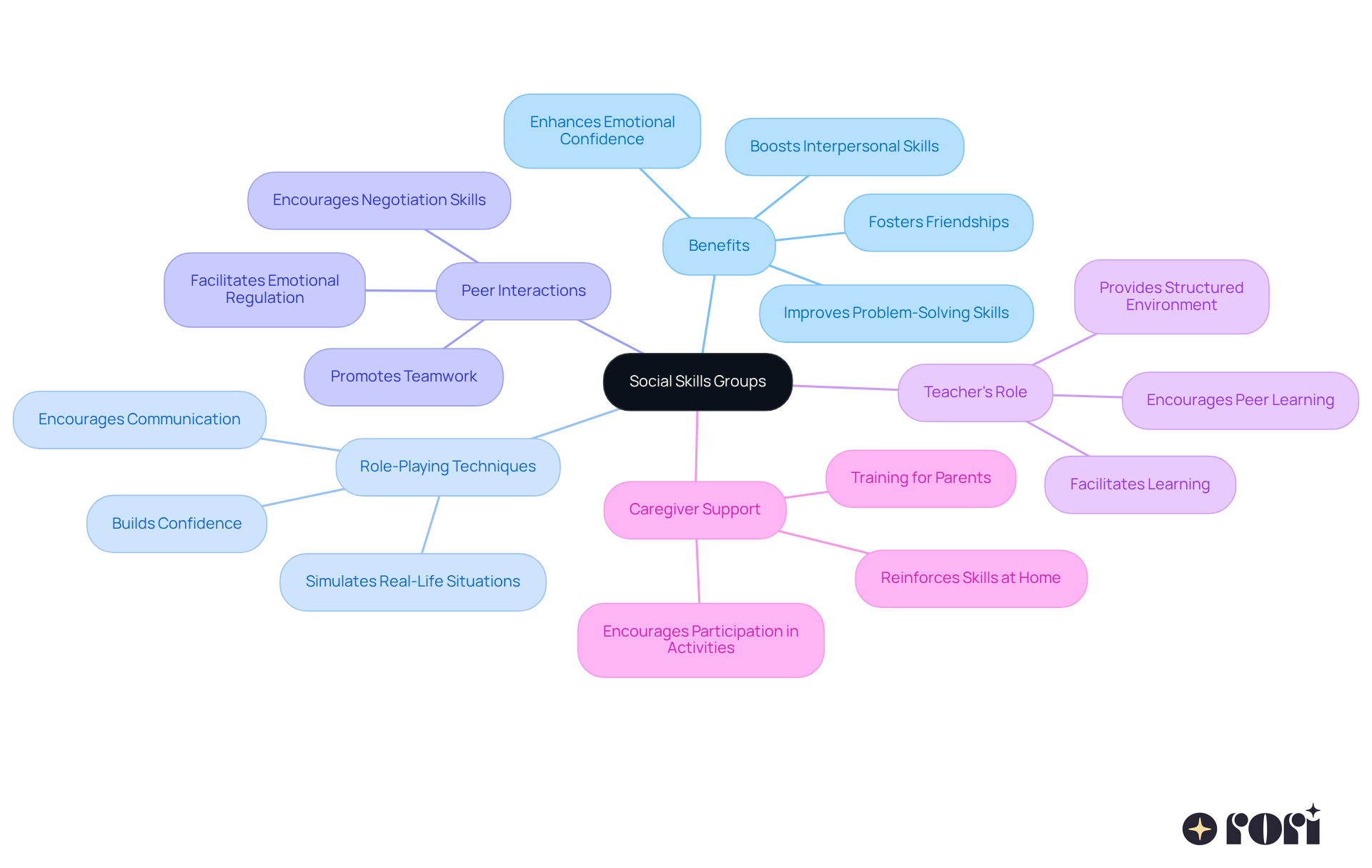
Social Skills Groups: Collaborative Role-Playing for Real-Life Scenarios
Social interaction groups are a fantastic way for young people to connect with their peers in a supportive environment. By utilizing , they can simulate real-life situations that are both fun and educational! Think about team sports or group projects – these activities encourage kids to communicate, negotiate, and work together toward shared goals.
Not only does this collaboration , but it also helps them form friendships, . Studies show that kids who engage in these often see , emotional confidence, and ability to navigate complex relationships.
Teachers often highlight how crucial these interactions are for developing essential . They mirror real-life scenarios and inspire kids to learn from one another. Plus, the allows youngsters to for in autism, which leads to lasting benefits in their social development.
And let’s not forget about the role of caregivers! Training for parents is key in , giving them the tools they need to reinforce at home. So, let’s explore this together and see how we can help our kids thrive!
Visual Supports: Enhancing Role-Playing with Visual Aids for Better Understanding
Integrating into can significantly help kids grasp and remember important interpersonal skills. Think about tools like picture cards, stories, and – they serve as handy references, guiding children through those tricky social interactions. For example, a visual aid that shows the can make it feel less overwhelming and much more doable.
Research shows that using can boost from a baseline of 2-20% to 6-28% during interventions. That’s pretty impressive! Not only do these aids help with understanding, but they also build confidence as kids dive into role-plays. Plus, , led by trained therapists, can really enhance how individuals communicate and connect with each other in a group setting.
Stories about social situations and emotion graphs have been shown to improve . By using these , kids with autism can better , which ultimately enhances their interaction skills. And guess what? Caregivers can play a big role in this journey too! By participating in at home and using similar , they can reinforce the skills learned in therapy.
Let’s explore this together! Your involvement can make a world of difference!

Role-Playing Games: Interactive Learning for Social Skills Enhancement
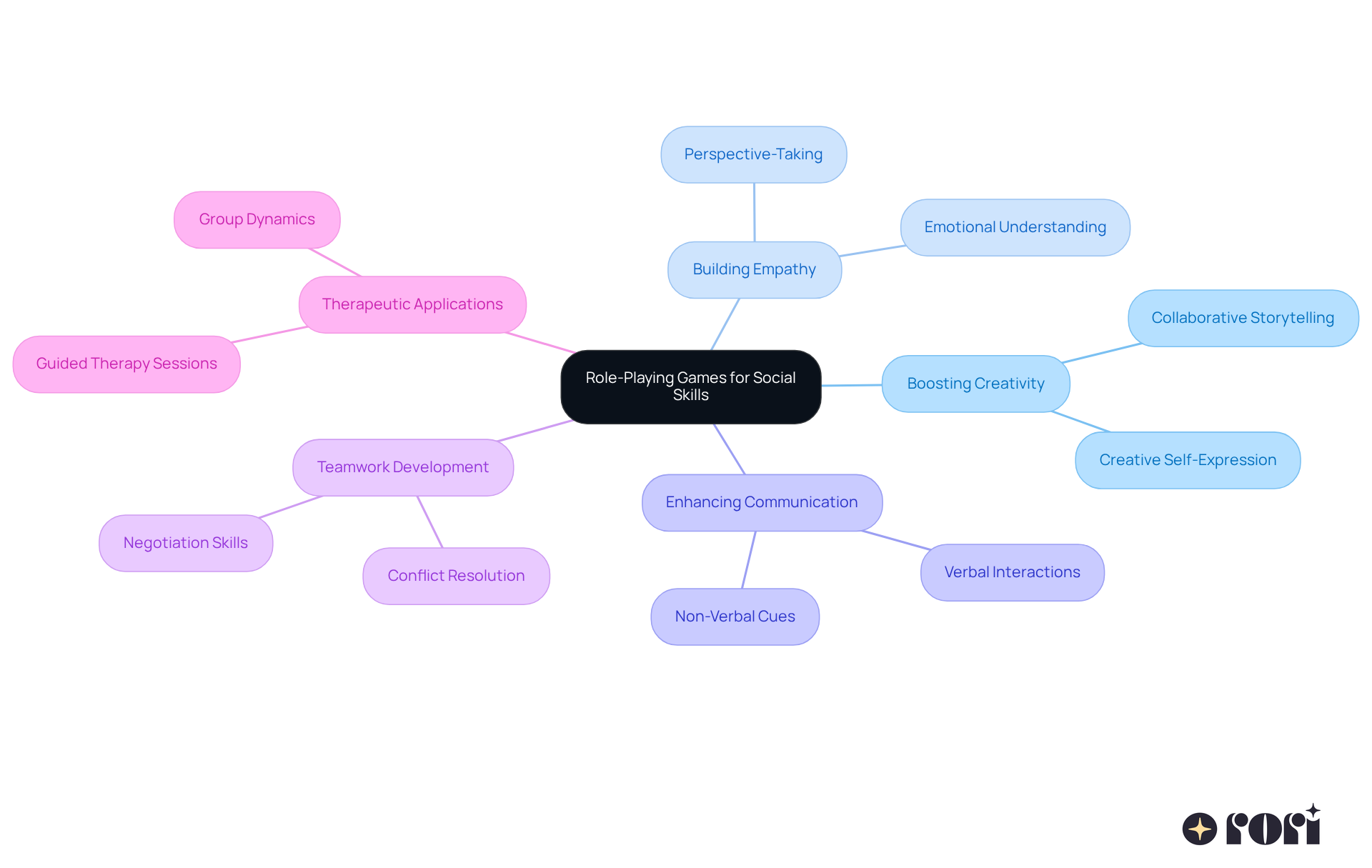
Role-playing games (RPGs) are a fantastic way for kids to boost their while having a blast! Games like Dungeons & Dragons invite players to step into different roles, tackle social challenges, and team up with friends to achieve shared goals. This immersive experience not only sparks creativity but also helps young people build , problem-solving, and communication in a supportive environment.
Research shows that can significantly improve social interactions and , making them a powerful tool for enhancing relational skills among kids with autism. For instance, studies have found that participants in RPG-based programs reported more verbal interactions and better , demonstrating the effectiveness of in real-life situations.
Plus, the encourages kids to develop , which are crucial for navigating complex social scenarios. By simulating real-life situations, RPGs help kids gain confidence and resilience, preparing them for meaningful community involvement throughout their lives.
And let’s not forget about focused on social development! Guided by trained therapists, these sessions provide and build relationships with their peers, further enhancing their skills. plays a vital role too, equipping parents with the tools and strategies they need to support their children’s growth effectively.
So, let’s explore this together! We’re here to help you every step of the way!
Technology Integration: Using Apps and Tools for Role-Playing Practice
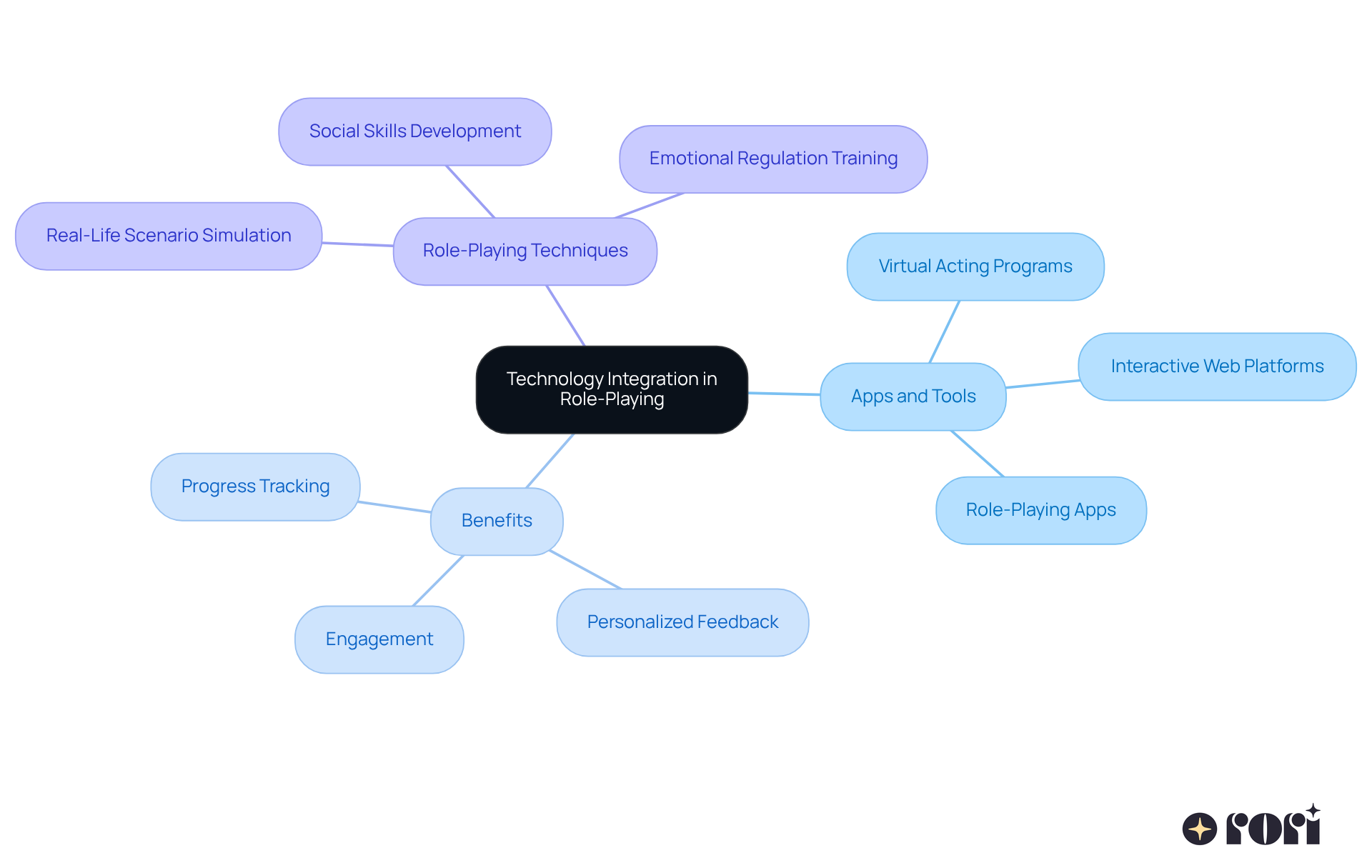
Incorporating technology into opens up exciting possibilities for ! 🌟 Think about it: various apps and web platforms create through for social skills in autism.
For example, programs that mimic use , allowing kids to participate in and helping them learn how to manage interactions and reactions in a safe space.
This tech-driven approach not only boosts engagement but also offers . It’s all about making sure each child’s are met effectively.
So, let’s explore this together and see how these tools can make a difference in your child’s journey!
Parent-Led Role-Playing: Empowering Families to Practice Social Skills Together
Parent-led are a fantastic way to strengthen the that kids learn in therapy by utilizing . When parents utilize at home, they create a nurturing environment where children feel comfortable practicing their skills. Simple activities like ” scenarios or ” serve as , enabling parents to model appropriate behaviors and provide immediate feedback.
Did you know that studies show regular participation in role-play can ? That’s pretty impressive! It really highlights how can be in fostering communication and behavioral improvements in about 70% of young people. This collaborative practice not only strengthens the bond between parents and kids but also , along the way.
Through , parents gain valuable support and decision-making skills, enhancing their ability to help their children achieve their behavioral goals. By incorporating into everyday activities, parents can reinforce , creating an engaging learning experience that mirrors real-life interactions. Let’s explore this together and see how you can make a difference in your child’s life!

Social Stories: Crafting Narratives for Role-Playing Scenarios
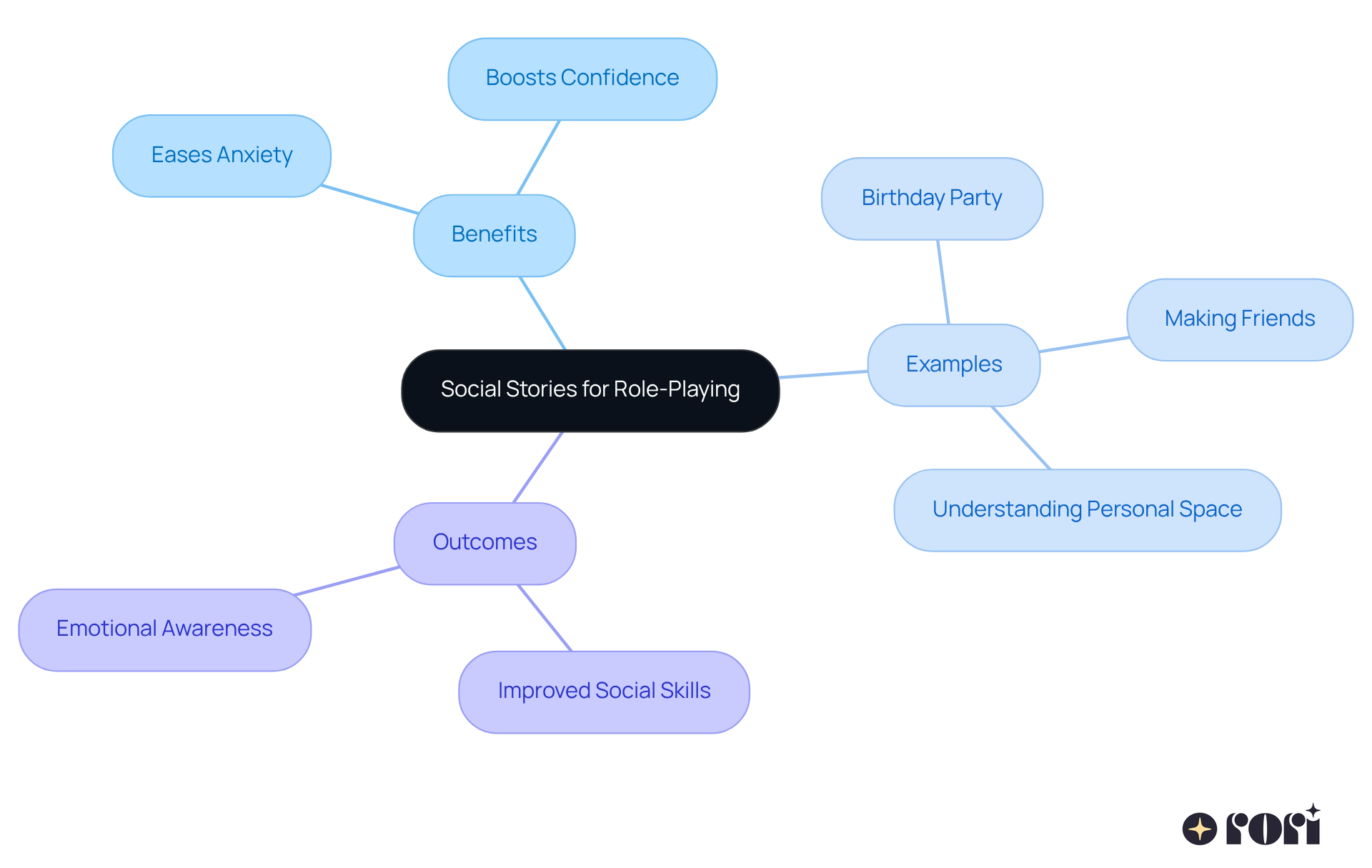
for helping kids get ready for role-playing situations! They clearly outline what’s expected and how to react appropriately. By sharing stories that reflect real-life community scenarios, parents and therapists can what to expect. For instance, think about a story about going to a birthday party – it can show kids important behaviors like saying hello, sharing toys, and saying thank you.
This kind of preparation not only eases anxiety but also as they dive into . Isn’t that great? Studies have shown that kids who engage with narrative tales make with others. This really highlights how for social skills in autism can be in improving social skills.
Teachers also point out that using helps kids become more , making it easier for them to . By embracing these , families can empower their children to engage more meaningfully with others, supporting their overall growth. Let’s explore this together!
Peer Modeling: Learning Social Skills Through Observation and Role-Playing
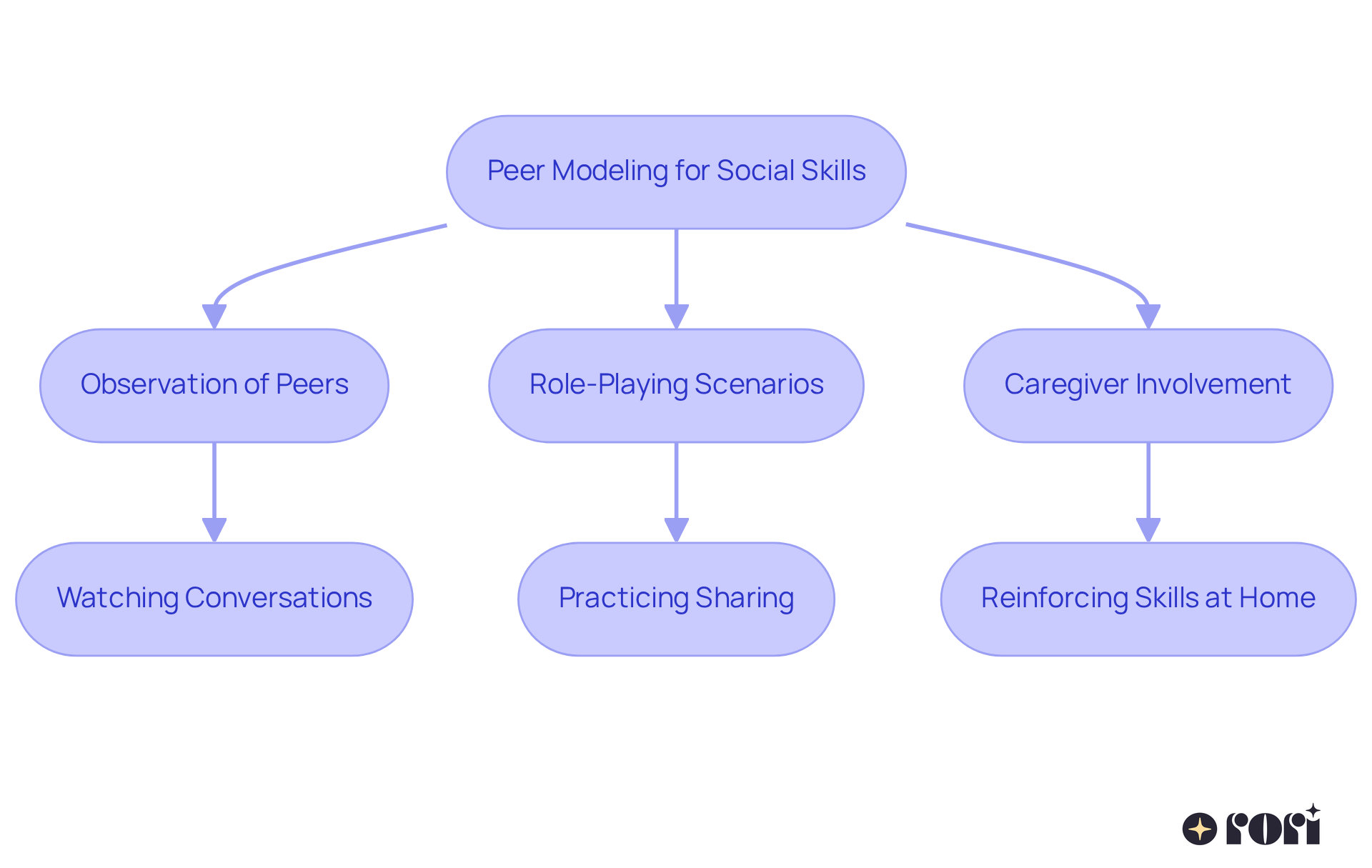
is a fantastic way to teach by using to act out real-life scenarios. When young people watch their peers interact, they pick up on the in the moment. For example, if a child sees a friend successfully start a conversation or share a toy, they’re more likely to try that out themselves during their own role-playing. This kind of not only builds a sense of community but also encourages kids to practice their naturally, which is so important for their overall growth.
Research shows that these interactions can boost motivation and competence. In fact, studies indicate that can lead to an impressive average effect size of 1.3 in improving performance among youth with autism. Plus, when are utilized in at places like Rori Care, kids can develop and responding appropriately-skills that are crucial for effective communication and building relationships.
As Ingersoll points out, low-intensity, targeted imitation interventions can really help with persistent interaction challenges in ASD. By creating supportive environments where kids can observe and engage with their peers, we can unlock their potential for meaningful social interactions. And let’s not forget about the role of ! It’s vital for , giving families the tools they need to nurture their children’s growth and improve behavioral outcomes.
To further enhance these skills, caregivers can get involved by practicing scenarios at home, reinforcing what kids learn in therapy. Let’s explore this together and see how we can make a difference!
Feedback Mechanisms: Enhancing Role-Playing with Constructive Critique
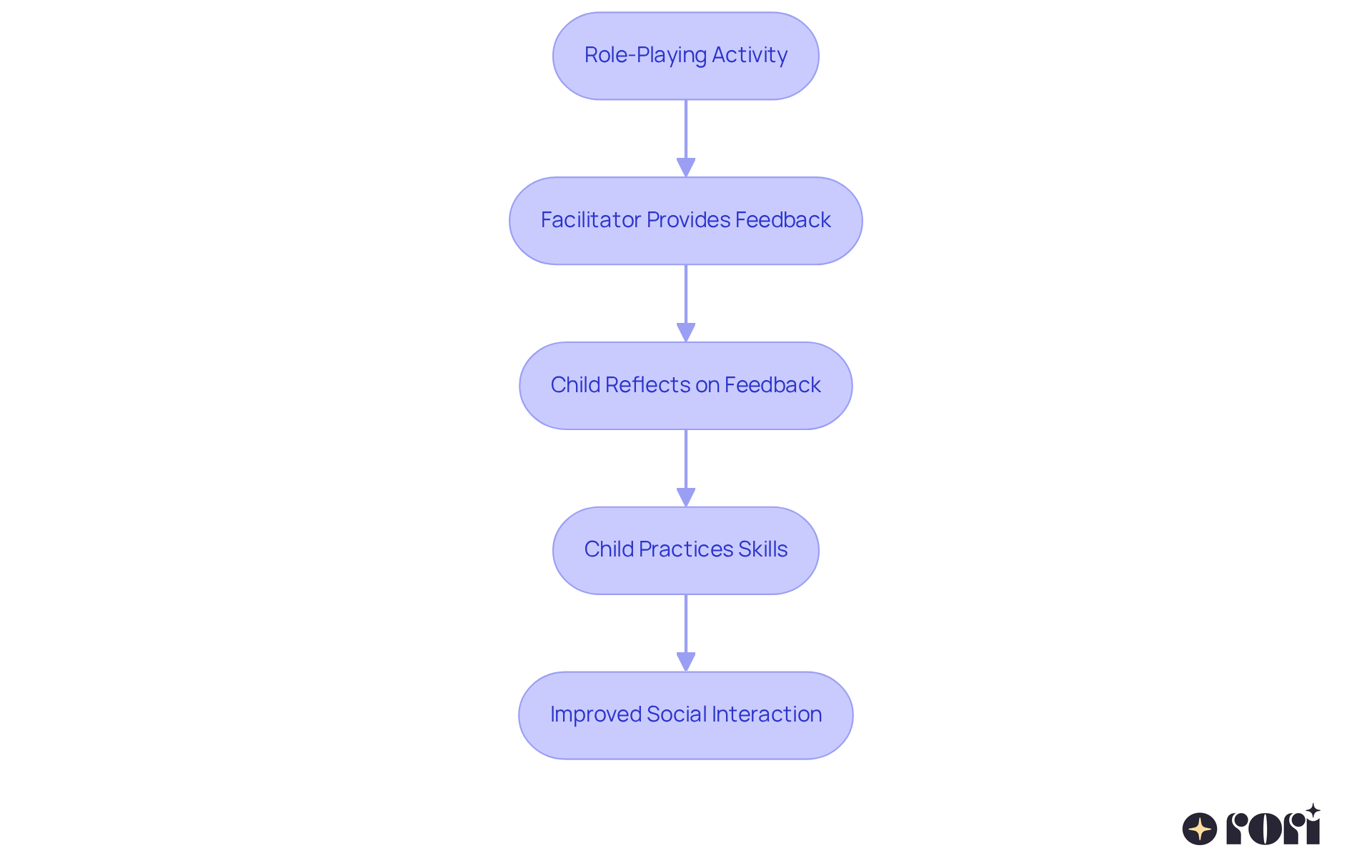
Incorporating feedback into is crucial for enhancing our young learners’ experiences! 🌟 When kids receive , they can really grasp their strengths and see where they can grow in their interactions with others. After each role-play, facilitators can share , pointing out what went well and suggesting areas for improvement. For example, if a child excels at maintaining eye contact, we can praise that while gently encouraging them to practice starting conversations more often. This kind of feedback loop not only reinforces but also motivates kids to keep sharpening their by utilizing .
And let’s not forget about the caregivers! Equipping them with can really boost their ability to . By actively joining in these and understanding the , caregivers can make informed choices that positively influence their child’s progress. This leads to better and helps kids feel more confident in social situations. So, let’s explore this together and see how we can make a difference!
Conclusion
When it comes to helping children with autism develop social skills, effective role-playing techniques can be a game changer! These methods create engaging, personalized scenarios that allow kids to practice essential social skills in a safe and supportive environment. This not only builds their confidence but also enhances their ability to navigate real-world interactions.
Throughout this article, we’ve explored various strategies, from structured role-playing games to collaborative group activities, and even the use of visual aids and technology. Each of these methods brings unique benefits, like improving verbal and non-verbal communication, enhancing emotional understanding, and providing opportunities for peer modeling and feedback. Together, these approaches form a comprehensive framework that empowers children with autism to thrive socially.
But the impact of these role-playing techniques goes beyond just therapy sessions. They encourage active participation from caregivers and families, which is so important! By reinforcing these skills at home and in everyday life, parents can play a crucial role in their child’s development. Engaging in these activities together not only strengthens family bonds but also equips children with the tools they need to build meaningful relationships and navigate social situations more effectively.
Embracing these strategies can truly make a profound difference in the lives of children with autism. It paves the way for a brighter future filled with social connections and opportunities. So, let’s explore this together! Remember, we’re here to help you every step of the way!
Frequently Asked Questions
What is Rori Care’s approach to ABA therapy for children with autism?
Rori Care utilizes tailored interactive strategies within their ABA therapy framework, focusing on personalized role-playing techniques to improve interpersonal development in children with autism.
How do role-playing techniques help children with autism?
Role-playing techniques help children practice essential social skills, such as starting conversations and reading social cues, in a safe and engaging environment, which boosts their confidence and communication abilities.
What types of scenarios are used in role-playing for social skills development?
Scenarios may include everyday interactions like starting conversations and grocery store interactions, which mirror real-life situations to enhance communication skills.
What evidence supports the effectiveness of role-playing techniques in improving social skills?
Research indicates that children who regularly participate in imaginative activities see significant improvements in behavior and communication, with some reports showing up to a 70% improvement.
How do visual aids contribute to social skills development in children with autism?
Visual aids, such as scripts or storyboards, help children understand social interactions better by providing clear expectations and responses, enhancing their ability to navigate social situations.
What role do social interaction groups play in developing social skills?
Social interaction groups allow children to engage in collaborative activities that simulate real-life situations, helping them improve their interpersonal skills, form friendships, and build a sense of community.
How do caregivers support the social skills development of children with autism?
Caregiver training is essential as it equips parents with the tools to reinforce social skills at home, complementing the efforts made in therapy and group settings.
List of Sources
- Rori Care – ABA Therapy: Personalized Role-Playing Strategies for Social Skills Development
- How to Use Role-Playing in ABA Therapy for Skill Development | Discovery ABA (https://discoveryaba.com/aba-therapy/how-to-use-role-playing-in-aba-therapy-for-skill-development)
- The Role of Role-Playing in Developing Social Skills in ABA Therapy for Autism (https://buildingblockstherapy.org/blog/the-role-of-role-playing-in-developing-social-skills-in-aba-therapy-for-autism)
- The Numbers Don’t Lie: Revealing Autism Therapy Statistics | Above and Beyond Therapy (https://abtaba.com/blog/autism-therapy-statistics)
- connectncareaba.com (https://connectncareaba.com/blog/aba-therapy-effectiveness-for-autism)
- Resources | Golden Steps ABA (https://goldenstepsaba.com/resources/success-rates-of-aba-therapy)
- Elevation Autism Center: Engaging Role-Playing Activities to Foster Communication
- kidsclubaba.com (https://kidsclubaba.com/autism-quotes)
- The Role of Role-Playing in Developing Social Skills in ABA Therapy for Autism (https://buildingblockstherapy.org/blog/the-role-of-role-playing-in-developing-social-skills-in-aba-therapy-for-autism)
- Inspirational Quotes About Autism | Grateful Care ABA (https://gratefulcareaba.com/blog/inspirational-quotes-about-autism)
- Social Skills Groups: Collaborative Role-Playing for Real-Life Scenarios
- The Benefits of Group Play for Young Children – Kids First (https://kidsfirstservices.com/first-insights/the-benefits-of-group-play-for-young-children)
- The Role of Peer Social Groups in ABA Therapy | Intellistars – ABA Therapy (https://intellistarsaba.com/blog/the-role-of-peer-social-groups-in-aba-therapy)
- Supporting Social Engagement in Children with Autism Through Structured Programs | Advanced Autism Services (https://advancedautism.com/post/supporting-social-engagement-in-children-with-autism-through-structured-programs)
- The Impact of Positive Peer Models on Social Skills Development in ASD (https://mastermindbehavior.com/post/the-impact-of-positive-peer-models-on-social-skills-development-in-asd)
- Play Quotes – The Strong National Museum of Play (https://museumofplay.org/about/play-quotes)
- Visual Supports: Enhancing Role-Playing with Visual Aids for Better Understanding
- Using Visual Aids to Support Autism Learning (https://magnetaba.com/blog/using-visual-aids-in-autism)
- supportivecareaba.com (https://supportivecareaba.com/statistics/using-visual-aids-in-autism)
- The Role of Visual Supports in Enhancing Learning for Autism | Advanced Autism Services (https://advancedautism.com/post/the-role-of-visual-supports-in-enhancing-learning-for-autism)
- Visual Supports to Increase Conversation Engagement for Preschoolers With Autism Spectrum Disorder During Mealtimes: An Initial Investigation – PMC (https://pmc.ncbi.nlm.nih.gov/articles/PMC11527399)
- The use of visual schedules to increase academic-related on-task behaviors of individuals with autism: a literature review (https://tandfonline.com/doi/full/10.1080/20473869.2024.2402124)
- Role-Playing Games: Interactive Learning for Social Skills Enhancement
- Social skills training with a tabletop role-playing game, before and during the pandemic of 2020: in-person and online group sessions – PMC (https://pmc.ncbi.nlm.nih.gov/articles/PMC10796767)
- heartwisesupport.org (https://heartwisesupport.org/post/using-role-playing-techniques-to-improve-social-skills)
- Using role-playing to teach social situations (https://ambitionsaba.com/resources/using-role-playing-to-teach-social-situations)
- Ask the Expert | James Paul Gee on Video Games and Learning (https://archive.nytimes.com/learning.blogs.nytimes.com/2010/09/15/ask-the-expert-james-paul-gee-on-video-games-and-learning)
- Technology Integration: Using Apps and Tools for Role-Playing Practice
- Inspirational Quotes About Autism | Grateful Care ABA (https://gratefulcareaba.com/blog/inspirational-quotes-about-autism)
- Effectiveness of social skills training interventions for children with autism spectrum disorder: A systematic review and meta-analysis – PMC (https://pmc.ncbi.nlm.nih.gov/articles/PMC11918677)
- Effectiveness of Virtual Reality Social Skills Training for Students with Autism and Social Difficulties Observed Through Behavior and Brain Waves | MDPI (https://mdpi.com/2076-3417/15/9/4600)
- Inspiring Autism Quotes for Understanding and Acceptance – Kids First (https://kidsfirstservices.com/first-insights/autism-quotes)
- Parent-Led Role-Playing: Empowering Families to Practice Social Skills Together
- rori.care (https://rori.care/post/10-positive-proud-autism-quotes-to-inspire-and-empower-parents)
- The Power of Parent Involvement in ABA Therapy Outcomes: Maximizing Success Through Family Engagement – RightWay ABA (https://rightwayaba.com/parent-involvement-in-aba-therapy-outcomes)
- The Role of Role-Playing in Parent Training Sessions (https://myteamaba.com/resources/the-role-of-role-playing-in-parent-training-sessions?8f6d38b6_page=2)
- 20 Inspiring Quotes About Autism Every Parent Must Read Today (https://circlecareservices.com/20-quotes-about-autism-and-parenting)
- Autism Parenting Quotes (https://rainbowtherapy.org/autism-parenting-quotes)
- Social Stories: Crafting Narratives for Role-Playing Scenarios
- 10 Quotes on Boosting Young Children’s Social-Emotional Development – Brookes Blog (https://blog.brookespublishing.com/10-quotes-on-boosting-young-childrens-social-emotional-development)
- journals.kmanpub.com (https://journals.kmanpub.com/index.php/psychnexus/article/view/3936)
- Inspiring Quotes on Child Learning and Development (https://vincegowmon.com/inspiring-quotes-on-child-learning-and-development)
- Using Social Stories to Support Autism | Advanced Autism Services (https://advancedautism.com/post/social-stories-for-autism)
- Peer Modeling: Learning Social Skills Through Observation and Role-Playing
- The Importance of Peer Modeling in School-Based ABA Therapy (https://precisionfamilytherapy.com/post/the-importance-of-peer-modeling-in-school-based-aba-therapy)
- The Impact of Positive Peer Models on Social Skills Development in ASD (https://mastermindbehavior.com/post/the-impact-of-positive-peer-models-on-social-skills-development-in-asd)
- sciencedirect.com (https://sciencedirect.com/science/article/abs/pii/S1750946710001108)
- Effectiveness of peer-mediated intervention on social skills for children with autism spectrum disorder: a randomized controlled trial – PMC (https://pmc.ncbi.nlm.nih.gov/articles/PMC9173870)
- Feedback Mechanisms: Enhancing Role-Playing with Constructive Critique
- (PDF) The Influence of Role-Playing Methods on the Social Skills and Self-Confidence of Grade V Elementary School Students (https://researchgate.net/publication/373828584_The_Influence_of_Role-Playing_Methods_on_the_Social_Skills_and_Self-Confidence_of_Grade_V_Elementary_School_Students)
- Building Communication Skills Through Structured Programs (https://heartwisesupport.org/post/building-communication-skills-through-structured-programs)
- Providing Feedback: Practical Skills and Strategies (https://sciencedirect.com/science/article/abs/pii/S1076633217300636)