
Introduction
In a world where social interactions can often feel daunting, building social skills for individuals with Autism Spectrum Disorder (ASD) can be quite the journey. But guess what? Role-playing can really change the game! This fun approach not only gives kids a chance to practice essential communication techniques in a safe space but also helps boost their confidence and social skills.
Now, you might be wondering: how can caregivers and educators effectively use these role-playing strategies to foster real growth? This article dives into ten effective role-playing techniques designed to enhance social skills in individuals with ASD. We’ll share insights and practical applications that can truly transform their social experiences. Let’s explore this together!
Rori Care – ABA Therapy: Personalized Role-Playing Strategies for Social Skills Development
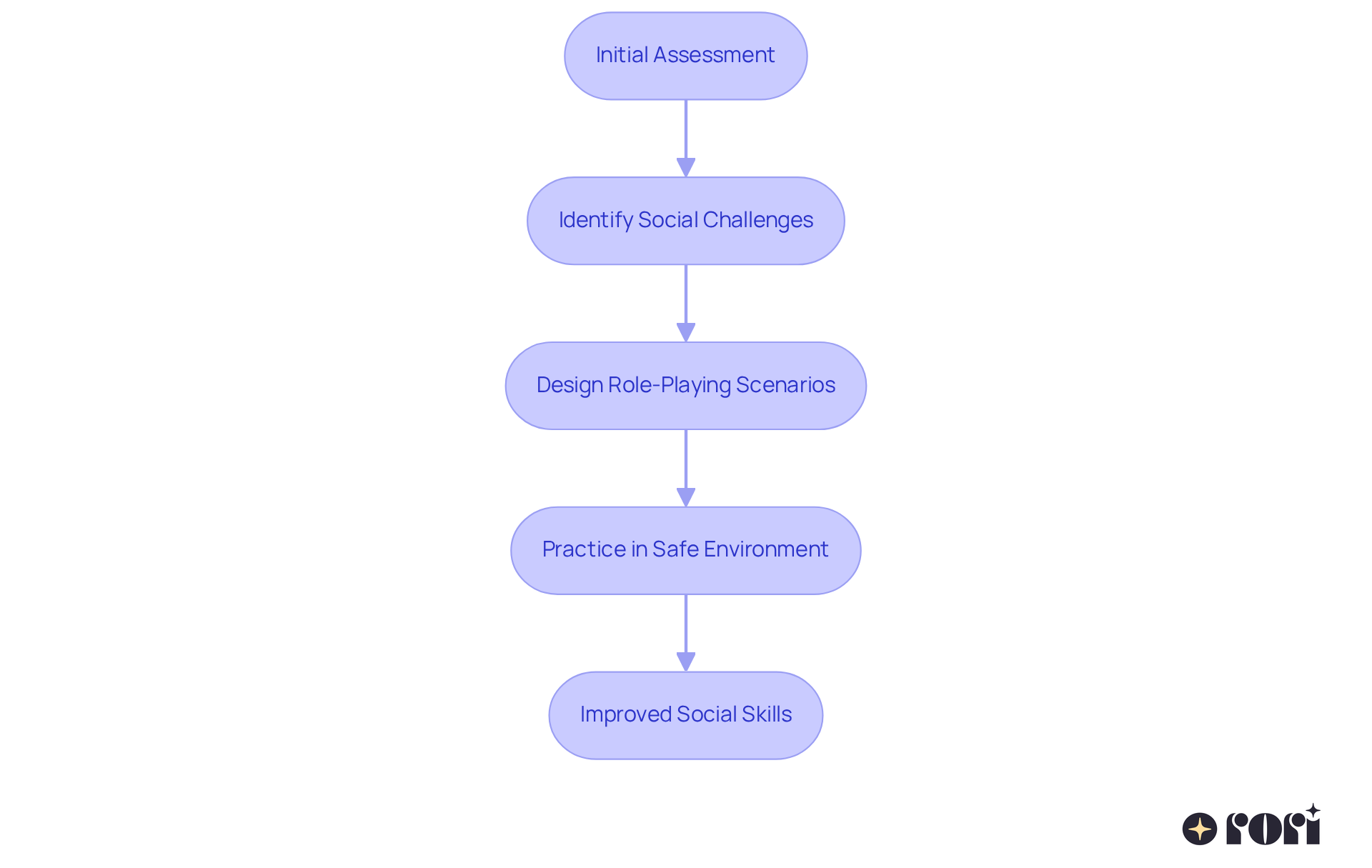
At Rori Behavioral Innovations, we understand that every child is unique, and that’s why we utilize to implement in individuals with ASD. Our practitioners take the time to conduct thorough assessments, pinpointing specific social challenges your child might face.
Imagine your child struggling to start conversations. We design effective for improving by creating scenarios that focus on these very situations, allowing them to practice in a safe and nurturing environment. For example, they might engage in with peers, helping to for real-life interactions.
Research shows that regular participation in these activities can by up to 40%! Isn’t that amazing? Studies indicate that around 70% of kids show as a result. This not only incorporates in individuals with ASD but also empowers them to , supporting their overall growth and independence.
Let’s explore this together! We’re here to help you every step of the way!
Autism Society: Structured Role-Playing Programs for Social Interaction
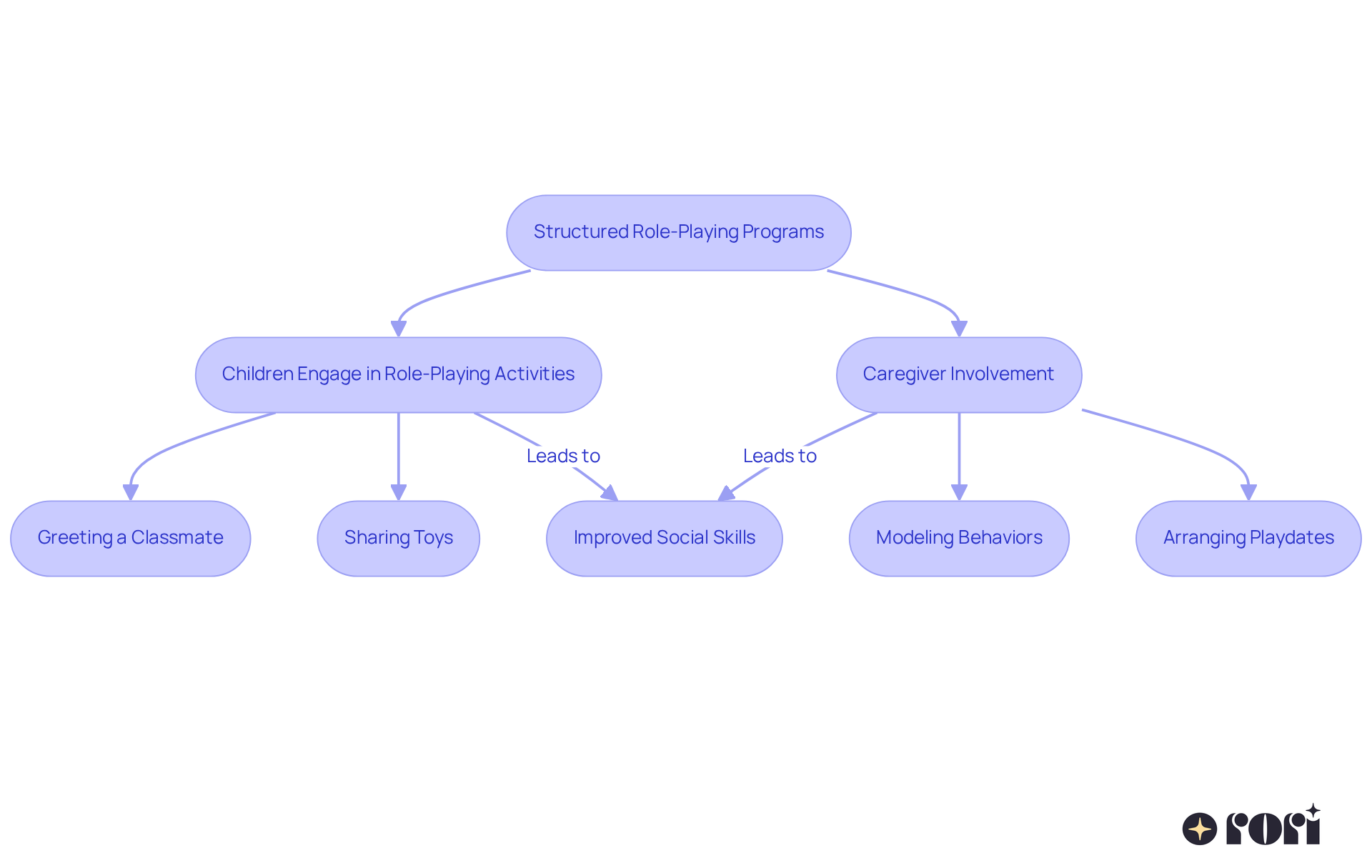
The Autism Society offers some fantastic interactive programs designed to help kids with autism . These programs typically involve small groups, allowing children to practice different social situations in a supportive environment. For example, they might engage in activities that mimic greeting a new classmate or sharing toys. This not only teaches but also builds a sense of community among peers, making interactions feel less intimidating.
Research shows that for improving in individuals with ASD can significantly boost . Many participants have reported feeling more confident in real-life interactions after these sessions. In fact, the Autism Society found that 88% of parents noticed improvements in their children’s social interactions after participating in these programs. By nurturing these essential skills, the Autism Society helps young people .
Moreover, Rori Care highlights how important is in this journey. By equipping caregivers with – like reinforcement strategies and modeling appropriate behaviors – they can create consistent practice opportunities at home. Think about arranging what they’ve learned in a familiar setting! This involvement not only supports the child’s growth but also strengthens the bond between caregiver and child.
Let’s explore this together! By working hand-in-hand, we can make a real difference in our children’s social experiences.
Social Thinking: Techniques for Understanding Social Cues Through Role-Playing
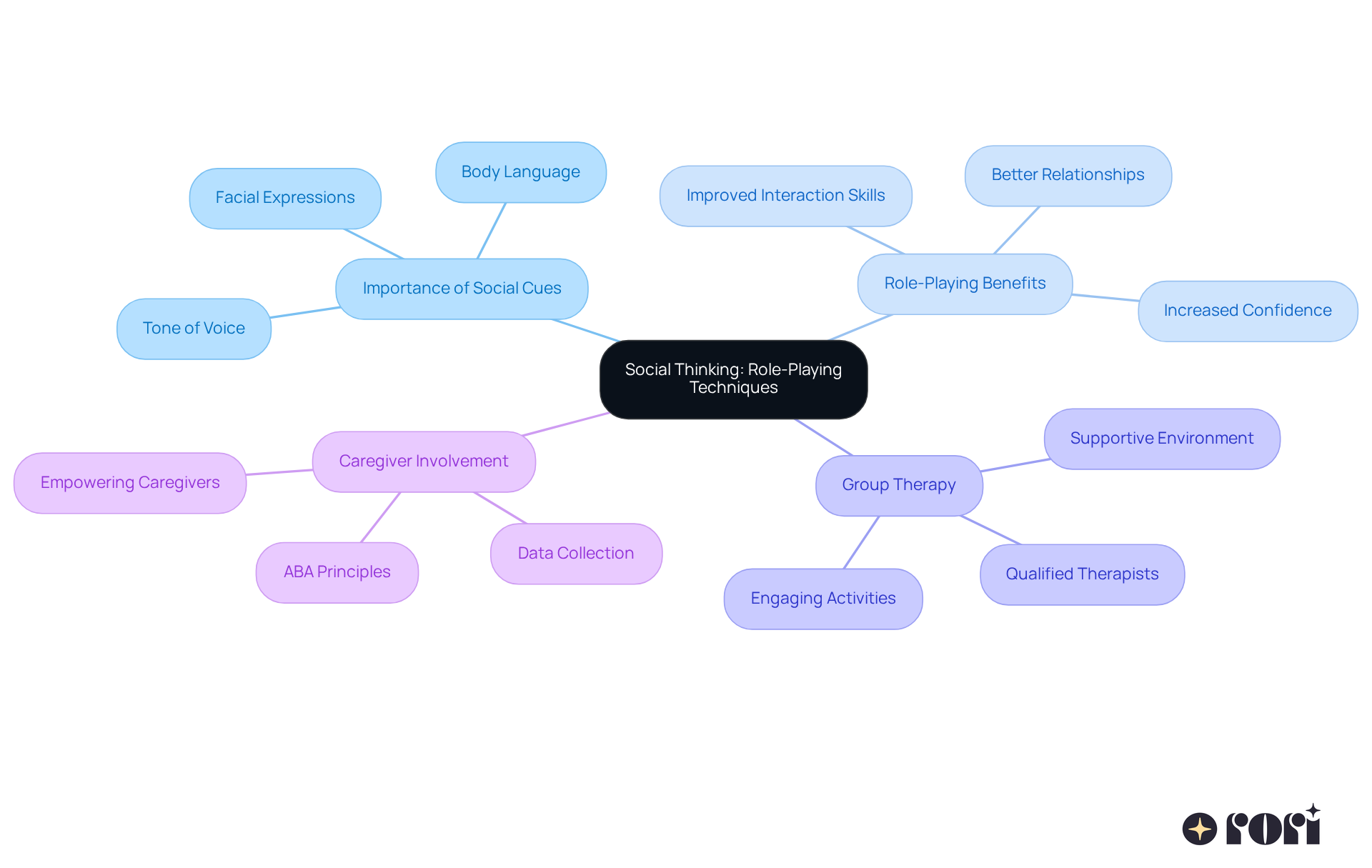
Social Cognition highlights how important interpersonal cues are for effective communication. ! Imagine your child participating in fun , focusing on interpreting body language, tone of voice, and facial expressions. By using to act out different scenarios, they learn to recognize and respond to these cues, which can significantly .
This approach not only enhances their understanding of others but also builds their confidence when interacting with peers and adults. Studies show that kids who engage in often see , leading to better relationships and a more fulfilling social life.
At Rori Care, our , led by qualified therapists, makes this learning process enjoyable and effective. It’s all about . Plus, is key to supporting children’s behavioral goals. This ensures everyone is actively involved and helps with .
Let’s explore this together! We’re here to help you every step of the way!
PEERS Program: Evidence-Based Role-Playing for Adolescent Social Skills
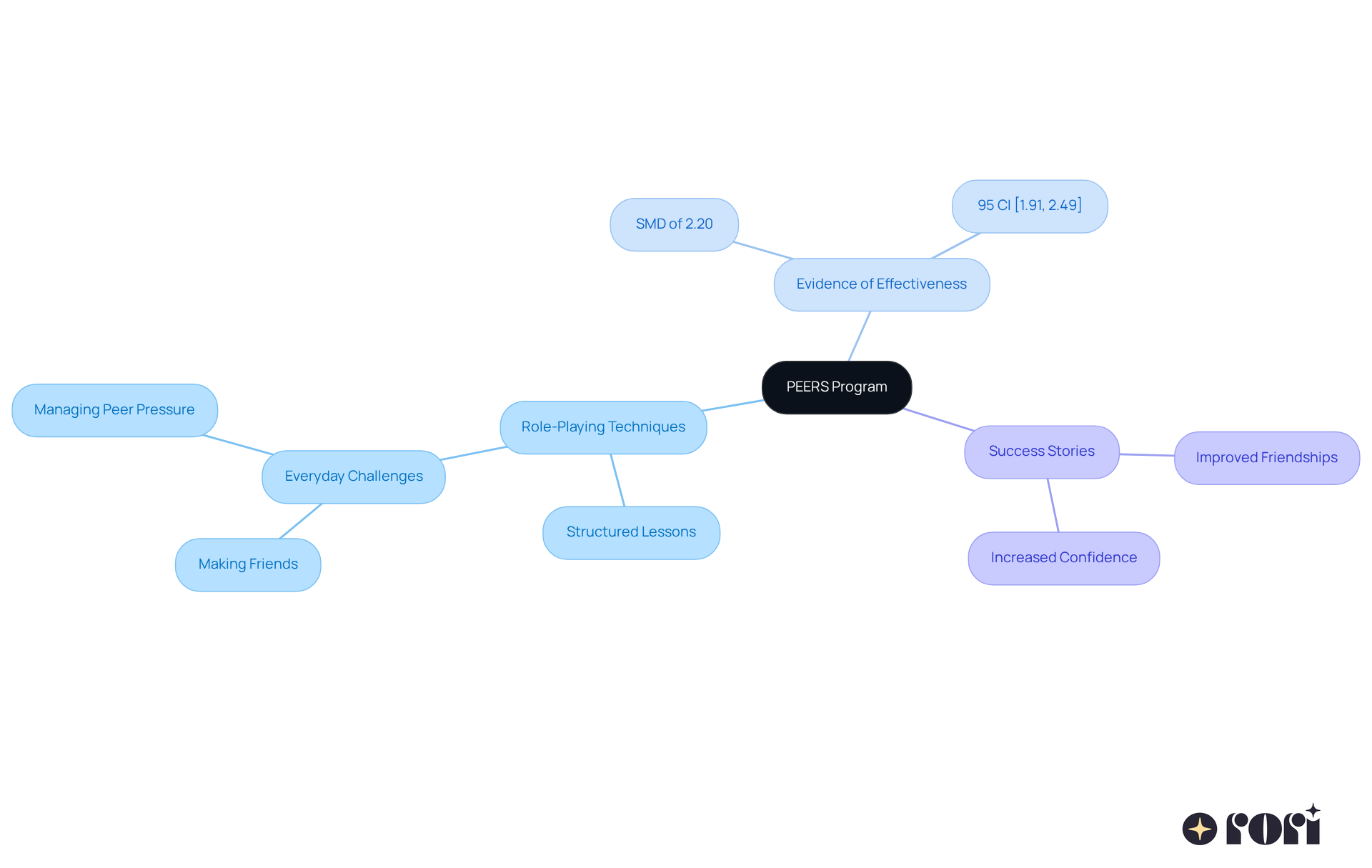
The PEERS (Program for the Education and Enrichment of Relational Skills) initiative stands out as a fantastic resource for helping teens improve their interpersonal skills. It incorporates for in individuals with asd through like making friends and managing peer pressure. By stepping into these situations in a supportive environment, and build the skills they need to form and maintain friendships, boosting their overall social competence.
Research shows that the really works! Studies reveal a , with a standardized mean difference (SMD) of 2.20 and a 95% confidence interval (CI) of [1.91, 2.49]. This highlights how effective the program is in helping participants . Success stories from the program are heartwarming, showing how adolescents have strengthened their friendships and social interactions through these engaging activities. Instructors involved in PEERS often share positive feedback, highlighting that the for in individuals with asd not only equip teens with valuable skills but also , leading to lasting friendships and healthier relational dynamics.
Role-Playing Games (RPGs): Engaging Techniques for Social Skills Practice
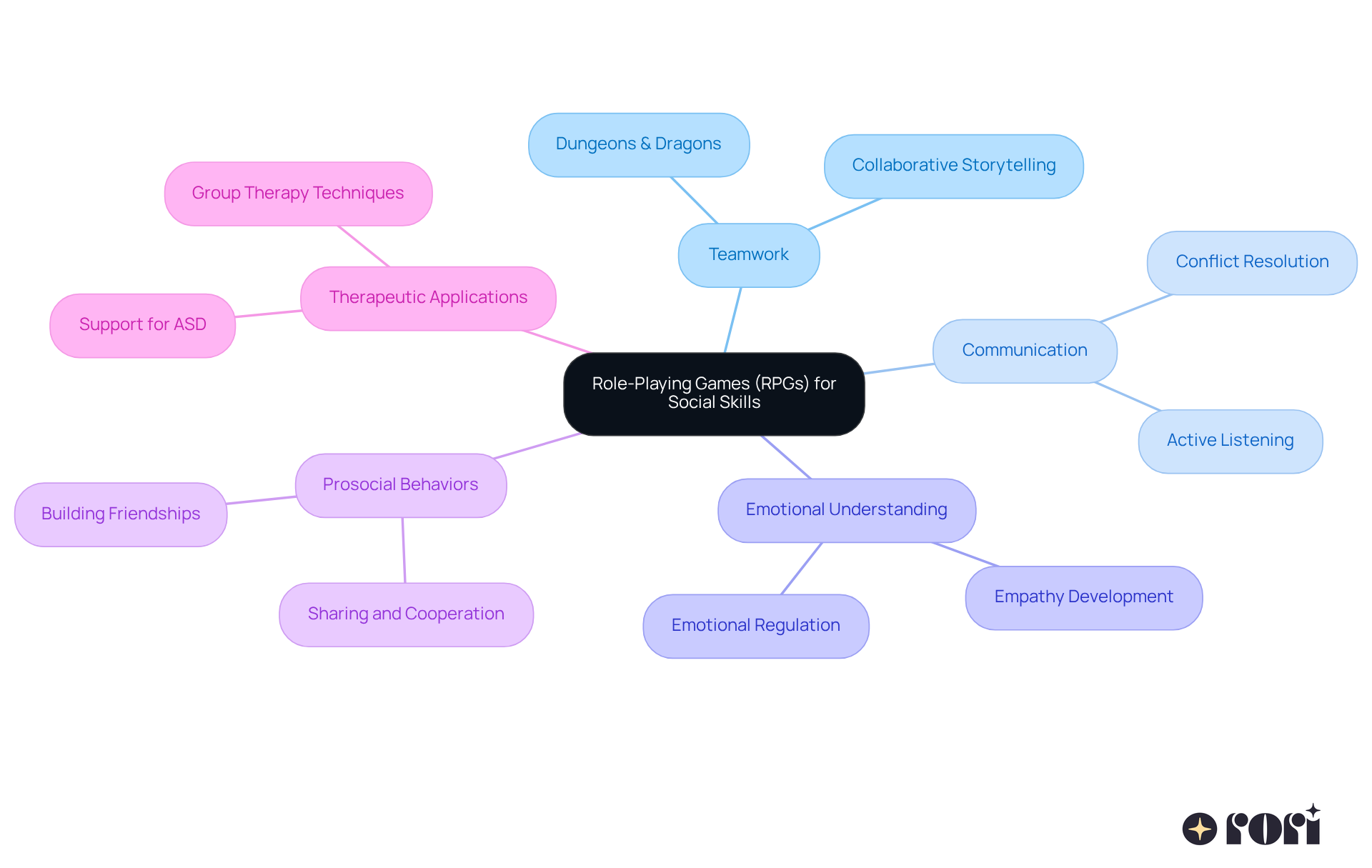
(RPGs) can be a fantastic way for kids to build essential interpersonal skills! 🎲 Games like let players step into different characters and engage in all sorts of interactions. This not only helps them learn but also sharpens their problem-solving abilities.
Research shows that kids involved in RPGs often show more prosocial behaviors, like sharing and cooperating. Plus, these games can enhance and even reduce anxiety in . By diving into these interactive experiences, young ones can safely explore how to navigate relationships, boosting their confidence and improving their interactions with peers.
And here’s something really encouraging: organized RPG activities have been linked to measurable improvements in skills like . This makes them in individuals with ASD, especially helping kids develop socially.
At Rori Care, we provide led by experienced therapists who specialize in effective . Our goal is to promote better communication and relationships among peers. We’re dedicated to and ensuring that young individuals thrive. Plus, we emphasize caregiver education to empower families in overcoming challenges and fostering growth.
Let’s explore this together! We’re here to help you every step of the way!
Social Skills Groups: Collaborative Role-Playing for Peer Interaction
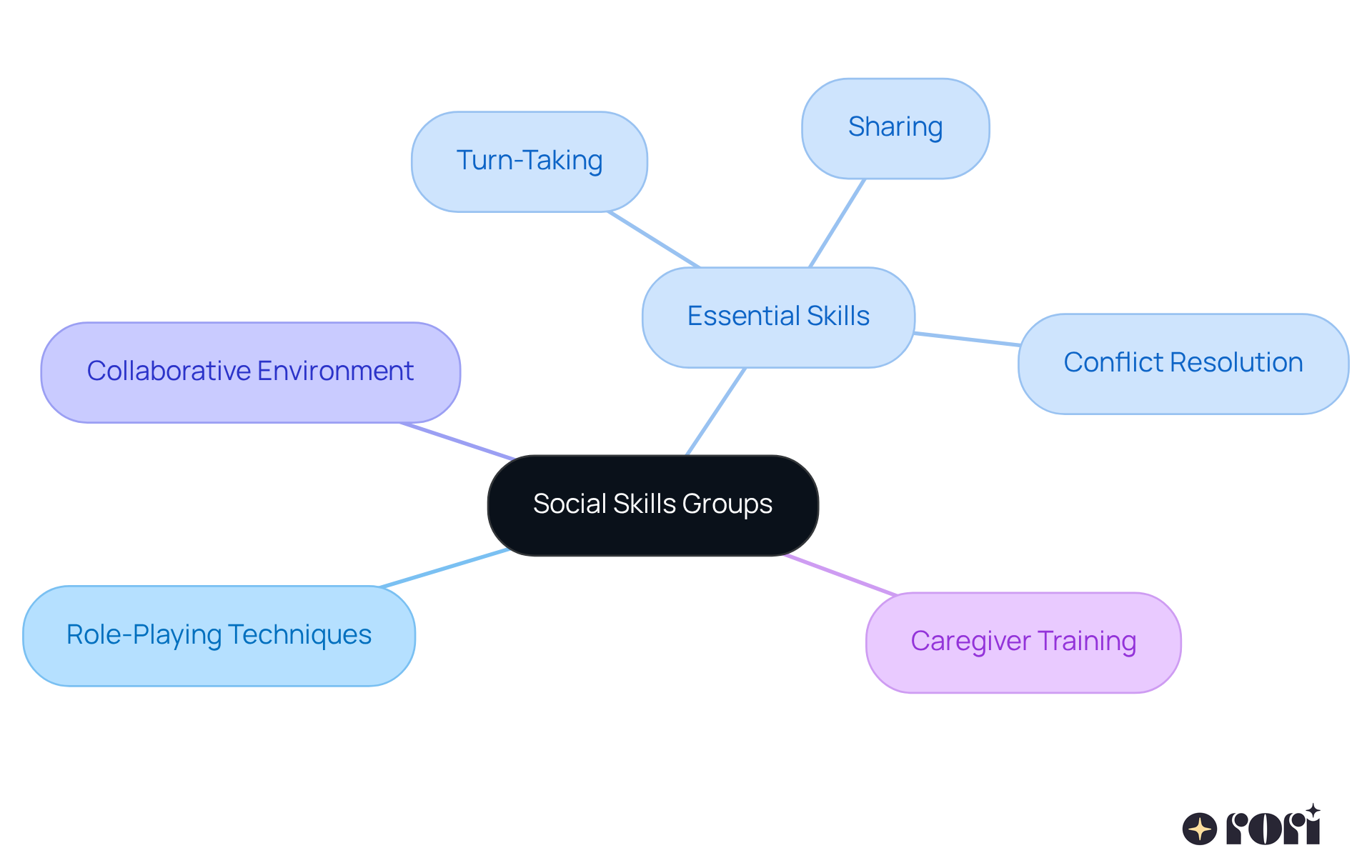
At Rori Care, create a warm and cooperative space where kids can engage in with their peers. These groups focus on essential skills like sharing, turn-taking, and , utilizing , which helps children gain independence as they navigate their interactions.
Imagine your child practicing in a nurturing environment, where they can strengthen their while making new friends. This collaborative approach not only incorporates but also fosters a sense of belonging that every child craves.
And it doesn’t stop there! Rori Care also offers , empowering families to support their children in developing these vital skills. It’s all about taking a comprehensive approach to , ensuring that everyone is on the same page.
Let’s explore this together! We’re here to !
Visual Supports: Enhancing Role-Playing Techniques for Social Understanding
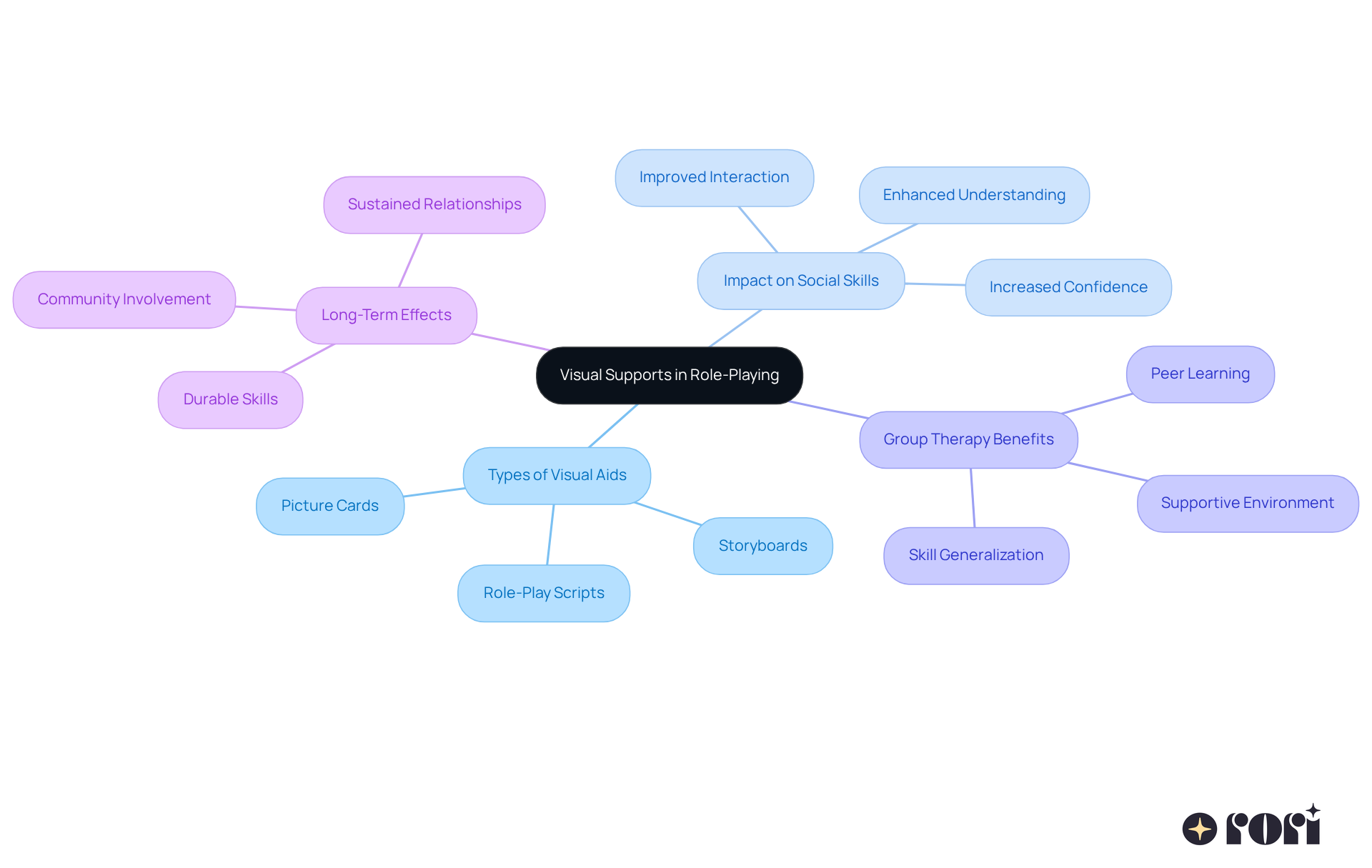
Using in role-playing activities is one of the effective role-playing techniques for , as it greatly enhances kids’ understanding of how to interact with others. Think about it: like stories, picture cards, and role-play scripts give clear examples of what behaviors to expect and the cues we pick up from each other. For instance, using a visual storyboard to lay out a role-play scenario helps young learners see the flow of events and grasp the . Not only does this method enhance understanding, but it also makes the whole experience more engaging and effective!
Instructors have noticed that these help kids get a better grip on societal norms. One educator even shared how clarify expectations, making it easier for kids to navigate social situations. The impact of these aids on acting skills is pretty significant, too! They encourage kids to practice in a , which leads to greater confidence and competence in real-life interactions.
Plus, , led by trained therapists, really strengthens these abilities. It creates a supportive space for kids to connect and learn from one another. The skills gained through stick around, thanks to regular practice in different settings. This highlights the in acting scenarios.
Organized teaching methods, especially , can greatly enhance , and serve as helpful guides. They assist young individuals in grasping societal expectations without confusion. Let’s explore this together and see how we can support our kids in their journey!
Local Therapy Centers: Real-Life Role-Playing for Social Competence
Local therapy facilities are truly essential for kids with autism, as they offer effective for in individuals with asd through real-life role-playing situations. These centers often organize fun , , and play sessions, allowing kids to develop their social abilities in . For instance, a trip to a nearby park can be a fantastic opportunity for children to practice important skills like greetings, sharing, and taking turns with their peers.
Studies show that these experiences are invaluable! They help young individuals apply what they’ve learned beyond the therapy room. Participating in not only encourages interaction among peers but also builds confidence, enabling kids to handle social situations more effectively. The allows for immediate feedback and reinforcement, making the learning experience even richer.
Ultimately, the are vital for in individuals with asd that young people can carry into their daily lives. So, let’s explore this together and see how these experiences can make a difference!

Technology-Enhanced Role-Playing: Interactive Tools for Social Skills Development
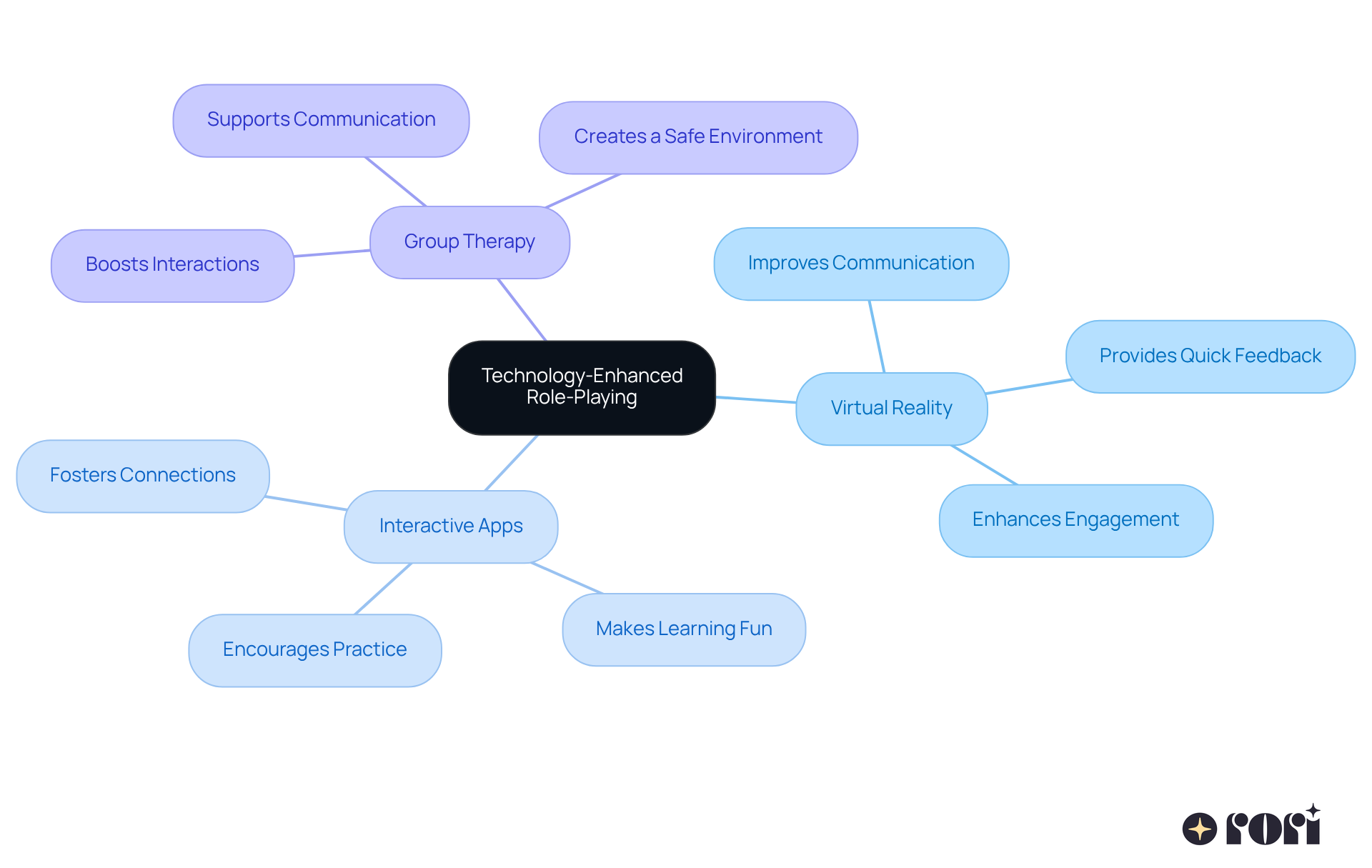
, like , serve as . Imagine your child stepping into a virtual classroom, where they can for improving social skills in individuals with ASD by starting conversations with classmates in a setting that feels real and immersive! 🌟
And it doesn’t stop there! , led by trained therapists, can really . It’s all about . Plus, these tech tools make learning fun and provide quick feedback, incorporating in an engaging way.
Let’s explore this together! These not only enhance learning but also create a sense of belonging for your child. If you’re curious about how these tools can make a difference, we’re here to help you every step of the way!
Family Support Programs: Empowering Parents Through Role-Playing Techniques
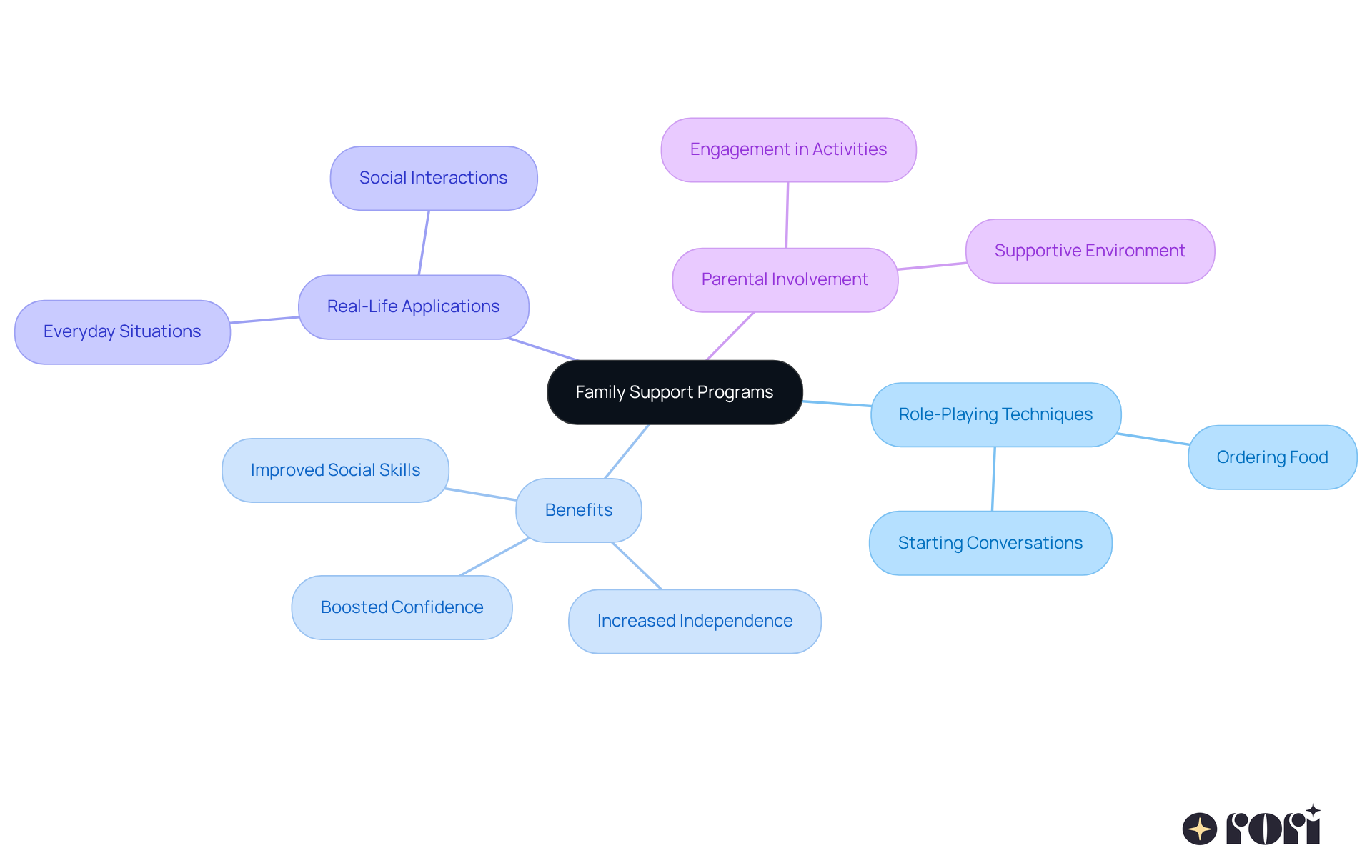
s play a vital role in helping parents access the resources they need to use . These programs offer to create , enhancing their kids’ interpersonal skills.
Imagine this: parents can utilize by , such as ordering food at a restaurant or striking up a conversation with neighbors. This hands-on involvement not only boosts their children’s social abilities but also helps them apply these skills in real-life situations, .
Research shows that when parents engage more in , their children’s social skills improve significantly. This highlights just how impactful . So, let’s explore this together! If you’re looking for , consider joining a . We’re here to !
Conclusion
Effective role-playing techniques really shine as a fantastic way to boost social skills in kids with Autism Spectrum Disorder (ASD). By offering safe and structured spaces for practice, these techniques help children tackle social interactions with more confidence and skill. When we weave in personalized role-playing strategies – whether through therapy centers, support programs, or fun activities – we can truly transform how children with ASD connect with the world around them.
Throughout this article, we’ve explored various methods, like structured programs such as PEERS, interactive role-playing games, and the use of visual aids. Each of these techniques not only nurtures essential social skills but also highlights how important it is for caregivers to get involved in reinforcing these skills at home. Research backs up the effectiveness of these approaches, showing impressive improvements in communication, confidence, and overall social competence among participants.
In wrapping up, the journey to enhance social skills in individuals with ASD is a team effort and quite multifaceted. By embracing effective role-playing techniques and actively involving families and caregivers, we can build a supportive community that fosters growth and independence. It’s so important for parents, educators, and therapists to collaborate, using the resources available to create enriching experiences that empower children with ASD to thrive socially. Let’s embrace these methods together! They can lead to lasting positive changes, paving the way for meaningful interactions and relationships. We’re here to help you every step of the way!
Frequently Asked Questions
What is Rori Care’s approach to improving social skills in children with ASD?
Rori Care utilizes Applied Behavior Analysis (ABA) therapy to implement personalized role-playing techniques that address specific social challenges faced by children with ASD.
How do role-playing techniques help children with ASD?
Role-playing techniques allow children to practice social interactions in a safe environment, boosting their confidence and skills for real-life situations, such as starting conversations.
What impact can regular participation in role-playing activities have on children with ASD?
Research indicates that regular participation can enhance interaction abilities by up to 40%, with around 70% of kids showing improved behavior and communication.
What programs does the Autism Society offer for improving communication skills?
The Autism Society offers interactive programs that involve small groups where children can practice various social situations, such as greeting classmates or sharing toys.
What are the benefits of the Autism Society’s structured role-playing programs?
These programs teach appropriate social behaviors and help build a sense of community, with 88% of parents reporting improvements in their children’s social interactions after participation.
How can caregivers support the social skills development of children with ASD?
Caregivers can support development by using ABA concepts and techniques at home, such as reinforcement strategies and arranging playdates to provide consistent practice opportunities.
What techniques does Social Cognition emphasize for understanding social cues?
Social Cognition emphasizes the importance of interpreting body language, tone of voice, and facial expressions through engaging role-playing scenarios.
How does Rori Care’s interpersonal abilities group therapy assist children?
It provides a supportive group environment led by qualified therapists, focusing on improving communication and social skills through enjoyable learning experiences.
Why is caregiver involvement important in the social skills development process?
Caregiver involvement is crucial as it reinforces learning at home, strengthens the caregiver-child bond, and ensures consistent practice of skills learned in therapy.
List of Sources
- Rori Care – ABA Therapy: Personalized Role-Playing Strategies for Social Skills Development
- Resources | Golden Steps ABA (https://goldenstepsaba.com/resources/success-rates-of-aba-therapy)
- How Scripting and Role-Playing Enhance ABA Therapy Outcomes – Up & Up ABA (https://upandupaba.com/faqs-resources/how-scripting-and-role-playing-enhance-aba-therapy-outcomes)
- Understanding Autism Therapy Success Rates (https://ambitionsaba.com/resources/understanding-autism-therapy-success-rates)
- The Numbers Don’t Lie: Revealing Autism Therapy Statistics | Above and Beyond Therapy (https://abtaba.com/blog/autism-therapy-statistics)
- Success Rates of ABA Therapy | Advanced Autism Services (https://advancedautism.com/post/success-rates-of-aba-therapy)
- Autism Society: Structured Role-Playing Programs for Social Interaction
- besteveraba.com (https://besteveraba.com/blog/autism-quotes)
- 10 inspiring quotes from people with autism | Autism Speaks (https://autismspeaks.org/life-spectrum/autism-quotes)
- Inspiring Autism Quotes for Understanding and Acceptance – Kids First (https://kidsfirstservices.com/first-insights/autism-quotes)
- Autism Quotes (https://kidsclubaba.com/autism-quotes)
- Celebrating Neurodiversity: Inspiring Words on Autism | Step Ahead ABA (https://stepaheadaba.com/blog/autism-quotes)
- Social Thinking: Techniques for Understanding Social Cues Through Role-Playing
- newpatternsaba.com (https://newpatternsaba.com/blog/the-importance-of-teaching-children-social-cues-using-aba-therapy)
- discoveryaba.com (https://discoveryaba.com/aba-therapy/using-role-playing-to-teach-social-situations)
- Play Quotes – The Strong National Museum of Play (https://museumofplay.org/about/play-quotes)
- PEERS Program: Evidence-Based Role-Playing for Adolescent Social Skills
- Impact of social knowledge and skills training based on UCLA PEERS® on social communication and interaction skills of adolescents or young adults with autism: A systematic review and meta-analysis (https://sciencedirect.com/science/article/abs/pii/S1876201825000656)
- Speech and language therapy for adolescents in youth justice: A series of empirical single‐case studies | Request PDF (https://researchgate.net/publication/340067720_Speech_and_language_therapy_for_adolescents_in_youth_justice_A_series_of_empirical_single-case_studies)
- (PDF) Efficacy of Community-Delivered PEERS® for Adolescents: Increases in Social Skills and Decreases in Social Anxiety and Loneliness (https://researchgate.net/publication/381486686_Efficacy_of_Community-Delivered_PEERSR_for_Adolescents_Increases_in_Social_Skills_and_Decreases_in_Social_Anxiety_and_Loneliness)
- Role-Playing Games (RPGs): Engaging Techniques for Social Skills Practice
- heartwisesupport.org (https://heartwisesupport.org/post/using-role-playing-techniques-to-improve-social-skills)
- discoveryaba.com (https://discoveryaba.com/aba-therapy/using-role-playing-to-teach-social-situations)
- attentiveautismcare.com (https://attentiveautismcare.com/blog/how-to-use-role-playing-games-for-autism-social-learning)
- Using role-playing to teach social situations (https://ambitionsaba.com/resources/using-role-playing-to-teach-social-situations)
- rpgresearch.com (https://rpgresearch.com/role-playing-games-used-as-educational-and-therapeutic-tools-for-youth-and-adults)
- Visual Supports: Enhancing Role-Playing Techniques for Social Understanding
- Supporting Social Engagement in Children with Autism Through Structured Programs | Advanced Autism Services (https://advancedautism.com/post/supporting-social-engagement-in-children-with-autism-through-structured-programs)
- The Role of Visual Supports in Enhancing ABA Therapy Outcomes (https://mastermindbehavior.com/post/the-role-of-visual-supports-in-enhancing-aba-therapy-outcomes)
- How ABA Therapy Supports Children with Autism in Understanding Social Cues (https://yellowbusaba.com/post/how-aba-therapy-supports-children-with-autism-in-understanding-social-cues)
- The use of visual schedules to increase academic-related on-task behaviors of individuals with autism: a literature review (https://tandfonline.com/doi/full/10.1080/20473869.2024.2402124)
- Visual Supports to Increase Conversation Engagement for Preschoolers With Autism Spectrum Disorder During Mealtimes: An Initial Investigation – PMC (https://pmc.ncbi.nlm.nih.gov/articles/PMC11527399)
- Local Therapy Centers: Real-Life Role-Playing for Social Competence
- How Scripting and Role-Playing Enhance ABA Therapy Outcomes – Up & Up ABA (https://upandupaba.com/faqs-resources/how-scripting-and-role-playing-enhance-aba-therapy-outcomes)
- Social Connection Quotes | Our 33 Favorite Quotes – Visible Network Labs (https://visiblenetworklabs.com/2020/10/16/thirty-three-best-social-connection-quotes)
- pinnacleblooms.org (https://pinnacleblooms.org/ma/role-playing-therapy-autism)
- The Role of Role-Playing in Developing Social Skills in ABA Therapy for Autism (https://buildingblockstherapy.org/blog/the-role-of-role-playing-in-developing-social-skills-in-aba-therapy-for-autism)
- 35 Best Therapy Quotes to Inspire and Motivate Others (https://positivepsychology.com/best-therapy-quotes)
- Technology-Enhanced Role-Playing: Interactive Tools for Social Skills Development
- Effectiveness of Virtual Reality Social Skills Training for Students with Autism and Social Difficulties Observed Through Behavior and Brain Waves (https://mdpi.com/2076-3417/15/9/4600)
- Effectiveness of Virtual Reality Technology Interventions in Improving the Social Skills of Children and Adolescents With Autism: Systematic Review (https://jmir.org/2025/1/e60845)
- Effectiveness of Virtual Reality Technology Interventions in Improving the Social Skills of Children and Adolescents With Autism: Systematic Review – PMC (https://pmc.ncbi.nlm.nih.gov/articles/PMC11840372)
- Family Support Programs: Empowering Parents Through Role-Playing Techniques
- THE IMPORTANCE OF PARENTS – Institute for Educational Advancement (https://educationaladvancement.org/blog-the-importance-of-parents)
- 50 Parenting Quotes to Inspire and Guide (https://mentalhealthcenterkids.com/blogs/articles/parenting-quotes)
- Checking your browser – reCAPTCHA (https://pmc.ncbi.nlm.nih.gov/articles/PMC11918677)
- 16 Quotes on Parenting with Empathy (https://ybgr.org/16-quotes-on-parenting-with-empathy)
- Parent Involvement and Children’s Academic and Social Development in Elementary School – PMC (https://pmc.ncbi.nlm.nih.gov/articles/PMC2973328)