

Introduction
Navigating the world of autism care can feel overwhelming, can’t it? But with the right strategies, therapy can become a meaningful journey for skill transfer. As children with autism learn to explore their surroundings, personalized approaches – like naturalistic teaching and varied instructional methods – are key in helping them apply what they learn in therapy to everyday life.
So, how can caregivers and practitioners ensure these skills stick in real-life situations, boosting independence and confidence? 🤔 This article dives into ten effective strategies for skill transfer in autism care, sharing insights and practical tips that can truly make a difference for children and their families. Let’s explore this together!
Rori Care – ABA Therapy: Personalized Skill Transfer Strategies for Autism
At Rori Behavioral Innovations, we believe in a that truly caters to the unique needs of each young individual. Our healthcare professionals conduct thorough assessments to craft that incorporate , enabling kids to apply what they learn in therapy to their everyday lives. This is so important for and enhancing the overall quality of life for individuals with autism.
Research shows that children who participate in often see . This really highlights how crucial personalized care is! Experts in the field emphasize that not only address behavioral challenges but also encompass social, communication, and functional skills. This .
What’s even more encouraging is that serve as , helping to ease the . This makes them a vital part of effective autism care. So, if you’re navigating this journey, remember that you’re not alone. Let’s explore this together and find the best path forward for your child!
Naturalistic Teaching: Enhancing Skill Transfer Through Real-Life Contexts
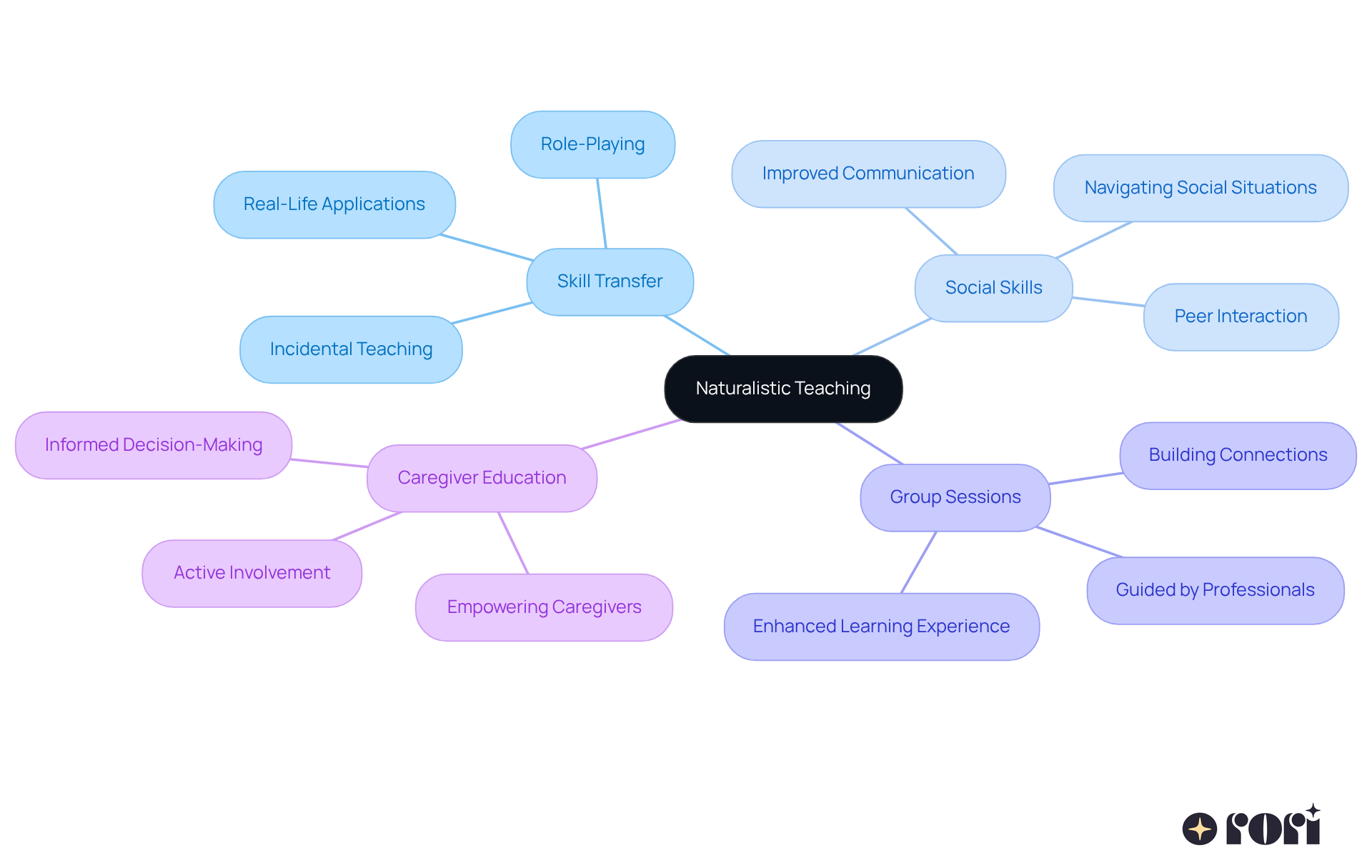
serve as by utilizing everyday situations to help kids learn important skills. Imagine teaching social interactions during playdates or while grocery shopping, as these are , allowing children to practice what they’ve learned in real-life settings. It’s a fantastic approach that not only boosts their learning but also increases the chances that they’ll use these skills in different environments.
Research shows that kids who engage in naturalistic teaching often show . They learn to navigate more effectively, which is so important! that using by bringing real-life experiences into treatment is key to fostering independence and adaptability.
And let’s not forget about ! When guided by experienced professionals, these sessions really enhance the learning experience, helping kids build better skills and connections with their peers. By weaving learning into daily activities and complementing it with , young individuals can implement across various settings. This ultimately leads to greater confidence and success in their lives.
is a vital part of this journey. It empowers caregivers with , enhancing their ability to support their children’s behavioral goals through active involvement and informed decision-making. So, let’s explore this together! We’re here to help you every step of the way!
Multiple Instructors: Leveraging Diverse Teaching Approaches for Skill Transfer
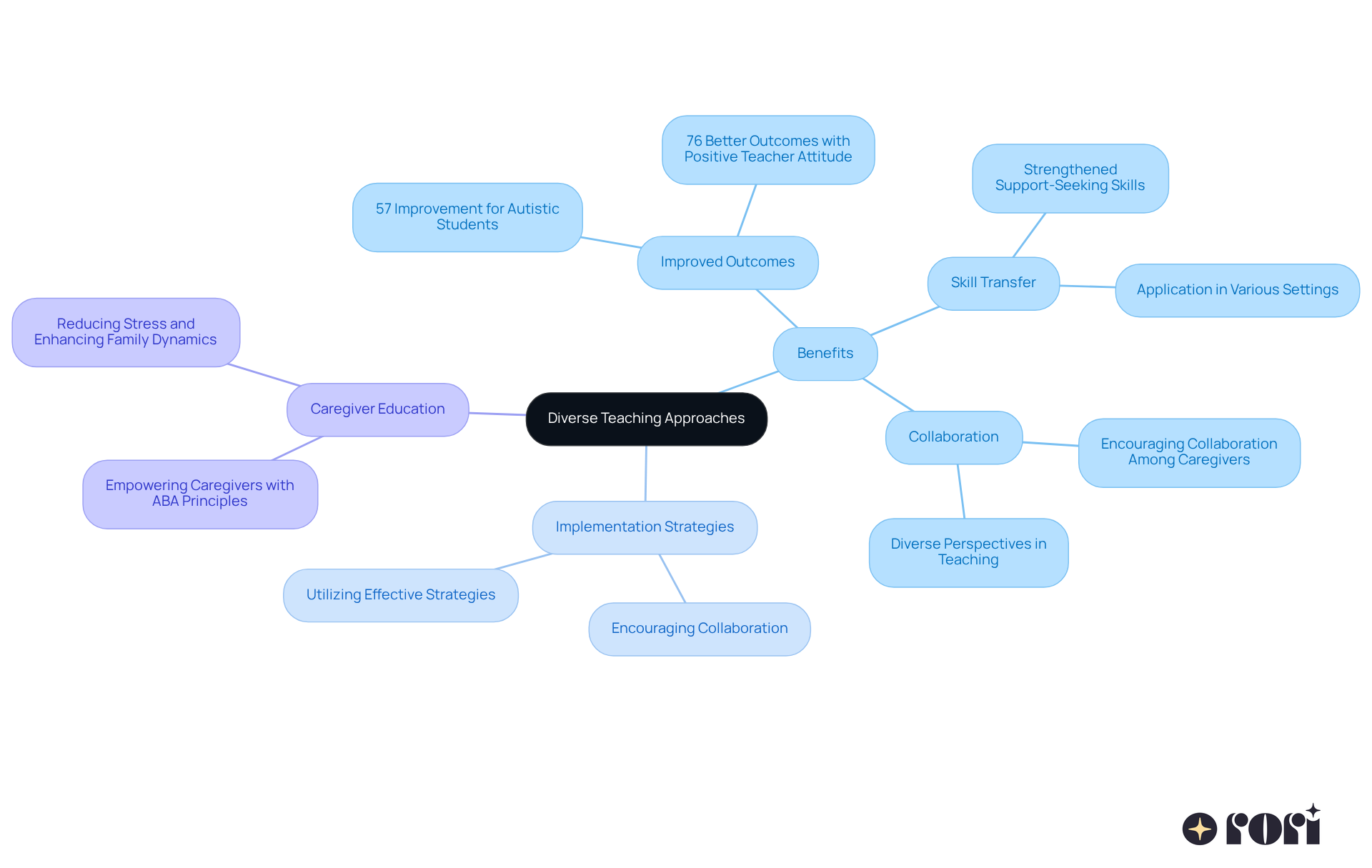
Bringing multiple instructors into the learning mix can really open up a world of for students. This not only enriches their educational journey but also helps young folks learn how to and with various people. For example, a young person might learn to ask for help from a therapist, a teacher, or a parent, which strengthens their ability to seek support in all sorts of situations.
Did you know that classrooms using see a whopping 57% improvement in outcomes for autistic students? That’s a clear sign that diverse teaching approaches really work! Plus, when teachers have a , it correlates with 76% better outcomes for autistic students. This just goes to show how impactful varied instructional methods can be.
By embracing these different methods, families can utilize , ultimately boosting their kids’ ability to navigate various environments and social interactions. So, how can parents implement this at home? Encouraging can ensure that kids experience a range of teaching styles and perspectives.
is key in this process. It empowers caregivers with ABA principles and strategies, leading to . When caregivers feel informed and confident, it reduces stress and creates a more .
Let’s explore this together! By working as a team, we can make a real difference in our children’s lives.
Reinforcement Techniques: Boosting Skill Transfer in Autism Therapy
methods are so important for motivating kids with autism to use their skills in different settings. When therapists a child right after they successfully use a learned skill, it really encourages them to practice and apply that skill more often. For instance, if a child asks for a toy using their communication skills, a prompt praise can really strengthen that behavior, making it more likely they’ll do it again.
Research shows that kids who start intervention early on see some amazing improvements. Studies have found a and an 80% increase in social interactions thanks to consistent . ABA is all about tailoring therapy to fit each child’s unique needs, using the science of learning and behavior to support their overall growth.
Experts emphasize that the success of these methods hinges on to what the child loves. This way, the reinforcement feels meaningful and motivating. This approach offers , helping kids not only to transfer their skills but also to build their confidence, making it easier for them to navigate different social situations.
Plus, when caregivers learn ABA concepts and techniques, they become better equipped to support their child’s . This active involvement leads to , less stress, and stronger . Parents are encouraged to weave into their daily routines, like complimenting their kids for using their skills in real-life situations. This simple practice can really help promote their growth!
Let’s explore this together! We’re here to help you every step of the way!

Varying Teaching Environments: Facilitating Generalization of Skills
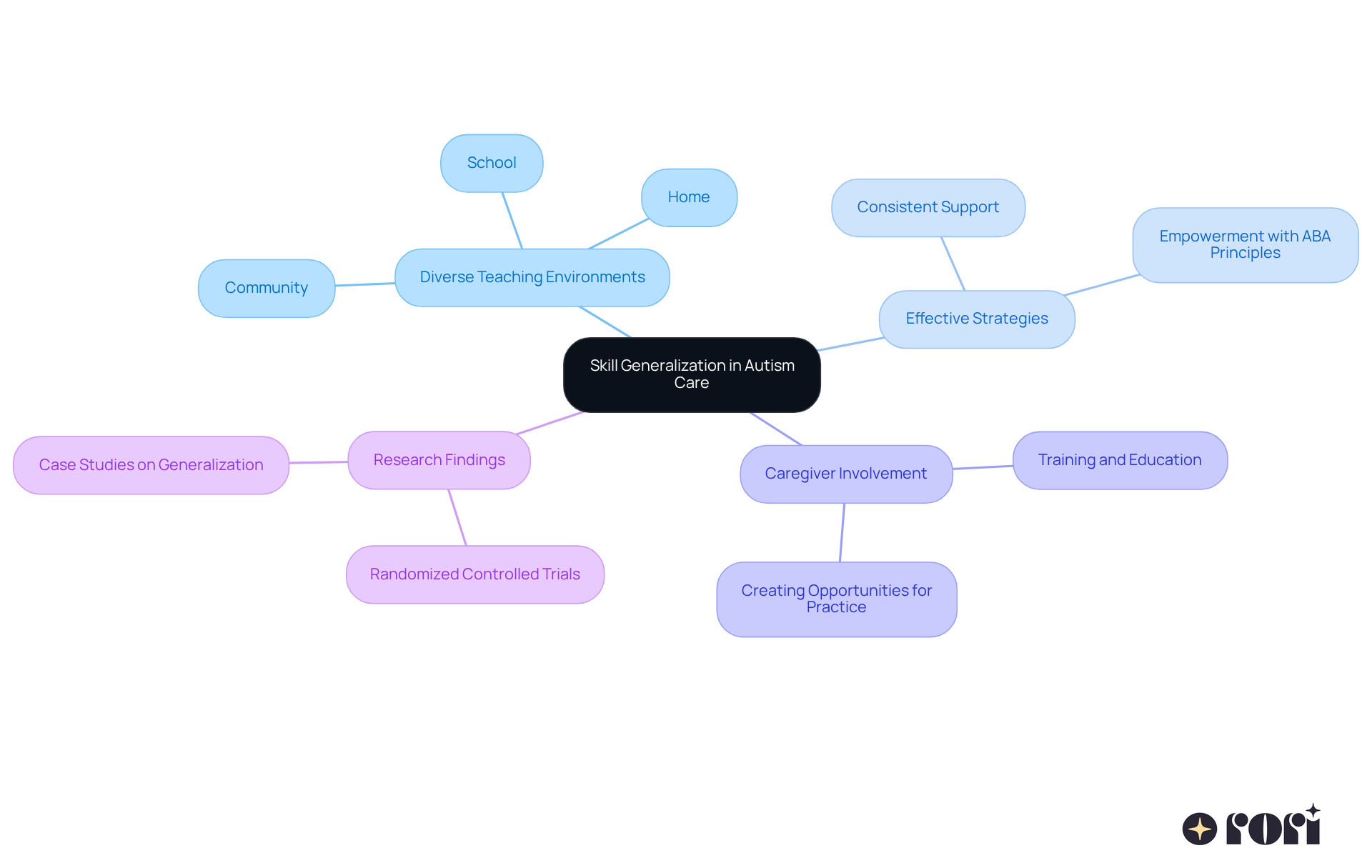
Diverse teaching settings play a vital role in implementing , helping kids with autism generalize their skills. When children – like home, school, and the community – they learn to to fit various situations. For instance, a child might practice greeting others during therapy, at home, and while engaging in community activities. This approach really strengthens their skills across different environments, boosting their chances of using those .
Research shows that kids who practice in various settings tend to be more adaptable and retain what they’ve learned better. Clinicians emphasize that is among the , as it not only helps with transferring skills but also , allowing kids to handle social interactions more smoothly. Plus, when caregivers are , they can really enhance this process by providing , making informed choices, and actively participating in their child’s learning journey.
By incorporating into therapy, families and practitioners can lay a solid foundation for skill generalization, leading to . Recent studies highlight that eight out of nine randomized controlled trials (RCTs) reviewed showed effective , settings, and everyday activities. As one clinician put it, “Generalization allows individuals to demonstrate their skills and behaviors in real-world situations, not just in structured teaching environments.”
Let’s explore this together! We’re here to help you every step of the way!
Parent Involvement: Empowering Families to Support Skill Transfer
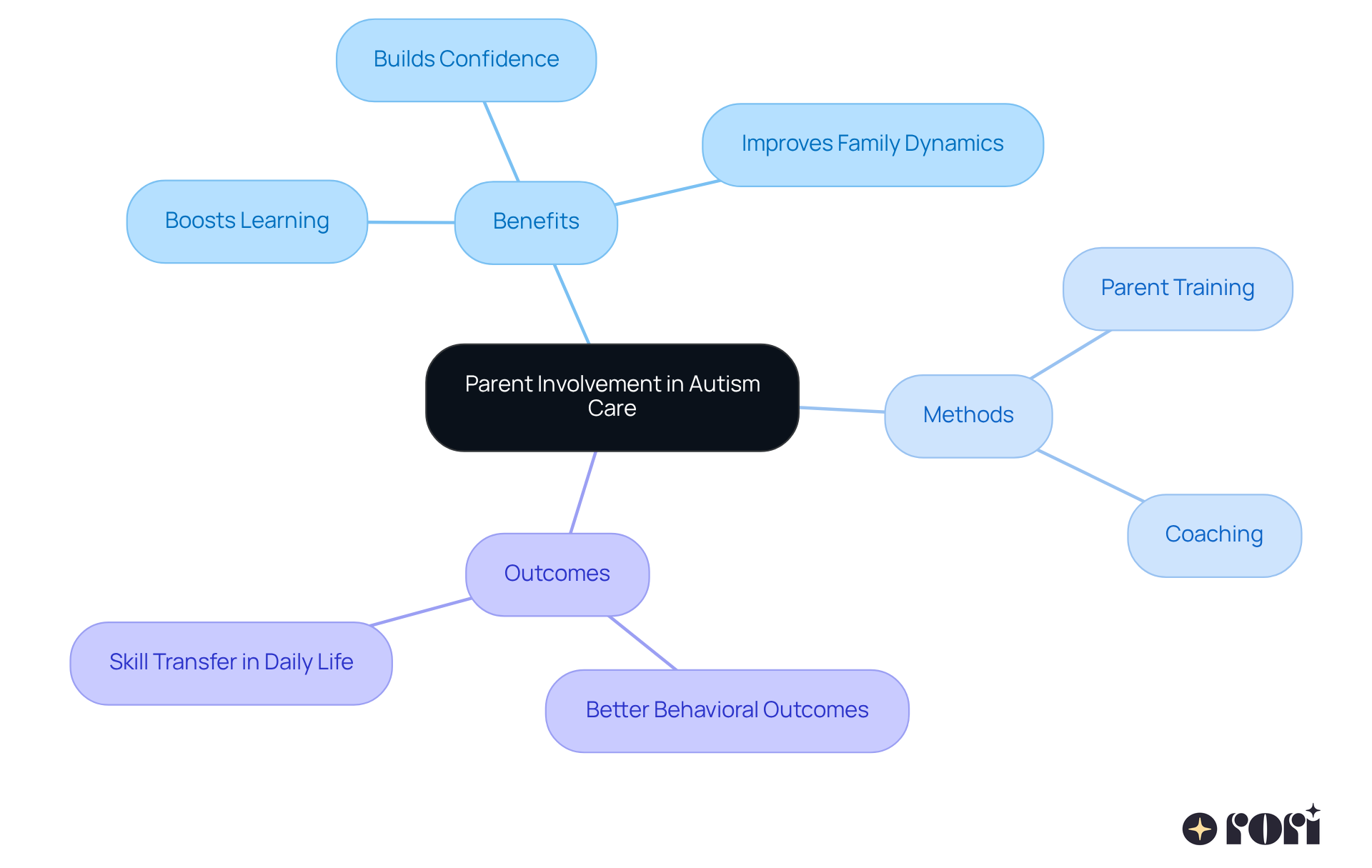
is so important when it comes to helping kids with autism thrive! At Rori Care, our caring clinicians are here to guide your family through the journey of . By joining in on therapy sessions and using techniques at home, you can really boost what your child learns in therapy.
Think about it: when parents get involved, it makes a world of difference! Through methods such as , caregivers learn that empower them to effectively. This active involvement not only helps skills stick in everyday life but also builds your confidence as a caregiver. Plus, it leads to and a more supportive family dynamic.
So, let’s explore this together! We’re here to !
Ongoing Assessment: Monitoring and Adapting Strategies for Skill Transfer
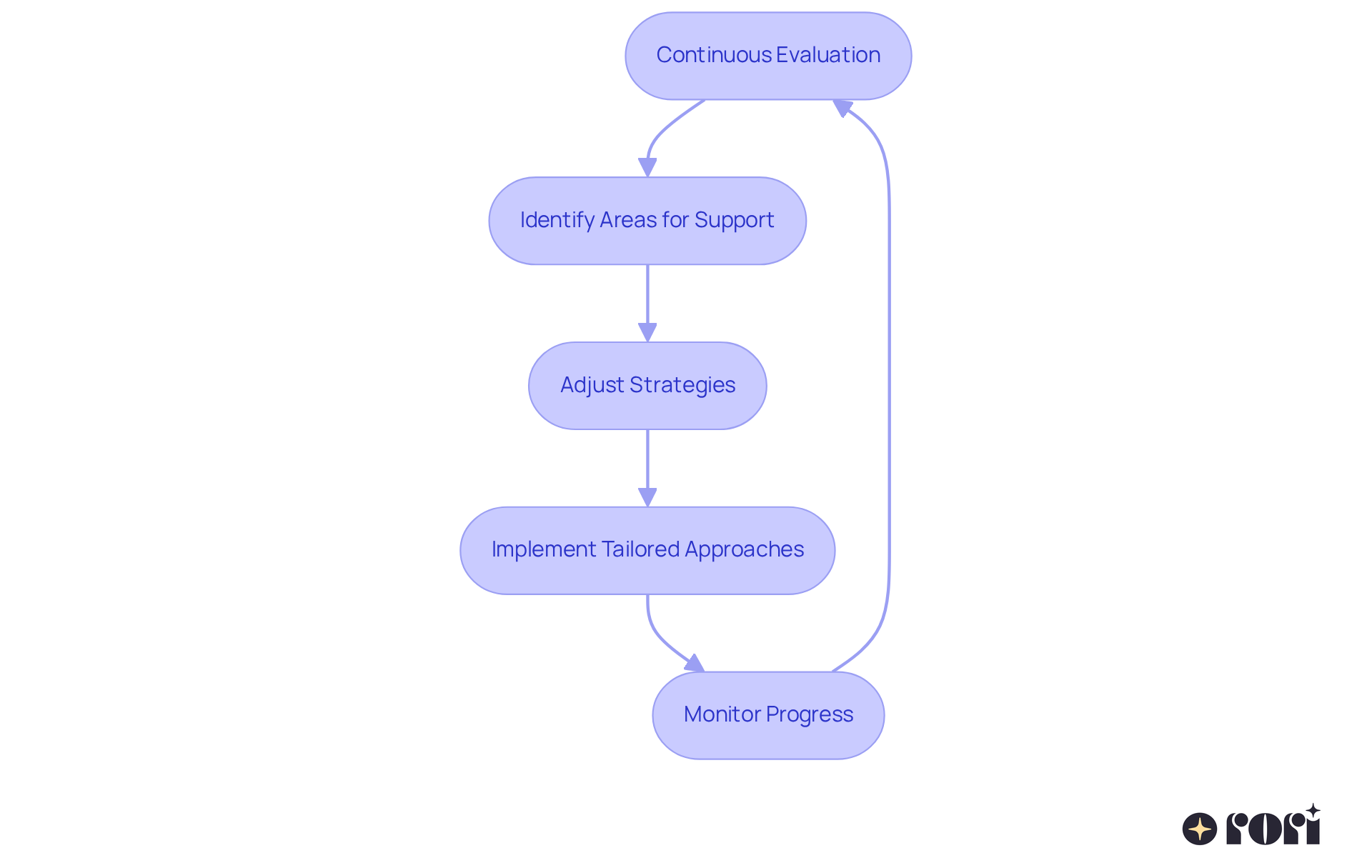
Continuous evaluation is so important for ! It helps practitioners keep track of a young person’s development and adjust their approaches as needed. on specific areas that might need a little extra support, ensuring that therapy aligns with the individual’s changing needs.
This improve but also promotes overall growth. For instance, if a young person finds it tough to generalize a skill, therapists can tweak their teaching methods or provide more practice opportunities in different settings. Research shows that young individuals who receive often see significant improvements when implementing . This really highlights how crucial this practice is for enhancing .
By actively tracking progress, clinicians can implement . It’s all about in their abilities. So, let’s explore this together! We’re here to !
Self-Monitoring: Fostering Independence in Skill Application
for helping young people with autism ! When we encourage kids to notice and , they start to use their skills in different situations without needing constant reminders. For instance, imagine a young person using a checklist to remember to speak politely during conversations. This not only helps them take responsibility for their behavior but also in what they can do.
At Rori Care, we really focus on . We make sure that each young person’s are tailored to their unique needs and goals. By setting , we empower caregivers to through that promote learning and transfer. Our are always evaluating and adjusting these plans to optimize outcomes, reinforcing how important self-monitoring is in fostering independence.
Let’s explore this together! If you’re looking for ways to support your child’s growth, we’re here to help you every step of the way!
Routine Integration: Embedding Skills into Daily Activities for Better Transfer
Incorporating acquired abilities into everyday practices represents . Imagine using communication techniques during mealtime or practicing social interactions during family outings – these moments can really help children strengthen their learning in meaningful contexts. Regular practice not only boosts their understanding but also promotes the use of these skills in real-life situations, ultimately enhancing their independence. Clinicians often point out that when young individuals engage in these natural settings, they’re more likely to retain and generalize their skills, which leads to improved social competence and confidence. Research shows that this kind of integration can significantly impact a young person’s ability to , making it a crucial part of .
At Rori Care, we truly believe that the patient is at the heart of everything we do. Our ABA intervention is tailored to meet each young individual’s unique needs, and studies reveal that significant improvement is seen in 90% of youngsters when the recommended hours are fully implemented with engaged caregiver participation. This active involvement not only but also with the knowledge and skills they need to support their child’s behavioral goals.
:
- Enhanced Support: Caregivers become better equipped to provide the right support at home, complementing professional interventions and promoting consistency.
- Informed Decision-Making: With a deeper understanding of ABA principles and techniques, caregivers can make .
- : and alignment with therapeutic approaches often lead to more effective and lasting behavioral improvements.
- Empowered Caregivers: The knowledge and skills gained through the program boost caregivers’ confidence in their ability to assist their child, reducing stress and improving overall family dynamics.
By grasping ABA concepts and techniques, caregivers can make , leading to . Research suggests that such integration can significantly influence a young person’s ability to , making it a vital component of . Let’s explore this together!

Technology-Enhanced Strategies: Optimizing Skill Transfer in Autism Care
Technology is changing the game in autism care, offering exciting tools that help share knowledge in new ways. Think about it: applications, interactive games, and virtual reality environments create fun learning experiences that motivate kids to practice their skills. For instance, a messaging app can make it easier for a young person to ask for things through enjoyable interactions, which not only strengthens their learning but also boosts their chances of using these skills in real-life situations.
Research shows that . Studies have highlighted significant improvements in social and cognitive skills among children with autism spectrum disorder (ASD). By weaving technology into therapy, clinicians at Rori Care can , leading to better results. And here’s something impressive: by up to 30%! This really underscores how effective can be in assisting kids to transfer their skills.
At Rori Care, they believe that technology not only makes learning more engaging but also helps young people with behavioral challenges pick up essential skills that matter in their daily lives. This approach is backed by , like , measurable goals, , and ongoing evaluation. This way, every child’s unique needs are met, maximizing the benefits of technology on their learning journey.
Let’s explore this together! We’re here to !

Conclusion
Effective strategies for skill transfer in autism care are so important for helping individuals with autism thrive in their everyday lives. By using personalized approaches – like naturalistic teaching, caregiver involvement, and tech-enhanced methods – children can learn to apply skills in real-world situations. This not only fosters independence but also boosts their overall quality of life.
Throughout this article, we’ve explored various strategies, such as the significance of diverse teaching environments, the power of positive reinforcement, and the advantages of ongoing assessments. Each of these elements plays a vital role in a holistic approach to autism care, ensuring that skills are not just learned but also generalized across different settings. Plus, the emphasis on collaboration among caregivers, educators, and therapists highlights the teamwork needed to make meaningful progress.
Ultimately, the journey of skill transfer in autism care is a shared one. It requires the commitment and support of families, professionals, and the community. By embracing effective strategies and staying adaptable to each child’s unique needs, we can create an environment where individuals with autism can truly flourish. Let’s explore this together! This is a call to action for everyone involved to keep discovering these strategies, ensuring that every child gets the support they need to thrive.
Frequently Asked Questions
What is Rori Care’s approach to ABA therapy for autism?
Rori Care employs a personalized approach to Applied Behavior Analysis (ABA), conducting thorough assessments to create tailored treatment plans that focus on effective skill transfer strategies for individuals with autism.
Why is personalized care important in autism therapy?
Personalized care is crucial because it leads to significant improvements in communication and adaptive behaviors, helping individuals apply what they learn in therapy to their everyday lives, fostering independence, and enhancing their overall quality of life.
How does naturalistic teaching enhance skill transfer in autism care?
Naturalistic teaching utilizes everyday situations, such as playdates or grocery shopping, to help children learn important skills in real-life contexts, increasing the likelihood that they will use these skills across different environments.
What benefits do children experience from naturalistic teaching?
Children engaged in naturalistic teaching often show improved communication and social skills, enabling them to navigate real-life situations more effectively, which is essential for fostering independence and adaptability.
How do social interaction group sessions contribute to skill transfer?
Guided social interaction group sessions enhance the learning experience by helping children build better skills and connections with peers, allowing them to implement effective strategies for skill transfer in various settings.
What role does caregiver education play in autism care?
Caregiver education empowers caregivers with ABA principles and techniques, enhancing their ability to support their children’s behavioral goals through active involvement and informed decision-making.
How does having multiple instructors benefit students with autism?
Multiple instructors provide diverse teaching styles and communication methods, enriching the educational experience and helping students apply their skills in various settings and with different people.
What impact do universal design for learning principles have on autistic students?
Classrooms using universal design for learning principles see a 57% improvement in outcomes for autistic students, demonstrating the effectiveness of diverse teaching approaches.
How can parents implement varied teaching methods at home?
Parents can encourage collaboration among different caregivers and educators to expose children to a range of teaching styles and perspectives, boosting their ability to navigate various environments.
What is the overall goal of Rori Care’s approach to autism therapy?
The overall goal is to work collaboratively with families to enhance the skills and confidence of children with autism, leading to better outcomes and a more supportive family dynamic.
List of Sources
- Rori Care – ABA Therapy: Personalized Skill Transfer Strategies for Autism
- The Numbers Don’t Lie: Revealing Autism Therapy Statistics | Above and Beyond Therapy (https://abtaba.com/blog/autism-therapy-statistics)
- ABA Therapy Effectiveness for Autism | Connect n Care (https://connectncareaba.com/blog/aba-therapy-effectiveness-for-autism)
- Understanding Autism Therapy Success Rates (https://ambitionsaba.com/resources/understanding-autism-therapy-success-rates)
- Resources | Golden Steps ABA (https://goldenstepsaba.com/resources/success-rates-of-aba-therapy)
- 10 Powerful Autism ABA Quotes That Inspire Change – Rori Blog (https://rori.care/post/10-powerful-autism-aba-quotes-that-inspire-change)
- Naturalistic Teaching: Enhancing Skill Transfer Through Real-Life Contexts
- pmc.ncbi.nlm.nih.gov (https://pmc.ncbi.nlm.nih.gov/articles/PMC7187421)
- The Role of Generalization in ABA Therapy Outcomes (https://goldenstepsaba.com/resources/the-role-of-generalization-in-aba-therapy-outcomes-8a9c8)
- Naturalistic Teaching Strategies in ABA: How PRT, Incidental Teaching & NLP Boost Engagement and Skill Development (https://atcconline.com/blog/the-power-of-naturalistic-teaching-in-aba-therapy)
- totalcareaba.com (https://totalcareaba.com/autism/how-aba-therapy-teaches-children-to-generalize-skills-across-environments)
- Multiple Instructors: Leveraging Diverse Teaching Approaches for Skill Transfer
- pmc.ncbi.nlm.nih.gov (https://pmc.ncbi.nlm.nih.gov/articles/PMC7187421)
- Autism Quotes (https://kidsclubaba.com/autism-quotes)
- learningforapurpose.com (https://learningforapurpose.com/special-education-quotes)
- Reinforcement Techniques: Boosting Skill Transfer in Autism Therapy
- Understanding Autism Therapy Success Rates (https://ambitionsaba.com/resources/understanding-autism-therapy-success-rates)
- ABA Therapy Impact (https://goldenstepsaba.com/resources/aba-therapy-impact)
- Autism Therapy Statistics (https://supportivecareaba.com/statistics/autism-therapy-statistics)
- Positive Reinforcement and ABA Therapy (https://goldenstepsaba.com/resources/positive-reinforcement-in-aba-therapy)
- A Study to Measure The Effectiveness of Differential Reinforcement for Stereotypical Behavior in Autism Spectrum Disorder (https://biomedpharmajournal.org/vol9no2/a-study-to-measure-the-effectiveness-of-differential-reinforcement-for-stereotypical-behavior-in-autism-spectrum-disorder)
- Varying Teaching Environments: Facilitating Generalization of Skills
- The Role of Generalization in ABA Therapy Outcomes (https://goldenstepsaba.com/resources/the-role-of-generalization-in-aba-therapy-outcomes-8a9c8)
- pmc.ncbi.nlm.nih.gov (https://pmc.ncbi.nlm.nih.gov/articles/PMC7187421)
- How ABA Therapy Helps with the Generalization of Skills Across Environments (https://supportivecareaba.com/statistics/how-aba-therapy-helps-with-the-generalization-of-skills-across-environments)
- ABA Skill Generalization: Strategies That Work (https://thetreetop.com/aba-therapy/aba-generalization-strategies)
- Ongoing Assessment: Monitoring and Adapting Strategies for Skill Transfer
- Autism Therapy Statistics (https://goldenstepsaba.com/resources/autism-therapy-statistics)
- Tracking and Measuring Outcomes in ABA Therapy Programs (https://mastermindbehavior.com/post/tracking-and-measuring-outcomes-in-aba-therapy-programs)
- The Numbers Don’t Lie: Revealing Autism Therapy Statistics | Above and Beyond Therapy (https://abtaba.com/blog/autism-therapy-statistics)
- Self-Monitoring: Fostering Independence in Skill Application
- A meta-analysis of self-management interventions for students with ASD (https://sciencedirect.com/science/article/pii/S1750946723001940)
- advancedautism.com (https://advancedautism.com/post/autism-quotes)
- The Role of Self-Monitoring in ABA Therapy for Autism | Autism Therapy Services (https://hiddengemsaba.com/articles/the-role-of-self-monitoring-in-aba-therapy-for-autism)
- Routine Integration: Embedding Skills into Daily Activities for Better Transfer
- Voices of Strength and Understanding: Insights and Inspiration on Autism – apricott ABA (https://apricott.com/resources/autism-quotes)
- 10 Inspiring Autism Awareness Quotes to Foster Understanding – Rori Blog (https://rori.care/post/10-inspiring-autism-awareness-quotes-to-foster-understanding)
- pmc.ncbi.nlm.nih.gov (https://pmc.ncbi.nlm.nih.gov/articles/PMC11918677)
- gratefulcareaba.com (https://gratefulcareaba.com/blog/inspirational-quotes-about-autism)
- Technology-Enhanced Strategies: Optimizing Skill Transfer in Autism Care
- The Role of Technology in Enhancing Therapy for Children with Autism | Advanced Autism Services (https://advancedautism.com/post/the-role-of-technology-in-enhancing-therapy-for-children-with-autism)
- Quotes About Autism – Blog | Arms Wide Open ABA (https://armswideopenaba.com/blog/quotes-about-autism)
- mental.jmir.org (https://mental.jmir.org/2021/9/e20892)
- Checking your browser – reCAPTCHA (https://pmc.ncbi.nlm.nih.gov/articles/PMC10398379)