

Introduction
Understanding the intricacies of Applied Behavior Analysis (ABA) therapy can feel overwhelming for parents navigating the complexities of autism treatment. 🌟 This therapeutic approach, grounded in scientific principles, offers tailored strategies aimed at enhancing communication, social skills, and independence in children. As families seek clarity amidst a sea of information, they often find themselves asking essential questions about the effectiveness, structure, and benefits of ABA therapy.
What are the key components that make ABA successful?
And how can parents actively participate in their child’s journey toward growth and development?
Let’s explore this together! We’re here to help you every step of the way!
Rori Care – ABA Therapy: Understanding the Basics of ABA for Parents
is a therapeutic method that is often discussed in , designed to help improve specific skills and actions in children with autism. By utilizing techniques like reinforcement, prompting, and modeling, ABA encourages positive behaviors while minimizing challenging ones. It’s important for parents to understand that highlight that ABA isn’t a one-size-fits-all approach; instead, it’s carefully tailored to meet each child’s unique needs, requiring active parental involvement throughout the journey.
Key components of ABA include:
- Reinforcement: Using rewards to encourage desired behaviors, which can really boost motivation and engagement.
- Data Collection: Keeping track of progress through automatic data collection during sessions, ensuring that interventions stay effective and relevant. All data is securely stored, anonymized, and deleted after analysis, giving families peace of mind.
- : Setting clear, measurable objectives for behavior change and skill enhancement, providing a transparent benchmark for progress.
- Individualization: Crafting designed by qualified analysts that consider the specific challenges and strengths of each child, which is vital for achieving the best therapeutic outcomes.
Recent studies shine a light on the on children’s behavior. Kids with lower initial adaptive skills often see remarkable improvements when they receive customized interventions. For example, research shows that can lead to better communication, social skills, and overall independence. In fact, studies indicate that ABA treatment boasts a in helping individuals with ASD, particularly in enhancing IQ scores and adaptive behaviors.
Real-world examples of personalized ABA treatment plans show how customization can effectively target specific goals, leading to meaningful progress in young people’s development. As Rori Care highlights, ‘The success of ABA treatment depends on several key variables: Early intervention, Intensity and duration, Therapist expertise, , Tailored interventions.’
The significance of personalization in is truly profound; it’s a core element that enhances treatment effectiveness and supports long-term success for youths with autism. Additionally, understanding the , which can be considerable, is crucial for families considering ABA services.
So, let’s explore this together! We’re here to help you every step of the way!

What is the Purpose of ABA Therapy?
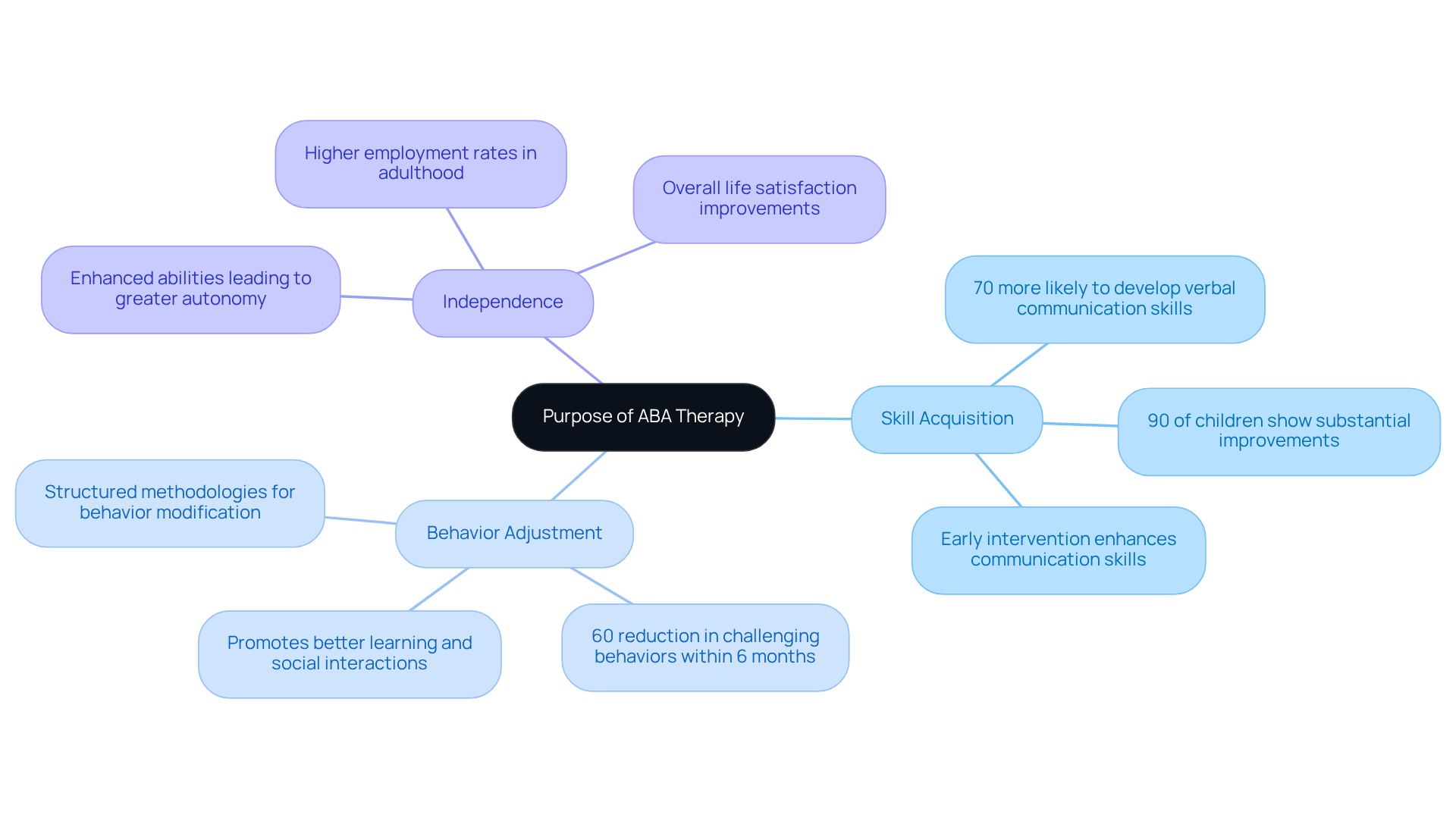
The main aim of ABA intervention is to improve the quality of life for youth with autism by equipping them with . Let’s dive into some of the key components that make this possible:
- : is all about teaching vital communication, social, and daily living skills. Did you know that research shows youngsters receiving intensive ABA treatment are 70% more likely to develop within just two years? This really highlights how effective structured interventions can be!
- : By addressing and diminishing difficult actions, ABA treatment helps . In fact, prompt action has been shown to decrease such behaviors by 60% within six months. This means kids can engage more fully in their surroundings, which is so important!
- Independence: A big goal of ABA treatment is to in youth. Research indicates that individuals who undergo intensive often show enhanced abilities, leading to . This includes better employment rates and overall life satisfaction.
In addition to these core components, Rori Care – harnesses cutting-edge AI technology to automate progress report generation. This innovation allows clinicians to spend 50% more time focusing on direct care for children rather than administrative tasks. By , caregivers gain actionable insights and strategies to actively support their children’s behavioral goals.
Experts in the field emphasize the importance of in ABA treatment. As noted, “Applied Behavior Analysis (ABA) intervention has long stood as a cornerstone in the treatment of Autism Spectrum Disorder (ASD).” This really underscores the program’s vital role in helping young individuals in various aspects of life. Overall, the ABA questions and answers not only impart essential skills but also transform the lives of youngsters with autism, paving the way for a brighter future.
Let’s explore this together and see how we can make a difference!
What Are Common Behavioral Interventions in ABA Therapy?
Common behavioral interventions in ABA therapy include:
- : This structured method breaks down skills into small, teachable components, allowing for focused learning and mastery. DTT is especially effective in educating youngsters with autism by offering clear instructions and prompt feedback, which aids in reinforcing preferred actions. Studies indicate that DTT continues to show substantial advancements in . Children with lower baseline adaptive levels can attain an average improvement of 4.46 points in adaptive skills for each year spent in DTT. The effectiveness of DTT is improved through , which ensures that the are personalized to meet the unique needs of each individual.
- : This approach emphasizes teaching skills within the context of everyday activities, promoting the generalization of learned behaviors to real-life situations. By incorporating education into everyday activities, young individuals can utilize their abilities more efficiently in different environments. Continuous assessment and adjustment of these strategies guarantee that they stay effective and adaptable to the individual’s changing needs.
- : PRT focuses on essential aspects of a young person’s development, such as motivation and self-management. By enhancing these core skills, young ones can experience broader improvements in their overall conduct and learning abilities. Behavior analysts utilize , supported by , to ensure that the most effective methods are applied for behavior change.
- : This intervention emphasizes assisting youngsters in learning to interact suitably with peers and adults. Through organized activities and role-playing, young individuals develop essential social skills that enhance communication and relationships. The involvement of caregivers in this process is crucial, as it empowers them with ABA principles and strategies, fostering a collaborative approach to achieving behavioral goals.
In 2025, the effectiveness of DTT remains backed by studies, demonstrating significant advancements in adaptive skills among individuals with autism. Research shows that youngsters with lower initial adaptive levels can attain an average rise of 4.46 points in adaptive behavior for every year engaged in DTT. BCBAs highlight that DTT’s organized method not only helps in skill development but also promotes independence and self-assurance in young individuals, establishing it as a foundational element of effective ABA practice. Furthermore, the average adjusted growth in (ABC) over 24 months is noted to be 2.49 points, emphasizing the long-term advantages of ABA. With the global prevalence of autism spectrum disorder (ASD) estimated between 0.62% and 0.70%, the like DTT is underscored. However, it is also important to note that a 31% discontinuation rate of ABA services within 12 months presents challenges for families, emphasizing the need for sustained intervention.

How Can ABA Therapy Address Challenging Behaviors?
ABA therapy is a fantastic way to tackle challenging behaviors, and it does so through several key strategies that really make a difference:
- : This process digs deep to uncover the reasons behind challenging behaviors. By understanding the context and triggers, clinicians can craft that truly meet each child’s unique needs. It’s like having a personalized roadmap for effective treatment! Experts agree that FBA not only shapes intervention strategies but also boosts the overall effectiveness of the therapy.
- : This approach encourages kids to embrace alternative, positive actions by rewarding them. Research shows that significantly reduces difficult behaviors, creating a more supportive environment for learning and growth. For instance, children who participate in ABA therapy show remarkable improvements in their behavior, with notable advancements in after just 24 months of treatment—even when they receive less than the recommended dosage!
- : Techniques like prompting, modeling, and fading help reduce undesirable behaviors. These strategies empower young individuals to learn appropriate responses and skills, fostering their independence and self-management.
- : Each behavioral plan is crafted to fit the unique needs, strengths, challenges, and goals of the individual. This ensures personalized care that truly resonates. Plus, with clear, measurable objectives for behavior change and skill enhancement, caregivers can easily track progress and stay actively involved in their child’s development.
- : At Rori Care, our behavior analysts use strategies grounded in the latest research. This means we apply the most effective methods for behavior change! By continuously observing a child’s progress, we can make necessary adjustments to the strategy, ensuring that treatment remains effective over time.
- : Thanks to , Rori Care can efficiently monitor and create progress reports, freeing up 50% more time for direct treatment. This not only enhances the quality of care but also equips caregivers with valuable insights to support their child’s behavioral goals.
The effectiveness of these methods is backed by data showing that children undergoing ABA therapy experience significant improvements in behavior and social skills. By integrating these strategies, ABA practices empower kids to navigate social situations more effectively, ultimately enhancing their quality of life. However, it’s important to note that challenges in accessing ABA services can impact the implementation of these strategies. That’s why is crucial for achieving the best results.
Let’s explore this together! We’re here to help you every step of the way!

How Can Parents Be Involved in the ABA Therapy Process?
Parents can truly make a difference in the through a few key actions:
- Observing Sessions: When parents attend therapy sessions, they gain invaluable insight into the techniques therapists use. This firsthand knowledge allows them to reinforce these strategies at home, creating a consistent learning environment for their children. It’s noteworthy that research indicates remarkable advancements are seen in 90% of children when suggested hours are fully utilized with active caregiver participation.
- : Keeping an open line of communication with therapists is vital. Parents should feel encouraged to share their observations about their child’s behavior and progress, as this information can lead to necessary adjustments in the treatment plan. , enhancing the overall therapeutic experience through .
- : Parents are encouraged to weave the skills and strategies learned during therapy into their daily lives. This not only promotes consistency but also helps children generalize their skills across different settings, leading to more meaningful developmental progress. In fact, have shown a 47.7% decrease in challenging behaviors compared to traditional methods, showcasing the effectiveness of this approach.
- Participating in Training: to support their child’s therapy effectively. Just over 40 hours of training can significantly boost parental confidence and skills, leading to better outcomes for kids. This training is crucial, as it enhances parental self-efficacy and reduces stress, empowering caregivers to make informed decisions that positively impact their child’s development.
- : Parents who take the time to observe therapy sessions can grasp the nuances of ABA techniques better. This understanding allows them to ask informed questions and clarify any doubts, ultimately enhancing their ability to support their child’s learning. The knowledge and skills gained through caregiver education bolster caregivers’ confidence, easing stress and improving family dynamics.
Integrating , especially when informed by . When parents are involved, they often feel more confident in addressing their child’s needs, which is linked to reduced parenting stress. This collaborative approach not only benefits the child but also strengthens the parent-child bond, creating a nurturing environment that fosters growth and development.
Let’s explore this journey together! Your involvement can !

How Can ABA Therapy Be Applied Throughout a Child’s Lifespan?
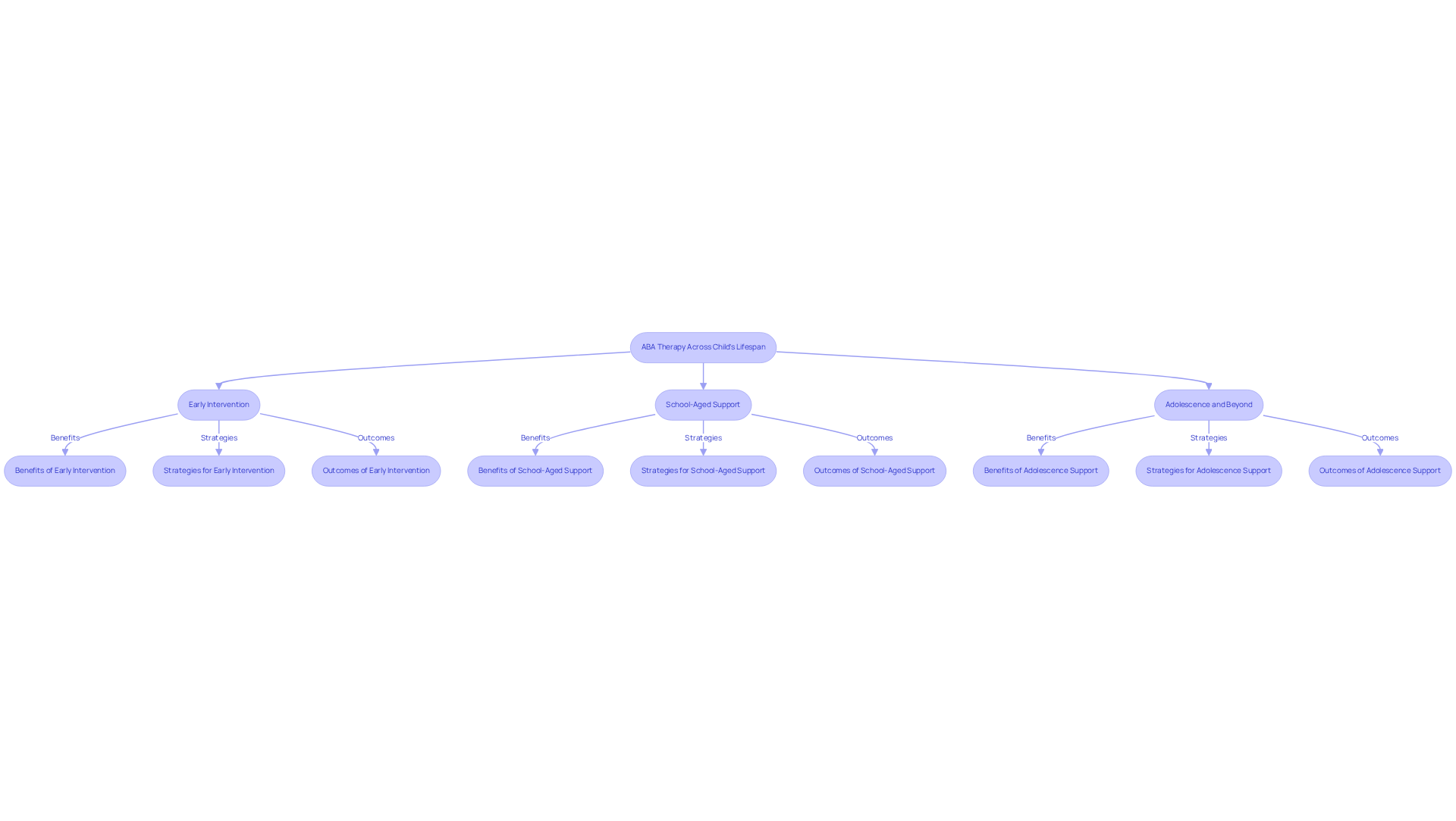
ABA questions and answers highlight how ABA therapy can truly make a difference in a child’s life and can be effectively applied throughout their lifespan in several meaningful ways.
: Starting therapy during early childhood is so important for addressing developmental delays and building essential skills. Research shows that kids who begin before age three can see impressive —an average rise of 17 IQ points compared to those who start later! Plus, can lead to a 60% decrease in challenging behaviors within just six months, helping kids engage more fully in family and social settings. plays a crucial role here, empowering families to support their child’s development effectively. When caregivers are educated, they’re better equipped to complement professional interventions, creating a consistent environment for the learner. This involvement not only enhances but also alleviates stress for families, fostering a more positive home atmosphere.
School-Aged Support: As children transition into school, can be tailored to boost their academic performance and . Regular evaluations and personalized strategies help students navigate school challenges, enhancing skills like communication and emotional control. Did you know that up to 90% of kids who receive develop ? These skills are vital for success in educational settings. And let’s not forget the economic benefits— can reduce the need for long-term special education and intensive care. When caregivers make informed decisions based on a solid understanding of ABA principles, it can lead to more and better .
Adolescence and Beyond: As kids grow into adolescents and young adults, ABA treatment shifts focus to , vocational training, and fostering independence. This stage is crucial for preparing young individuals to face real-world challenges, ensuring they can manage daily tasks and build meaningful relationships. Longitudinal studies show that youth who undergo ABA intervention develop better and independence over time, significantly enhancing their quality of life. Building trust between therapists and families is key to effective therapy, ensuring that interventions are tailored to each individual’s unique needs. Empowered caregivers, armed with , play a vital role in supporting their children’s journey toward independence.
Experts emphasize that is a cornerstone for successful outcomes for youth with Autism Spectrum Disorder (ASD) and other behavioral challenges, as highlighted in ABA questions and answers. By investing in ABA therapy early on, families can lay the groundwork for lifelong growth and development, leading to a more fulfilling and self-sufficient life for their children. Moreover, ABA therapy can also support children with selective mutism and other issues, providing the assistance they need to thrive. Let’s explore this together! We’re here to help you every step of the way!
Is ABA Therapy Supported by Scientific Evidence?
Absolutely! is built on a solid foundation of scientific evidence. Numerous studies have demonstrated its effectiveness in for individuals with autism. Organizations like the American Psychological Association and the National Autism Center proudly endorse ABA as an , showcasing its .
What’s even more exciting is how Rori Care takes to the next level! By incorporating , we automate and . This innovation not only makes reporting easier but also frees up to 50% more time for direct treatment with your little ones. This means caregivers can dive deeper into their dependent’s , armed with informed decision-making and . Let’s explore this together and see how we can support your journey!
What Is the Evaluation Process for ABA Therapy?
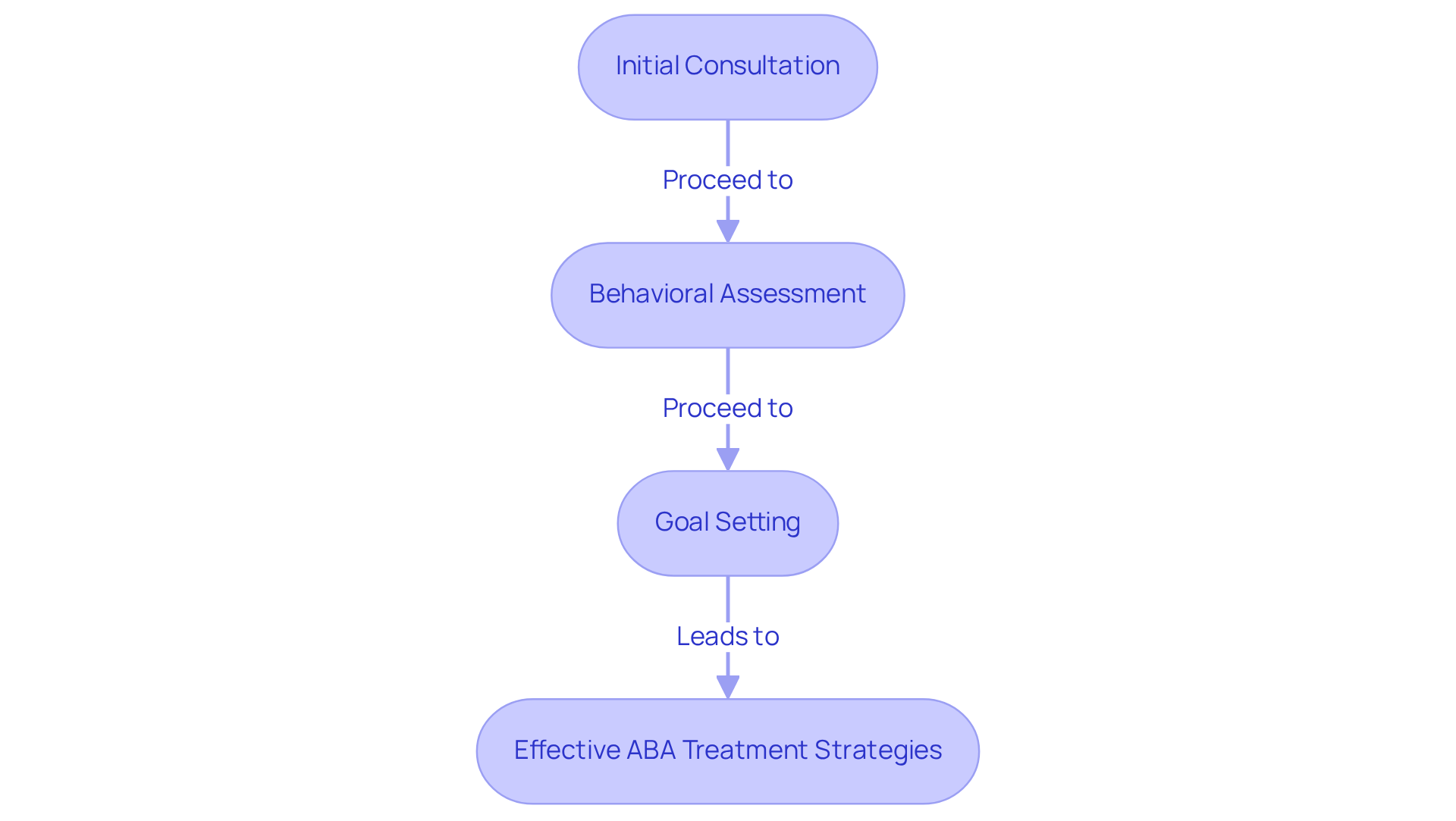
The structured assessment process for ABA therapy involves to effectively address each child’s unique needs. It typically involves several key steps that we can explore together:
- : This first step is crucial! It allows clinicians to discuss concerns with parents and gather essential background information about the child. This dialogue helps us understand the young individual’s surroundings and particular challenges.
- : After the , a is conducted. This includes direct observations and standardized evaluations to identify the individual’s strengths and areas needing assistance. Studies show that these evaluations are essential for , as they provide valuable regarding the child’s behavior in different situations.
- : After the evaluation, clinicians collaborate with parents to create specific, measurable objectives for treatment. These objectives are directly guided by the evaluation outcomes, ensuring that the treatment aligns with the child’s unique requirements and family expectations.
Clinicians emphasize that , which include , are not merely a formality; they are essential for developing . As one expert noted, ‘Understanding a young person’s behavior through detailed assessments allows us to create .’ This organized assessment procedure ultimately enhances the effectiveness of ABA treatment, promoting better results for young individuals.
So, let’s explore this together! Your child’s journey is important, and we’re here to !
How Are Personalized Treatment Plans Developed in ABA Therapy?
Creating in ABA therapy is all about a systematic approach that includes some key components.
- : These thorough evaluations by psychiatric experts provide essential data that shapes the . They are crucial for understanding the unique needs of each individual, ensuring that the treatment is tailored to their specific challenges and strengths. Research shows that lead to better outcomes, especially when started early in a person’s development.
- : Involving parents in the goal-setting process is vital for aligning the with family values and priorities. BCBAs emphasize that not only boosts the effectiveness of the treatment but also fosters a supportive atmosphere at home. This collaboration ensures that the strategies used in therapy are reinforced in everyday life, helping the young person make the most progress possible.
- : Regularly checking in on the patient’s progress allows clinicians to make necessary tweaks to the . Our conduct care engine keeps a close eye on the client’s progress and how they respond to interventions, updating plans based on what’s achieved after each session. This iterative process is key for optimizing outcomes, as it helps therapists adapt to the child’s changing needs. Did you know that every additional 12 months of ABA intervention is linked to a ? This highlights the importance of ongoing participation and flexibility in treatment. Plus, is performed to pinpoint target behaviors and skills, generating automatic progress reports for clinician review, which underscores the need for a committed approach.
By weaving together thorough evaluations, encouraging parental collaboration, and committing to continuous oversight, ABA interventions can effectively meet the diverse needs of individuals on the autism spectrum. This ultimately enhances their communication, social skills, and overall independence. Let’s explore this journey together!

What Is the Transformative Power of ABA Therapy for Children?
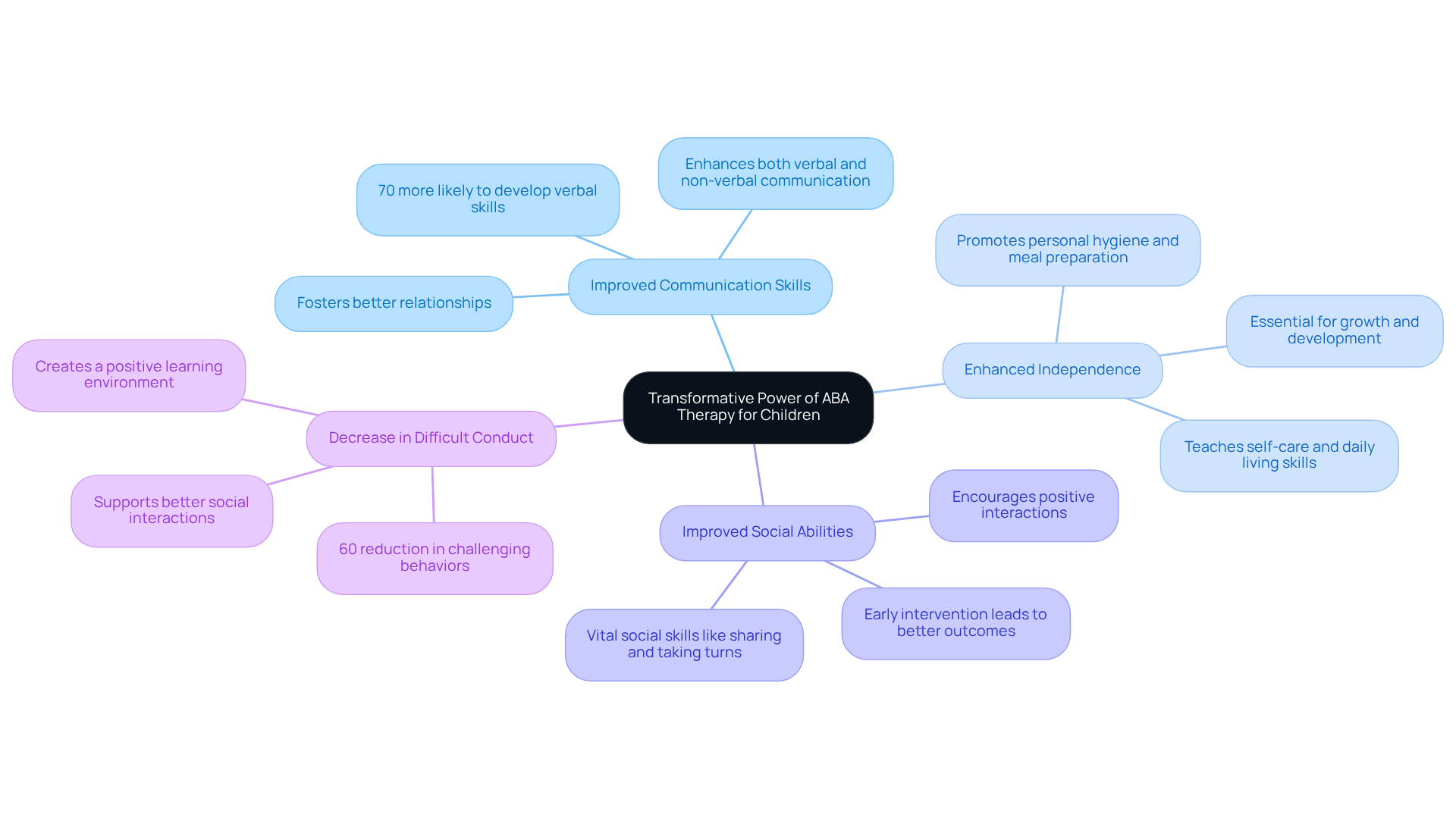
The transformative power of for children touches on several important areas of development:
- : significantly boosts both verbal and non-verbal communication abilities. Studies suggest that kids undergoing ABA treatment are 70% more likely to pick up verbal communication skills within two years. This improvement helps children express their needs and engage in meaningful conversations, fostering better relationships with peers and adults.
- : Through targeted interventions, ABA methods teach essential self-care and daily living skills, which promote independence. Children learn to handle personal hygiene, prepare simple meals, and manage household tasks—skills that are crucial for their growth.
- Improved Social Abilities: ABA intervention encourages positive interactions, helping kids develop like sharing, taking turns, and recognizing social cues. Early intervention programs have shown that children who start treatment before age three experience , making them more likely to thrive in inclusive educational settings.
- Decrease in Difficult Conduct: effectively addresses and reduces challenging behaviors that can hinder learning and social interactions. Research indicates that children in early intervention programs see a within just six months of starting therapy, creating a more positive learning environment.
The role of caregiver education is vital in this transformative journey. When caregivers are equipped with , they can provide better support at home, complementing professional interventions and fostering consistency. Their informed choices, rooted in a deeper understanding of ABA, positively influence their children’s progress. Active involvement leads to better , empowering caregivers and reducing stress, which ultimately enhances family dynamics.
Key elements of behavioral program development, such as personalized planning and measurable objectives, ensure that each child’s unique needs are met, further supporting their growth.
Parents have shared their experiences, highlighting the on improving their children’s communication skills. One parent expressed, “Since starting , my child has begun to communicate his needs more clearly, which has reduced his frustration and improved our family dynamics.” Such testimonials showcase the real-world benefits of in enhancing communication and overall quality of life for children with autism.
Conclusion
Understanding ABA therapy is crucial for parents navigating the complexities of autism treatment. This article highlights that ABA isn’t just a standardized approach; it’s a personalized therapy that adapts to the unique needs of each child. By focusing on evidence-based methods, parents can better support their children in developing essential skills, reducing challenging behaviors, and enhancing overall quality of life.
Key insights from the article emphasize the importance of:
- Early intervention
- The role of parental involvement
- The effectiveness of various behavioral strategies
Parents are encouraged to actively participate in their child’s therapy, fostering a collaborative environment that promotes consistent learning and growth. Plus, using data-driven approaches ensures that interventions stay relevant and targeted, leading to meaningful progress.
The significance of ABA therapy goes beyond immediate behavioral changes; it lays the foundation for lifelong skills and independence. As families consider the implications of autism treatment, embracing the principles of ABA can lead to transformative outcomes for their children. Engaging with ABA not only empowers parents but also creates a nurturing atmosphere where children can thrive.
Taking proactive steps in understanding and implementing ABA strategies can pave the way for a brighter future, filled with opportunities for growth and success. Let’s explore this together! We’re here to help you every step of the way!
Frequently Asked Questions
What is Applied Behavior Analysis (ABA)?
Applied Behavior Analysis (ABA) is a therapeutic method designed to help improve specific skills and actions in children with autism by utilizing techniques like reinforcement, prompting, and modeling to encourage positive behaviors while minimizing challenging ones.
What are the key components of ABA?
The key components of ABA include reinforcement (using rewards to encourage desired behaviors), data collection (tracking progress to ensure effective interventions), measurable goals (setting clear objectives for behavior change), and individualization (crafting personalized treatment plans based on each child’s unique needs).
How effective is ABA therapy for children with autism?
ABA treatment has a success rate exceeding 89% in helping individuals with autism spectrum disorder (ASD), particularly in enhancing communication, social skills, and overall independence. Research shows that early and intensive ABA can lead to significant improvements in adaptive behaviors and IQ scores.
What is the main purpose of ABA therapy?
The main aim of ABA therapy is to improve the quality of life for youth with autism by teaching essential skills, reducing challenging behaviors, fostering independence, and enhancing overall life satisfaction.
What are some common behavioral interventions used in ABA therapy?
Common behavioral interventions in ABA therapy include Discrete Trial Training (DTT), Natural Environment Teaching (NET), Pivotal Response Training (PRT), and Social Skills Training, each focusing on different aspects of skill acquisition and behavior adjustment.
How does Discrete Trial Training (DTT) work?
DTT is a structured method that breaks down skills into small, teachable components, allowing for focused learning and mastery. It provides clear instructions and prompt feedback, which helps reinforce preferred actions and has shown substantial advancements in adaptive skills among youth with autism.
What is the role of Natural Environment Teaching (NET) in ABA?
NET emphasizes teaching skills within the context of everyday activities to promote the generalization of learned behaviors to real-life situations. This approach helps individuals utilize their abilities more effectively in different environments.
How does Pivotal Response Training (PRT) enhance development?
PRT focuses on essential aspects such as motivation and self-management, leading to broader improvements in overall conduct and learning abilities. It utilizes evidence-based strategies to ensure effective behavior change.
Why is family involvement important in ABA therapy?
Family involvement is crucial as it empowers caregivers with ABA principles and strategies, fostering a collaborative approach to achieving behavioral goals and enhancing the effectiveness of interventions.
What are the financial implications of autism treatment?
The financial implications of autism treatment can be considerable, making it important for families to understand the costs associated with ABA services when considering treatment options.
List of Sources
- Rori Care – ABA Therapy: Understanding the Basics of ABA for Parents
- Patient Outcomes After Applied Behavior Analysis for Autism Spectrum Disorder – PMC (https://pmc.ncbi.nlm.nih.gov/articles/PMC8702444)
- The Numbers Don’t Lie: Revealing Autism Therapy Statistics | Above and Beyond Therapy (https://abtaba.com/blog/autism-therapy-statistics)
- 81 ABA Therapy Statistics You Need to Know – apricott ABA (https://apricott.com/resources/aba-therapy-statistics)
- Success Rates of ABA Therapy | Advanced Autism Services (https://advancedautism.com/post/success-rates-of-aba-therapy)
- What is the Purpose of ABA Therapy?
- The Impact of ABA Therapy on Long-Term Outcomes for Children with Autism (https://supportivecareaba.com/statistics/the-impact-of-aba-therapy-on-long-term-outcomes-for-children-with-autism)
- The Numbers Don’t Lie: Revealing Autism Therapy Statistics | Above and Beyond Therapy (https://abtaba.com/blog/autism-therapy-statistics)
- Patient Outcomes After Applied Behavior Analysis for Autism Spectrum Disorder – PMC (https://pmc.ncbi.nlm.nih.gov/articles/PMC8702444)
- ABA Therapy Results | Brighter Strides ABA (https://brighterstridesaba.com/blog/aba-therapy-results)
- Success Rate of Early Intervention for Autism | Connect n Care (https://connectncareaba.com/blog/early-intervention-autism-success-rate-statistics)
- What Are Common Behavioral Interventions in ABA Therapy?
- Applied Behavior Analysis in Children and Youth with Autism Spectrum Disorders: A Scoping Review – PMC (https://pmc.ncbi.nlm.nih.gov/articles/PMC9458805)
- The Numbers Don’t Lie: Revealing Autism Therapy Statistics | Above and Beyond Therapy (https://abtaba.com/blog/autism-therapy-statistics)
- Patient Outcomes After Applied Behavior Analysis for Autism Spectrum Disorder – PMC (https://pmc.ncbi.nlm.nih.gov/articles/PMC8702444)
- 81 ABA Therapy Statistics You Need to Know – apricott ABA (https://apricott.com/resources/aba-therapy-statistics)
- Autism Therapy Statistics (https://supportivecareaba.com/statistics/autism-therapy-statistics)
- How Can ABA Therapy Address Challenging Behaviors?
- Success Rates of ABA Therapy | Advanced Autism Services (https://advancedautism.com/post/success-rates-of-aba-therapy)
- Patient Outcomes After Applied Behavior Analysis for Autism Spectrum Disorder – PMC (https://pmc.ncbi.nlm.nih.gov/articles/PMC8702444)
- Autism Therapy Statistics (https://supportivecareaba.com/statistics/autism-therapy-statistics)
- The impact of positive reinforcement on long-term behavior change (https://mastermindbehavior.com/post/the-impact-of-positive-reinforcement-on-long-term-behavior-change)
- How Can Parents Be Involved in the ABA Therapy Process?
- Patient Outcomes After Applied Behavior Analysis for Autism Spectrum Disorder – PMC (https://pmc.ncbi.nlm.nih.gov/articles/PMC8702444)
- Autism Quotes (https://kidsclubaba.com/autism-quotes)
- Unlocking the Power of Parent-Led ABA for Lasting Skill Development | Step Ahead ABA (https://stepaheadaba.com/blog/why-parent-led-aba-strategies-are-effective-for-skill-retention)
- The Benefits of Parent Involvement in ABA Therapy Programs (https://supportivecareaba.com/statistics/the-benefits-of-parent-involvement-in-aba-therapy-programs)
- How Can ABA Therapy Be Applied Throughout a Child’s Lifespan?
- Autism Therapy Statistics (https://supportivecareaba.com/statistics/autism-therapy-statistics)
- Success Rate of Early Intervention for Autism | Connect n Care (https://connectncareaba.com/blog/early-intervention-autism-success-rate-statistics)
- Inspirational ABA and Autism Quotes – Mrs. Moe’s Modifications (https://mrsmoesmodifications.com/inspirational-aba-and-autism-quotes)
- 81 ABA Therapy Statistics You Need to Know – apricott ABA (https://apricott.com/resources/aba-therapy-statistics)
- Is ABA Therapy Supported by Scientific Evidence?
- The Numbers Don’t Lie: Revealing Autism Therapy Statistics | Above and Beyond Therapy (https://abtaba.com/blog/autism-therapy-statistics)
- Applied Behavior Analysis in Children and Youth with Autism Spectrum Disorders: A Scoping Review – PMC (https://pmc.ncbi.nlm.nih.gov/articles/PMC9458805)
- Success Rates of ABA Therapy | Advanced Autism Services (https://advancedautism.com/post/success-rates-of-aba-therapy)
- Patient Outcomes After Applied Behavior Analysis for Autism Spectrum Disorder – PMC (https://pmc.ncbi.nlm.nih.gov/articles/PMC8702444)
- Autism Therapy Statistics (https://supportivecareaba.com/statistics/autism-therapy-statistics)
- What Is the Evaluation Process for ABA Therapy?
- The Numbers Don’t Lie: Revealing Autism Therapy Statistics | Above and Beyond Therapy (https://abtaba.com/blog/autism-therapy-statistics)
- Patient Outcomes After Applied Behavior Analysis for Autism Spectrum Disorder – PMC (https://pmc.ncbi.nlm.nih.gov/articles/PMC8702444)
- mastermindbehavior.com (https://mastermindbehavior.com/post/tracking-and-measuring-outcomes-in-aba-therapy-programs?83be1371_page=2)
- qbssocal.com (https://qbssocal.com/does-aba-therapy-work)
- ABA Therapy Results | Brighter Strides ABA (https://brighterstridesaba.com/blog/aba-therapy-results)
- How Are Personalized Treatment Plans Developed in ABA Therapy?
- Inspirational ABA and Autism Quotes – Mrs. Moe’s Modifications (https://mrsmoesmodifications.com/inspirational-aba-and-autism-quotes)
- ABA Therapy Results | Brighter Strides ABA (https://brighterstridesaba.com/blog/aba-therapy-results)
- The Numbers Don’t Lie: Revealing Autism Therapy Statistics | Above and Beyond Therapy (https://abtaba.com/blog/autism-therapy-statistics)
- Inspiring Autism Quotes for Understanding and Acceptance – Kids First (https://kidsfirstservices.com/first-insights/autism-quotes)
- What Is the Transformative Power of ABA Therapy for Children?
- 81 ABA Therapy Statistics You Need to Know – apricott ABA (https://apricott.com/resources/aba-therapy-statistics)
- bridgecareaba.com (https://bridgecareaba.com/blog/aba-therapy-statistics)
- Success Rate of Early Intervention for Autism | Connect n Care (https://connectncareaba.com/blog/early-intervention-autism-success-rate-statistics)
- ABA Therapy Results | Brighter Strides ABA (https://brighterstridesaba.com/blog/aba-therapy-results)