

Introduction
Managing behaviors in children, especially those with autism, can feel overwhelming for caregivers and educators. But guess what? The power of first-then statements shines through as a game-changing tool in Applied Behavior Analysis (ABA). This approach links less preferred tasks with enjoyable rewards, creating a structured way to navigate daily challenges.
When these strategies are tailored to individual needs, they not only help with compliance but also foster a deeper understanding of task completion and motivation. However, it’s important to consider what happens when these techniques are inconsistently applied, or when the ‘then’ activities don’t quite resonate with a child’s interests.
Let’s explore these essential first-then statements together! They reveal a path to effective behavior management that can truly enhance the learning experience for everyone involved.
Rori Care – ABA Therapy: Personalized First-Then Strategies for Effective Behavior Management
At Rori Behavioral Innovations, we truly believe in the power of tailored to help manage behaviors in youth with autism. By linking less favored activities with enjoyable ones, we create a clear framework that encourages young individuals to take part in . For instance, imagine a young person being motivated to complete their homework assignment before diving into their favorite video game. This method not only promotes compliance but also helps kids grasp the idea of —making it a vital tool in ABA therapy.
- , ensuring every child receives .
- Clear expectations can significantly ease anxiety and boost compliance, leading to a more positive learning atmosphere.
- These strategies work wonders for both and skill development, nurturing a holistic approach to therapy.
Current best practices highlight how connecting activities with enjoyable pursuits can lead to . When young individuals see tasks as part of a , they’re more likely to participate actively and positively in their learning journey. Plus, treatment plans are regularly adjusted based on progress reports, keeping interventions effective and relevant. The role of skilled behavior analysts is crucial here, as they assess progress and make necessary tweaks.
So, applying not only aids in but also supports the overall developmental goals of individuals with autism. Additionally, empowering caregivers with ABA concepts and techniques enhances their ability to help their children achieve behavioral goals through active participation and data collection. This alignment with therapeutic strategies often leads to , underscoring the importance of .
Let’s explore this together! We’re here to help you every step of the way!
First-Then Boards: Visual Tools to Enhance Understanding and Compliance
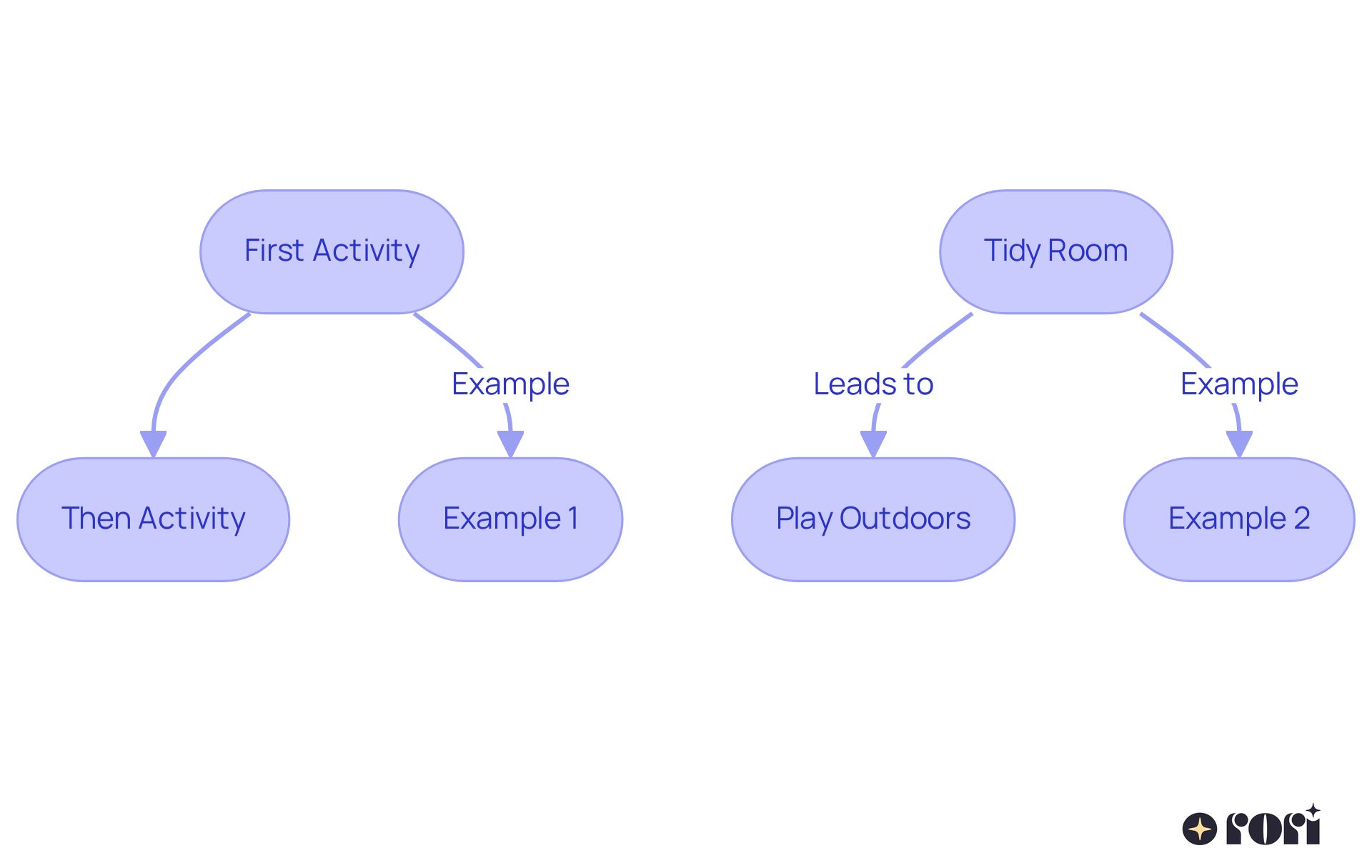
are such helpful for young learners! They really make it easier for kids to understand the order of activities they need to complete. By clearly showing what comes first and what follows, these boards take away confusion and help kids follow through. For instance, a Before-After board can show a child tidying their room (Before) and then having fun playing outdoors (After). This not only boosts understanding but also encourages kids to tackle those less exciting tasks by connecting them to fun experiences.
Research shows that like sequence boards can significantly improve behavior, communication, learning, and independence for children with Autism Spectrum Disorders, ADHD, and other . They help ease anxiety and support smoother transitions, making feel more manageable. Plus, case studies reveal that using these boards regularly leads to and a greater sense of achievement among children.
Child psychologists highlight that not only clarify what’s expected but also promote independence by reducing the need for constant verbal reminders. This approach aligns perfectly with the , which suggests that linking less preferred tasks to more enjoyable outcomes can boost motivation and engagement. Overall, are fantastic tools for enhancing understanding and adherence in children with autism and other , paving the way for more successful daily interactions. By equipping caregivers with these strategies, they can actively support their children’s behavioral goals through involvement and data collection. Let’s explore this together!
Premack Principle: Motivating Children with First-Then Statements
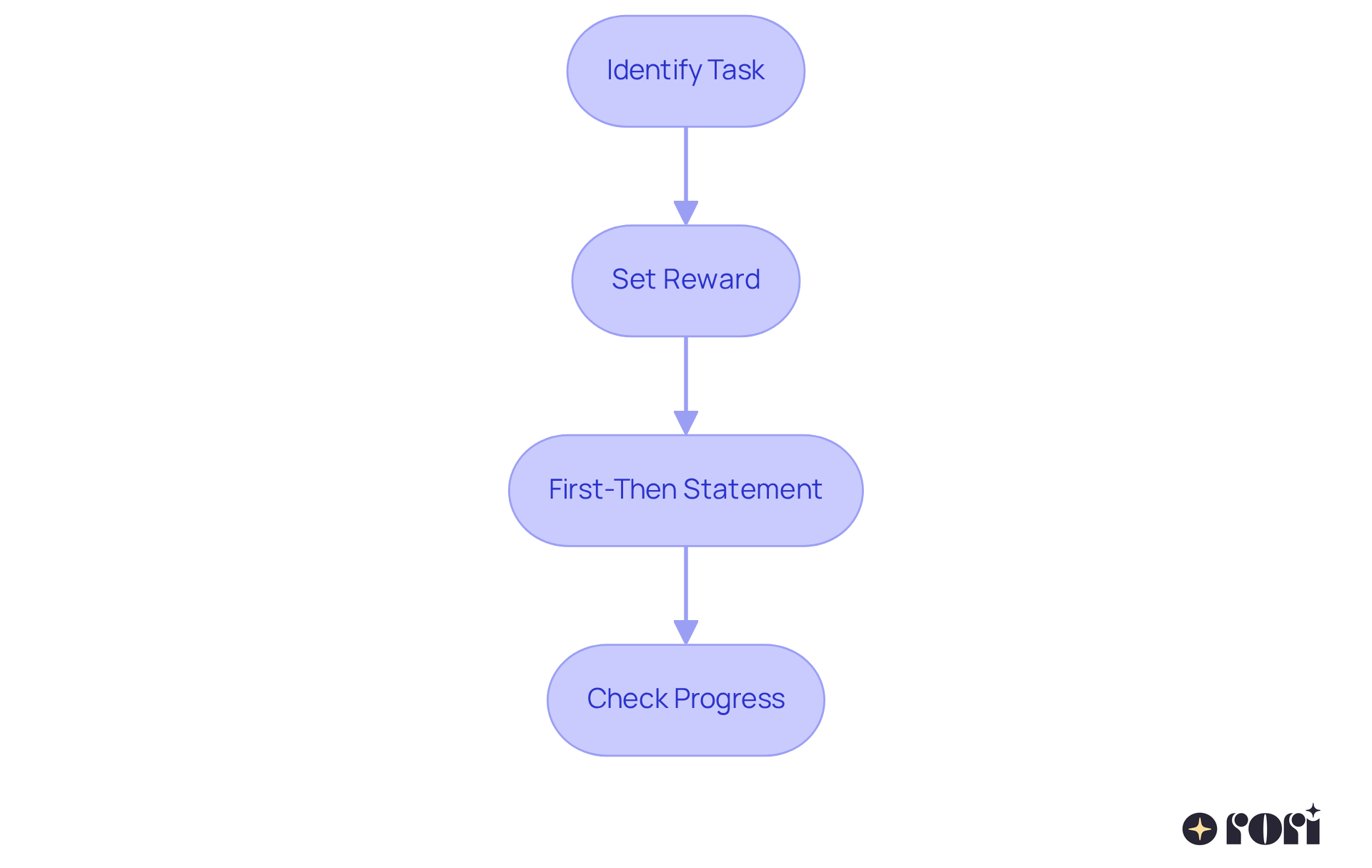
The is a fantastic way to help young people tackle tasks they might shy away from. It suggests that a behavior they enjoy—like playing a game—can encourage them to engage in a less appealing activity, such as doing homework. Imagine telling your child, ‘: finish your math homework; then, you can dive into your favorite game.’ This simple connection between effort and reward not only sparks motivation but also creates a .
To make the most of the , caregivers can set , like aiming to increase the number of homework assignments completed each week. Research shows that , such as this principle, can by about 30% among kids. By pairing tasks they might not prefer with enjoyable outcomes, caregivers and educators can craft effective that really engage young learners.
Real-life stories highlight just how effective this principle can be. One family shared that they saw a big improvement in their child’s homework completion by using the , incorporating by saying, ‘First we do homework, then we can watch a movie.’ This straightforward approach not only motivates kids but also helps them build a sense of responsibility and accomplishment.
To keep things on track, it’s essential for caregivers to regularly check in on their child’s progress toward these goals, adjusting the reinforcement methods as needed. Understanding the is key to developing that resonate with each child’s unique needs, paving the way for and a more harmonious learning experience. Plus, this principle can help kids develop social skills by encouraging them to engage in peer interactions, linking fun activities with social play. By empowering caregivers with ABA principles and strategies, we can enhance their ability to support their children’s behavioral goals through active involvement and data collection, leading to improved outcomes and family dynamics. Let’s explore this together!
Consistency in First-Then Statements: Building Trust and Predictability
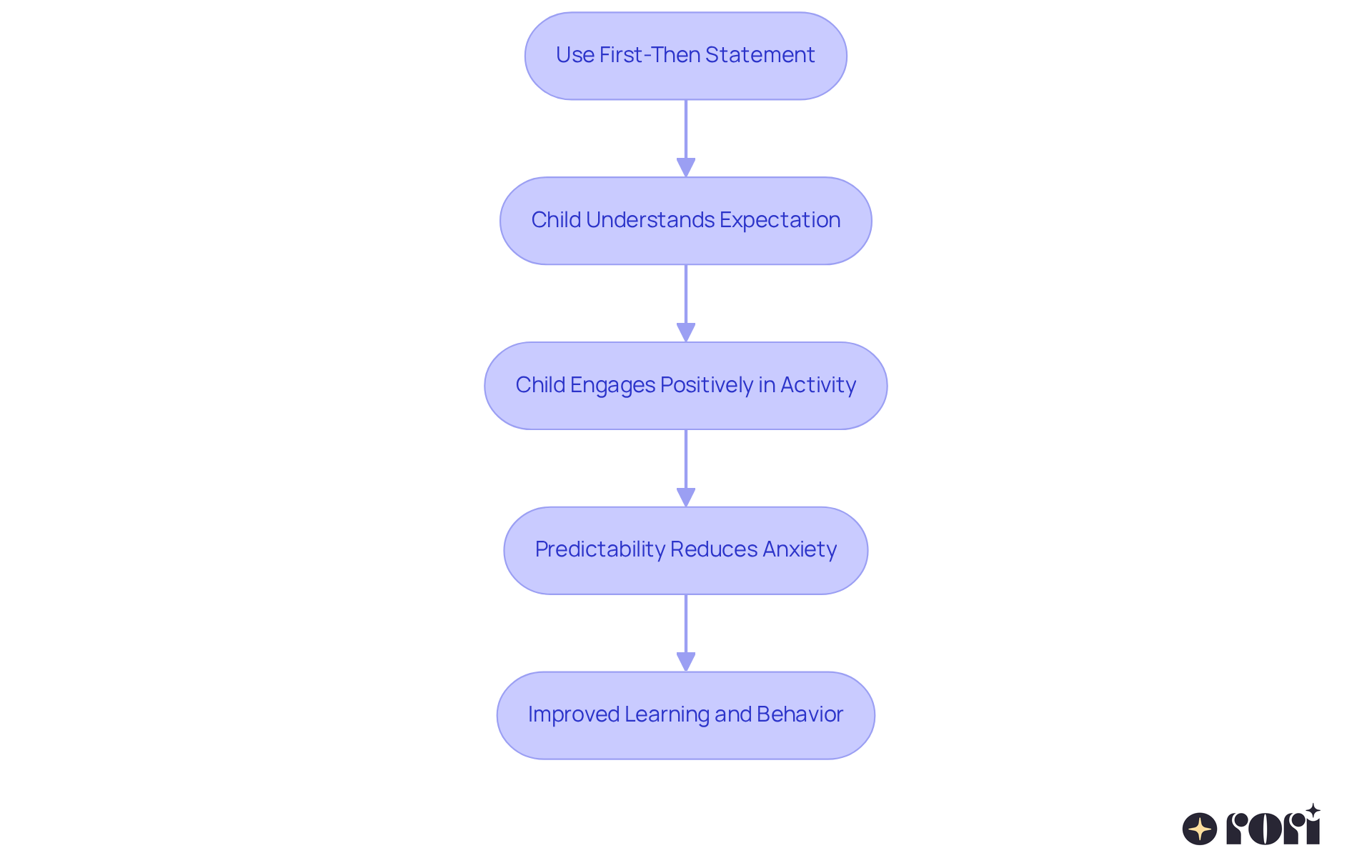
Using consistently is essential for for our young ones. When kids , they’re more likely to dive into activities with a positive attitude. For instance, using ” like, ‘First, do your chores; then, you can watch TV,’ helps them grasp the routine, . This kind of but also creates a sense of security, which is so important for .
Research shows that can significantly enhance compliance in children with autism, who thrive in environments where expectations are . By setting up these predictable patterns, caregivers can encourage and emotional stability, leading to better outcomes in therapy. Let’s explore this together and see how we can make routines work for you and your family!
Visual Supports: Enhancing First-Then Statements for Better Engagement
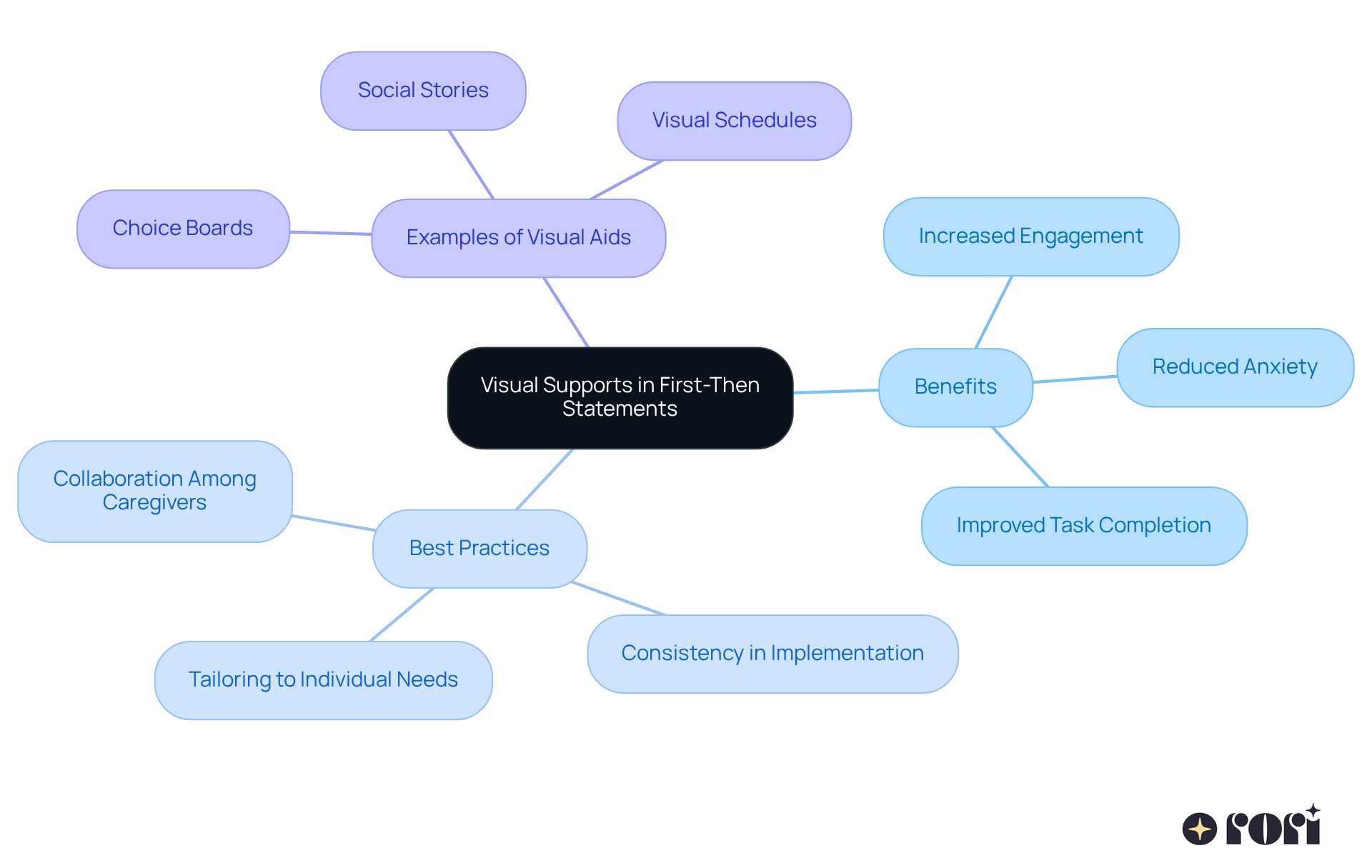
Integrating into can really boost involvement and understanding for individuals with autism and other behavioral challenges. , like images or symbols, serve as alongside verbal guidance, helping clarify expectations and making activities feel more relatable. For example, when we show a visual representation of a young person completing an activity as part of the followed by a fun event, it transforms the sequence into a tangible experience. This method not only deepens understanding but also encourages young learners to actively participate in their education and .
Current best practices highlight how by providing clear, predictable structures, which in turn promotes compliance. Research shows that individuals with autism respond positively to visual supports, leading to improved task completion and involvement during therapy sessions. include , social stories, and , all of which have been proven to enhance participation and understanding in . By incorporating these visual elements, therapists can create a more that helps young individuals thrive.
Let’s explore this together! 🌟
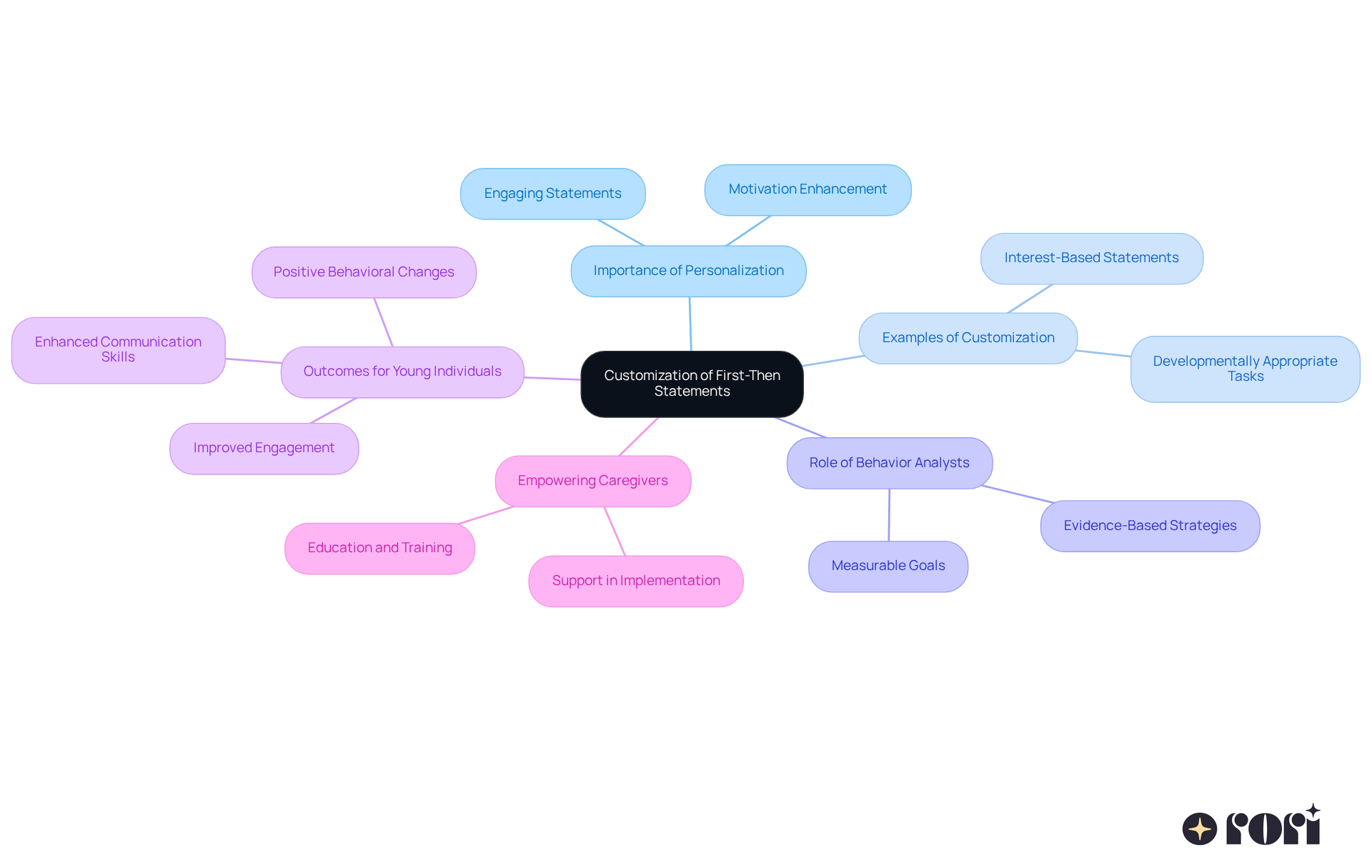
Customization of First-Then Statements: Tailoring Strategies to Individual Needs
Customizing to meet each young person’s unique needs is so important for making them truly effective! By taking into account their preferences, interests, and developmental levels, caregivers can craft statements that are not just engaging but also motivating. For example, if a young person loves to draw, a simple statement such as first then statements aba: finish your homework; then, you can draw can really spark their motivation. This personal touch not only helps them stick to their tasks but also fosters a positive connection with completing assignments.
Studies show that when approaches are tailored to individual interests, young individuals are more likely to respond positively. It’s amazing how much more involved they become in behavior management when they see their interests reflected in the tasks at hand! to fit personal preferences encourages a sense of ownership and excitement about learning, leading to .
Plus, is key. It allows caregivers to make changes based on the young one’s development. Having design these is essential, as they use and set measurable goals to track progress. Research indicates that kids receiving ABA therapy before age four show , underscoring the importance of early, tailored interventions.
And let’s not forget about ! This boosts their ability to support their child’s behavioral goals, leading to informed decision-making and better behavioral outcomes. We’re here to ! Let’s explore this together!
Feedback Mechanisms: Evaluating the Effectiveness of First-Then Strategies
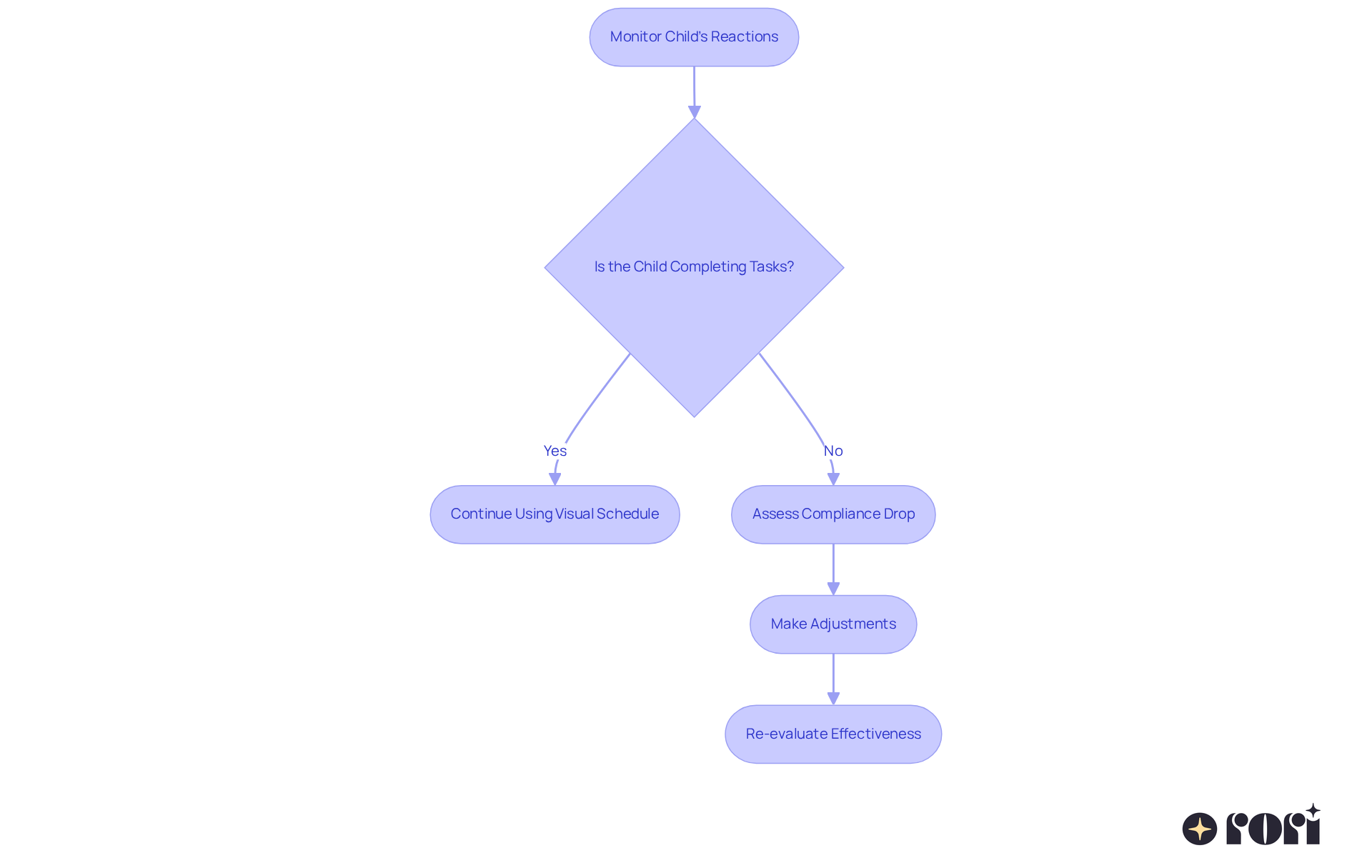
Establishing feedback systems is so important for in . Caregivers and clinicians should regularly check in on how kids are reacting and how involved they are. For example, if a child consistently completes tasks using a , it’s a ! On the other hand, if you notice a drop in compliance, it might be time to . This helps us that can really , ensuring that interventions are . Let’s explore this together!
Integrating First-Then Statements into Daily Routines: Practical Applications for Parents
Incorporating can really and adherence. Parents can easily use these statements during everyday activities like mealtime or homework. For example, a parent might say, “, we eat dinner; then, we can watch a movie.” This clear structure not only sets expectations but also helps kids internalize the sequence of tasks, making it easier for them to .
Using regularly in different situations brings a sense of , which is super important for individuals with autism. Research shows that weaving these statements into routine activities can . By helping parents adopt these strategies, we create a nurturing atmosphere that encourages children to actively participate in their daily activities.
Practical uses of these sequential techniques can pop up during transitions, like getting ready for school or bedtime. For instance, a parent might say, “, we brush our teeth; then, we read a story.” This approach not only but also reinforces through immediate rewards, enhancing the overall effectiveness of techniques used at home.
Let’s explore this together! By integrating these simple yet effective techniques into your routine, you can that benefits both you and your child.

Avoiding Common Pitfalls: Best Practices for Effective First-Then Implementation
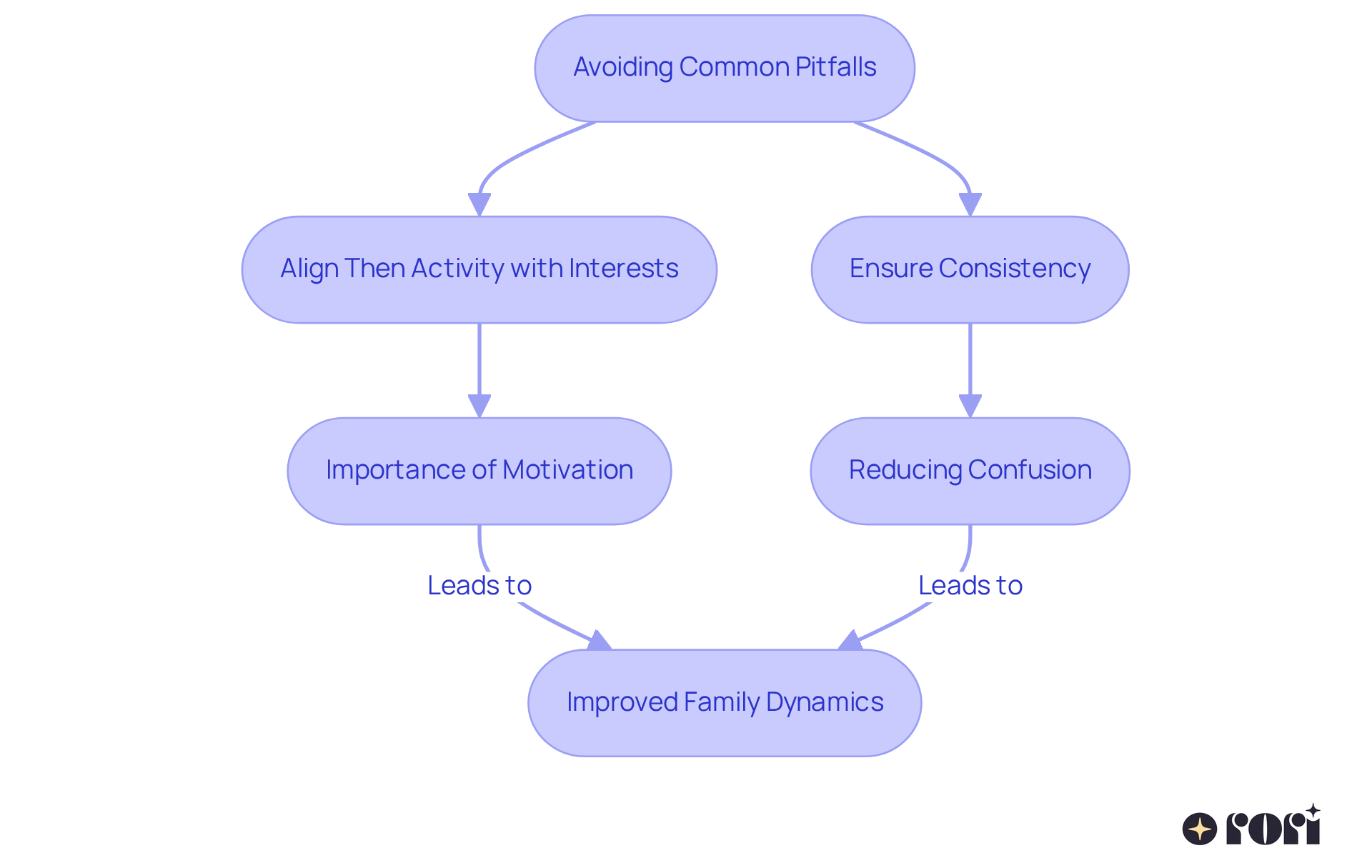
To maximize the effectiveness of strategies, it’s important to avoid some . One mistake many parents make is not aligning the ‘Then’ activity with their child’s interests, which can really dampen motivation. When have a solid , they can choose activities that truly inspire their little ones.
Inconsistency in using can also confuse kids and reduce the effectiveness of these strategies. By actively engaging and consistently applying this approach in different situations, can in . This not only leads to better behavioral outcomes but also empowers , helping to .
Let’s explore this together and see how these strategies can make a difference in your family life!
Long-Term Benefits of First-Then Statements: Fostering Independence and Skill Development
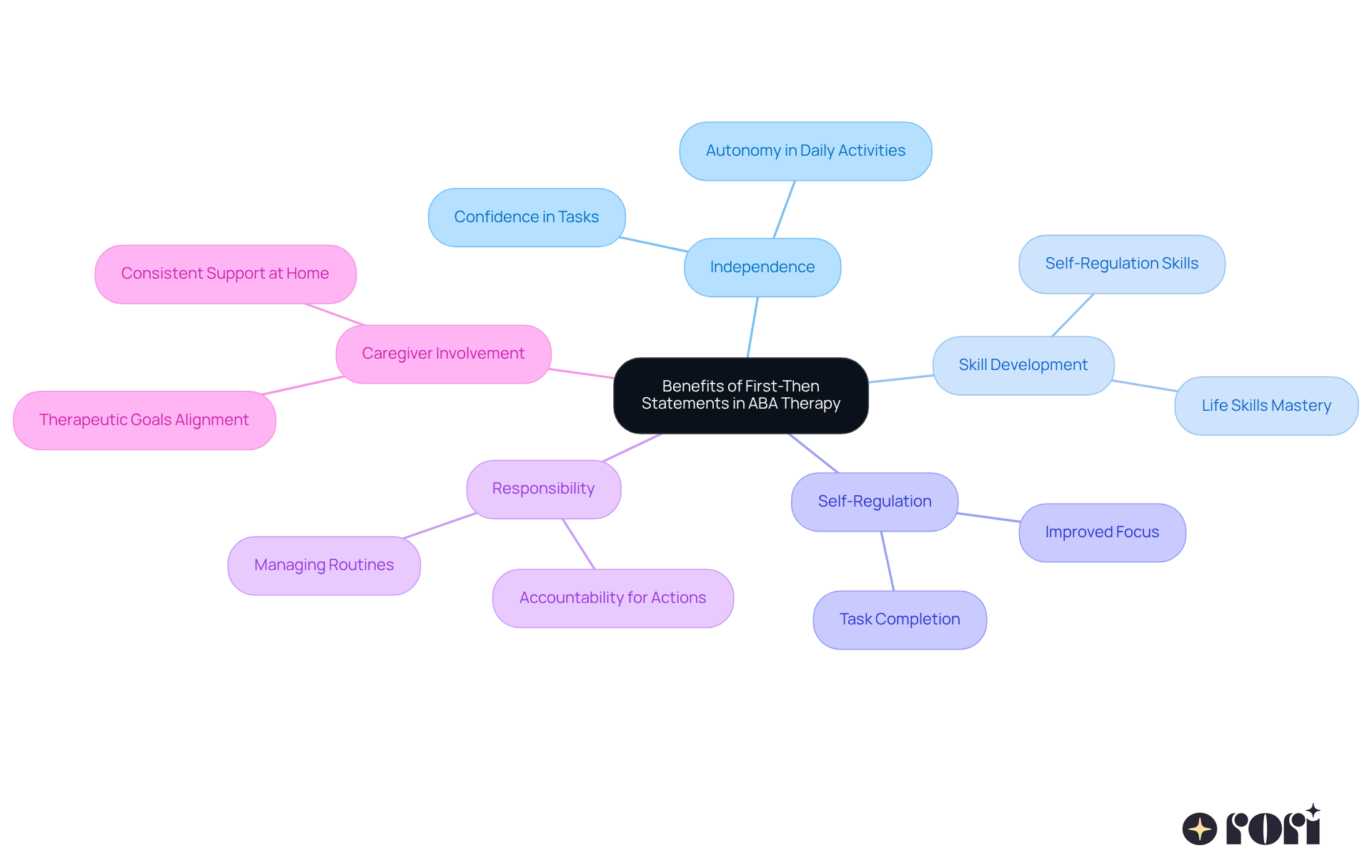
The long-term benefits of using extend well beyond just following rules; they play a vital role in and . When we consistently use these strategies, kids start to and routines with more confidence. For example, think about when a child learns to finish their homework before diving into playtime. Not only does this boost their —so important for doing well in school—but it also nurtures a sense of responsibility. This helps children take charge of their tasks, leading to greater autonomy and confidence in their abilities.
Moreover, it’s essential to equip caregivers with the right knowledge and skills to implement these methods effectively at home. This ensures that what they learn aligns with therapeutic goals and creates a consistent environment. Over time, regularly using not only improves compliance but also fosters that pave the way for a fulfilling and independent life. After all, the ultimate aim of is to to tackle daily tasks with confidence and reduced support. So, let’s explore this journey together and see how we can make a difference!
Conclusion
Implementing first-then statements in ABA therapy is a fantastic strategy that not only helps with behavior management but also encourages independence and skill development in children. By connecting less preferred tasks with enjoyable activities, caregivers can create a structured environment that boosts motivation and compliance. This approach is vital for supporting young individuals with autism as they navigate their daily responsibilities while fostering a sense of accomplishment.
Throughout the article, we’ve explored key insights, like customizing first-then statements to meet individual needs, the importance of visual aids for better understanding, and how the Premack Principle can motivate children. Consistency in applying these strategies is essential for building trust and predictability, which can significantly reduce anxiety and create a positive learning atmosphere. Plus, regular feedback helps assess how well these strategies are working, ensuring they stay relevant and beneficial.
The value of first-then statements goes beyond just immediate compliance; they help lay the foundation for long-term success in developing essential life skills. By actively engaging with these techniques, caregivers can empower their children to take charge of their tasks and responsibilities. Embracing these strategies not only improves behavioral outcomes but also enriches family dynamics, ultimately paving the way for a more fulfilling and independent life for young individuals.
So, let’s explore this together! Remember, you’re not alone on this journey, and we’re here to help you every step of the way!
Frequently Asked Questions
What is Rori Care’s approach to behavior management for youth with autism?
Rori Care utilizes personalized first-then strategies in ABA therapy, linking less favored activities with enjoyable ones to encourage participation in essential duties.
How do first-then statements work in ABA therapy?
First-then statements motivate individuals by clearly stating that a less preferred task must be completed before engaging in a preferred activity, such as doing homework before playing a video game.
What are the benefits of using first-then strategies?
These strategies promote compliance, help children understand task completion and reward systems, reduce anxiety, and create a positive learning atmosphere.
How are treatment plans adjusted in ABA therapy?
Treatment plans are regularly updated based on progress reports, ensuring that interventions remain effective and relevant to the child’s needs.
What role do caregivers play in ABA therapy?
Caregivers are empowered with ABA concepts and techniques, enhancing their ability to help their children achieve behavioral goals through active participation and data collection.
What are first-then boards and how do they help children?
First-then boards are visual aids that show the sequence of activities, helping children understand what comes first and what follows, thereby reducing confusion and promoting task completion.
What is the Premack Principle and how does it motivate children?
The Premack Principle suggests that a preferred behavior can motivate a less preferred one. For example, a child might be encouraged to finish homework before playing a game.
How effective is the Premack Principle in increasing task completion?
Research indicates that structured reinforcement strategies, like the Premack Principle, can boost task completion rates by about 30% among children.
How can caregivers track their child’s progress using the Premack Principle?
Caregivers should regularly check in on their child’s progress towards set goals and adjust reinforcement methods as needed to ensure continued motivation and engagement.
What are the overall goals of using first-then statements and the Premack Principle in ABA therapy?
The goals include improving behavioral outcomes, fostering a sense of responsibility and accomplishment in children, and enhancing family dynamics through active caregiver involvement.
List of Sources
- Rori Care – ABA Therapy: Personalized First-Then Strategies for Effective Behavior Management
- Resources | Golden Steps ABA (https://goldenstepsaba.com/resources/success-rates-of-aba-therapy)
- The Numbers Don’t Lie: Revealing Autism Therapy Statistics | Above and Beyond Therapy (https://abtaba.com/blog/autism-therapy-statistics)
- soaringhighaba.com (https://soaringhighaba.com/post/how-personalized-aba-therapy-plans-improve-long-term-outcomes)
- The Connection Between ABA Therapy and Long-Term Success (https://magnetaba.com/blog/the-connection-between-aba-therapy-and-long-term-success)
- Success Rates of ABA Therapy (https://yellowbusaba.com/post/success-rates-of-aba-therapy)
- First-Then Boards: Visual Tools to Enhance Understanding and Compliance
- firstthenboard.com (https://firstthenboard.com/blog/first-then-board)
- discoveryaba.com (https://discoveryaba.com/aba-therapy/how-to-use-first-then-boards-to-support-positive-behavior-changes?8936781b_page=17)
- magnetaba.com (https://magnetaba.com/blog/how-to-use-first-then-boards-in-home-based-aba-therapy)
- chalkboardsuperhero.com (https://chalkboardsuperhero.com/2023/08/the-impact-of-first-then-charts-on-reducing-problem-behaviors)
- celavora.com (https://celavora.com/how-first-then-boards-benefit-children-with-autism-and-adhd?srsltid=AfmBOorJ2fqJ-RT08MZvnjVxfOu6ig0_RLnVuWXprgpp46yXwEWdLCYq)
- Premack Principle: Motivating Children with First-Then Statements
- (PDF) Applications of the Premack Principle: A Review of the Literature (https://researchgate.net/publication/359633462_Applications_of_the_Premack_Principle_A_Review_of_the_Literature)
- ybgr.org (https://ybgr.org/17-quotes-on-coaching-kids-through-behaviors)
- rori.care (https://rori.care/post/7-premack-principle-aba-examples-to-enhance-child-behavior)
- Inspirational ABA and Autism Quotes – Mrs. Moe’s Modifications (https://mrsmoesmodifications.com/inspirational-aba-and-autism-quotes)
- Improving Motivation for Academics in Children with Autism – PMC (https://pmc.ncbi.nlm.nih.gov/articles/PMC2926912)
- Consistency in First-Then Statements: Building Trust and Predictability
- Supporting Children with Autism Through Consistent ABA Therapy (https://supportivecareaba.com/statistics/supporting-children-with-autism-through-consistent-aba-therapy)
- Autism Statistics You Need To Know in 2024 (https://autismparentingmagazine.com/autism-statistics)
- intellistarsaba.com (https://intellistarsaba.com/blog/the-importance-of-consistency-in-aba-interventions)
- The Importance of Consistency in Behavior Therapy for Children with Autism (https://mastermindbehavior.com/post/the-importance-of-consistency-in-behavior-therapy-for-children-with-autism)
- goldencaretherapy.com (https://goldencaretherapy.com/blogs-importance-of-consistency-in-autism)
- Visual Supports: Enhancing First-Then Statements for Better Engagement
- Best Autism Quotes to Raise Awareness and Understanding (https://yellowbusaba.com/post/autism-quotes)
- Visual Supports to Optimize ABA Therapy for Children with Autism (https://striveabaconsultants.com/harnessing-visual-supports-to-optimize-aba-therapy-for-children-with-autism)
- The use of visual schedules to increase academic-related on-task behaviors of individuals with autism: a literature review (https://tandfonline.com/doi/full/10.1080/20473869.2024.2402124)
- The influence of visual supports and motivation on motor performance of the MABC-2 for Chinese school-aged children with autism spectrum disorder – PMC (https://pmc.ncbi.nlm.nih.gov/articles/PMC8324853)
- Customization of First-Then Statements: Tailoring Strategies to Individual Needs
- Resources | Golden Steps ABA (https://goldenstepsaba.com/resources/success-rates-of-aba-therapy)
- The Numbers Don’t Lie: Revealing Autism Therapy Statistics | Above and Beyond Therapy (https://abtaba.com/blog/autism-therapy-statistics)
- Autism Therapy Statistics (https://supportivecareaba.com/statistics/autism-therapy-statistics)
- The Impact of ABA Therapy on Long-Term Outcomes for Children with Autism (https://supportivecareaba.com/statistics/the-impact-of-aba-therapy-on-long-term-outcomes-for-children-with-autism)
- Success Rates of ABA Therapy | Advanced Autism Services (https://advancedautism.com/post/success-rates-of-aba-therapy)
- Feedback Mechanisms: Evaluating the Effectiveness of First-Then Strategies
- How to track progress effectively in therapy (https://mastermindbehavior.com/post/the-importance-of-data-driven-decisions-in-aba-therapy)
- The Role of Feedback in ABA Therapy for Skill Building (https://magnetaba.com/blog/the-role-of-feedback-in-aba-therapy-for-skill-building)
- pmc.ncbi.nlm.nih.gov (https://pmc.ncbi.nlm.nih.gov/articles/PMC2521856)
- pmc.ncbi.nlm.nih.gov (https://pmc.ncbi.nlm.nih.gov/articles/PMC4883498)
- ABA Behavior Tracking (https://discoveryaba.com/aba-therapy/the-role-of-observation-and-feedback-in-aba-therapy-progress)
- Integrating First-Then Statements into Daily Routines: Practical Applications for Parents
- yellowbusaba.com (https://yellowbusaba.com/post/why-aba-therapy-works-best-when-integrated-into-daily-routines)
- Success Rate of Early Intervention for Autism | Connect n Care (https://connectncareaba.com/blog/early-intervention-autism-success-rate-statistics)
- Autism Therapy Statistics (https://supportivecareaba.com/statistics/autism-therapy-statistics)
- ambitionsaba.com (https://ambitionsaba.com/resources/the-role-of-daily-routines-in-reinforcing-aba-therapy-goals)
- intellistarsaba.com (https://intellistarsaba.com/blog/the-benefits-of-integrating-aba-strategies-into-daily-routines)
- Avoiding Common Pitfalls: Best Practices for Effective First-Then Implementation
- The Significance of Statistics in ABA Therapy | All Star ABA (https://allstaraba.org/statistics-in-aba-therapy)
- The Benefits of Regular Assessments in ABA Therapy Progress (https://supportivecareaba.com/statistics/the-benefits-of-regular-assessments-in-aba-therapy-progress)
- Inspirational ABA and Autism Quotes – Mrs. Moe’s Modifications (https://mrsmoesmodifications.com/inspirational-aba-and-autism-quotes)
- supportivecareaba.com (https://supportivecareaba.com/statistics/promoting-positive-behavior-in-autism)
- 10 Great Quotes on Promoting Positive Behavior – Brookes Blog (https://blog.brookespublishing.com/10-great-quotes-on-promoting-positive-behavior)
- Long-Term Benefits of First-Then Statements: Fostering Independence and Skill Development
- mastermindbehavior.com (https://mastermindbehavior.com/post/how-aba-therapy-helps-children-achieve-greater-independence)
- cultivatebhe.com (https://cultivatebhe.com/how-early-aba-intervention-improves-long-term-outcomes-in-children-with-autism)
- ambitionsaba.com (https://ambitionsaba.com/resources/how-aba-therapy-promotes-independence-in-children-with-autism)
- The Numbers Don’t Lie: Revealing Autism Therapy Statistics | Above and Beyond Therapy (https://abtaba.com/blog/autism-therapy-statistics)