

Introduction
In the world of early childhood development, effective communication is truly a cornerstone of growth, especially for children with autism. Did you know that over 90% of parents see noticeable improvements in their child’s verbal skills through Applied Behavior Analysis (ABA) therapy? This really highlights the importance of tailored interventions.
However, as families embark on this journey, they often find themselves wondering which specific techniques will bring about the best results. This article dives into ten compelling examples of verbal behavior strategies in ABA, offering insights into how these methods can transform communication and foster independence in young learners. Let’s explore this together!
Rori Care – ABA Therapy: Comprehensive Verbal Behavior Strategies
At Rori Care, we incorporate among a variety of tailored specifically to help young children with autism enhance their . Each method is thoughtfully crafted to meet the unique needs of every child, fostering communication skills in a nurturing environment. Our , trained in evidence-based practices, walk alongside your family through the journey of . This approach empowers both families and clinicians to cultivate effective communication through structured interventions and .
Did you know that over 90% of parents notice after therapy? This statistic highlights just how impactful these customized ABA interventions can be! Our comprehensive framework not only focuses on but also supports overall developmental growth. Research shows that children often see over time.
To truly maximize the benefits of therapy, we encourage parents to actively participate in their child’s therapy process. By reinforcing the skills learned during sessions, you’re playing a vital role in their progress! We believe in empowering caregivers by equipping you with ABA principles and strategies that can be applied at home, enhancing your ability to support your loved one’s behavioral goals.
Additionally, we utilize . This means our clinical team is always present for your child, ensuring they receive uninterrupted attention. With this process, we can focus on your child’s needs while keeping all information confidential—rest assured that all data is securely stored, anonymized, and deleted after analysis.
Let’s explore this journey together! We’re here to help you every step of the way!
Mand: Requesting Needs and Wants in Verbal Behavior
Mands serve as examples of , representing important requests that kids make to obtain what they want or need. They in how children grow their . For example, when a child wants a toy, you can encourage them to say ‘toy’ or use a picture exchange system, which are both examples of , to ask for it. This not only helps them express themselves better but also , which can really that often happen when needs go unmet.
Research shows that effective can lead to a , as kids learn to communicate their needs instead of feeling overwhelmed. By using strategies like modeling, prompting, and giving immediate reinforcement, therapists can create a space where children feel confident making requests.
There are plenty of success stories out there! Kids who get the hang of mands often experience and a greater sense of autonomy. Experts remind us that mands are not just about asking for things; they’re crucial for developing a way to interact that helps kids navigate their world and connect meaningfully with others. Let’s explore this together and see how we can on this journey!

Tact: Labeling and Describing the Environment
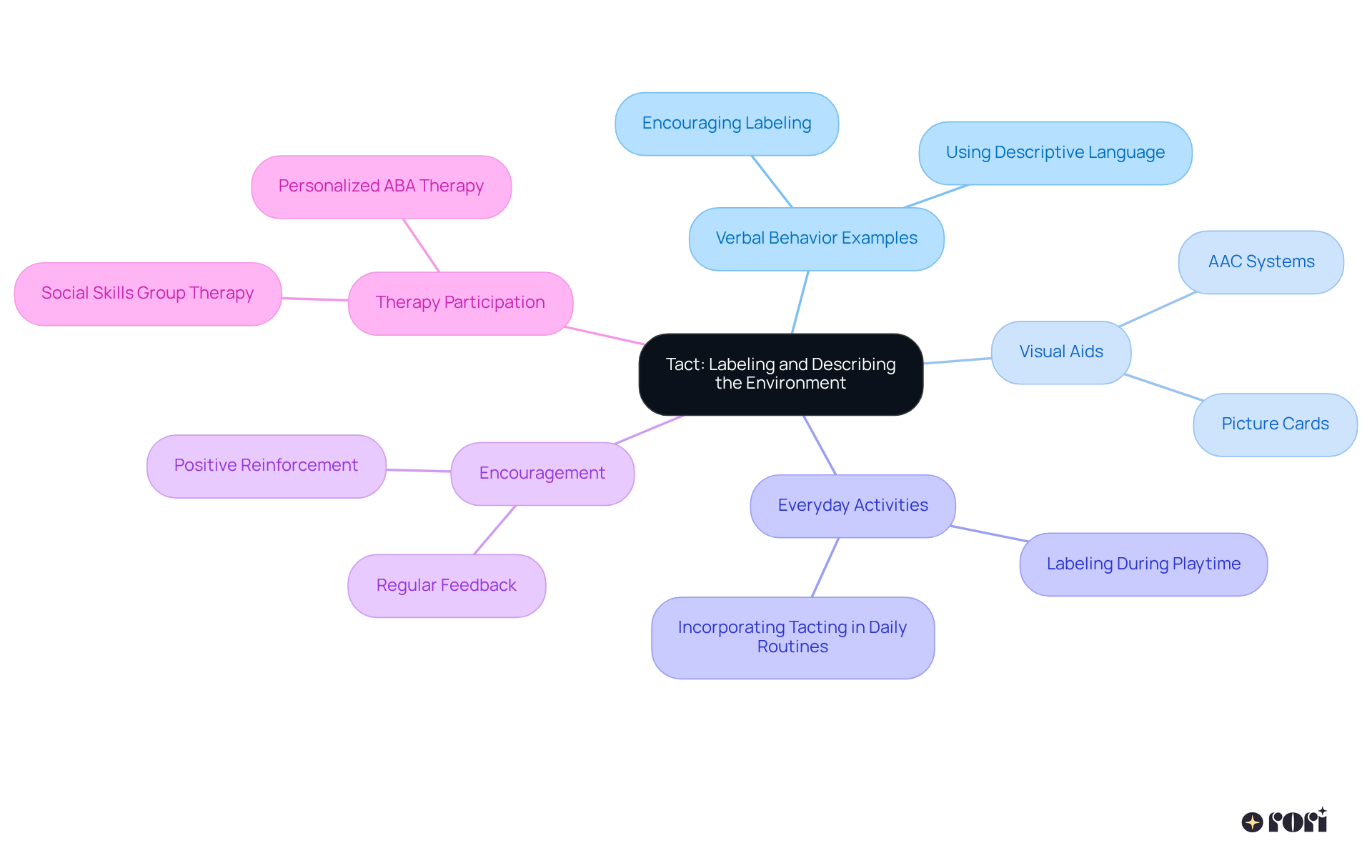
Tacting is all about in a young person’s world, and it’s a key part of boosting their language skills. For instance, when a child spots a dog, encouraging them to say ‘dog’ or point it out while saying the word can be really beneficial. This not only but also helps them express what they see around them, leading to better communication and social interactions.
Involving kids in fun activities like identifying objects during playtime or using picture cards can really enhance their skills. Research shows that when children , it can significantly . They learn to express their thoughts and feelings more clearly, which is so important!
So, how can we help them improve these skills? Effective methods include:
- Using examples of
- Visual aids
- Weaving labeling into everyday activities
Plus, participating in led by trained therapists can further enhance these interaction techniques, giving kids a chance to practice tacting in a supportive environment.
for addressing specific interaction needs. By equipping caregivers with ABA principles and strategies, they can actively support their children’s development. This consistent approach fosters and meaningful connections with others. It’s all about empowering caregivers with the right tools for informed decision-making, which ultimately leads to better behavioral outcomes and a happier family dynamic. Let’s explore this together!
Intraverbal: Engaging in Conversations and Responding
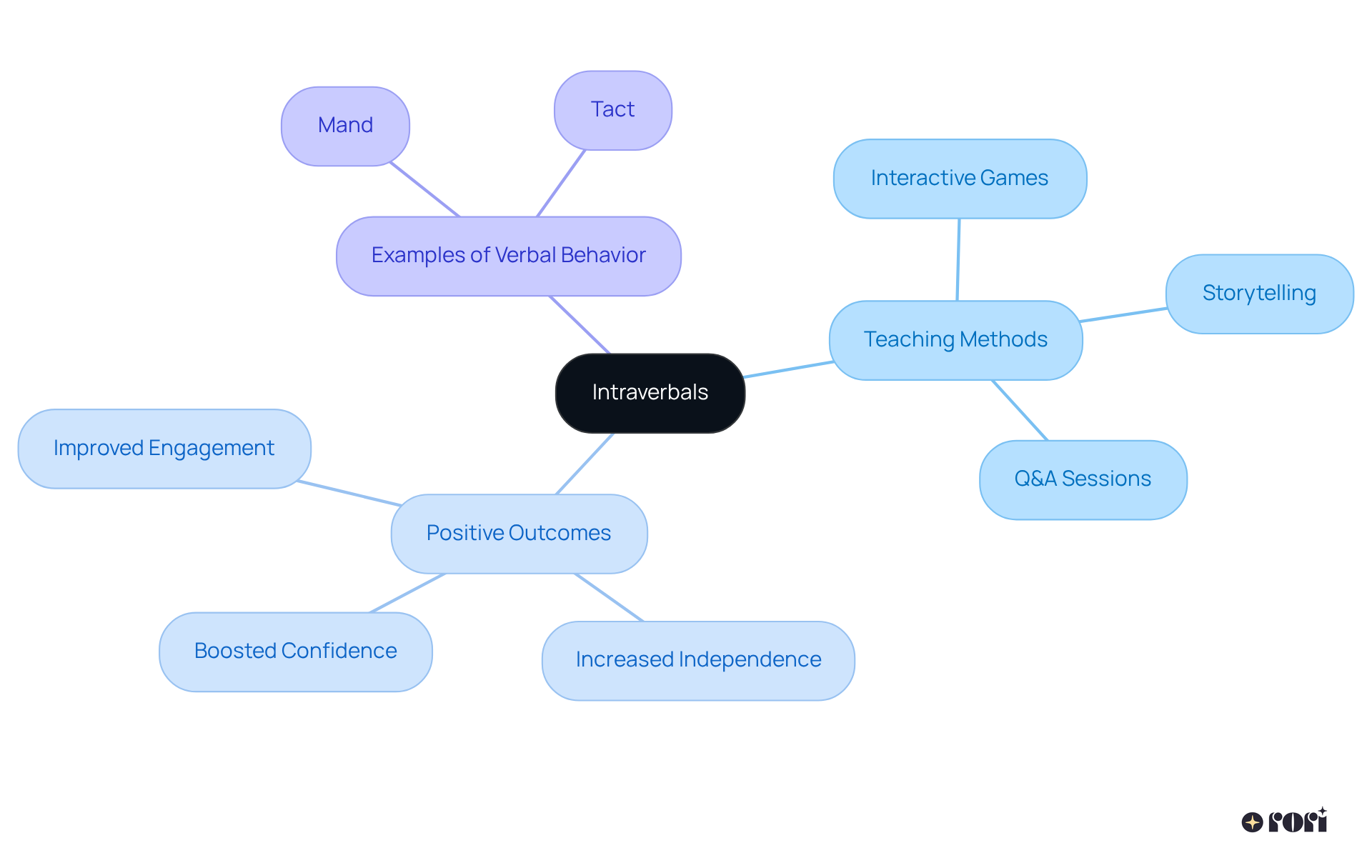
Intraverbals are those fun responses that go beyond just answering questions or completing phrases. For instance, when someone asks, ‘What do you like to eat?’ a little one might joyfully say, ‘pizza!’ Teaching can be a blast—think . These methods not only but also help build . This is especially true in , where trained therapists guide the fun and provide personalized support.
When kids dive into these activities, we often see a remarkable improvement in their ability to with others. This growth fosters their independence and confidence in social situations. Plus, when we empower caregivers with , they can actively support their child’s behavioral goals. This involvement—along with keeping track of progress—leads to informed choices and better behavioral outcomes, which is a win for everyone!
Let’s not forget about examples of , including ‘mand’ and ‘tact.’ These are key players in enhancing language and interaction skills, including . By weaving these operants into the learning journey, children can flourish across various verbal abilities, paving the way for a richer communication experience. So, let’s explore this together and see how we can support our little ones in their growth!
Echoic: Imitating Sounds and Words
Echoics are all about the fun of repeating sounds or words that someone else has just said—it’s a key part of ! For example, when a caregiver demonstrates by saying ‘ball,’ the child is encouraged to echo back ‘ball.’ This playful repetition is so important because it helps young learners grasp the sounds and structures of language. Recent studies highlight just how significant echoic behavior is in language development, showing a .
Integrating —like singing songs or playing games that focus on repetition—can really boost a child’s verbal skills. Plus, are crucial for strengthening these abilities. They help kids anticipate learning moments and improve their understanding of language. By using during echoic training, caregivers can create a fun and engaging environment that fosters growth in interaction.
Ultimately, the use of , such as , not only enhances but also lays the groundwork for more advanced language skills, empowering youngsters to express themselves more effectively. Let’s explore this together and see how we can support our children on this exciting journey!

Listener Responding: Understanding and Following Directions
is so important for a young person’s ability to understand and follow verbal instructions. Think about it: when a caregiver says, ‘Please pick up the toy,’ it’s not just about hearing the request—it’s about responding to it, too. To teach effectively, are essential, along with consistent practice in different settings.
Incorporating , like pictures, diagrams, or gestures, can really boost comprehension and compliance. Research shows that people retain 42% more information when visuals are involved compared to text alone, which makes visuals a fantastic tool for communication! Plus, using step-by-step visual aids can help clarify , making it easier for young learners to process information. This approach is particularly beneficial for individuals with autism, ADHD, and other learning disabilities, as it caters to their unique learning styles and helps them follow instructions more easily.
By combining these strategies, caregivers can enhance understanding and interaction, which helps youngsters respond better to examples of . At Rori Care – ABA Therapy, we’re dedicated to providing families with the resources they need to support their children’s growth through . We even offer a with our ! This highlights how crucial caregiver involvement and education are in achieving positive behavioral outcomes. Let’s explore this together!

Natural Environment Teaching: Applying Verbal Behavior in Daily Life
(NET) is a fantastic way to weave into our daily lives, turning everyday moments into rich learning experiences. Imagine grocery shopping with your little ones—what if you encouraged them to spot items or share their favorite snacks? This not only gets them involved but also helps them outside of therapy sessions, making those interactions feel more relevant and practical.
By incorporating examples of into our routines, we create wonderful opportunities for our kids to boost their , paving the way for greater independence and . Studies show that these can really enhance a young person’s ability to start conversations and pick up on social cues, ultimately enriching their . So, let’s explore this together and see how we can make every moment a chance for learning!

Discrete Trial Training: Structured Learning for Verbal Behavior
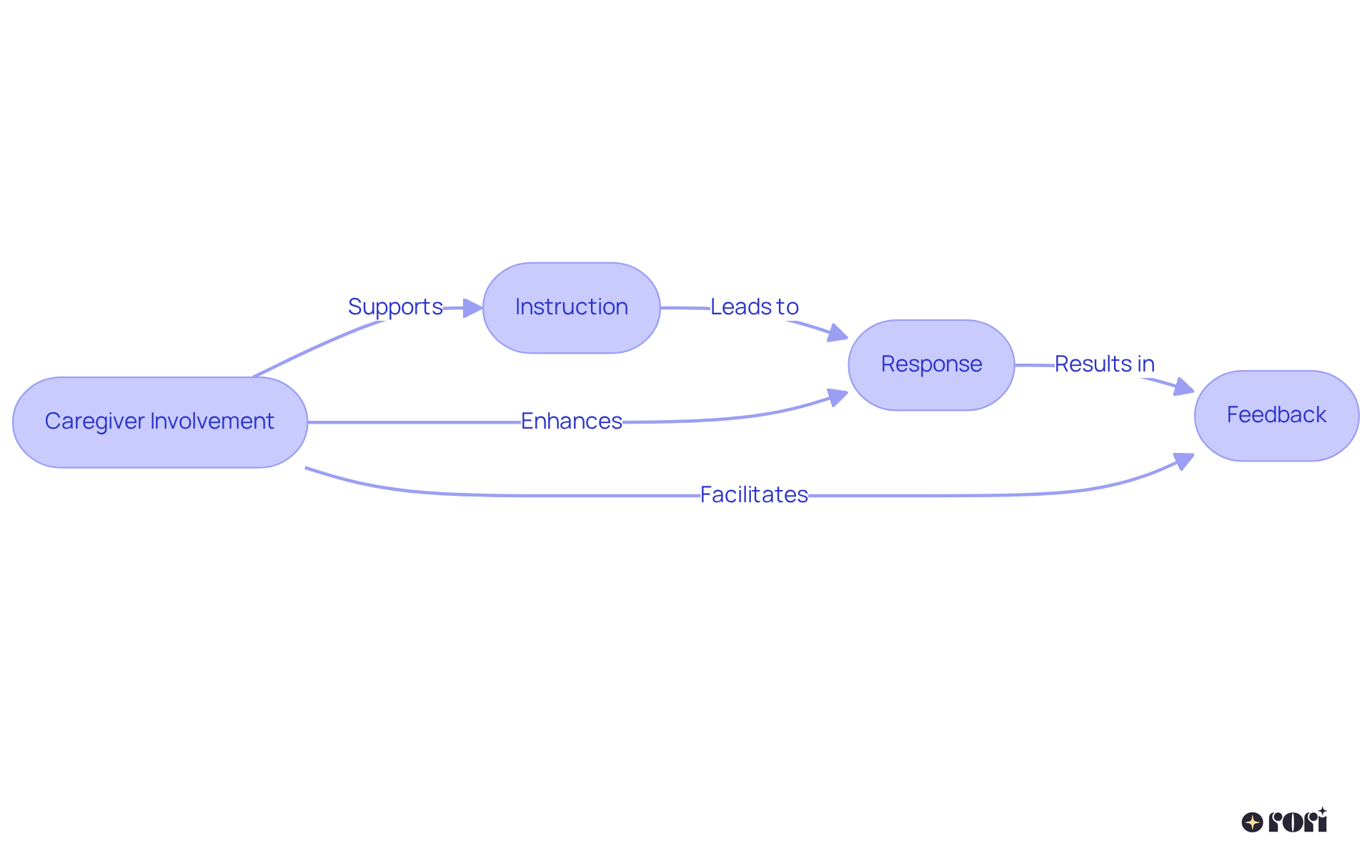
(DTT) is a structured teaching method that breaks down skills into small, manageable components. This approach aligns beautifully with the principles of individualized planning and measurable goals in . For instance, imagine a young person learning to identify colors. They might start by naming ‘red’ before moving on to other hues. Each trial includes a clear instruction, a response from the child, and prompt feedback. This method reflects developed by qualified .
This systematic approach enables , making it an effective strategy for teaching examples of in a controlled environment. Plus, having caregivers actively participate in the significantly boosts the effectiveness of the intervention. Their involvement is essential for achieving and acquiring knowledge. Let’s explore this together and see how we can make a difference!
VB-MAPP: Assessing Verbal Behavior Milestones
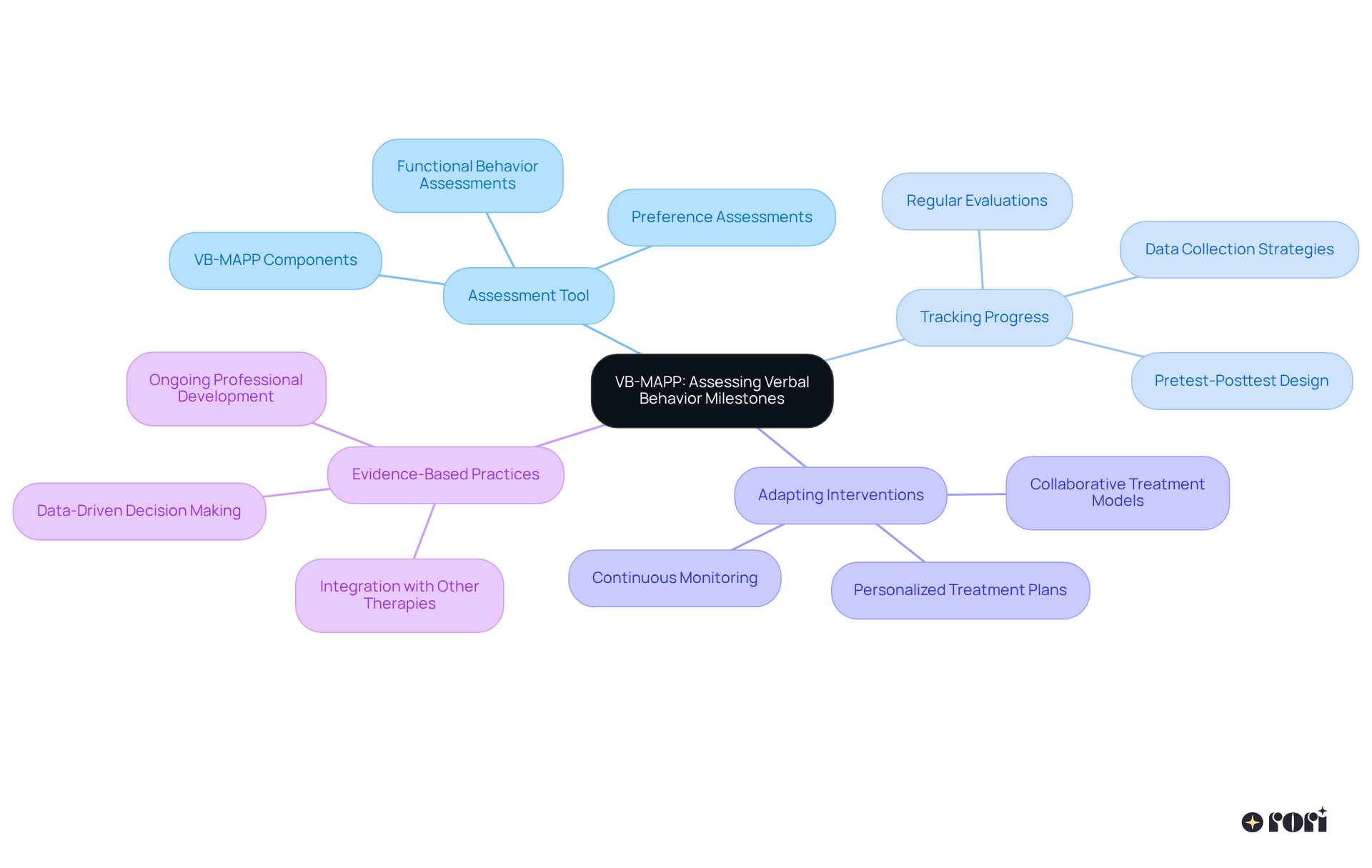
The is a fantastic tool for evaluating examples of skills and identifying . This structured framework not only helps but also , allowing clinicians to adapt interventions as the individual’s needs change. is essential as it provides examples of that help practitioners monitor advancements and adjust strategies to ensure therapy remains effective and relevant.
Recent advancements in verbal behavior assessment tools are exciting! They support the use of , highlighting the importance of . By leveraging insights from the VB-MAPP, clinicians can create that foster significant progress in examples of . This empowers children to reach their full potential. Let’s explore this journey together!
Reinforcement: Enhancing Verbal Behavior Through Positive Feedback
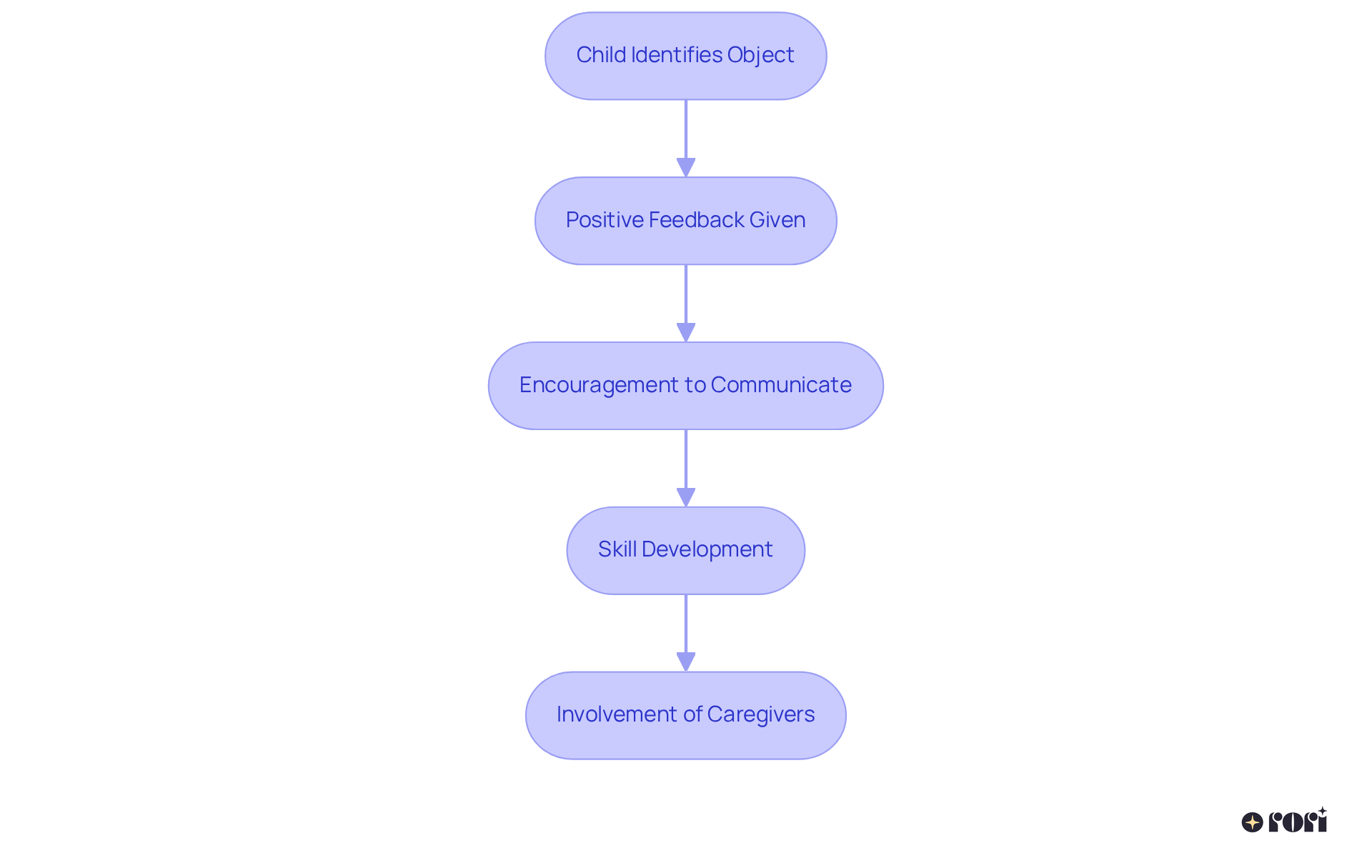
Reinforcement is all about offering positive feedback or rewards when a young one successfully displays . For example, when a child accurately identifies an object, they might receive a big smile or a small treat. This kind of really encourages them to keep using their verbal abilities, which serve as , and boosts their desire to communicate.
By consistently using these reinforcement techniques, families and clinicians can create a warm environment that promotes and encourages . Plus, when caregivers are equipped with ABA principles and techniques, they can better support their child’s behavioral goals by utilizing , leading to even better outcomes.
It’s also super important for caregivers to get involved in . This involvement helps maximize the effectiveness of these interventions, making informed decisions that contribute to . So, let’s explore this together and see how we can make a difference!
Conclusion
Enhancing communication skills in children through verbal behavior ABA techniques is truly impactful and transformative. By using tailored strategies like mands, tacts, intraverbals, echoics, and listener responding, caregivers and professionals can really boost a child’s ability to express themselves and connect with their world. This structured approach not only fosters independence but also nurtures social interactions, paving the way for a more fulfilling life.
Throughout this journey, we’ve seen how important it is for caregivers to actively participate, utilize natural environment teaching, and apply effective reinforcement strategies. Each example of verbal behavior acts as a building block for effective communication, helping children articulate their needs, understand their surroundings, and engage in meaningful conversations. Plus, the VB-MAPP assessment supports this growth by providing a framework to track progress and adapt interventions to fit individual needs.
Ultimately, the significance of these verbal behavior techniques is huge. They empower children with the skills necessary for effective communication, enhancing their overall quality of life. By embracing these strategies and engaging in the learning process, families can create an environment rich in opportunities for growth and connection. Engaging with these approaches not only transforms the lives of children but also strengthens family relationships, showcasing the profound impact of effective communication strategies in ABA therapy. Let’s explore this together and see how we can support each other on this journey!
Frequently Asked Questions
What is Rori Care’s approach to ABA therapy for children with autism?
Rori Care utilizes a variety of ABA therapy techniques, specifically incorporating verbal behavior strategies to enhance verbal skills in young children with autism. Each method is tailored to meet the unique needs of each child in a nurturing environment.
What evidence supports the effectiveness of Rori Care’s ABA therapy?
Research indicates that over 90% of parents notice positive changes in their child’s communication skills after therapy. Additionally, children often show improvements in social interactions and academic performance over time.
How can parents participate in their child’s therapy process?
Parents are encouraged to actively reinforce the skills learned during therapy sessions at home. Rori Care provides caregivers with ABA principles and strategies to help support their child’s behavioral goals.
What data collection methods does Rori Care use during therapy sessions?
Rori Care employs automatic data gathering during clinical sessions to ensure uninterrupted attention for each child. All collected data is securely stored, anonymized, and deleted after analysis to maintain confidentiality.
What are mands in the context of verbal behavior?
Mands are requests made by children to obtain their needs or wants. They are essential for developing communication skills and can significantly reduce challenging behaviors when children learn to express their needs effectively.
How does mand training benefit children?
Effective mand training can lead to a significant decrease in frustrating moments for children, as they learn to communicate their needs rather than feeling overwhelmed. Strategies like modeling, prompting, and immediate reinforcement help build their confidence in making requests.
What is tacting and why is it important?
Tacting involves recognizing and labeling objects, actions, or events in a child’s environment. It is crucial for boosting language skills, expanding vocabulary, and enhancing social interactions.
What methods can help improve a child’s tacting skills?
Effective methods include using examples of verbal behavior ABA, visual aids, incorporating labeling into everyday activities, and providing regular encouragement during practice. Participation in social skills group therapy can also enhance these techniques.
How does Rori Care empower caregivers in the therapy process?
Rori Care equips caregivers with ABA principles and strategies, enabling them to actively support their children’s development. This consistent approach fosters effective communication and meaningful connections, leading to better behavioral outcomes.
List of Sources
- Rori Care – ABA Therapy: Comprehensive Verbal Behavior Strategies
- The Numbers Don’t Lie: Revealing Autism Therapy Statistics | Above and Beyond Therapy (https://abtaba.com/blog/autism-therapy-statistics)
- myteamaba.com (https://myteamaba.com/resources/the-impact-of-aba-therapy-on-academic-achievement-for-children-with-autism)
- discoveryaba.com (https://discoveryaba.com/aba-therapy/success-rates-of-aba-therapy?8936781b_page=13)
- behavioralinterventionforautism.com (https://behavioralinterventionforautism.com/blog/aba-therapy-success-rate-is-it-worth-it)
- The Significance of Statistics in ABA Therapy | All Star ABA (https://allstaraba.org/statistics-in-aba-therapy)
- Mand: Requesting Needs and Wants in Verbal Behavior
- behavioralinterventionforautism.com (https://behavioralinterventionforautism.com/blog/tact-vs-mand-key-differences)
- amazeaba.com (https://amazeaba.com/understanding-mands-in-aba-therapy-a-guide)
- yellowbusaba.com (https://yellowbusaba.com/post/verbal-operants-in-aba)
- pmc.ncbi.nlm.nih.gov (https://pmc.ncbi.nlm.nih.gov/articles/PMC3592491)
- Tact: Labeling and Describing the Environment
- levelaheadaba.com (https://levelaheadaba.com/blog/tacting-in-aba)
- pmc.ncbi.nlm.nih.gov (https://pmc.ncbi.nlm.nih.gov/articles/PMC9620673)
- Inspiring Autism Quotes for Understanding and Acceptance – Kids First (https://kidsfirstservices.com/first-insights/autism-quotes)
- Best Autism Quotes to Raise Awareness and Understanding (https://yellowbusaba.com/post/autism-quotes)
- Intraverbal: Engaging in Conversations and Responding
- brighterstridesaba.com (https://brighterstridesaba.com/blog/verbal-operants-in-aba)
- Phases of Verbal Behavior Therapy Explained | Rising Above ABA (https://risingaboveaba.com/autism-blog/phases-of-verbal-behavior-therapy-explained)
- Echoic: Imitating Sounds and Words
- rori.care (https://rori.care/post/how-to-understand-and-apply-echoic-definition-in-aba-a-step-by-step-guide)
- Inspirational ABA and Autism Quotes – Mrs. Moe’s Modifications (https://mrsmoesmodifications.com/inspirational-aba-and-autism-quotes)
- Listener Responding: Understanding and Following Directions
- 10 Neuroscience-Based Statistics That Prove Visual SOPs Are More Effective Than Written Procedures (https://speach.me/blog/10-neuroscience-based-statistics-that-prove-visual-sops-are-more-effective-than-written-procedures)
- 112 Best Communication Quotes for effective relationships (https://growthsummary.com/posts/communication-quotes)
- Natural Environment Teaching: Applying Verbal Behavior in Daily Life
- crossrivertherapy.com (https://crossrivertherapy.com/autism/how-natural-environment-teaching-net-supports-learning)
- pmc.ncbi.nlm.nih.gov (https://pmc.ncbi.nlm.nih.gov/articles/PMC3659499)
- yellowbusaba.com (https://yellowbusaba.com/post/how-aba-therapy-helps-children-develop-communication-skills-in-everyday-situations)
- Discrete Trial Training: Structured Learning for Verbal Behavior
- Reporting Results of Single-Case Studies | Request PDF (https://researchgate.net/publication/281542950_Reporting_Results_of_Single-Case_Studies)
- researchgate.net (https://researchgate.net/publication/286760677_The_Use_of_Computers_and_Augmentative_and_Alternative_Communication_Devices_in_Independent_Naming_Practice_Three_Single-Case_Studies)
- VB-MAPP: Assessing Verbal Behavior Milestones
- Applied Behavior Analysis (ABA) Statistics: Data, Effectiveness, and Evidence-Based Practices (https://nexoaba.com/applied-behavior-analysis-statistics)
- pmc.ncbi.nlm.nih.gov (https://pmc.ncbi.nlm.nih.gov/articles/PMC11385427)
- The Benefits of Regular Assessments in ABA Therapy Progress (https://supportivecareaba.com/statistics/the-benefits-of-regular-assessments-in-aba-therapy-progress)