

Introduction
Navigating the world of social skills for children with autism can feel overwhelming for many families. It’s a journey filled with ups and downs, but there’s hope! One powerful approach that’s gaining traction is parent-guided interventions. By actively involving caregivers in the therapeutic process, we’re seeing a real transformation in how autism support is delivered.
Imagine being able to tailor strategies that fit your child’s unique needs. With personalized approaches, parents can make a significant difference in their child’s communication and emotional regulation. This leads to meaningful improvements in social interactions, which is something every parent hopes for. But let’s be real – what challenges do families face when trying to implement these strategies? And how can they navigate the complexities of developing social skills in autism?
Let’s explore this together! We’re here to help you every step of the way!
Rori Care – ABA Therapy: Personalized Parent-Guided Interventions
At Rori Behavioral Innovations, we truly believe in the power of , especially when it incorporates and actively involves guardians in the journey. Imagine being part of a process where your insights and experiences shape the therapy your child receives! By using , our clinicians craft that cater to each child’s unique needs. This collaborative approach not only but also ensures that the strategies are consistently applied at home.
Research shows that when parents are engaged, the effectiveness of skyrockets! Kids often see . Isn’t that what we all want for our children? Research indicates that have been shown to bring about significant benefits, with studies highlighting impressive gains in positive behaviors and communication skills.
By , we enhance therapy consistency and build family confidence and resilience. This leads to better outcomes for individuals with autism. So, let’s explore this journey together! We’re here to !

Structured Social Skills Programs: Building Foundations for Interaction
Organized interaction programs are a fantastic way for kids to build essential ! 🌟 These programs often include , storytelling, and peer interactions, allowing children to practice in a safe space. With the guidance of trained therapists, helps kids improve their interactions and communication within a group, fostering better relationships and confidence.
By focusing on specific skills like turn-taking, sharing, and starting conversations, these programs lay the groundwork for in various settings. Plus, is super important in the context of parent-guided interventions for autism development! It provides parents with strategies through to reinforce their child’s learning at home. Let’s explore this together and see how we can support our little ones in their growth!

Play Therapy: Enhancing Social Skills Through Engaging Activities
taps into the natural love kids have for play, making it a fantastic way to boost . Through guided play activities, kids get to learn vital like sharing and teamwork in a fun, supportive setting. Think about it: when kids engage in role-playing, games, or simply using toys, they can practice interactions without the pressure of formal settings, which really helps build their confidence.
Research shows that kids who participate in often make significant strides in their interactions. In fact, studies indicate that those involved in scored, on average, 25 percentile points higher on outcome measures compared to those who didn’t receive this kind of support. By incorporating into therapy, parents and clinicians can help kids form , enhancing their ability to engage with others and navigate social situations.
And let’s not forget about the ! It’s been shown that when parents take part in , the outcomes are even better. Just participating in at least 20 therapy sessions can really amplify the benefits of , ensuring that kids get the support they need to thrive. Plus, led by qualified therapists can complement play therapy, further enhancing children’s interactions and in a group setting.
This , along with educating caregivers on , empowers parents to actively engage in to support their children’s behavioral goals. It helps them make informed decisions and contributes to better outcomes. So, let’s explore this together! We’re here to help you every step of the way!

Emotional Regulation: Key to Successful Social Interactions
is super important for kids with autism, as it really affects how they handle social interactions. Parents, you play a key role in facilitating to help your little ones develop these vital skills! Teaching them to recognize and manage their emotions can make a world of difference. For instance, can be a great way for kids to calm down during stressful moments.
Visual aids, like emotion thermometers or the 5-Point Scale, can help kids identify their feelings and understand how intense those feelings are. This boosts their ! Plus, practicing – like putting together filled with fidget toys and soothing music – can help kids respond appropriately in social situations. Not only do these strategies reduce anxiety, but they also improve their ability to connect with peers, leading to better social skills and relationships.
As advocates often say, “Emotional intelligence plays a crucial role in every young person’s development.” This really highlights how important these strategies are for fostering . And here’s a thought: by actively involving caregivers in the therapeutic process and educating them on ABA principles, parents can implement , making informed choices that positively impact their child’s progress.
Research shows that when the recommended hours of are fully implemented with active caregiver participation, about 90% of kids show significant progress. This really emphasizes how crucial is for achieving successful outcomes in . So, let’s explore this together! We’re here to !

Parent Coaching and Support: Empowering Families for Success
serves as a valuable resource for families by offering that contribute to in children. Through personalized sessions, parents can gain insights into . This collaborative approach not only helps parents tackle challenges but also positions them as champions of their child’s growth by utilizing .
At Rori Care, our qualified create and evidence-based strategies. We continuously evaluate and adjust these plans to ensure they meet each child’s needs. As Dr. Elizabeth Laugeson wisely says, “In my experience, parents of individuals with autism who embrace their loved one’s differences have a much easier time of it.” By fostering a , caregivers can significantly enhance their child’s through , leading to better interactions and relationships.
To make the most of coaching, try to set aside dedicated time each week to practice the techniques you learn during sessions. This steady, supportive approach can really strengthen your child’s skills. Plus, Rori Care emphasizes the , particularly through , which boosts support, informed decision-making, and better behavioral outcomes for kids.
Let’s explore this together! We’re here to !

Evidence-Based Social Skills Interventions: Proven Strategies for Parents
If you’re a parent looking to boost your child’s development, consider that can be a game changer! Techniques like storytelling and video modeling are , which improve interactions, especially for kids with autism. For instance, can teach children how to handle various social situations, while video modeling provides them with visual examples that make learning through observation a breeze. Research even shows that these methods can lead to .
By consistently using these strategies, you can create wonderful opportunities for your child to practice and enhance their social skills in everyday situations through . Plus, involving peers in the learning process – known as – can really boost these interventions, encouraging collaborative social interactions. And let’s not forget about the importance of ! When caregivers are equipped with , they can implement to offer better support at home, make informed choices, and actively participate in their child’s growth. This hands-on involvement often leads to .
The latest research from 2026 highlights just how effective these approaches can be, emphasizing their role in a . By embracing these evidence-based methods, you’re not just helping your child; you’re setting them up to thrive socially and emotionally. Let’s explore this together!

Integrating Therapy at Home and School: A Unified Approach
Incorporating at home and school is . When parents and teachers work together, it ensures that are consistently applied across different settings. This way, , which really boosts their ability to generalize what they learn and .
Keeping the lines of communication open between parents and educators is key to making this integration work. It helps everyone understand each child’s unique needs and growth. Research shows that kids who benefit from , along with , tend to do better. In fact, there’s a with active caregiver involvement!
By collaborating, parents and educators can utilize to create a socially and emotionally. Let’s explore this together! We’re here to help you every step of the way!

Peer Interaction and Group Learning: Fostering Social Connections
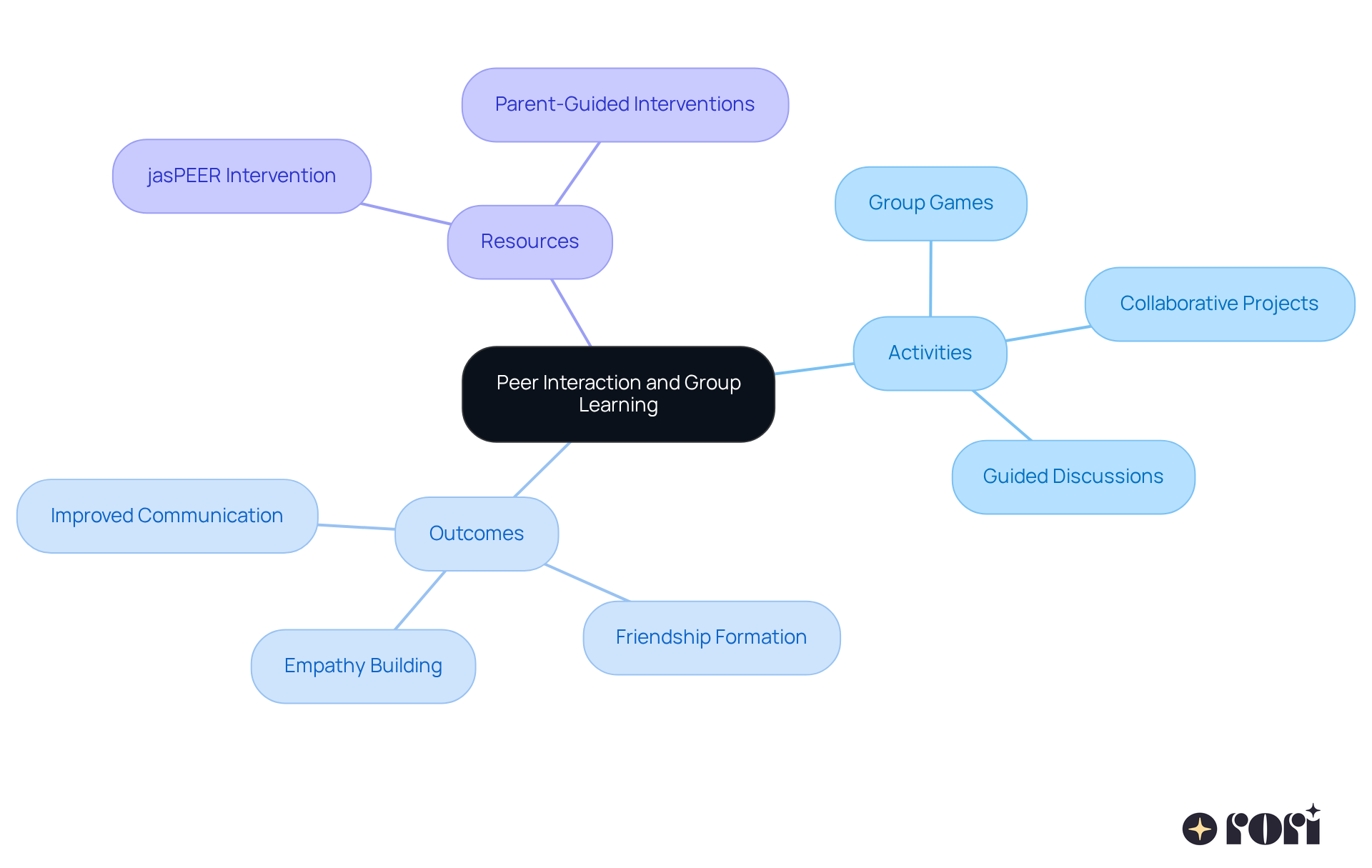
Peer interaction and play a vital role in helping youngsters with autism improve their . When kids join organized peer groups, they get to connect with others facing similar challenges, creating a for developing those essential social skills. Think about it: activities like group games, collaborative projects, and guided discussions not only boost communication but also help kids form friendships and build empathy.
Research shows that youngsters who engage in these collective settings often see . Structured strategies can lead to positive outcomes in and communication skills. Plus, successful group activities – like and – really help reinforce these skills, giving kids the confidence they need to navigate social situations.
At Rori Care, our clinical leadership team is made up of seasoned experts in autism therapy, and they’re dedicated to . They provide caregivers with the knowledge and tools they need to help their children thrive. One fantastic resource is the jasPEER intervention, which focuses on designed to enhance . As parents guide their children through these experiences, utilizing , they play a crucial role in nurturing meaningful relationships and supporting their kids’ interpersonal growth.
Let’s explore this together! We’re here to help you every step of the way!
Addressing Common Challenges: Navigating the Path to Social Skills
Navigating the world of autism can be a bit tricky for kids, especially when it comes to . They often face , like understanding social cues and managing anxiety. But don’t worry! There are some effective strategies, such as , that parents can use to help their children tackle these hurdles, all rooted in the principles of .
- : Setting clear and consistent expectations is key. It helps kids know what’s expected of them in social situations, which can really cut down on anxiety and confusion. Plus, using ABA techniques can reinforce these expectations through positive reinforcement, making it easier for them to grasp.
- Utilize : , like charts or stories, can be super helpful. They provide concrete examples of interactions, making it easier for kids to understand complex cues. ABA encourages using these to boost understanding and retention.
- : Role-playing different social situations at home is a great way for kids to practice in a safe space. It builds their confidence and skills! You can integrate ABA strategies into these practices to reinforce the behaviors you want to see.
- : Slowly introducing kids to social settings can help them adapt without feeling overwhelmed. Start with smaller, familiar groups before moving on to larger gatherings. ABA can help track their progress and adjust exposure levels based on their comfort.
- Celebrate : Don’t forget to recognize and celebrate even the tiniest achievements in ! This can really boost a child’s confidence and resilience, encouraging them to engage more with their peers. ABA emphasizes the importance of reinforcement in building self-esteem.
Did you know that about 1 in 31 youths are recognized with Autism Spectrum Disorder (ASD)? This highlights how crucial it is to have tailored approaches to support their social development. By focusing on these strategies, parents can implement to empower their kids to handle social challenges more effectively, fostering a sense of belonging and acceptance in their communities.
At Rori Care, we’re all about using – a personalized therapy grounded in the science of learning and behavior. Our goal is to enhance interpersonal skills and confidence for individuals with Autism and related disorders. Our dedicated clinical leadership team is passionate about neurodiversity and ensuring that every young person gets the support they need to thrive.
As a practical tip, consider setting specific social goals with your child and regularly checking in on their progress. Let’s explore this together! We’re here to help you every step of the way!

Real-Life Success Stories: Inspiration for Parents on the Journey
Real-life success stories of kids with autism who’ve made amazing strides in their social skills can be such a boost for parents. These tales really show how effective can be, playing a crucial role in community growth. For instance, kids who engage in tailored often see remarkable improvements in communication and social interactions. Research even suggests that over 89% of participants show ! Parents often express their happiness in watching their children by as much as 70% after just a year of personalized support.
One inspiring case highlights a young person who, through structured play in their , developed and improved their ability to connect with peers. This individual not only learned to handle social situations better but also gained confidence, showcasing the .
Plus, parents find that their involvement in really boosts their child’s progress. By actively participating in and applying the ABA principles they learn through caregiver education, families create a nurturing environment that supports social skills development. This education empowers caregivers to make informed choices that positively affect their child’s growth, reduces stress, and enhances family dynamics. As one parent shared, “Seeing my son or daughter engage with others and form friendships has been the most rewarding experience. It reassures me that we are on the right path.”
These success stories highlight the resilience of youth with autism and the . They remind families that with the right support and strategies – like the benefits of automatic data collection for consistent and effective therapy – their child can truly thrive socially. It’s all about on this journey together!

Conclusion
The journey of developing social skills for children with autism can feel overwhelming at times, but guess what? You’re not alone! Parent-guided interventions can truly make a difference. When you get involved, not only do you empower yourself, but you also boost the effectiveness of therapy. This leads to real improvements in communication, emotional regulation, and social interactions. By actively participating in your child’s development, you open the door to meaningful connections and growth in various social situations.
Throughout this article, we’ve explored some key strategies like structured social skills programs, play therapy, and emotional regulation techniques. These tools are effective for fostering social skills and can really help your child shine. Plus, the importance of caregiver education and collaboration between home and school can’t be overstated. When everyone works together, amazing progress can happen! Real-life success stories remind us just how impactful these interventions can be, inspiring families to embrace the journey ahead.
As you navigate the complexities of autism, staying committed to these evidence-based strategies is vital. By fostering open communication, utilizing structured programs, and actively engaging in therapy, you can create a nurturing environment that supports your child’s social development. Together, let’s champion the potential of every child! Let’s ensure they thrive in their social interactions and build lasting relationships within their communities. We’re here to help you every step of the way!
Frequently Asked Questions
What is Rori Care’s approach to ABA therapy?
Rori Care emphasizes personalized ABA therapy that incorporates parent-guided interventions, actively involving guardians in the therapy process to shape the strategies used for their child’s autism social skills development.
How do parent-guided interventions benefit children with autism?
Research shows that when parents are engaged in the therapy process, children experience significant improvements in communication, social skills, and emotional regulation, leading to better overall outcomes.
What role do structured social skills programs play in autism therapy?
Structured social skills programs provide organized interaction opportunities for children to practice essential communication skills through activities like role-playing and peer interactions, helping them build confidence and improve relationships.
Why is caregiver education important in autism social skills development?
Caregiver education provides parents with strategies to reinforce their child’s learning at home, enhancing the effectiveness of parent-guided interventions for autism social skills development.
How does play therapy enhance social skills in children with autism?
Play therapy uses guided play activities to help children learn vital communication skills like sharing and teamwork in a fun and supportive environment, which helps build their confidence in social interactions.
What are the benefits of parental involvement in play therapy?
Studies indicate that children whose parents participate in parent-guided interventions during play therapy experience better outcomes, with significant improvements in their interactions and communication skills.
How does group therapy complement play therapy?
Group therapy led by qualified therapists can enhance children’s interactions and communication skills, providing additional support alongside the benefits gained from play therapy.
What is the overall goal of Rori Care’s interventions?
The overall goal is to empower parents and caregivers, enabling them to actively engage in their child’s therapy, support their behavioral goals, and contribute to better outcomes for children with autism.
List of Sources
- Rori Care – ABA Therapy: Personalized Parent-Guided Interventions
- The Power of Parent Involvement in ABA Therapy Outcomes: Maximizing Success Through Family Engagement – RightWay ABA (https://rightwayaba.com/parent-involvement-in-aba-therapy-outcomes)
- The Numbers Don’t Lie: Revealing Autism Therapy Statistics | Above and Beyond Therapy (https://abtaba.com/blog/autism-therapy-statistics)
- rori.care (https://rori.care/post/10-positive-proud-autism-quotes-to-inspire-and-empower-parents)
- How Parental Involvement Impacts Therapy Outcomes (https://yellowbusaba.com/post/how-parental-involvement-impacts-therapy-outcomes)
- Structured Social Skills Programs: Building Foundations for Interaction
- The Numbers Don’t Lie: Revealing Autism Therapy Statistics | Above and Beyond Therapy (https://abtaba.com/blog/autism-therapy-statistics)
- The Importance of Social Skills Development in Autism Therapy (https://mastermindbehavior.com/post/the-importance-of-social-skills-development-in-autism-therapy)
- Success Rate of Early Intervention for Autism | Connect n Care (https://connectncareaba.com/blog/early-intervention-autism-success-rate-statistics)
- heartwisesupport.org (https://heartwisesupport.org/post/using-role-playing-techniques-to-improve-social-skills)
- Encouraging Autism Quotes for Positivity (https://besteveraba.com/blog/autism-quotes)
- Play Therapy: Enhancing Social Skills Through Engaging Activities
- 10 inspiring quotes from people with autism | Autism Speaks (https://autismspeaks.org/life-spectrum/autism-quotes)
- Best Autism Quotes to Raise Awareness and Understanding (https://yellowbusaba.com/post/autism-quotes)
- A meta-analysis of play therapy outcomes – Database of Abstracts of Reviews of Effects (DARE): Quality-assessed Reviews – NCBI Bookshelf (https://ncbi.nlm.nih.gov/books/NBK68621)
- Inspiring and Insightful Autism Quotes | Advanced Autism Services (https://advancedautism.com/post/autism-quotes)
- 59 Inspirational Quotes About Autism – Hidden Talents ABA (https://hiddentalentsaba.com/autism-quotes)
- Emotional Regulation: Key to Successful Social Interactions
- Autism and Emotional Regulation Essentials (https://yellowbusaba.com/post/autism-and-emotional-regulation)
- rori.care (https://rori.care/post/10-positive-proud-autism-quotes-to-inspire-and-empower-parents)
- linksaba.com (https://linksaba.com/building-emotional-intelligence-in-autistic-children)
- Why Emotional Regulation Is Hard for Autistic Children (https://psychologytoday.com/us/blog/nurturing-self-esteem-in-autistic-children/202306/why-emotional-regulation-is-hard-for)
- Inspiring and Insightful Autism Quotes | Advanced Autism Services (https://advancedautism.com/post/autism-quotes)
- Parent Coaching and Support: Empowering Families for Success
- 20 Inspiring Quotes About Autism Every Parent Must Read Today (https://circlecareservices.com/20-quotes-about-autism-and-parenting)
- Autism Parenting Quotes (https://rainbowtherapy.org/autism-parenting-quotes)
- brainbeat.com (https://brainbeat.com/autism-quotes-for-parents)
- Inspiring Autism Quotes for Understanding and Acceptance – Kids First (https://kidsfirstservices.com/first-insights/autism-quotes)
- rori.care (https://rori.care/post/10-positive-proud-autism-quotes-to-inspire-and-empower-parents)
- Evidence-Based Social Skills Interventions: Proven Strategies for Parents
- Effectiveness of social skills training interventions for children with autism spectrum disorder: A systematic review and meta-analysis – PMC (https://pmc.ncbi.nlm.nih.gov/articles/PMC11918677)
- The Numbers Don’t Lie: Revealing Autism Therapy Statistics | Above and Beyond Therapy (https://abtaba.com/blog/autism-therapy-statistics)
- Data and Statistics on Autism Spectrum Disorder (https://cdc.gov/autism/data-research)
- Inspiring Quotes on Child Learning and Development (https://vincegowmon.com/inspiring-quotes-on-child-learning-and-development)
- blog.brookespublishing.com (https://blog.brookespublishing.com/10-quotes-and-tips-for-building-strong-social-emotional-skills)
- Integrating Therapy at Home and School: A Unified Approach
- The Numbers Don’t Lie: Revealing Autism Therapy Statistics | Above and Beyond Therapy (https://abtaba.com/blog/autism-therapy-statistics)
- Treatment patterns in children with autism in the United States – PMC (https://pmc.ncbi.nlm.nih.gov/articles/PMC6519302)
- Success Rate of Early Intervention for Autism | Connect n Care (https://connectncareaba.com/blog/early-intervention-autism-success-rate-statistics)
- supportivecareaba.com (https://supportivecareaba.com/statistics/autism-therapy-statistics)
- Peer Interaction and Group Learning: Fostering Social Connections
- 80 Inspiring Quotes on Autism Awareness and Support – Empower ABA (https://empoweraba.com/80-inspiring-quotes-on-autism-awareness-and-support)
- A systematic review of peer-mediated interventions for children with autism spectrum disorder – PMC (https://pmc.ncbi.nlm.nih.gov/articles/PMC5087797)
- pmc.ncbi.nlm.nih.gov (https://pmc.ncbi.nlm.nih.gov/articles/PMC9467434)
- Best Autism Quotes to Raise Awareness and Understanding (https://yellowbusaba.com/post/autism-quotes)
- Encouraging Autism Quotes for Positivity (https://besteveraba.com/blog/autism-quotes)
- Addressing Common Challenges: Navigating the Path to Social Skills
- 10 inspiring quotes from people with autism | Autism Speaks (https://autismspeaks.org/life-spectrum/autism-quotes)
- Data and Statistics on Autism Spectrum Disorder (https://cdc.gov/autism/data-research)
- 20 Inspiring Quotes About Autism Every Parent Must Read Today (https://circlecareservices.com/20-quotes-about-autism-and-parenting)
- 80 Inspiring Quotes on Autism Awareness and Support – Empower ABA (https://empoweraba.com/80-inspiring-quotes-on-autism-awareness-and-support)
- Real-Life Success Stories: Inspiration for Parents on the Journey
- 10 inspiring quotes from people with autism | Autism Speaks (https://autismspeaks.org/life-spectrum/autism-quotes)
- Success Rate of Early Intervention for Autism | Connect n Care (https://connectncareaba.com/blog/early-intervention-autism-success-rate-statistics)
- 30 Quotes from 30 People with Autism (https://elsforautism.org/30-quotes-from-30-people-with-autism)
- The Impact of ABA Therapy on Long-Term Outcomes for Children with Autism (https://supportivecareaba.com/statistics/the-impact-of-aba-therapy-on-long-term-outcomes-for-children-with-autism)