

Introduction
Augmentative and Alternative Communication (AAC) has become a crucial resource for children with autism, helping them express their thoughts and feelings in ways that truly resonate with their unique experiences. As families look for effective ways to boost communication at home, understanding the different AAC options available can open up new avenues for connection and engagement.
But let’s be honest – misconceptions about AAC can often cloud its potential, leaving parents wondering if it really works. What if embracing these tools not only enhances communication but also supports verbal development in ways you might not expect? Let’s explore this together!
Define Augmentative and Alternative Communication (AAC) in Autism
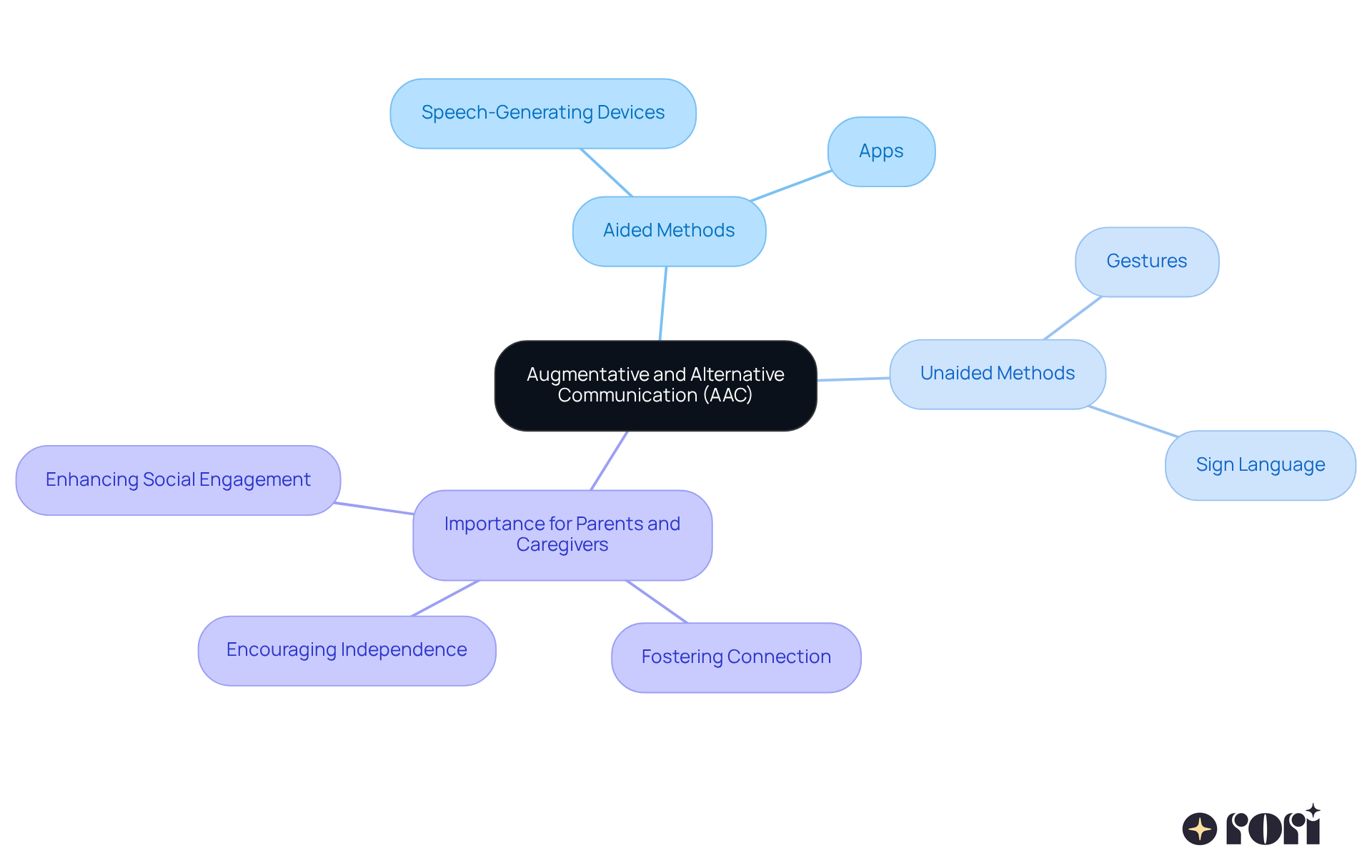
Augmentative and Alternative Communication (AAC) is all about . For kids with autism, can be a game changer! It gives them the in a way that feels right for them.
- Unaided methods, such as gestures and sign language
is super important for parents and caregivers. It opens up new ways to connect, for our little ones.
Let’s explore this together! By embracing AAC programs for enhancing communication in autism, we can help our kids find their voice and build meaningful connections. Remember, you’re not alone on this journey; we’re here to help you every step of the way!
Develop Personalized AAC Strategies with Therapy Teams
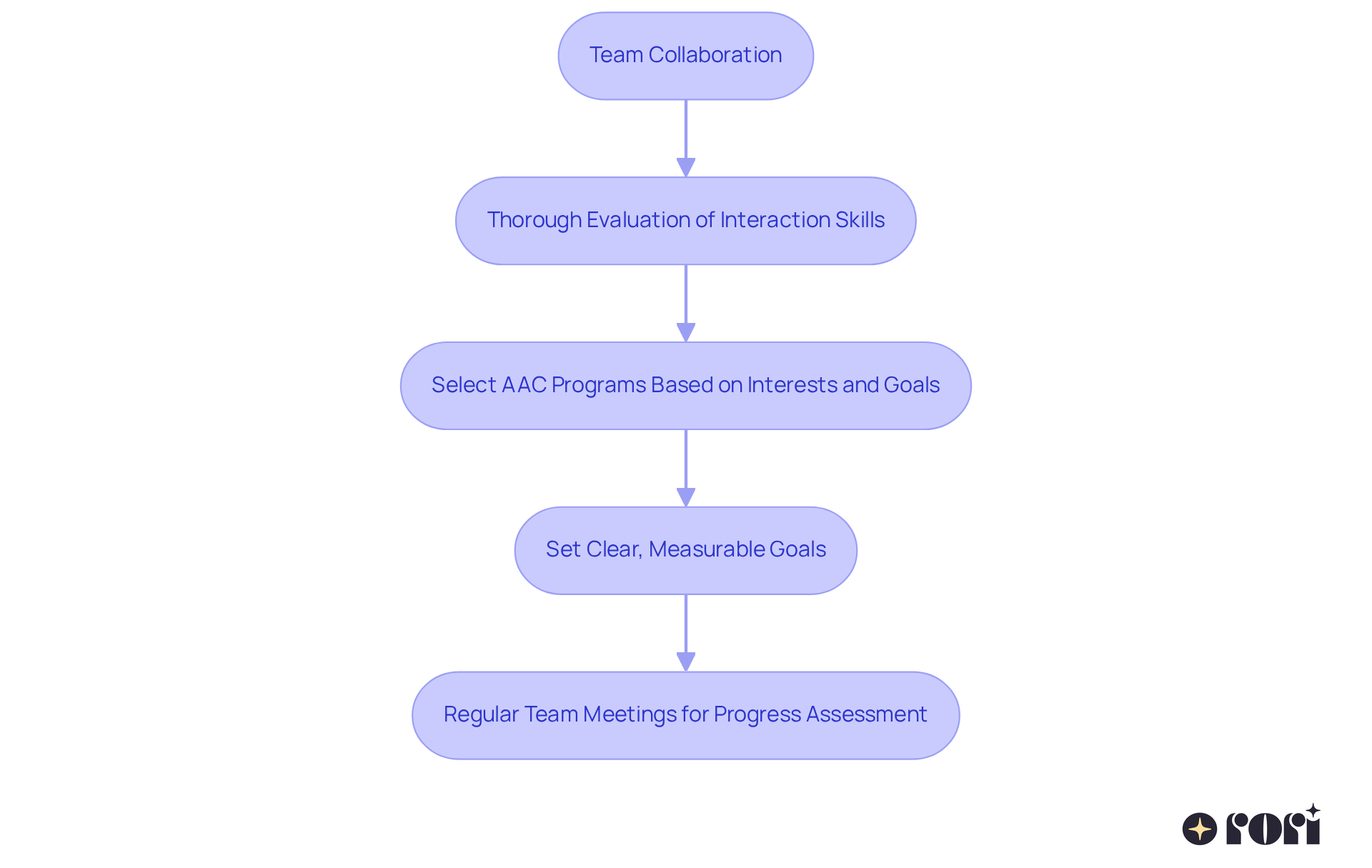
Teamwork is essential when creating personalized ! 🤝 It involves . This journey begins with a thorough evaluation of the young person’s interaction skills and preferences, ensuring that the planning includes AAC programs for enhancing communication in autism to meet their unique needs.
When selecting AAC programs for enhancing communication in autism, it’s important to consider the young person’s daily routines, interests, and specific interaction goals. For example, if a young person loves storytelling, incorporating a device that allows for narrative expression can really boost their engagement. 📖 Setting clear, measurable goals for is essential, as it provides a transparent benchmark for progress.
Regular team meetings to assess progress and tweak strategies are key! This ensures that the AAC approach remains effective and responsive to the individual’s changing needs. Plus, this ongoing assessment not only supports the individual’s development but also equips caregivers with and for .
Let’s explore this together! We’re here to help you every step of the way!
Implement Effective Home Practices for AAC Usage
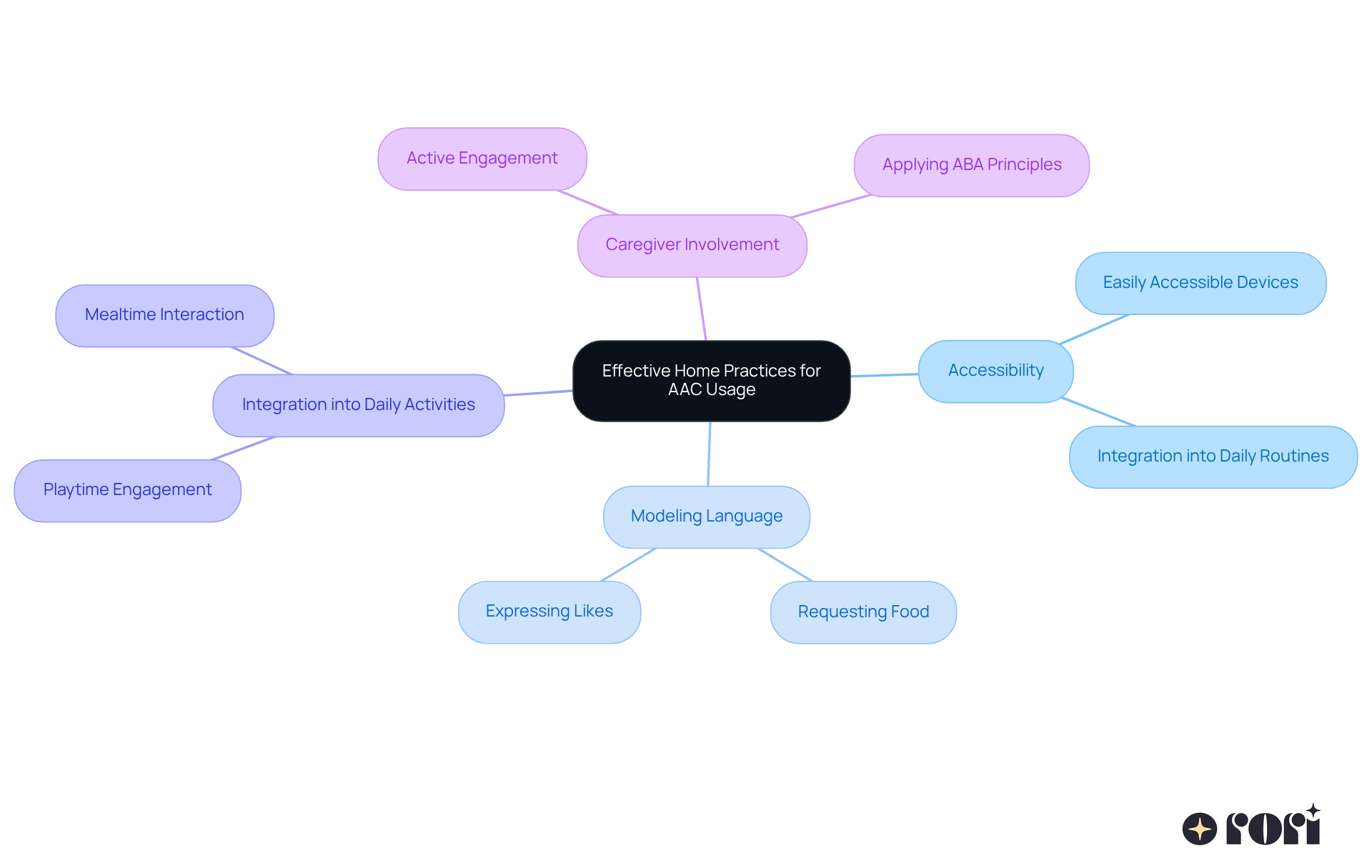
To effectively implement at home, it’s super important for parents to ensure that the AAC device or app is easily accessible during daily activities. Think about it: is key! Parents can show how to use the AAC system to express needs, share experiences, or even just chat. For instance, during mealtime, why not encourage your little one to use the AAC device to or express what they like?
And let’s not forget about playtime! Integrating AAC into those moments can really boost engagement and interaction. Regular practice in various settings helps reinforce skills and encourages the spontaneous use of . By getting involved in this process, caregivers can embrace principles of , which focuses on a patient-centered and adaptable approach. This involvement not only supports your child’s communication goals but also empowers you with the knowledge and skills to make informed decisions that positively impact their development.
Here’s something to consider: achieving progress is seen in 90% of young individuals when caregivers are actively engaged in implementing these strategies. So, let’s explore this together! Your involvement can make a world of difference!
Address Myths and Misconceptions About AAC
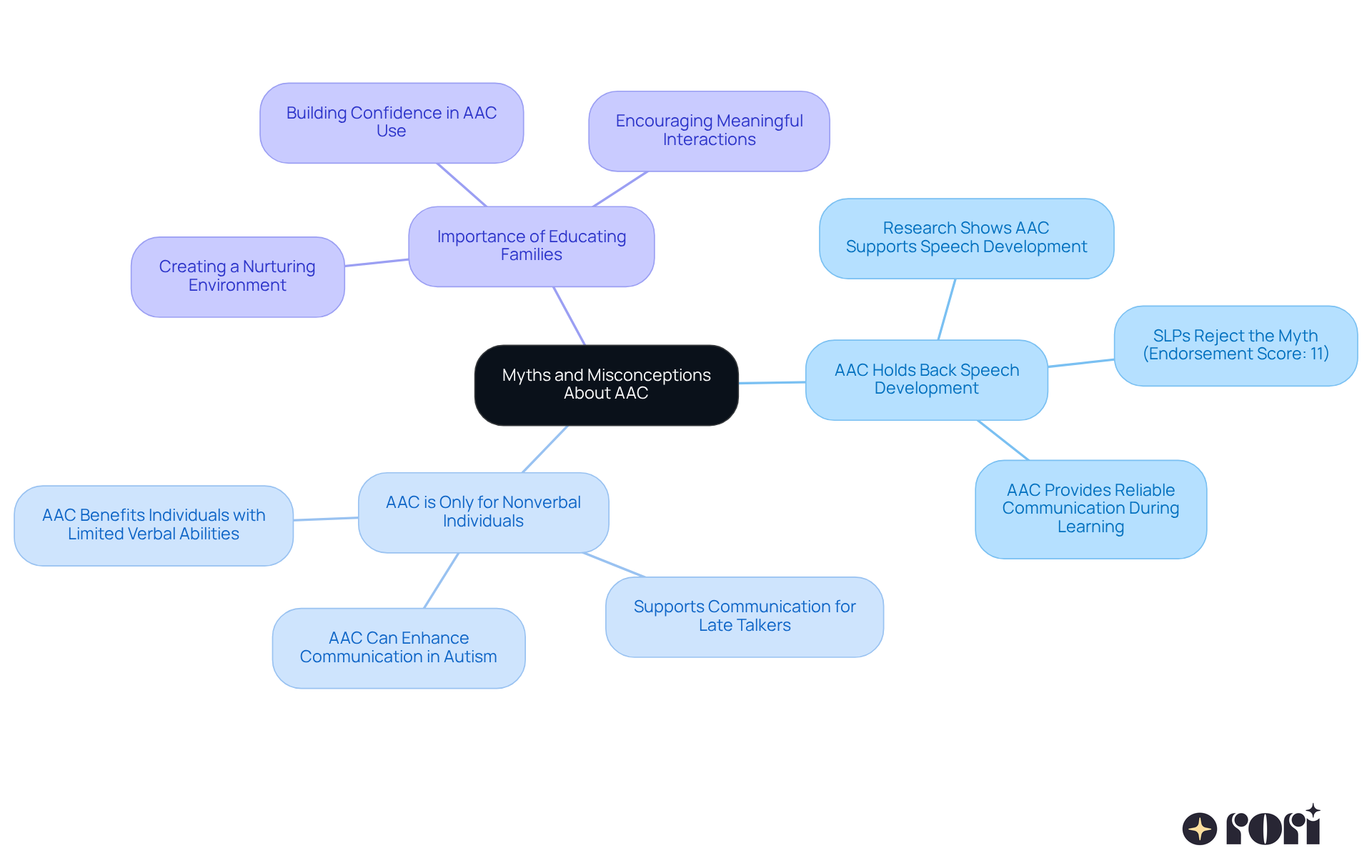
There are quite a few (AAC) that can really get in the way of its acceptance and use. One common misconception is that AAC might hold back a young person’s ability to develop verbal speech. But guess what? ! It gives young individuals a reliable way to express their needs and thoughts while they’re learning to talk. For instance, studies have found that children who use AAC often see improvements in their , as it allows them to engage with words in a meaningful way. In fact, the belief that ” was strongly rejected by speech-language pathologists (SLPs), with an endorsement score of just 11!
Another myth floating around is that AAC is only for nonverbal individuals. In reality, AAC can be a game-changer for anyone who struggles to express themselves, including those with limited verbal abilities or late talkers. For example, young people who use alongside their speech often catch up to their peers in verbal skills, showing that AAC can be a fantastic resource at different stages of development. Plus, can really boost verbal growth, creating a .
It’s so important to inform parents about these misunderstandings. By doing so, we can create a nurturing atmosphere where kids can truly flourish with AAC. When families realize that , they can build confidence and encourage meaningful interactions. This, in turn, enhances their child’s language development and social engagement. Let’s explore this together!
Conclusion
Embracing Augmentative and Alternative Communication (AAC) programs can truly enhance communication for children with autism. It allows them to express their thoughts, needs, and feelings in a way that feels right for them. By blending both aided and unaided methods, AAC not only promotes independence but also strengthens those all-important social connections. It’s a fantastic tool for families navigating the ups and downs of autism.
This article shines a light on how personalized AAC strategies, developed through teamwork between parents and therapy teams, can make a real difference. When approaches are tailored to fit individual needs and interests, and when measurable goals are set, caregivers can create a nurturing environment that encourages communication growth. Plus, tackling common myths about AAC – like the idea that it hinders verbal speech – empowers families to see AAC as a vital resource. This can really boost their child’s language development and social engagement.
Ultimately, implementing AAC at home is a journey best taken together. It thrives on active parental involvement and ongoing assessment. By adopting effective home practices and dispelling misconceptions, families can unlock the full potential of AAC. This transforms communication challenges into wonderful opportunities for connection and understanding. Engaging with AAC not only enriches the lives of children with autism but also fosters a supportive community where every voice can be heard. Let’s explore this together!
Frequently Asked Questions
What is Augmentative and Alternative Communication (AAC)?
AAC refers to methods that assist individuals who have difficulty expressing themselves verbally, providing them with tools to communicate their thoughts, needs, and feelings.
How can AAC benefit children with autism?
AAC can be a transformative tool for children with autism, as it enhances their ability to communicate effectively, fostering independence and social engagement.
What are the two main types of AAC methods?
The two main types of AAC methods are aided methods, which include speech-generating devices and apps, and unaided methods, such as gestures and sign language.
Why is understanding AAC important for parents and caregivers?
Understanding AAC is crucial for parents and caregivers as it opens up new communication avenues, helping to connect with children and support their development.
How can AAC programs help children with autism build connections?
By embracing AAC programs, children with autism can find their voice, allowing them to share their thoughts and feelings, which leads to building meaningful connections with others.