
Introduction
Music therapy has become a beacon of hope for children with autism, offering a unique way to enhance communication, social interaction, and emotional growth. Through engaging in sound-based activities, these kids can tap into their potential in ways that traditional therapies might not reach. But as caregivers and educators dive into the world of music therapy, some questions pop up:
- How can we weave this approach into daily life?
- What specific benefits can it bring to each child?
Exploring the many advantages of music therapy shows us not just its profound impact, but also how crucial caregiver involvement is in making it work effectively. Let’s explore this together!
By sharing experiences and insights, we can create a supportive community that understands the journey. After all, every child is unique, and music therapy can be a wonderful tool to help them shine.
Understand Music Therapy and Its Role in Autism
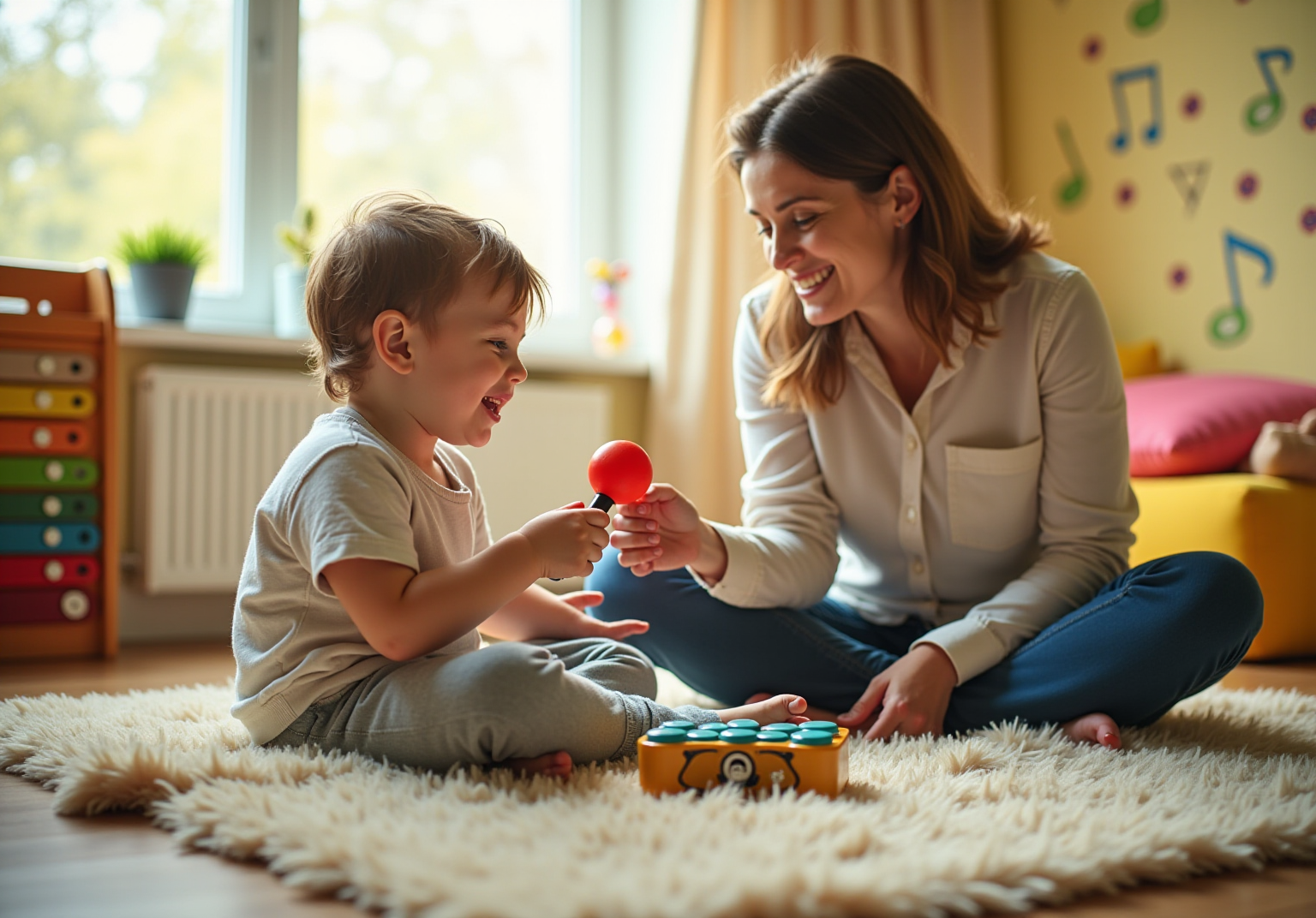
Sound treatment is a clinical practice that uses auditory interventions to help achieve personalized therapeutic goals, all within a supportive relationship. This approach is particularly beneficial for kids with autism, showcasing the by , emotional expression, and communication skills. In sound treatment sessions, methods like improvisation, songwriting, and active sound creation are often used to promote engagement and interaction.
At Rori Care, we’re all about they need to support their loved ones’ behavioral goals through . Our approach emphasizes strategy alignment and data collection, creating a like art-based support. Our play a vital role in this journey, ensuring that each intervention is tailored to meet the unique needs of individuals on the autism spectrum. Their expertise not only strengthens the therapeutic relationship but also enhances the overall effectiveness of the interventions.
Research shows a , emphasizing the . As sound-based treatment continues to grow, the remain a key element in autism care, . Plus, parental involvement is crucial in the music treatment process, significantly improving the effectiveness of these interventions. At Rori Care, our clinical leadership team is dedicated to neurodiversity and the success of young individuals, providing support for families as they navigate challenges and nurture their children’s development.
Let’s explore this together! We’re here to help you every step of the way!

Identify Key Benefits of Music Therapy for Your Child
Identify Key Benefits of Music Therapy for Your Child
- : Music therapy is a fantastic way for kids to express themselves! It encourages both verbal and non-verbal communication, helping them share their needs and feelings more effectively. You might be surprised to learn that many children with existing language skills really thrive in these sound-based sessions. is key here, too, as it supports these budding communication abilities.
- : Have you noticed how group activities can bring kids together? Music therapy does just that! Through fun sound activities, children learn essential like turn-taking and joint attention. Research shows that kids involved in these sessions often improve their eye contact and social interactions. In fact, a comprehensive review found that 80% of young participants made strides in their after attending auditory sessions.
- : Music can be such a soothing tool! It helps kids manage anxiety and . The supportive bond formed during therapy sessions is linked to better emotional management, allowing children to handle their feelings more effectively. This is crucial for their overall well-being and social functioning.
- Enhance Cognitive Growth: Engaging with rhythmic and melodic patterns in sound therapy can really boost attention, memory, and learning. Studies have shown that kids often experience significant , displaying greater focus and initiative during activities. This is especially beneficial for children with autism, who may face challenges in these areas.
Let’s explore this together! We’re here to help you every step of the way, as could be a wonderful resource for your child!

Incorporate Music Therapy into Daily Life
- Create a Routine for Sound: Why not set aside some special times each day for ? Think about singing, dancing, or even playing instruments together! It’s a fun way to bond and enjoy music as a family.
- Use Sound for Transitions: Incorporating sound can really help signal transitions between activities. It makes it easier for kids to adjust and can turn a simple change into a fun moment!
- Engage in : Encourage everyone in the family to join in on music-making! Utilizing is a wonderful way to strengthen your bonds and improve communication skills. Plus, who doesn’t love a little jam session?
- : Let’s not forget about technology! There are some fantastic apps designed for that can provide interactive and engaging experiences right at home. It’s a great way to explore sound together!

Evaluate and Adjust Music Therapy Approaches
Establish : It’s so important to set specific, measurable objectives for each sound healing session. When you have , it makes it easier to and ensures that the treatment aligns with your child’s developmental needs.
Monitor Progress: Regularly check in on how your child is responding to the . Look for improvements in areas like , as these are crucial for realizing the in their overall growth. You might be surprised to learn that about 90% of youth show significant progress when they fully engage in the recommended hours with active caregiver involvement. Our behavior care engine even updates intervention plans based on their progress!
Solicit Feedback: Keep the lines of communication open with the music therapist. Share your thoughts and any concerns about your child’s participation and progress. This ensures everyone is on the same page. When caregivers understand better, they can make informed decisions that really help their child thrive.
Be Flexible: Stay open to adjusting your approach to music healing. Be ready to and activities based on your little one’s changing needs and preferences. This flexibility helps keep the therapy relevant and effective. Plus, when caregivers are educated, they feel more confident in supporting their child’s .
Let’s explore this journey together! Your makes a world of difference!

Conclusion
Music therapy truly shines as a wonderful approach for children with autism. It opens up a unique pathway to boost communication, social skills, emotional regulation, and cognitive growth. By using sound as a therapeutic tool, this method creates a fun and engaging space where kids can express themselves and connect with others, helping them grow in meaningful ways.
Throughout our discussion, we’ve seen some key benefits of music therapy. It can:
- Improve communication skills
- Promote social interaction
- Support emotional regulation
- Enhance cognitive abilities
Plus, having caregivers involved makes a huge difference! When families incorporate music therapy into their daily routines, they create enriching experiences that not only strengthen relationships but also help their child thrive.
Ultimately, the potential of music therapy for children with autism is truly remarkable. It offers a holistic way to support their unique needs. As caregivers and professionals work together, it’s important to stay flexible and open to adjusting techniques based on each child’s evolving preferences. Embracing music therapy can lead to wonderful outcomes, paving the way for a brighter future for children on the autism spectrum. Let’s explore this together!
Frequently Asked Questions
What is music therapy and how does it relate to autism?
Music therapy is a clinical practice that uses auditory interventions to achieve personalized therapeutic goals, particularly beneficial for children with autism. It enhances social interactions, emotional expression, and communication skills.
What methods are used in sound treatment sessions for children with autism?
Methods such as improvisation, songwriting, and active sound creation are often used in sound treatment sessions to promote engagement and interaction among children with autism.
How does Rori Care support caregivers of children with autism?
Rori Care empowers caregivers by providing knowledge and skills to support their loved ones’ behavioral goals through Applied Behavior Analysis (ABA), emphasizing strategy alignment and data collection to create a nurturing environment.
What role do therapists play in the music therapy process at Rori Care?
Qualified therapists at Rori Care tailor interventions to meet the unique needs of individuals on the autism spectrum, strengthening the therapeutic relationship and enhancing the overall effectiveness of the interventions.
What does research say about the effectiveness of sound interventions for children with autism?
Research indicates a standardized mean difference of -0.66 in behavioral symptoms after sound intervention, highlighting the benefits of music therapy for children with autism.
How important is parental involvement in the music therapy process?
Parental involvement is crucial in the music treatment process, significantly improving the effectiveness of the interventions for children with autism.
What is the mission of Rori Care regarding neurodiversity?
Rori Care’s clinical leadership team is dedicated to neurodiversity and the success of young individuals, providing support for families as they navigate challenges and nurture their children’s development.
List of Sources
- Understand Music Therapy and Its Role in Autism
- A randomized controlled trial of the efficacy of music therapy on the social skills of children with autism spectrum disorder (https://sciencedirect.com/science/article/pii/S0891422225000265)
- Effectiveness of music therapy in children with autism spectrum disorder: A systematic review and meta-analysis – PMC (https://pmc.ncbi.nlm.nih.gov/articles/PMC9582596)
- The Efficacy of Music Therapy Programs on the Development of Social Communication in Children with Autism Spectrum Disorder: A Systematic Review (https://mdpi.com/2227-7102/14/4/373)
- Frontiers | The effectiveness of music therapy in improving behavioral symptoms among children with autism spectrum disorders: a systematic review and meta-analysis (https://frontiersin.org/journals/psychiatry/articles/10.3389/fpsyt.2024.1511920/full)
- The Benefits of Music Therapy for Autistic Children | Advanced Autism Services (https://advancedautism.com/post/the-benefits-of-music-therapy-for-autistic-children)
- Identify Key Benefits of Music Therapy for Your Child
- Group-Based Music Therapy Enhances Social Communication and Language Skills in Children With Autism Spectrum Disorder (https://consultant360.com/exclusive/group-based-music-therapy-enhances-social-communication-and-language-skills-children)
- Music therapy for children on the autism spectrum: Improved social interaction observed by multiple informants across different social contexts (https://tandfonline.com/doi/full/10.1080/08098131.2022.2046628)
- Frontiers | The effect of music therapy on language communication and social skills in children with autism spectrum disorder: a systematic review and meta-analysis (https://frontiersin.org/journals/psychology/articles/10.3389/fpsyg.2024.1336421/full)
- The Efficacy of Music Therapy Programs on the Development of Social Communication in Children with Autism Spectrum Disorder: A Systematic Review (https://mdpi.com/2227-7102/14/4/373)
- Music Therapy and Skill Development in Children with Autism Spectrum Disorder: A Systematic Review (https://fortunejournals.com/articles/music-therapy-and-skill-development-in-children-with-autism-spectrum-disorder-a-systematic-review.html)
- Evaluate and Adjust Music Therapy Approaches
- An analysis of music therapy program goals and outcomes for clients with diagnoses on the autism spectrum – PubMed (https://pubmed.ncbi.nlm.nih.gov/15839730)
- Definition and Quotes about Music Therapy | American Music Therapy Association (AMTA) (https://musictherapy.org/about/quotes)
- Music therapy for children on the autism spectrum: Improved social interaction observed by multiple informants across different social contexts (https://tandfonline.com/doi/full/10.1080/08098131.2022.2046628)
- A SURVEY OF CURRENT MUSIC THERAPY PRACTICES ADDRESSING MOTOR GOALS IN CHILDREN WITH AUTISM SPECTRUM DISORDER (https://uknowledge.uky.edu/music_etds/54)
- Music Therapy and Skill Development in Children with Autism Spectrum Disorder: A Systematic Review (https://fortunejournals.com/articles/music-therapy-and-skill-development-in-children-with-autism-spectrum-disorder-a-systematic-review.html)