
Introduction
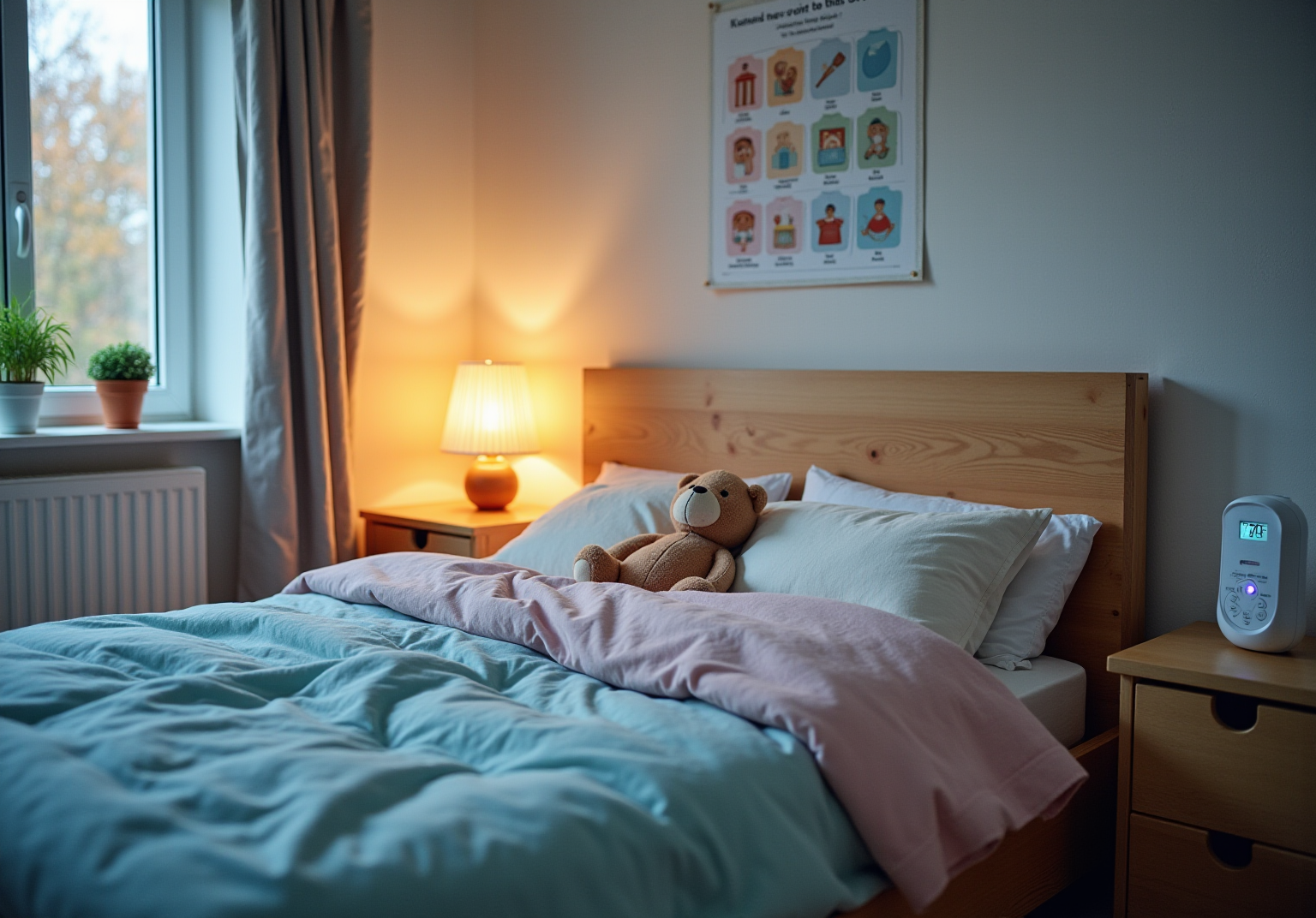
Navigating sleep routines for children with autism can be quite the adventure! This guide is here to help you explore some practical strategies to create a peaceful bedtime routine together. It’s all about ensuring your child not only falls asleep more easily but also enjoys a restful night. But how do you find the right balance for your child’s unique needs? Every child responds differently to sleep routines, and that’s perfectly okay!
Establish a Consistent Bedtime Routine
Ever find yourself wrestling with bedtime battles? You’re not alone!
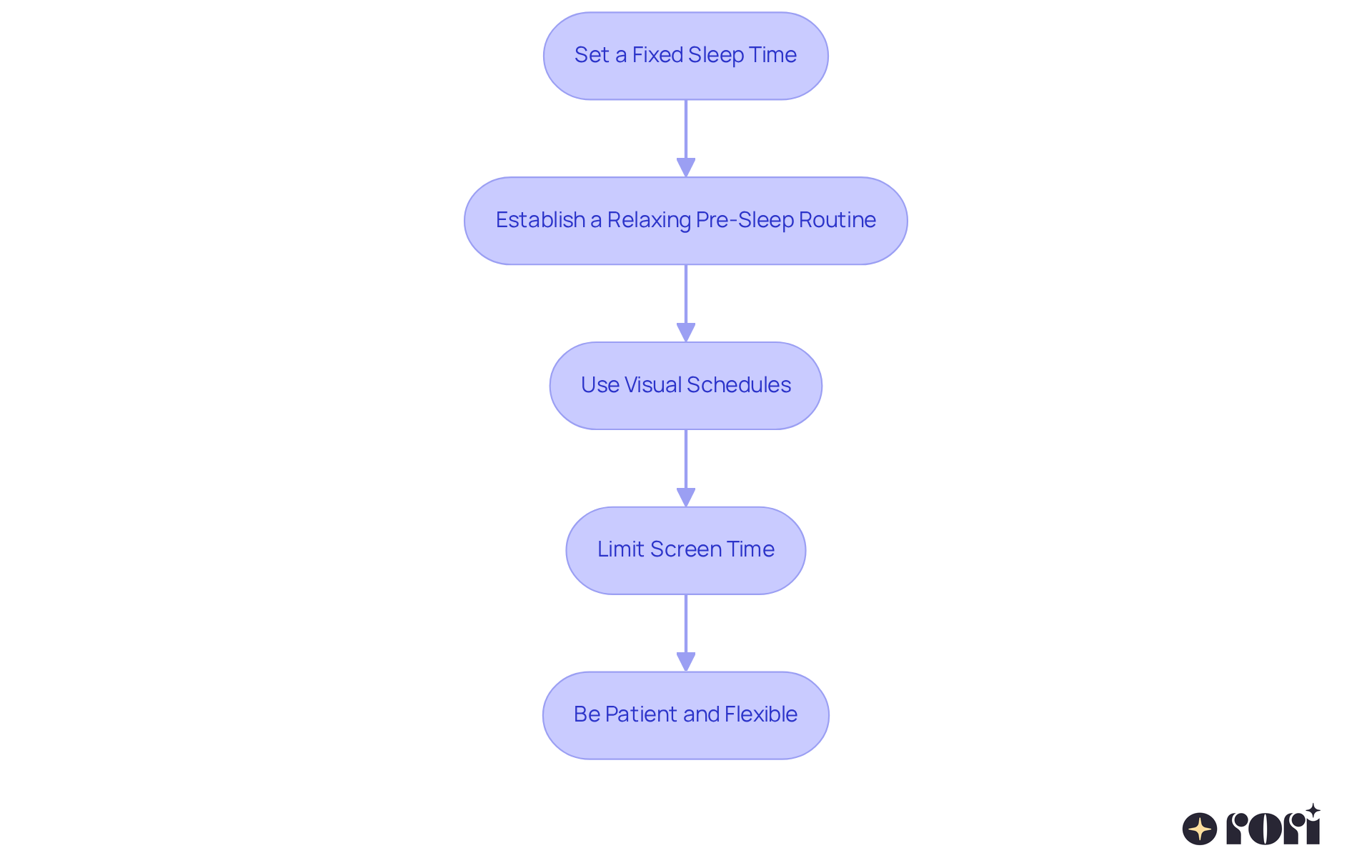
- Set a Fixed Sleep Time: Kids thrive on routine, and a consistent sleep schedule can really help! Try to establish a specific hour for your little one and stick to it, even on weekends. You know how tough it can be when bedtime feels like a wrestling match? Studies show that kids with regular sleep times tend to manage their emotions better and behave well under pressure.
- Establish a Relaxing Pre-Sleep Routine: Try winding down with some cozy activities like reading a favorite story or enjoying a warm bath together. It’s a lovely way to signal that it’s time to relax! About 20 to 30 minutes before sleep, engage in calming activities that help your child transition smoothly into dreamland.
- Use Visual Schedules: How about making a fun visual schedule together? You can use pictures for each step, like brushing teeth and reading a story, to make it easier for your little one to follow along! Visual aids can really help kids, especially those with autism, by supporting healthy sleep habits in children with autism through anticipating and understanding the evening routine.
- Limit Screen Time: Let’s make sure to turn off those screens at least an hour before bed. It helps everyone wind down and get ready for a good night’s sleep! The blue light from screens can mess with melatonin production, making it harder for your child to fall asleep.
- Be Patient and Flexible: Remember, it might take a little time to get used to a new routine, and that’s totally okay! Stay patient and be open to adjusting the routine to better fit your child’s unique needs. With a little creativity, you can turn bedtime into a peaceful experience for everyone!
Create a Safe and Comfortable Sleep Environment
Creating a peaceful sleep environment for your child can feel like a daunting task, especially when bedtime rolls around and chaos ensues. Here are some friendly tips to help you create that cozy space!
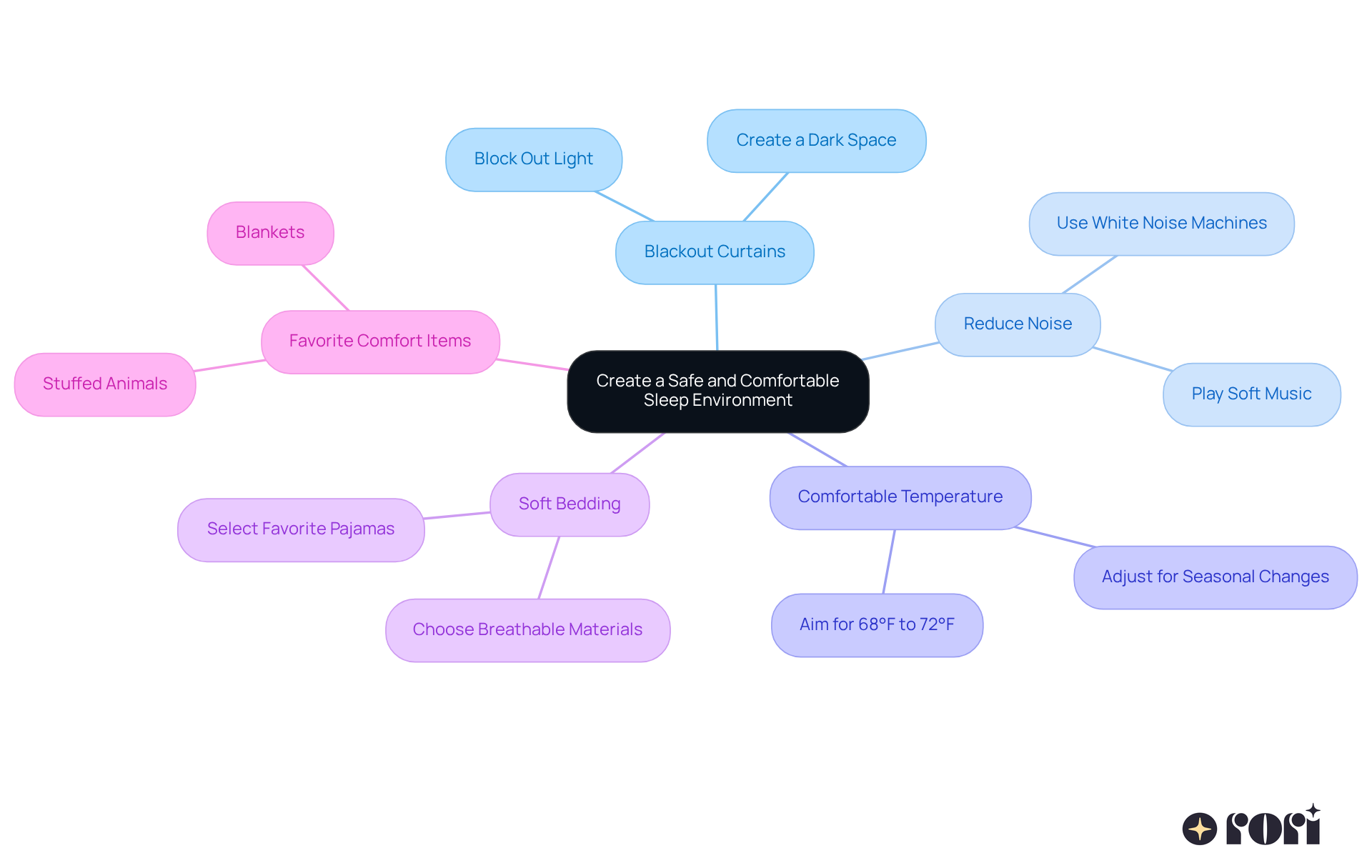
- Have you tried using blackout curtains? They can really help block out any pesky light and create a cozy, dark space for your little one to sleep soundly.
- Reducing noise during bedtime can be a game-changer! Have you thought about using white noise machines or soft music to help drown out any disruptive sounds?
- Keeping the bedroom at a comfy temperature can make a big difference! Aim for around 68°F to 72°F for the best sleep vibes.
- Choosing soft, breathable bedding and pajamas can really help your little one feel cozy and ready for sleep. What are their favorite materials?
- Letting your little one snuggle with their favorite stuffed animal or blanket can provide that extra comfort and security they need to drift off to sleep.
By making these simple adjustments, you can help your little one drift off to dreamland more easily, giving you both the restful nights you deserve.
Develop Healthy Sleep Associations and Avoid Stimulants
Many parents know the struggle of getting their little ones to settle down at night. Here are some friendly tips to help make bedtime a breeze!
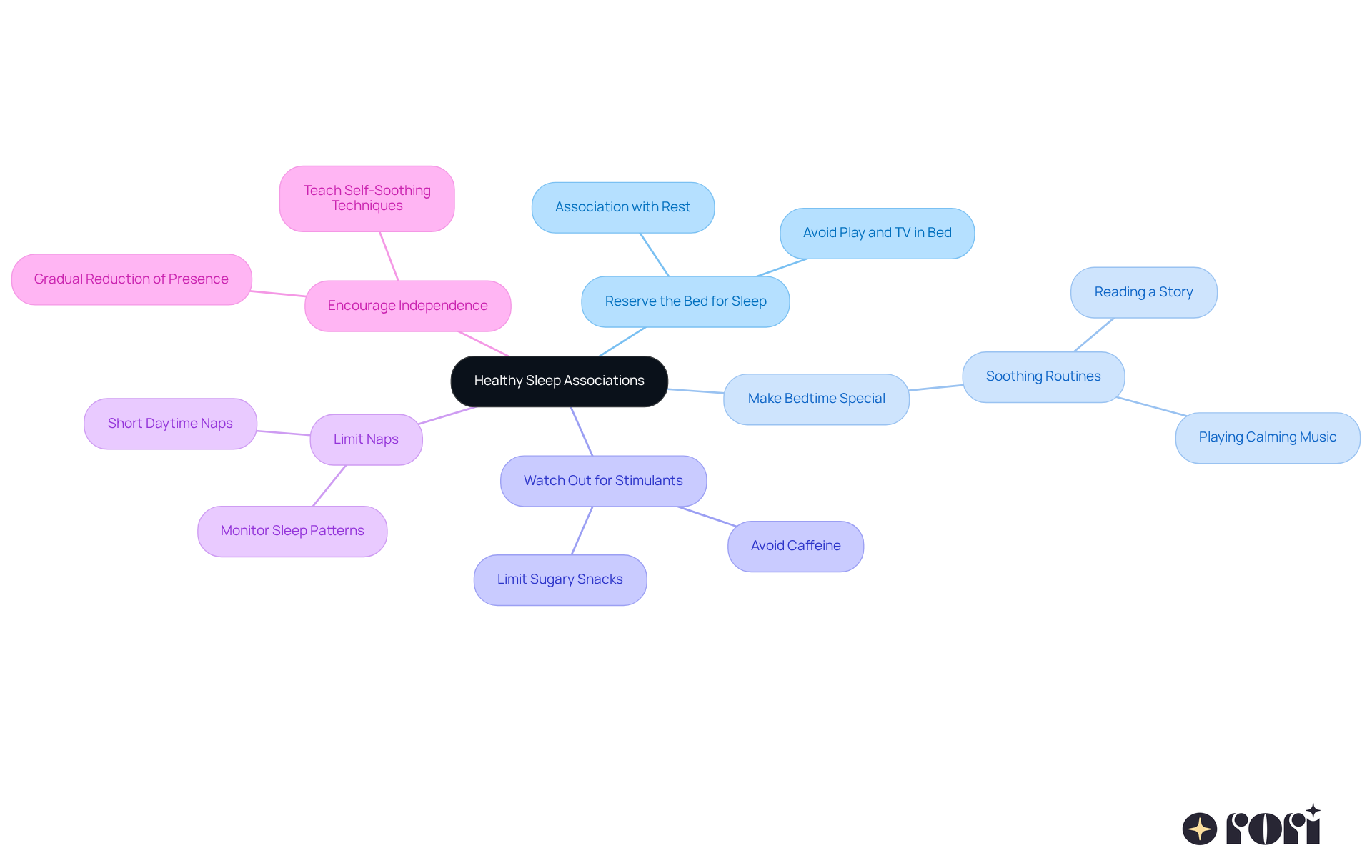
- Reserve the Bed for Sleep: Teach your child that their bed is a cozy spot just for sleeping. Avoid letting them play or watch TV in bed. This way, they’ll start to associate their bed with rest, making it easier for everyone to wind down at night!
- Let’s Make Bedtime Special: Try integrating soothing routines before bedtime, like reading a story or playing some calming music. These little rituals can help your child link these activities with relaxation and sleep.
- Watch Out for Stimulants: If you want your child to drift off easily, it’s best to skip the caffeine and sugary snacks in the hours leading up to bedtime. Making smart choices about what they eat can really help their sleep patterns!
- Limit Naps: If your little one struggles to sleep at night, it might help to limit those daytime naps or keep them short. Keeping an eye on their sleep patterns can lead to better nights for everyone!
- Encourage Independence: Let’s help our kids learn to drift off on their own! Gradually reduce your presence in the room as they fall asleep. This can empower them and make bedtime less stressful for the whole family.
By taking these steps, you can transform bedtime from a struggle into a peaceful routine for your family. We’re here to help you every step of the way!
Incorporate Daily Physical Activity for Better Sleep
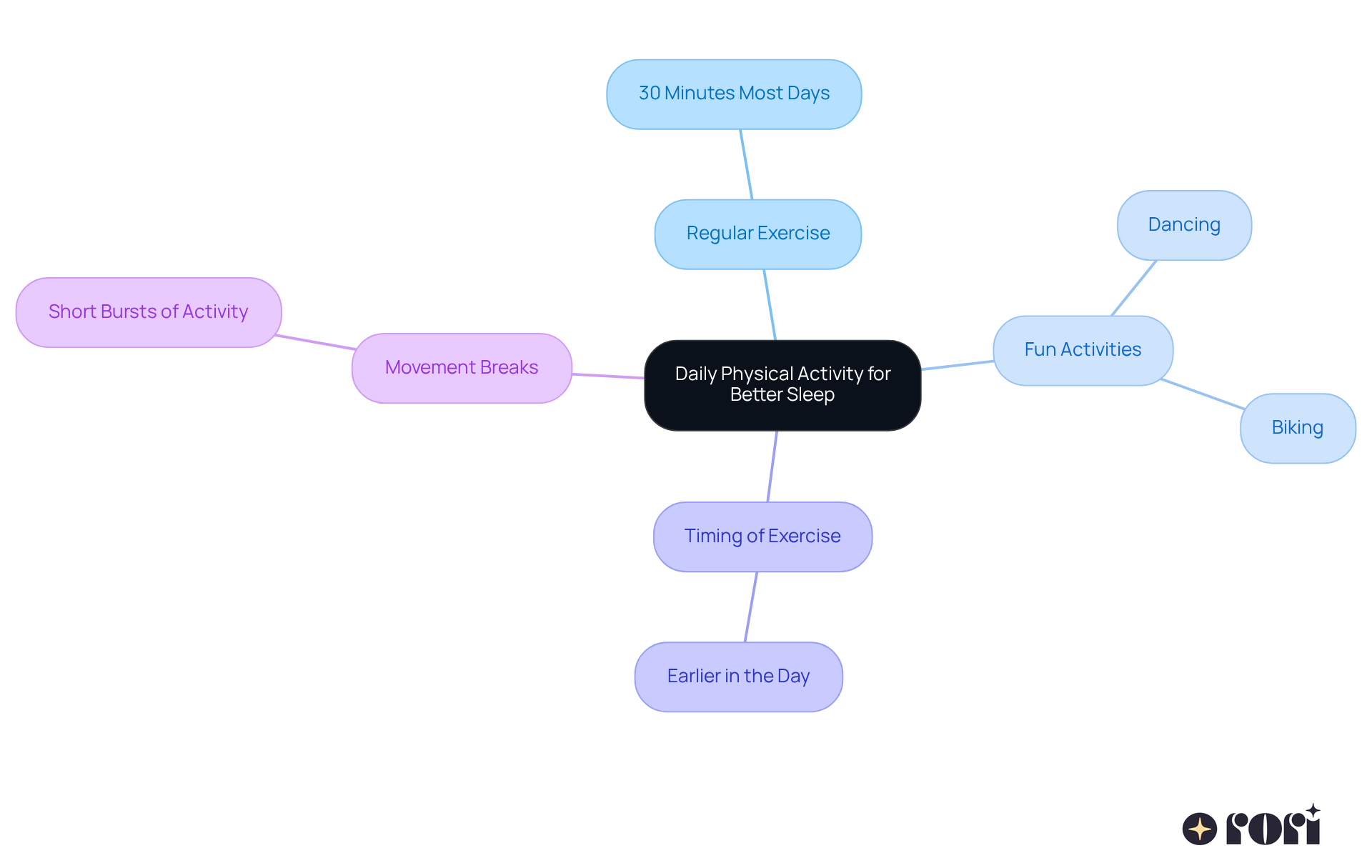
Finding ways to help our kids sleep better can feel like a never-ending challenge, right? Let’s talk about getting our kids moving! Aim for about 30 minutes of fun exercise most days. You know, supporting healthy sleep habits in children with autism often involves ensuring they get regular exercise. It’s amazing how a little movement can make such a difference!
What does your child love to do? Finding fun activities like dancing or biking can make exercise feel less like a chore! And remember, keeping exercise earlier in the day helps our kids wind down better at night.
Don’t forget those little movement breaks! They can really help your child refocus and feel more energized, especially during homework or screen time. Even short bursts of activity can be beneficial for supporting healthy sleep habits in children with autism.
Let’s keep an eye on how much our kids are moving and sleeping. It can really help us figure out what works best for them! Imagine the peace of mind you’ll have when you see your child sleeping soundly at night!
Conclusion
We all know how tough bedtime can be, especially when it comes to our little ones with autism. Establishing healthy sleep habits is so important for their overall well-being and development. By creating a consistent bedtime routine, a safe sleep environment, and encouraging daily physical activity, you can help your child transition to restful nights, making bedtime a more peaceful experience for everyone involved.
Key strategies to consider include:
- Setting a fixed sleep time
- Engaging in calming pre-sleep activities
- Limiting screen time
Creating a cozy sleep environment with blackout curtains, soft bedding, and noise control can really enhance the sleep experience. Plus, promoting healthy sleep associations and encouraging physical activity during the day can lead to better sleep patterns, benefiting both your child and your family.
Sleep is so important for our kids, especially those with autism, and it really makes a difference in their day-to-day lives. By actively supporting their sleep habits, you can help them thrive, fostering emotional regulation and improved behavior. Embracing these strategies not only leads to better sleep but also enhances the overall quality of life for your family. By taking these steps, you’re not just helping your child sleep better; you’re creating a happier, healthier family life together.
Frequently Asked Questions
Why is it important to establish a consistent bedtime routine for children?
A consistent bedtime routine helps children thrive on routine, manage their emotions better, and behave well under pressure.
What is a recommended approach to setting a fixed sleep time for kids?
Try to establish a specific hour for your child to go to bed and stick to it consistently, even on weekends.
What activities can be included in a relaxing pre-sleep routine?
Cozy activities such as reading a favorite story or enjoying a warm bath can help signal to your child that it’s time to relax.
How long before bedtime should calming activities begin?
Calming activities should begin about 20 to 30 minutes before sleep to help your child transition smoothly into bedtime.
How can visual schedules assist in a child’s bedtime routine?
Visual schedules can help children, especially those with autism, follow along with the bedtime routine by using pictures for each step, making it easier for them to anticipate and understand the evening activities.
Why is it important to limit screen time before bed?
Turning off screens at least an hour before bed helps everyone wind down and prepares the body for sleep, as blue light from screens can interfere with melatonin production.
What should parents keep in mind when establishing a new bedtime routine?
Parents should be patient and flexible, as it may take time for children to adjust to a new routine, and it’s important to be open to making adjustments to better fit the child’s unique needs.
List of Sources
- Establish a Consistent Bedtime Routine
- Autism and Sleep: Setting Up Routines for Bedtime Success (https://nationwidechildrens.org/family-resources-education/700childrens/2019/04/autism-and-sleep)
- Consistent bedtime linked with better child emotion and behavior regulation | Penn State University (https://psu.edu/news/health-and-human-development/story/consistent-bedtime-linked-better-child-emotion-and-behavior)
- Create a Safe and Comfortable Sleep Environment
- Autism Quotes (https://kidsclubaba.com/autism-quotes)
- Whats the connection between autism and sleep? (https://autism.org/whats-the-connection-between-autism-and-sleep)
- Autism and Sleep Issues | Neurodivergent Insights (https://neurodivergentinsights.com/autism-and-sleep?srsltid=AfmBOoqaKEYy90vTCb0Wnlk98xCY_gSaALxCSOod_o0qz8uH39Cg2fvz)
- Frontiers | Analysis of sleep problem in children aged 1–3 years with autism spectrum disorder in Zhejiang province, China (https://frontiersin.org/journals/psychiatry/articles/10.3389/fpsyt.2022.923757/full)
- 10 inspiring quotes from people with autism | Autism Speaks (https://autismspeaks.org/life-spectrum/autism-quotes)
- Develop Healthy Sleep Associations and Avoid Stimulants
- Sleep and Autism: Current Research, Clinical Assessment, and Treatment Strategies | Focus (https://psychiatryonline.org/doi/full/10.1176/appi.focus.20230028)
- 30 Quotes About Sleep You Need To Read – The Sleep Matters Club (https://dreams.co.uk/sleep-matters-club/30-quotes-sleep-need-read)
- Sleep | Autism Speaks (https://autismspeaks.org/sleep)
- Incorporate Daily Physical Activity for Better Sleep
- Brief Report: Influence of Physical Activity on Sleep Quality in Children with Autism. | Autism & Developmental | BBC (https://behavioristbookclub.com/aba-research/autism-developmental/brief-report–influence-of-physical-activity-on-sleep-quality-in-child)
- Effect of Daily Physical Activity on Sleep Characteristics in Children with Autism Spectrum Disorder (https://mdpi.com/2075-4663/9/7/91)
- Daily Exercise May Be Key to Better Sleep, New Study Finds (https://news.utexas.edu/2025/07/14/daily-exercise-may-be-key-to-better-sleep-new-study-finds)
- Physical Activity Effects on Sleep in Children with Autism Spectrum Disorder – Amazing Kidz (https://amazingkidztherapy.com/physical-activity-effects-on-sleep-in-children-with-autism-spectrum-disorder)
- Exercise and Sleep in Children with Disabilities — Helen: The Journal of Human Exceptionality (https://helenjournal.org/january-2023/exercise-and-sleep-in-children-with-disabilitiesnbsp)