

Introduction
Creating a nurturing environment for your child during ABA therapy can feel overwhelming, can’t it? By keeping things consistent at home, you can really boost how effective the therapy is, leading to better outcomes for your little one. It’s tough to juggle everything while trying to support your child’s therapy needs. But with the right approach, you can create a nurturing space that truly supports their growth.
How can you effectively implement these strategies to create a stable and supportive atmosphere that fosters learning and engagement? Let’s explore how you can make this journey a little easier for both you and your child!
Understand the Importance of Consistency in ABA Therapy
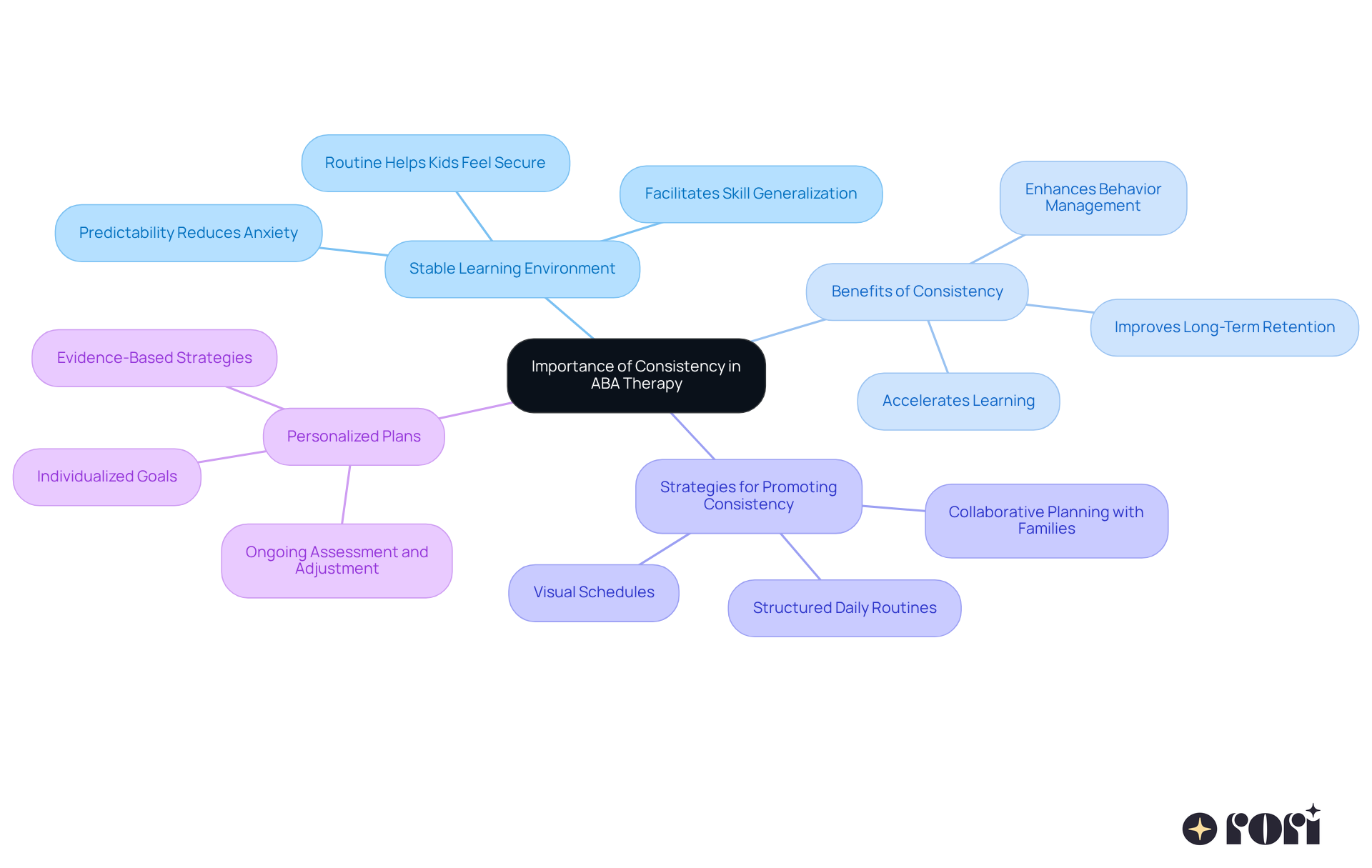
Creating a stable learning environment is essential for young individuals, and implementing strategies for promoting consistency in the home for ABA therapy can greatly assist in this process. Consistency is key! When caregivers and therapists respond consistently, kids feel more comfortable and are more likely to engage and remember what they’ve learned. You know, having a routine helps kids feel secure and encourages them to show off their skills at home and school! For example, a child who gets praise for using their words is more likely to do it again, whether they’re at home or in class. This predictability not only supports their learning but also makes them feel at ease during sessions, which is so important for picking up new skills.
Moreover, consistent routines help kids with autism manage transitions better. They provide a sense of security that can really lessen anxiety. Without a structured approach, children may struggle to learn and adapt, leading to frustration for both them and their caregivers. Parents and therapists can enhance the effectiveness of ABA therapy by employing strategies for promoting consistency in the home, which paves the way for better long-term outcomes.
Here at Rori Care, we believe in creating personalized plans that fit each child’s unique needs and strengths. We set clear, measurable goals for behavior change and skill development, so everyone knows what progress looks like. Plus, using evidence-based strategies, like starting with easier tasks to build confidence before moving on to tougher ones, can really help kids stay engaged. Visual schedules can also be a game-changer, helping kids anticipate daily activities and reducing anxiety.
We’re always assessing and adjusting treatment plans based on progress reports to make sure we’re meeting each child’s evolving needs. By embracing a structured approach, you’re not just helping your child learn; you’re giving them the confidence to thrive in every setting.
Implement Effective Home Strategies for Consistent ABA Therapy
Keeping up with ABA therapy at home can feel overwhelming, but it doesn’t have to be! Here are some friendly strategies to help you foster consistency and support your child’s growth:
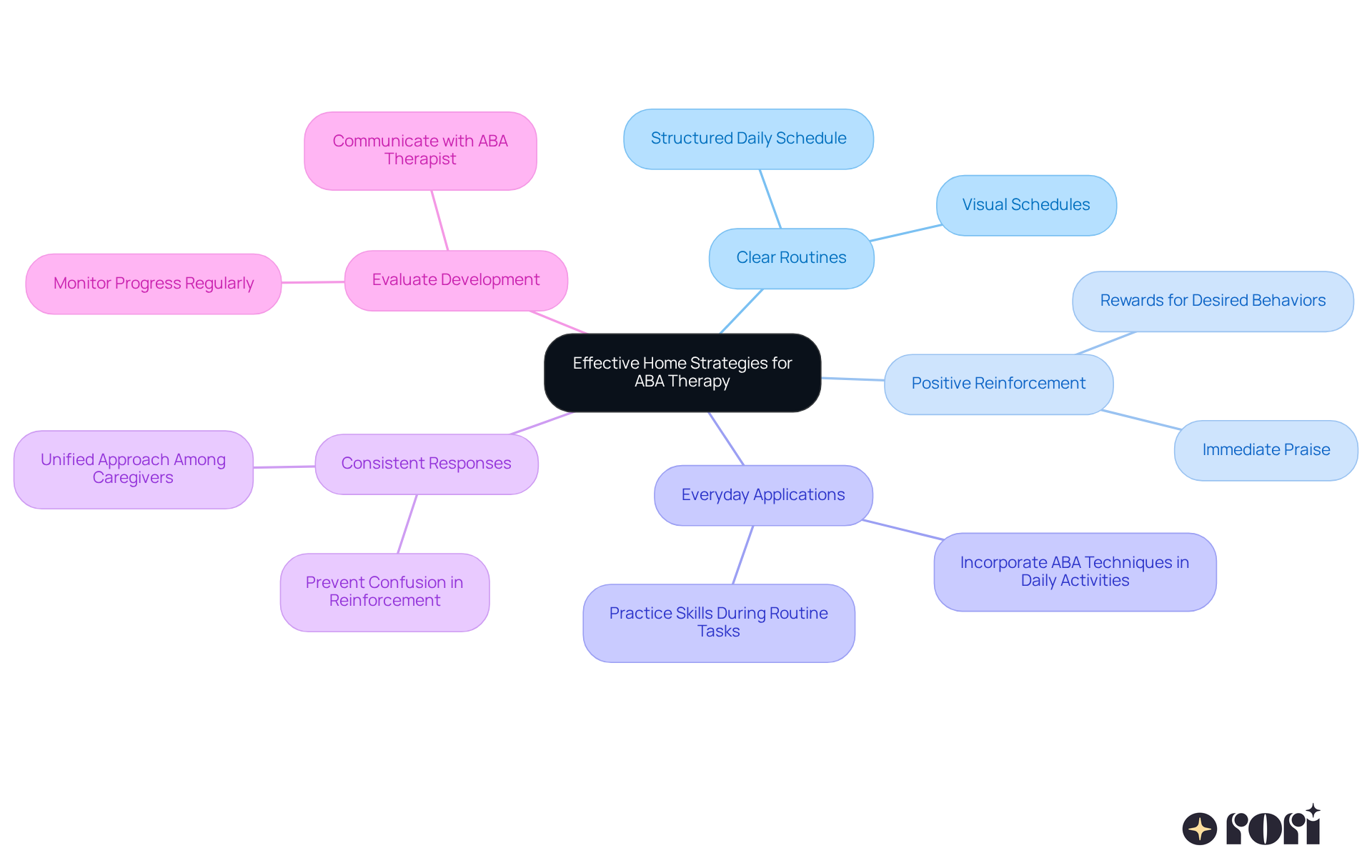
- Let’s talk about how to set up clear routines! Developing a structured daily schedule with set times for meals, play, and therapy activities can really help. Visual schedules can assist kids in anticipating transitions and understanding daily expectations, which is so important for their sense of security.
- Use Positive Reinforcement: When your child shows desired behaviors, give them immediate praise or rewards. For instance, if they successfully use a communication card, shower them with positive feedback! This encourages them to repeat that behavior and enhances their learning process.
- Think about how you can weave ABA techniques into your everyday life! Everyday situations, like grocery shopping, are perfect opportunities to practice skills. Encourage your child to request items using words or pictures, reinforcing their communication skills in a fun, practical way.
- It’s important for everyone to respond in the same way to behaviors. If one parent rewards a behavior, it’s crucial that others do the same. This helps prevent confusion and reinforces learning effectively.
- Consistently evaluate development: Keep an eye on your child’s progress and adjust your approaches as needed. Regular chats with your child’s ABA therapist can provide valuable insights into what’s working and what might need tweaking. By empowering caregivers with knowledge and skills, Rori Care enhances the effectiveness of behavioral support.
When you use these strategies, you’re creating a warm and nurturing space for your child to thrive! By employing strategies for promoting consistency in the home for ABA therapy, you’re not just helping your child; you’re also building a stronger family bond!
Engage Parents as Active Participants in ABA Therapy
Ever felt lost trying to navigate ABA therapy for your child? You’re not alone! Parental engagement is fundamental to the success of ABA therapy. Here are some effective strategies for parents to actively participate:
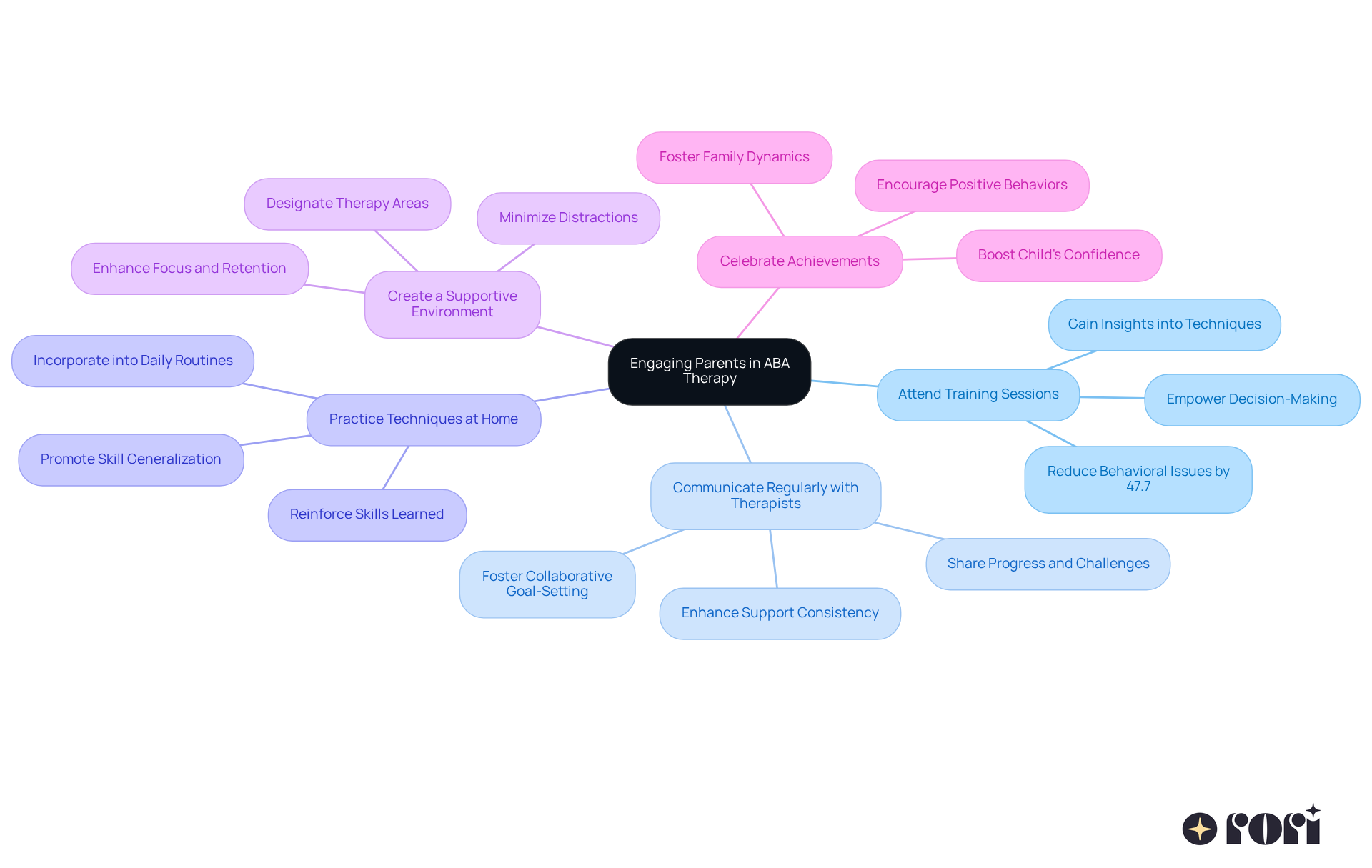
- Attend Training Sessions: Getting involved in training sessions with your child’s ABA therapist can be a game changer. These sessions offer essential insights into the techniques being used and how to implement them at home. Did you know that parents who get trained can see a drop in behavioral issues by nearly 48%? That’s way better than the 32% from just general parent education! This education empowers you with a deeper understanding of ABA principles, helping you make informed decisions that positively influence your child’s progress.
- Communicate Regularly with Therapists: Keeping the lines open with your child’s ABA team is so important! It helps everyone stay on the same page and support your little one better. Sharing updates about your child’s progress, challenges, and successes allows therapists to adjust their approaches to better meet your child’s needs. As Kerry Magro says, “The evidence speaks clearly – you’re not just important to your child’s treatment, you’re essential.” This collaboration enhances support and ensures the implementation of strategies for promoting consistency in the home for ABA therapy.
- Practice Techniques at Home: You can reinforce skills by practicing techniques learned during therapy sessions. For example, if your child is focusing on turn-taking during games, why not incorporate this into family game nights? A 2024 study from Tunisia found significant improvements in communication and reduced behavior issues in preschoolers with autism after parent training, which underscores the need for strategies for promoting consistency in the home for ABA therapy. Active involvement often leads to more effective and lasting behavioral improvements.
- Create a Supportive Environment: Setting up a home environment that’s conducive to learning can make a big difference. Designate specific areas for therapy activities and minimize distractions during practice times. This can significantly enhance focus and retention, empowering you to support your child effectively.
- Celebrate Achievements: Recognizing and celebrating your child’s successes, no matter how small, is vital. This practice not only boosts their confidence but also encourages them to keep engaging in positive behaviors. Remember, every small step is a victory! Celebrating these milestones can further empower you and enhance family dynamics.
When parents step in and engage, the journey becomes not just about therapy, but about growth and connection for the whole family!
Overcome Challenges to Maintain Consistency in ABA Therapy
We all know that using [[[strategies for promoting consistency in the home for ABA therapy](https://rori.care/services/caregiver-education)](https://rori.care/services/caregiver-education)](https://rori.care/services/caregiver-education) can feel like a juggling act, right? But don’t worry, understanding some common bumps in the road can really help! Here are some key strategies to tackle those challenges:
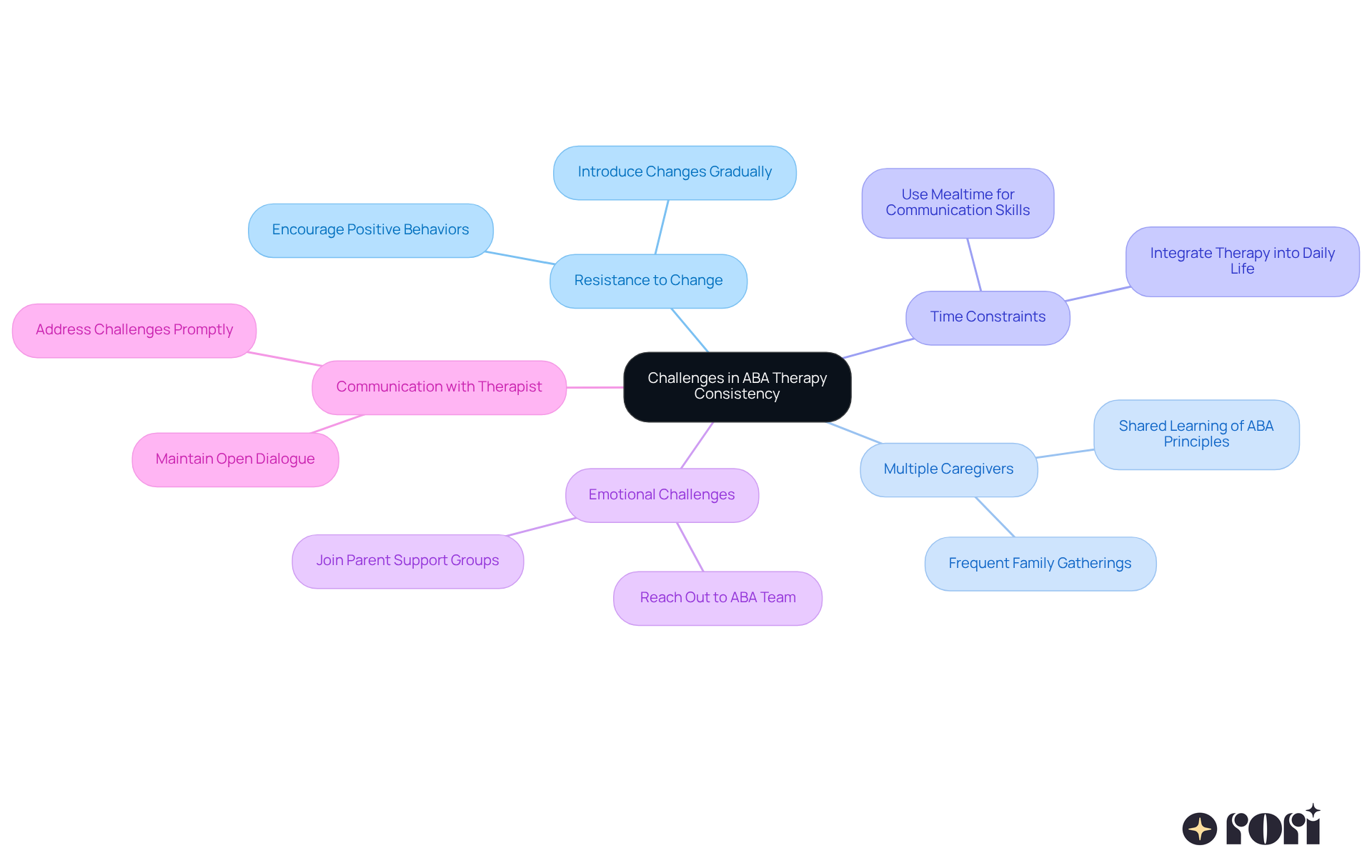
- Resistance to Change: Kids often resist new routines or approaches. Try introducing changes little by little, and don’t forget to cheer on those positive behaviors! It makes a world of difference!
- When multiple caregivers are involved, it’s super important to implement strategies for promoting consistency in the home for ABA therapy to keep everyone on the same page. Frequent family gatherings can really boost communication, allowing caregivers to share insights and strengthen a united approach. Plus, learning about ABA principles together can help develop strategies for promoting consistency in the home for ABA therapy, empowering everyone to make informed decisions that positively impact your child’s progress.
- Time Constraints: Busy schedules can make it tough to stick to routines. To make things easier, think about weaving treatment activities into your daily life. For example, use mealtime as a chance to practice communication skills. This way, therapy becomes a natural part of your day, helping everyone feel more confident in using ABA techniques.
- Emotional Challenges: It’s totally normal for parents to feel overwhelmed or frustrated. Reaching out to your ABA team or joining parent support groups can provide valuable resources and shared experiences. Getting involved in caregiver education can also help ease stress and improve family dynamics.
- Effective strategies for promoting consistency in the home for ABA therapy include keeping the lines of communication open with your therapist. If challenges pop up, address them right away to adjust strategies and keep progress on track. Open dialogue ensures everyone is informed and can contribute to your child’s development effectively.
By embracing these strategies, you’re not just helping your child; you’re also nurturing a more harmonious family life!
Conclusion
Creating a nurturing environment at home can feel overwhelming, but it’s so important for your child’s growth! Promoting consistency in ABA therapy is fundamental to supporting your child’s learning and development. By setting up structured routines and actively engaging with therapeutic strategies, you can really help your child thrive. Staying consistent is key – it helps your child feel secure and ready to learn!
Key strategies to keep in mind include:
- Establishing clear routines
- Using positive reinforcement
- Weaving ABA techniques into your daily activities
Plus, it’s crucial that all caregivers respond consistently to behaviors. Regular chats with therapists and adjusting strategies based on progress are also vital for maintaining this consistency. When you stick to these practices, you’re not just helping your child; you’re also bringing your family closer together, creating a supportive atmosphere for growth.
At the end of the day, using ABA therapy at home is really about building those important connections with your child. By committing to these strategies, you can effectively support your child’s development while reinforcing the importance of consistency in achieving lasting outcomes in ABA therapy. Embracing this approach leads to not only individual growth but also a more harmonious family life, making every small victory a shared celebration. Let’s explore this journey together!
Frequently Asked Questions
Why is consistency important in ABA therapy?
Consistency is crucial in ABA therapy because it helps children feel comfortable, encourages engagement, and aids in retention of learned skills. A stable routine provides security, which is essential for effective learning.
How does a consistent routine benefit children with autism?
A consistent routine helps children with autism manage transitions better and reduces anxiety. It provides a sense of security, which can enhance their ability to learn and adapt, minimizing frustration for both the child and caregivers.
What strategies can parents and therapists use to promote consistency in ABA therapy at home?
Parents and therapists can promote consistency by creating structured routines, setting clear and measurable goals, using evidence-based strategies, and employing visual schedules to help children anticipate daily activities.
How does Rori Care approach personalized plans for children in ABA therapy?
Rori Care creates personalized plans that cater to each child’s unique needs and strengths, setting clear goals for behavior change and skill development, and regularly assessing and adjusting treatment plans based on progress.
What role do visual schedules play in ABA therapy?
Visual schedules help children anticipate daily activities, which can reduce anxiety and support their learning by providing a clear structure for what to expect throughout the day.
List of Sources
- Understand the Importance of Consistency in ABA Therapy
- Consistency in ABA Therapy: How a Structured Routine Supports Lasting Progress (https://popstherapy.com/consistency-in-aba-therapy-how-a-structured-routine-supports-lasting-progress)
- Why Consistency is Important in Center-Based ABA Therapy – Wonderway ABA (https://wonderwayaba.com/why-consistency-is-important-in-center-based-aba-therapy)
- The Importance of Sticking to Consistent ABA Therapy – LEARN Behavioral (https://learnbehavioral.com/blog/the-importance-of-sticking-to-consistent-aba-therapy)
- Implement Effective Home Strategies for Consistent ABA Therapy
- 81 ABA Therapy Statistics You Need to Know – apricott ABA (https://apricott.com/resources/aba-therapy-statistics)
- The Impact of Positive Reinforcement on ABA Therapy Outcomes (https://crossrivertherapy.com/articles/the-impact-of-positive-reinforcement-on-aba-therapy-outcomes)
- Understanding the Success Rates of ABA Therapy (https://magnetaba.com/blog/success-rates-of-aba-therapy)
- 80 Inspiring Quotes on Autism Awareness and Support – Empower ABA (https://empoweraba.com/80-inspiring-quotes-on-autism-awareness-and-support)
- Best ABA Quotes (https://testpreptech.com/post/best-aba-quotes)
- Engage Parents as Active Participants in ABA Therapy
- The Importance of Parent Training in ABA Therapy Programs: Evidence-Based Benefits for Children with Autism – RightWay ABA (https://rightwayaba.com/the-importance-of-parent-training-in-aba-therapy)
- 20 Inspiring Quotes About Autism Every Parent Must Read Today (https://circlecareservices.com/blog/20-quotes-about-autism-and-parenting)
- Why Parent Involvement In ABA Shapes Outcomes More Than Hours Alone (https://kidsclubaba.com/the-missing-piece-why-parent-involvement-shapes-aba-outcomes-more-than-hours-alone)
- The Benefits of Parent Training in ABA Therapy Programs (https://magnetaba.com/blog/the-benefits-of-parent-training-in-aba-therapy-programs)
- 8 Meaningful Autism Quotes for Parents’ Support (https://graciousgrowthaba.com/8-meaningful-autism-quotes-for-parents-support)
- Overcome Challenges to Maintain Consistency in ABA Therapy
- 80 Inspiring Quotes on Autism Awareness and Support – Empower ABA (https://empoweraba.com/80-inspiring-quotes-on-autism-awareness-and-support)
- Enhancing ABA Therapy with Active Caregiver Involvement | Step Ahead ABA (https://stepaheadaba.com/blog/how-parent-and-caregiver-guidance-enhances-aba-therapy-outcomes)
- Success Rates of ABA Therapy (https://alumacare.com/blog/success-rates-of-aba-therapy)
- Ten Powerful Autism Quotes (https://bluegemsaba.com/10-powerful-autism-quotes-2)