
Introduction
Teaching self-care skills to autistic children isn’t just about setting up a routine; it’s about nurturing their independence and confidence, which can truly enhance their quality of life. By using effective strategies, caregivers can help children learn essential tasks like brushing their teeth or washing their hands, paving the way for greater autonomy.
But let’s be real – the journey can be challenging! How can caregivers ensure these skills are taught in a way that resonates with each child’s unique learning style? This article dives into practical approaches that make self-care engaging and achievable, turning everyday routines into valuable learning experiences. Let’s explore this together!
Start with Basic Self-Care Tasks
Let’s discuss some that can really make a difference in a young person’s life! Brushing teeth, washing hands, and getting dressed are , as they are essential for daily living and can significantly boost a child’s confidence.
For instance, when you’re teaching handwashing, start with a . Then, let your child give it a try! when to autistic children. And don’t forget to reinforce their efforts with as part of the . This not only encourages them to repeat the activity but also helps them for .
By using this , you’re to autistic children, which in your child. This lays a solid foundation for more complex personal care activities down the road. So, let’s explore this together and make these routines fun and engaging!

Break Down Tasks into Manageable Steps
Breaking down self-care tasks into smaller, manageable steps is one of the and can make a world of difference! For instance, when teaching handwashing, you might outline it like this:
- Turn on the tap
- Wet your hands
- Apply soap
- Scrub for 20 seconds
- Rinse
- Dry
Using is one of the , as it helps students to follow along. This approach not only simplifies learning but also exemplifies , allowing for a gradual mastery of each step.
As caregivers, your can really enhance the learning experience. Research shows that when suggested therapy hours are fully implemented, youngsters see ! By using , based on , you can tailor these steps to fit each individual’s unique needs and progress.
And let’s not forget the vital role . They integrate evidence-based strategies that ensure continuous assessment and adaptability. So, let’s explore this together! Your involvement can truly in your child’s journey.

Utilize Visual Aids for Enhanced Learning
Incorporating like picture schedules, diagrams, or instructional videos is one of the to autistic children. For example, think about a visual chart that outlines the . It’s not just a reminder; it’s a handy guide that kids can refer to on their own!
Research shows that to autistic children, like using , help by allowing young ones to manage their daily routines with less help from adults. This independence is so important! Studies indicate that kids using often feel less . Plus, visual supports are recognized as to autistic children, as they cater to their unique learning styles.
And here’s something to consider: when the recommended hours of are fully implemented with active caregiver involvement, about 90% of youth show amazing progress! By providing , parents and educators can utilize to autistic children, empowering them to shine in and building both confidence and competence in their everyday lives.
Let’s explore this together! By embracing these strategies, we can make a real difference in our children’s lives.

Implement Social Stories to Facilitate Understanding
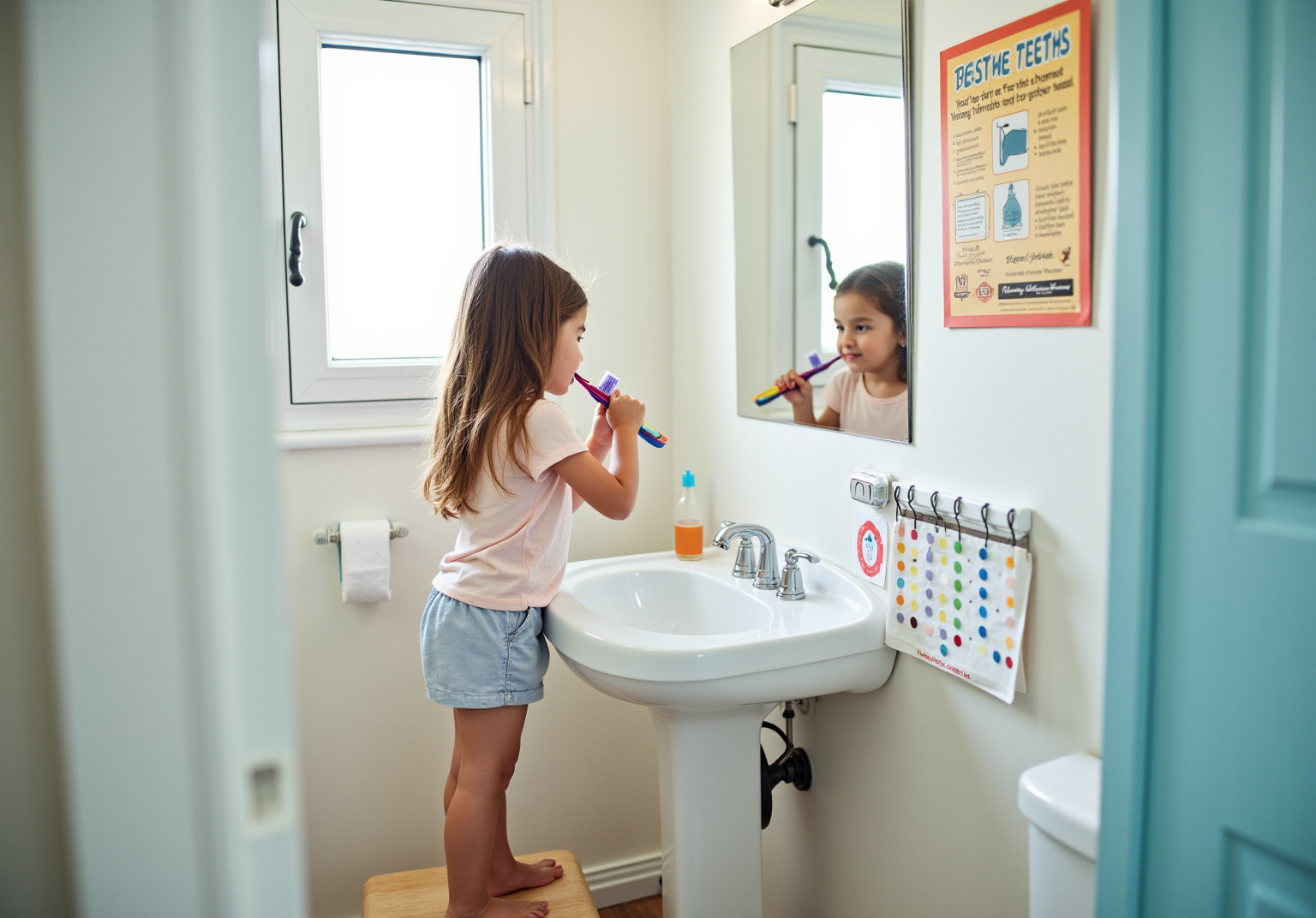
Creating social narratives is one of the , as it highlights the . Imagine a social story about brushing teeth, complete with fun illustrations and simple text that explains why it matters and walks through the steps involved. By consistently reading these stories, kids can really grasp the concepts, making them feel more at ease when it’s time to tackle these tasks.
This approach not only aids in understanding but also fosters a sense of routine and predictability, which is essential for . When parents employ , such as using , they can and promote . Plus, educating caregivers about provides them with valuable support, equipping them with that help them make informed choices. This leads to better behavioral outcomes and consistency in teaching skills.
Let’s explore this together! By sharing these narratives, we can create a where children feel empowered to take charge of their self-care. Remember, you’re not alone in this journey – there are resources and communities ready to help you every step of the way!

Practice Positive Reinforcement to Encourage Progress
Let’s talk about to autistic children that can really make a difference in your child’s , such as ! 🌟 Recognizing and can be a game-changer. Think about it – simple things like verbal praise, stickers, or even small rewards can really motivate kids. For example, if your little one brushes their teeth all by themselves, why not celebrate that achievement with some enthusiastic praise? It’s a great way to reinforce the behavior and !
Equipping caregivers with to autistic children can create a . When you have , you can , complementing any professional help they might be receiving. By gaining a deeper understanding of to autistic children, you’ll be able to make informed decisions that positively influence your child’s progress. This can lead to and greater confidence in your ability to support them.
So, let’s explore this together! We’re here to help you every step of the way!

Ensure Regular Practice for Skill Mastery
Establishing is crucial, as it involves . Think about designating specific times for things like handwashing before meals or brushing teeth after breakfast and dinner. This not only helps create predictability but also reinforces those . Consistent practice is key! Research shows that routines can help kids . Over time, these activities become second nature, leading to mastery and .
As one advocate beautifully puts it, “Independence is a vital goal in the development of individuals with autism, .” By incorporating into daily routines, parents can significantly enhance their children’s ability to tackle everyday challenges. Plus, employing can tailor these routines to fit each child’s unique needs. This approach offers , which promote learning and positive behavioral outcomes, such as informed decision-making and improved behavior.
Active participation not only supports the child’s development but also builds the guardian’s confidence and decision-making skills. This nurturing environment creates a more supportive home atmosphere. Let’s explore this together! We’re here to !

Emphasize Patience Throughout the Learning Journey
Encouraging guardians and instructors to show patience is so important as kids learn . Progress can be slow, and setbacks are just part of the journey. Using like deep breathing or taking breaks can really help manage frustration.
Research shows that when caregivers stay calm and steady, it not only reduces anxiety but also . By modeling patience, caregivers implement effective strategies for teaching to autistic children, creating a . This is crucial! Studies indicate that children who receive tend to show greater skill mastery and experience fewer persistent symptoms of .
Let’s explore this together! Remember, you’re not alone in this journey.

Conclusion
Teaching self-care skills to autistic children is such an important journey that really helps them grow into confident, independent individuals. By using structured strategies and engaging methods, caregivers can make a big difference in how children learn. It’s not just about teaching tasks; it’s about empowering them in their daily routines.
In this article, we’ve shared some effective strategies, like:
- Breaking tasks into smaller steps
- Using visual aids
- Incorporating social stories
These methods simplify the learning process, making it easier for kids to understand and master self-care activities. Plus, regular practice and positive reinforcement are key! They help build a child’s confidence and competence in personal care.
Ultimately, teaching self-care skills to autistic children takes patience, creativity, and a supportive environment. By embracing these strategies and staying committed, caregivers can help kids develop the skills they need for a more independent and fulfilling life. The impact goes beyond just completing tasks; it nurtures a sense of achievement and self-worth that will benefit them throughout their lives.
Let’s explore this together! Remember, you’re not alone on this journey, and we’re here to help you every step of the way!
Frequently Asked Questions
What are some basic self-care tasks that can be taught to autistic children?
Basic self-care tasks that can be taught include brushing teeth, washing hands, and getting dressed. These tasks are essential for daily living and can significantly boost a child’s confidence.
How should you begin teaching self-care skills to autistic children?
Start with a clear demonstration of the self-care task. After demonstrating, allow your child to try it themselves. Guided practice is essential for effective learning.
Why is positive feedback important when teaching self-care skills?
Positive feedback encourages children to repeat the activity and helps them master the self-care skills being taught, reinforcing their efforts and boosting their confidence.
How can tasks be broken down for easier learning?
Break down self-care tasks into smaller, manageable steps. For example, when teaching handwashing, outline the steps: turn on the tap, wet hands, apply soap, scrub for 20 seconds, rinse, and dry.
What tools can help autistic children follow along with self-care tasks?
Visual aids or checklists can be used to help children follow along with the steps of self-care tasks, simplifying the learning process.
What role do caregivers play in teaching self-care skills?
Caregivers’ active participation enhances the learning experience. Their involvement can significantly impact the child’s success in mastering self-care skills.
How can Applied Behavior Analysis (ABA) therapy assist in teaching self-care skills?
ABA therapy principles can be used to tailor teaching strategies to fit each child’s unique needs and progress, ensuring effective learning.
What is the importance of skilled behavior analysts in this process?
Skilled behavior analysts are vital in crafting personalized plans that integrate evidence-based strategies, ensuring continuous assessment and adaptability in teaching self-care skills.
List of Sources
- Start with Basic Self-Care Tasks
- advancedautism.com (https://advancedautism.com/post/how-to-teach-independence-in-self-care-skills-for-children-with-autism)
- earlyautismventures.in (https://earlyautismventures.in/helpful-tips-for-teaching-self-care-skills-to-children-with-autism)
- nspt4kids.com (https://nspt4kids.com/healthtopics-and-conditions-database/autism-spectrum-disorder/self-care-skills-for-children-with-autism)
- Expert Q&A: Teaching self-care skills to autistic youth with high support needs | Autism Speaks (https://autismspeaks.org/blog/expert-qa-teaching-self-care-skills-autistic-youth-high-support-needs)
- Utilize Visual Aids for Enhanced Learning
- Effectiveness of Video Prompting Versus Picture Prompting in Improving Daily Living Skills of Autistic Children (https://research.aota.org/ajot/article/78/3/7803205030/25182/Effectiveness-of-Video-Prompting-Versus-Picture)
- Visual Schedules for Autism Classrooms: 7 Reasons Why We Use and Love Them – Autism Classroom Resources (https://autismclassroomresources.com/visual-schedules-series-7-reasons-to)
- kidsclubaba.com (https://kidsclubaba.com/autism-quotes)
- Quotes About Autism (https://usevisualstrategies.com/quotes-about-autism)
- Implement Social Stories to Facilitate Understanding
- 20 Inspiring Quotes About Autism Every Parent Must Read Today (https://circlecareservices.com/20-quotes-about-autism-and-parenting)
- How Social Stories Help Children with Autism Learn Life Skills | Shelton, Fairfield County (CT) | Solstice Behavioral Health & Consulting (https://solsticebhc.org/blog/how-social-stories-help-children-with-autism-learn-life-skills)
- earlyautismventures.in (https://earlyautismventures.in/helpful-tips-for-teaching-self-care-skills-to-children-with-autism)
- Effects of social stories intervention for children and adolescents with autism spectrum disorders: A protocol for a systematic review and meta-analysis of randomized controlled trials – PMC (https://pmc.ncbi.nlm.nih.gov/articles/PMC7489673)
- 10 inspiring quotes from people with autism | Autism Speaks (https://autismspeaks.org/life-spectrum/autism-quotes)
- Practice Positive Reinforcement to Encourage Progress
- supportivecareaba.com (https://supportivecareaba.com/statistics/autism-therapy-statistics)
- Inspirational ABA and Autism Quotes – Mrs. Moe’s Modifications (https://mrsmoesmodifications.com/inspirational-aba-and-autism-quotes)
- How to Build Confidence in Children with Autism Through ABA | Intellistars – ABA Therapy (https://intellistarsaba.com/blog/how-to-build-confidence-in-children-with-autism-through-aba)
- stjosephacademy.com (https://stjosephacademy.com/news/positive-vs-negative-reinforcement-which-is-more-effective-1)
- crossrivertherapy.com (https://crossrivertherapy.com/articles/the-role-of-positive-reinforcement-in-school-based-aba-therapy)
- Ensure Regular Practice for Skill Mastery
- Inspiring Autism Quotes for Understanding and Acceptance – Kids First (https://kidsfirstservices.com/first-insights/autism-quotes)
- kidsclubaba.com (https://kidsclubaba.com/autism-quotes)
- Autism & Routines: The Benefits & Importance for Autistic Children (https://blossomchildrenscenter.com/the-benefits-of-routines-for-children-with-autism)
- 10 inspiring quotes from people with autism | Autism Speaks (https://autismspeaks.org/life-spectrum/autism-quotes)
- Supporting Independence in Autism (https://supportivecareaba.com/statistics/supporting-independence-in-autism)
- Emphasize Patience Throughout the Learning Journey
- Inspiring Autism Quotes for Understanding and Acceptance – Kids First (https://kidsfirstservices.com/first-insights/autism-quotes)
- 20 Inspiring Quotes About Autism Every Parent Must Read Today (https://circlecareservices.com/20-quotes-about-autism-and-parenting)
- kidsclubaba.com (https://kidsclubaba.com/autism-quotes)
- The Importance of Patience and Persistence in ABA Therapy – SoaringHigh ABA (https://soaringhighaba.com/post/the-importance-of-patience-and-persistence-in-aba-therapy)
- 10 inspiring quotes from people with autism | Autism Speaks (https://autismspeaks.org/life-spectrum/autism-quotes)