

Introduction
Understanding a child’s behavior can often feel like navigating a complex maze. For parents seeking clarity on their child’s needs, it’s a journey that can be both challenging and rewarding. Functional Behavior Assessments (FBAs) serve as a valuable roadmap, offering insights that can lead to tailored interventions and improved outcomes. 🌟
In this article, we’ll share seven illustrative FBA ABA examples designed to empower you with the knowledge and tools to support your child’s development. What challenges might you face in interpreting these assessments? And how can you use this understanding to foster positive changes? Let’s explore this together! 😊
Rori Care – ABA Therapy: Comprehensive Functional Behavior Assessment Process
At Rori Care, we understand that navigating your young person’s behavior can be challenging. That’s why begins with a thorough evaluation of their actions, focusing on identifying specific difficulties and their root causes. We gather data through interviews, direct observations, and standardized assessments, all working together to create a .
Our primary goal is to develop a that effectively addresses these behaviors. We want to ensure that our interventions are focused and meaningful, promoting positive outcomes for your child. Plus, with our , we can automatically generate , freeing up 50% more time for child treatment! This not only enhances the overall efficiency of but also allows us to dedicate more time to what truly matters—your child’s growth and development.
Research shows that the fba aba example highlights the importance of . They can significantly , leading to over time. We’re here to help you every step of the way! Let’s explore this together and ensure your child receives the support they need to thrive.

Example Scenario: Aaron’s Math Challenge and FBA Application
Let’s consider Aaron, a student who finds math a bit tricky, especially when it comes to word problems. During the , his teachers noticed that Aaron often felt frustrated and disengaged when faced with these challenges. By analyzing the math problems (the antecedents), his reactions (frustration and disengagement), and the support he received from teachers (the outcomes), the team recognized that an would show that Aaron needed extra and step-by-step guidance to thrive.
Thanks to Rori Care’s , the team conducted a thorough that helped shape a personalized (BIP). This plan included tailored strategies designed to boost his in math. The introduction of not only clarified the problems but also made learning more enjoyable for Aaron. This shows just how effective can be in !
Moreover, by integrating elements that resonate with Aaron’s interests, the team inspired him even further. It’s a wonderful reminder that when we involve children with autism in their passions, we can encourage positive actions and improve learning outcomes. Plus, this whole process empowers caregivers by providing them with actionable insights and strategies to support their child’s . We’re here to help you every step of the way!

ABC Data Collection: Understanding Antecedents, Behaviors, and Consequences
is a structured yet approachable method that involves noting the Antecedents (events leading up to an action), the Action itself, and the Consequences (what follows the action). Imagine a scenario where a child has an outburst (Behavior) when asked to do homework (Antecedent), and later receives attention from caregivers (Consequence). By examining this pattern, we uncover the role of the behavior, enabling . Understanding these elements is crucial, as it helps parents and clinicians that can be adjusted to encourage more positive actions.
Research shows that often involve transitions, requests, or changes in routine. The consequences can vary widely, from gaining attention to avoiding tasks. By systematically observing these elements, practitioners can develop tailored to each child’s unique needs. For instance, if a young person frequently misbehaves to escape homework, changing the homework environment or offering for completing tasks can lead to improved behavior.
Experts in underscore the importance of this understanding: “By collecting detailed data on antecedents, actions, and consequences, professionals can identify potential triggers and patterns.” This highlights the analytical nature of this approach. Additionally, using regularly in autism treatment serves as an fba aba example that not only aids in assessment but also fosters a where parents can actively participate in their child’s behavioral strategies, ultimately leading to more successful outcomes.
Let’s explore this together! Understanding the nuances of behavior can be a game-changer for families, and we’re here to help you every step of the way!

Role of Board Certified Behavior Analysts (BCBAs) in Functional Behavior Assessments
play a vital role in conducting . With their specialized training, they analyze behaviors and develop hypotheses about their underlying functions, often illustrated through an fba aba example. This expertise helps them craft . At Rori Care, our , including experts like Dr. Jesslyn Nicole Farros, Ph.D., BCBA-D, and Kristine Le, BCBA, is committed to this mission.
Valentina Zea, RBT, serves as our , focusing on . Together, they enhance our team’s capabilities. ! BCBAs work closely with parents, educators, and other professionals to gather comprehensive data, ensuring that diverse perspectives are woven into the assessment process. This teamwork not only enriches the data collected but also fosters a supportive atmosphere for implementing strategies that encourage positive behavioral changes.
Recent findings highlight that , showcasing the effectiveness of their techniques. We invite parents to take advantage of our to discover how our team can support their child’s development. Let’s explore this together! We’re here to help you every step of the way!
Steps in Conducting a Functional Behavior Assessment: A Parent’s Guide
- Identify the Action: Let’s start by pinpointing the specific behavior that’s raising concerns. Getting clear on this is key to understanding the situation better.
- Gather Information: Next, it’s time to gather some information! This means observing directly, chatting with caregivers and teachers, and even using questionnaires. By taking this multi-faceted approach, we can really get a good grasp of what’s going on with the child’s actions.
- Analyze Data: Now, let’s dive into the , especially the Antecedent-Behavior-Consequence (ABC) data. This helps us spot any patterns. Understanding what triggers certain behaviors and what happens afterward is crucial for effective action. Did you know that research shows 52.6% of participants were identified with tangible functions through Indirect+ABC? This highlights just how important thorough is in the context of an .
- Develop Hypotheses: Based on what we’ve analyzed, it’s time to come up with some hypotheses about why these actions are happening. This step is super important for tailoring our approach to meet the unique needs of the child.
- Develop a Support Strategy: Collaborating with a is essential to create an that effectively addresses the identified behaviors. This teamwork ensures that our plan is based on solid evidence and can adapt as we receive progress reports and input from caregivers. At Rori Care, our updates these plans after each session, keeping them responsive to the child’s changing needs.
- Implement and Monitor: After developing the plan, we’ll put it into action and regularly check how it’s working. Ongoing monitoring allows us to make quick adjustments, ensuring the strategy remains flexible to the child’s evolving requirements. It’s encouraging to note that is seen in 90% of young individuals when the recommended hours are fully followed with .
Research shows that when parents engage in support plans, it really boosts their effectiveness! Studies indicate that children whose parents are involved in the evaluation process tend to achieve better outcomes. Nathan A Call emphasizes that treatments become more effective when grounded in thorough , showing just how vital data-driven methods are in assessing behavior. Let’s not forget, 38.2% of participants engaged in self-harming actions, which highlights the need for effective evaluation and tailored to the unique services at Rori Care.
We’re here to help you every step of the way! Let’s explore this together!

Implementing Behavior Interventions Based on Functional Behavior Assessments
Once you’ve completed the FBA ABA example, the next important step is to implement . Often, successful approaches involve:
- Making environmental adjustments to minimize triggers
- Teaching alternative behaviors
For example, if your child tends to act out during group activities, strategies might include:
- Setting clear expectations
- Using visual aids
- Encouraging or incentives
Research shows that can greatly improve desired behaviors, with a suggested ratio of at least five praises for every corrective comment to really make an impact. This ratio highlights just how effective can be in .
It’s also essential to remember that is a key part of this journey. By learning , you can provide better support at home and complement the professional help your child receives. Understanding these principles empowers you to make that can positively influence your child’s progress and lead to better behavioral outcomes.
Regularly is crucial, too. This includes to assess effectiveness and ensure ongoing progress. By focusing on tailored strategies and recognizing the vital role of in implementing these interventions, you can create a nurturing environment that promotes positive behaviors and skill development, which serves as an FBA ABA example.
As a friendly tip, make it a point to regularly connect with your child’s support technician. Discussing progress and tweaking strategies as needed can make a world of difference. Let’s explore this together, and remember, we’re here to help you every step of the way!

Types of Functional Analysis: Exploring Different Assessment Techniques
uses several techniques to assess behavior effectively, and we’re excited to share them with you! 😊
- : This method gathers insights through interviews and questionnaires with parents, teachers, and other stakeholders. It helps identify potential triggers and patterns without needing . Research shows that 90% of analysts incorporate elements of the in their practice, highlighting how essential this approach is.
- : Here, we watch the little ones in their natural environments to recognize and the context affecting those actions. captures real-time interactions and environmental influences, giving us a clearer understanding of the child’s actions. With the help of , clinicians can now automate tracking these observations, making the assessment process much more efficient and allowing for more focused treatment time.
- : This advanced method manipulates environmental variables to systematically observe changes in behavior. By creating controlled situations, clinicians can pinpoint the specific functions behind challenging actions. Research has shown that this method can lead to significant improvements in behavior by tailoring interventions to the recognized functions. Plus, using AI technology to create automatic progress reports lets clinicians dedicate more time to direct treatment—up to 50% more time for interaction and care!
Each assessment method offers unique insights, and an can demonstrate how these methods can be blended together for a of a child’s behavior. For example, combining findings from s with s can enhance the accuracy of diagnoses and inform more effective treatment plans.
Recent advancements in techniques, especially through AI-driven automation, underscore the importance of understanding the functions behind actions. This understanding can lead to more focused and effective approaches. Let’s explore this together! We’re here to help you every step of the way!

When Functional Behavior Assessments Are Necessary: Key Indicators
When Are Necessary:
(FBAs) are incredibly important when certain indicators pop up, signaling that it’s time to step in. Let’s take a look at some of these key signs:
- : If your child frequently shows behaviors that disrupt learning, it’s essential to dig deeper and understand what’s going on. Did you know that around 15-17.5% of individuals with intellectual disabilities exhibit challenging behaviors? This highlights just how crucial it is to .
- : Have you noticed a shift in your child’s behavior, like increased aggression or withdrawal? These changes can be a red flag, indicating that there might be underlying issues that need careful evaluation.
- : If the strategies you’ve tried haven’t worked, a can help uncover why things aren’t progressing as hoped. This can guide you toward more effective approaches tailored to your child’s needs.
- Safety Risks: It’s vital to address any behaviors that could pose . Research shows that self-harming behavior among youth with developmental disabilities can be as high as 36.4% in certain groups, making it essential to act promptly.
By recognizing these , you can seek , similar to an , ensuring your child gets the support they need to flourish. Ready to take the first step toward a brighter future for your little one? Let’s explore this together! Sign up for a free consultation with our compassionate team of experts, who are here to help you every step of the way in creating a .

Importance of Functional Behavior Assessments in Educational Settings
An highlights how are super important in educational settings! They help uncover the reasons behind challenging behaviors that can get in the way of learning. By taking a closer look at these behaviors, educators can create that not only boost academic success but also . Research shows that when FBAs are done right, they serve as a that leads to better educational outcomes for individuals with autism, offering insights that guide tailored .
What’s even better is that FBAs promote essential . This because parents bring valuable insights about their child’s behavior at home, which can really enhance the effectiveness of interventions. of teamwork demonstrate that when educators and parents collaborate using information from FBAs, they can create nurturing learning environments that help kids thrive both academically and socially.
In fact, studies reveal that schools actively involving parents in the FBA process see higher rates of positive behavioral changes and academic achievements among students. This joint effort not only addresses pressing behavioral challenges but also lays the groundwork for lasting success, empowering young people to navigate their educational journeys with confidence and resilience. Let’s explore this together!

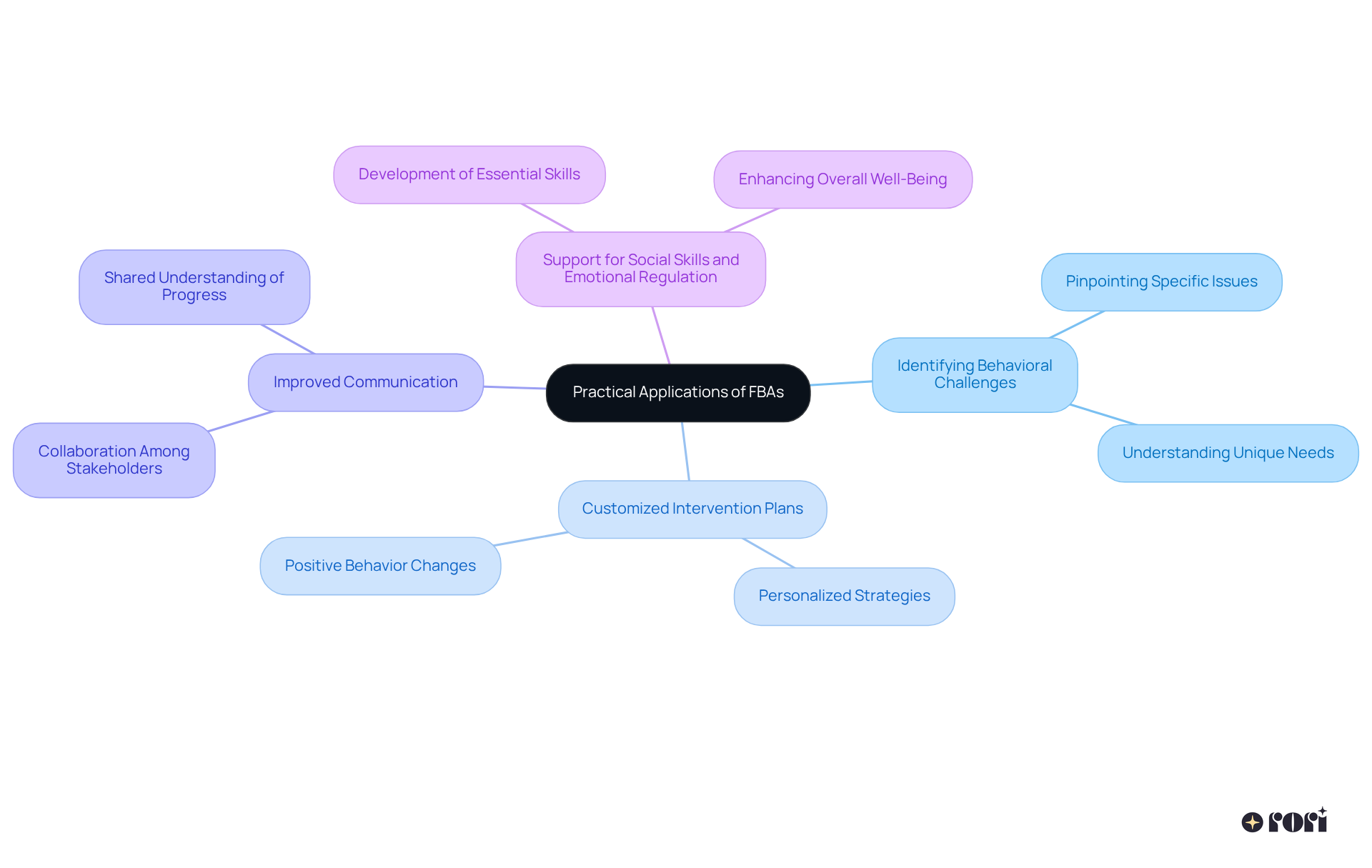
Practical Applications of Functional Behavior Assessments for Child Development
serve as a vital in supporting children’s growth and meaningful development. Let’s take a closer look at how they work:
- : FBAs help us pinpoint specific and what might be causing them. This understanding allows us to appreciate each child’s unique needs more deeply.
- : By creating personalized intervention strategies, an shows how FBAs encourage tailored to each child’s specific situation and goals. It’s all about finding what works best for them!
- : Think of FBAs as a bridge connecting parents, teachers, and therapists. They promote teamwork and ensure everyone is on the same page regarding the child’s progress and needs.
- : The insights from FBAs don’t just tackle challenging behaviors—they also help kids develop and emotional regulation. These are crucial for their overall well-being.
By getting involved in the FBA process, parents can . Together, we can ensure they receive the support they need to truly thrive. Let’s explore this together!
Conclusion
Understanding Functional Behavior Assessments (FBAs) is essential for parents who want to support their child’s development effectively. In this article, we’ve explored various FBA ABA examples, highlighting the importance of personalized assessments and interventions tailored to each child’s unique needs. By using these assessments, parents can gain valuable insights into their child’s behavior, allowing them to work hand-in-hand with professionals to create customized strategies for improvement.
We discussed key points, like the role of Board Certified Behavior Analysts (BCBAs) in conducting FBAs, the significance of ABC data collection, and the different assessment techniques available. Each example, such as Aaron’s math challenge, shows how targeted interventions can lead to positive behavioral changes and improved learning outcomes. Plus, we emphasized how crucial parental involvement is in the FBA process, demonstrating that active engagement can enhance the effectiveness of the strategies being implemented.
Ultimately, the journey toward understanding and addressing challenging behaviors through FBAs is a collaborative effort that empowers both parents and children. By recognizing the signs that indicate the need for an FBA and embracing the insights provided, parents can take proactive steps to nurture their child’s growth and success. Engaging with professionals, like BCBAs, and utilizing available resources can pave the way for a brighter future, ensuring that every child receives the support they need to thrive in their learning environments. Let’s explore this together!
Frequently Asked Questions
What is the purpose of the Functional Behavior Assessment (FBA) at Rori Care?
The purpose of the FBA at Rori Care is to conduct a thorough evaluation of a young person’s behavior, identifying specific difficulties and their root causes to develop a personalized treatment strategy that effectively addresses these behaviors.
How does Rori Care gather data for the FBA process?
Rori Care gathers data through interviews, direct observations, and standardized assessments to create a holistic understanding of the child’s unique needs.
How does Rori Care utilize AI technology in their ABA therapy?
Rori Care uses AI technology to automatically generate progress reports, which increases efficiency by freeing up 50% more time for child treatment, allowing more focus on the child’s growth and development.
Why are early and comprehensive assessments important in ABA therapy?
Early and comprehensive assessments are important because they significantly improve the effectiveness of ABA therapy, leading to better adaptive behaviors and social skills over time.
Can you provide an example scenario of how FBA is applied at Rori Care?
An example scenario involves a student named Aaron, who struggles with math, particularly word problems. The FBA process revealed that he needed extra visual aids and step-by-step guidance. A personalized Intervention Plan was created to enhance his engagement and performance in math.
What is ABC data collection, and why is it important?
ABC data collection involves noting the Antecedents (events leading up to an action), the Behavior itself, and the Consequences (what follows the action). It is important because it helps identify triggers and patterns in behavior, enabling more focused interventions.
What are some common precursors for challenging behaviors in young individuals?
Common precursors for challenging behaviors often involve transitions, requests, or changes in routine.
How can understanding ABC data contribute to more successful outcomes in autism treatment?
Understanding ABC data allows professionals to identify potential triggers and patterns, leading to tailored strategies that encourage positive actions. It also fosters a collaborative atmosphere where parents can actively participate in their child’s behavioral strategies.
List of Sources
- Rori Care – ABA Therapy: Comprehensive Functional Behavior Assessment Process
- Data and Statistics on Autism Spectrum Disorder (https://cdc.gov/autism/data-research)
- Autism Statistics You Need To Know in 2024 (https://autismparentingmagazine.com/autism-statistics)
- Inspirational ABA and Autism Quotes – Mrs. Moe’s Modifications (https://mrsmoesmodifications.com/inspirational-aba-and-autism-quotes)
- Patient Outcomes After Applied Behavior Analysis for Autism Spectrum Disorder – PMC (https://pmc.ncbi.nlm.nih.gov/articles/PMC8702444)
- Autism Therapy Statistics (https://supportivecareaba.com/statistics/autism-therapy-statistics)
- Example Scenario: Aaron’s Math Challenge and FBA Application
- coursehero.com (https://coursehero.com/file/20850184/Iris-Case-Studies)
- sarahdooleycenter.org (https://sarahdooleycenter.org/news/autism-in-the-classroom-how-to-handle-behavior-challenges)
- Visual Aids: Boosting Retention and Understanding – Graduate Programs for Educators (https://graduateprogram.org/blog/visual-aids-boosting-retention-and-understanding)
- ED Releases Guidance on Functional Behavioral Assessments | National Title I Association (https://eseanetwork.org/news-and-resources/blogs/used/ed-releases-guidance-on-functional-behavioral-assessments)
- ABC Data Collection: Understanding Antecedents, Behaviors, and Consequences
- Inspirational ABA and Autism Quotes – Mrs. Moe’s Modifications (https://mrsmoesmodifications.com/inspirational-aba-and-autism-quotes)
- daniellehewych.org (https://daniellehewych.org/content/top-applied-behavior-analysis-quotesnbsp)
- pmc.ncbi.nlm.nih.gov (https://pmc.ncbi.nlm.nih.gov/articles/PMC7265021)
- abtaba.com (https://abtaba.com/blog/abc-data-collection)
- Patient Outcomes After Applied Behavior Analysis for Autism Spectrum Disorder – PMC (https://pmc.ncbi.nlm.nih.gov/articles/PMC8702444)
- Role of Board Certified Behavior Analysts (BCBAs) in Functional Behavior Assessments
- abacenterstn.com (https://abacenterstn.com/blog/4-essential-facts-of-bcba-in-aba-therapy)
- The Rate of Job Growth for BCBAs | Intellistars – ABA Therapy (https://intellistarsaba.com/blog/the-rate-of-job-growth-for-bcbas)
- Latest Data on the Rising Need for BCBAs in Autism Therapy (https://blossomabatherapy.com/blog/shortage-of-bcbas-demand-and-opportunities)
- 81 ABA Therapy Statistics You Need to Know – apricott ABA (https://apricott.com/resources/aba-therapy-statistics)
- risingaboveaba.com (https://risingaboveaba.com/autism-blog/the-rate-of-job-growth-for-bcbas)
- Steps in Conducting a Functional Behavior Assessment: A Parent’s Guide
- Inspirational ABA and Autism Quotes – Mrs. Moe’s Modifications (https://mrsmoesmodifications.com/inspirational-aba-and-autism-quotes)
- New Federal Guidance On Functional Behavioral Assessments (FBAs) And Behavioral Intervention Plans (BIPs) – Washington Autism Alliance (https://washingtonautismalliance.org/new-federal-guidance-on-functional-behavioral-assessments-fbas-and-behavioral-intervention-plans-bips)
- A comparative effectiveness trial of functional behavioral assessment methods – PMC (https://pmc.ncbi.nlm.nih.gov/articles/PMC10843530)
- Best ABA Quotes (https://testpreptech.com/post/best-aba-quotes)
- Implementing Behavior Interventions Based on Functional Behavior Assessments
- 10 Great Quotes on Promoting Positive Behavior – Brookes Blog (https://blog.brookespublishing.com/10-great-quotes-on-promoting-positive-behavior)
- thetreetop.com (https://thetreetop.com/aba-therapy/what-is-functional-behavior-assessment)
- Success Rate of Early Intervention for Autism | Connect n Care (https://connectncareaba.com/blog/early-intervention-autism-success-rate-statistics)
- A comparative effectiveness trial of functional behavioral assessment methods – PMC (https://pmc.ncbi.nlm.nih.gov/articles/PMC10843530)
- positivepsychology.com (https://positivepsychology.com/positive-reinforcement-psychology)
- Types of Functional Analysis: Exploring Different Assessment Techniques
- researchgate.net (https://researchgate.net/publication/305497694_The_effects_of_video_modeling_in_teaching_functional_living_skills_to_persons_with_ASD_A_meta-analysis_of_single-case_studies)
- pmc.ncbi.nlm.nih.gov (https://pmc.ncbi.nlm.nih.gov/articles/PMC6411551)
- asatonline.org (https://asatonline.org/research-treatment/research-synopses/comparisons-of-functional-behavior-assessment)
- When Functional Behavior Assessments Are Necessary: Key Indicators
- pattan.net (https://pattan.net/Evidence-Based-Practices/Learning-Environment-Engagement/Functional-Behavior-Assessments-FBAs-and-Positive)
- milnepublishing.geneseo.edu (https://milnepublishing.geneseo.edu/instruction-in-functional-assessment/chapter/chapter-1-challenging-behaviors-of-individuals-with-developmental-disabilities)
- researchgate.net (https://researchgate.net/publication/332685692_Prevalence_and_correlates_of_challenging_behaviour_in_children_and_young_people_in_a_special_school_setting)
- studocu.com (https://studocu.com/en-us/messages/question/12026594/a-bcba-created-a-staff-training-on-functional-behavior-assessment-toolssummarize-the-key-points)
- 10 Great Quotes on Promoting Positive Behavior – Brookes Blog (https://blog.brookespublishing.com/10-great-quotes-on-promoting-positive-behavior)
- Importance of Functional Behavior Assessments in Educational Settings
- abetterwayaba.com (https://abetterwayaba.com/functional-behavioral-assessments-in-aba)
- Using Functional Behavioral Assessments to Create Supportive Learning Environments (https://njsba.org/news-information/school-board-notes/using-functional-behavioral-assessments-to-create-supportive-learning-environments)
- discoveryaba.com (https://discoveryaba.com/aba-therapy/the-role-of-functional-behavior-assessments-in-preventing-problem-behaviors?8936781b_page=14)
- Practical Applications of Functional Behavior Assessments for Child Development
- goldenstepsaba.com (https://goldenstepsaba.com/resources/the-role-of-functional-behavior-assessments-in-aba-therapy)
- Child Development Data and Statistics (https://cdc.gov/child-development/data-research)