Understanding the complexities of autism therapy can feel a bit daunting, can’t it? But there’s one key principle that shines through: consistency. This essential part of Applied Behavior Analysis (ABA) therapy not only creates a stable learning environment but also boosts long-term progress significantly.
By looking at the powerful effects of structured routines and open communication among caregivers, we can see how a consistent approach leads to amazing improvements in skill acquisition and emotional well-being. So, how can caregivers put these strategies into action to ensure lasting success in their child's therapeutic journey? Let’s explore this together!
The importance of consistency and its impact on long-term progress in autism therapy is a vital component of Applied Behavior Analysis (ABA) therapy! It creates a stable environment that really helps individuals with autism learn and feel less anxious. Research shows that the consistency and its impact on long-term progress in autism therapy, along with structured routines, make therapeutic interventions much more effective. For example, children who have predictable routines tend to engage positively and hold onto new skills better.
At Rori Care, we believe in personalized planning. Each behavioral plan is crafted to meet the unique needs, strengths, challenges, and goals of our clients. This tailored approach, combined with clear and measurable objectives for behavior change and skill enhancement, gives everyone a transparent way to track progress. Our evidence-based strategies, rooted in the latest research, ensure that we consistently apply the best methods for behavior change.
We also keep a close eye on how our clients are doing and how they respond to interventions, making adjustments as needed to get the best outcomes. Let’s explore how consistency and its impact on long-term progress in autism therapy not only aids in skill acquisition but also simplifies the generalization of these skills across different settings. This ultimately leads to better long-term results! We’re here to !

To enhance consistency and its impact on long-term progress in autism therapy, caregivers can establish organized daily routines that address their unique needs. Here are some actionable steps to help you create effective routines:
By following these steps, you can create a structured environment that promotes learning and behavioral growth, ultimately improving long-term outcomes in autism treatment. Remarkably, when suggested hours of support are fully implemented with active involvement from guardians, 90% of youngsters show significant progress, which underscores the importance of consistency and its impact on long-term progress in autism therapy. Let’s explore this together!

To enhance collaborative communication among caregivers in autism therapy, let’s explore some friendly strategies that can make a real difference:
By applying these strategies, providers can collaborate more efficiently, ensuring that the child receives steady support in all environments. This cooperative approach not only boosts the child’s development but also strengthens the caregiver network, creating a nurturing atmosphere for everyone involved. We’re here to help you every step of the way!

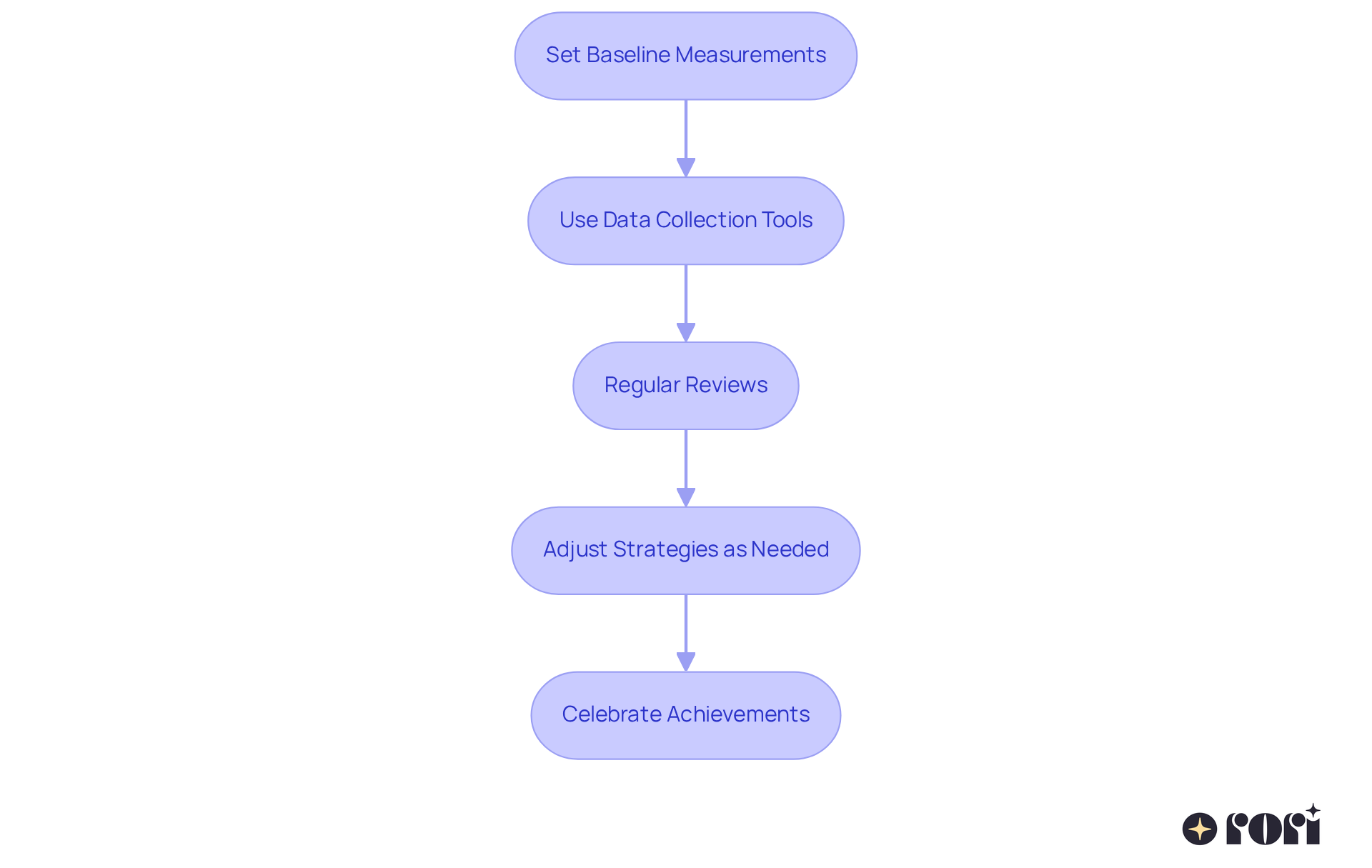
Monitoring progress in ABA therapy can feel like a journey, and it involves several essential steps that can make a big difference:
By consistently observing advancements and making informed adjustments, you can help ensure that your child benefits from consistency and its impact on long-term progress in autism therapy. Effective data collection not only enhances the accuracy of progress measures but also fosters collaboration between therapists and families, creating a comprehensive picture of your child’s development.
Let’s explore this together! We’re here to help you every step of the way!
The journey toward meaningful progress in autism therapy really hinges on one key principle: consistency. When caregivers establish structured routines and foster open communication, individuals with autism can truly thrive. It creates a supportive environment that not only reduces anxiety but also enhances learning. This commitment to consistency helps in picking up new skills and makes it easier to apply them in different settings, leading to better long-term outcomes.
Let’s talk about some key strategies!
By setting up organized daily routines, caregivers can build a stable framework that encourages engagement and emotional regulation. Plus, when everyone communicates openly, it ensures that everyone involved is on the same page with the child’s goals, making the therapy even more effective.
In conclusion, we can’t stress enough how important consistency is in autism therapy. It’s crucial for caregivers to embrace structured routines and keep that collaborative communication flowing to support the child’s development effectively. By taking actionable steps to reinforce these principles, caregivers can help create a nurturing atmosphere that promotes growth and success. The journey might have its challenges, but with the right strategies in place, meaningful progress isn’t just possible; it’s absolutely attainable! Let’s explore this together!
Why is consistency important in ABA therapy?
Consistency is crucial in ABA therapy as it creates a stable environment that helps individuals with autism learn more effectively and feel less anxious. It enhances long-term progress by making therapeutic interventions more effective through structured routines.
How does structured routine affect children in ABA therapy?
Children with predictable routines tend to engage positively and retain new skills better, which contributes to their overall progress in therapy.
What is the approach of Rori Care in ABA therapy?
Rori Care emphasizes personalized planning, crafting each behavioral plan to meet the unique needs, strengths, challenges, and goals of their clients. This tailored approach includes clear and measurable objectives for behavior change and skill enhancement.
How does Rori Care ensure the effectiveness of their interventions?
Rori Care employs evidence-based strategies rooted in the latest research and consistently applies the best methods for behavior change. They also monitor client progress closely and make necessary adjustments to interventions for optimal outcomes.
How does consistency aid in skill generalization across different settings?
Consistency in ABA therapy not only helps with skill acquisition but also simplifies the process of generalizing these skills across various environments, leading to better long-term results.