
Introduction
Creating a welcoming environment for Applied Behavior Analysis (ABA) therapy is so important for helping our kids thrive. When caregivers grasp the key principles of ABA, they can use strategies that not only boost learning but also foster a sense of security and predictability. But here’s the question: how can we keep this stability in the midst of our busy lives?
Let’s dive into some practical ways to set up a stable ABA therapy environment. We’ll explore how structured routines, active caregiver involvement, and effective tools can support our children on their path to success. Together, we can make a difference!
Understand the Basics of ABA Therapy and Its Importance for Stability
treatment is a scientifically validated approach that helps us understand and modify behavior through . The – reinforcement, prompting, and shaping – are essential for and reducing challenging behaviors.
- Reinforcement: Think of as a powerful tool that encourages the behaviors we want to see. It’s all about rewarding those desired actions with things like verbal praise, tokens, or other incentives. Research shows that when used effectively, reinforcement can really boost motivation and engagement in therapy, with when applied consistently. Isn’t that encouraging?
- Prompting: This principle is about offering cues or assistance to help young individuals perform a desired behavior. Gradually fading those prompts is key! It encourages young learners to tackle tasks independently, along the way.
- Shaping: This approach breaks down complex behaviors into smaller, manageable steps. It allows young learners to achieve success bit by bit. Not only does this develop skills, but it also strengthens their sense of accomplishment, which is so important for their ongoing growth.
By understanding and implementing these , caregivers can contribute to that supports ABA practices. This kind of setting, focused on , helps young individuals feel secure, ultimately in reaching their learning and behavioral goals.
Let’s explore this together! We’re here to help you every step of the way!

Establish a Structured Routine to Enhance Predictability and Reduce Anxiety
Creating a structured routine is crucial for , as it can greatly enhance a young person’s sense of security and predictability. This therapy tailors itself to individual needs, using the science of learning and behavior. So, how can you set up an ? Let’s dive in!
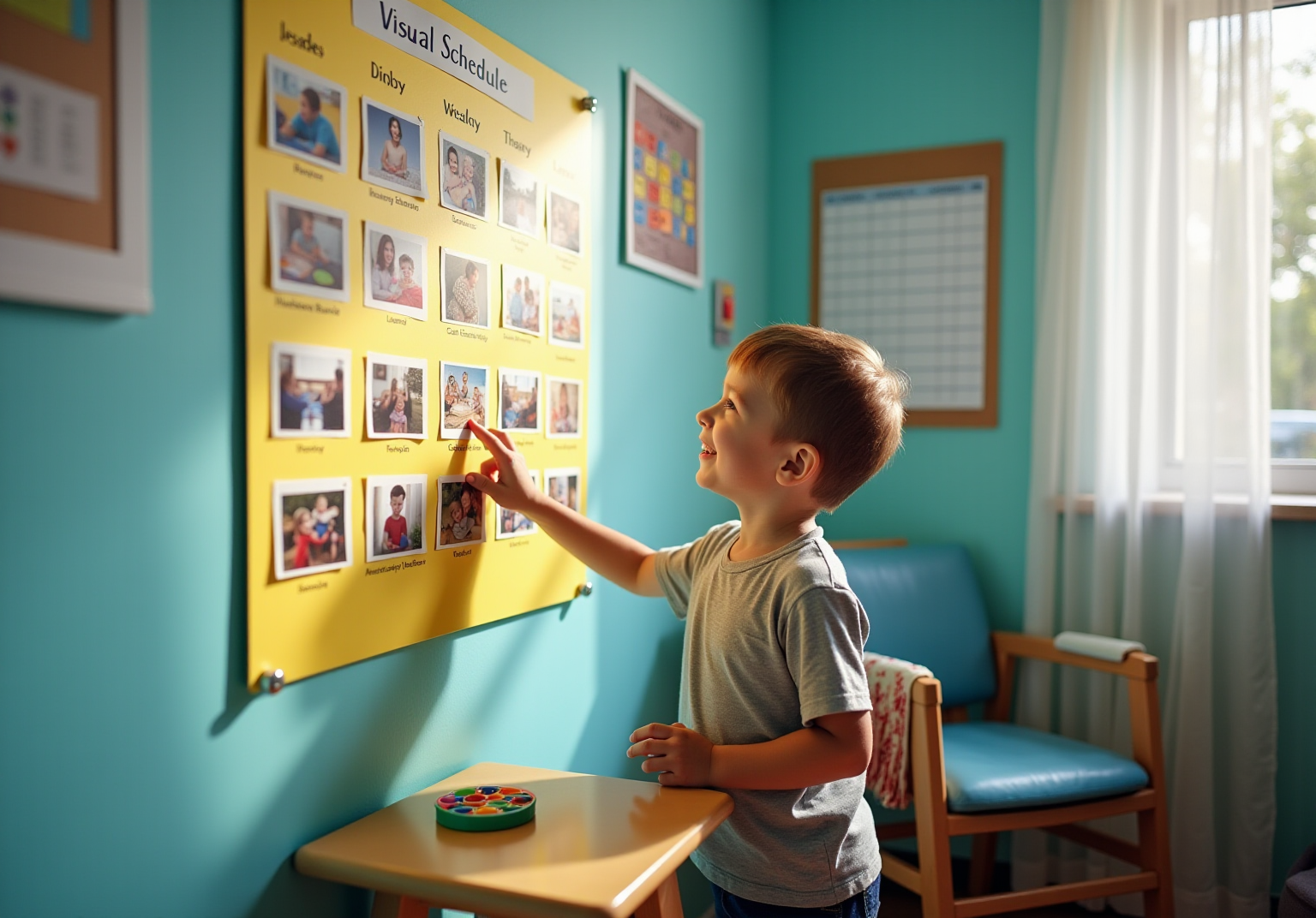
- : Think about using visual aids like picture schedules or handy apps that lay out the day’s activities. These tools help kids know what’s coming next, which can and ease anxiety. Did you know that kids with established routines are 47% more likely to maintain strong social-emotional health as they grow? Plus, caregivers trained in ABA can utilize these visual supports as part of creating a for better progress in reinforcing learning and behavioral goals.
- : Try to schedule daily activities – like meals, playtime, and therapy sessions – at the same time each day. This consistency helps kids understand what to expect, which can really lower anxiety and promote emotional regulation. Experts say that a steady daily routine gives kids a sense of security and can significantly improve their ability to navigate their world. And don’t forget, your involvement in for better progress is essential for !
- : It’s important to weave short breaks into the routine. These little pauses allow for relaxation and sensory regulation, helping to prevent overwhelm and keep focus during tasks. Giving kids a heads-up about changes and using visual aids can make adapting to routine shifts easier. Caregivers who are familiar with ABA strategies can manage these transitions better, leading to improved behavioral outcomes.
- : Regularly check in on the routine with your child, making adjustments as needed to fit their changing needs and preferences. Involving them in this process not only empowers them but also boosts their willingness to stick to the routine. Successful implementation involves those who understand ABA principles, which is essential for [creating a stable aba therapy environment for better progress](https://rori.care/post/10-benefits-of-naturalistic-training-for-children-with-autism) and ensuring that the routine remains meaningful and relevant to your child’s development.
Let’s explore this together! Your journey in establishing a routine can be a rewarding experience, and we’re here to help you every step of the way!

Involve Caregivers in Maintaining Consistency for Effective ABA Therapy
is truly the heart of successful ! Here are some friendly steps to ensure caregivers are :
- Training Sessions: Let’s kick things off with comprehensive ! These sessions educate caregivers on ABA principles and techniques, including data collection skills. When caregivers understand these strategies, they can apply them consistently at home, which is essential for for better progress in their child’s growth. It’s amazing how informed decisions can a child’s progress!
- Regular Communication: Keeping the lines of communication open between therapists and caregivers is key. Regular updates on advancements and challenges help everyone feel more connected and informed, boosting their ability to support treatment goals. After all, teamwork makes the dream work!
- Goal Setting: Involving is a game changer. This ensures that the objectives are relevant to the child’s daily life and that caregivers are committed to achieving them together.
- Reinforcement Strategies: Teaching caregivers how to effectively use reinforcement at home is crucial. helps maintain consistency with what’s practiced during therapy sessions. It’s all about celebrating those little victories!
Research shows that when caregivers are educated and actively involved, kids often show remarkable improvements in communication, social skills, and overall adaptive functioning. For instance, studies reveal that over 80% of families notice in their child’s ABA program. This really highlights how important these strategies are for creating a for better progress! As noted by Behavior Frontiers, “Research consistently demonstrates that family and supporter participation in ABA intervention results in improved outcomes.” Plus, the pBT model has shown a mean utilization of prescribed treatment at 92.2%, which correlates with better patient outcomes, especially for children facing significant challenges. This just goes to show how essential is in maximizing the effectiveness of ABA treatment.
Let’s explore this together! We’re here to help you every step of the way!

Utilize Tools and Resources to Support a Stable ABA Therapy Environment
Creating a for better progress can feel like a big task, but there are some great tools and resources that can really help!
- : Think about using visual schedules, choice boards, and social stories. These tools can make a world of difference in helping kids understand what’s coming next and what’s expected of them. Did you know that 87% of kids using visual schedules see better task completion and fewer problem behaviors within just a month? That’s pretty encouraging!
- : Have you tried using behavior tracking apps or charts? They’re fantastic for keeping an eye on progress and spotting behavior patterns. At Rori Care, we gather , so our clinical team can focus on your child without interruptions. Plus, all that data is stored securely and erased after analysis, giving you peace of mind. Studies show that organizations using real-time analytics can achieve target behaviors 28% faster than those relying on traditional methods.
- : Let’s not forget about ! Fidget toys or weighted blankets can really help kids self-regulate during sessions. They provide comfort and can ease anxiety, making the whole experience smoother.
- : We also offer access to articles, workshops, and online forums where you can learn more about and connect with other families. This community support is crucial for creating a for better progress and keeping everyone motivated and consistent. And here’s something exciting: Rori Care combines personalized therapy with advanced AI to monitor progress and prepare reports, giving you 50% more time for your loved one’s treatment. This way, you’re empowered with the knowledge and strategies to support your child’s behavioral goals effectively.
Let’s explore this together! We’re here to help you every step of the way!

Conclusion
Creating a stable environment for ABA therapy is so important for helping our kids thrive. The principles of Applied Behavior Analysis – like reinforcement, prompting, and shaping – are the building blocks for effective interventions. When caregivers set up a structured routine, it not only boosts predictability but also eases anxiety, creating a warm atmosphere where learning can flourish.
Throughout this article, we’ve shared some key strategies to help you build that stable environment. Think about using:
- Daily visual schedules
- Keeping consistent timing
- Incorporating breaks
- Actively involving yourself in the therapeutic process
These practices empower children and enhance their ability to engage in therapy, leading to better outcomes. Remember, your involvement is crucial! Engaged caregivers can truly make a difference in a child’s progress in ABA therapy.
Ultimately, the journey toward a stable ABA therapy environment is a team effort and an ongoing process. By embracing the tools and resources available and committing to consistent practices, you can profoundly impact your child’s life. This commitment not only meets their immediate needs but also sets the stage for long-term success and well-being. Let’s recognize our roles in this journey and actively participate in creating an environment where our children can thrive and reach their fullest potential. We’re here to help you every step of the way!
Frequently Asked Questions
What is ABA therapy?
Applied Behavior Analysis (ABA) therapy is a scientifically validated approach that helps understand and modify behavior through structured interventions.
What are the core principles of ABA therapy?
The core principles of ABA therapy include reinforcement, prompting, and shaping, which are essential for teaching new skills and reducing challenging behaviors.
How does reinforcement work in ABA therapy?
Reinforcement encourages desired behaviors by rewarding them with incentives such as verbal praise, tokens, or other rewards. When used effectively, reinforcement can significantly boost motivation and engagement in therapy.
What is the success rate of using reinforcement in ABA therapy?
Research indicates that when reinforcement is applied consistently, success rates can exceed 89%.
What is prompting in the context of ABA therapy?
Prompting involves offering cues or assistance to help individuals perform desired behaviors, with the goal of gradually fading those prompts to encourage independence.
How does shaping contribute to learning in ABA therapy?
Shaping breaks down complex behaviors into smaller, manageable steps, allowing learners to achieve success incrementally, which fosters skill development and a sense of accomplishment.
Why is creating a stable ABA therapy environment important?
A stable ABA therapy environment helps young individuals feel secure, which enhances their ability to thrive and reach their learning and behavioral goals.
How can caregivers support ABA therapy practices?
Caregivers can support ABA therapy practices by understanding and implementing the essential principles of ABA, contributing to a stable environment that promotes better progress.
List of Sources
- Understand the Basics of ABA Therapy and Its Importance for Stability
- Inspirational ABA and Autism Quotes – Mrs. Moe’s Modifications (https://mrsmoesmodifications.com/inspirational-aba-and-autism-quotes)
- The Numbers Don’t Lie: Revealing Autism Therapy Statistics | Above and Beyond Therapy (https://abtaba.com/blog/autism-therapy-statistics)
- Success Rates of ABA Therapy | Advanced Autism Services (https://advancedautism.com/post/success-rates-of-aba-therapy)
- crossrivertherapy.com (https://crossrivertherapy.com/aba-therapy-success-rates)
- Patient Outcomes After Applied Behavior Analysis for Autism Spectrum Disorder – PMC (https://pmc.ncbi.nlm.nih.gov/articles/PMC8702444)
- Establish a Structured Routine to Enhance Predictability and Reduce Anxiety
- Autism Routine and Structure (https://goldenstepsaba.com/resources/autism-routine-and-structure)
- The Benefits of Using Visual Schedules in ABA Therapy | Advanced Autism Services (https://advancedautism.com/post/the-benefits-of-using-visual-schedules-in-aba-therapy)
- The Importance of Routine for Children with Autism | Phoenix Autism Center (https://phoenixautism.com/the-importance-of-routine-establishing-a-consistent-daily-schedule-for-children-with-autism)
- Inspiring Autism Quotes for Understanding and Acceptance – Kids First (https://kidsfirstservices.com/first-insights/autism-quotes)
- magnetaba.com (https://magnetaba.com/blog/how-to-create-a-structured-routine-with-aba-therapy)
- Involve Caregivers in Maintaining Consistency for Effective ABA Therapy
- Empowering Families to Drive Progress in ABA Therapy | Step Ahead ABA (https://stepaheadaba.com/blog/how-parent-and-caregiver-guidance-strengthens-aba-therapy-effectiveness)
- mastermindbehavior.com (https://mastermindbehavior.com/post/the-impact-of-parent-training-in-aba-therapy)
- Aba Therapy Training For Parents (https://discoveryaba.com/aba-therapy/the-importance-of-caregiver-involvement-in-aba-therapy-programs)
- Family-Centric Applied Behavior Analysis Facilitates Improved Treatment Utilization and Outcomes – PMC (https://pmc.ncbi.nlm.nih.gov/articles/PMC11051390)
- Family & Caregiver Involvement in ABA Therapy | Autism Treatment & Parent Training Support — Behavior Frontiers (https://behaviorfrontiers.com/blog/importance-of-family-and-caregiver-involvement-in-autism-care)
- Utilize Tools and Resources to Support a Stable ABA Therapy Environment
- The Significance of Statistics in ABA Therapy | All Star ABA (https://allstaraba.org/statistics-in-aba-therapy)
- The Benefits of Data-Driven Decision Making in ABA Therapy | Advanced Autism Services (https://advancedautism.com/post/the-benefits-of-data-driven-decision-making-in-aba-therapy)
- Using Visual Supports in ABA Therapy | Links (https://linksaba.com/using-visual-supports-in-aba-therapy)
- Inspirational ABA and Autism Quotes – Mrs. Moe’s Modifications (https://mrsmoesmodifications.com/inspirational-aba-and-autism-quotes)
- Data Collection in ABA: Apps and Tools You Need | Links (https://linksaba.com/data-collection-in-aba-apps-and-tools-you-need)