
Introduction
Visual supports have become essential tools in autism education, helping to bridge communication gaps and foster understanding for children on the spectrum. By using images, symbols, and structured formats, these aids not only make learning more engaging but also create a sense of predictability that can ease anxiety.
But how can you, as a parent, effectively implement and customize these visual supports to fit your child’s unique needs? 🤔 This guide is here to explore practical strategies and insights that empower you to create a supportive educational environment. Together, we can nurture independence and boost communication skills for your child with autism. Let’s explore this together!
Understand Visual Supports and Their Importance in Autism Education
Visual aids are such ! They use images, symbols, or written words to share information in a way that’s easier for kids with autism to understand. These supports, such as picture schedules, visual cues, and social stories, demonstrate how to enhance autism education with visual supports. They really shine when it comes to enhancing communication, providing structure, and easing anxiety by demonstrating how to enhance autism education with visual supports. For example, a visual timetable can help a child anticipate daily tasks, making transitions smoother and reducing stress. Research shows that these graphical aids can empower kids to express their needs and feelings, cutting down on frustration by simplifying complex instructions.
By using data gathering techniques, parents can keep track of their child’s progress with these visual aids, allowing for strategies that meet individual needs. Case studies have shown just how effective these supports can be in educational settings. One study found that using a wearable schedule significantly boosted independent play among children with autism, highlighting how these tools can promote autonomy. Another study pointed out the positive impact of picture-based schedules on helping kids transition between activities, with participants making faster progress than those using traditional methods.
Quotes from advocates really capture the magic of visual strategies. Danita M. Luzadder notes, ‘The visuals help students stick to the sequence consistently, so they learn to complete the entire process.’ This really underscores how important consistency is in teaching routines, something that visual aids can provide. By incorporating these tools and actively engaging in data collection, parents can discover how to enhance autism education with visual supports to create a more predictable environment that nurtures independence and confidence in their children. This ultimately enhances their communication skills and enriches their overall educational experience. Let’s explore this together!

Explore Different Types of Visual Supports for Effective Learning
Visual supports are crucial in autism education, illustrating how to enhance autism education with by providing various tools that make communication and learning easier. Let’s take a look at some effective types of visual supports:
- Picture Exchange Communication System (PECS): This system helps young individuals express their needs and wants using images, which really boosts their communication skills. Research shows that PECS can enhance vocabulary learning and non-vocal communication, with studies highlighting its effectiveness in increasing word approximations and vocalizations among participants.
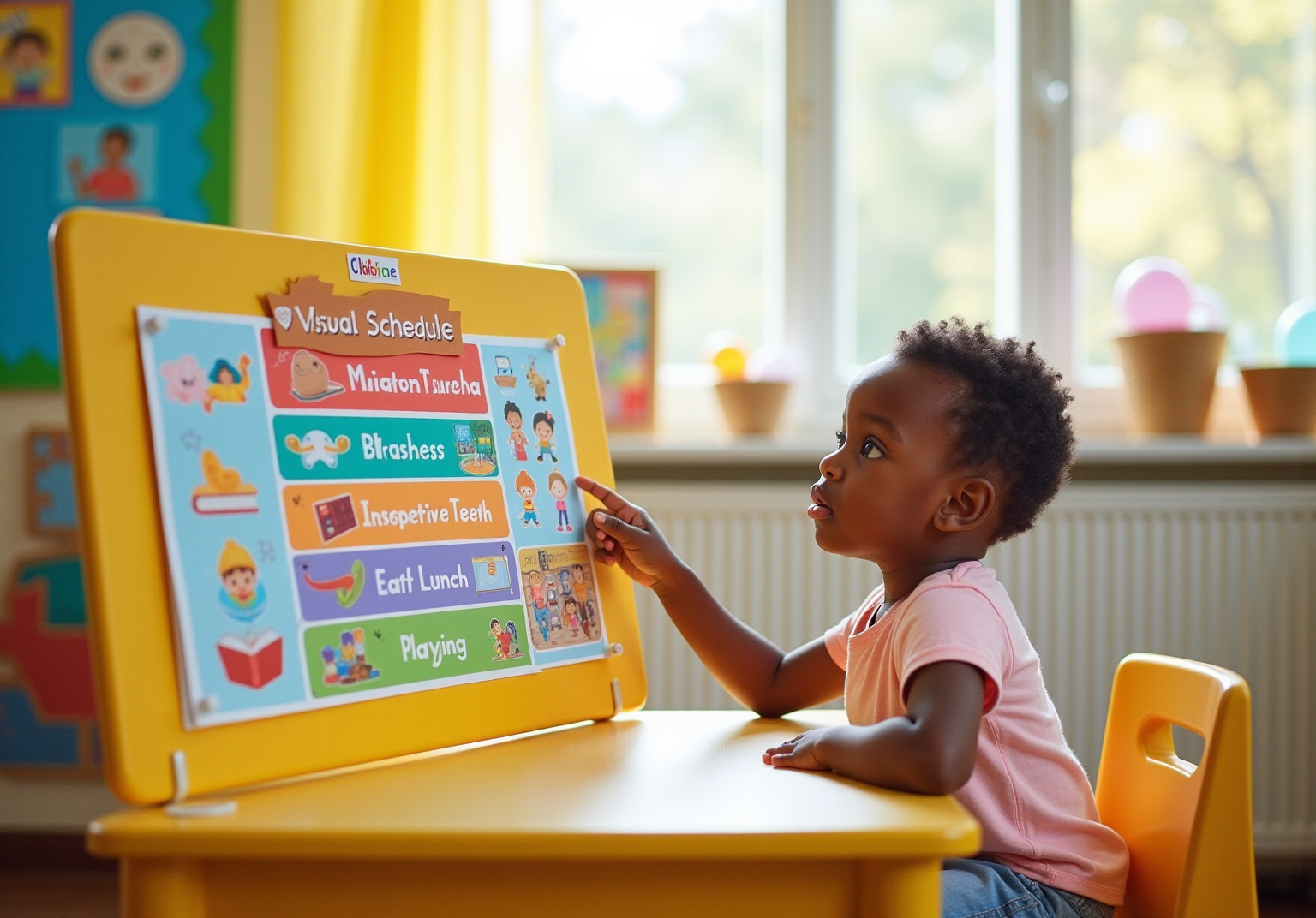
- Visual Schedules: These schedules lay out daily activities in a structured way, helping kids know what to expect next. Evidence suggests that visual schedules can improve on-task behavior and make transitions smoother, which is key for keeping kids engaged in their learning environments.
- Choice Boards: By showing options visually, choice boards empower young learners to make their own decisions. This not only fosters independence but also encourages them to actively participate in their learning journey.
- Social Stories: These narratives use visuals to explain social situations and appropriate responses, helping kids develop their social skills. They assist young individuals in understanding complex social cues and expectations, leading to better interactions with their peers.
- Emotion Charts: Emotion charts are great for helping kids recognize and express their feelings, which is crucial for emotional regulation. When they can identify their emotions, they learn to communicate their needs more effectively.
Getting familiar with these tools can really help parents understand how to enhance autism education with visual supports, ultimately improving their child’s learning and communication. Let’s explore this together!

Implement Visual Supports in Daily Routines and Educational Activities
To effectively implement visual supports in daily routines, parents can follow these simple steps:
- Identify Key Practices: Think about daily activities that could really benefit from some visual aids, like morning routines, mealtimes, or homework sessions. You know, studies show that can help kids stick to routines more reliably, boosting their ability to handle tasks on their own.
- Create Graphic Supports: Try making easy-to-understand graphic supports, like picture schedules or checklists that lay out each step of the process. Most autistic students grasp information better through images than through listening. This insight is key when crafting effective aids.
- Introduce Slowly: Start with one practice at a time. Show the visual aid and explain its purpose to your child. Experts say that tweaking teaching methods to include visual techniques is a crucial aspect of how to enhance autism education with visual supports, ultimately improving communication and learning outcomes for autistic kids.
- Practice Regularly: Use these aids consistently during the routines to reinforce learning and understanding. Research indicates that regularly using image-based schedules can lead to better focus and greater participation in activities.
- Promote Autonomy: Let your child use the aids independently, helping them develop self-management skills. This approach not only fosters independence but also helps kids build confidence as they navigate their daily tasks.
By weaving these aids into everyday life, parents can learn how to enhance autism education with visual supports, empowering their kids to manage routines more effectively and develop essential skills, ultimately enhancing their overall educational experience. Let’s explore this together!

Customize Visual Supports to Meet Individual Learning Needs
Personalizing visual aids is so important for enhancing your child’s learning experience! Here are some effective steps to tailor these aids to fit their individual needs:
- Assess Preferences: Take a moment to observe which types of visuals resonate with your child – do they respond better to pictures, symbols, or written words? This initial evaluation is crucial, especially since about 35% of autistic individuals are non-verbal or minimally verbal. Effective communication is vital! Visual supports can really help in daily activities, particularly for those facing behavioral challenges or skill deficits, which is essential in understanding how to enhance autism education with visual supports.
- Incorporate Interests: Use visuals that reflect your child’s interests, like their favorite characters or colors. Personalizing visuals not only makes them more appealing but also boosts understanding by tapping into your child’s cognitive strengths. For example, incorporating choice boards featuring their favorite themes can spark engagement, which is a key part of Rori Care’s approach to empowering caregivers with ABA principles.
- Simplify Complexity: Start with basic visuals and gradually introduce more intricate ones as your young learner becomes comfortable. This method helps ease anxiety and fosters independence, allowing them to manage tasks more effectively. Visual schedules can serve as a fantastic starting point for educators looking to learn how to enhance autism education with visual supports, as they clearly outline daily routines and are especially beneficial for individuals with Autism Spectrum Disorders and ADHD.
- Seek Feedback: Involve your child in the customization process by asking for their input on which visuals they find most helpful. This engagement promotes autonomy and empowers them to express their preferences. Using social stories can also help them navigate social situations by illustrating expectations, aligning with Rori Care’s commitment to supporting individuals’ behavioral goals through active involvement.
- Adapt as Required: Stay flexible and ready to adjust visual aids based on your child’s changing needs and reactions. Continuous adaptation is key to keeping them engaged and effective in learning. New technologies, like mobile apps and interactive tools, can also be integrated to enhance the visual support experience, reflecting the innovative strategies used by Rori Care’s clinical leadership team.
Customizing visual supports is a key strategy in how to enhance autism education with visual supports, as it can significantly boost your child’s engagement and learning outcomes, ultimately fostering greater independence and confidence in their daily activities. Let’s explore this together!

Conclusion
Visual supports are truly essential in enhancing autism education. They provide vital tools that help children with autism communicate, find structure, and manage their emotions. By weaving these visual aids into daily routines and educational activities, parents can create a more predictable and engaging environment that nurtures independence and confidence in their little ones.
Throughout our discussion, we’ve explored various types of visual supports, like Picture Exchange Communication Systems (PECS), visual schedules, choice boards, social stories, and emotion charts. Each of these tools has shown how effective they can be in improving learning outcomes, fostering autonomy, and easing anxiety for autistic learners. It’s so important to customize these supports to fit individual needs, emphasizing how tailoring approaches based on each child’s preferences and strengths can make a real difference.
Ultimately, embracing visual supports goes beyond just improving communication and learning; it’s about empowering children with autism to navigate their world more effectively. By actively incorporating these strategies into everyday life, parents and educators can significantly enhance the educational experience for autistic learners. This journey of enhancing autism education with visual supports promises to enrich lives and foster meaningful connections.
So, let’s explore this together! Remember, you’re not alone in this journey, and we’re here to help you every step of the way!
Frequently Asked Questions
What are visual supports and why are they important in autism education?
Visual supports are tools that use images, symbols, or written words to convey information in a way that is easier for children with autism to understand. They are important because they enhance communication, provide structure, and help ease anxiety in educational settings.
What types of visual supports are commonly used in autism education?
Common types of visual supports include picture schedules, visual cues, and social stories. These aids help children anticipate daily tasks and facilitate smoother transitions.
How do visual aids help children with autism?
Visual aids help children express their needs and feelings, reduce frustration by simplifying complex instructions, and promote autonomy through tools like wearable schedules that encourage independent play.
What does research say about the effectiveness of visual supports in education?
Research indicates that visual supports can significantly improve educational outcomes. For example, studies show that children using picture-based schedules transition between activities more quickly and make faster progress than those using traditional methods.
How can parents track their child’s progress with visual supports?
Parents can use data gathering techniques to monitor their child’s progress with visual aids, allowing them to develop strategies that cater to their child’s individual needs.
What role do consistency and routine play in the effectiveness of visual supports?
Consistency is crucial in teaching routines, and visual aids help students stick to sequences consistently, which reinforces learning and supports the completion of tasks.
How do visual supports contribute to a child’s overall educational experience?
By creating a more predictable environment, visual supports enhance communication skills, nurture independence and confidence, and ultimately enrich the child’s overall educational experience.