

Introduction
Understanding the complexities of behavior in children undergoing ABA therapy can feel overwhelming, especially when those sudden surges in challenging actions hit. Have you ever noticed an extinction burst? It’s that temporary spike in behaviors that were once rewarded, happening right after reinforcement is taken away. This article dives into the signs of extinction bursts, offering you valuable insights and strategies to handle these intense moments with confidence.
So, how can you navigate these turbulent waters without accidentally reinforcing unwanted behaviors? What proactive steps can you take to create a more positive therapeutic environment? Let’s explore this together! We’re here to help you every step of the way!
Define Extinction Burst in ABA Therapy
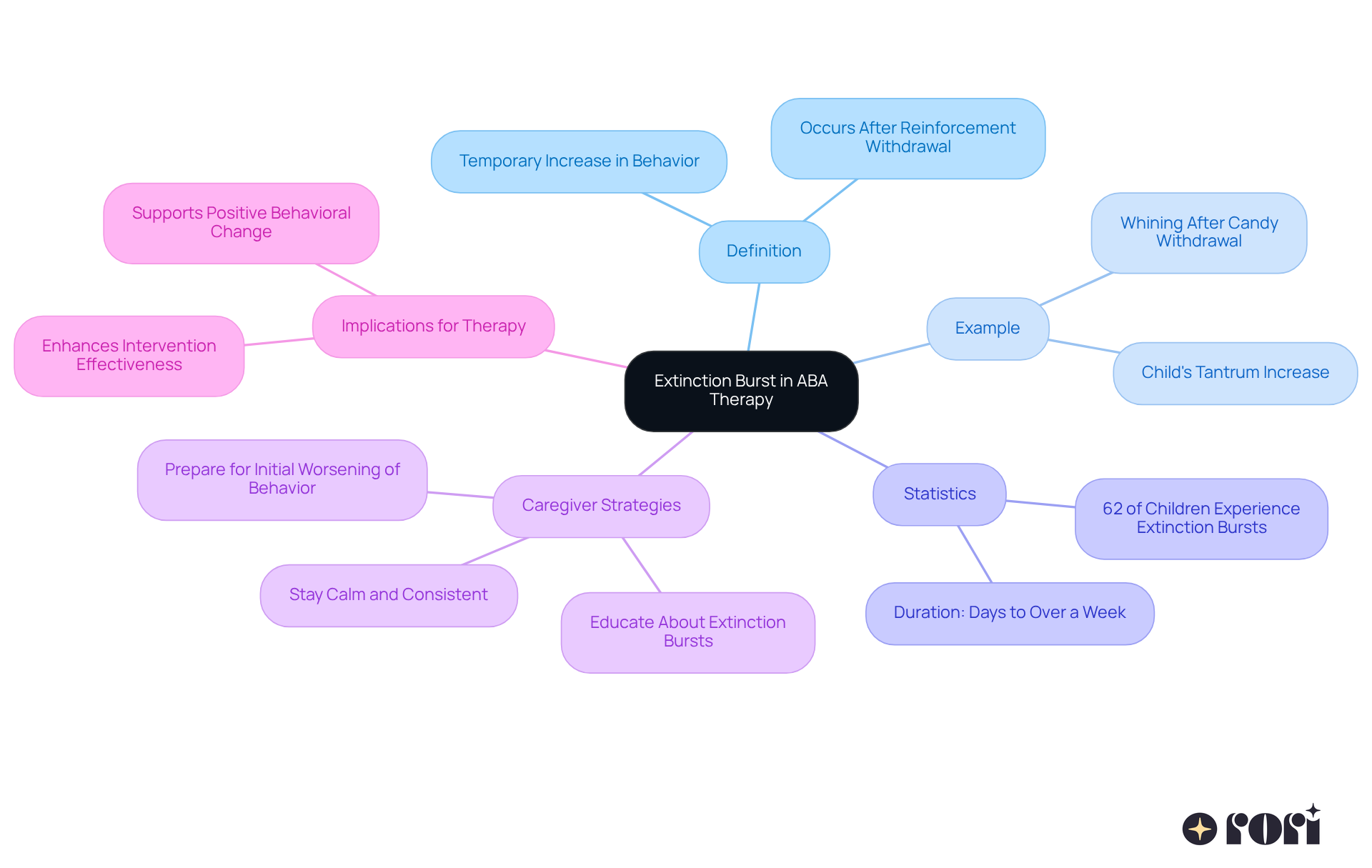
In Applied Behavior Analysis (ABA) therapy, a is like a short-term spike in the frequency or intensity of a behavior that was previously rewarded, especially when that reward is taken away. For instance, if a child has been getting lots of attention for throwing tantrums, suddenly withdrawing that attention might cause an initial increase in those tantrums, which serves as an example of as the child tries to get that reinforcement back. This behavior isn’t uncommon; research shows that about 62% of children in ABA therapy may experience when reinforcement stops.
Understanding these is really important for caregivers and therapists. It helps them anticipate these challenging moments and respond appropriately. Educating caregivers plays a key role in this process. By equipping them with , they can manage these situations more effectively. For example, staying calm and consistent can help avoid unintentionally reinforcing unwanted behaviors during this tricky time. Plus, it’s essential for caregivers to recognize that these sudden increases in can be an example of extinction burst and may last from a few days to over a week. Being prepared for this is crucial.
By realizing that these episodes are a natural part of the adjustment process, caregivers can make informed choices that positively impact their child’s progress. This awareness is vital for creating a and fostering lasting behavioral change. Additionally, that include can significantly enhance the effectiveness of interventions, leading to better behavioral outcomes and a more supportive family dynamic. Let’s explore this together!
Identify Signs of Extinction Burst
Recognizing the signs of a population decline is essential for . Let’s take a closer look at some common indicators that can help us understand what’s happening:
- of the : Have you noticed that during an , your child might show the undesired behavior more often? For an example of extinction burst, a little one who usually asks for a toy nicely might start yelling or crying more frequently when their request is turned down.
- : Sometimes, the intensity of their actions can really ramp up. A child who typically has mild tantrums might switch to screaming or throwing things, showing a big increase in their emotional response.
- : You might find that tantrums or outbursts last longer than usual. This extended behavior can be , who may feel overwhelmed by the situation.
- Variability in Behavior: Kids can be quite creative in their attempts to get attention or reinforcement. For instance, they might go from crying to hitting or tossing objects, showcasing a range of .
Studies indicate that sudden increases in responses occur in about 24 to 36% of cases, particularly when certain behaviors have been consistently encouraged. By recognizing these signs, caregivers can better prepare themselves to respond effectively and maintain a consistent approach. Plus, there are they can use, like reinforcing alternative actions and keeping a calm demeanor, to help their little ones transition to more adaptive behaviors.
Let’s explore this together! Remember, you’re not alone in this journey, and we’re here to help you every step of the way!

Manage Extinction Burst Effectively
Effectively managing an can feel daunting, but with a strategic approach, it becomes much more manageable. Here are some key steps to help you navigate this challenging phase:
- Stay Calm and Consistent: It’s so important to keep your cool! When you stay composed, it helps your child understand that their unwanted behavior won’t get the response they’re hoping for. Remember, emotional reactions can sometimes reinforce those pesky behaviors, so staying calm is key.
- Avoid Reinforcement: During this phase of , try not to offer any attention or rewards. If your little one is throwing a tantrum to get your attention, wait for them to calm down before engaging. Tantrums are a common example of extinction burst, especially for kids in .
- Provide : Teach and encourage more appropriate behaviors. For instance, if your child is upset about a toy, guide them to ask for it politely instead. This approach aligns perfectly with the created by the skilled analysts at Rori Care.
- Use : When your child starts to calm down or shows more suitable behavior, shower them with positive reinforcement! This could be a simple verbal praise or a small reward, reinforcing the behavior you want to see.
- : Keep track of your child’s behaviors over time. Noting occurrences can help you spot trends and guide your future actions. Conducting a is essential for understanding the reasons behind behaviors and what triggers those increases. At Rori Care, we continuously refine our treatment plans based on progress reports to ensure effective outcomes.
- Seek Support: If managing an extinction burst feels overwhelming, don’t hesitate to reach out to a BCBA or a therapist who specializes in ABA therapy. They can provide tailored strategies that meet your child’s unique needs. The case study “” shows how individuals respond to the removal of a reinforcer, emphasizing why it’s crucial to understand this behavior in therapy.
By implementing these strategies, you can effectively manage an example of extinction burst, which paves the way for more positive behavioral outcomes. Remember, you’re not alone in this journey—we’re here to help you every step of the way!

Conclusion
Recognizing and managing extinction bursts in Applied Behavior Analysis (ABA) therapy is essential for fostering positive behavioral changes. These temporary surges in challenging behaviors often pop up when actions that were once rewarded are no longer acknowledged. Understanding this phenomenon can truly enhance the effectiveness of interventions.
It’s important to spot the signs of extinction bursts—like an increase in the frequency and intensity of behaviors, as well as their duration and variability. Caregivers can navigate these tricky moments more effectively by:
- Staying calm
- Avoiding reinforcement
- Offering alternative actions
- Monitoring progress
- Seeking professional support
Being informed and prepared for extinction bursts can turn a potentially overwhelming situation into an opportunity for growth. By embracing these strategies and creating a supportive environment, caregivers can make a significant impact on their child’s behavioral development—leading to more adaptive behaviors and a stronger family dynamic. Taking proactive measures to understand and manage these bursts is vital for achieving lasting positive outcomes in therapy. Let’s explore this together!
Frequently Asked Questions
What is an extinction burst in ABA therapy?
An extinction burst is a temporary surge or spike in the frequency or intensity of a previously rewarded behavior when that reward is removed. For example, if a child stops receiving attention for throwing tantrums, they may initially increase those tantrums in an attempt to regain that attention.
How common are extinction bursts in children undergoing ABA therapy?
Research indicates that about 62% of children in ABA therapy may experience sudden increases in their responses when reinforcement is stopped.
Why is it important for caregivers and therapists to understand extinction bursts?
Understanding extinction bursts helps caregivers and therapists anticipate challenging behaviors and respond appropriately. This knowledge is crucial for managing these moments effectively and avoiding unintentional reinforcement of unwanted behaviors.
What strategies can caregivers use to manage extinction bursts?
Caregivers can manage extinction bursts by staying calm and consistent, which helps prevent unintentionally reinforcing undesirable behaviors during this period.
How long do extinction bursts typically last?
Extinction bursts can last from a few days to over a week, depending on the individual child and the circumstances.
What role does caregiver education play in managing extinction bursts?
Educating caregivers on extinction bursts equips them with specific strategies to handle these situations effectively, which can positively impact their child’s progress and create a supportive therapeutic environment.
How can adaptive treatment plans enhance the effectiveness of interventions?
Adaptive treatment plans that involve caregiver participation can significantly improve behavioral outcomes and foster a more supportive family dynamic, leading to lasting behavioral change.
List of Sources
- Define Extinction Burst in ABA Therapy
- Extinction Bursts – Peace Behavioral Health (https://peacebh.com/blog/extinction-bursts)
- pmc.ncbi.nlm.nih.gov (https://pmc.ncbi.nlm.nih.gov/articles/PMC8482780)
- aprilaba.com (https://aprilaba.com/resources/extinction-bursts-in-aba)
- crossrivertherapy.com (https://crossrivertherapy.com/aba-therapists/extinction-bursts)
- Identify Signs of Extinction Burst
- Extinction Bursts – Peace Behavioral Health (https://peacebh.com/blog/extinction-bursts)
- thetreetop.com (https://thetreetop.com/aba-therapy/extinction-burst-aba)
- Manage Extinction Burst Effectively
- goldenstepsaba.com (https://goldenstepsaba.com/resources/extinction-bursts)
- crossrivertherapy.com (https://crossrivertherapy.com/aba-therapists/extinction-bursts)