

Introduction
Empowering children through choice is a transformative approach in Applied Behavior Analysis (ABA) therapy, and it can truly enhance their engagement and cooperation. When kids are allowed to make decisions, they not only feel a sense of control but also enjoy improved motivation and less anxiety during therapy sessions.
However, navigating the complexities of choice-making can be a bit tricky for parents. It raises important questions about how to effectively implement these strategies. What are the best ways to provide choices that encourage independence and support a child’s growth in ABA therapy? Let’s explore this together!
Understand the Importance of Choice in ABA Therapy
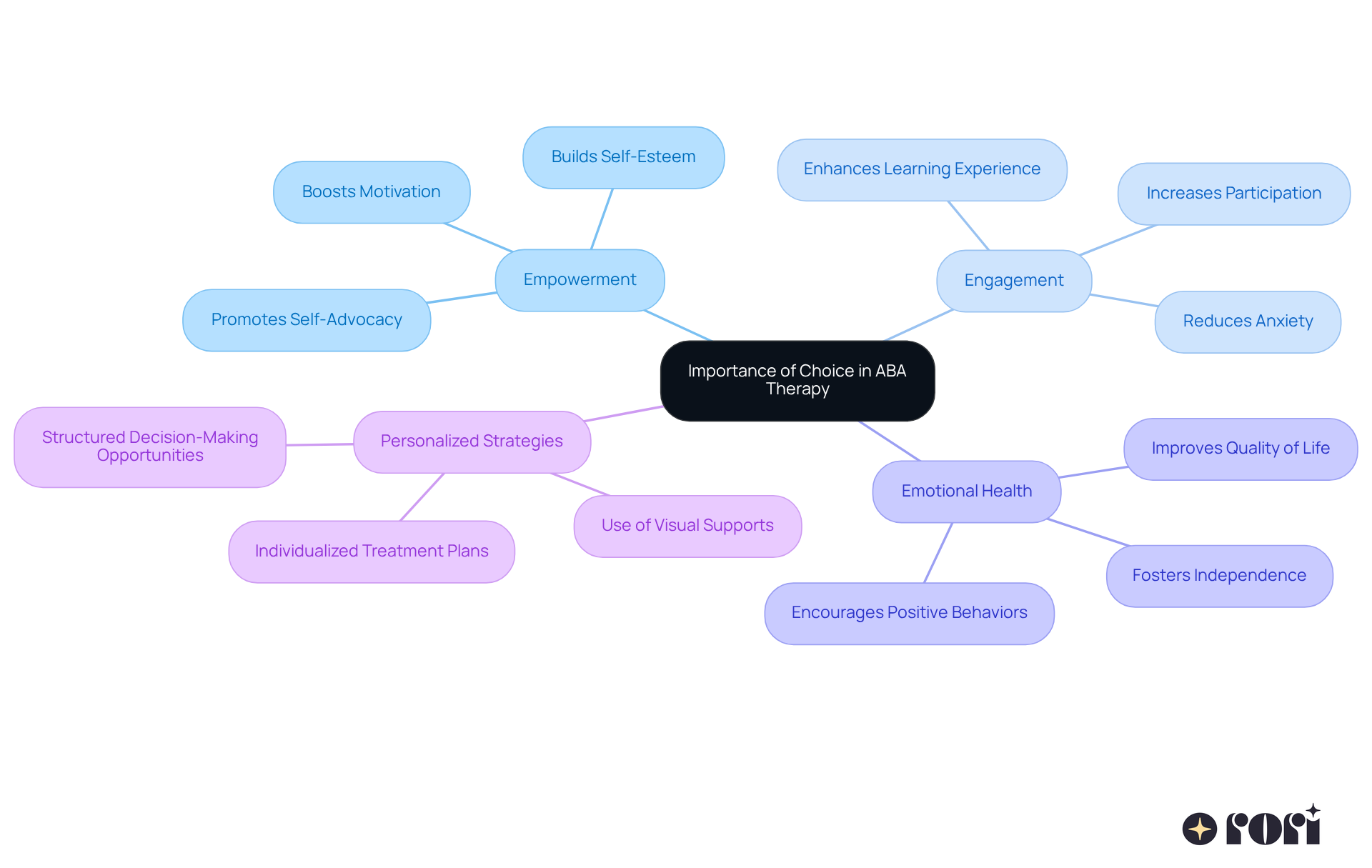
In , to is a game-changer that really empowers our youth and boosts their engagement! When kids are allowed to provide choices aba, they feel more in control of their environment, which leads to and fewer challenging behaviors. Research shows that young people who are allowed to provide choices aba in decision-making are more likely to cooperate and exhibit .
For instance, imagine a therapist giving a child with autism a choice between two fun games during their session. This not only clarifies their options but also helps reduce anxiety, especially with visual aids like selection boards. This sense of empowerment can provide choices aba that build their self-esteem and encourage them to take an active role in their learning and growth.
Plus, being able to make choices allows for . Parents and therapists can see how these decisions impact the child’s over time. Positive reinforcement through praise can further boost their motivation and sense of achievement in making decisions. By recognizing the importance of choice, parents can provide choices aba that effectively support their child’s , creating a collaborative environment during sessions.
This approach aligns perfectly with Rori Care’s commitment to and the principles of neurodiversity. It highlights the need for tailored strategies that respect each child’s unique preferences and strengths. Including is linked to , underscoring the importance of educating caregivers on how to best support their child’s development. Let’s explore this together!
Identify Effective Strategies for Offering Choices
To effectively offer , parents can easily implement a few friendly strategies:
- Limit Options: Try offering just two or three distinct selections to avoid overwhelming your little one. For instance, when it’s snack time, ask, ‘Would you like an apple or a banana?’ This approach and reduces the stress that often comes with .
- Utilize : Consider integrating or pictures to help your child understand their choices better. Visuals can make decision-making more accessible and engaging, especially for kids with autism who might find verbal communication challenging.
- : Think about weaving choices into your daily routines. For example, let your child decide the order of activities, like ‘Do you want to play with blocks first or read a book?’ This not only but also nurtures a sense of control over their environment.
- : Remember to acknowledge and celebrate your child’s decisions, no matter the outcome. This practice helps to provide choices aba that strengthen their and encourage them to engage more actively in the future. Positive reinforcement can significantly boost their confidence and willingness to participate in treatment.
Let’s explore this together! We’re here to !

Address Common Challenges in Choice-Making
To boost engagement in , it is essential to provide , although parents often encounter a few hurdles along the way.
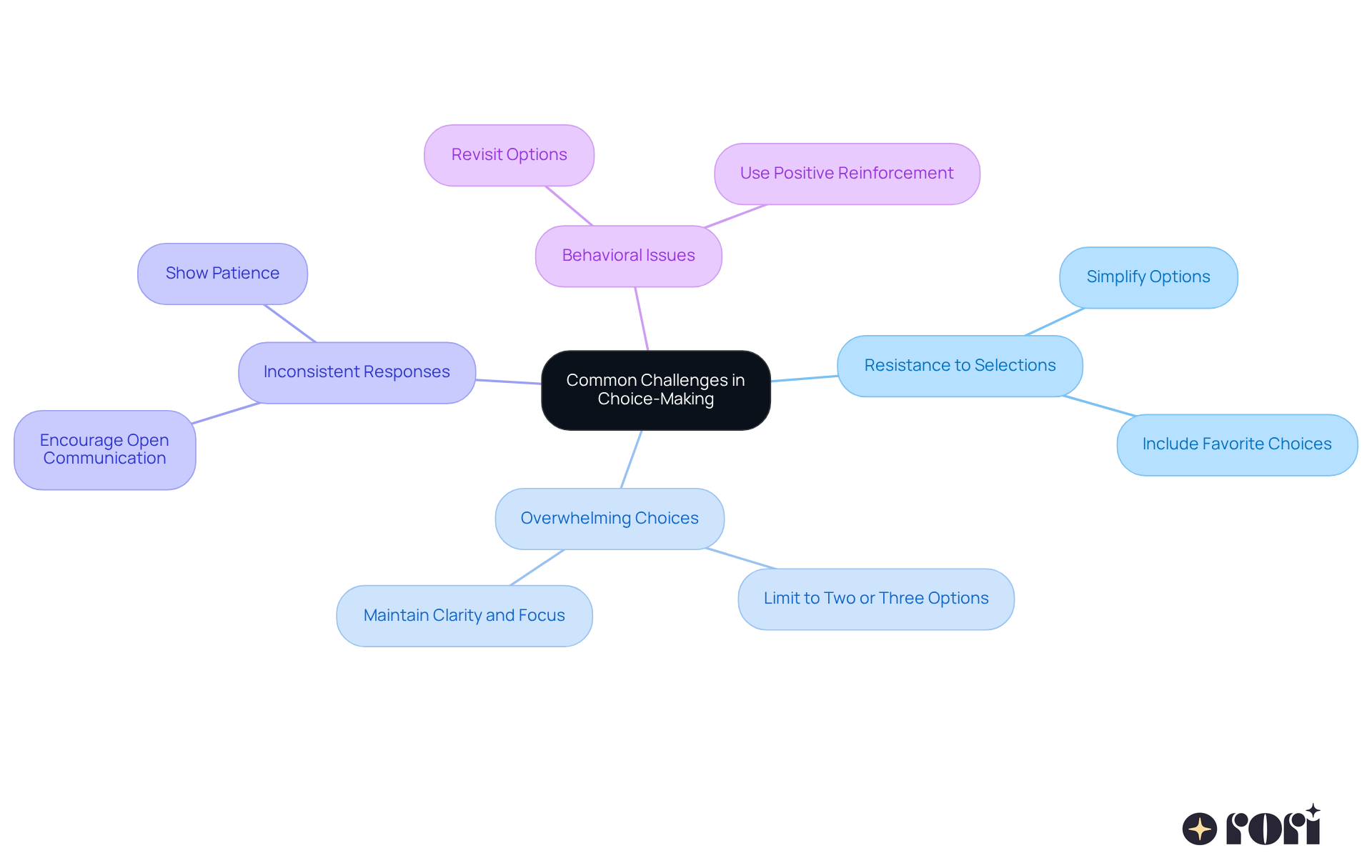
- Resistance to Selections: It’s not uncommon for some kids to shy away from or even feel upset when options are presented. To help them out, try to by or adding a favorite choice to make decision-making a bit easier.
- Overwhelming Choices: Too many options can lead to confusion for little ones. To maintain , it is helpful to provide choices aba just two or three options, making it simpler for them to decide.
- Inconsistent Responses: Kids might change their minds or find it hard to express what they want. Encouraging and showing patience can give them the time they need to share their thoughts effectively.
- : If a child shows when you provide choices aba, it might be time to revisit the options or change how choices are presented. Staying consistent and using positive reinforcement can really help create a supportive environment for making decisions.
Let’s explore this together! We’re here to help you every step of the way!
Utilize Tools and Resources to Enhance Choice-Making
To enhance choice-making in ABA therapy, parents can utilize a variety of :
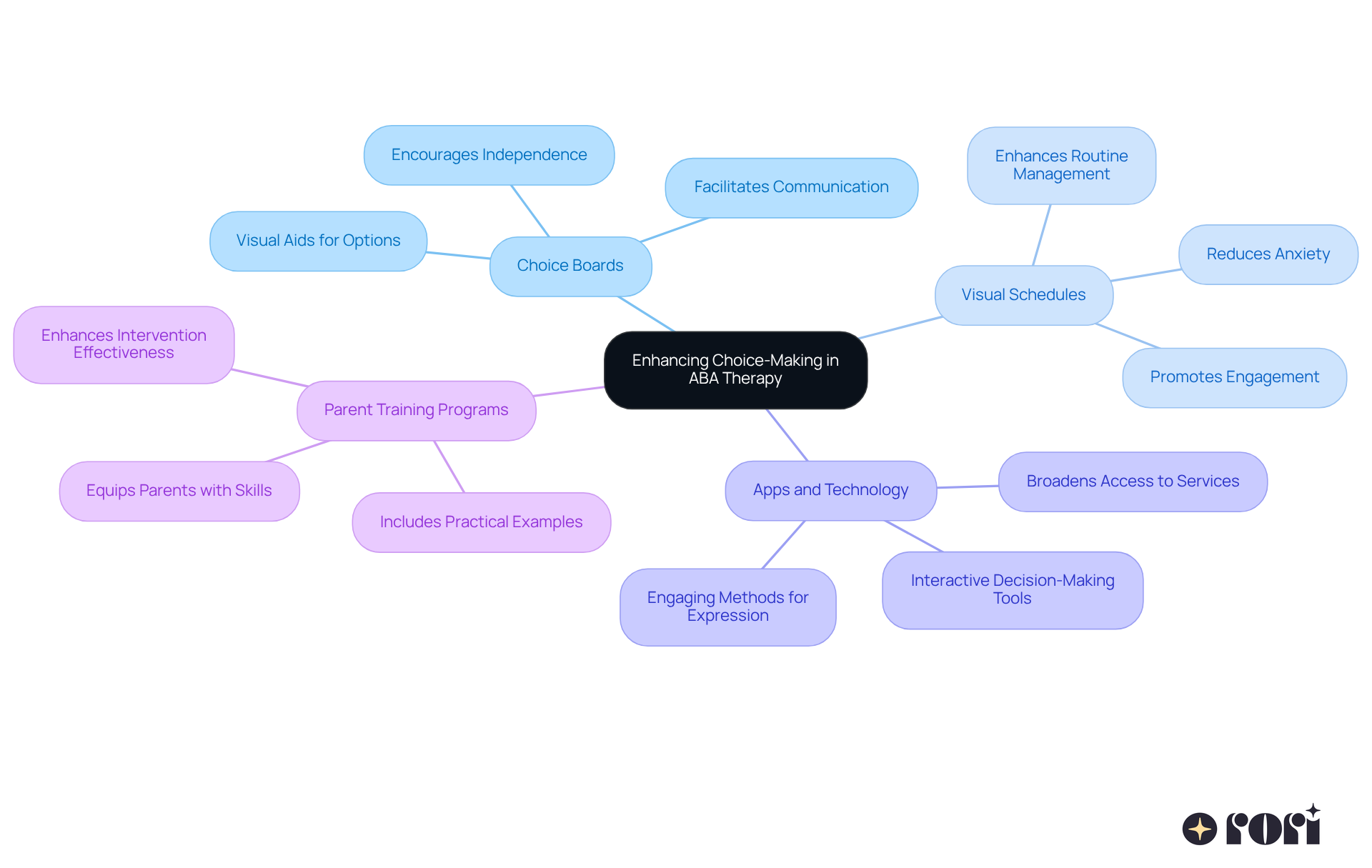
- : These visual aids present options available to the learner, simplifying the selection process. They can be adapted for different activities or routines, allowing kids to convey their preferences. This encourages us to provide for independence and involvement! It aligns with ABA principles, as caregivers who provide choices aba can significantly influence a young person’s informed decision-making and progress.
- : Implementing can provide choices aba for young learners, helping them anticipate upcoming events and significantly decreasing anxiety while enhancing their willingness to engage. Visual schedules offer a clear, structured depiction of their day, assisting youngsters in managing daily tasks and adhering to routines with greater independence. Research shows that 90% of youngsters achieve considerable advancement when caregivers provide choices aba and the suggested hours are fully applied with active participation. This highlights how crucial is when using these tools effectively.
- Apps and Technology: Numerous applications are created to assist in decision-making and communication for individuals with autism. These choices aba engaging methods for young individuals to express their preferences, making the process enjoyable and effective. The incorporation of technology has broadened access to autism services, enabling families to employ innovative solutions in their care strategies. This further empowers caregivers with the knowledge and tools necessary to support their offspring’s behavioral goals.
- aim to provide choices aba by engaging parents in training that equips them with essential skills and knowledge to implement choice-making strategies effectively. These programs often include practical examples and tailored support, enhancing the overall effectiveness of interventions at home. Furthermore, carrying out preference evaluations is essential for that affect young people’s engagement. This ensures that the strategies utilized align with their interests and needs. Empowering caregivers through education is vital for achieving improved behavioral outcomes and fostering a supportive environment for children.
Let’s explore this together! We’re here to help you every step of the way!
Conclusion
Providing choices in ABA therapy isn’t just a technique; it’s a transformative approach that truly fosters empowerment and engagement among children. When young individuals are allowed to exercise decision-making, parents and therapists can significantly enhance motivation, reduce anxiety, and promote positive behaviors. This core principle highlights just how important it is to integrate choice into therapy sessions, creating an environment where children feel valued and in control of their learning experiences.
Throughout this article, we’ve explored several effective strategies for implementing choice-making. For instance, limiting options can help avoid overwhelming children, while utilizing visual supports enhances understanding. And let’s not forget the power of celebrating their decisions to reinforce confidence! It’s also essential to address common challenges, like resistance to choices and behavioral issues, to create a supportive atmosphere. Tools like choice boards and visual schedules can further empower children, making the decision-making process more accessible and engaging.
Ultimately, the significance of providing choices in ABA therapy goes beyond immediate behavioral improvements. It lays the foundation for fostering independence, self-esteem, and emotional well-being in children. By embracing these strategies and resources, parents can cultivate an enriching therapeutic environment that respects each child’s unique preferences and strengths. Supporting a child’s development through choice is not just beneficial; it’s essential for their growth and happiness.
Let’s explore this together! By taking these steps, you’re not only helping your child thrive but also creating a warm and engaging space where they can truly flourish.
Frequently Asked Questions
Why is providing choices important in ABA therapy?
Providing choices in ABA therapy empowers youth, boosts their engagement, increases motivation, and leads to fewer challenging behaviors.
How does allowing choices affect a child’s behavior?
When children are allowed to make choices, they are more likely to cooperate and exhibit positive behaviors, as it gives them a sense of control over their environment.
Can you give an example of how choices are implemented in ABA therapy?
An example is a therapist giving a child with autism a choice between two fun games during a session, which helps reduce anxiety and clarifies their options.
How do visual aids help in providing choices?
Visual aids, like selection boards, help children understand their options better, which can reduce anxiety and enhance their decision-making experience.
What are the benefits of making choices in therapy for children?
Making choices helps build self-esteem, encourages active participation in learning, and allows for clear tracking of progress in engagement and behavior.
How does positive reinforcement play a role in decision-making?
Positive reinforcement through praise can further enhance a child’s motivation and sense of achievement when they make decisions.
How does this approach align with Rori Care’s principles?
This approach aligns with Rori Care’s commitment to personalized support and neurodiversity, emphasizing tailored strategies that respect each child’s unique preferences and strengths.
What is the overall impact of decision-making opportunities in therapy?
Including decision-making opportunities is linked to better emotional health and an improved quality of life for children, highlighting the importance of educating caregivers to support their child’s development effectively.