

Introduction
Creating a structured environment is so important for children with autism. It helps foster predictability and can really reduce anxiety. When caregivers use consistent schedules in Applied Behavior Analysis (ABA) therapy, it not only boosts skill retention but also builds trust between children and their caregivers. This trust can lead to better behavioral outcomes!
But here’s a question for you: how can caregivers effectively implement these schedules at home while still being flexible and responsive to their child’s needs? 🤔 This article dives into practical strategies for establishing consistent ABA schedules that promote progress and engagement in therapy. Let’s explore this together!
Understand the Importance of Consistency in ABA Therapy
When it comes to ABA therapy, consistency is key for a bunch of important reasons:
- Predictability: Kids with autism really thrive in . Having a consistent schedule in ABA therapy for autism is essential for , as it helps them know what to expect next, easing anxiety and boosting their engagement in therapy activities.
- : Regular practice is a game changer for keeping learned skills fresh. When children repeatedly face familiar situations, they’re more likely to remember and use what they’ve learned, leading to better outcomes.
- : Sticking to consistent routines helps build momentum, making transitions between activities smoother. This often results in greater compliance and active participation during therapy sessions.
- Trust Building: A stable routine fosters or caregiver. When kids feel secure in a , they’re more likely to engage openly in treatment, thereby improving behavior and progress with , which enhances the overall effectiveness of the intervention.
- Data Tracking: make it easier to , allowing therapists to track progress and adjust treatment plans as needed.
By creating a structured framework, caregivers can greatly contribute to improving behavior and progress with [consistent schedules in ABA therapy for autism](https://rori.care/post/10-essential-aba-therapy-resources-for-parents-of-children-with-autism). This way, children with autism get the support they need to truly thrive. Let’s explore this together!

Implement Strategies for Creating Consistent Schedules at Home
Establishing at home can feel like a challenge, but with a few friendly strategies, you can make it work! Let’s explore this together:
- : Think about using visual aids like charts or picture schedules. They can really help kids see what’s coming next, easing anxiety and making routines clearer. It’s amazing how much this can help them feel more secure!
- Set Fixed Times: Try designating , meals, and bedtime. When kids know what to expect, it makes everything smoother. Research shows that kids who stick to structured schedules often perform better-one study even found a 96% on-schedule performance rate during teaching sessions! Plus, when caregivers actively participate, 90% of kids show remarkable progress.
- Incorporate Breaks: Don’t forget to schedule ! They’re essential for preventing burnout and giving kids a chance to recharge. This can really boost their focus and engagement during sessions.
- Engage in Routine Activities: Why not weave treatment goals into daily life? For example, practice during family meals or use communication devices during playtime. Real-life examples show that this kind of integration can lead to big improvements in behavior and social interactions.
- : Embrace technology! Apps or digital calendars can be lifesavers for reminding both parents and kids about scheduled activities. It’s a great way to keep routines on track and encourage independence.
- Be Flexible: While consistency is key, it’s also important to stay flexible. Life can throw curveballs, and a little adaptability can ease stress for both you and your child.
By using these approaches, you can create a that supports your child’s . This not only helps kids with Autism Spectrum Disorders, ADHD, and other behavioral challenges but also empowers you as a caregiver with the tools you need to support your child’s growth. Remember, you’re not alone in this journey-we’re here to help you every step of the way!

Utilize Reinforcement Schedules to Enhance Behavioral Outcomes
in , and using them effectively can really boost . Let’s dive into how you can implement them:
-
Identify Target Actions: Start by clearly outlining the actions you want to reinforce, like communication skills, social interactions, or self-care tasks. This clarity is key for effective intervention!
-
: There are several types to consider:
- Continuous Reinforcement: Reward the behavior every time it happens. This is especially helpful for establishing new behaviors.
- : Offer rewards occasionally to help maintain actions over time, which builds resilience against extinction.
- : Reinforce after a set number of responses, like after every five correct answers. This encourages steady response rates.
- Variable Ratio: Provide reinforcement after an unpredictable number of responses. This can lead to higher rates of behavior because of the surprise element!
-
Use : Make sure the rewards are genuinely motivating for your child. Think about options like verbal praise, tokens, or access to favorite activities-tailored to what they love!
-
: Regularly check how well the reinforcement schedule is working. Keep track of your child’s responses to see if any tweaks are needed to improve results.
-
Slowly Decrease Support: As your child gets better at the desired actions, gradually reduce the frequency of support. This helps and encourages them to internalize the behavior.
By thoughtfully using reinforcement plans, you can really enhance your child’s behavioral growth in ABA therapy. This leads to better cooperation, compliance, and overall development. Let’s explore this together!

Monitor and Adjust Schedules for Optimal Progress
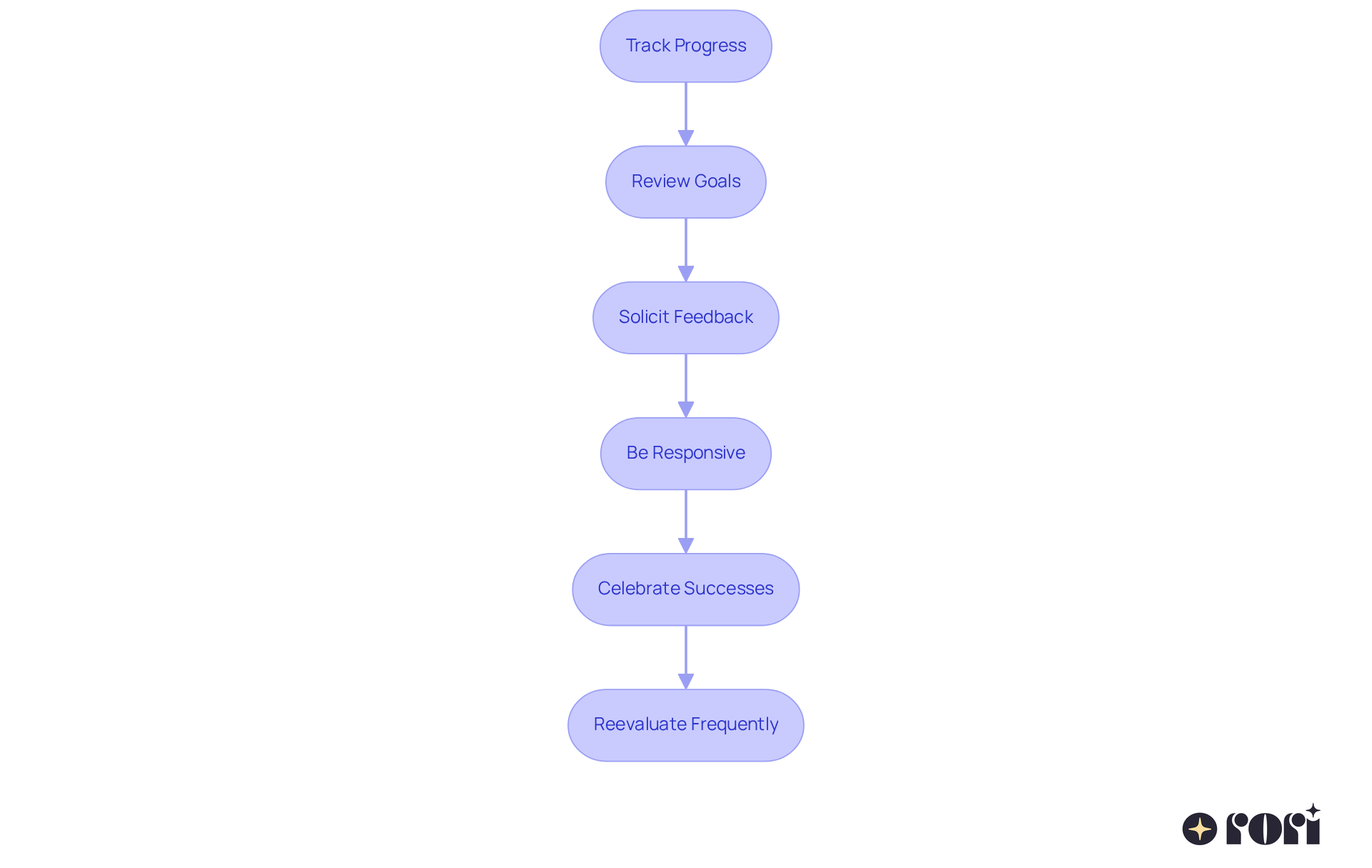
To make the most of your child’s ABA therapy, it’s super important to keep an eye on their progress and tweak their schedule as needed. Here’s how you can do that:
- : Start by ! Use methods like , duration measurements, and simple observations to see how your child is developing. Our behavior care engine updates intervention and skill plans after each session based on what’s been achieved, giving you clear insights into behavior changes over time.
- : Regularly check in on whether those therapy goals are being met. If things seem to stall, it might be time to adjust the schedule or the strategies you’re using to better fit your child’s needs.
- Solicit Feedback: Keep the lines of communication open with your child’s therapists. Share updates on their progress and any bumps in the road. Their professional insights can really help in to the therapy plan.
- Be Responsive: If your child struggles with certain activities or times of day, be flexible! can boost engagement and lead to better outcomes.
- : Don’t forget to celebrate those milestones, no matter how small! Recognizing progress reinforces positive behavior and keeps motivation high.
- Reevaluate Frequently: Set aside time every few weeks to review how effective the treatment plan is. This ensures it stays aligned with your child’s evolving developmental needs and goals.
By actively monitoring and adjusting schedules, you can significantly contribute to with , which leads to better outcomes for your child. Let’s explore this together!
Conclusion
Creating a consistent schedule for ABA therapy is so important for nurturing positive behavior and helping children with autism make progress. When caregivers set up a structured environment, it really boosts the effectiveness of interventions, making sure kids feel secure and engaged. Just think about it: when there’s predictability, skill retention, and trust, the impact of consistency on therapeutic outcomes can be truly remarkable.
Throughout this article, we’ve shared some key strategies for putting these schedules into action and keeping them going strong. From using visual aids and sticking to fixed timings to embracing technology and allowing for a bit of flexibility, each approach helps create a supportive framework that empowers both children and caregivers. Plus, we highlighted the significance of reinforcement schedules, showing how targeted rewards can really enhance behavioral growth and encourage independence.
So, as we wrap up, remember that the journey to improving behavior and progress in ABA therapy is all about consistency and intentionality. By keeping an eye on schedules and making adjustments as needed, caregivers can adapt to their child’s changing needs, leading to better outcomes. Embracing these practices not only supports your child’s development but also creates a collaborative environment where you, as caregivers, feel equipped and confident in your role. It might be a challenging road, but with the right tools and strategies, significant progress is definitely within reach! Let’s explore this together!
Frequently Asked Questions
Why is consistency important in ABA therapy for children with autism?
Consistency is crucial in ABA therapy because it provides predictability, helping children feel secure and reducing anxiety, which enhances their engagement in therapy activities.
How does a consistent schedule benefit skill retention in children undergoing ABA therapy?
A consistent schedule allows children to regularly practice learned skills, making it more likely they will remember and use those skills effectively in various situations.
What is behavioral momentum, and how does consistency contribute to it in ABA therapy?
Behavioral momentum refers to the increased likelihood of compliance and participation during therapy sessions when routines are consistent, making transitions between activities smoother.
How does a stable routine help in building trust between the child and the therapist?
A stable routine fosters trust by creating a secure environment, which encourages children to engage openly in treatment, thereby improving their behavior and progress.
Why is data tracking important in ABA therapy, and how does consistency aid this process?
Data tracking is essential for monitoring progress and adjusting treatment plans. Consistent routines make it easier to collect accurate data, which helps therapists evaluate and optimize therapy effectiveness.
How can caregivers contribute to the effectiveness of ABA therapy through consistency?
Caregivers can create a structured framework by maintaining consistent schedules, which significantly supports children with autism in improving their behavior and overall progress in therapy.
List of Sources
- Understand the Importance of Consistency in ABA Therapy
- Why Consistent Session Structure Matters in ABA Therapy Outcomes (https://pbsmidwest.com/blog/why-consistent-session-structure-matters-in-aba-therapy-outcomes)
- The Importance of Consistency in ABA Therapy Programs (https://magnetaba.com/blog/the-importance-of-consistency-in-aba-therapy-programs)
- Impact of Applied Behavior Analysis on Autistic Children Target Behaviors: A Replication Using Repeated Measures – PMC (https://pmc.ncbi.nlm.nih.gov/articles/PMC10907966)
- 43 Inspiring Autism Quotes to Uplift and Motivate (https://goldencaretherapy.com/43-inspiring-autism-quotes)
- The Importance of Consistency in ABA Therapy – BM Behavioral Center (https://bmbehavioralcenter.com/aba-therapy-services-kids)
- Implement Strategies for Creating Consistent Schedules at Home
- Effectiveness of Visual Schedule in Combination with… : The Indian Journal of Occupational Therapy (https://journals.lww.com/iopt/fulltext/2018/50030/effectiveness_of_visual_schedule_in_combination.7.aspx)
- The Efficacy of Visual Activity Schedule Intervention in Reducing Problem Behaviors in Children With Attention-Deficit/Hyperactivity Disorder Between the Age of 5 and 12 Years: A Systematic Review – PMC (https://pmc.ncbi.nlm.nih.gov/articles/PMC8733412)
- 107 Favorite Quotes About Autism and Aspergers (https://the-art-of-autism.com/favorite-quotes-about-autism-and-aspergers)
- Quotes About Autism – Arms Wide Open ABA Therapy (https://armswideopenaba.com/blog/quotes-about-autism)
- Utilize Reinforcement Schedules to Enhance Behavioral Outcomes
- Reinforcement Schedules in ABA: Types and Examples | Links (https://linksaba.com/reinforcement-schedules-in-aba-types-and-examples)
- The Role of Reinforcement Schedules in ABA Therapy (https://magnetaba.com/blog/the-role-of-reinforcement-schedules-in-aba-therapy)
- How Schedules of Reinforcement Work in ABA Therapy (https://astroaba.com/blog/how-schedules-of-reinforcement-work-in-aba-therapy)
- Best ABA Quotes (https://testpreptech.com/post/best-aba-quotes)
- Monitor and Adjust Schedules for Optimal Progress
- The Numbers Don’t Lie: Revealing Autism Therapy Statistics | Above and Beyond Therapy (https://abtaba.com/blog/autism-therapy-statistics)
- The Importance of Data Collection in ABA Therapy (https://handscenter.com/the-importance-of-data-collection-in-aba-therapy)
- Tracking Progress in ABA Therapy: The Importance of Data and Monitoring | Autism Therapy Services (https://hiddengemsaba.com/articles/tracking-progress-in-aba-therapy-the-importance-of-data-and-monitoring)
- ambitionsaba.com (https://ambitionsaba.com/resources/the-role-of-data-in-measuring-progress-in-aba-therapy)
- Applied Behavior Analysis (ABA) Statistics: Data, Effectiveness, and Evidence-Based Practices (https://nexoaba.com/applied-behavior-analysis-statistics)