
Introduction
Understanding the challenges of communication in children with autism is so important for building those meaningful connections. This guide is here to help parents navigate this journey, offering practical strategies and insights tailored to the unique hurdles you might face. It’s totally normal to feel overwhelmed when trying to make sense of both verbal and non-verbal interactions. So, how can you bridge that gap and empower your child to express themselves with confidence?
Let’s explore this together! By sharing relatable experiences and practical tips, we can deepen our understanding of these challenges. You’re not alone in this; many parents have walked this path and found ways to connect with their children. Remember, every small step counts, and we’re here to support you every step of the way!
Understand Communication Challenges in Autism
Interaction difficulties in autism can show up in various ways, making it tough for young people to connect with others. These challenges often involve struggles with verbal expression, reading social cues, and using non-verbal methods like gestures and facial expressions. Let’s take a closer look at some common hurdles:
- Verbal Communication: Many kids with autism face delays in speech development or might be non-verbal. Some may engage in echolalia, repeating phrases or sentences they’ve heard instead of creating their own speech. While it might not fit , it can still be a way for them to communicate.
- Non-Verbal Interaction: Understanding non-verbal signals can be tricky for autistic youngsters. They might struggle with eye contact, body language, and facial expressions, which can lead to misunderstandings and make it harder for them to connect with peers and adults.
- Social Communication: Grasping the nuances of conversation-like taking turns and recognizing humor-can be particularly challenging for children on the spectrum. They may miss subtle hints that usually guide social exchanges.
- Sensory Processing: Sensory sensitivities can add another layer of complexity. For example, a noisy environment might overwhelm a young person, making it hard for them to focus on conversations or respond appropriately.
Understanding these challenges is key to improving communication skills in autism and creating effective interaction strategies tailored to your child’s unique needs. Parents can support their kids by using ABA techniques, like visual aids, modeling appropriate interactions, and encouraging their attempts to engage. By recognizing the specific challenges they face, parents can better help their children navigate social interactions and build their interpersonal skills, thus aiding in improving communication skills in autism. Plus, equipping caregivers with knowledge rooted in ABA principles creates a consistent and supportive environment that maximizes the impact of interventions.
Let’s explore this together! We’re here to help you every step of the way!

Implement Practical Strategies for Communication Enhancement
To enhance communication skills in children with autism, let’s explore some practical strategies that can make a real difference:
- Use Clear and Simple Language: Keep it short and sweet! Instead of saying, ‘Can you please tell me what you want for lunch?’ try, ‘Do you want a sandwich?’ This way, it’s easier for your child to understand.
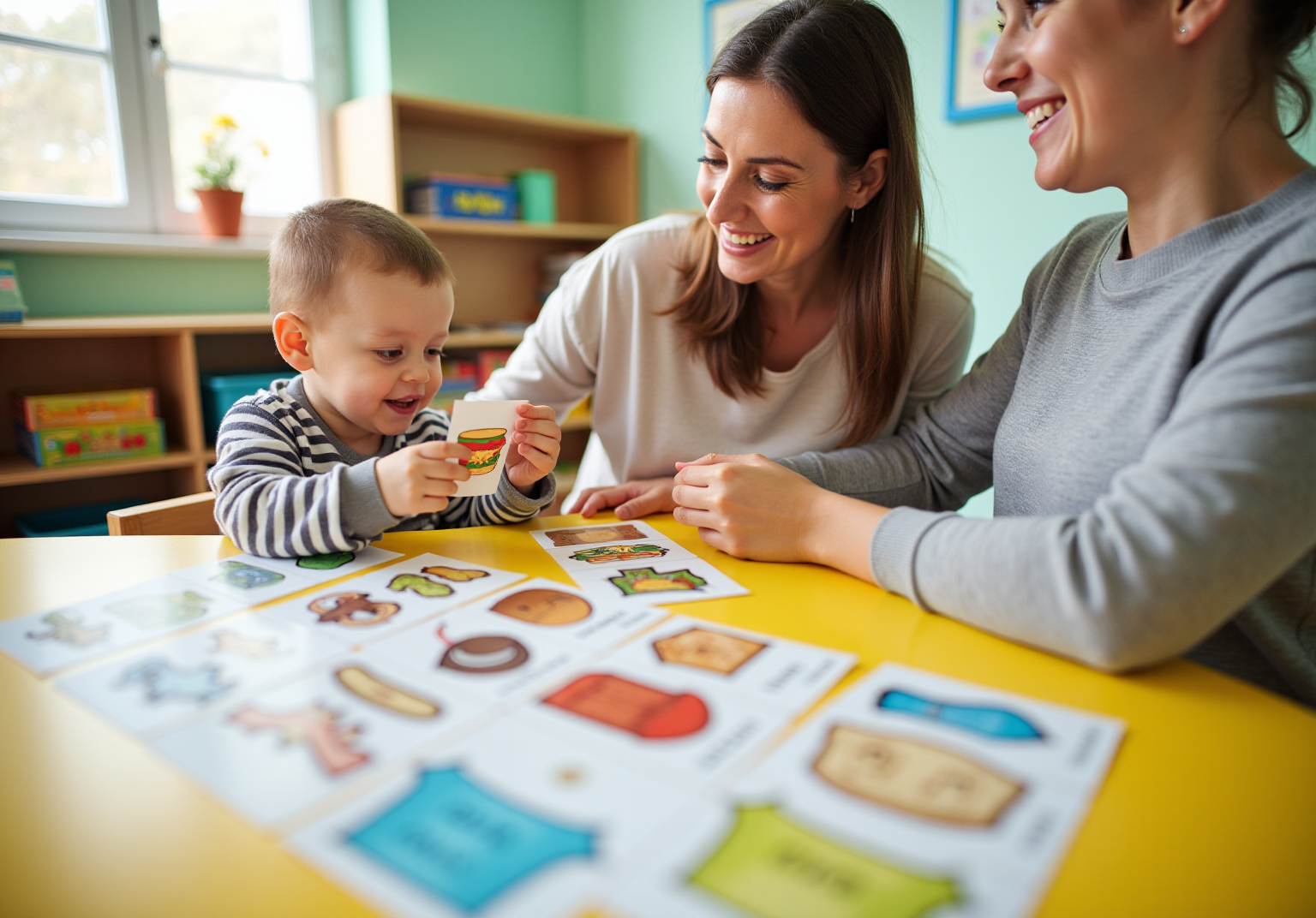
- Incorporate Visual Supports: Pictures, symbols, or visual schedules can be super helpful. They assist your child in understanding and expressing their needs. Visual aids can effectively assist in by bridging the gap between verbal and non-verbal communication, making it easier for individuals to engage and understand.
- Promote Non-Verbal Interaction: Encourage your child to use gestures, sign language, or picture exchange systems (PECS) to express their needs and feelings. This not only fosters independence but also boosts their self-expression.
- Model Interaction: Show them how it’s done! Participate in conversations and use expressive language. When your child sees you in action, they’re more likely to imitate those behaviors, reinforcing their learning through observation.
- Create Opportunities for Interaction: Set up situations where your child can practice conversation, like during playtime or daily routines. For example, instead of handing them a toy, ask them to request it. This encourages active participation and makes improving communication skills in autism a fun aspect of their daily activities.
- Be Patient and Give Time: It’s important to allow your child enough time to process information and respond. Avoid interrupting or finishing their sentences; this can discourage them from trying to communicate on their own. Acknowledging their efforts builds confidence and encourages them to keep trying.
Now, implementing these strategies effectively requires teamwork! Collaboration among ABA therapists, special education teachers, and families is key to ensuring consistency and support across different environments. The patient-centered approach of ABA therapy adapts to each child’s unique needs, highlighting the importance of active caregiver involvement. This collaborative method can really enhance the effectiveness of communication strategies, as recent studies have shown.
Let’s take this journey together! We’re here to help you every step of the way!

Leverage Technology and Tools for Communication Support
Technology can really make a difference in improving communication skills in autism for children. At Rori Care, our clinical leadership team is all about neurodiversity and supporting youth in reaching their goals. We do this by using effective tools and resources that truly work. Let’s take a look at some of these helpful tools:
- Augmentative and Alternative Communication (AAC) Devices: Devices like speech-generating devices (SGDs) and apps such as Proloquo2Go can empower non-verbal children to express themselves using symbols and text-to-speech technology.
- Communication Tools: There are fantastic apps designed for kids with autism that focus on vocabulary development and improving communication skills in autism. Check out options like ChoiceWorks and Avaz!
- Visual Schedules: Digital visual schedules can help kids understand their daily routines and what’s expected of them. This can really ease anxiety and open up conversations about their needs.
- Social Narratives: You can use apps or printed resources to create stories that illustrate different situations and appropriate responses, helping kids navigate social interactions more smoothly.
- Video Modeling: Video modeling is a great way to show kids the right ways to interact and engage socially, allowing them to learn by watching.
- Interactive Games: Get your little one involved with interactive games that boost social skills like turn-taking and following instructions. Learning can be fun and engaging!
Let’s explore these tools together and see how they can aid in improving communication skills in autism for your child’s communication journey!

Seek Ongoing Support and Resources for Continued Development
To help your child thrive in their communication skills, let’s explore some resources and support options together:
- Professional Support: Connecting with speech-language pathologists (SLPs) who specialize in autism can be a game-changer. They offer tailored guidance and interventions that really make a difference for your child.
- Parent Support Groups: Have you thought about joining local or online support groups? It’s a great way to meet other parents who are navigating similar challenges. Sharing experiences and strategies can provide not just emotional support but also practical advice.
- Workshops and Training: Attending workshops or training sessions focused on autism and interaction strategies can really boost your skills as a parent. Rori Care offers caregiver education that equips you with ABA principles to effectively support your goals for behavior.
- Educational Resources: There are so many books, articles, and online materials out there that offer insights into autism and effective interaction strategies. Websites like Autism Speaks and the CDC are fantastic resources to check out.
- Community Initiatives: Look for community initiatives that provide skills training and workshops for youth with autism. These programs offer wonderful opportunities for practice in a nurturing setting. Rori Care’s social skills group therapy, led by our dedicated clinicians, focuses on improving communication skills in autism while enhancing social interactions and exchanges.
- Continuous Learning: Staying informed about the latest research and advancements in autism communication strategies is key. As your child grows, adapting your approach can make all the difference. At Rori Care, our clinical leadership team is committed to neurodiversity and children’s success, ensuring you have access to the best practices in supporting your child’s development.
Let’s take this journey together! We’re here to !

Conclusion
Improving communication skills in children with autism is quite the journey, isn’t it? It takes understanding, patience, and the right strategies. By recognizing the unique communication challenges these kids face, parents can really tailor their approaches to foster those meaningful interactions. Think about how important clear language, visual supports, and practice opportunities are in laying a solid foundation for enhancing communication abilities.
Throughout this guide, we’ve highlighted practical strategies – from using simple language to incorporating technology and seeking professional support. Each method is like a vital tool, bridging the gap between verbal and non-verbal communication. It empowers children to express their needs and connect with others. And let’s not forget the collaborative effort between parents, therapists, and educators! It’s crucial in creating a consistent and encouraging environment that nurtures communication growth.
As this journey continues, staying informed and engaged is key. Leveraging community resources, ongoing professional support, and utilizing technology can really enhance communication development. By committing to this process, parents not only support their child’s communication skills but also foster confidence and independence. This paves the way for successful interactions in the future.
So, let’s explore this together! Remember, you’re not alone in this. We’re here to help you every step of the way!
Frequently Asked Questions
What are some common communication challenges faced by young people with autism?
Common challenges include difficulties with verbal expression, reading social cues, and using non-verbal methods like gestures and facial expressions.
How does verbal communication manifest in children with autism?
Many children with autism experience delays in speech development or may be non-verbal. Some might engage in echolalia, repeating phrases or sentences they’ve heard instead of creating their own speech.
What non-verbal interaction difficulties do autistic children encounter?
Autistic children often struggle with understanding non-verbal signals such as eye contact, body language, and facial expressions, which can lead to misunderstandings and hinder connections with others.
What specific aspects of social communication are challenging for children on the autism spectrum?
Children on the spectrum may find it difficult to grasp conversation nuances, such as taking turns in dialogue and recognizing humor, and they may miss subtle hints that guide social exchanges.
How can sensory processing issues affect communication in autistic individuals?
Sensory sensitivities, such as being overwhelmed by noisy environments, can make it hard for young people with autism to focus on conversations or respond appropriately.
What strategies can parents use to support their children in improving communication skills?
Parents can use ABA techniques, such as visual aids, modeling appropriate interactions, and encouraging their children’s attempts to engage, to support communication development.
Why is understanding the specific challenges faced by autistic children important?
Recognizing these challenges helps parents create effective interaction strategies tailored to their child’s unique needs, aiding in the development of interpersonal skills and improving communication.
How does equipping caregivers with knowledge of ABA principles benefit autistic children?
Providing caregivers with knowledge rooted in ABA principles creates a consistent and supportive environment, maximizing the impact of interventions on the child’s communication skills.