
Introduction
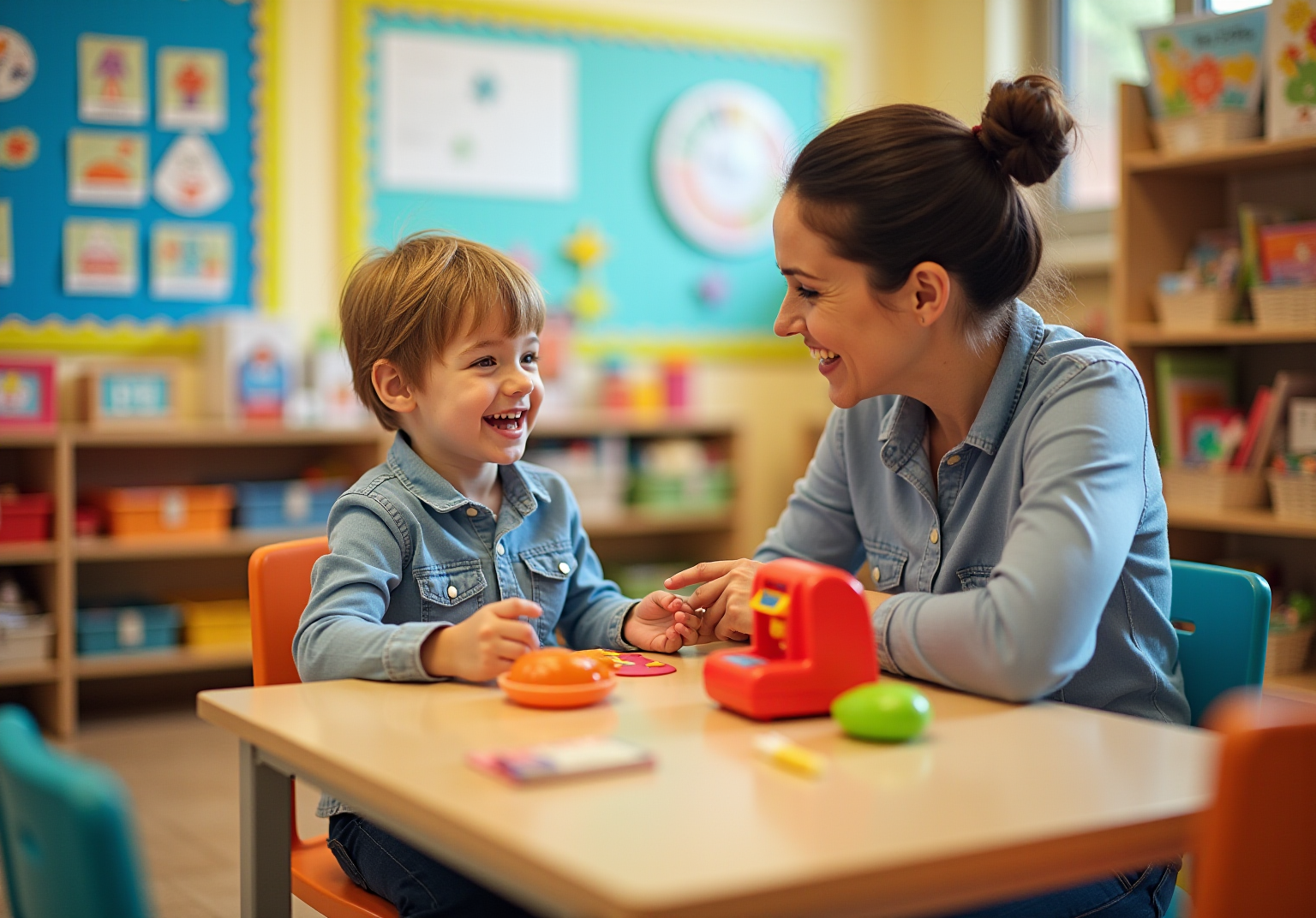
Applied Behavior Analysis (ABA) therapy has become a wonderful way to help kids, especially those on the autism spectrum, improve their social skills. In this guide, we’ll explore the structured methods of ABA, showing how it breaks down complex social interactions into simple, manageable steps. But let’s be honest – the journey to better communication and relationships can feel overwhelming for parents and caregivers.
So, what can you do to help your child not just learn but truly thrive in their social environments? Let’s dive into some strategies together! We’re here to support you every step of the way!
Understand ABA Therapy and Its Role in Social Skills Development
Applied Behavior Analysis (ABA) therapy is a fantastic method that’s been through targeted reinforcement strategies. This approach is particularly beneficial for kids with autism, as it breaks down complex interactions into manageable steps, thereby and making the learning of those crucial skills a bit easier. Recent studies show that kids involved in ABA therapy are making with ABA therapy, with many demonstrating improved and stronger friendships.
, starting conversations, and responding appropriately in different situations. Techniques like modeling, role-playing, and are used to encourage communication, build friendships, and promote independence. For instance, through , kids can practice interactions in a safe space, which helps them apply these skills in real-life situations.
Behavioral analysts emphasize that [improving social skills with ABA therapy](https://rori.care/post/the-power-of-social-reinforcement-in-aba-therapy) plays a vital role in teaching social skills, as it addresses not just the challenges but also enhances the child’s strengths. , as parents can reinforce the skills learned during therapy at home. By using reinforcement techniques, therapists can encourage preferred behaviors, leading to better connections with others and an overall improved quality of life. Plus, group therapy focused on social skills, led by qualified therapists, helps individuals interact and communicate better in a group setting, fostering stronger relationships. Understanding these basic concepts is essential for parents, as it empowers them to through improving social skills with ABA therapy. Let’s explore this together!

Create a Personalized Treatment Plan for Your Child
Creating a customized for your child focuses on and begins with a thorough look at their social skills and behavioral challenges. This usually involves:
- Direct observations
- Chatting with parents
- Using
Working alongside a is key here; they’ll help set that fit your child’s unique needs. For instance, if your little one struggles to start conversations, a goal could be for them to initiate a chat with a peer at least once during playtime.
The treatment plan should clearly outline the strategies and interventions to be used. Think or storytelling, which give your child a chance to practice these skills in a . are crucial, ensuring it evolves with your child’s progress and continues to foster their growth and development. With the right evaluation techniques and BCBA support, kids can focus on with ABA therapy, leading to better interactions and connections. Let’s explore this together!

Implement Effective Strategies for Social Skills Training
in children with autism may seem like a big task, but it’s totally doable! and are super helpful.
- Modeling is all about showing the right way to interact, letting your child watch and learn from real-life examples.
- Role-playing, on the other hand, gives them a safe space to practice things like . For instance, setting up scenarios like grocery shopping or playdates lets kids try out their responses in a comfortable environment, helping them understand social cues and expectations better.
But that’s not all! with ABA therapy, led by trained therapists, can significantly enhance communication and friendships among peers. This group setting fosters deeper connections, allowing kids to grow their skills in a .
- , can also help clarify social dynamics.
- In fact, studies show that using storytelling techniques helps kids grasp social exchanges and expectations more effectively.
- Encouraging participation in organized group activities allows children to practice their skills in low-pressure situations, building their confidence and social competence.
And let’s not forget about ! Praising your child for successful interactions can really lift their self-esteem and motivate them to keep practicing these . As an ABA therapist puts it, ‘Modeling and role-playing are fundamental in improving social skills with ABA therapy, helping young individuals navigate social situations effectively.’
Plus, it’s super important to equip caregivers with ABA principles and strategies to through active engagement and data collection.
So, let’s explore this together! We’re here to help you every step of the way!

Collaborate with Educators and Therapists for Consistent Support
To work well with educators and therapists, it’s super important to keep those . Share your child’s and goals with teachers and other professionals involved in their care. Regular meetings can really help everyone stay on the same page about strategies and progress, creating a strong .
Encourage teachers to weave . Simple things like using visual supports and structured routines can really complement therapy goals. Plus, having your child’s therapist join school meetings can offer , making the educational experience even better.
This teamwork not only reinforces the skills your child is learning in therapy but also aids in improving social skills with , creating a . By sharing , Rori Care empowers caregivers to support their child’s behavioral goals, which is essential for and leading to a more connected support system. Let’s explore this together!

Conclusion
Improving a child’s social skills through ABA therapy is truly a journey that empowers both kids and their families. This approach breaks down complex social interactions into manageable steps, helping children develop essential skills like communication, understanding social cues, and making friends. With targeted reinforcement strategies, ABA therapy offers a structured framework that enhances kids’ abilities to connect with others, leading to a richer quality of life.
Let’s dive into some key components that are essential for successful social skills development. It all starts with understanding the foundational principles of ABA therapy and creating personalized treatment plans. Collaboration between therapists, educators, and families is so important! Techniques like modeling, role-playing, and positive reinforcement are effective strategies for teaching social skills. Plus, family involvement and consistent communication with educators play a crucial role in reinforcing these skills across different settings.
In summary, integrating ABA therapy into a child’s social skills training isn’t just beneficial; it’s vital for fostering meaningful connections. When families and professionals come together to implement these strategies, they create a supportive environment that nurtures growth and development. Embracing this collaborative approach can lead to significant improvements in a child’s ability to navigate social situations, paving the way for lasting friendships and a fulfilling social life. Let’s explore this together!
Frequently Asked Questions
What is ABA therapy and its purpose?
Applied Behavior Analysis (ABA) therapy is a scientifically validated method aimed at enhancing specific behaviors through targeted reinforcement strategies, particularly beneficial for kids with autism.
How does ABA therapy help in social skills development?
ABA therapy breaks down complex interactions into manageable steps, helping children improve their social skills, communication abilities, and the formation of friendships.
What techniques are used in ABA therapy to improve social skills?
Techniques such as modeling, role-playing, and positive reinforcement are employed to encourage communication, build friendships, and promote independence.
Why is family involvement important in ABA therapy?
Family involvement is crucial as parents can reinforce the skills learned during therapy at home, enhancing the effectiveness of the therapy.
How does role-playing benefit children in ABA therapy?
Role-playing allows children to practice interactions in a safe environment, helping them apply learned skills in real-life situations.
What role do behavioral analysts play in ABA therapy?
Behavioral analysts focus on improving social skills by addressing challenges and enhancing the child’s strengths, which is vital for effective social skills development.
What is the significance of group therapy in ABA?
Group therapy, led by qualified therapists, helps individuals interact and communicate better in a group setting, fostering stronger relationships.
How can parents support their child’s social development through ABA therapy?
Parents can support their child’s social development by understanding the concepts of ABA therapy and reinforcing learned skills at home.
List of Sources
- Understand ABA Therapy and Its Role in Social Skills Development
- The Numbers Don’t Lie: Revealing Autism Therapy Statistics | Above and Beyond Therapy (https://abtaba.com/blog/autism-therapy-statistics)
- Inspirational ABA and Autism Quotes – Mrs. Moe’s Modifications (https://mrsmoesmodifications.com/inspirational-aba-and-autism-quotes)
- Success Rates of ABA Therapy | Advanced Autism Services (https://advancedautism.com/post/success-rates-of-aba-therapy)
- ABA Therapist Statistics & Demographics In The US (https://crossrivertherapy.com/aba-therapy-success-rates)
- Quotes About Autism – Arms Wide Open ABA Therapy (https://armswideopenaba.com/blog/quotes-about-autism)
- Create a Personalized Treatment Plan for Your Child
- Applied Behavior Analysis (ABA) Statistics: Data, Effectiveness, and Evidence-Based Practices (https://nexoaba.com/applied-behavior-analysis-statistics)
- Success Rates of ABA Therapy | Advanced Autism Services (https://advancedautism.com/post/success-rates-of-aba-therapy)
- The Numbers Don’t Lie: Revealing Autism Therapy Statistics | Above and Beyond Therapy (https://abtaba.com/blog/autism-therapy-statistics)
- Quotes About Autism – Arms Wide Open ABA Therapy (https://armswideopenaba.com/blog/quotes-about-autism)
- Resources | Golden Steps ABA (https://goldenstepsaba.com/resources/success-rates-of-aba-therapy)
- Implement Effective Strategies for Social Skills Training
- The Role of Role-Playing in Developing Social Skills in ABA Therapy for Autism (https://buildingblockstherapy.org/blog/the-role-of-role-playing-in-developing-social-skills-in-aba-therapy-for-autism)
- The effectiveness of social training in individuals with autism spectrum disorder (ASD): a systematic review and transfer analysis – Scientific Reports (https://nature.com/articles/s41598-024-83953-9)
- Celebrating Neurodiversity: Inspiring Words on Autism | Step Ahead ABA (https://stepaheadaba.com/blog/autism-quotes)
- How to Use Role-Playing in ABA Therapy for Skill Development | Discovery ABA (https://discoveryaba.com/aba-therapy/how-to-use-role-playing-in-aba-therapy-for-skill-development)
- Effectiveness of social skills training interventions for children with autism spectrum disorder: A systematic review and meta-analysis – PMC (https://pmc.ncbi.nlm.nih.gov/articles/PMC11918677)
- Collaborate with Educators and Therapists for Consistent Support
- Inspirational ABA and Autism Quotes – Mrs. Moe’s Modifications (https://mrsmoesmodifications.com/inspirational-aba-and-autism-quotes)
- The Numbers Don’t Lie: Revealing Autism Therapy Statistics | Above and Beyond Therapy (https://abtaba.com/blog/autism-therapy-statistics)
- vocal.media (https://vocal.media/bookclub/30-parents-and-teachers-working-together-quotes)
- The Role of Parent Education in ABA Therapy Success (https://supportivecareaba.com/statistics/the-role-of-parent-education-in-aba-therapy-success)