

Introduction
Understanding the difference between Level 1 Autism and Asperger’s Syndrome goes beyond just terminology; it reflects a wide range of experiences that shape lives. As we become more aware of autism spectrum disorders, it’s crucial to grasp the subtle differences between these two classifications.
This article will explore the key characteristics, treatment options, and the impact of recent diagnostic changes. By doing so, we aim to empower families and professionals alike.
How can recognizing these differences help us enhance support strategies and create a more inclusive environment for those on the spectrum? Let’s explore this together!
Defining Level 1 Autism and Asperger’s Syndrome
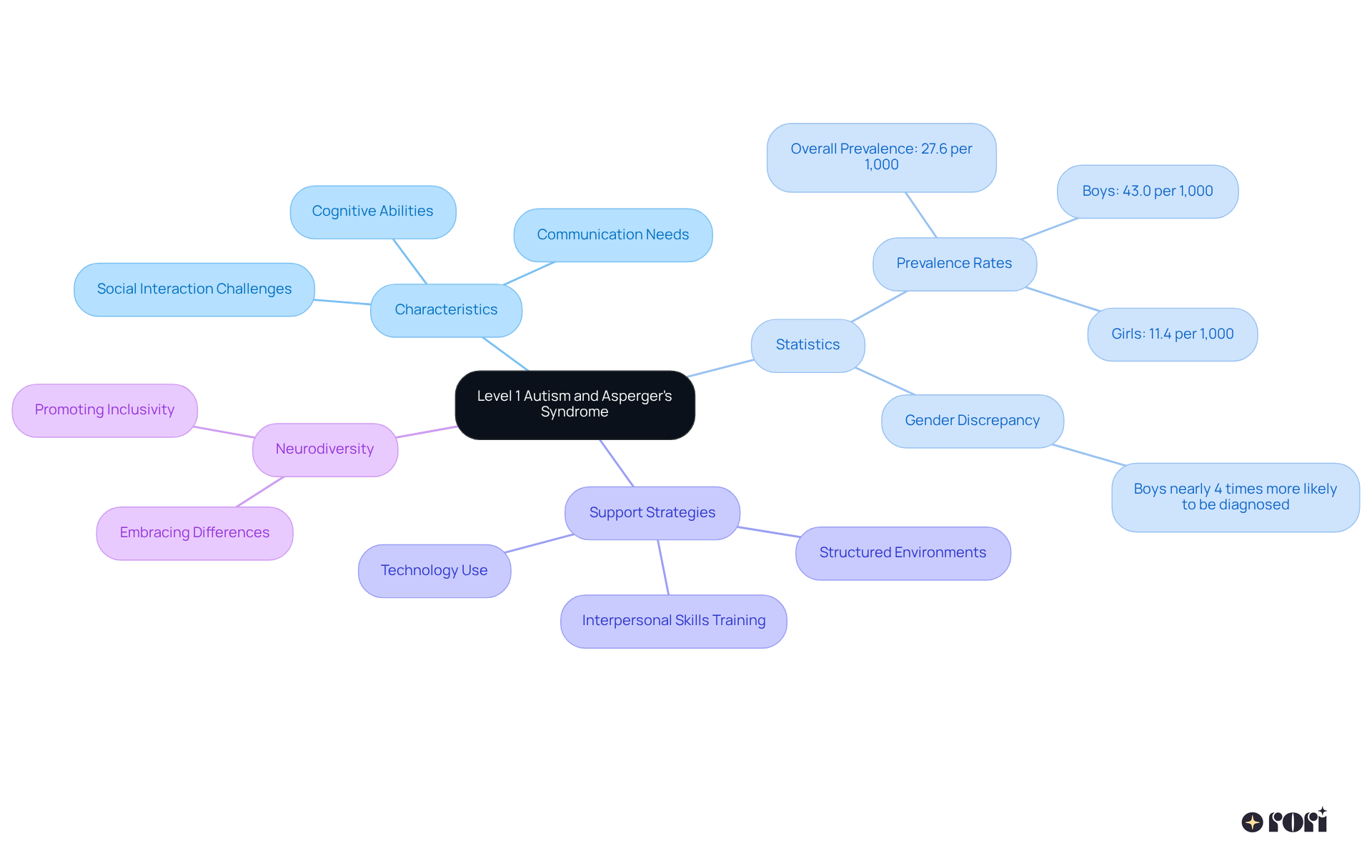
The discussion of highlights that this condition, often referred to as high-functioning autism, involves a need for support in communication and behavioral challenges. Individuals may find , struggle with interpreting social cues, and have difficulty adapting to changes in their routines.
Interestingly, Asperger’s condition, which used to be viewed as a separate diagnosis, shares many traits when considering . However, it is generally associated with stronger verbal communication skills and enhanced cognitive abilities. Both conditions fall under the Spectrum Disorder (ASD) umbrella, but the key difference when comparing level 1 autism vs Asperger’s lies in the level of support required and the specific challenges encountered.
Did you know that boys are nearly four times more likely to be diagnosed with autism than girls? This statistic is reflected in the . Currently, the overall prevalence of ASD stands at 27.6 per 1,000 8-year-old children, with recent studies indicating that about 1 in 36 children are diagnosed with ASD. This highlights the critical need for .
Experts emphasize , such as a strong focus on specific interests and challenges in interpersonal reciprocity. Many individuals on the spectrum share personal stories that reveal how receiving a diagnosis can lead to greater self-awareness, promoting self-advocacy and acceptance.
When it comes to real-world support for individuals, understanding the differences between level 1 autism vs Asperger’s is crucial, with strategies like:
These approaches aim to empower individuals, helping them navigate social situations and build independence. As we continue to discuss autism, embracing neurodiversity and recognizing the strengths of those with these diagnoses is essential for creating inclusive communities. Let’s explore this together!
Comparing Symptoms: Level 1 Autism vs Asperger’s
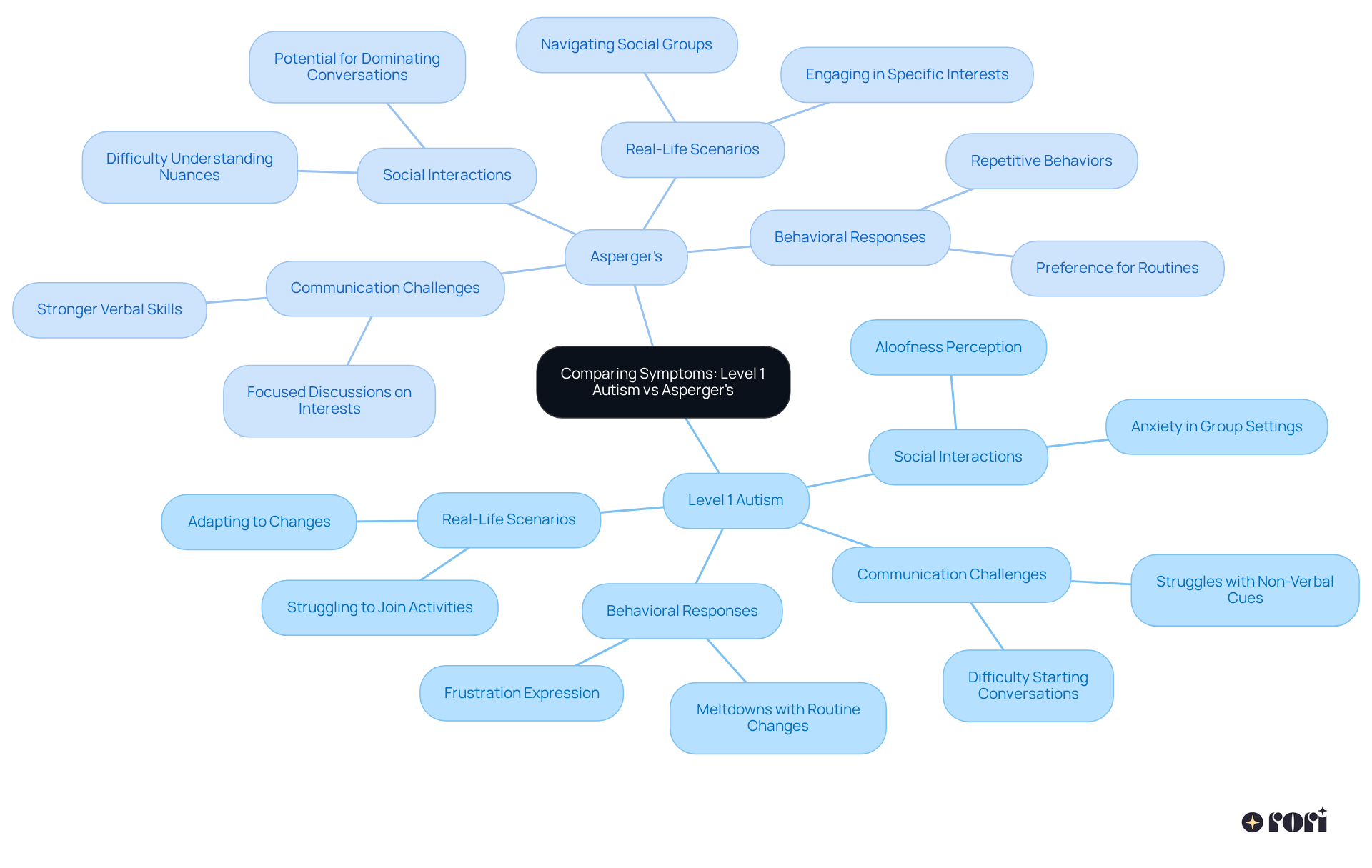
Individuals often compare vs asperger’s, as both can lead to with others. This can sometimes come across as aloofness or a lack of interest in . They might find it tough to start conversations or pick up on non-verbal cues, which can lead to misunderstandings in social situations. On the other hand, individuals with usually show stronger verbal skills and can engage in conversations, although their discussions might focus heavily on specific interests.
Did you know that about 1 in 31 youths in the U.S. has autism? This statistic really highlights how common these conditions are. Both groups may show , but the intensity and nature of these behaviors can vary quite a bit. For example, a child with might have a , while another child with a similar condition may express frustration verbally but adapt more easily to changes.
Experts suggest that even though individuals with might have better interpersonal communication skills, they still face , especially when it comes to . This distinction sheds light on the in how individuals with level 1 autism vs asperger’s interact and respond behaviorally.
Consider real-life scenarios, like a young person with Level 1 developmental disorder struggling to join a group activity due to anxiety, compared to another young person with a specific type of autism who might dominate the conversation with their interests. These examples really illustrate the differences in experiences and challenges faced by these individuals. Let’s explore this together and see how we can !
Treatment Modalities: Approaches for Level 1 Autism and Asperger’s
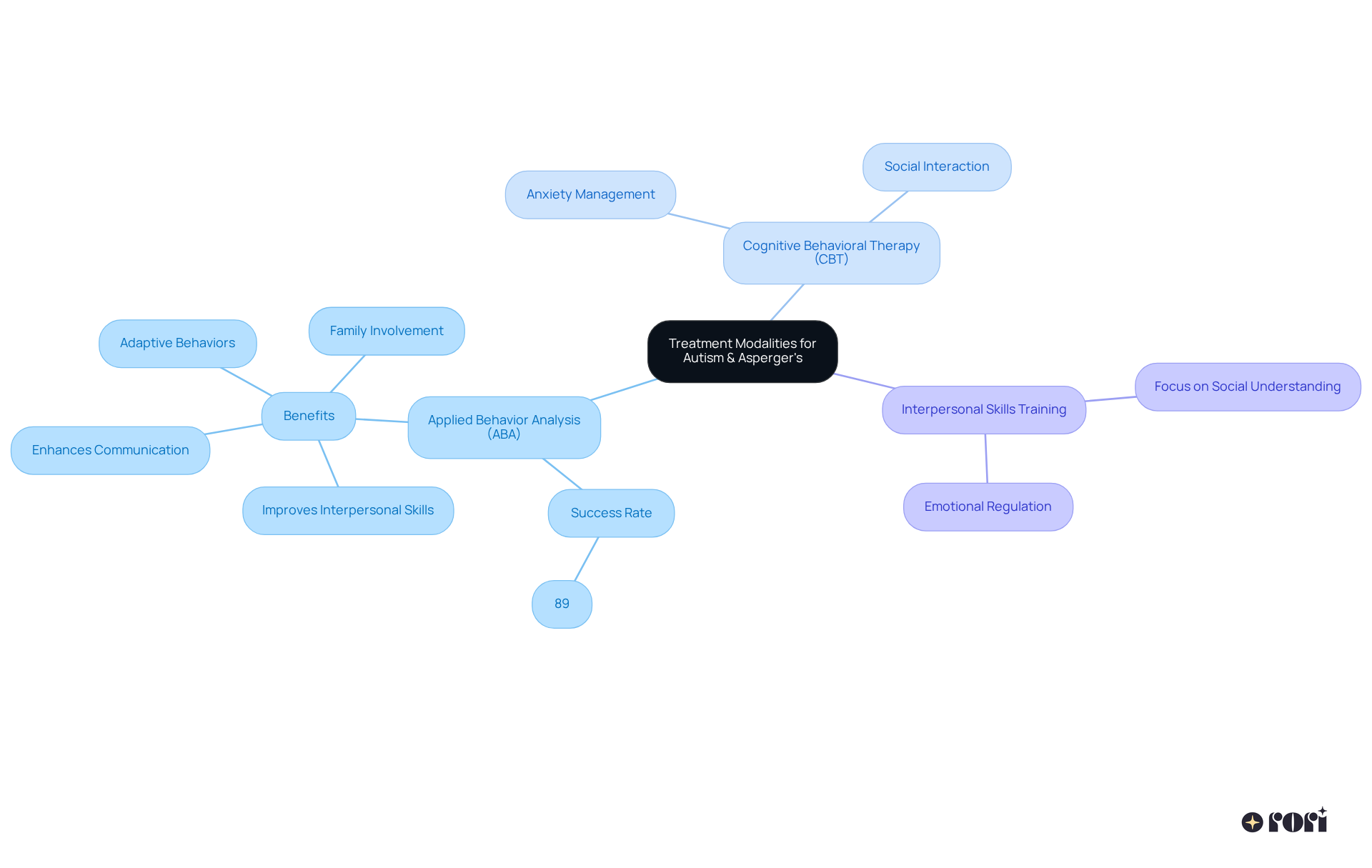
When it comes to treatment for level 1 autism vs Asperger’s, many parents find that can be a game changer! With an impressive , it helps children with autism spectrum conditions improve their , communication, and adaptive behaviors. For those with , it often involves training and , especially to address anxiety and social interaction challenges.
While both groups benefit from tailored approaches, the focus can differ. When considering level 1 autism vs Asperger’s, treatment for level 1 autism usually emphasizes , while Asperger’s treatment tends to prioritize enhancing . Family participation is so important in both scenarios, allowing parents to actively support their child’s development.
Did you know that research shows 47% of ? This highlights the importance of . Let’s explore this together and see how we can support your journey!
Understanding DSM-5 Changes: The Integration of Asperger’s into Autism Spectrum Disorder
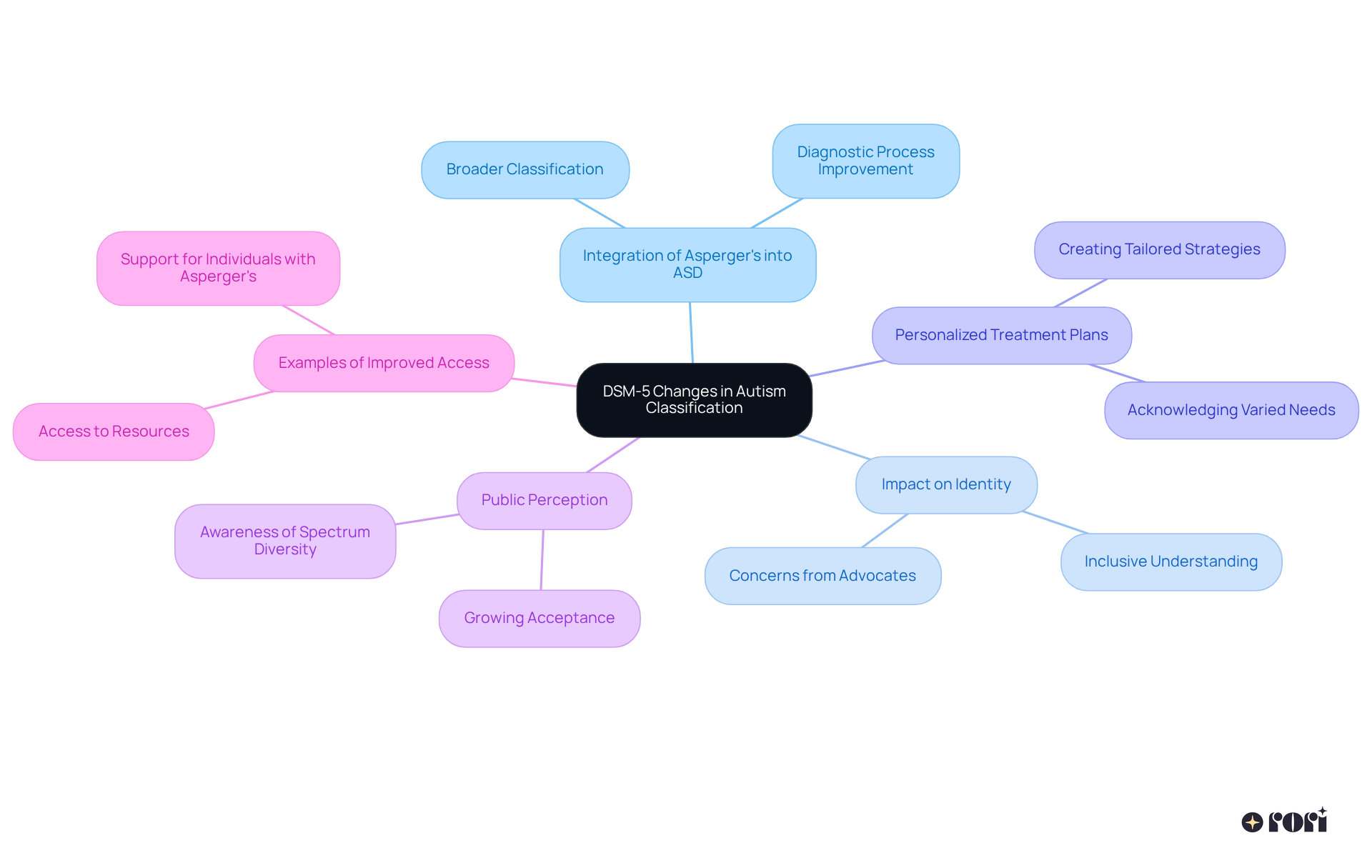
The publication of the Diagnostic and Statistical Manual of Mental Disorders, Fifth Edition (DSM-5) in 2013 brought about a big change in how we classify autism-related disorders. The classification of Asperger’s Syndrome falls under the broader , highlighting the distinction between . This reclassification aims to make the diagnostic process smoother and better reflect the range of autism symptoms.
While some advocates worry that this integration might blur the unique identity of individuals on the spectrum, many mental health professionals believe it fosters a more . For instance, a well-known mental health expert shared, “The inclusion of Asperger’s syndrome into ASD enables a more thorough approach to treatment, acknowledging the varied needs of individuals on the spectrum.” This shift highlights the importance of creating that cater to the unique challenges individuals face, regardless of whether they have or another diagnosis.
Real-world examples show how this integration has for those previously identified with Asperger’s, helping to create a more unified approach to autism care. Plus, , as awareness of the spectrum’s diversity continues to grow. Did you know that according to the CDC, ? This emphasizes the need for effective and inclusive treatment strategies.
At Rori Behavioral Innovations Inc., we align with these changes by focusing on that empowers families and clinicians to navigate the complexities of . Let’s explore this together!
Conclusion
Understanding the distinctions between Level 1 autism and Asperger’s Syndrome is so important for fostering awareness and support for individuals on the autism spectrum. While both conditions share common traits and challenges, they truly require different approaches in terms of support and treatment. Recognizing these differences not only helps in more accurate diagnosis but also enhances the development of tailored interventions that can significantly improve the quality of life for those affected.
Key insights reveal that:
- Level 1 autism often needs support in communication and behavioral challenges.
- Asperger’s is generally associated with stronger verbal skills and cognitive abilities.
It’s crucial to emphasize the importance of:
- Early intervention
- Personalized strategies
- The role of therapies like Applied Behavior Analysis (ABA) and cognitive behavioral therapy (CBT) in empowering individuals
These insights highlight the need for a nuanced understanding of autism spectrum disorders, especially with the DSM-5’s reclassification aiming to create a more inclusive framework for diagnosis and treatment.
Ultimately, embracing neurodiversity and advocating for tailored support strategies is essential for building inclusive communities. As society continues to evolve in its understanding of autism, fostering acceptance and awareness will pave the way for better resources and opportunities for individuals with Level 1 autism and Asperger’s. Let’s engage in conversations, share experiences, and seek knowledge about these conditions together! This can lead to a more compassionate and informed approach to autism spectrum disorders.
Frequently Asked Questions
What is level 1 autism and how does it relate to Asperger’s Syndrome?
Level 1 autism, often referred to as high-functioning autism, involves a need for support in communication and behavioral challenges. Asperger’s Syndrome shares many traits with level 1 autism but is generally associated with stronger verbal communication skills and enhanced cognitive abilities.
What are some common challenges faced by individuals with level 1 autism and Asperger’s Syndrome?
Individuals may find social interactions tricky, struggle with interpreting social cues, and have difficulty adapting to changes in their routines.
How prevalent is autism, and are there differences in diagnosis rates between genders?
The overall prevalence of Autism Spectrum Disorder (ASD) is currently 27.6 per 1,000 8-year-old children, with about 1 in 36 children diagnosed with ASD. Boys are nearly four times more likely to be diagnosed with autism than girls.
What are some unique characteristics associated with Asperger’s Syndrome?
Individuals with Asperger’s Syndrome often have a strong focus on specific interests and may experience challenges in interpersonal reciprocity.
Why is receiving a diagnosis important for individuals on the spectrum?
Receiving a diagnosis can lead to greater self-awareness, promoting self-advocacy and acceptance among individuals on the spectrum.
What strategies can support individuals with level 1 autism and Asperger’s Syndrome?
Effective strategies include structured environments, interpersonal skills training, and the use of technology to help individuals navigate social situations and build independence.
How does the discussion of autism emphasize the importance of neurodiversity?
Embracing neurodiversity and recognizing the strengths of individuals with autism is essential for creating inclusive communities.
List of Sources
- Defining Level 1 Autism and Asperger’s Syndrome
- songbirdcare.com (https://songbirdcare.com/articles/autism-statistics)
- Data and Statistics on Autism Spectrum Disorder (https://cdc.gov/autism/data-research)
- Autism Spectrum Disorder (ASD) (https://nimh.nih.gov/health/statistics/autism-spectrum-disorder-asd)
- Autism statistics and facts | Autism Speaks (https://autismspeaks.org/autism-statistics-asd)
- 107 Favorite Quotes About Autism and Aspergers (https://the-art-of-autism.com/favorite-quotes-about-autism-and-aspergers)
- Comparing Symptoms: Level 1 Autism vs Asperger’s
- Autism Statistics You Need To Know in 2024 (https://autismparentingmagazine.com/autism-statistics)
- Autism statistics and facts | Autism Speaks (https://autismspeaks.org/autism-statistics-asd)
- Data and Statistics on Autism Spectrum Disorder (https://cdc.gov/autism/data-research)
- Prevalence and Early Identification of Autism Spectrum … (https://cdc.gov/mmwr/volumes/74/ss/ss7402a1.htm)
- carleton.ca (https://carleton.ca/pmc/level-1-autism-spectrum-disorder-formerly-known-as-aspergers-syndrome)
- Treatment Modalities: Approaches for Level 1 Autism and Asperger’s
- connectncareaba.com (https://connectncareaba.com/blog/aba-therapy-effectiveness-for-autism)
- The Numbers Don’t Lie: Revealing Autism Therapy Statistics | Above and Beyond Therapy (https://abtaba.com/blog/autism-therapy-statistics)
- Patient Outcomes After Applied Behavior Analysis for Autism Spectrum Disorder – PMC (https://pmc.ncbi.nlm.nih.gov/articles/PMC8702444)
- Resources | Golden Steps ABA (https://goldenstepsaba.com/resources/success-rates-of-aba-therapy)
- 81 ABA Therapy Statistics You Need to Know – apricott ABA (https://apricott.com/resources/aba-therapy-statistics)
- Understanding DSM-5 Changes: The Integration of Asperger’s into Autism Spectrum Disorder
- Data and Statistics on Autism Spectrum Disorder (https://cdc.gov/autism/data-research)
- yellowbusaba.com (https://yellowbusaba.com/post/autism-statistics)
- neurologyadvisor.com (https://neurologyadvisor.com/features/autism-statistics-prevalence)
- Autism diagnosis on the rise, according to trends study | Autism Speaks (https://autismspeaks.org/science-news/why-autism-increasing)
- Autism statistics and facts | Autism Speaks (https://autismspeaks.org/autism-statistics-asd)