

Introduction
Elopement is a behavior that many parents of children with autism encounter, and it can be quite concerning. Did you know that nearly half of these children wander away from safe environments? Understanding the reasons behind this behavior is essential for parents who want to protect their little ones while also fostering their independence.
So, what can families do to prevent elopement and create a safer space? In this article, we’ll explore effective ABA techniques that empower parents to tackle elopement behaviors, enhance safety, and support their children’s growth. Let’s dive in together and discover some actionable strategies that can make a real difference!
Define Elopement in Autism: Understanding the Behavior
, which is often referred to as wandering, is something many youngsters with developmental disorders experience. It happens when they leave a safe, supervised environment without permission. This behavior can manifest differently for each child—some might run away from caregivers, while others may be from home or bolting in public places. In fact, studies reveal that nearly 50% of children with developmental disorders engage in wandering behaviors. Sadly, many of these kids are at risk of getting lost or . Alarmingly, 26% of aba were reported missing long enough to raise concerns, underscoring the urgent need for to tackle this issue.
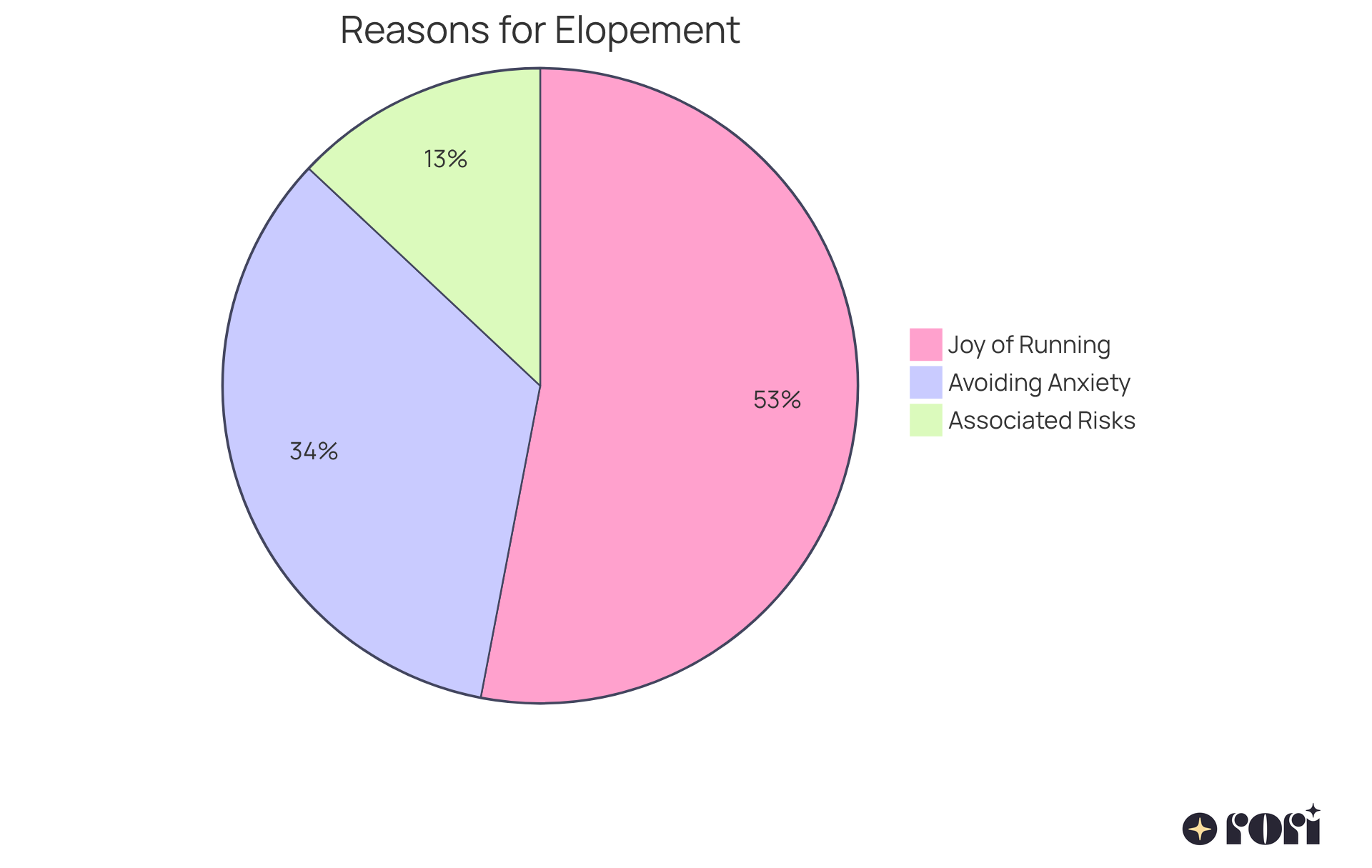
means recognizing it as a , rather than just a simple behavioral problem. Kids may elope to explore their surroundings, escape overwhelming situations, or find comforting sensory experiences, which is often referred to as . For instance, 53% of parents reported that their children flee for the joy of running or discovering new things, while 34% mentioned it’s a way to avoid anxiety. This complexity shows how important it is to address with compassion and quick action.
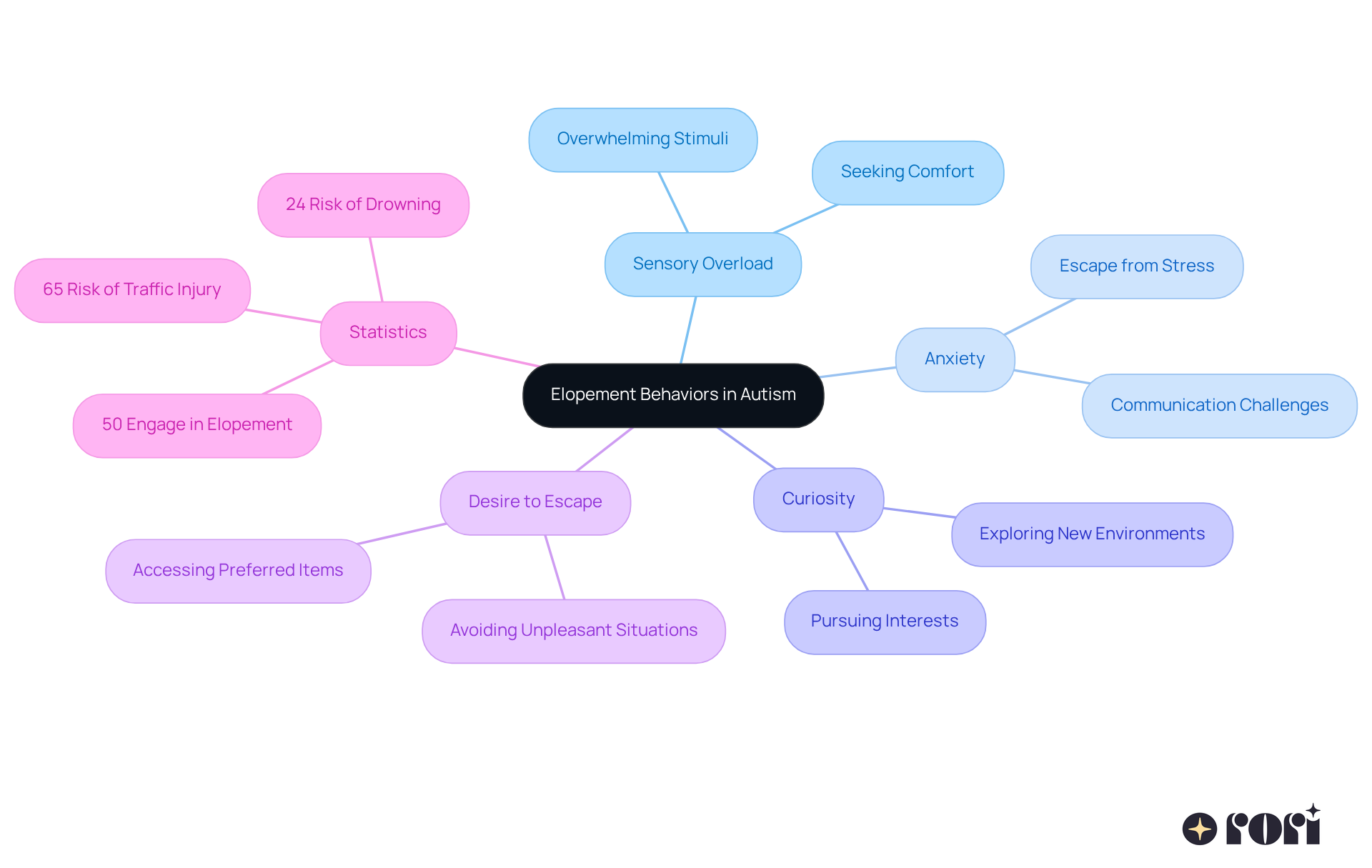
Experts stress the when it comes to . Dr. Paul Law, a leading researcher in this field, points out that these actions can put young individuals in dangerous situations, highlighting the need for interventions that support affected families. By understanding the triggers and motivations behind , parents can better prepare and implement strategies to enhance their children’s safety and well-being. is crucial in this journey of , as it provides them with the knowledge and skills necessary to help their children achieve behavioral goals. This education not only boosts caregivers’ confidence but also reduces stress and improves family dynamics. Plus, it’s vital to note that 65% of missing youths have had close encounters with traffic injuries, and 24% faced drowning—reminding us of the significant dangers associated with .
Let’s explore this together! We’re here to help you every step of the way!
Identify Causes and Triggers of Elopement Behaviors
can arise from a variety of triggers, each shaped by the child’s unique experiences and challenges. Common factors include . For example, a young child might elope to grab a favorite toy or to get away from the overwhelming sights and sounds of a busy store. Communication challenges also play a significant role; when kids struggle to express their needs or feelings, they may run away as a way to escape or express themselves.
Did you know that nearly 50% of children with autism engage in elopement behaviors? Often, these actions are influenced by specific motivations. Sensory sensitivities can lead a child to wander off in search of a more comfortable environment or sensory experiences. Additionally, children may run away to access items or activities they enjoy, highlighting the importance of .
Safety is a huge concern here. Alarmingly, 24% of those who went missing were at risk of drowning, and 65% faced traffic injury risks. Parents are encouraged to closely monitor their children’s behaviors to spot patterns or situations that commonly lead to elopement. Keeping a detailed journal of incidents can be incredibly helpful in identifying these triggers, paving the way for proactive strategies.
Incorporating the principles of can empower parents to tackle these behaviors effectively. By focusing on , measurable goals, and evidence-based strategies, parents can create a supportive environment that minimizes risks and enhances their child’s safety. As Dr. Rhonda Davin puts it, “The bottom line for reducing the chances of running away is to teach individuals the skills they need to get what they want in the environments they are in at the time.” Understanding the ABA principles helps parents foster better communication and coping skills, ultimately leading to . Plus, ABA therapy is , making it a practical option for families seeking support.
Let’s explore this together! Your journey in understanding and supporting your child is important, and we’re here to help you every step of the way!
Implement Effective Strategies to Prevent Elopement
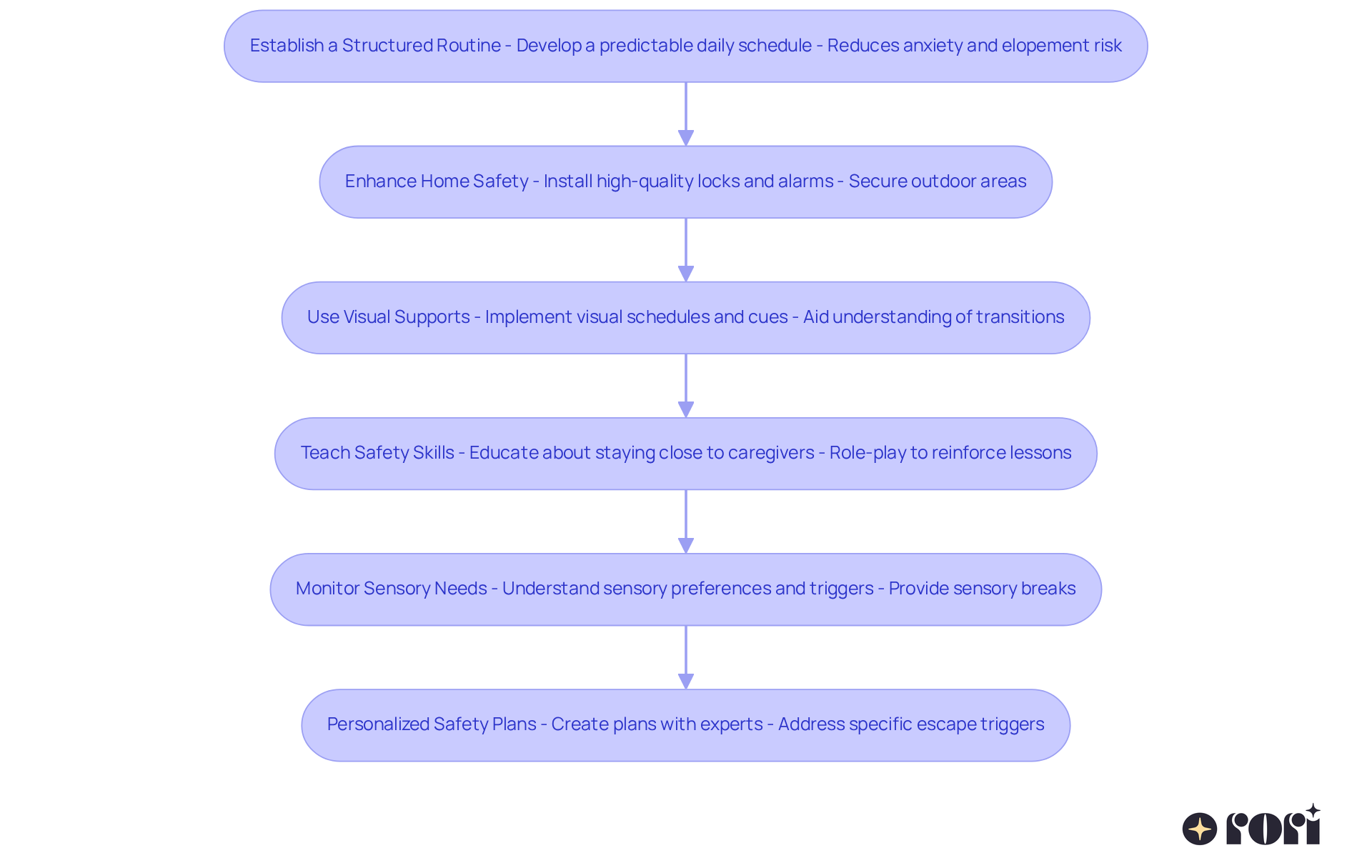
To effectively prevent , parents can adopt several key strategies that align with the principles of , which is based on the science of learning and behavior.
- : Developing a predictable daily schedule with clear transitions is crucial. Consistency fosters a sense of security, significantly reducing anxiety and the likelihood of elopement. Studies suggest that organized routines can improve independent functioning and emotional well-being in young individuals with developmental disorders. Routine disruptions can significantly affect individuals with spectrum disorder (ASD), making it essential to maintain a consistent schedule, which is a core aspect of .
- : Implementing high-quality locks on doors and windows is essential. Additionally, using alarms to alert caregivers when a door is opened can provide an extra layer of security. Enclosing the yard establishes a secure outdoor setting, which is crucial as data indicates that around 50% of youngsters with autism participate in wandering behaviors, highlighting the necessity of adopting safety precautions.
- Use Visual Supports: Visual schedules and cues are effective tools for assisting young learners in understanding expectations and transitions. By making changes more predictable, these aids can significantly decrease the chances of during routine disruptions, aligning with the that caters to each individual’s unique needs.
- : Educating your offspring about safety and the importance of staying close to caregivers is fundamental. Role-playing different situations can strengthen these lessons, increasing young people’s awareness of their environment and the possible risks of straying away. It is important to recognize that ASD wandering is usually a form of communication, indicating a need or desire, which highlights the necessity of teaching safety skills as part of a comprehensive treatment plan.
- : Understanding your child’s sensory preferences and triggers is critical. Offering sensory breaks or relaxing tools can assist in alleviating intense emotions that may result in running away. Recognizing and addressing sensory overload can significantly reduce the urge to escape from stressful situations. Grasping the underlying factors of wandering away is essential for effective prevention and intervention, which is a focus of in early intensive behavioral intervention (EIBI).
- : Working with experts to create can tackle specific escape triggers. Customizing approaches to address the distinct requirements of every individual boosts the efficiency of prevention initiatives, enabling youngsters to cultivate independence through vital skill enhancement.
By implementing these strategies, parents can create a safer environment and reduce the risk of , ultimately fostering a sense of security and stability for their offspring while supporting their growth through ABA therapy. Let’s explore this together and make a positive impact on our children’s lives!
Utilize ABA Therapy: Tailoring Interventions for Your Child
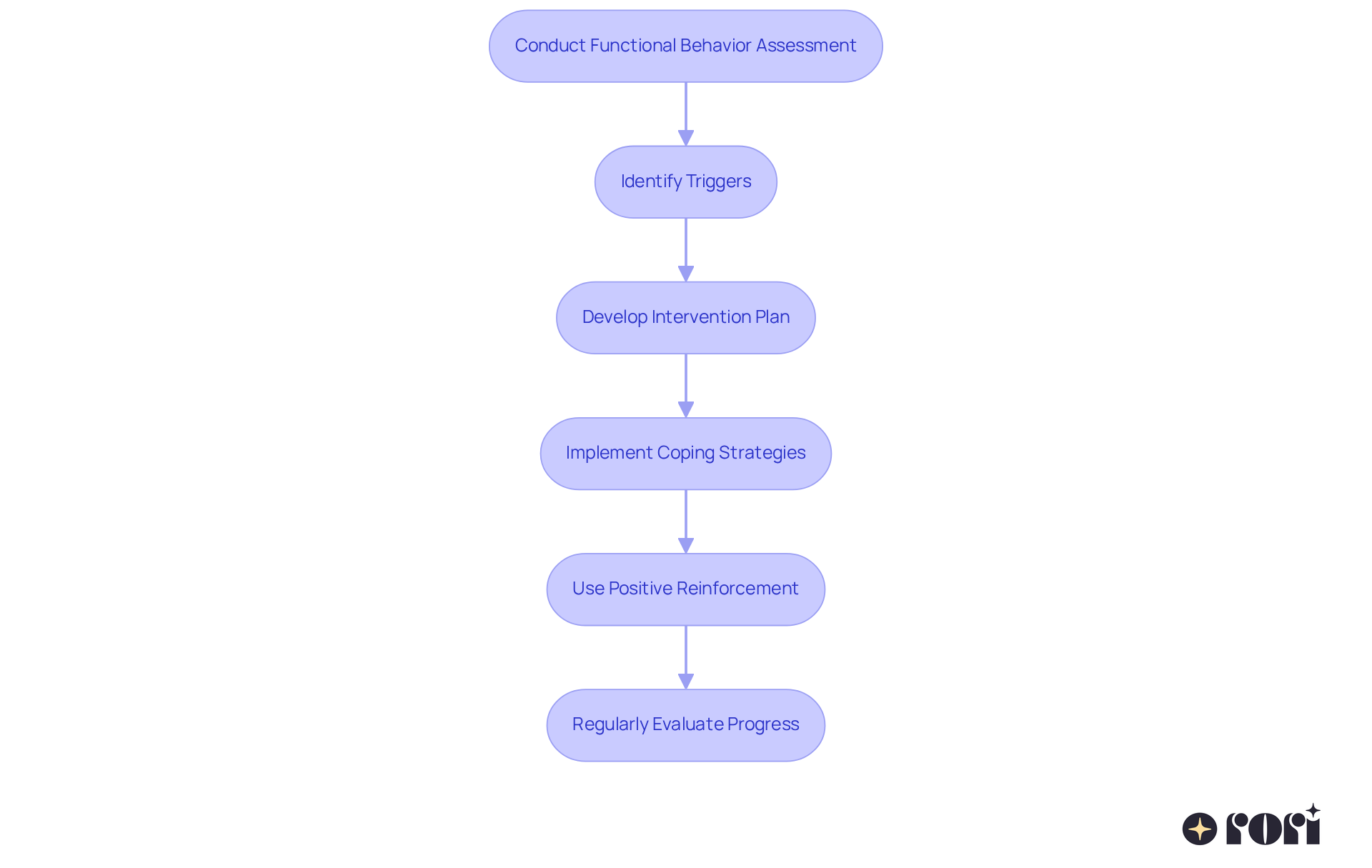
Applied Behavior Analysis (ABA) therapy is a vital tool for helping young ones with developmental disorders who might wander off. By conducting a , therapists can pinpoint what triggers a child’s . For instance, a study involving 57 kids with autism found that 94.3% exhibited challenging behaviors, underscoring how crucial FBAs are for crafting effective interventions.
If a child is prone to eloping ABA to escape a stressful situation, therapists can focus on teaching them and alternative ways to communicate. , like staying close to caregivers. It’s important to regularly evaluate and tweak the intervention plan to ensure it meets the evolving needs of the child.
is key in developing a comprehensive plan that addresses the unique . As one ABA therapist noted, ” is essential for without running away.” This teamwork not only boosts the child’s safety but also nurtures their .
Let’s explore this together! We’re here to help you every step of the way!
Conclusion
Understanding and addressing elopement behaviors in children with autism is crucial for their safety and well-being. This article sheds light on the complexity of elopement, highlighting that it often arises from various triggers like sensory overload, anxiety, and communication challenges. By viewing elopement as a multifaceted behavior rather than just a problem to fix, parents can embrace more compassionate and effective strategies to reduce these risks.
Key insights include:
- The importance of establishing structured routines
- Enhancing home safety measures
- Using visual supports
- Teaching essential safety skills
Plus, the article emphasizes the value of Applied Behavior Analysis (ABA) therapy in customizing interventions to meet each child’s unique needs. These strategies not only lower the chances of elopement but also nurture a supportive environment that encourages independence and growth.
Ultimately, the importance of proactive measures and informed interventions cannot be overstated. By implementing the strategies discussed, parents can create a safer and more nurturing environment for their children. Empowering caregivers with knowledge and tools is vital in this journey, as it not only enhances child safety but also strengthens family dynamics. Taking action today can lead to a brighter and more secure future for children with autism and their families. Let’s explore this together!
Frequently Asked Questions
What is elopement in autism?
Elopement, often referred to as wandering, is when children with developmental disorders leave a safe, supervised environment without permission. This behavior can vary, with some children running away from caregivers and others leaving home or bolting in public places.
How common is elopement among children with developmental disorders?
Studies indicate that nearly 50% of children with developmental disorders engage in wandering behaviors, highlighting the prevalence of this issue.
What risks are associated with elopement in children with autism?
Children who elope are at risk of getting lost, and alarming statistics show that 26% of children with autism who eloped were reported missing long enough to raise concerns.
Why do children with autism elope?
Elopement is a complex behavior that can stem from various motivations, such as the desire to explore their surroundings, escape overwhelming situations, or seek comforting sensory experiences. For instance, 53% of parents reported their children elope for the joy of running or discovering new things, while 34% noted it as a way to avoid anxiety.
What measures can be taken to address elopement?
Experts emphasize the importance of awareness and proactive measures. Understanding the triggers and motivations behind elopement can help parents prepare and implement strategies to enhance their children’s safety and well-being.
How can caregiver education help with elopement?
Educating caregivers is crucial as it provides them with the necessary knowledge and skills to help their children achieve behavioral goals. This education boosts caregivers’ confidence, reduces stress, and improves family dynamics.
What are the dangers associated with elopement?
The dangers of elopement are significant, with statistics showing that 65% of missing youths have had close encounters with traffic injuries and 24% faced drowning. This underscores the urgent need for effective strategies to prevent elopement.
List of Sources
- Define Elopement in Autism: Understanding the Behavior
- yellowbusaba.com (https://yellowbusaba.com/post/elopement-and-autism)
- Occurrence and Family Impact of Elopement in Children With Autism Spectrum Disorders – PMC (https://pmc.ncbi.nlm.nih.gov/articles/PMC4524545)
- Nearly Half Of Children With Autism Wander Or “Bolt” From Safe Places (https://kennedykrieger.org/stories/nearly-half-children-autism-wander-or-bolt-safe-places)
- milestoneachievements.com (https://milestoneachievements.com/post/elopement-and-autism)
- precisionfamilytherapy.com (https://precisionfamilytherapy.com/post/how-to-address-elopement-running-away-in-children-with-autism)
- Identify Causes and Triggers of Elopement Behaviors
- Elopement in Children With Autism: What You Need to Know | Relias (https://relias.com/blog/elopement-in-children-with-autism)
- pbsmidwest.com (https://pbsmidwest.com/blog/understanding-elopement-in-autism-causes-risks-and-solutions)
- Occurrence and Family Impact of Elopement in Children With Autism Spectrum Disorders – PMC (https://pmc.ncbi.nlm.nih.gov/articles/PMC4524545)
- milestoneachievements.com (https://milestoneachievements.com/post/elopement-and-autism)
- yellowbusaba.com (https://yellowbusaba.com/post/elopement-and-autism)
- Implement Effective Strategies to Prevent Elopement
- yellowbusaba.com (https://yellowbusaba.com/post/elopement-and-autism)
- The Importance of Routines for Autistic Individuals | Advanced Autism Services (https://advancedautism.com/post/autism-routines)
- Occurrence and Family Impact of Elopement in Children With Autism Spectrum Disorders – PMC (https://pmc.ncbi.nlm.nih.gov/articles/PMC4524545)
- Elopement Patterns and Caregiver Strategies – PMC (https://pmc.ncbi.nlm.nih.gov/articles/PMC6728233)
- theautismproject.org (https://theautismproject.org/training-education/elopement-prevention/elopement-prevention-general-resources)
- Utilize ABA Therapy: Tailoring Interventions for Your Child
- Elopement in Children With Autism: What You Need to Know | Relias (https://relias.com/blog/elopement-in-children-with-autism)
- A comparative effectiveness trial of functional behavioral assessment methods – PMC (https://pmc.ncbi.nlm.nih.gov/articles/PMC10843530)
- How Functional Behavior Assessments Inform Therapy for Advanced Autism | Advanced Autism Services (https://advancedautism.com/post/how-functional-behavior-assessments-inform-therapy-for-advanced-autism)
- Quotes About Autism – Arms Wide Open ABA Therapy (https://armswideopenaba.com/blog/quotes-about-autism)