
Introduction
Understanding how children with autism can effectively apply learned skills across different environments is crucial for their development and independence. 🌟 The generalization of skills in Applied Behavior Analysis (ABA) therapy not only enhances a child’s ability to navigate various social situations but also significantly impacts their long-term success. However, many parents and caregivers face challenges in promoting this vital skill transfer. How can you ensure that the lessons learned in therapy translate into real-world applications, fostering confidence and growth in your child?
This article delves into the importance of skill generalization in ABA therapy, offering practical strategies and insights to empower families on this transformative journey. Let’s explore this together! We’re here to help you every step of the way!
Define Generalization in ABA Therapy
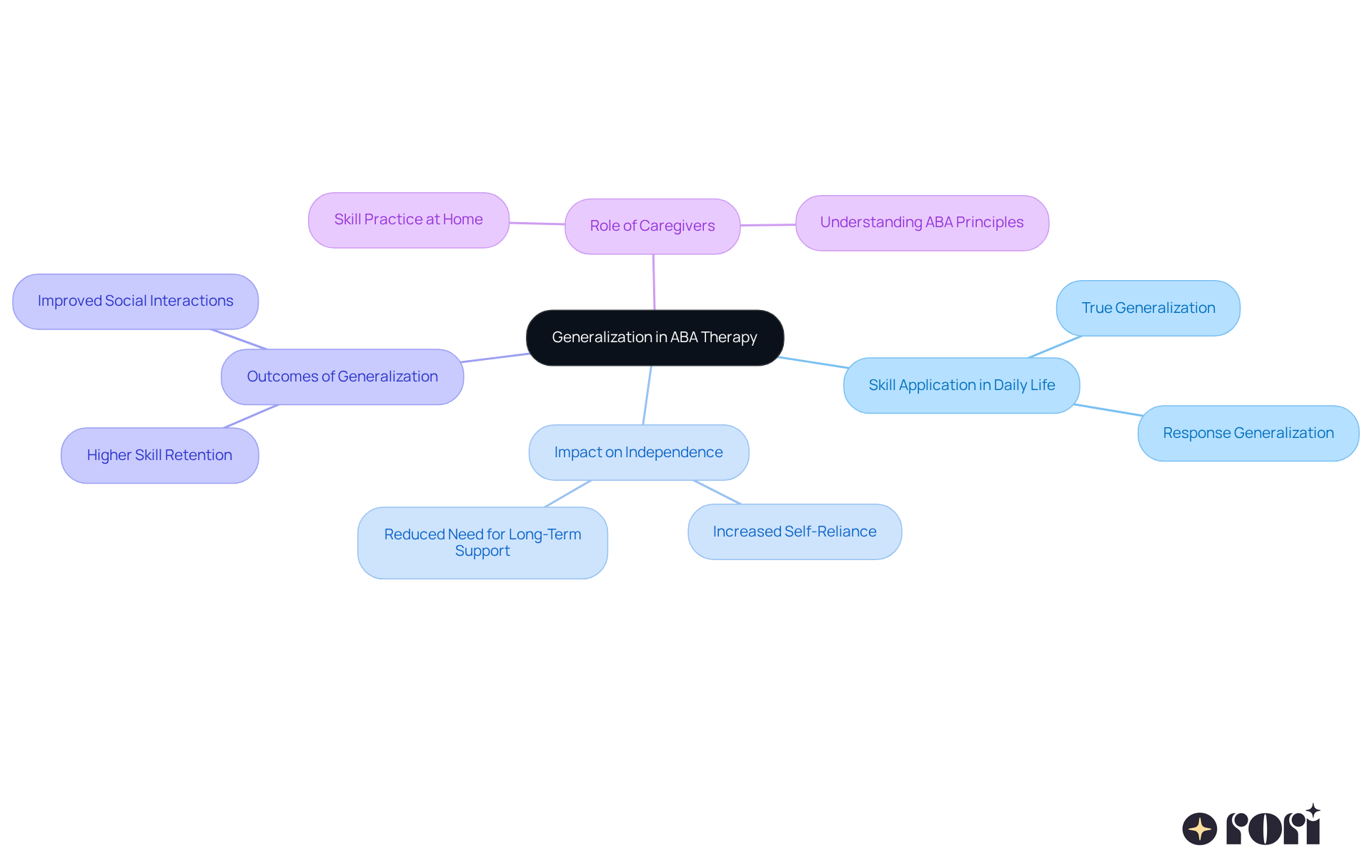
The in ABA treatment is focused on helping young people apply the skills they’ve learned in one situation to different scenarios. For instance, when a child learns to say thank you during therapy, this means they can also show gratitude when they’re with family or friends. This ability is crucial because it ensures the generalization of is applicable in everyday life, thereby .
Did you know that kids who achieve strong overall outcomes are 3.2 times more likely to keep their skills six months after treatment? Plus, comprehensive ABA programs that focus on the can by an average of 35%. By emphasizing the , we honor the ultimate goal of —helping children with autism thrive—while also enabling families to witness real progress in their loved ones’ everyday lives.
Parents and guardians play a vital role in this journey! By practicing skills at home and creating chances for their kids to use these skills in new situations, they make a huge difference. Through , they gain a , which boosts their ability to effectively. This active involvement not only leads to better behavioral outcomes but also empowers caregivers, easing stress and nurturing healthier family dynamics. Let’s explore this together and see how we can support each other on this journey!
Explain the Importance of Generalization for Skill Development
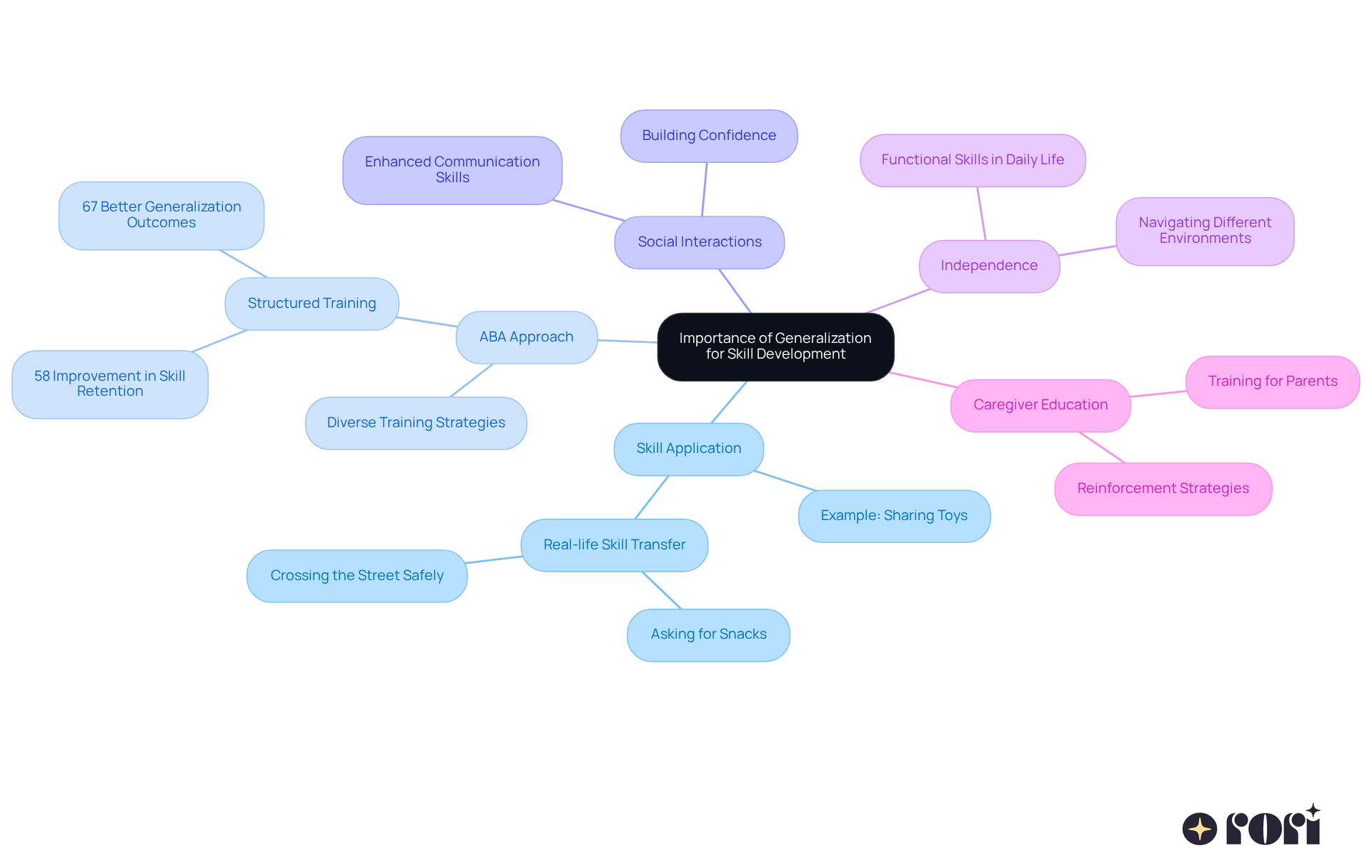
Generalization is so important for developing abilities in our kids! It helps them apply the they have learned in different situations, which is key for their growth and independence. is a tailored approach that meets a young person’s unique needs, using learning and behavior principles. When kids can use their skills in various settings—like at home, school, or in the community—they’re more likely to achieve a and remember those skills over time. This ability to , which not only boosts their confidence but also enhances their and daily functioning.
For instance, imagine a young person who learns to share toys during therapy. They can take that same behavior to the playground, showing how effectively they can apply what they’ve learned in real-life situations! Plus, this idea of abstraction reinforces that learning involves the beyond just memorizing; it’s about meaningful application in everyday life. Research shows that kids who achieve strong outcomes in broad skills are much more likely to exhibit a that allows them to maintain those abilities over time. In fact, studies indicate that those whose parents received saw a 58% improvement in .
By fostering a broad understanding, we empower our kids to navigate their environments more effectively, promoting greater independence and enhancing their overall quality of life. is vital in this journey. When caregivers are informed, they can provide the right support at home, complementing professional interventions and ensuring consistency. Let’s explore this together! We’re here to help you every step of the way!
Implement Strategies to Promote Generalization Across Settings
To effectively promote generalization across , let’s consider some friendly strategies that can make a difference:
- Instruct in Various Environments: Involve your children in applying their abilities across different settings like home, school, and community activities. This exposure is vital for helping them adjust their skills to various contexts, which can enhance the and improve their independence and social integration.
- Use : It’s great to involve a variety of instructors, such as therapists, parents, and caregivers, in the teaching process. This method encourages children to , enhancing their .
- Vary Instructions and Materials: When teaching a technique, introduce different prompts, resources, and examples. For instance, if you’re teaching a young learner to ask for a snack, try using various types of snacks and contexts—like at home versus in a store—to boost their adaptability.
- Incorporate : Embed learning opportunities into everyday activities. Engaging in social activities during playdates or family gatherings allows youngsters to use their abilities in real-life contexts, which promotes the . Group therapy focusing on social skills, guided by a qualified therapist, can further enhance these interactions, fostering improved competence and relationships among peers.
- Enhance : Remember to offer when your children effectively . This not only boosts their confidence but also motivates them to continue using what they’ve learned in various contexts.
By incorporating these strategies, you can greatly improve your child’s , resulting in better functional outcomes and increased success in daily life. Plus, studies show that children whose guardians underwent organized instruction in ABA methods demonstrated a 58% improvement in retention of abilities. This highlights the importance of .
Caregiver education empowers parents with ABA principles and strategies, enabling informed decisions that positively influence their child’s progress. For example, if a young person excels at zipping various clothing items during therapy, they can apply this skill to zip jackets, backpacks, and coat pockets in everyday situations—showcasing the effectiveness of these strategies.
Let’s explore this together! We’re here to help you every step of the way!

Identify and Overcome Barriers to Generalization
Common barriers to the can be quite challenging for parents and caregivers. Let’s take a closer look at some of these hurdles and how we can tackle them together!
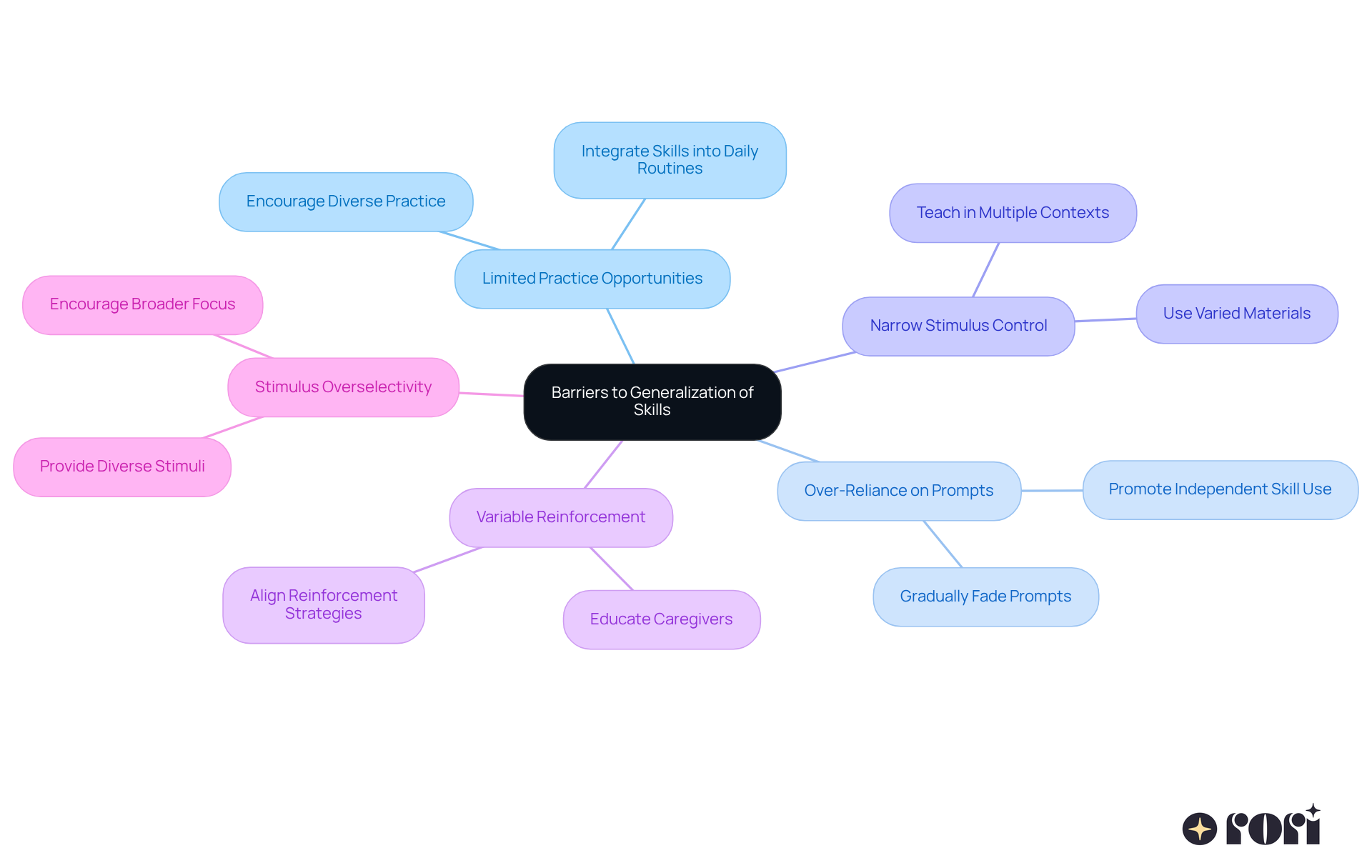
- : When children don’t get enough chances to practice their skills in different settings, it can really hold them back. It’s so important for them to have diverse practice opportunities to aid in the effectively.
- Over-Reliance on Prompts: Sometimes, kids might lean too heavily on the prompts they receive during therapy. By gradually reducing these prompts, we can encourage them to use their skills independently, which boosts their confidence and autonomy!
- can happen if skills are taught only with specific materials or in limited contexts, which can hinder the for kids to apply them more broadly. Incorporating a variety of resources and situations during instruction can really help them expand their skill usage.
- : If reinforcement varies in different environments, children might not see the value in using their skills outside of therapy. It’s essential for caregivers and educators to be on the same page with reinforcement strategies. Educating caregivers is key here; when they understand how to support their children at home, it complements what’s happening in therapy and promotes consistency.
- : This occurs when kids focus on certain features of their environment while ignoring others, which can limit their ability to generalize skills. To combat this, we can provide to improve the .
To effectively overcome these barriers, keeping open communication with all caregivers involved in the learner’s educational journey is vital. Regularly checking in on how the child is demonstrating a in different situations can support ongoing growth and success. Research shows that eight out of nine randomized controlled trials (RCTs) highlighted the effective among various practitioners, settings, and everyday activities. Plus, —like acknowledging appropriate behaviors and offering incentives—plays a crucial role in encouraging kids to apply their skills in various environments.
with ABA principles and strategies for supporting children’s behavioral goals is essential. By actively involving them and encouraging , we not only boost their confidence but also improve behavioral outcomes and reduce stress. This way, the learned in therapy can facilitate a smooth transition into real-world applications. Let’s explore this together and ensure our children thrive in every setting!
Conclusion
The generalization of skills in ABA therapy is such an important piece of the puzzle! It empowers children to take what they learn in therapy and apply it to real-life situations. This ability not only fosters independence and social interactions but also significantly boosts the overall effectiveness of therapeutic interventions. By focusing on generalization, caregivers can help ensure that the skills learned during therapy aren’t just for the clinic; they become part of everyday life, promoting lasting behavioral change.
Throughout this article, we’ve highlighted several key strategies to help with the generalization of skills. Think about:
- Providing varied practice opportunities
- Incorporating multiple instructors
- Using naturalistic teaching methods
Plus, addressing barriers like limited practice opportunities and over-reliance on prompts is crucial for maximizing the effectiveness of ABA therapy. And let’s not forget the importance of caregiver education—it really reinforces the power of a collaborative approach in supporting children’s skill development.
In conclusion, promoting the generalization of skills in ABA therapy is essential for helping children with autism thrive in diverse environments. By actively engaging in your child’s learning process and implementing effective strategies, you can significantly enhance their ability to transfer skills across different contexts. This commitment not only leads to improved behavioral outcomes but also nurtures healthier family dynamics. Together, you can pave the way for greater independence and quality of life for your child. Embracing this journey together can truly make a profound difference in the lives of children and their families. Let’s explore this together!
Frequently Asked Questions
What is generalization in ABA therapy?
Generalization in ABA therapy refers to helping individuals apply the skills they have learned in one context to different situations. For example, if a child learns to say thank you during therapy, they should also be able to express gratitude in social settings with family or friends.
Why is generalization important in ABA therapy?
Generalization is important because it ensures that the skills learned in therapy are applicable in everyday life, enhancing the individual’s independence and social interactions.
What impact does generalization have on skill retention after treatment?
Children who achieve strong overall outcomes are 3.2 times more likely to retain their skills six months after treatment.
How do comprehensive ABA programs that focus on generalization affect long-term support needs?
Comprehensive ABA programs that emphasize skill generalization can reduce the need for long-term support services by an average of 35%.
What role do parents and guardians play in the generalization of skills?
Parents and guardians play a crucial role by practicing skills at home and creating opportunities for their children to use these skills in new situations, which significantly contributes to their development.
How does caregiver education enhance support for children’s behavioral goals?
Caregiver education helps parents and guardians understand ABA principles and strategies better, which boosts their ability to support their children’s behavioral goals effectively.
What are the benefits of active caregiver involvement in ABA therapy?
Active involvement leads to better behavioral outcomes for the child, empowers caregivers, reduces stress, and nurtures healthier family dynamics.
List of Sources
- Define Generalization in ABA Therapy
- The Role of Generalization in Sustaining ABA Therapy Gains | Discovery ABA (https://discoveryaba.com/aba-therapy/the-role-of-generalization-in-sustaining-aba-therapy-gains)
- Generalization: A Key Concept in ABA Therapy for Kids (https://chicagoabatherapy.com/resources/articles/generalization-and-how-it-applies-to-aba-therapy)
- pmc.ncbi.nlm.nih.gov (https://pmc.ncbi.nlm.nih.gov/articles/PMC7187421)
- Generalization in ABA: Why It Matters | Links (https://linksaba.com/generalization-in-aba-why-it-matters)
- Explain the Importance of Generalization for Skill Development
- achievingstarstherapy.com (https://achievingstarstherapy.com/blog/the-importance-of-generalization-in-aba-therapy)
- Generalization in ABA: Why It Matters | Links (https://linksaba.com/generalization-in-aba-why-it-matters)
- ambitionsaba.com (https://ambitionsaba.com/resources/the-importance-of-generalization-in-aba-therapy)
- The importance of generalization in skill development (https://leorabh.com/blog/the-importance-of-generalization-in-skill-development)
- Implement Strategies to Promote Generalization Across Settings
- achievingstarstherapy.com (https://achievingstarstherapy.com/blog/the-importance-of-generalization-in-aba-therapy)
- mrsmoesmodifications.com (https://mrsmoesmodifications.com/inspirational-aba-and-autism-quotes)
- Generalization in ABA: Why It Matters | Links (https://linksaba.com/generalization-in-aba-why-it-matters)
- motivity.net (https://motivity.net/blog/generalization-in-aba)
- Identify and Overcome Barriers to Generalization
- aliciaortego.com (https://aliciaortego.com/resilience-quotes-for-kids?srsltid=AfmBOoq_7kcMnvJh-itqsTCgLnem3sGFYAP5M0DtxB5lYh01LYXD0aeg)
- intellistarsaba.com (https://intellistarsaba.com/blog/how-to-generalize-skills-learned-in-aba-therapy-to-real-world-settings)
- crossrivertherapy.com (https://crossrivertherapy.com/autism/the-importance-of-generalization-in-aba-therapy-skills)
- The Role of Generalization in ABA Therapy Outcomes (https://goldenstepsaba.com/resources/the-role-of-generalization-in-aba-therapy-outcomes-8a9c8)