
Introduction
Understanding autism is so important for creating welcoming spaces that truly meet the unique needs of individuals on the spectrum. 🌈 By raising awareness and making sensory-friendly adjustments in our public places, we can really enhance the experiences of those with autism, helping them feel valued and included. But even with more people recognizing these challenges, many still find social interactions and sensory overload tough in everyday life.
So, how can we bridge the gap between awareness and real inclusion? 🤔 Let’s explore this together! Imagine a community where everyone can thrive, where the needs of all individuals are met with understanding and compassion. It’s not just about knowing; it’s about creating spaces where everyone feels they belong.
Understand Autism in Public Settings
Autism is a spectrum disorder that brings a variety of behaviors and challenges. In community settings, individuals on the autism spectrum often face , , and . For instance, many might feel overwhelmed in crowded or noisy places, which can lead to or even meltdowns. Recognizing these challenges is key to in public settings for individuals with autism, where everyone feels safe and supported.
When we focus on educating society about autism, we can really make a difference! Awareness can help reduce stigma and foster empathy. Research shows that understanding is crucial; studies indicate that sensory overload can significantly affect a person’s ability to engage socially. By sharing insights about these sensitivities, we can work together to create more welcoming spaces for all.
Recent studies highlight the importance of in community settings. For example, spaces designed with can greatly enhance comfort for those on the autism spectrum, making social situations easier to navigate. Ultimately, about and their challenges is vital for in public settings for individuals with autism, ensuring that everyone can thrive in our communities.
Let’s explore this together! By understanding and supporting one another, we can build a brighter future for everyone.

Identify Challenges to Inclusion
Even with growing awareness, many individuals on the spectrum still face . For example, think about a busy restaurant: a child with might struggle to express their needs amidst the bright lights and loud noises. This can lead to . 😟
And let’s not forget about the that can arise. Sometimes, societal stigma can create negative interactions, making those on the autism spectrum feel even more isolated. Recognizing these challenges is the first step toward finding solutions that promote inclusion.
So, what can we do? Educating staff on awareness and making in community areas can make a world of difference. Let’s explore this together! We’re here to !

Foster Community Acceptance and Engagement
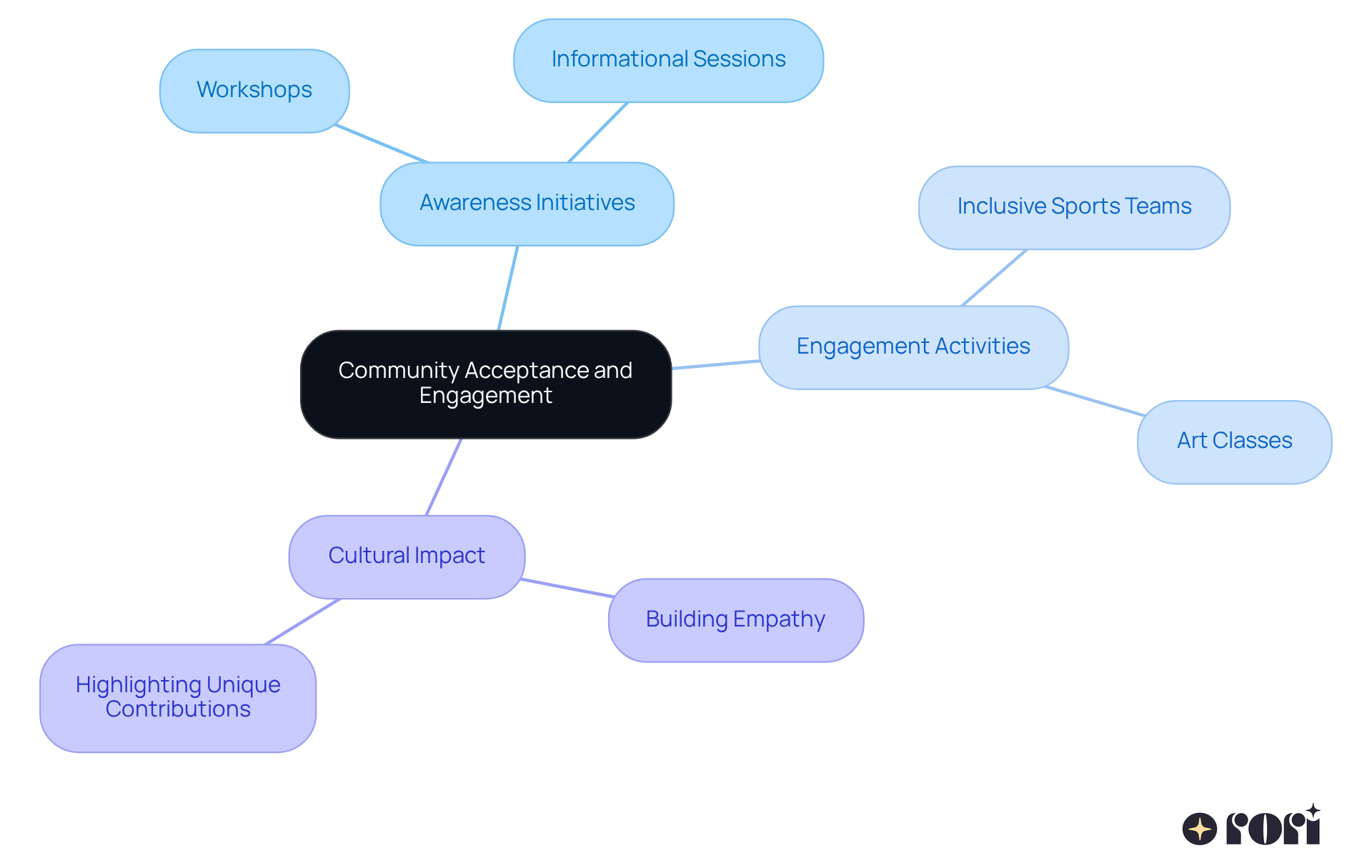
Community acceptance is an important foundation for . When local organizations, schools, and businesses engage in , it can really change how people perceive these challenges. For example, hosting helps educate community members about these conditions, breaking down myths and building empathy.
At Rori Care, our – made up of experienced professionals – actively leads these initiatives to ensure we reach out effectively and provide the support needed. Engaging people with autism in plays a crucial role in , as it not only improves visibility but also highlights their . Think about or ; these programs encourage interactions that help build relationships and understanding between neurotypical individuals and those on the spectrum.
By , we can create environments that focus on , ensuring everyone feels valued and included. This ultimately enriches the social fabric for all of us. Let’s explore this together and see how we can make a difference!
Create Sensory-Friendly Environments
Creating is so important for everyone, especially for those who might feel overwhelmed in busy environments. Imagine walking into a library or museum where soft, warm lighting and natural light greet you, instantly making you feel at ease. Reducing noise levels and having where people can retreat when things get a bit too much can make a world of difference.
For example, many libraries and museums have started implementing ‘quiet hours’ – a time when noise is kept to a minimum, allowing visitors to enjoy the exhibits without distractions. Plus, using in displays can really enhance the experience. And let’s not forget about ! This can be a game-changer for those on the , making navigation so much easier.
is another key piece of the puzzle. When parents and guardians feel informed and supported, they can make better decisions for their children, leading to . These thoughtful adjustments not only help those on the spectrum but also play a role in in , enhancing the experience for all visitors. Together, we can achieve our goal of in and create a more inclusive and welcoming atmosphere for everyone! Let’s explore this together!

Support Effective Communication in Public Spaces
Effective communication is key for those on the autism spectrum to confidently navigate public spaces. , like , can really help individuals express their needs and preferences. For example, restaurants can enhance the dining experience by offering menus with visual symbols, allowing those on the spectrum to make choices independently.
Training staff in basic sign language or can also enrich interactions, creating a more . Research shows that using can boost task completion rates by 34% and engagement by 28% for individuals on the spectrum. By fostering a culture of patience and understanding, public spaces can become more welcoming and accessible, thereby and ultimately improving their quality of life.
Rori Care is here to support this mission through , led by trained therapists. This not only helps but also encourages children to build their independence. Plus, empowering caregivers with means they can actively support their child’s behavioral goals, that maximizes the impact of interventions. Let’s explore this together!

Conclusion
Promoting inclusion for individuals with autism in public settings isn’t just important; it’s essential for building a society where everyone can thrive. By understanding the unique challenges faced by those on the autism spectrum, we can create communities that prioritize safety, acceptance, and support. This inclusive approach helps individuals with autism feel valued and empowered to participate fully in public life.
Let’s talk about some key strategies! Raising awareness about autism and its characteristics is a great start. Implementing sensory-friendly designs in public spaces and enhancing communication methods can make a world of difference. When we educate community members and promote acceptance, we break down barriers, allowing for more meaningful interactions between neurotypical individuals and those on the spectrum. Plus, creating sensory-friendly environments and effective communication tools can really improve the experiences of individuals with autism in various public settings.
Ultimately, our goal is to cultivate a culture of understanding and support that benefits everyone. Engaging local organizations, schools, and businesses in awareness initiatives is crucial to driving this change. By working together, we can create inclusive public spaces that not only accommodate individuals with autism but also enrich the social fabric for all.
So, let’s take action! It’s time to embrace the principles of inclusion, ensuring that every individual, regardless of their challenges, has the opportunity to thrive in public settings. We’re here to help you every step of the way!
Frequently Asked Questions
What is autism and how does it affect individuals in public settings?
Autism is a spectrum disorder that brings a variety of behaviors and challenges. Individuals on the autism spectrum often face sensory sensitivities, social interaction hurdles, and communication difficulties, which can lead to feelings of overwhelm in crowded or noisy places.
Why is understanding sensory sensitivities important for individuals with autism?
Understanding sensory sensitivities is crucial because sensory overload can significantly affect a person’s ability to engage socially. Recognizing these sensitivities helps create more welcoming environments for individuals on the autism spectrum.
What can be done to promote inclusion for individuals with autism in public settings?
Promoting inclusion involves educating society about autism, raising awareness to reduce stigma, and implementing tailored interventions and support systems. Creating sensory-friendly spaces can enhance comfort and make social situations easier to navigate.
What challenges do individuals with autism face in public spaces?
Individuals on the autism spectrum may struggle with expressing their needs in busy environments, such as restaurants, due to sensory overload from bright lights and loud noises. This can lead to feelings of frustration and withdrawal.
How can staff in public settings contribute to the inclusion of individuals with autism?
Educating staff about autism awareness and making sensory-friendly adjustments in community areas can significantly improve the experience for individuals on the autism spectrum, fostering a more inclusive environment.
List of Sources
- Understand Autism in Public Settings
- Autism statistics and facts | Autism Speaks (https://autismspeaks.org/autism-statistics-asd)
- Data and Statistics on Autism Spectrum Disorder (https://cdc.gov/autism/data-research)
- Autism Through the Years: How Understanding Has Evolved Over Two Decades – Southwest Autism Research & Resource Center (SARRC) (https://autismcenter.org/autism-through-the-years)
- Prevalence and Early Identification of Autism Spectrum … (https://cdc.gov/mmwr/volumes/74/ss/ss7402a1.htm)
- Foster Community Acceptance and Engagement
- Autism acceptance: 15 stats on Autism Spectrum Disorder (https://newsroom.cigna.com/autism-spectrum-disorder-stats)
- Autism statistics and facts | Autism Speaks (https://autismspeaks.org/autism-statistics-asd)
- 20 Autism Awareness Month quotes (https://ensorahealth.com/blog/20-quotes-to-share-this-autism-awareness-month)
- Celebrating Neurodiversity: Inspiring Words on Autism | Step Ahead ABA (https://stepaheadaba.com/blog/autism-quotes)
- 30 Quotes from 30 People with Autism (https://elsforautism.org/30-quotes-from-30-people-with-autism)
- Create Sensory-Friendly Environments
- How Public Spaces Can Become More Autism-Friendly | Links (https://linksaba.com/how-public-spaces-can-become-more-autism-friendly)
- Support Effective Communication in Public Spaces
- 10 inspiring quotes from people with autism | Autism Speaks (https://autismspeaks.org/life-spectrum/autism-quotes)
- Using Visual Supports To Help Children With Autism (https://thetreetop.com/aba-therapy/visuals-for-autism)
- Using Visual Supports in ABA Therapy | Links (https://linksaba.com/using-visual-supports-in-aba-therapy)
- 30 Quotes from 30 People with Autism (https://elsforautism.org/30-quotes-from-30-people-with-autism)
- The Role of Visual Supports in Enhancing Learning for Autism | Advanced Autism Services (https://advancedautism.com/post/the-role-of-visual-supports-in-enhancing-learning-for-autism)