
Introduction
It’s tough when words just won’t come out, isn’t it? Especially for kids with autism who can’t express themselves verbally. Many of these kids might never learn to speak, which can lead to some real frustration and challenging behaviors.
In this article, we’ll dive into some great strategies that can help these kids communicate better and connect with those around them. Let’s explore how these methods can help these amazing kids share their thoughts and feelings with the world!
Understand Communication Challenges in Nonverbal Autism
Imagine trying to express your feelings without words – this is the reality for many nonverbal individuals with autism. Many kids with autism find it really hard to share their thoughts and feelings without words. Did you know that about 25% to 30% of kids with autism might never learn to speak? This can lead to a lot of frustration and behavioral challenges. It can be tough when kids struggle to express what they feel or need.
For instance, many silent kids might leave intervention programs with fewer than five spontaneous words, and a lot of them don’t even use two-word phrases. By understanding that these kids often use gestures and facial expressions to communicate, we can adopt targeted approaches for improving communication skills in nonverbal children with autism to better meet their needs. This understanding is crucial for caregivers and educators, as it enables them to implement targeted approaches for improving communication skills in nonverbal children with autism.
Group therapy with skilled therapists can utilize targeted approaches for improving communication skills in nonverbal children with autism, helping these kids connect and express themselves better. It’s all about creating a supportive environment where they can thrive. As one speech-language pathologist puts it, “Training interaction partners is essential to making AAC effective.” This highlights how important it is for caregivers to have the right tools and knowledge.
When caregivers learn about ABA principles, they can better support their kids’ communication skills, which helps everyone in the family. Plus, targeted approaches for improving communication skills in nonverbal children with autism, like AAC tools, can really help them share their thoughts and feelings. By embracing these communication tools, we can truly make a difference in their lives.

Implement Effective Communication Strategies at Home
To enhance communication at home, caregivers can adopt several effective strategies:
- Utilize Gestures and Sign Language: Integrating basic gestures and sign language can greatly assist youngsters in conveying their needs. Teaching simple signs for common requests, like ‘more’ or ‘help’, boosts interaction and encourages spontaneous expression. Research shows that kids who use sign language are more likely to communicate on their own, leading to better social skills and less frustration.
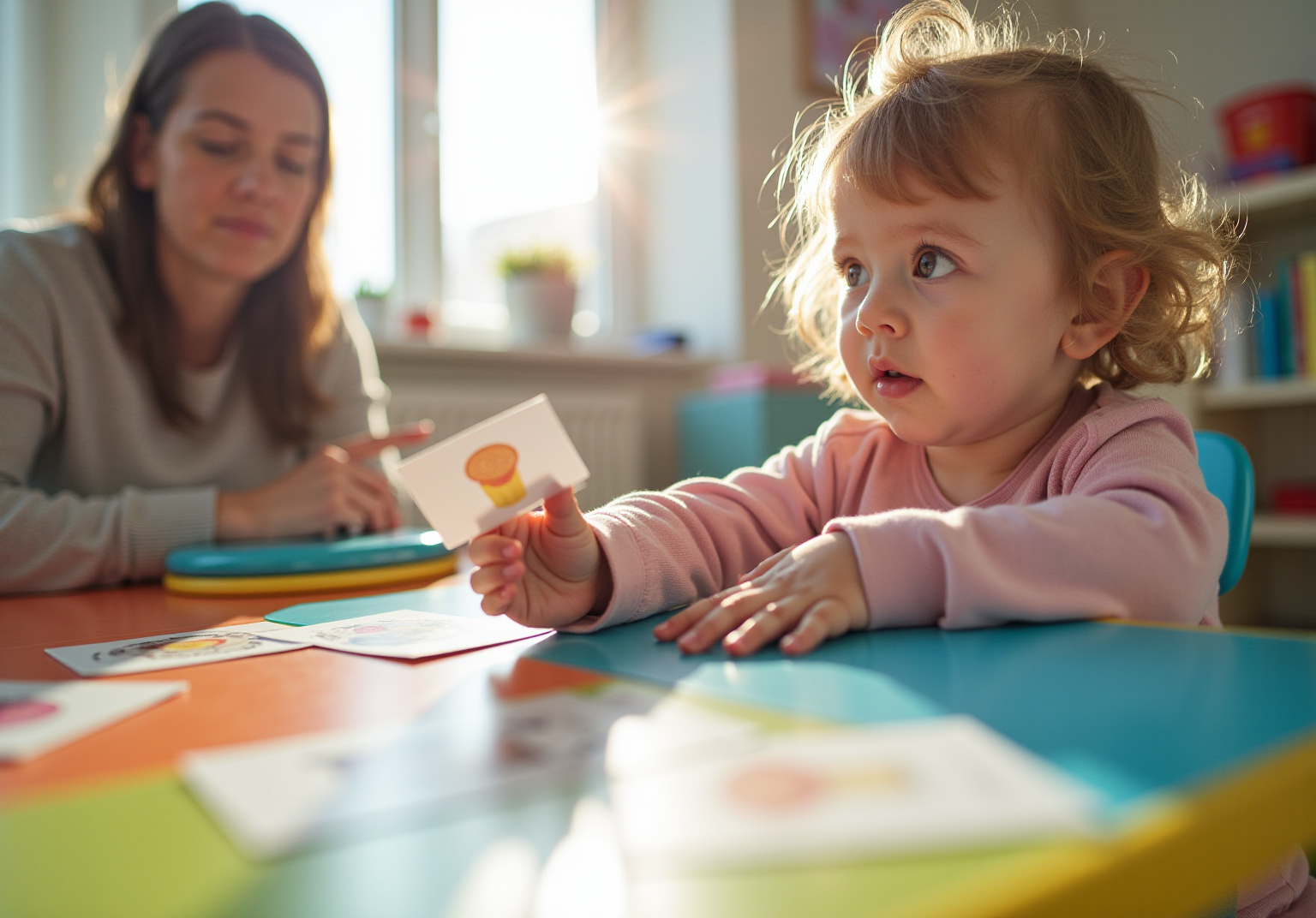
- Visual Supports: Using visual aids like picture boards or message books helps kids indicate images that reflect their needs or feelings. This approach can reduce anxiety and meltdowns, as it clarifies expectations and enhances understanding. Studies highlight that targeted approaches for improving communication skills in nonverbal children with autism, like visual aids, can enhance interaction and involvement.
- Model Interaction: Regularly demonstrating interaction behaviors-like narrating actions and using descriptive language-helps young ones grasp the rhythm and structure of conversations. This practice not only supports language development but also encourages turn-taking, which is essential for effective communication.
- Create Opportunities for Interaction: Engaging in activities that naturally prompt dialogue, such as play or daily routines, gives children chances to express their preferences or needs. These interactions can be enriched with visual supports, which have been shown to improve transition times and boost independence.
- Positive Reinforcement: When you celebrate any little attempt your child makes to communicate, it encourages them to keep trying! Recognizing small successes builds confidence and motivation, creating a supportive environment for growth. As behavior analysts observe, rewarding attempts to interact can significantly enhance a young person’s willingness to engage and express themselves.
By learning about targeted approaches for improving communication skills in nonverbal children with autism, caregivers can feel more confident in their approach, using strategies that truly support their child’s growth. This knowledge leads to informed decision-making and better behavioral outcomes. Plus, participating in social skills group therapy can improve interactions and relationships, providing a structured setting for practice and development.
Imagine the joy of seeing your child express themselves more freely and confidently-let’s explore these strategies together!

Leverage Technology and Assistive Devices for Communication
Let’s discuss targeted approaches for improving communication skills in nonverbal children with autism and how technology can make a real difference for them and their caregivers! Here are some effective tools and devices that can help:
- Augmentative and Alternative Communication (AAC) Devices: These range from simple picture boards to advanced speech-generating devices. They allow kids to communicate using symbols or text-to-speech technology. Kids who use AAC devices often find it easier to express themselves and develop their spoken language skills!
- Communication Apps: There are many apps designed specifically for individuals with autism. These apps let users pick images or phrases to share their needs. Advanced AAC tools have been shown to be more effective than basic alternatives in improving social interaction, making these applications a valuable resource.
- Visual Schedules: Using visual schedules helps kids know what to expect, which can really ease their worries! This structured approach helps them understand daily routines and expectations, making it easier for them to communicate about what’s coming up.
- Interactive Games: Technology-driven interactive games promote interaction through play, making learning enjoyable and engaging. These games can inspire young individuals to express themselves in a fun environment, encouraging social interaction.
- Wearable Devices: Some devices monitor nonverbal signals and offer feedback to caregivers, improving their understanding of the child’s expression efforts. This feedback loop can significantly enhance the caregiver’s ability to respond effectively to the needs of the young one.
By exploring these tools together, we can utilize targeted approaches for improving communication skills in nonverbal children with autism, helping them communicate better and thrive in their daily lives! The integration of these technologies not only supports communication but also gives kids the chance to express themselves and connect with others. Plus, when caregivers are informed about these tools and strategies, they can provide the right support at home, which is so important for their development.

Collaborate with Professionals for Tailored Communication Plans
Navigating communication with a nonverbal child can feel like wandering through a maze without a map. But don’t worry! Let’s team up with amazing experts like speech-language pathologists, occupational therapists, and behavior analysts to develop effective interaction strategies that truly resonate with your child.
- Let’s assess together! Connect with professionals who can help identify your child’s unique strengths and areas for growth in communication. This step is all about understanding where your child shines and where they might need a little extra support.
- Personalized interaction strategies! Together, we can create customized plans that reflect your child’s distinct needs, preferences, and abilities. These strategies should be flexible, adapting as your child grows and develops.
- Keep the conversation going! Regular check-ins with experts can help us adapt our strategies as your child grows. This way, we ensure that our approach remains effective and relevant.
- Let’s bring the family in! Involving family members in sessions can create a supportive environment that reinforces learning at home. It’s all about teamwork!
- Share the wealth! [[Experts can provide helpful resources and tools](https://uclahealth.org/news/release/ucla-led-study-finds-personalized-approach-enhances-communication-skills-in-children-with-autism)](https://uclahealth.org/news/release/ucla-led-study-finds-personalized-approach-enhances-communication-skills-in-children-with-autism) to empower your family in supporting your child’s communication journey. With the right support, you can make a real difference in your child’s life.
Imagine the joy of seeing your child express themselves more clearly with the right support – it’s within reach!

Conclusion
Navigating communication with nonverbal children can feel overwhelming, but you’re not alone in this journey! With some simple strategies, you can create a space where your child feels comfortable expressing themselves and connecting with others.
Let’s take a moment to remember how important it is to understand your child’s unique way of communicating. Think about using gestures, visuals, or even tech tools to help! These strategies can really help your child express their needs and feelings, making interactions at home and in therapy much smoother!
As you continue this journey, staying informed and open to new ideas can make a big difference! By trying out these strategies, you can really help your child thrive and engage more fully in their world! Together, we can create a supportive environment where every child feels heard and understood! Let’s work together to ensure every child feels heard and understood, because every voice matters!
Frequently Asked Questions
What are the communication challenges faced by nonverbal individuals with autism?
Nonverbal individuals with autism often struggle to express their thoughts and feelings without words, which can lead to frustration and behavioral challenges.
What percentage of children with autism are nonverbal?
Approximately 25% to 30% of children with autism might never learn to speak.
How do nonverbal children with autism typically communicate?
Many nonverbal children use gestures and facial expressions to communicate instead of spoken words.
What can be done to improve communication skills in nonverbal children with autism?
Targeted approaches, such as group therapy with skilled therapists and the use of AAC (Augmentative and Alternative Communication) tools, can help improve communication skills.
Why is training interaction partners important for nonverbal children with autism?
Training interaction partners is essential for making AAC effective, as it equips caregivers with the necessary tools and knowledge to support communication.
How can ABA principles assist caregivers of nonverbal children with autism?
Learning about ABA (Applied Behavior Analysis) principles enables caregivers to better support their children’s communication skills, benefiting the entire family.
What role do AAC tools play in the communication of nonverbal children with autism?
AAC tools can significantly help nonverbal children share their thoughts and feelings, enhancing their ability to communicate.
List of Sources
- Understand Communication Challenges in Nonverbal Autism
- Reimagining communication for people with non-verbal autism (https://healthpolicypartnership.com/reimagining-communication-for-people-with-non-verbal-autism)
- Brain Imaging Shows How Minimally Verbal and Nonverbal Children with Autism Have Slower Response to Sounds (https://chop.edu/news/brain-imaging-shows-how-minimally-verbal-and-nonverbal-children-autism-have-slower-response)
- Identifying the barriers to helping children with autism communicate | Penn State University (https://psu.edu/news/health-and-human-development/story/identifying-barriers-helping-children-autism-communicate)
- The proportion of minimally verbal children with autism spectrum disorder in a community-based early intervention programme – PubMed (https://pubmed.ncbi.nlm.nih.gov/27120989)
- Proportion and Profile of Autistic Children Not Acquiring Spoken Language Despite Receiving Evidence-Based Early Interventions (https://tandfonline.com/doi/full/10.1080/15374416.2025.2579286)
- Implement Effective Communication Strategies at Home
- Benefits of Sign Language and Other Forms of AAC for Autism – NAPA (https://napacenter.org/aac-autism)
- Using Visual Aids in Autism (https://crossrivertherapy.com/articles/using-visual-aids-in-autism)
- Benefits of Sign Language for Autism (https://autismparentingmagazine.com/autistic-child-sign-language?srsltid=AfmBOoozlLlZHwhkiB6x72aNPNvys1BrqW2QWefEkKlqexB66ScEyFJo)
- Visual Supports in Autism Communication | Divine Steps ABA (https://divinestepstherapy.com/blog/visual-supports-autism-communication)
- The Effectiveness of Visual Supports for Students with Autism Spectrum Disorder – (https://naset.com/publications/autism-spectrum-disorders-series/the-effectiveness-of-visual-supports-for-students-with-autism-spectrum-disorder)
- Leverage Technology and Assistive Devices for Communication
- AAC in English-speaking countries: Survey Results – AssistiveWare (https://assistiveware.com/blog/survey-aac-in-english-speaking-countries)
- Clinical Effectiveness of AAC Intervention in Minimally Verbal Children With ASD: A Systematic Review
| NeuroRegulation (https://neuroregulation.org/article/view/23389) - Study Reveals Wide Gap in Awareness of AAC Devices for Children With Autism (https://chla.org/blog/experts/research-and-breakthroughs/study-reveals-wide-gap-awareness-aac-devices-children-autism)
- Favorite Quotes about Augmentative Communication (https://blog.mycoughdrop.com/favorite-quotes-about-augmentative-communication)
- Collaborate with Professionals for Tailored Communication Plans
- 35 Quotes about Communication to Inspire Collaboration (https://vibe.us/blog/35-quotes-about-communication?srsltid=AfmBOoqfSeU5eoFvAOsGTOSriCUbrsMZzLKAfQoNmeXYCX3Rtx3xB44S)
- UCLA-led study finds personalized approach enhances communication skills in children with autism (https://uclahealth.org/news/release/ucla-led-study-finds-personalized-approach-enhances-communication-skills-in-children-with-autism)
- 60 Collaboration Quotes: Inspiring Teamwork & Business Success | ITD World (https://itdworld.com/blog/human-resources/collaboration-quotes)
- 50 Quotes on the Importance of Collaboration and Cooperation in Teamwork (https://inc.com/gordon-tredgold/50-quotes-on-the-importance-and-benefits-of-teamwork.html)