

Introduction
Navigating public spaces can feel overwhelming for families with autism. The sensory challenges and social interactions often make outings daunting. But don’t worry! With the right tools and strategies, these experiences can turn into positive adventures that build independence and confidence.
So, what resources can help families tackle these challenges? 🤔 This article dives into ten essential tools designed to empower families and create more inclusive environments. Let’s explore this together! We’re here to help you every step of the way!
Rori Care – ABA Therapy: Personalized Support for Public Outings
At Rori Care – ABA Therapy, we understand the challenges families face when navigating community spaces and offer supportive tools and resources for navigating public places with autism. Our customized ABA therapy is designed to empower you and your loved ones, helping you step out with confidence. Through thorough evaluations, our clinicians create tailored treatment plans that cater to each individual’s unique needs.
This personalized approach equips young individuals with essential skills for outings – like waiting in line, engaging with others, and managing sensory overload. Did you know that over 89% of individuals in ABA therapy show significant improvements? And 90% make observable gains after intensive treatment! For instance, those who receive targeted interventions often experience enhanced social interactions and adaptive behaviors in various environments.
We also provide parents with effective strategies to reinforce these skills during outings, ensuring a smoother experience for everyone involved. Current best practices in ABA therapy highlight the importance of ongoing assessment and family involvement, which can really boost the effectiveness of these tailored plans.
Caregiver education is key in this journey. It empowers you with a deeper understanding of ABA principles and strategies, enabling informed decisions that positively impact your child’s progress. Rori Care – ABA Therapy helps promote independence and confidence by providing supportive tools and resources for navigating public places with autism, addressing the specific challenges faced by children with autism in community settings, which leads to more positive experiences for your family.
Let’s explore this together! We’re here to help you every step of the way!

Creating Sensory-Friendly Environments: Essential Strategies for Public Spaces
Creating sensory-friendly spaces is so important, especially in public areas where everyone should feel welcome. Think about it: soft lighting, noise reduction, and calming colors can make a world of difference! Designated quiet areas are like little havens for those who might feel overwhelmed, giving them a chance to catch their breath in a supportive environment.
Adding tactile materials and visual supports can really boost comfort and engagement, making the atmosphere inviting for everyone. These thoughtful strategies not only help those on the spectrum but also foster a more inclusive vibe for all guests. Did you know that around 90% of people with sensory hypersensitivity need these kinds of adjustments to feel comfortable in community spaces?
As Ana Gentil-Gutiérrez points out, individuals with Autism Spectrum Disorder (ASD) are particularly sensitive to sensory changes, which highlights just how crucial these design choices are. By focusing on sensory-friendly design, communities can truly enhance the experiences of neurodiverse individuals, ensuring they feel welcomed and supported wherever they go.
For example, the East County Library has created sensory rooms based on feedback from the community, showcasing a fantastic way to put these ideas into practice. Let’s explore this together and see how we can make our spaces more inclusive!

Promoting Community Acceptance: Building Supportive Public Spaces for Autism
Creating inclusive communal spaces for those on the autism spectrum really hinges on community involvement and education. Think about it: awareness campaigns about developmental disorders and specialized training for staff in community venues can make a huge difference in promoting acceptance and understanding. For instance, when communities set up training programs for workers, it can significantly enhance the experiences of autistic individuals, ensuring they feel valued and included.
Research shows that effective awareness campaigns can boost public acceptance by educating everyone about the unique challenges faced by those on the spectrum. Plus, successful local initiatives often involve collaboration with autistic individuals and their families, helping everyone understand that autism is just one of the many beautiful variations of human diversity.
At Rori Care – ABA Therapy, we empower caregivers with the knowledge and skills they need to support their loved ones through active involvement and data collection. This is so important in these community efforts! We also offer social skills group therapy led by qualified therapists to help improve social interactions and communication among youth with developmental differences.
As Michael Mohan wisely points out, “Acceptance requires more than positive feelings or inspirational social media posts during April.” By prioritizing these initiatives, communities can create environments that not only support individuals with autism but also celebrate their contributions. Together, we can work towards a more inclusive society! Let’s explore this journey together!

Managing Sensory Overload: Practical Tips for Stress-Free Outings
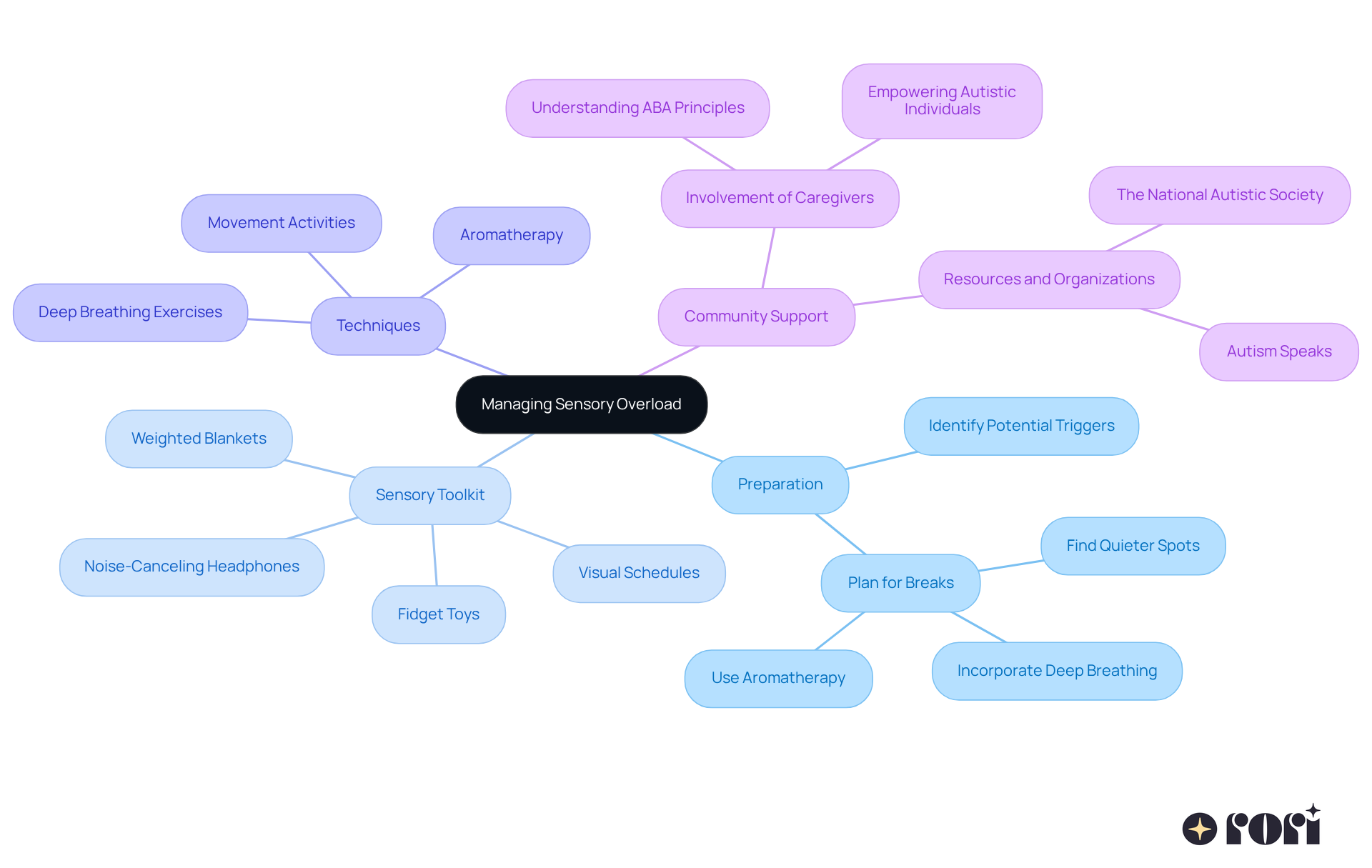
Managing sensory overload during outings can be a real challenge for families. It’s all about being prepared! Start by identifying potential triggers and putting together a sensory toolkit that works for your loved one. Think about including:
- Noise-canceling headphones
- Fidget toys
- Weighted blankets
- Visual schedules tailored to their preferences
Planning for breaks in quieter spots can make a world of difference. Techniques like deep breathing or even a bit of aromatherapy can help everyone feel more at ease. By anticipating these challenges and using these strategies, you can create a more enjoyable and stress-free outing in community spaces.
And here’s a little tip: caregivers who understand ABA principles can really enhance their support. Making informed choices can positively impact your child’s ability to navigate busy areas. This active involvement not only helps in managing sensory overload but also leads to better behavioral outcomes for your child.
Let’s explore this together! Remember, you’re not alone in this journey, and we’re here to help you every step of the way!
Utilizing Visual Supports: Enhancing Navigation for Individuals with Autism
Visual supports like picture schedules, maps, and clear signs serve as supportive tools and resources for navigating public places with autism. These tools bring a sense of organization and predictability, making outings a bit easier for our kids. Research shows that visual aids can significantly lower anxiety by outlining daily routines and transitions, which helps kids feel more secure. For instance, visual timers have been shown to boost engagement and shorten transition times for children with autism, allowing them to participate more actively in activities.
Parents can create personalized visual aids that cater to their child’s unique needs, laying out the day’s activities to make transitions smoother. Think about using choice boards to present options for outings – this empowers kids to express their preferences and make decisions visually. Plus, picture schedules can effectively break down daily routines into manageable steps, enhancing understanding and independence.
And here’s something encouraging: about 90% of kids show significant improvement when they fully engage in suggested hours of ABA therapy with their caregivers involved. This patient-centered approach not only offers supportive tools and resources for navigating public places with autism but also encourages active participation and boosts communication. By tapping into the strengths of visual learners, these supportive tools and resources for navigating public places with autism help children with developmental differences navigate community spaces with more confidence and clarity, leading to more positive experiences during outings.
Let’s explore this together! If you’re looking for ways to support your child, remember that you’re not alone. We’re here to help you every step of the way!

Training Staff for Autism Awareness: Ensuring Inclusive Public Experiences
Public venues really need to focus on training their staff to be aware and sensitive to individuals with developmental differences. This training should cover things like:
By fostering inclusivity, staff can build better connections with people on the spectrum, making public spaces accessible and enjoyable for everyone.
Successful examples of inclusive practices include supportive tools and resources for navigating public places with autism, like sensory kits and communication cards. These supportive tools and resources for navigating public places with autism empower staff to facilitate better interactions and create accommodating environments. As Heidi Harrison, Assistant Recreation Director for the City of Beacon, puts it, a truly inclusive environment is one where ‘norms don’t even exist.’ This allows everyone to feel seen and heard. 🌟
Such initiatives not only enhance the experiences of people with developmental disorders but also enrich the community as a whole. Plus, advocates for individuals on the spectrum stress the importance of acceptance and understanding in communal areas. This really highlights the need for ongoing education and awareness among staff. Let’s explore this together!

Developing Communication Strategies: Empowering Individuals with Autism in Public
Supporting individuals with autism in our communities can be a rewarding journey for families. One effective way to do this is by creating customized communication methods that align with the principles of Applied Behavior Analysis (ABA) therapy. Think about using tools like:
- Augmentative and alternative communication (AAC) devices
- Visual aids
- Simple verbal prompts
Practicing these strategies in familiar settings before heading out into the wider world can really help build confidence, making it easier for individuals to express their needs.
With the guidance of trained therapists, social skills group therapy can take these communication strategies to the next level. It’s all about fostering better interactions and relationships in public spaces. And let’s not forget the crucial role of active caregiver involvement! Research shows that when families fully implement the recommended hours of therapy, about 90% of children show notable progress. That’s something to celebrate!
It’s also important to recognize that ABA therapy is the only scientifically validated treatment for developmental disorders that insurance covers, making it accessible for families. So, parents, don’t hesitate to practice these strategies consistently and reach out for support from therapists. Together, we can maximize their effectiveness and make a real difference in our children’s lives. Let’s explore this journey together!

Leveraging Technology: Innovative Tools for Navigating Public Spaces with Autism
Technology can serve as supportive tools and resources for navigating public places with autism for families during outings with loved ones on the autism spectrum. Imagine having mobile apps that offer real-time navigation help, sensory alerts, and handy communication tools right at your fingertips! For example, GPS apps designed specifically for individuals with developmental differences can make exploring new places feel a lot less daunting. Plus, wearable devices can keep an eye on sensory levels, sending alerts when a child might be feeling overwhelmed.
It’s all about making those public outings smoother and more enjoyable. We understand how challenging it can be, and these supportive tools and resources for navigating public places with autism can really help alleviate some of that stress. So, let’s explore this together! If you’re curious about how these technologies can support your family, don’t hesitate to reach out for more information or resources. We’re here to help you every step of the way!

Creating Quiet Areas: Essential Retreat Spaces for Individuals with Autism
Creating quiet areas in public spaces can be a game-changer for families with children on the autism spectrum. Imagine a cozy nook with soft seating, gentle lighting, and minimal distractions-just the kind of retreat that can help when things get a bit overwhelming. These safe havens allow kids to take a breather and recharge, so they can keep enjoying their day out.
At Rori Care, we understand the unique challenges that come with Autism Spectrum Disorders and ADHD. Our behavioral intervention services are designed to offer supportive tools and resources for navigating public places with autism, assisting individuals of all ages and helping families navigate communal spaces with ease. By fostering an environment that prioritizes personalized assistance and flexible approaches, we empower children to thrive in various settings.
Let’s explore this together! We’re here to help you every step of the way!
Engaging with the Autism Community: Shaping Supportive Public Spaces Together
Interacting with the neurodiverse community is so important for creating inclusive spaces where everyone feels welcome. By teaming up with local advocacy organizations, we can really get to know the unique needs of autistic individuals. For instance, when we gather input from the neurodiverse community, we can make significant improvements in how spaces are designed, making them more accommodating and inviting for all.
Surveys and community forums serve as great platforms for those with autism and their families to share their thoughts and preferences. This way, their insights can truly shape the planning process. It’s all about working together to enhance inclusivity and foster a sense of belonging, which ultimately benefits everyone involved. As Verna Myers beautifully puts it, inclusion is ‘being asked to dance.’ This highlights just how vital community involvement is.
By prioritizing collaboration with advocacy groups, like those involved in the NeuInsight Training for Businesses, we can transform public spaces into environments that genuinely reflect the diverse needs of all individuals. At Rori Care, we’re all about empowering caregivers with ABA principles. We equip them with the knowledge and skills they need to support their loved ones’ behavioral goals.
Our clinical leadership team is dedicated to nurturing neurodiversity and ensuring children succeed. We provide expertise and compassion to help families overcome challenges and enhance child development. Plus, our social skills group therapy, led by trained therapists, focuses on improving social interactions and communication by offering supportive tools and resources for navigating public places with autism, making it easier for families.
Caregivers can implement ABA strategies by using positive reinforcement techniques, setting clear expectations, and maintaining consistent routines. These practices are essential for maximizing the impact of interventions. Let’s explore this together! We’re here to help you every step of the way!
Conclusion
Navigating public spaces with autism can feel like a winding road, but with the right tools and strategies, families can enjoy outings with more ease and confidence. 🌟 This article shines a light on how personalized support, sensory-friendly environments, community acceptance, and effective communication can create positive experiences for individuals on the autism spectrum. By tapping into these resources, families can nurture independence and enhance social interactions, making public spaces more accessible and welcoming.
Key insights include:
- The value of tailored ABA therapy
- The creation of sensory-friendly areas
- The importance of community involvement in promoting awareness and acceptance
It’s clear that effective training for staff in public venues and the use of innovative technology can significantly improve experiences for those with autism. Each of these elements plays a part in building a more inclusive society where everyone can thrive.
Ultimately, the message is simple: collaboration and understanding are key to shaping supportive public spaces. Engaging with the autism community and implementing best practices can lead to meaningful changes that benefit all. Together, by prioritizing these initiatives, we can ensure that public spaces are not just accessible but truly welcoming for individuals with autism and their families. Let’s explore this journey together!
Frequently Asked Questions
What is Rori Care – ABA Therapy?
Rori Care – ABA Therapy offers personalized support for families navigating community spaces with autism, providing customized ABA therapy to empower individuals and help them engage in public outings confidently.
How does Rori Care tailor its ABA therapy?
Clinicians at Rori Care conduct thorough evaluations to create individualized treatment plans that address each person’s unique needs, equipping them with essential skills for outings, such as waiting in line and managing sensory overload.
What improvements can be expected from ABA therapy?
Over 89% of individuals in ABA therapy show significant improvements, and 90% make observable gains after intensive treatment, particularly in social interactions and adaptive behaviors.
How does Rori Care support parents during outings?
Rori Care provides parents with effective strategies to reinforce skills during outings, ensuring a smoother experience for the entire family.
Why is caregiver education important in ABA therapy?
Caregiver education empowers parents with a deeper understanding of ABA principles and strategies, enabling them to make informed decisions that positively impact their child’s progress.
What are sensory-friendly environments, and why are they important?
Sensory-friendly environments are designed to accommodate individuals with sensory sensitivities, featuring soft lighting, noise reduction, and calming colors. These adjustments help create welcoming spaces for everyone, particularly those on the autism spectrum.
What strategies can be used to create sensory-friendly public spaces?
Essential strategies include adding designated quiet areas, tactile materials, and visual supports to enhance comfort and engagement for all guests.
How can communities promote acceptance and understanding of autism?
Communities can promote acceptance through awareness campaigns about developmental disorders and specialized training for staff in community venues, which enhances the experiences of autistic individuals.
What role does Rori Care play in community acceptance initiatives?
Rori Care empowers caregivers with knowledge and skills for active involvement in community efforts and offers social skills group therapy to improve social interactions among youth with developmental differences.
How can individuals and communities work towards a more inclusive society for those with autism?
By prioritizing awareness initiatives, community involvement, and collaboration with autistic individuals and their families, communities can create supportive environments that celebrate the contributions of those on the autism spectrum.
List of Sources
- Rori Care – ABA Therapy: Personalized Support for Public Outings
- Success Rates of ABA Therapy | Advanced Autism Services (https://advancedautism.com/post/success-rates-of-aba-therapy)
- alumacare.com (https://alumacare.com/blog/success-rates-of-aba-therapy)
- ABA Therapy Success Rates: Autism Treatment Insights – Mindcolor Resources (https://mindcolorautism.com/resources/articles/aba-therapy-success-rates-autism-treatment-insights)
- The Numbers Don’t Lie: Revealing Autism Therapy Statistics | Above and Beyond Therapy (https://abtaba.com/blog/autism-therapy-statistics)
- Creating Sensory-Friendly Environments: Essential Strategies for Public Spaces
- autism.org.uk (https://autism.org.uk/advice-and-guidance/about-autism/sensory-processing)
- Sensory Sensitive Spaces — Holst (https://holstarc.com/research-development/sensory-sensitive-spaces)
- Implication of the Sensory Environment in Children with Autism Spectrum Disorder: Perspectives from School – PMC (https://pmc.ncbi.nlm.nih.gov/articles/PMC8306690)
- 10 inspiring quotes from people with autism | Autism Speaks (https://autismspeaks.org/life-spectrum/autism-quotes)
- Promoting Community Acceptance: Building Supportive Public Spaces for Autism
- 80 Inspiring Quotes on Autism Awareness and Support – Empower ABA (https://empoweraba.com/80-inspiring-quotes-on-autism-awareness-and-support)
- autismspeaks.org (https://autismspeaks.org/autism-statistics-asd)
- The Evolution of Autism Awareness to Acceptance: A Transformative Journey | Links (https://linksaba.com/the-evolution-of-autism-awareness-to-acceptance)
- Autism Awareness and Acceptance Month: A Growing Community and Collaboration (https://autismsociety-nc.org/autism-awareness-and-acceptance-month-a-growing-community-and-collaboration)
- Managing Sensory Overload: Practical Tips for Stress-Free Outings
- kidsfirstservices.com (https://kidsfirstservices.com/first-insights/autism-quotes)
- ambitionsaba.com (https://ambitionsaba.com/resources/autism-quotes)
- Building a Fantastic Sensory Tool Kit for Kiddos With Autism | ABA Centers of Florida (https://abacentersfl.com/blog/sensory-tool-kit)
- 10 Powerful Autism ABA Quotes That Inspire Change – Rori Blog (https://rori.care/post/10-powerful-autism-aba-quotes-that-inspire-change)
- Utilizing Visual Supports: Enhancing Navigation for Individuals with Autism
- Using Visual Aids in Autism (https://crossrivertherapy.com/articles/using-visual-aids-in-autism)
- The Effectiveness of Visual Supports for Students with Autism Spectrum Disorder – (https://naset.com/publications/autism-spectrum-disorders-series/the-effectiveness-of-visual-supports-for-students-with-autism-spectrum-disorder)
- The use of visual schedules to increase academic-related on-task behaviors of individuals with autism: a literature review (https://tandfonline.com/doi/full/10.1080/20473869.2024.2402124)
- Visual supports at home and in the community for individuals with autism spectrum disorders: A scoping review – PubMed (https://pubmed.ncbi.nlm.nih.gov/31451016)
- Training Staff for Autism Awareness: Ensuring Inclusive Public Experiences
- Building an Autism-Supportive City: Training Municipal Staff and First Responders (https://autismspectrumnews.org/building-an-autism-supportive-city-training-municipal-staff-and-first-responders)
- 80 Inspiring Quotes on Autism Awareness and Support – Empower ABA (https://empoweraba.com/80-inspiring-quotes-on-autism-awareness-and-support)
- 10 inspiring quotes from people with autism | Autism Speaks (https://autismspeaks.org/life-spectrum/autism-quotes)
- (PDF) The effects of staff training on staff confidence and challenging behavior in services for people with autism spectrum disorders (https://researchgate.net/publication/229415484_The_effects_of_staff_training_on_staff_confidence_and_challenging_behavior_in_services_for_people_with_autism_spectrum_disorders)
- Evaluation of autism awareness training provided to staff working in a high secure psychiatric care hospital (https://emerald.com/aia/article/6/1/35/59940/Evaluation-of-autism-awareness-training-provided)
- Creating Quiet Areas: Essential Retreat Spaces for Individuals with Autism
- Sensory-Friendly Public Spaces: 7 Barriers Every One Know (https://achieveautismcenter.com/sensory-friendly-public-spaces-autism)
- The Impact Of Sensory Rooms In Public Facilities For Autism (https://allaboutaba.com/blog/the-impact-of-sensory-rooms-in-public-facilities-for-autism)
- Quiet Room Ideas for Autism: Create Calm Spaces (https://alumacare.com/blog/quiet-room-autism)
- The benefits of quiet rooms and sensory spaces (https://therapyfocus.org.au/on-the-blog/the-benefits-of-quiet-rooms-and-sensory-spaces)
- Transforming Experiences for Neurodiverse Individuals through Sensory-friendly Hours and Quiet Spaces – Sheri Byrne-Haber’s Blog (https://sheribyrnehaber.com/transforming-experiences-for-neurodiverse-individuals-through-sensory-friendly-hours-and-quiet-spaces)
- Engaging with the Autism Community: Shaping Supportive Public Spaces Together
- Making public places more sensory inclusive for autistic people | Autistica (https://autistica.org.uk/our-research/research-projects/public-spaces-training-sensory-inclusive)
- cultureally.com (https://cultureally.com/blog/diversity-and-inclusion-quotes-to-inspire-work-environment)
- How Public Spaces Can Become More Autism-Friendly | Links (https://linksaba.com/how-public-spaces-can-become-more-autism-friendly)
- wellbeing.gmu.edu (https://wellbeing.gmu.edu/famous-quotes-on-inclusivity-and-well-being)
- One of our 2030 Goals: Accessible public spaces | Autistica (https://autistica.org.uk/about-us/2030/by-2030-public-spaces-will-be-more-accessible-for-neurodivergent-people)