

Introduction
Understanding sensory overload in children with Asperger’s Syndrome is so important for creating a supportive environment. As parents, navigating the complexities of heightened sensitivities can feel overwhelming, but gaining insights into effective strategies can truly make a difference in easing your child’s distress. With so many sensory triggers out there and the emotional toll they can take, you might wonder: how can you best equip yourself to recognize and manage these challenges? Let’s explore this together!
Define Sensory Overload in Asperger’s Syndrome
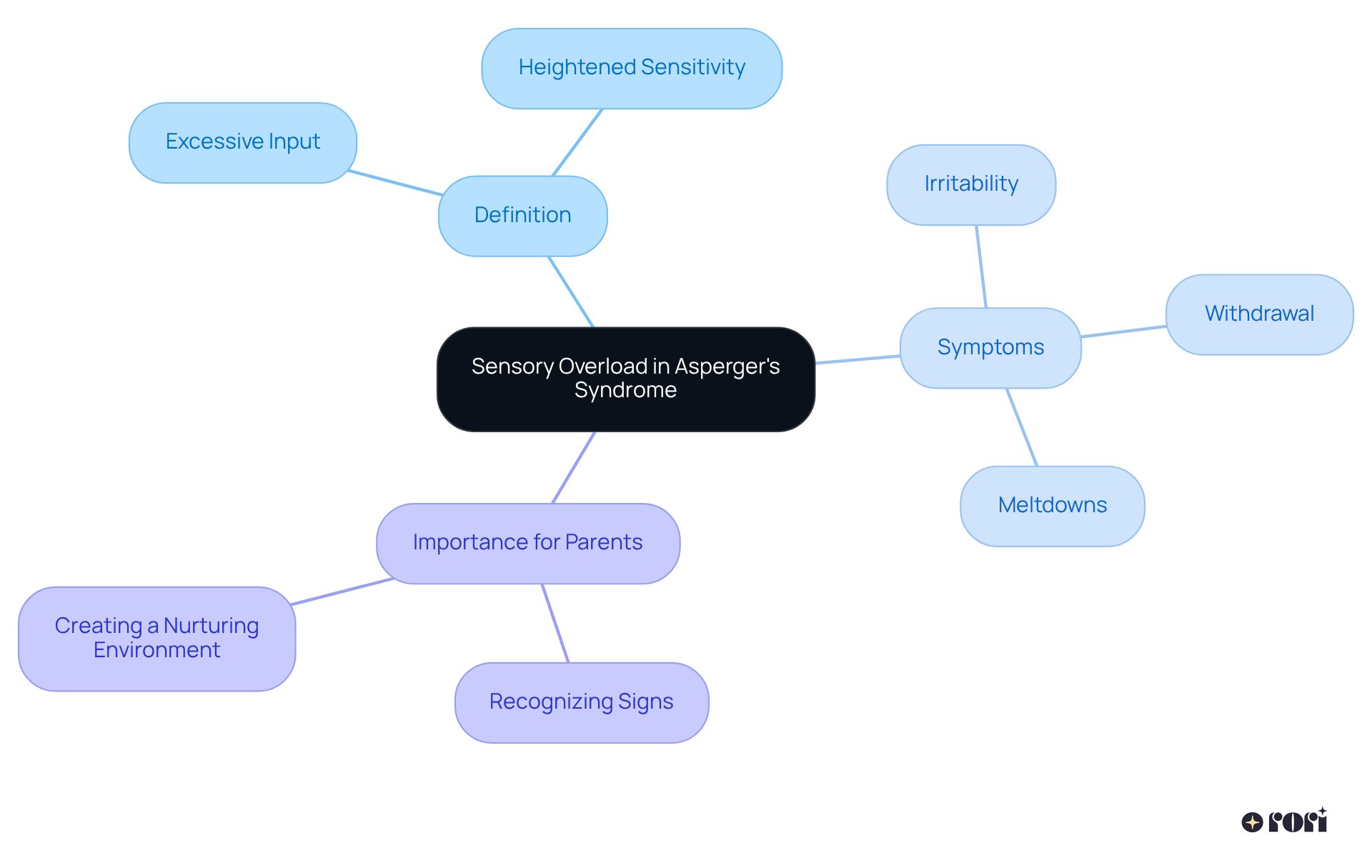
Excessive input occurs when the brain receives more stimuli than it can manage, leading to . For youngsters with , this might present as Asperger’s , characterized by . is crucial for parents, as it helps them recognize when their child with Asperger’s is experiencing and .
You might notice symptoms like:
- Irritability
- Withdrawal
- Meltdowns
These can be . Identifying these signals is the first step in for your little one. Let’s explore this together and on this journey!
Identify Common Sensory Triggers for Children with Asperger’s
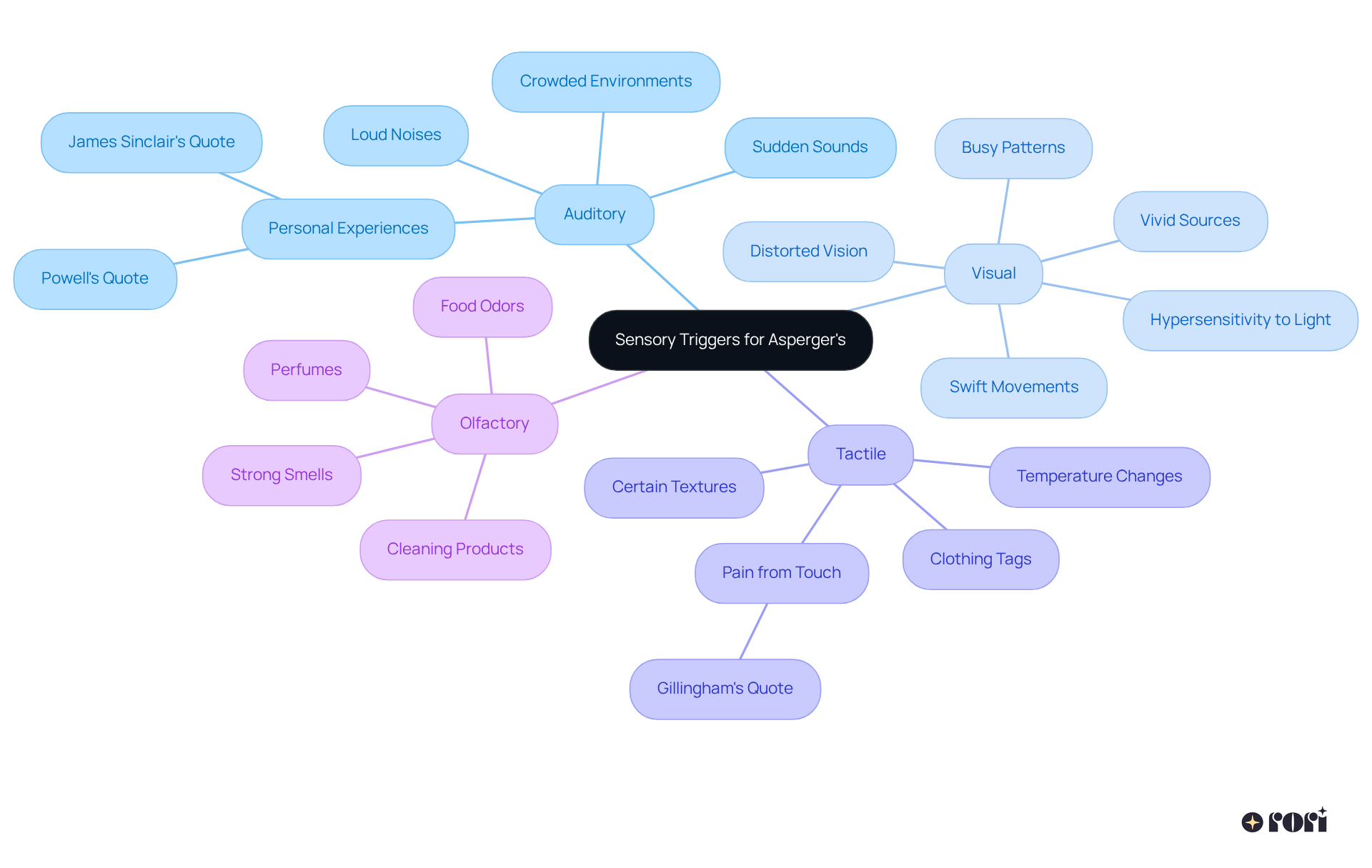
Common sensory triggers for children experiencing Asperger’s can vary significantly, often showing up in several key areas.
- : Loud noises, sudden sounds, or crowded environments can lead to overwhelming experiences. For instance, James Sinclair describes how even a single noise can disrupt his focus, illustrating the profound impact of on his daily life. Sarah Hope also shares her sensitivity to sensory stimuli, noting that it can be difficult in many aspects of life.
- : Vivid sources, busy patterns, or swift movements may cause discomfort. Many autistic individuals report hypersensitivity to specific wavelengths, such as LED or fluorescent sources, which can be physically and emotionally draining. Some individuals may experience distorted vision where objects and bright sources seem to move unexpectedly.
- : Certain textures, clothing tags, or temperature changes can provoke strong reactions. Some youngsters may reject certain clothing pieces because of discomfort, while others might feel , resulting in avoidance behaviors. Frequent touching of others or playing rough can occur during sensory issues, highlighting the need for understanding.
- : from food, cleaning products, or perfumes can be distressing. Autistic individuals may have varying sensitivities, with some being completely unaware of certain odors, while others find even mild scents overwhelming.
By identifying these triggers, parents can take and address Asperger’s , for their child. Implementing accommodations, such as using light covers, wearing sunglasses under fluorescent lights, or providing sensory-friendly clothing, can significantly enhance their ability to learn and socialize effectively.
Furthermore, recognizing that some autistic individuals might partake in actions such as chewing on non-food items, referred to as pica, can assist parents in addressing these needs more effectively. Let’s explore this together and find the best strategies for your child!
Implement Strategies to Manage Sensory Overload
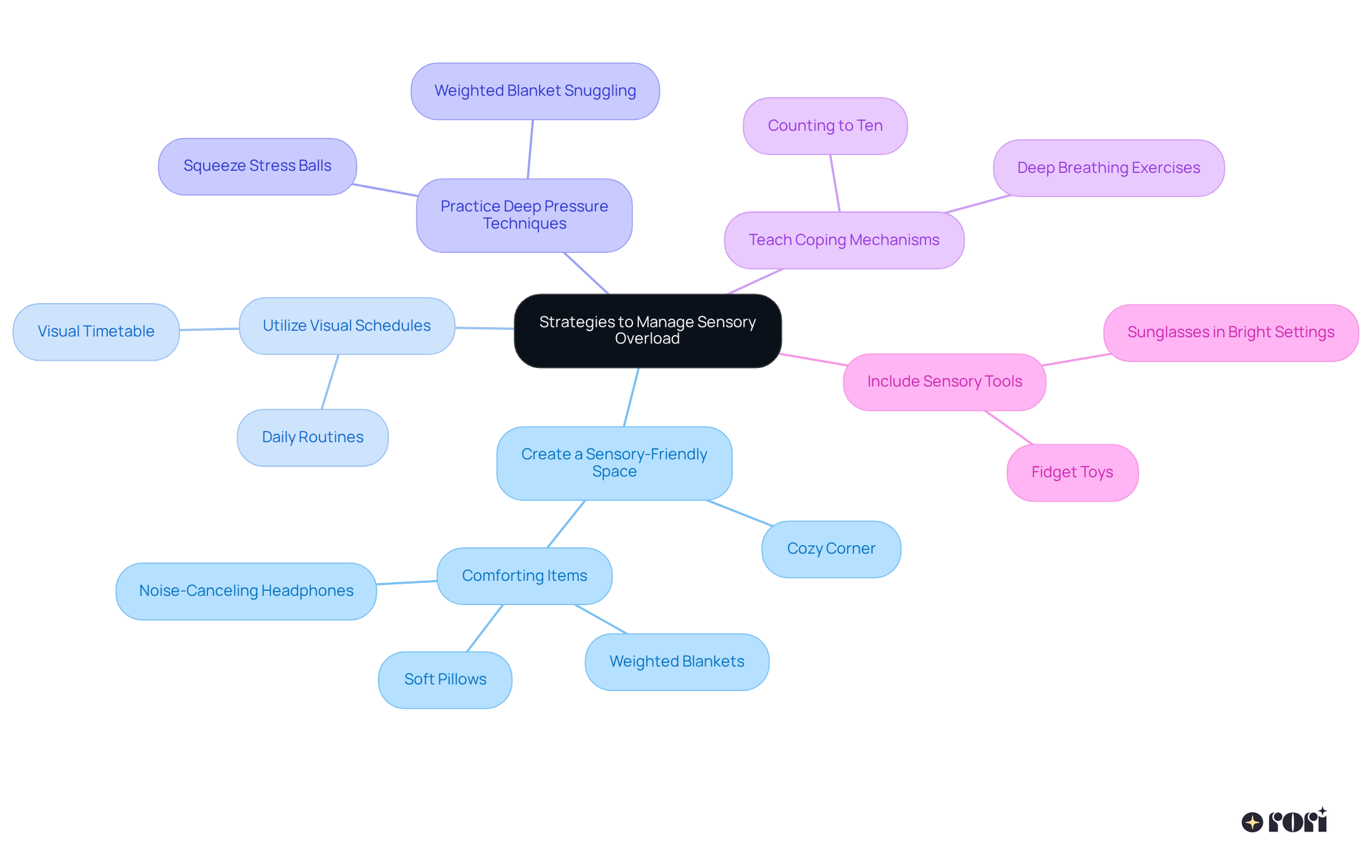
Managing aspergers can be a challenge for parents, but there are several friendly strategies you can adopt to help your child navigate these situations.
- Create a : Think about designating a cozy corner in your home where your child can retreat when things feel a bit too much. This space should be free from overwhelming stimuli and filled with comforting items like soft pillows, weighted blankets, or even noise-canceling headphones. It’s all about giving them a safe haven to regain their composure.
- Utilize : Visual aids can be a lifesaver! They help kids anticipate changes in their environment, which can ease anxiety. A clear visual timetable brings organization and consistency—especially beneficial for children with Asperger’s—helping them with a bit more confidence.
- Practice : Engaging in activities like squeezing a stress ball or snuggling under a weighted blanket can provide soothing tactile input. These techniques are fantastic for helping children self-regulate their sensory experiences and feel more secure.
- Teach : Encourage your little one to share their feelings and develop their own strategies for handling overwhelming moments. Simple methods like deep breathing exercises or counting to ten can empower them to regain control when anxiety starts to creep in.
- Include : For instance, using sunglasses in bright settings can really help kids manage sensory stress.
By incorporating these strategies, you can significantly enhance your child’s ability to cope with aspergers , fostering a more . Did you know that up to 90% of children with autism experience some form of processing disorder? This highlights just how crucial these strategies can be! As educator David Boehme wisely points out, ‘For many autistic individuals, any unforeseen touch is distressing.’ This underscores the importance of approaching with care and thoughtfulness.
Let’s explore this together! We’re here to help you every step of the way!
Encourage Self-Advocacy and Communication Skills
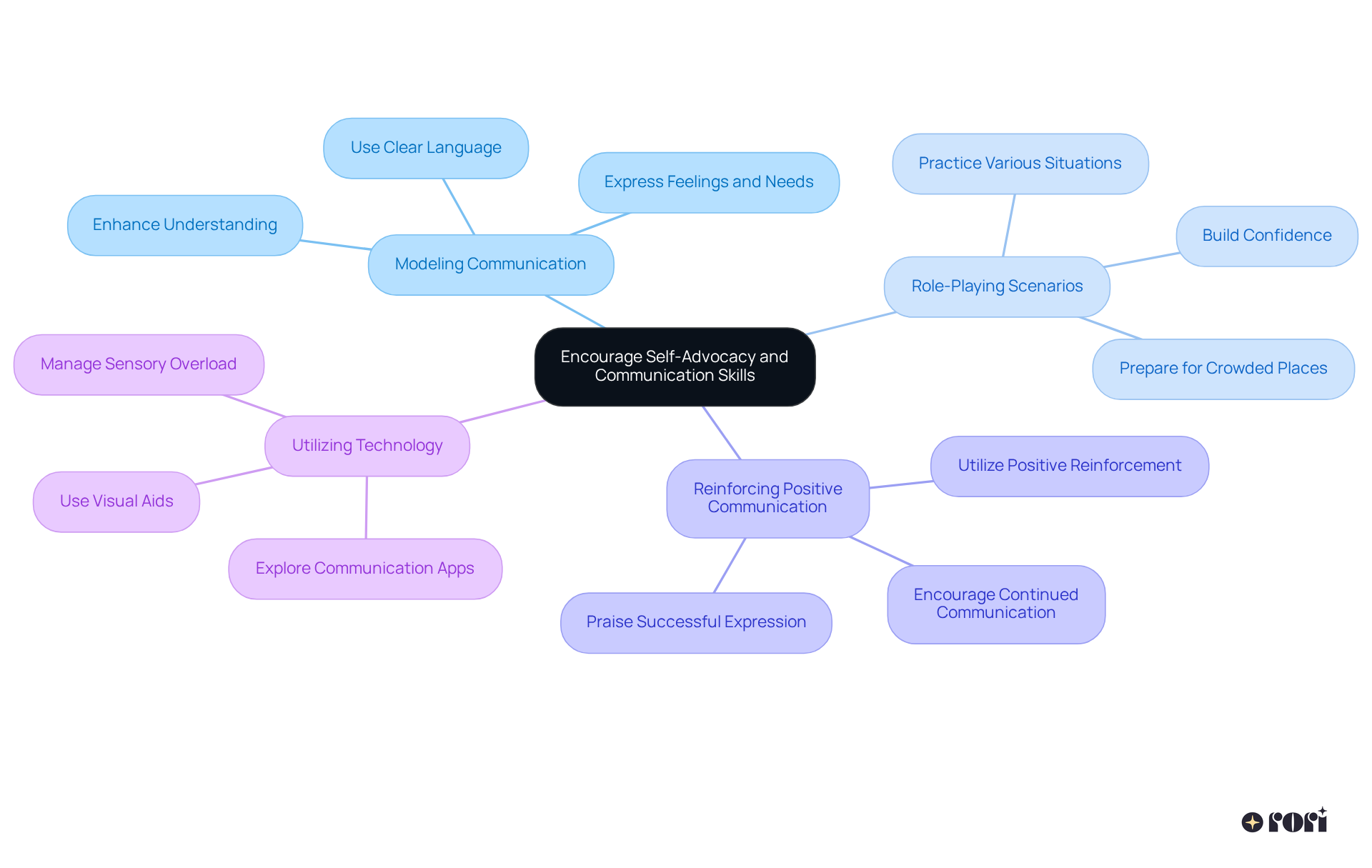
Promoting self-advocacy and communication abilities is so important for youngsters with Asperger’s! Parents can play a key role in this development through several effective strategies:
- : Try using clear and simple language to express your feelings and needs. This approach shows kids how to communicate their discomfort or feelings of overwhelm, making it easier for them to understand and imitate. Research highlights that strong , as they enhance social interactions and reduce anxiety related to .
- : Engage in practice sessions where your child can express their feelings in various situations. This can help them feel more comfortable and confident during real-life interactions. For example, role-playing a scenario where they need to communicate discomfort in a crowded place can prepare them for similar experiences.
- Reinforcing Positive Communication: Remember to praise your child when they successfully express their needs! them to keep communicating. Studies show that children who receive positive feedback are more likely to develop strong communication skills.
, explore designed to help young individuals express their feelings and manage . These resources can provide extra support and engagement. For instance, using visual aids or communication apps can help kids express their emotions more effectively.
By nurturing these skills, parents empower their children to advocate for themselves, leading to better coping strategies and overall well-being. Did you know the ? This really underscores the importance of . Let’s explore this together!
Conclusion
Understanding Asperger’s sensory overload is essential for parents who want to create a supportive environment for their children. By recognizing the unique challenges of sensory overload, caregivers can respond more effectively to their child’s needs and foster a sense of security. This awareness not only helps in spotting when a child feels overwhelmed but also empowers parents to take proactive steps to ease distress.
Throughout this article, we’ve explored various aspects of sensory overload, including its definition, common triggers, and effective strategies for managing these experiences. We highlighted the importance of creating sensory-friendly spaces, using visual schedules, and teaching coping mechanisms. Plus, we emphasized the role of self-advocacy and communication skills as vital tools for helping children navigate their sensory experiences.
Ultimately, supporting a child with Asperger’s is a journey that requires patience, understanding, and the right tools. By implementing the strategies we discussed, parents can significantly enhance their child’s ability to cope with sensory overload, improving their overall quality of life. It’s crucial to stay engaged and informed, as these efforts not only help in immediate situations but also lay the groundwork for long-term emotional resilience and self-advocacy.
Let’s explore this together! We’re here to help you every step of the way!
Frequently Asked Questions
What is sensory overload in Asperger’s Syndrome?
Sensory overload in Asperger’s Syndrome occurs when the brain receives more stimuli than it can manage, leading to feelings of anxiety, discomfort, or distress.
What are the characteristics of Asperger’s sensory overload?
Asperger’s sensory overload is characterized by heightened sensitivity to sounds, lights, textures, or other stimuli.
Why is it important for parents to understand sensory overload in children with Asperger’s?
Understanding sensory overload is crucial for parents as it helps them recognize when their child is experiencing it and respond appropriately.
What symptoms might indicate a child with Asperger’s is experiencing sensory overload?
Symptoms may include irritability, withdrawal, and meltdowns.
How can caregivers support children experiencing sensory overload?
Identifying the signals of sensory overload is the first step in creating a nurturing environment for the child.
List of Sources
- Define Sensory Overload in Asperger’s Syndrome
- 30 Quotes from 30 People with Autism (https://elsforautism.org/30-quotes-from-30-people-with-autism)
- Autism Statistics & Facts: How Many People Have Autism? (https://thetreetop.com/statistics/autism-prevalence)
- 107 Favorite Quotes About Autism and Aspergers (https://the-art-of-autism.com/favorite-quotes-about-autism-and-aspergers)
- azquotes.com (https://azquotes.com/quote/924972)
- Identify Common Sensory Triggers for Children with Asperger’s
- autism.org.uk (https://autism.org.uk/advice-and-guidance/topics/sensory-differences/sensory-differences/all-audiences)
- autismspeaks.org (https://autismspeaks.org/sensory-issues)
- 107 Favorite Quotes About Autism and Aspergers (https://the-art-of-autism.com/favorite-quotes-about-autism-and-aspergers)
- Implement Strategies to Manage Sensory Overload
- autismspectrumnews.org (https://autismspectrumnews.org/practical-tips-for-a-sensory-friendly-christmas-for-autistic-children)
- amazeaba.com (https://amazeaba.com/best-calming-tools-for-autism-sensory-products-strategies)
- pediaplex.net (https://pediaplex.net/blog/sensory-room-benefits-uses-guide)
- Best Autism Quotes to Raise Awareness and Understanding (https://yellowbusaba.com/post/autism-quotes)
- Encourage Self-Advocacy and Communication Skills
- CDC Reports Profound Autism Statistics For The First Time (https://autismsciencefoundation.org/press_releases/cdc-profound-autism-statistics)
- Autism statistics and facts | Autism Speaks (https://autismspeaks.org/autism-statistics-asd)
- Autism Statistics You Need To Know in 2024 (https://autismparentingmagazine.com/autism-statistics)