

Introduction
Understanding the ins and outs of executive functioning is so important for supporting children with Autism Spectrum Disorder (ASD). These cognitive processes are the backbone of essential skills like planning, focus, and emotional regulation. In this article, we’ll dive into the core components of executive functioning, shining a light on the unique challenges that children with ASD face and how these hurdles can impact their daily lives.
So, how can caregivers and educators spot these challenges and help foster better outcomes for children with ASD? Let’s explore some targeted strategies and interventions together! By doing so, we can illuminate pathways for growth and development in this vital area. We’re here to help you every step of the way!
Define Executive Functioning and Its Core Components
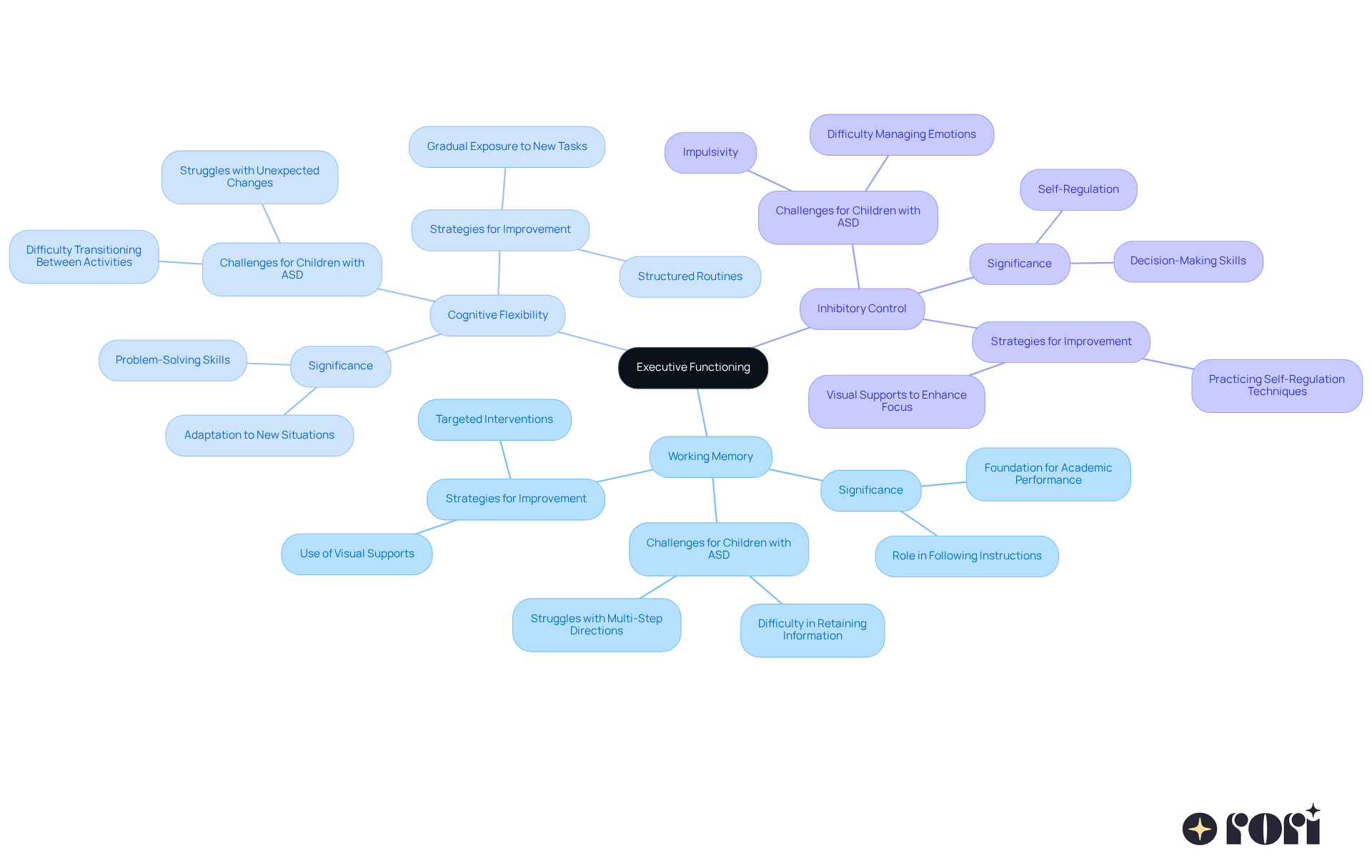
(EF) is all about those essential cognitive processes that help our kids plan, stay focused, remember instructions, and juggle multiple tasks. Let’s break down the core components of executive functioning:
- : Think of this as the ability to hold onto and work with information for a short time. It’s super important for following multi-step directions. Many kids with ASD face challenges that affect their , making it tough for them to engage in complex activities or stick to instructions. At Rori Care, our qualified behavior analysts create targeted interventions that focus on , like improving the ability to recall sequences of instructions and using strategies to boost retention.
- : This is all about adapting to new situations and switching gears between activities or thoughts. It’s crucial for problem-solving and adjusting to changes around us. Kids with ASD might struggle with cognitive flexibility, which can hinder their when transitioning between activities or dealing with unexpected changes. Evidence-based strategies, like structured routines and gradual exposure to new tasks, can really help improve adaptability.
- : This refers to the ability to hold back impulsive responses and distractions, which helps with self-regulation and decision-making. Many children with ASD experience challenges in executive function development, which can manifest as impulsivity or difficulty managing emotions. Setting measurable goals here might involve practicing self-regulation techniques and using visual supports to enhance focus.
These components are all connected and work together to help our young ones manage their behavior, emotions, and social interactions effectively. Working memory, in particular, is a foundational skill that plays a huge role in academic performance and social competence. As Elena A Chichinina pointed out, “The results have confirmed concerns about the slower growth of executive functioning in youngsters during the lockdown versus their peers before the pandemic, especially for cognitive flexibility and working memory.”
At Rori Care, our tailored plans, crafted by skilled behavior analysts, focus on measurable objectives and evidence-based strategies to promote positive behavior changes. We’re here to empower caregivers to actively support their children’s behavioral goals through data collection and ABA principles. Let’s explore this together!
Explore the Connection Between Executive Functioning and ASD
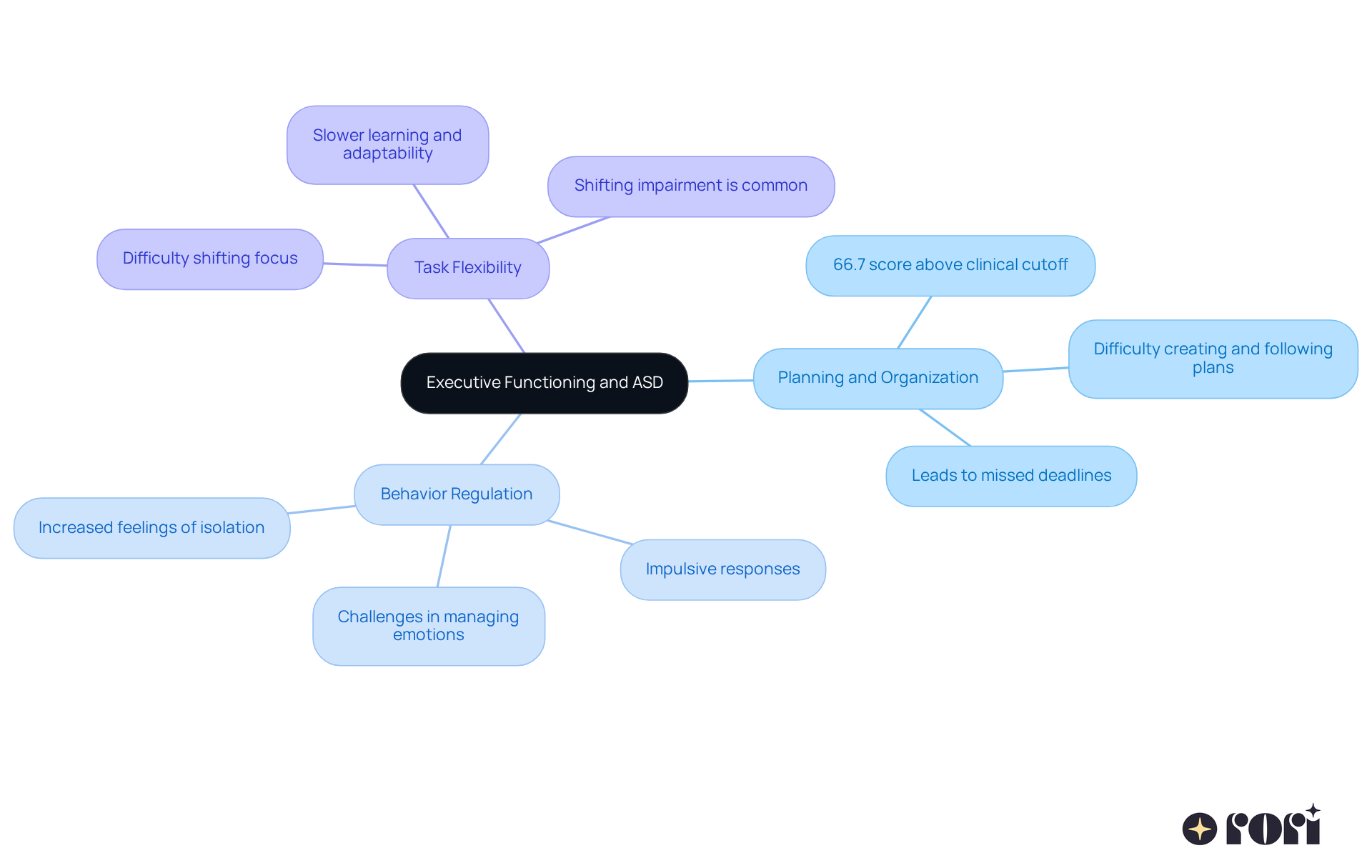
Research shows that many individuals with Autism Spectrum Disorder (ASD) face significant challenges that impact the , which can really affect their daily lives. Let’s take a closer look at some of these challenges:
- : It’s common for children with ASD to have a tough time creating and following through on plans. This often leads to missed deadlines or tasks left unfinished. In fact, about 66.7% of individuals with ASD score above the clinical cutoff for planning difficulties, highlighting just how widespread this issue is.
- : Managing emotions and impulses can be tricky, leading to outbursts or responses that might not fit the situation. This struggle can make social interactions harder and can even contribute to feelings of isolation.
- : Shifting focus from one task to another can be a real challenge for kids with ASD. This can slow down their learning and adaptability in changing environments. Research has shown that .
is so important for caregivers and educators. It helps them tailor their approaches to better support individuals with ASD in developing . By equipping caregivers with , they can offer better support at home, make informed choices that positively influence their child’s progress, and actively engage in their child’s development. This involvement not only leads to better but also boosts caregivers’ confidence, reduces stress, and improves family dynamics. Together, we can create a more effective and compassionate approach to tackling the challenges associated with ASD. Let’s explore this journey together!
Identify Signs of Executive Functioning Challenges in Children with ASD
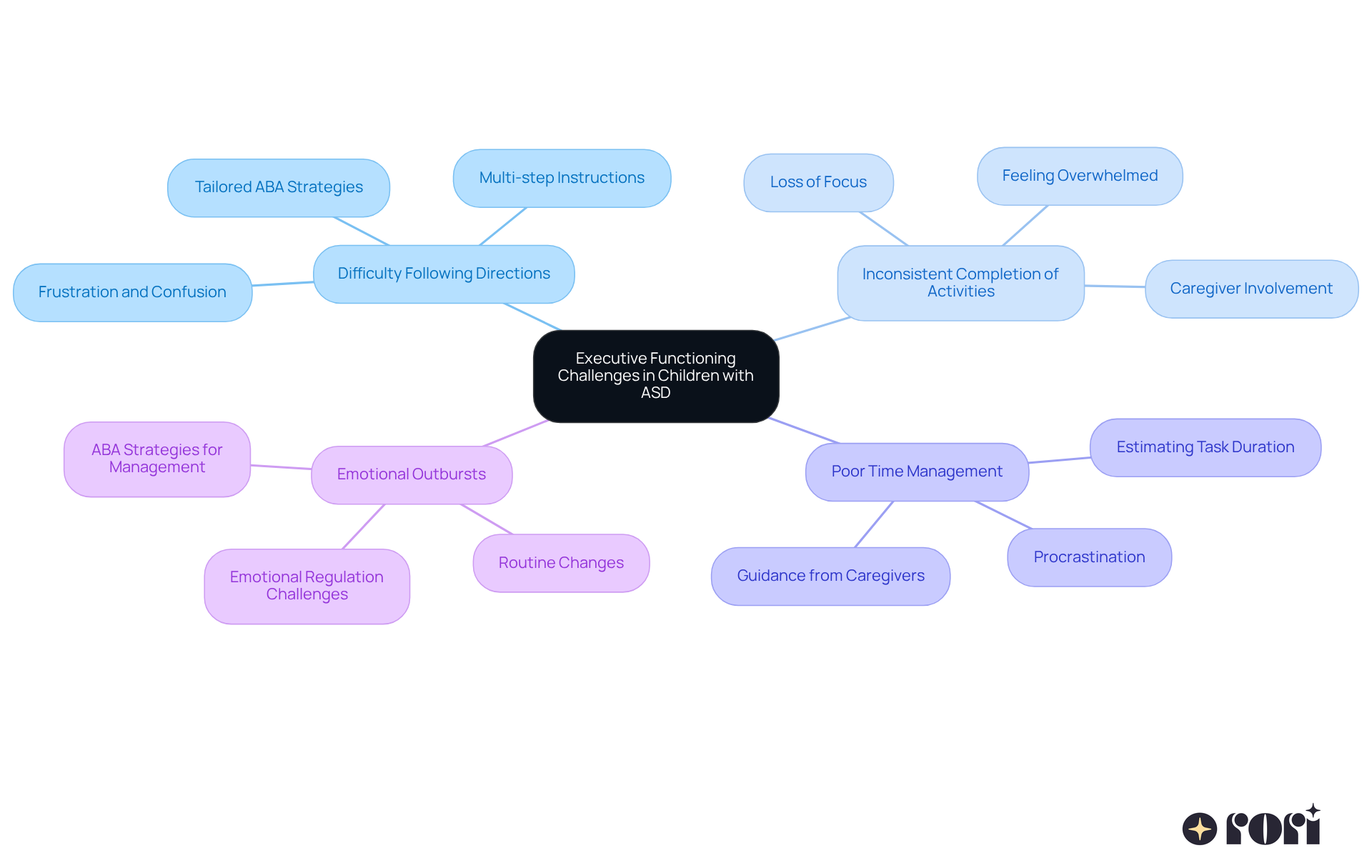
Children with Autism Spectrum Disorder (ASD) often face a variety of challenges, highlighting the importance of , which can significantly impact their daily lives. Let’s take a closer look at some key signs:
- Difficulty Following Directions: Many kids with ASD find it tough to remember or follow multi-step instructions. This can lead to frustration and confusion, which we all know can be overwhelming. is super important, as they often tie into social interaction difficulties. Tailored can really help enhance understanding and retention, putting the child right at the heart of the therapeutic approach.
- Inconsistent Completion of Activities: It’s common for these youngsters to start activities but struggle to finish them. Often, it’s due to losing focus or feeling overwhelmed. plays a big role here, and kids with ASD might have stronger . Active involvement from caregivers, as highlighted in , can really help maintain consistency and motivation.
- Poor : Kids with ASD often have a hard time estimating how long tasks will take, which can lead to procrastination or rushed work. This can ramp up feelings of stress and anxiety, especially when deadlines are looming. can guide their children in developing better time management skills.
- Emotional Outbursts: Many children respond strongly to changes in routine or unexpected events, which often relates to their struggles with emotional regulation. Research shows that emotional control and working memory are key to managing these reactions. By implementing ABA strategies, caregivers can empower their children to handle these emotional responses more effectively.
By recognizing these signs and using the principles of ABA therapy, parents and educators can put in place to support their child’s development. This creates a more structured and that encourages growth and learning. Plus, improving caregiver education gives families the tools they need to help their children reach their behavioral goals. Let’s explore this together!
Implement Strategies to Support Executive Functioning in ASD
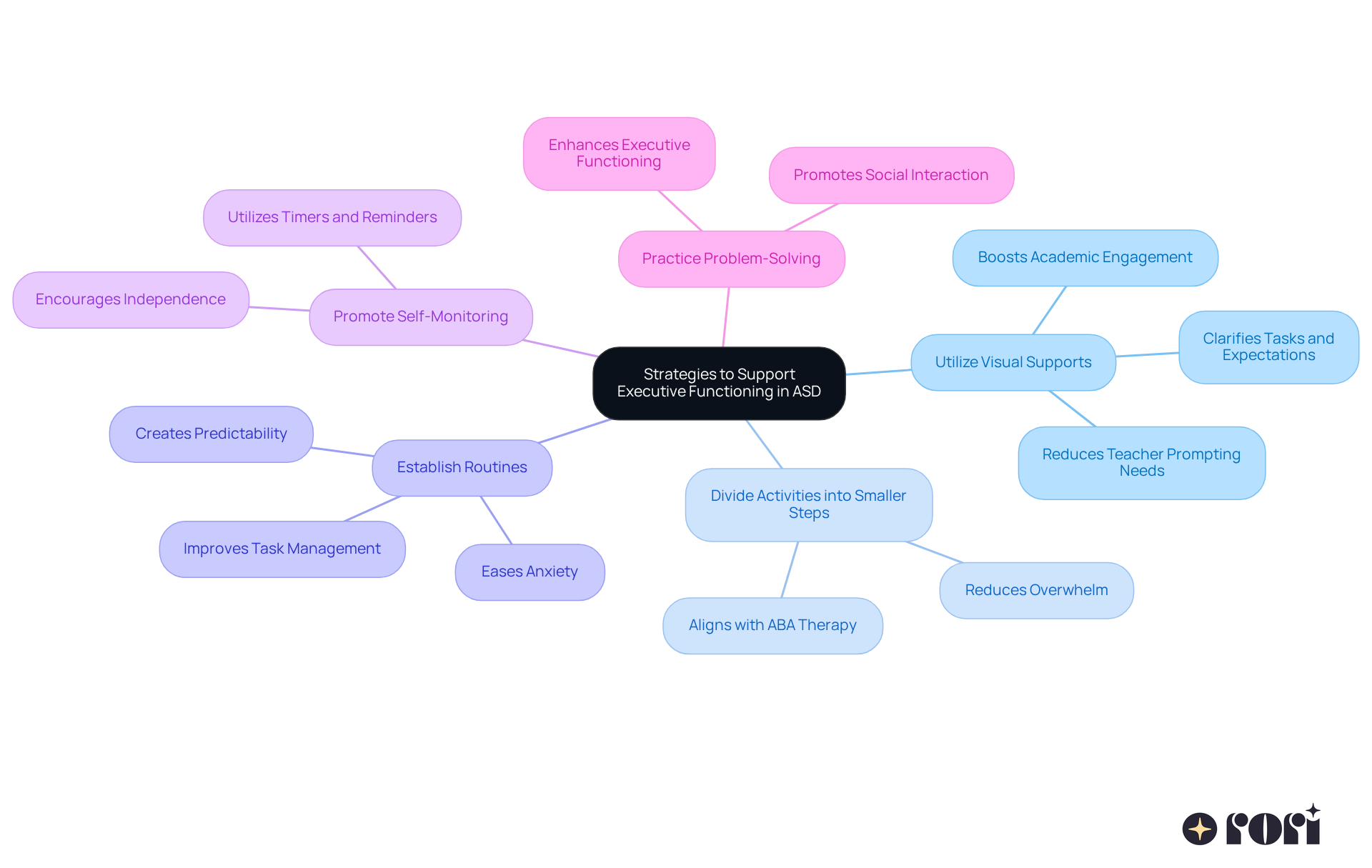
Supporting in children with ASD can feel like a big task, but with the right strategies, it can be manageable and even rewarding! Let’s explore some :
- Utilize : Think about using , checklists, and charts. These tools can really clarify tasks and expectations. Research shows that kids with autism who use visual supports see a 28% boost in academic engagement and a 41% drop in the need for teacher prompts. It’s all about providing structured, individualized support that makes understanding and engagement easier!
- Divide Activities into Smaller Steps: Breaking larger tasks into smaller, manageable parts can help reduce overwhelm. This approach aligns perfectly with the , making it easier for kids facing challenges to achieve executive function development in children with ASD.
- Establish Routines: can be a game-changer! They help kids anticipate what’s coming next, which can ease anxiety and improve task management. Regular routines create a sense of safety and predictability-so important for individuals with ASD. Plus, can adapt these routines to fit each child’s unique needs, maximizing their effectiveness.
- Promote Self-Monitoring: Encourage your child to use timers or reminders to stay on track. like self-evaluation and goal setting can really . These techniques are key in ABA therapy, highlighting the importance of caregiver involvement to make them work even better.
- Practice Problem-Solving: Get your child involved in activities that require planning and decision-making, like games or structured play. These fun activities not only enhance executive functioning but also promote social interaction and communication skills. Behavioral interventions, including those from ABA therapy, can support individuals of all ages facing these challenges.
By embracing these strategies, you can significantly boost the executive function development in children with ASD, paving the way for greater independence and success in daily life. Remember, you’re not alone in this journey-let’s explore these ideas together!
Conclusion
Understanding how executive function develops in children with Autism Spectrum Disorder (ASD) is so important for helping them grow and succeed. It’s all about those vital cognitive processes that help with planning, focus, and managing tasks. For kids with ASD, challenges in these areas can really affect their daily lives. That’s why it’s essential to recognize these difficulties and address them with targeted interventions.
Let’s take a closer look at the core components of executive functioning: working memory, cognitive flexibility, and inhibitory control. Each of these plays a key role in how a child navigates social interactions, manages emotions, and completes tasks. You might notice signs of executive functioning challenges, like trouble following directions, poor time management, or emotional outbursts. These all highlight the need for proactive support from caregivers and educators.
Ultimately, implementing effective strategies to support executive function development in children with ASD isn’t just beneficial; it’s vital! By using visual supports, establishing routines, and promoting self-monitoring, caregivers can create a structured environment that encourages independence and growth. Supporting children with ASD in developing these essential skills is a journey we can take together, leading to improved behavioral outcomes and better family dynamics. Embracing these strategies can truly make a difference, empowering children to thrive in their everyday lives. Let’s explore this together!
Frequently Asked Questions
What is executive functioning (EF)?
Executive functioning (EF) refers to essential cognitive processes that help children plan, stay focused, remember instructions, and manage multiple tasks.
What are the core components of executive functioning?
The core components of executive functioning include working memory, cognitive flexibility, and inhibitory control.
What is working memory?
Working memory is the ability to hold onto and manipulate information for a short period, which is crucial for following multi-step directions.
How does executive functioning relate to children with ASD?
Many children with ASD face challenges that affect their executive function development, making it difficult for them to engage in complex activities or adhere to instructions.
What is cognitive flexibility?
Cognitive flexibility is the ability to adapt to new situations and switch between activities or thoughts, which is important for problem-solving and handling changes.
Why might children with ASD struggle with cognitive flexibility?
Children with ASD may struggle with cognitive flexibility, hindering their executive function development when transitioning between activities or coping with unexpected changes.
What is inhibitory control?
Inhibitory control is the ability to suppress impulsive responses and distractions, aiding in self-regulation and decision-making.
How can challenges in inhibitory control manifest in children with ASD?
Challenges in inhibitory control can result in impulsivity or difficulty managing emotions in children with ASD.
How do the components of executive functioning work together?
The components of executive functioning are interconnected and help children manage their behavior, emotions, and social interactions effectively.
What impact did the lockdown have on executive functioning in children?
Research indicated that the lockdown resulted in slower growth of executive functioning in children, particularly in cognitive flexibility and working memory, compared to their peers before the pandemic.
How does Rori Care support children with executive functioning challenges?
Rori Care provides tailored plans created by skilled behavior analysts that focus on measurable objectives and evidence-based strategies to promote positive behavior changes. They empower caregivers to support their children’s behavioral goals through data collection and ABA principles.