

Introduction
Understanding off-task behavior is crucial in our educational landscape, where distractions can really throw a wrench in a student’s learning journey. You know those seemingly harmless actions—like daydreaming or chatting? They’re not just quirky habits; they can actually lead to less engagement and lower academic performance. As educators and caregivers, we all want to create supportive learning environments, but it can be a challenge to identify and address these behaviors effectively.
So, what strategies can we use to turn those off-task moments into chances for better focus and engagement? Let’s explore this together! Your insights and experiences matter, and we’re here to help you every step of the way!
Define Off-Task Behavior: Key Characteristics and Importance
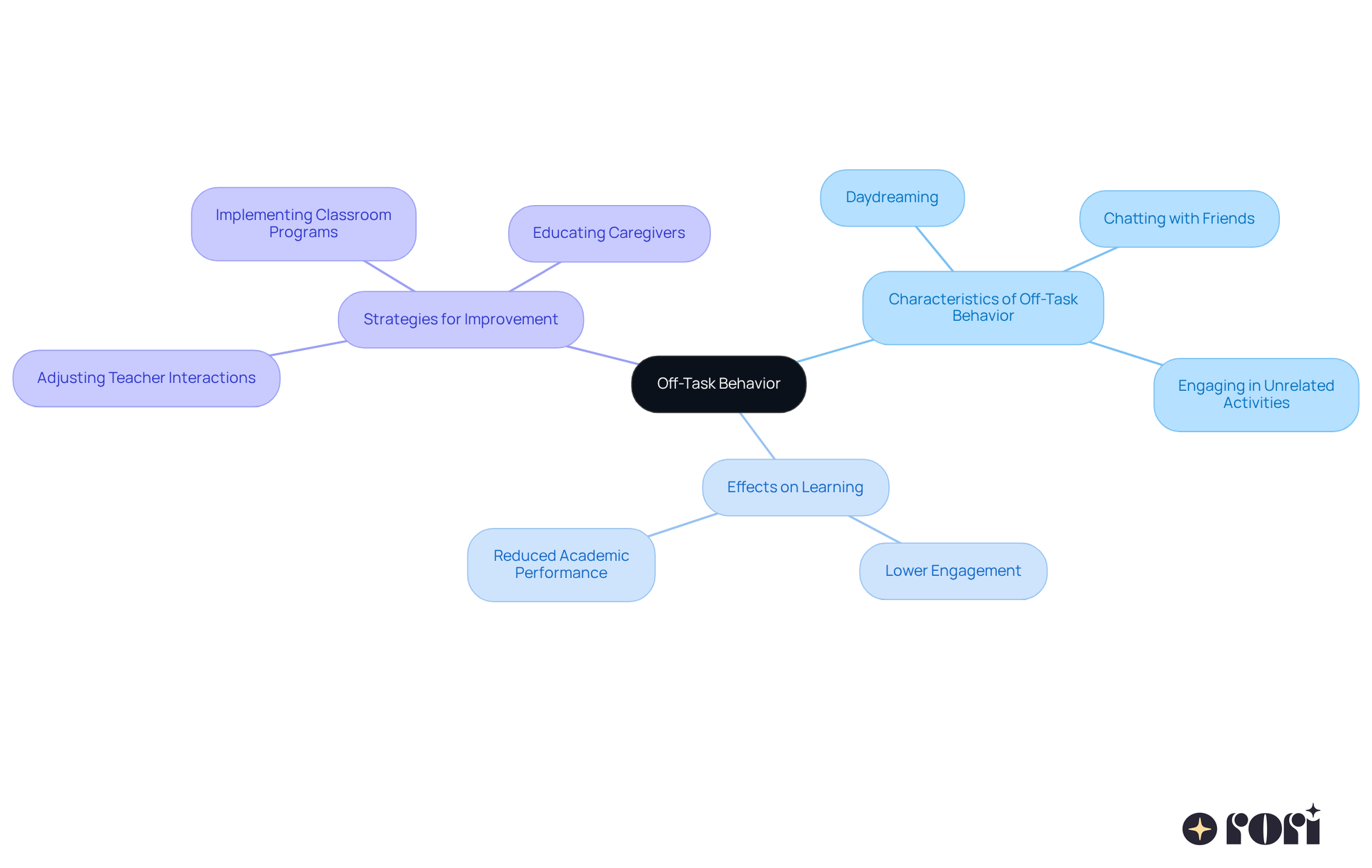
Off-task actions are those sneaky little distractions that can pull a young person’s focus away from what they’re supposed to be doing. You might notice them daydreaming, chatting with friends, or getting lost in unrelated activities. Understanding these distractions is so important because they can really affect a child’s learning journey and how well they do in school. Research shows that when kids get distracted, their engagement drops, and that often leads to lower . For example, a systematic review of interventions aimed at reducing found that and help keep classrooms organized, which ultimately leads to better academic outcomes.
When we identify distractions, it opens the door for educators and caregivers to use that encourage engagement and concentration. This, in turn, creates a more . Think about it: operational definitions of disengaged actions often include things like a student spending more than three seconds coloring instead of focusing on a lesson. Having this clarity is key for recognizing and managing distractions effectively. Plus, have shown promise in increasing engagement and cutting down on distractions, especially in early elementary classrooms. By prioritizing our understanding of , we can work together to create more supportive and effective educational experiences for every student. And let’s not forget about the role of ! This is crucial in providing better support and making informed decisions, especially for individuals with , ADHD, and other behavioral challenges. We’re here to help you every step of the way!
Explore Factors Influencing Off-Task Behavior in Learning Settings
A variety of factors can influence in learning environments. One major contributor is environmental distractions. Things like noise and visual stimuli can easily pull a young learner’s attention away, making it tough for them to focus on lessons. For example, research shows that kids exposed to high levels of background noise often see a dip in their . This highlights just how important it is to create a !
Social dynamics also play a big role. Peer interactions during group activities can lead to distractions, especially if a student becomes off-task by chatting with friends instead of paying attention to the lesson. Individual characteristics, like attention span, interest in the subject, and emotional state, further impact a child’s focus. Take children on the autism spectrum, for instance; they might struggle with behavior that is off-task due to or challenges in processing information. This really emphasizes the need for that meet their .
Case studies have shown that having and cutting down on visual clutter can really help students with autism focus better. Plus, experts agree that creating a can foster engagement and reduce distractions. By understanding these factors, educators and parents can work together to create that support children’s education and help them stay focused. Let’s explore this together!

Analyze the Impact of Off-Task Behavior on Learning Outcomes
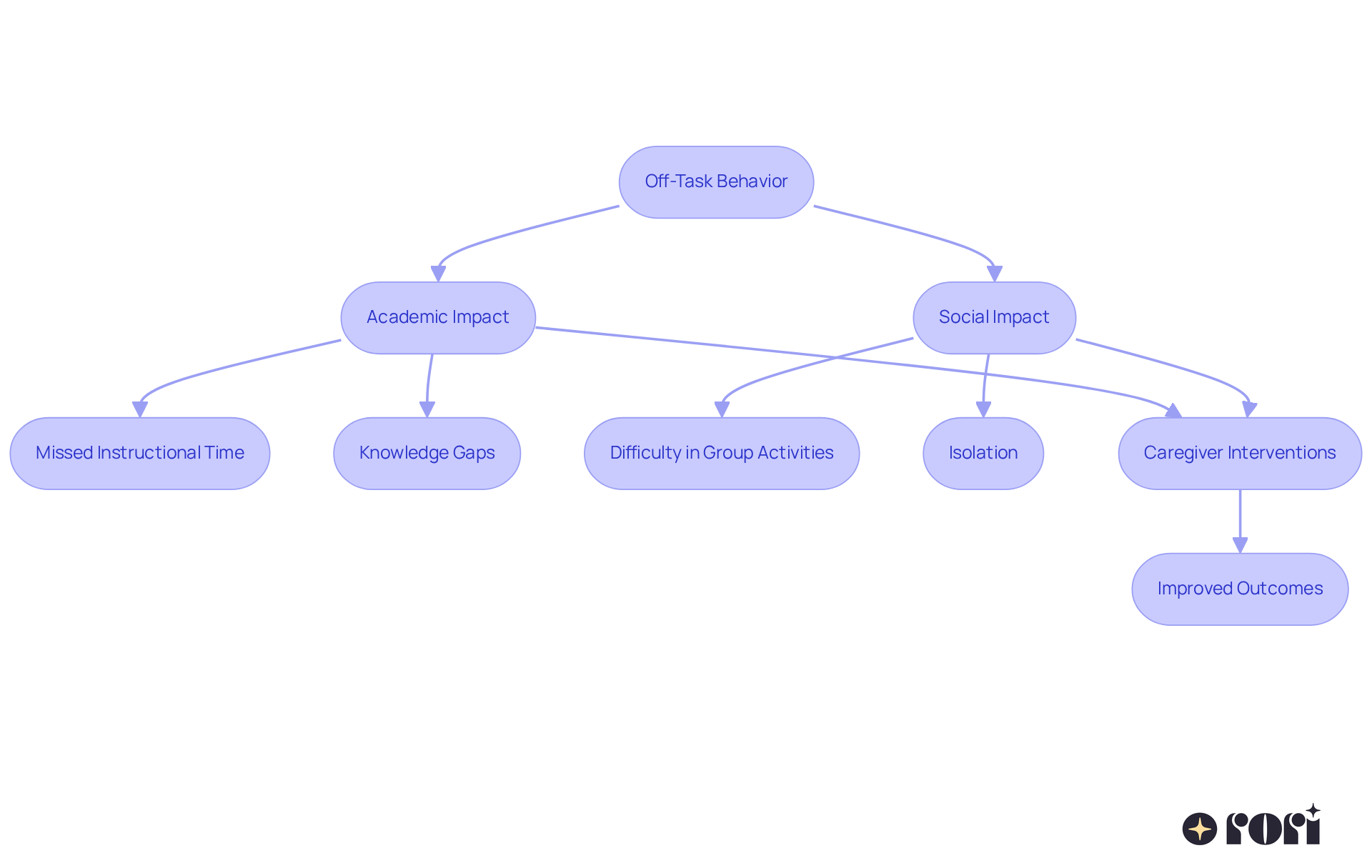
Actions that are off-task can really impact how well our kids learn. When students frequently drift away from lessons, they miss out on , which can lead to . Research shows a clear connection between and lower academic success. Kids who aren’t actively involved often struggle to remember information or develop essential skills.
But it’s not just academics that suffer— can also get in the way of social interactions. Children who find it hard to focus may have , which can make them feel isolated or frustrated. For instance, a child who often seems inattentive might miss out on opportunities to collaborate with their peers, which can hinder their development.
That’s why it’s so important to address ! It helps foster both and , ensuring our kids thrive in school and beyond. By empowering caregivers with knowledge about , we can enhance their ability to support their children at home. This not only complements professional interventions but also promotes consistency.
When caregivers are informed, they can actively participate in their child’s growth, leading to better and a more harmonious family dynamic. Let’s explore this together! We’re here to help you every step of the way!
Conclusion
Understanding off-task behavior is so important for enhancing our kids’ educational experiences and helping them succeed! By recognizing the different distractions that can pull a child’s attention away, educators and caregivers can put effective strategies in place to boost engagement and academic performance. This proactive approach not only helps manage classroom dynamics but also creates a more supportive learning environment for all students.
This article shares key insights into off-task behavior, including its causes like environmental distractions, social dynamics, and individual characteristics. It highlights the need for tailored interventions that meet the unique needs of students, especially those facing specific challenges like Autism Spectrum Disorders and ADHD. By creating a communication-rich environment and minimizing distractions, both educators and parents can work together to reduce off-task behavior and improve learning outcomes.
Ultimately, tackling off-task behavior is essential for promoting academic achievement and developing social skills. Empowering caregivers with knowledge and strategies enables them to support their children effectively, leading to a more harmonious and productive educational experience. By prioritizing understanding and intervention around off-task behavior, we can help every child thrive, ensuring they reach their full potential in school and beyond. Let’s explore this together, and remember, we’re here to help you every step of the way!
Frequently Asked Questions
What are off-task behaviors?
Off-task behaviors are distractions that divert a young person’s focus away from their intended activities, such as daydreaming, chatting with friends, or engaging in unrelated activities.
Why is it important to understand off-task behaviors?
Understanding off-task behaviors is crucial because they can significantly impact a child’s learning journey and academic performance, leading to decreased engagement and lower academic outcomes.
How do off-task behaviors affect student engagement?
Research indicates that when children are distracted, their engagement in learning activities drops, which often results in poorer academic performance.
What strategies can help reduce off-task behaviors?
Effective strategies to reduce off-task behaviors include specific interventions that boost student engagement and help maintain classroom organization, ultimately leading to better academic results.
How can educators identify off-task behaviors?
Educators can identify off-task behaviors by observing actions such as a student spending more than three seconds on unrelated tasks, which helps in recognizing and managing distractions effectively.
What role do teacher interactions play in managing off-task behaviors?
Adjusting teacher interactions based on students’ temperaments has shown promise in increasing engagement and reducing distractions, particularly in early elementary classrooms.
How can caregiver education contribute to managing off-task behaviors?
Caregiver education is essential for providing better support and making informed decisions, especially for individuals with Autism Spectrum Disorders, ADHD, and other behavioral challenges.
List of Sources
- Define Off-Task Behavior: Key Characteristics and Importance
- psychiatryonline.org (https://psychiatryonline.org/doi/10.1176/appi.ps.20230543)
- nyu.edu (https://nyu.edu/about/news-publications/news/2015/november/intervention-improves-teacher-practices-and-student-engagement-in-early-elementary-school-classrooms.html)
- Explore Factors Influencing Off-Task Behavior in Learning Settings
- theautismhelper.com (https://theautismhelper.com/data-and-interventions-for-off-task-behavior)
- governor.ny.gov (https://governor.ny.gov/news/icymi-governor-hochuls-op-ed-amny-how-we-win-war-our-childrens-attention)
- governor.ny.gov (https://governor.ny.gov/news/last-day-school-governor-hochul-and-education-leaders-celebrate-end-smartphone-disruptions-new)
- Analyze the Impact of Off-Task Behavior on Learning Outcomes
- 10 Great Quotes on Promoting Positive Behavior – Brookes Blog (https://blog.brookespublishing.com/10-great-quotes-on-promoting-positive-behavior)
- studocu.com (https://studocu.com/en-us/document/community-college-of-allegheny-county/educational-psychology/classroom-arrange-case-study/99315880)
- nyu.edu (https://nyu.edu/about/news-publications/news/2015/january/disruptive-children-benefit-from-tailored-classroom-intervention.html)