

Introduction
Understanding the intricacies of reinforcement in Applied Behavior Analysis (ABA) therapy is so important for fostering positive behavioral changes, especially for individuals with autism spectrum disorder. This fundamental concept not only helps in skill development but also empowers caregivers and practitioners to create tailored interventions that truly resonate with each child’s unique needs.
However, even with its significance, many still find themselves grappling with the nuances of how reinforcement really works in therapeutic settings. What are the key elements that make reinforcement effective? How can we strategically implement these elements to maximize outcomes? Let’s explore this together!
Define Reinforcement in ABA: Core Concepts and Importance
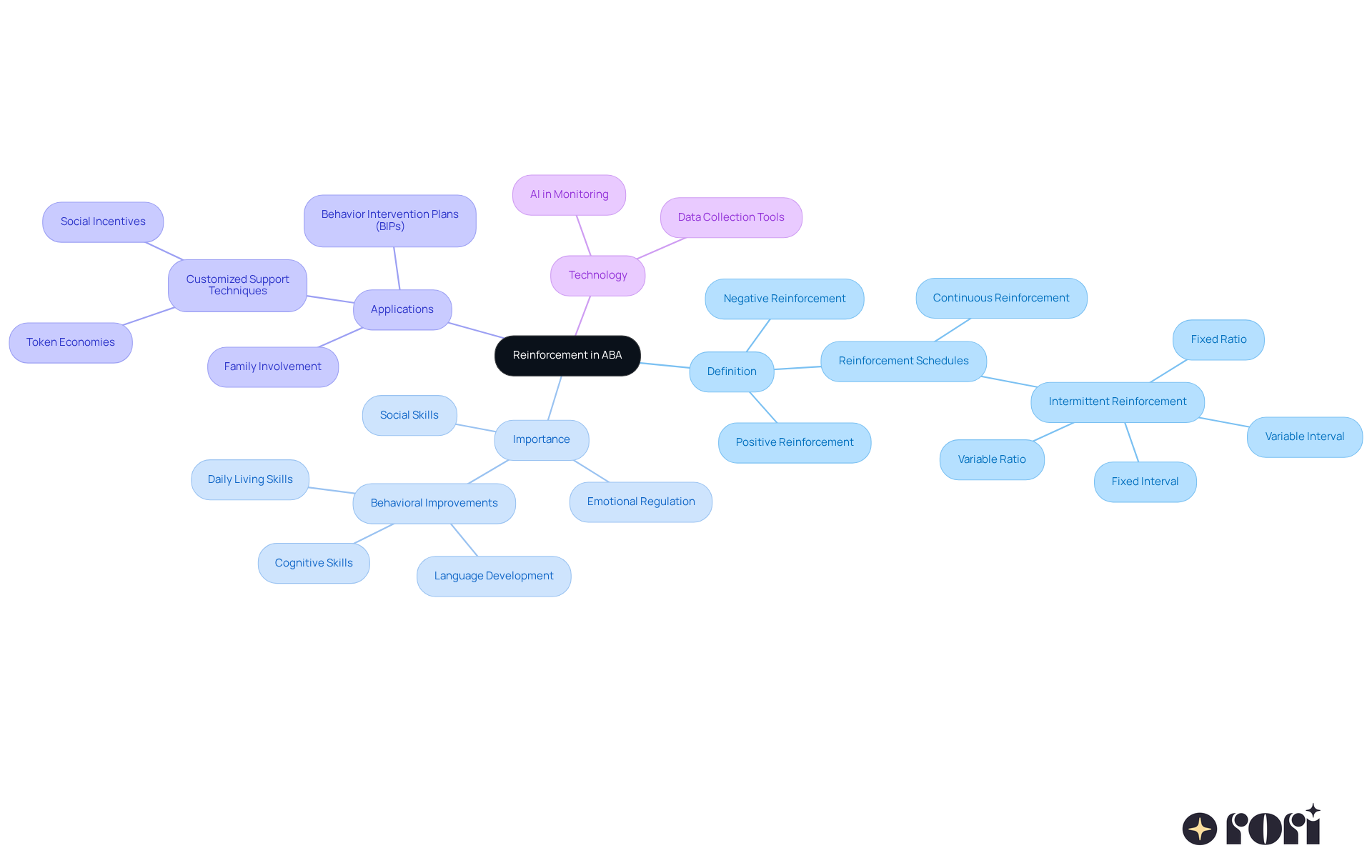
The highlights it as such an essential process! It really helps increase the chances of certain actions being repeated. Basically, it involves giving a rewarding consequence after a desired action happens. This can be anything from to or other . It’s amazing how effective support can be in influencing actions, which aligns with the , making it a cornerstone of ABA therapy.
Research shows that using can lead to , especially for individuals with autism spectrum disorder (ASD). For instance, studies indicate that young people receiving intensive ABA therapy, which often includes , can see major improvements in cognitive abilities, language skills, and everyday living. How encouraging is that?
Moreover, , like token economies or social incentives, have proven effective in real-life situations, boosting motivation and involvement among learners. Understanding and applying the allows clinicians to design that promote positive changes, helping youth with autism thrive.
Skilled behavior analysts also create personalized plans with measurable goals—like improving communication skills or reducing challenging behaviors—using research-backed methods. This ensures that reinforcement is applied effectively. Plus, the ongoing assessment and adjustment of strategies not only enhance the quality of care but also empower caregivers with the knowledge and resources they need to support their children’s behavioral goals.
And let’s not forget the role of technology! Incorporating helps monitor behavioral interventions more efficiently, freeing up valuable time for direct treatment. This way, the focus can stay on fostering those positive outcomes. Let’s explore this together and see how we can make a difference!
Explore Types of Reinforcement: Positive, Negative, and Beyond
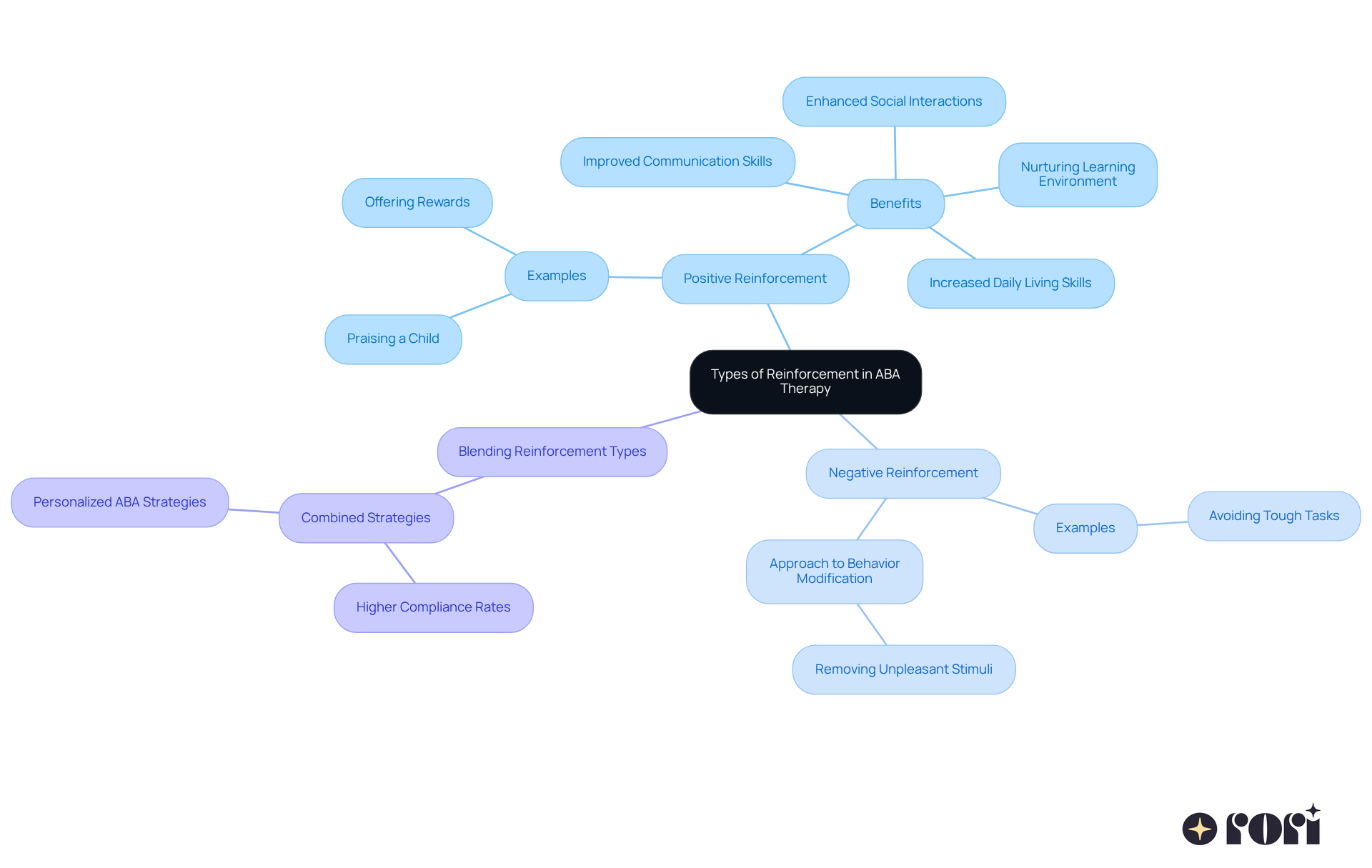
Support in ABA therapy comes in two main flavors: positive and negative.
- means giving a little boost after a good action, like praising a child or offering a small reward when they complete a task. This approach really helps increase the chances that they’ll do it again! Research shows that can lead to —communication skills can jump by 75%, social interactions by 80%, and daily living skills by 70% for kids with autism spectrum disorder (ASD). Plus, it creates a that’s especially beneficial for individuals with ASD.
- On the flip side, focuses on removing an unpleasant stimulus to encourage action. For example, if a child shows a desired behavior, letting them avoid a tough task can reinforce that behavior. While both methods can work well, studies suggest that often leads to and fosters a more supportive atmosphere for learning.
Recent research highlights the power of blending both positive and negative incentives. One study found that using both together resulted in the highest compliance rates, showing that a thoughtful mix of support types can really enhance efforts. Understanding these differences is key to crafting that meet each individual’s unique needs, which is essential in the context of the , ultimately promoting and .
Equipping caregivers with knowledge about these support methods boosts their ability to support their children’s growth effectively. By learning how to implement these strategies alongside professional help, caregivers can make informed decisions that positively impact their child’s development, leading to better behavioral outcomes and less stress. This deep understanding of support not only aids in skill enhancement but also strengthens the caregiver’s role in creating a loving environment for their child. Let’s explore this together!
Implement Reinforcement Strategies: Practical Applications in ABA Therapy
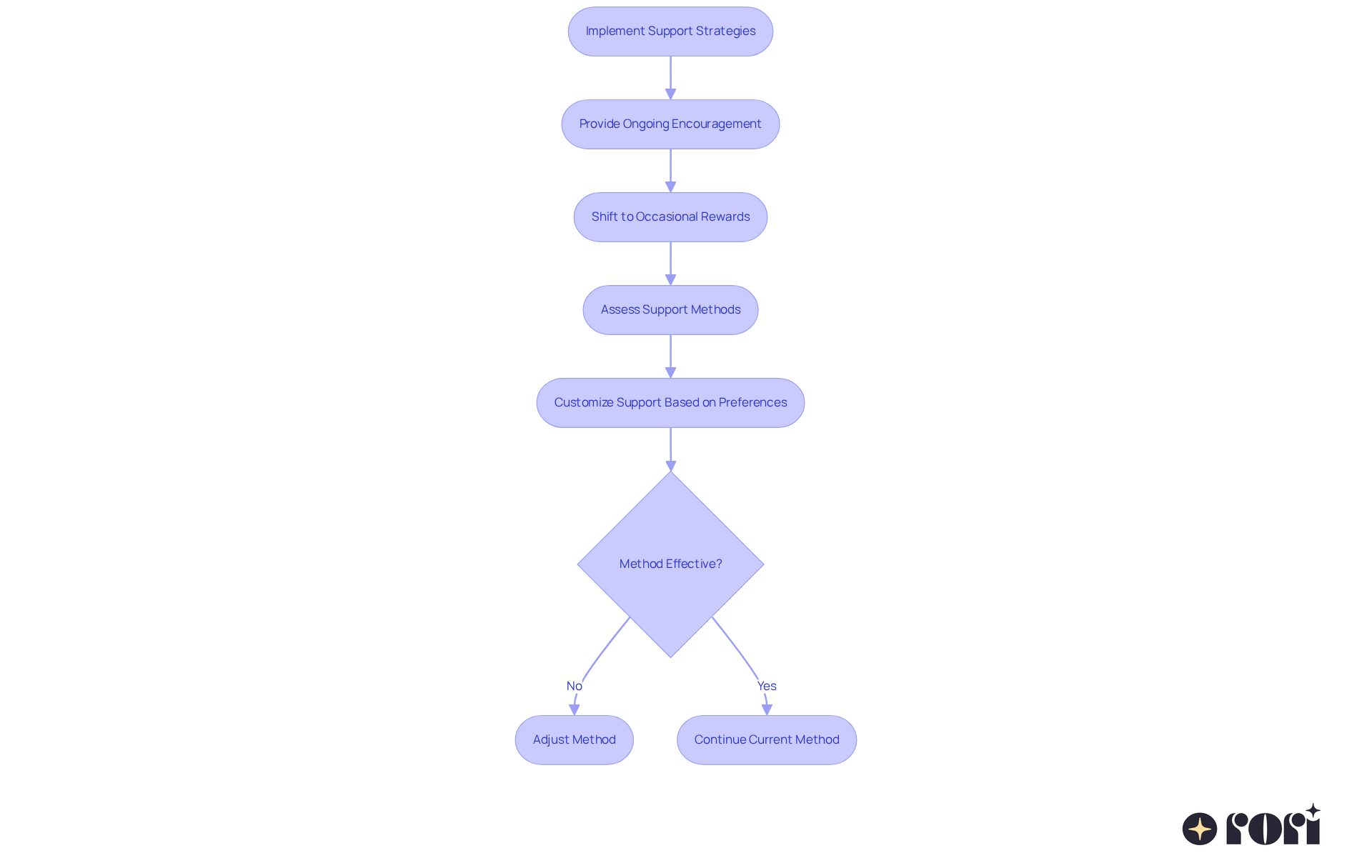
Implementing support strategies in ABA therapy is all about careful planning and consistency. Clinicians often start by providing , as per the , rewarding each instance of the desired action to help children develop new skills. As the little one becomes more proficient, the focus shifts to , where incentives are given sporadically. This approach not only helps over time but also builds resilience against extinction.
Continuously assessing is crucial to ensure they remain effective and engaging for the child. Customizing support to align with the child’s preferences is essential; for example, some kids may respond better to than to physical rewards. include a blend of verbal affirmations, tangible items, and social attention to keep motivation high.
Current best practices align with the by encouraging the use of , like Fixed Ratio and Variable Ratio, to enhance learning outcomes and ensure that behaviors are generalized across different environments. Plus, integrating visual aids can significantly bolster preferred actions in the classroom setting.
By using these strategies, therapists can greatly encourage , enhance social skills, and enrich the overall learning experience for children with autism. Let’s explore this together and see how these approaches can make a difference!
Conclusion
In ABA therapy, the essence of reinforcement is a key element that helps increase the chances of desired behaviors being repeated. When practitioners provide rewarding outcomes after specific actions, they can really make a difference in behavioral results. This makes reinforcement a foundational part of effective ABA interventions.
Throughout the article, we’ve uncovered some important insights about the powerful effects of both positive and negative reinforcement strategies. Positive reinforcement—like praise or tangible rewards—has shown amazing success in helping individuals, especially those with autism spectrum disorder, develop new skills. By thoughtfully integrating both types of reinforcement, we can achieve better compliance and meaningful behavioral changes. Plus, focusing on personalized approaches and ongoing assessments ensures that interventions are effective and tailored to each child’s unique needs.
Ultimately, understanding and applying reinforcement in ABA therapy not only empowers clinicians but also gives caregivers the tools they need to support their children’s growth. As our field evolves with new technologies, embracing these strategies can lead to transformative outcomes for individuals with autism. Engaging with these concepts and putting them into practice can spark significant positive changes, highlighting the importance of targeted reinforcement in creating a nurturing learning environment. Let’s explore this together and see how we can make a difference!
Frequently Asked Questions
What is reinforcement in ABA?
Reinforcement in ABA (Applied Behavior Analysis) is a process that increases the likelihood of a behavior being repeated by providing a rewarding consequence after the desired action occurs. This can include tangible rewards, social praise, or other positive stimuli.
Why is reinforcement important in ABA therapy?
Reinforcement is important in ABA therapy because it effectively influences actions and behaviors, making it a cornerstone of the therapy. It helps in promoting positive behavior changes, particularly for individuals with autism spectrum disorder (ASD).
How does reinforcement impact individuals with autism spectrum disorder?
Research shows that positive reinforcement can lead to significant advancements in behavior and skill development for individuals with ASD. Intensive ABA therapy, which often includes reward strategies, can result in major improvements in cognitive abilities, language skills, and everyday living.
What are some examples of customized support techniques in ABA?
Examples of customized support techniques in ABA include token economies and social incentives. These techniques have proven effective in real-life situations, enhancing motivation and involvement among learners.
How do behavior analysts use reinforcement in their plans?
Skilled behavior analysts create personalized plans with measurable goals, such as improving communication skills or reducing challenging behaviors, using research-backed methods to ensure effective application of reinforcement.
How does ongoing assessment improve reinforcement strategies?
Ongoing assessment and adjustment of strategies enhance the quality of care and empower caregivers by providing them with the knowledge and resources needed to support their children’s behavioral goals.
What role does technology play in monitoring behavioral interventions?
Technology, such as AI-driven progress report automation, helps monitor behavioral interventions more efficiently, allowing clinicians to focus more on direct treatment and fostering positive outcomes.
List of Sources
- Define Reinforcement in ABA: Core Concepts and Importance
- brighterstridesaba.com (https://brighterstridesaba.com/blog/aba-reinforcement-methods)
- supportivecareaba.com (https://supportivecareaba.com/statistics/autism-therapy-statistics)
- Resources | Golden Steps ABA (https://goldenstepsaba.com/resources/success-rates-of-aba-therapy)
- goldenstepsaba.com (https://goldenstepsaba.com/resources/understanding-the-importance-of-reinforcement-schedules-in-aba)
- The Impact of Positive Reinforcement on ABA Therapy Outcomes (https://crossrivertherapy.com/articles/the-impact-of-positive-reinforcement-on-aba-therapy-outcomes)
- Explore Types of Reinforcement: Positive, Negative, and Beyond
- Positive Reinforcement and ABA Therapy (https://goldenstepsaba.com/resources/positive-reinforcement-in-aba-therapy)
- pmc.ncbi.nlm.nih.gov (https://pmc.ncbi.nlm.nih.gov/articles/PMC3050464)
- linksaba.com (https://linksaba.com/key-principles-of-aba-reinforcement-prompting-and-shaping)
- Best ABA Quotes (https://testpreptech.com/post/best-aba-quotes)
- Implement Reinforcement Strategies: Practical Applications in ABA Therapy
- 10 Great Quotes on Promoting Positive Behavior – Brookes Blog (https://blog.brookespublishing.com/10-great-quotes-on-promoting-positive-behavior)
- Best ABA Quotes (https://testpreptech.com/post/best-aba-quotes)
- Applied Behavior Analysis Strategies for Positive Reinforcement (https://heartwisesupport.org/post/applied-behavior-analysis-strategies-for-positive-reinforcement)
- Inspirational ABA and Autism Quotes – Mrs. Moe’s Modifications (https://mrsmoesmodifications.com/inspirational-aba-and-autism-quotes)
- ambitionsaba.com (https://ambitionsaba.com/resources/the-benefits-of-reinforcement-schedules-in-aba-therapy-programs)