

Introduction
Applied Behavior Analysis (ABA) has become a vital part of autism treatment, providing a structured yet personalized approach that truly resonates. By using evidence-based techniques, ABA not only encourages positive behaviors but also boosts communication skills. This paves the way for greater independence and a better quality of life for children on the autism spectrum.
But with so many methods and strategies out there, what really makes ABA stand out in its effectiveness? And how can families navigate this complex landscape to secure the best outcomes for their loved ones? Let’s explore this together! 😊
Define Applied Behavior Analysis (ABA) and Its Role in Autism Treatment
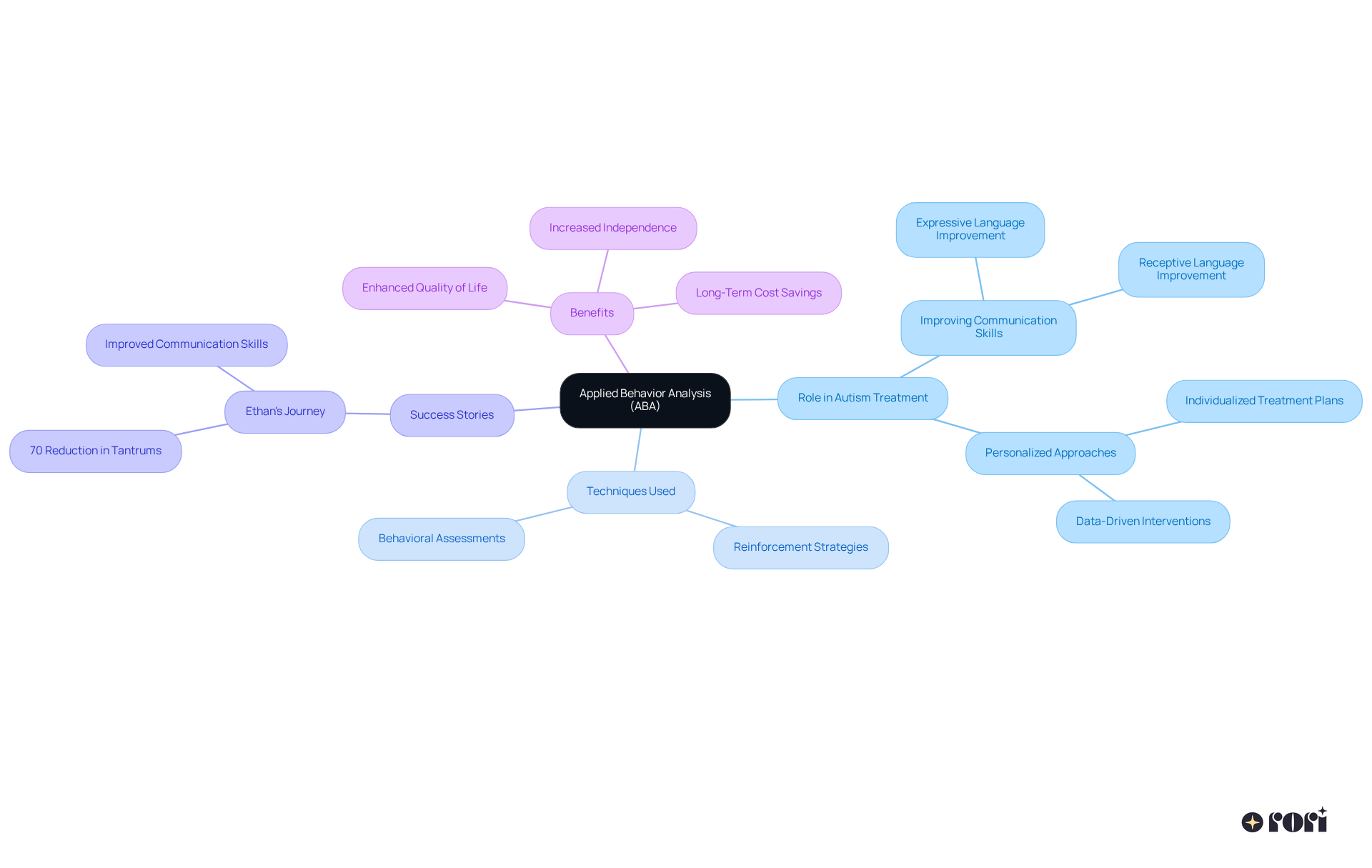
Applied Behavior Analysis (ABA) is a scientifically backed approach that aims to improve human behavior, specifically addressing treatment. This method uses to encourage positive behaviors and reduce challenging ones. By systematically applying interventions grounded in learning theory, ABA is tailored to meet the unique needs of each individual.
Recent research shows , highlighting its ability to in children with the condition. For instance, kids undergoing ABA interventions have demonstrated notable improvements in both expressive and receptive language abilities. This is so important because effective communication is the foundation for social interaction and self-care.
into manageable parts, allowing practitioners to develop that . Real-world stories showcase the success of ABA: take Ethan, for example. He started treatment at a young age and saw a 70% reduction in tantrums and within just a year. As behavioral specialist Ralph Moller wisely states, “When it comes to autism treatment, one size does not fit all,” emphasizing the importance of personalized approaches.
The techniques used in ABA are varied and evidence-based, focusing on reinforcing desired behaviors while teaching new skills. Behavioral therapists emphasize that the personalized nature of ABA intervention is key to its success, . As a result, many wonder what does ABA do for autism, as it is recognized as one of the most effective methods for children with autism, with research showing an impressive over 89% . This promotes essential skills that lead to greater independence and an improved quality of life.
Let’s explore this together! If you’re considering ABA for your child, remember that you’re not alone on this journey. We’re here to !
Trace the History and Evolution of ABA in Autism Care
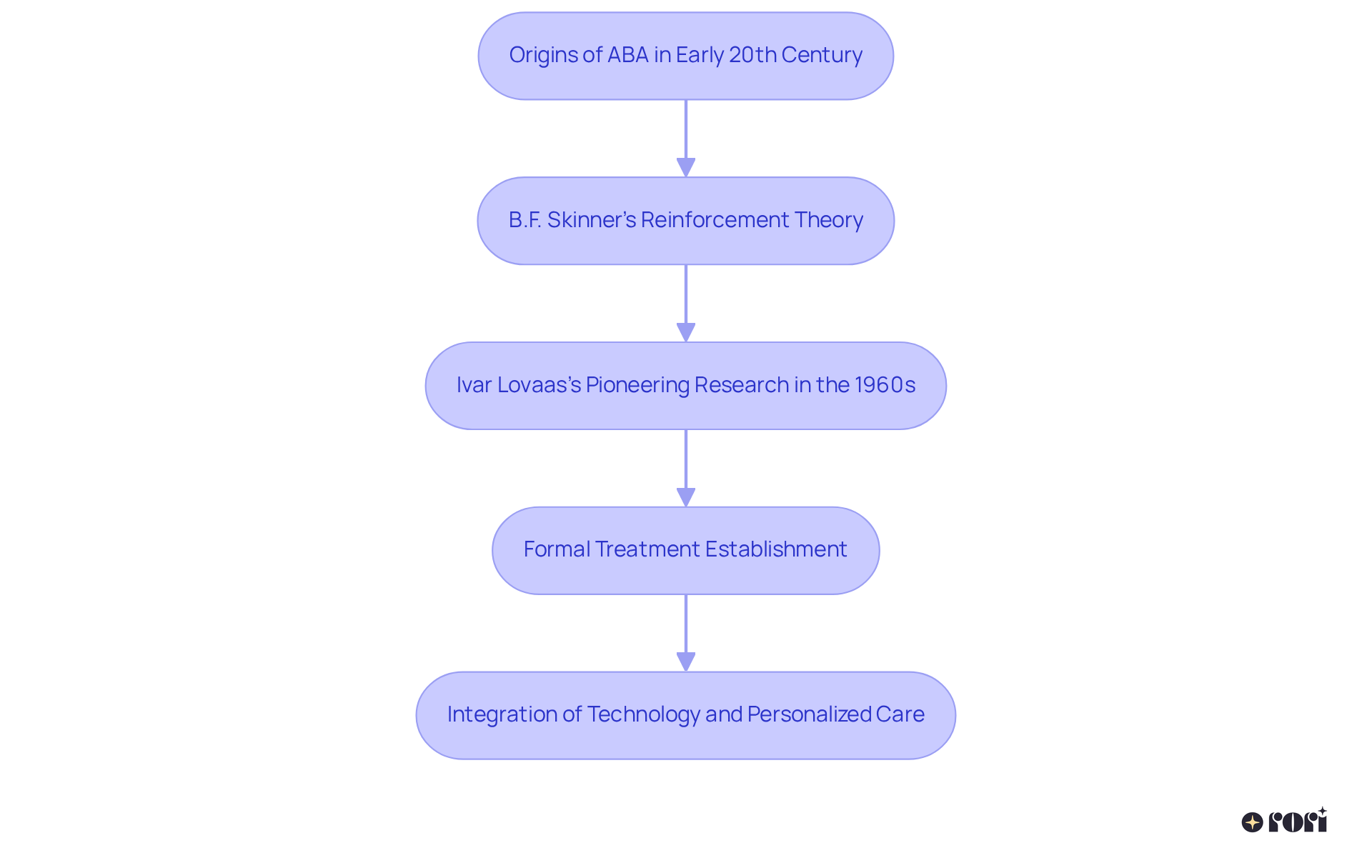
Did you know that the origins of date back to the early 20th century? It all started with psychologists like B.F. Skinner, who highlighted how important reinforcement is in learning. Fast forward to the 1960s, and the question of was answered as it became a formal treatment, thanks to the pioneering research of Ivar Lovaas. His work showed what ABA does for autism by demonstrating how effective it can be in , laying the groundwork for its widespread use.
Over the years, ABA has evolved quite a bit! It now incorporates the latest technology and ongoing research to refine its techniques. Today, it stands out as a leading , highlighting . What’s really special is its strong focus on and personalized care plans that adapt to meet the unique needs of each child and their family.
It’s quite striking that around 1 in 36 children in the U.S. are diagnosed with autism spectrum disorder each year. This highlights the growing importance of , specifically addressing what does ABA do for autism. Companies like Rori Behavioral Innovations Inc. are stepping up by to enhance therapy outcomes. They also offer , empowering families to play an active role in their child’s care. This journey reflects a heartfelt commitment to improving outcomes and enhancing the quality of life for individuals with autism.
Let’s explore this together! If you have questions or thoughts, feel free to share. We’re here to help you every step of the way!
Examine the Core Principles of ABA: Techniques and Strategies
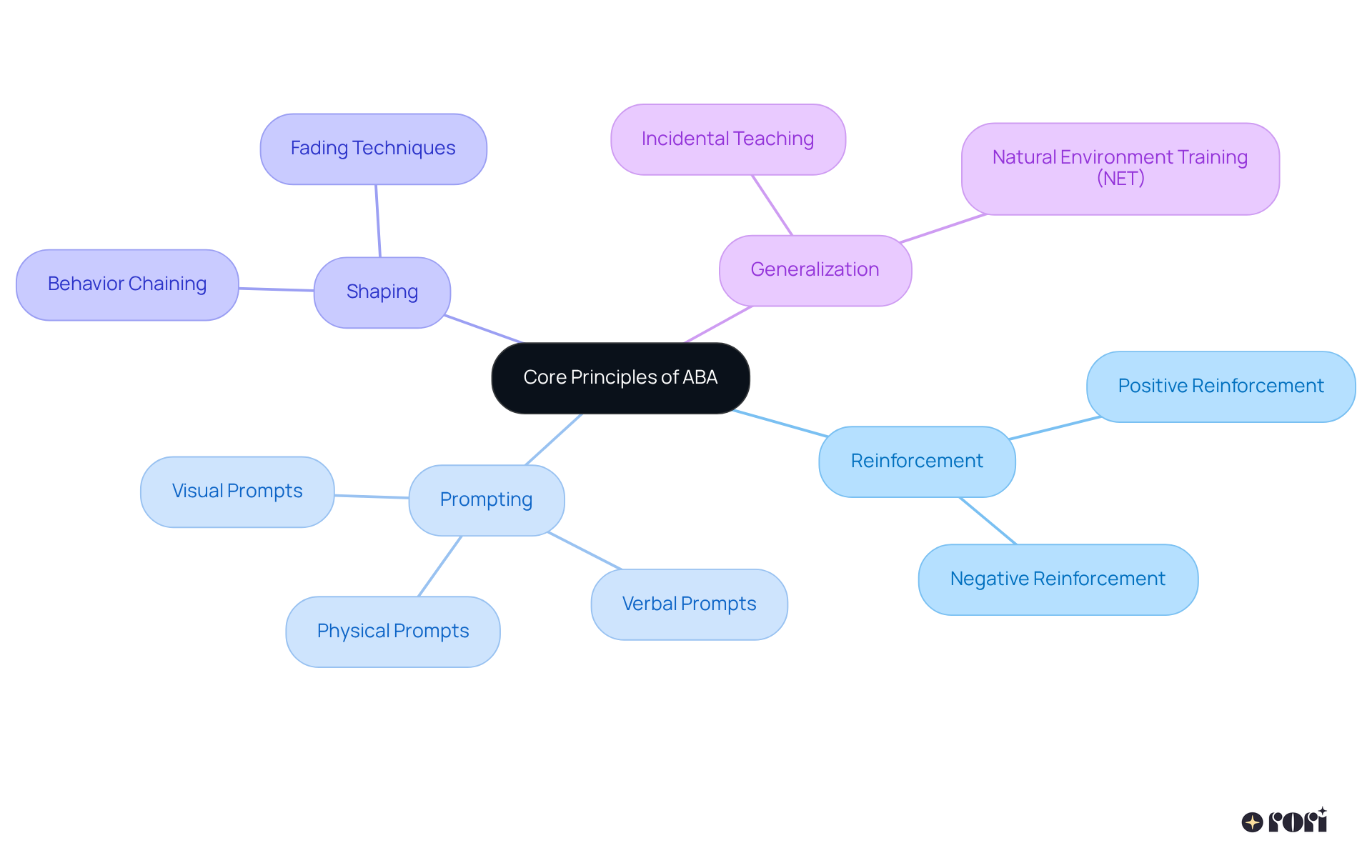
Let’s dive into the core principles of ! These include:
- Reinforcement
- Prompting
- Shaping
- Generalization
to encourage those preferred actions we want to see. On the other hand, prompting involves giving signals that help kickstart an action.
where we gently guide a young person toward a desired action by reinforcing those small steps they take along the way. And then there’s they learn are applied in different contexts and situations—how great is that?
In the world of ABA, :
come into play. These methods are , making the interventions as effective as possible. Therapists can truly in individuals with autism, leading to the question of what does ABA do for autism. Remember, we’re here to help you every step of the way!
Identify the Key Benefits of ABA Therapy for Children with Autism
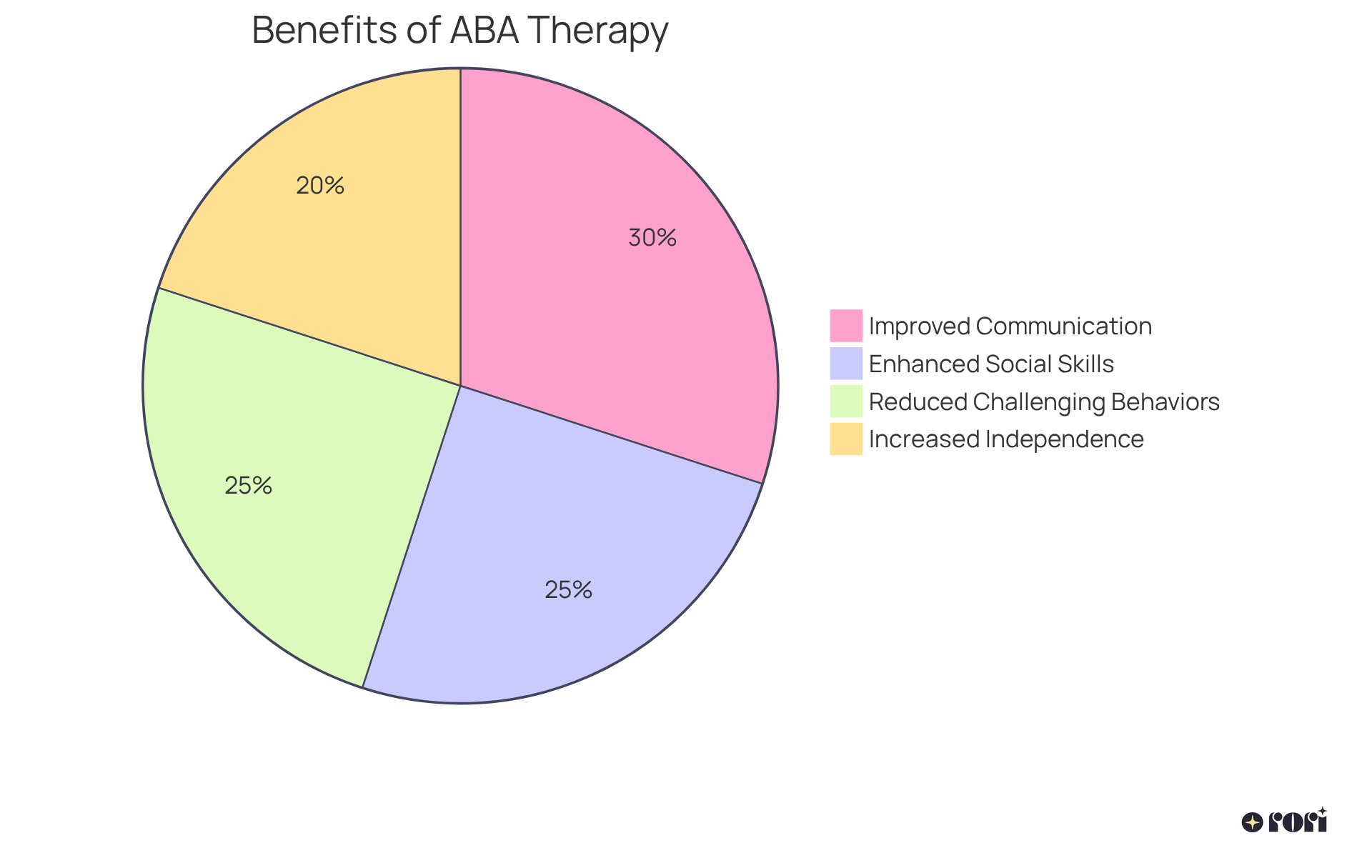
for individuals with autism, highlighting what does ABA do for autism by greatly improving their , , and overall independence. By targeting specific behavioral objectives, young individuals learn to express their needs more effectively and interact with peers in meaningful ways. Studies suggest that kids who undergo before turning five show , social skills, and adaptive abilities.
Research indicates that can lead to . In fact, over 89% of youngsters display improvements in adaptive behaviors and a decrease in challenging behaviors like tantrums and self-harm. This not only but also creates a more positive home environment.
Families often feel more assured about their children’s skills. One parent shared, ” and given us hope for our child’s future.” Real-world examples show how structured ABA programs have successfully , helping kids develop essential skills like making eye contact and starting conversations.
Moreover, combining ABA with other therapeutic approaches can further enhance the effectiveness of the intervention. Overall, understanding what ABA does for autism reveals its profound impact, making it a vital part of autism care that empowers children and their families. Let’s explore this together!
Conclusion
Applied Behavior Analysis (ABA) is truly a game-changer in the treatment of autism, showing how it can spark positive behavioral changes and boost communication skills in children. By using scientifically backed techniques tailored to each child’s unique needs, ABA not only tackles challenging behaviors but also enhances the overall quality of life, empowering both families and children.
In this article, we’ve shared some key insights, like the historical journey of ABA and its core principles, such as reinforcement and shaping. The impressive success rates associated with ABA are a testament to its effectiveness. Research shows that early intervention through ABA can lead to significant improvements in communication, social skills, and independence, making it an invaluable resource for families navigating autism care.
But the significance of ABA therapy goes beyond just modifying behavior; it’s a holistic approach that fosters growth and independence in children with autism. As research continues to evolve and embrace the latest techniques and technologies, our commitment to enhancing the lives of individuals with autism remains strong. Exploring ABA not only opens doors for children but also inspires families to actively participate in the therapeutic journey, ensuring a brighter future for everyone involved. Let’s explore this together!
Frequently Asked Questions
What is Applied Behavior Analysis (ABA)?
Applied Behavior Analysis (ABA) is a scientifically backed approach that aims to improve human behavior by using evidence-based techniques to encourage positive behaviors and reduce challenging ones. It is tailored to meet the unique needs of each individual.
How does ABA help in autism treatment?
ABA helps in autism treatment by significantly boosting communication skills in children. It focuses on enhancing both expressive and receptive language abilities, which are crucial for social interaction and self-care.
What is the process of ABA intervention?
ABA intervention involves breaking down complex behaviors into manageable parts, allowing practitioners to develop personalized treatment strategies that foster meaningful progress in individuals.
Can you provide an example of success with ABA?
Yes, one example is Ethan, who started ABA treatment at a young age and experienced a 70% reduction in tantrums and improved communication skills within just one year.
Why is personalization important in ABA?
Personalization is important in ABA because, as behavioral specialist Ralph Moller states, “one size does not fit all.” Tailoring interventions to the individual’s needs is key to the success of the treatment.
What techniques are used in ABA?
The techniques used in ABA are varied and evidence-based, focusing on reinforcing desired behaviors while teaching new skills.
What is the success rate of ABA for children with autism?
Research shows that ABA has an impressive success rate of over 89% in addressing autism spectrum disorder, promoting essential skills that lead to greater independence and an improved quality of life.
List of Sources
- Define Applied Behavior Analysis (ABA) and Its Role in Autism Treatment
- Success Rate of Early Intervention for Autism | Connect n Care (https://connectncareaba.com/blog/early-intervention-autism-success-rate-statistics)
- behavioralinterventionforautism.com (https://behavioralinterventionforautism.com/blog/aba-therapy-success-rate-is-it-worth-it)
- 81 ABA Therapy Statistics You Need to Know – apricott ABA (https://apricott.com/resources/aba-therapy-statistics)
- Patient Outcomes After Applied Behavior Analysis for Autism Spectrum Disorder – PMC (https://pmc.ncbi.nlm.nih.gov/articles/PMC8702444)
- The Numbers Don’t Lie: Revealing Autism Therapy Statistics | Above and Beyond Therapy (https://abtaba.com/blog/autism-therapy-statistics)
- Trace the History and Evolution of ABA in Autism Care
- Inspirational ABA and Autism Quotes – Mrs. Moe’s Modifications (https://mrsmoesmodifications.com/inspirational-aba-and-autism-quotes)
- supportivecareaba.com (https://supportivecareaba.com/statistics/autism-therapy-statistics)
- The Numbers Don’t Lie: Revealing Autism Therapy Statistics | Above and Beyond Therapy (https://abtaba.com/blog/autism-therapy-statistics)
- Data-driven, client-centric applied behavior analysis treatment-dose optimization improves functional outcomes – PMC (https://pmc.ncbi.nlm.nih.gov/articles/PMC9672611)
- 19 Powerful Autism Quotes | Rising Above ABA (https://risingaboveaba.com/autism-blog/powerful-autism-quotes)
- Examine the Core Principles of ABA: Techniques and Strategies
- advancedtherapyclinic.com (https://advancedtherapyclinic.com/blog/aba-therapy-techniques-for-autism)
- goldenstepsaba.com (https://goldenstepsaba.com/resources/aba-methods-and-techniques)
- kidsfirstservices.com (https://kidsfirstservices.com/first-insights/understanding-the-different-types-of-aba-therapy-techniques)
- amazeaba.com (https://amazeaba.com/types-of-aba-therapy-techniques-methods-and-benefits)
- Identify the Key Benefits of ABA Therapy for Children with Autism
- Applied Behavior Analysis (ABA) Statistics: Data, Effectiveness, and Evidence-Based Practices (https://nexoaba.com/applied-behavior-analysis-statistics)
- The Numbers Don’t Lie: Revealing Autism Therapy Statistics | Above and Beyond Therapy (https://abtaba.com/blog/autism-therapy-statistics)
- ABA Study: the Reduction of Challenging Behavior through Early Intensive and Comprehensive ABA Therapy (https://actionbehavior.com/resource/blog/a-longitudinal-study-of-the-reduction-of-challenging-behavior-through-early-intensive-and-comprehensive-applied-behavior-analysis)
- mastermindbehavior.com (https://mastermindbehavior.com/post/the-role-of-aba-therapy-in-reducing-repetitive-behaviors-in-autism)
- supportivecareaba.com (https://supportivecareaba.com/statistics/the-benefits-of-aba-therapy-in-reducing-challenging-behaviors)