

Introduction
The Premack Principle, often called the relativity theory of reinforcement, offers a fascinating glimpse into behavior modification, especially in applied behavior analysis (ABA). By using enjoyable activities to motivate less appealing tasks, this principle not only boosts motivation but also encourages engagement, particularly among children with autism.
But how can parents and therapists effectively use this strategy to achieve positive behavioral outcomes? Let’s explore the nuances of the Premack Principle together! It reveals practical applications that can turn everyday challenges into wonderful opportunities for growth and development.
We’re here to help you every step of the way! 🌟
Define the Premack Principle: Core Concept and Importance
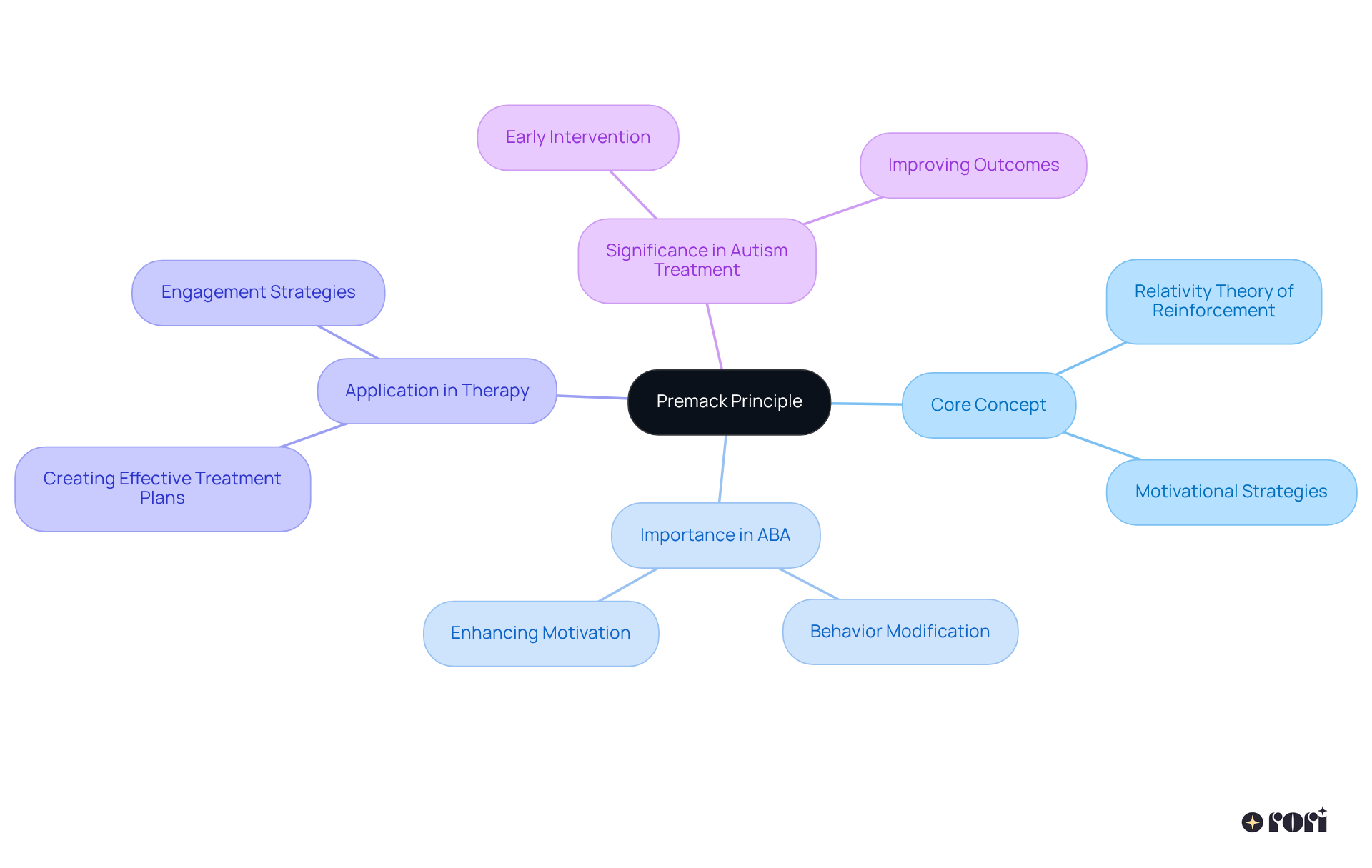
What is the ? It is often called the relativity theory of reinforcement and is all about how actions we enjoy can help us tackle those we don’t. Imagine this: when you let your child do something they love after finishing a less exciting task, it can really boost their chances of getting that task done. In applied behavior analysis (ABA), understanding what is the is especially valuable, as it provides a clear method for , helping kids—especially those with autism—to remain motivated and engaged.
By using this concept thoughtfully, clinicians can create fun and effective that inspire young patients to complete necessary tasks. This not only promotes but also leads to better outcomes in therapy. It’s worth noting that ABA is utilized for about , showcasing the significance of in achieving the desired behavioral results. Experts emphasize that , which further supports the application of this principle to enhance motivation and adherence in children.
So, let’s explore this together! If you’re a parent navigating these challenges, remember that you’re not alone. We’re here to !
Explore the Origins and Development of the Premack Principle
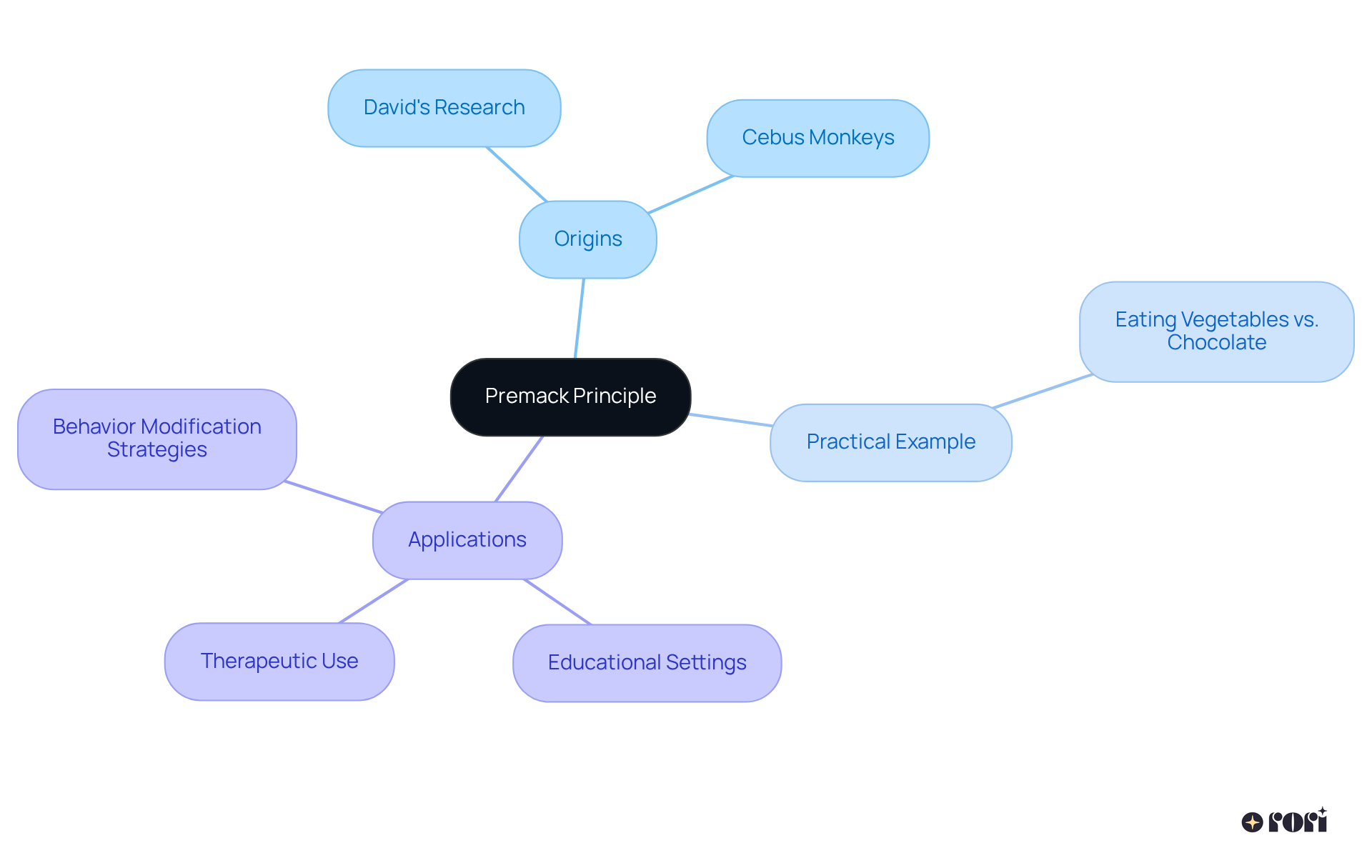
Have you ever heard of the Principle, often fondly called ”? It was introduced by psychologist David back in the 1960s, inspired by his fascinating research on Cebus monkeys. David noticed that some actions happened more frequently than others and thought that these could help boost the . For example, imagine a child who might be encouraged to eat their vegetables (a low-frequency action) by first allowing them to enjoy some chocolate candy (a high-frequency action) afterward.
David’s laid the foundation for understanding , which helps explain what is the . Over the years, this idea has been backed by countless studies and has become a vital part of analyzing behaviors, especially in educational and therapeutic settings. What’s really exciting is that this concept applies to various situations—think , home environments, and . It effectively motivates individuals to engage in activities they might not enjoy as much by linking them to more appealing outcomes. This approach can really enhance .
So, let’s explore this together and see how you can apply it in your own life! We’re here to help you every step of the way!
Apply the Premack Principle: Practical Examples and Settings
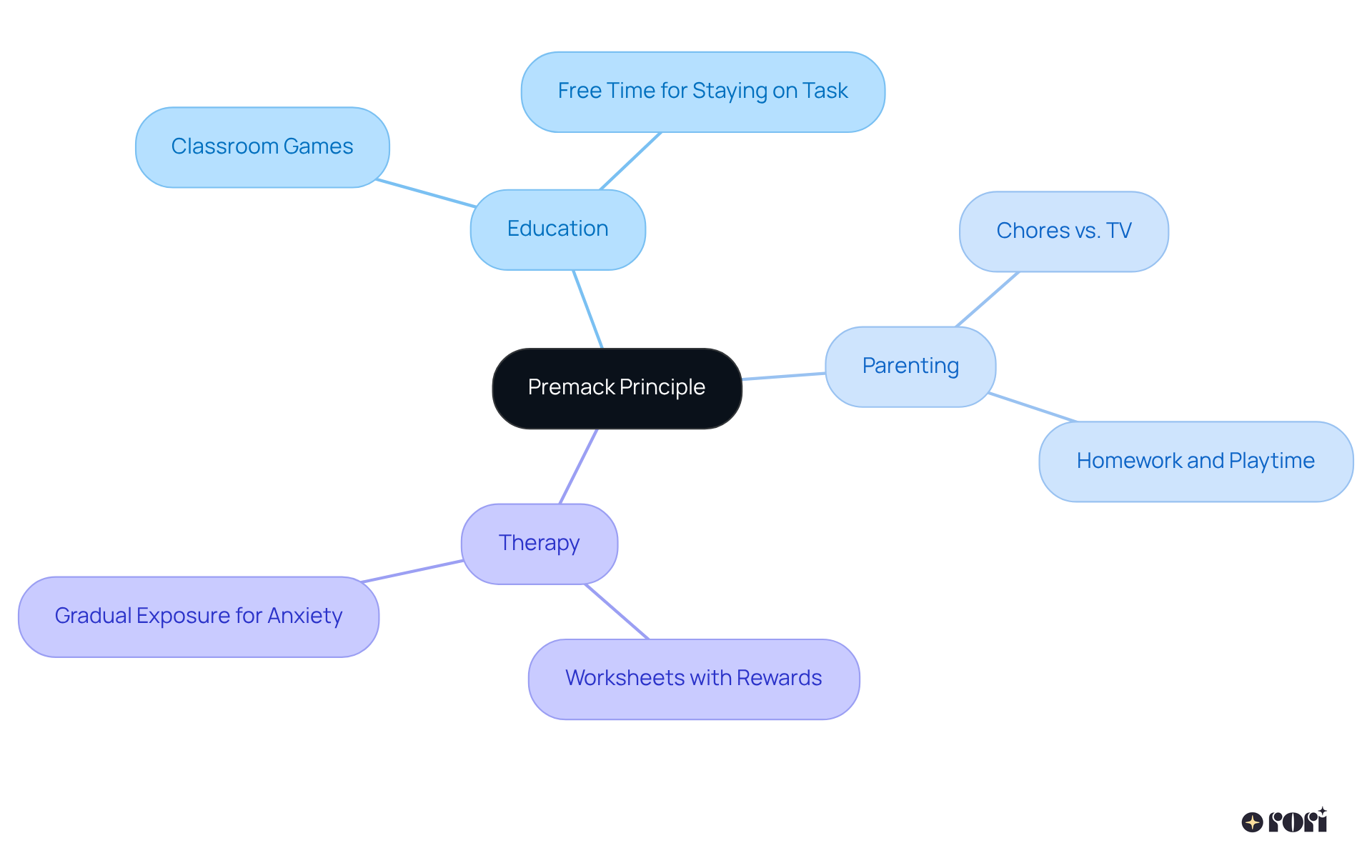
The concept finds versatile applications in various settings, like education, therapy, and parenting. For instance, in a classroom, a teacher might let students play a fun game (high-probability behavior) after they finish their homework (low-probability behavior). This strategy not only motivates kids to complete their assignments but also in learning. It’s been particularly , aiding in addressing .
In the realm of parenting, this idea can work wonders too! Imagine allowing your little one to watch their favorite show after finishing chores. This approach links less enjoyable tasks to fun activities, helping to while making chores feel more appealing.
In therapy, professionals often discuss what is the to encourage individuals with autism to tackle less favored tasks. By pairing these tasks with enjoyable activities, therapists can significantly and foster positive behavior. For example, a child might be motivated to complete a worksheet with the reward of playing with a beloved toy afterward. This method not only enhances motivation but also supports skill development and behavioral improvement. Plus, research shows that , like the GIFT program, plays a crucial role in achieving successful outcomes.
Overall, this concept serves as a powerful tool for both parents and therapists, helping them reach therapeutic goals while respecting individual preferences and dynamics. As noted by A Gem of Joy, emphasizes that it is unique to each person, highlighting the importance of personalized approaches in its application. Let’s explore this together and see how it can make a difference in your journey!
Understand the Impact of the Premack Principle on Behavior Modification
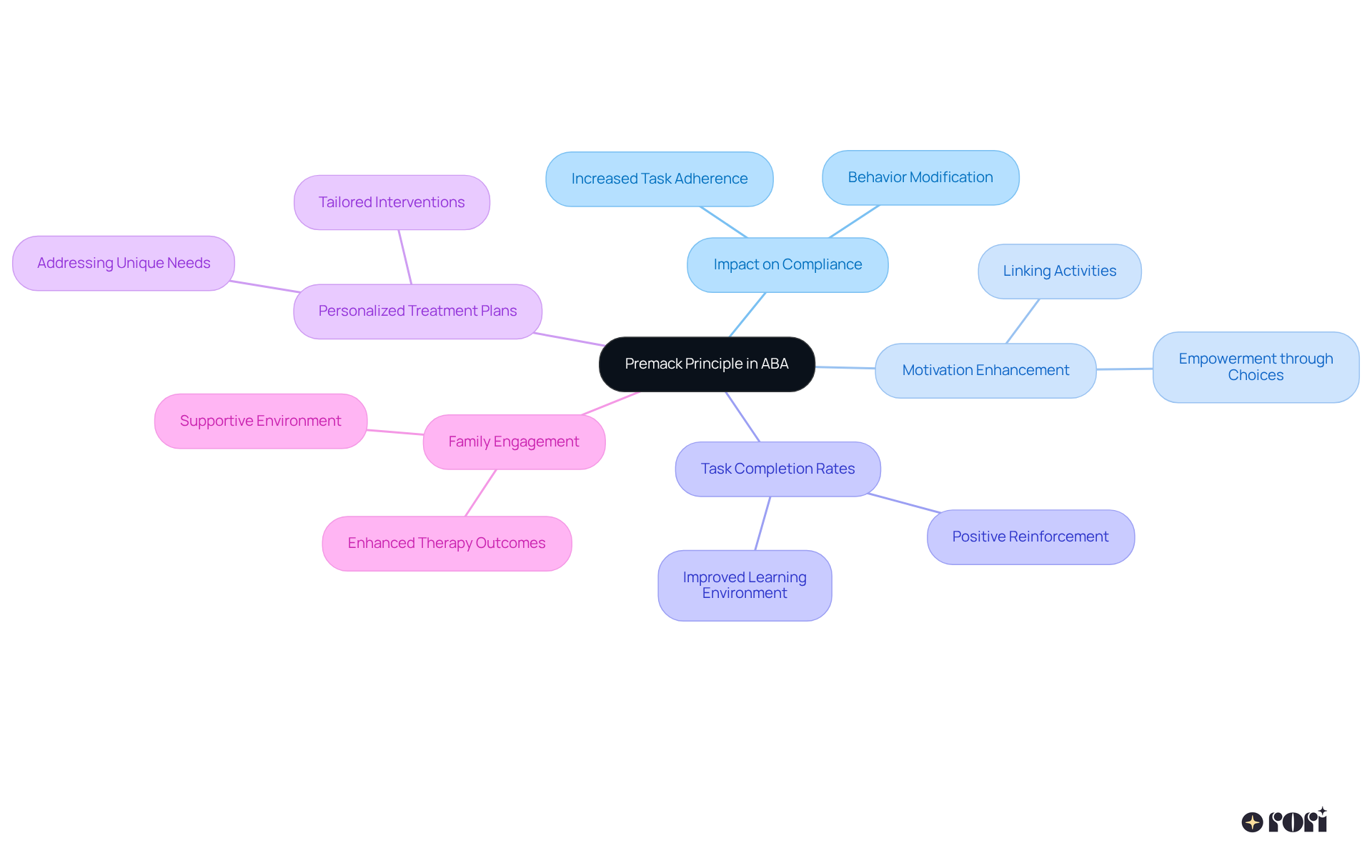
proposed by Premack has a profound impact on , especially when it comes to treating autism. By linking less favored activities with more enjoyable ones, practitioners can truly enhance compliance and motivation among young individuals. Research shows that this approach not only boosts task completion rates but also creates a positive learning environment. For example, did you know that ? This really highlights how , can be!
What’s even more exciting is that it by giving them a sense of control over their choices. This leads to better behavioral outcomes and greater independence. As Ralph Moller puts it, ‘ as they address their unique needs and challenges.’ This principle is a vital tool for , helping to facilitate .
And let’s not forget about the ! In the context of autism treatment, what is the in ABA, and why does it become an essential component? So, let’s explore this together and see how we can make a difference in the lives of our children!
Conclusion
The Premack Principle is a fantastic strategy in applied behavior analysis (ABA) that shows how preferred activities can motivate individuals to tackle less desirable tasks. By using this principle, parents, educators, and therapists can create structured environments that encourage positive behavior changes, especially in children with autism. Connecting enjoyable activities with necessary tasks not only boosts motivation but also fosters a sense of accomplishment and engagement.
Throughout this article, we’ve shared key insights about the origins of the Premack Principle, its practical applications, and its significant impact on behavior modification. From the foundational research by psychologist David Premack to its current use in therapy and education, this principle has become an invaluable tool for promoting compliance and independence among young individuals. The success rates of ABA therapy in treating autism spectrum disorder really highlight how effective this approach can be.
Ultimately, the Premack Principle reminds us of the importance of personalized strategies in behavior modification. By understanding and applying this principle, caregivers and professionals can enhance the therapeutic experience for children, empowering them to take control of their choices and develop lifelong skills. Embracing this approach can lead to meaningful improvements in behavior and overall well-being. Let’s explore this together as we continue on the journey toward effective intervention and support!
Frequently Asked Questions
What is the Premack Principle in ABA?
The Premack Principle, often referred to as the relativity theory of reinforcement, suggests that engaging in enjoyable activities can motivate individuals to complete less desirable tasks.
How does the Premack Principle work?
The principle works by allowing a person to engage in a preferred activity after completing a less exciting task, thereby increasing the likelihood of completing that task.
Why is the Premack Principle important in applied behavior analysis (ABA)?
It is important because it provides a clear method for modifying behavior, particularly in helping children, especially those with autism, to stay motivated and engaged in necessary tasks.
How can clinicians use the Premack Principle in therapy?
Clinicians can use the Premack Principle to create fun and effective treatment plans that inspire young patients to complete necessary tasks, promoting positive behavior changes and better therapy outcomes.
What percentage of individuals with autism utilize ABA?
Approximately 64% of individuals with autism utilize applied behavior analysis (ABA), highlighting the significance of effective strategies like the Premack Principle in achieving desired behavioral results.
Why is early intervention crucial in autism therapy?
Early intervention is crucial because it enhances motivation and adherence in children, making strategies like the Premack Principle particularly beneficial in autism therapy.
List of Sources
- Define the Premack Principle: Core Concept and Importance
- 81 ABA Therapy Statistics You Need to Know – apricott ABA (https://apricott.com/resources/aba-therapy-statistics)
- Inspirational ABA and Autism Quotes – Mrs. Moe’s Modifications (https://mrsmoesmodifications.com/inspirational-aba-and-autism-quotes)
- Autism Therapy: Key Statistics (https://ambitionsaba.com/resources/autism-therapy-statistics)
- Autism Parenting Quotes (https://rainbowtherapy.org/autism-parenting-quotes)
- rainbowtherapy.org (https://rainbowtherapy.org/autism-statistics-and-facts)
- Explore the Origins and Development of the Premack Principle
- journals.sagepub.com (https://journals.sagepub.com/doi/abs/10.1177/01454455221085249)
- en.wikipedia.org (https://en.wikipedia.org/wiki/Premack’s_principle)
- researchgate.net (https://researchgate.net/publication/239803993_Application_of_the_Premack_Principle_of_Reinforcement_to_the_Quality_Performance_of_Service_Employees)
- pubmed.ncbi.nlm.nih.gov (https://pubmed.ncbi.nlm.nih.gov/35354379)
- Apply the Premack Principle: Practical Examples and Settings
- rori.care (https://rori.care/post/maximizing-progress-premack-principle-in-aba-therapy)
- agemofjoyaba.com (https://agemofjoyaba.com/autism-treatment-blog/premack-principle-aba-examples-and-implementation)
- discoveryaba.com (https://discoveryaba.com/aba-therapy/what-is-the-premack-principle?8936781b_page=12&c73247f3_page=7)
- masteraba.com (https://masteraba.com/premack-principle)
- brighterstridesaba.com (https://brighterstridesaba.com/blog/what-is-the-premack-principle)
- Understand the Impact of the Premack Principle on Behavior Modification
- The Numbers Don’t Lie: Revealing Autism Therapy Statistics | Above and Beyond Therapy (https://abtaba.com/blog/autism-therapy-statistics)
- journals.sagepub.com (https://journals.sagepub.com/doi/full/10.1177/01987429231224044)
- Autism Therapy Statistics (https://goldenstepsaba.com/resources/autism-therapy-statistics)
- supportivecareaba.com (https://supportivecareaba.com/statistics/how-aba-therapy-improves-compliance-in-children-with-autism)
- mastermindbehavior.com (https://mastermindbehavior.com/post/what-is-premack-principle)