
Introduction
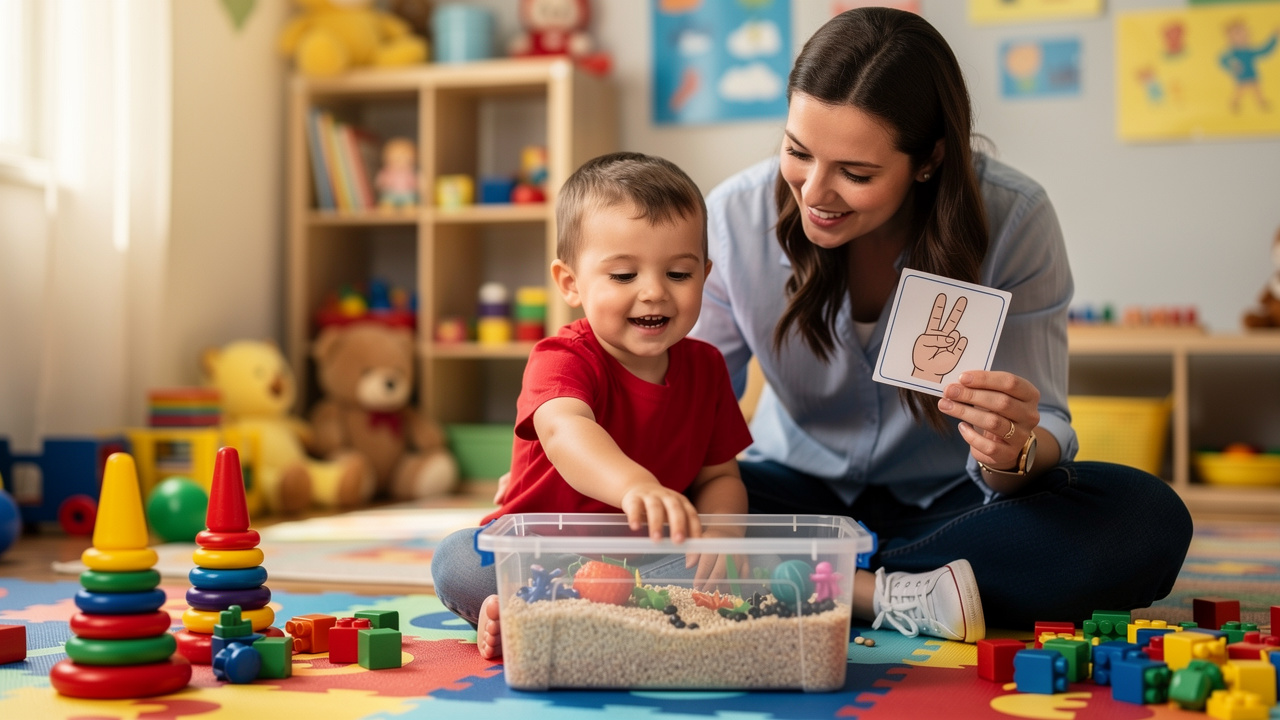
Hey there, parents! Communicating with a nonverbal child can sometimes feel like a real puzzle, can’t it? But don’t worry! The right activities can turn this challenge into a fun adventure that brings you closer together.
Let’s explore ten fun ABA activities that can boost communication skills in nonverbal kids, giving you some handy strategies to support their growth!
But what if the usual methods just aren’t cutting it? Let’s find out how some creative approaches can open up new ways for your child to express themselves and connect with you!
Rori Care – ABA Therapy: Tailored Activities for Nonverbal Communication
Finding the right support for your nonverbal child can be a challenge, but it doesn’t have to be. At Rori Care, we create fun and engaging activities that are tailored just for your child, based on what they love and need. By focusing on their unique strengths and preferences, we help them express themselves and develop important interaction skills through organized play.
Kids who participate in these personalized activities often show amazing growth in how they express themselves and interact with others. Imagine the joy of watching your child thrive and connect with others – let’s make that happen together! Experts agree that when therapy is tailored to each child, it not only helps them connect better but also boosts their confidence and independence. We’re here to help you every step of the way!
Utilize Picture Exchange Communication System (PECS) for Effective Interaction
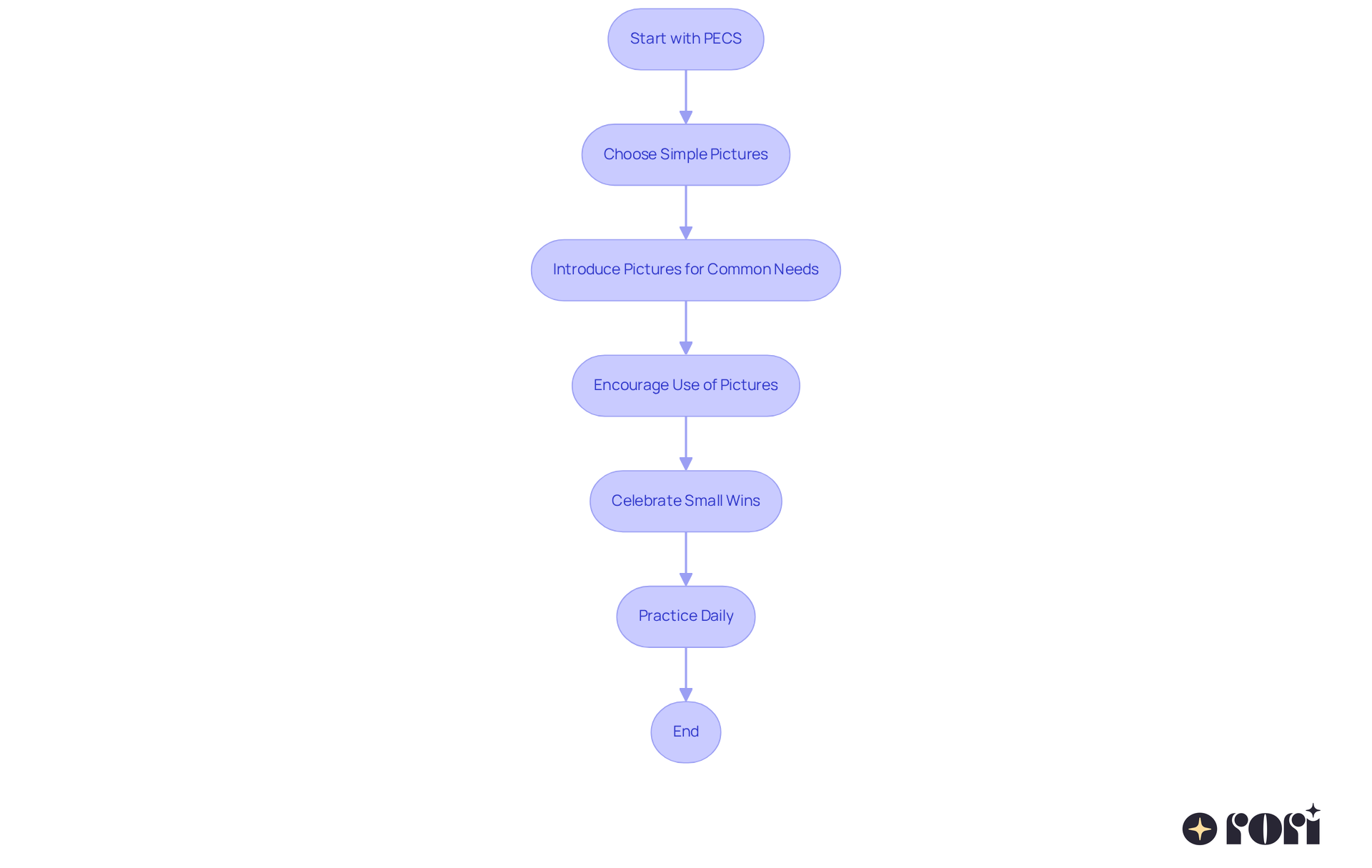
Have you ever felt stuck trying to understand what your child wants when they can’t find the words? The Picture Exchange Communication System (PECS) is a fantastic tool for nonverbal kids, enabling them to participate in ABA activities for non verbal communication by sharing their needs and desires through pictures. Using pictures helps your child express themselves and makes things a lot less frustrating for both of you.
To get started with PECS, try using a few simple pictures for things your child often asks for, like ‘more,’ ‘help,’ or ‘play.’ As they get the hang of it, you can add more pictures to their vocabulary. Every time they use a picture, it’s a win! It builds their confidence and encourages them to keep trying. Remember, it’s not about being perfect; it’s about celebrating those little victories along the way.
Plus, Rori Care’s services can really help kids with Autism Spectrum Disorders, ADHD, learning disabilities, and other behavioral challenges, making aba activities for non verbal children a great option for many families. If you’re looking to implement PECS, try setting aside some time each day to practice with your child. With a little practice, you’ll see your child’s confidence grow, and that’s something to celebrate!
Incorporate Sensory Activities to Foster Communication Skills
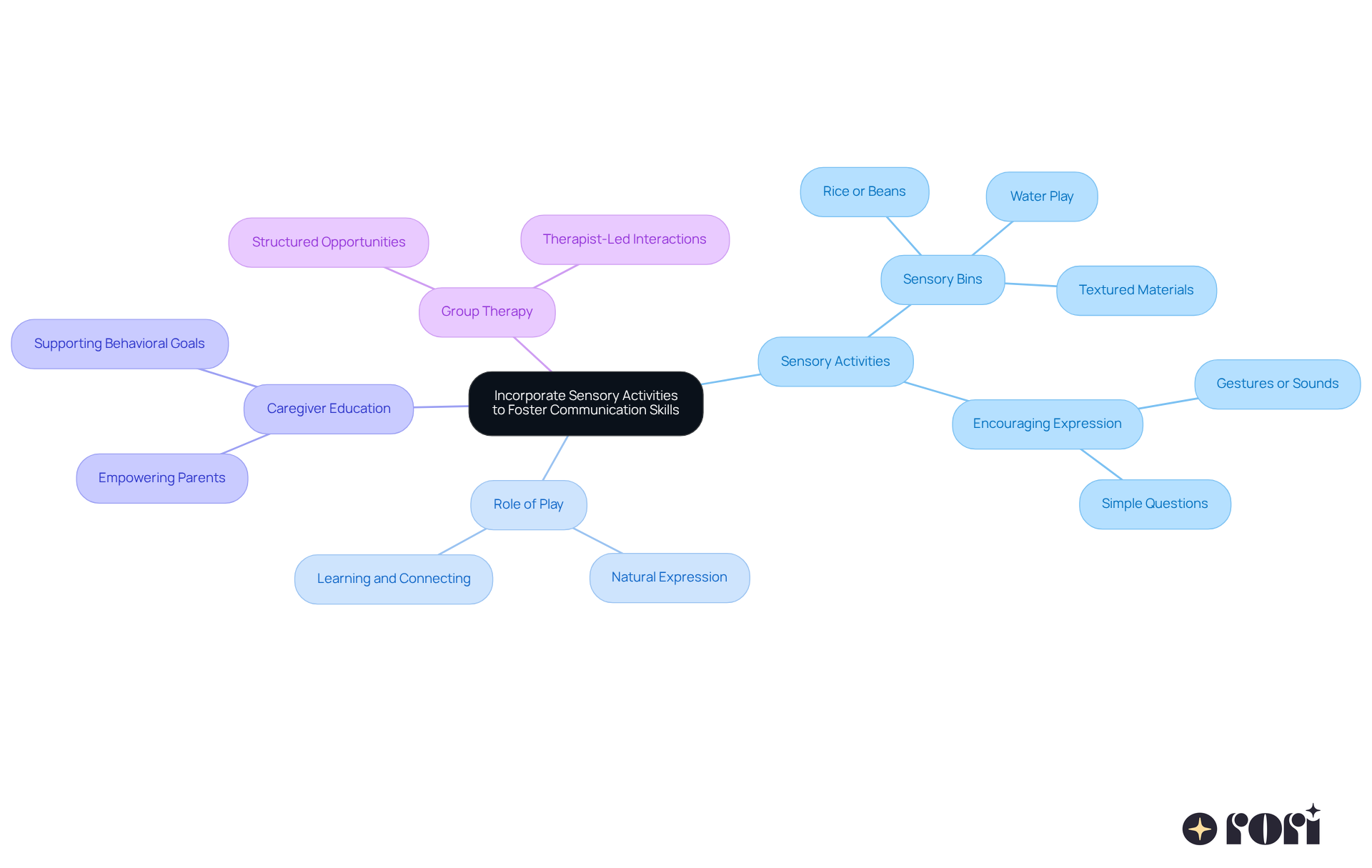
Many parents feel overwhelmed when trying to connect with their nonverbal children, but incorporating ABA activities for nonverbal communication can be a game-changer! Sensory bins filled with rice or beans, water play, and textured materials are fantastic ways to engage your child’s senses. They not only spark curiosity but also open up chances for expression. For example, during sensory bin activities, you might ask, ‘Do you prefer the rice or the beans?’ This simple question encourages your little one to respond with gestures or sounds, helping them express themselves.
You might be surprised to learn that ABA activities for nonverbal children can really boost expressive skills, especially for kids with autism. It’s amazing how play can create a natural setting for interaction! Engaging in ABA activities for nonverbal communication can lead to better language abilities and social interactions, making them essential tools for parents and caregivers.
Occupational therapists often say that play is how kids naturally express themselves. It’s not just fun; it’s a key part of learning and connecting! Plus, group therapy led by qualified therapists can enhance these interactions, providing structured opportunities for kids to practice communication in a supportive environment.
And let’s not forget about caregiver education! It’s crucial for parents to learn ABA activities for nonverbal skills and strategies, empowering them to support their child’s behavioral goals effectively. This active involvement not only reinforces the skills learned during therapy but also leads to improved behavioral outcomes and overall family dynamics. Imagine the joy of seeing your child express themselves more freely through play!
Implement Visual Supports to Enhance Understanding and Expression
Have you ever felt frustrated trying to understand what your child needs when they can’t find the words? Visual supports, like picture schedules and choice boards, can greatly improve ABA activities for non-verbal children who can’t speak up. These tools help them share what they need!
Research shows that visual schedules can really help kids feel less anxious. They help them know what to expect each day, making it easier for them to join in and participate. Plus, studies indicate that ABA activities for non-verbal children can enhance on-task behaviors and interaction skills for those with autism.
The great news is that parents can easily create simple visual tools at home, like daily schedules or choice boards, to support their child’s journey in expressing themselves. Educators have noticed that using visual aids in therapy not only encourages independence but also enhances overall communication development. This makes these tools invaluable in autism interventions.
As Michael Mohan puts it, visual schedules are some of the best tools we have for implementing ABA activities for non-verbal kids with autism. And with the principles of Applied Behavior Analysis (ABA), caregivers can effectively utilize ABA activities for non-verbal children to meet their child’s unique needs. Early intensive behavioral intervention (EIBI) is especially important, as it can lead to improvements in learning, verbal communication, and social skills for young individuals with autism. Imagine the relief of seeing your child confidently express themselves with the right tools in place!

Engage in Play-Based Activities to Encourage Communication Development
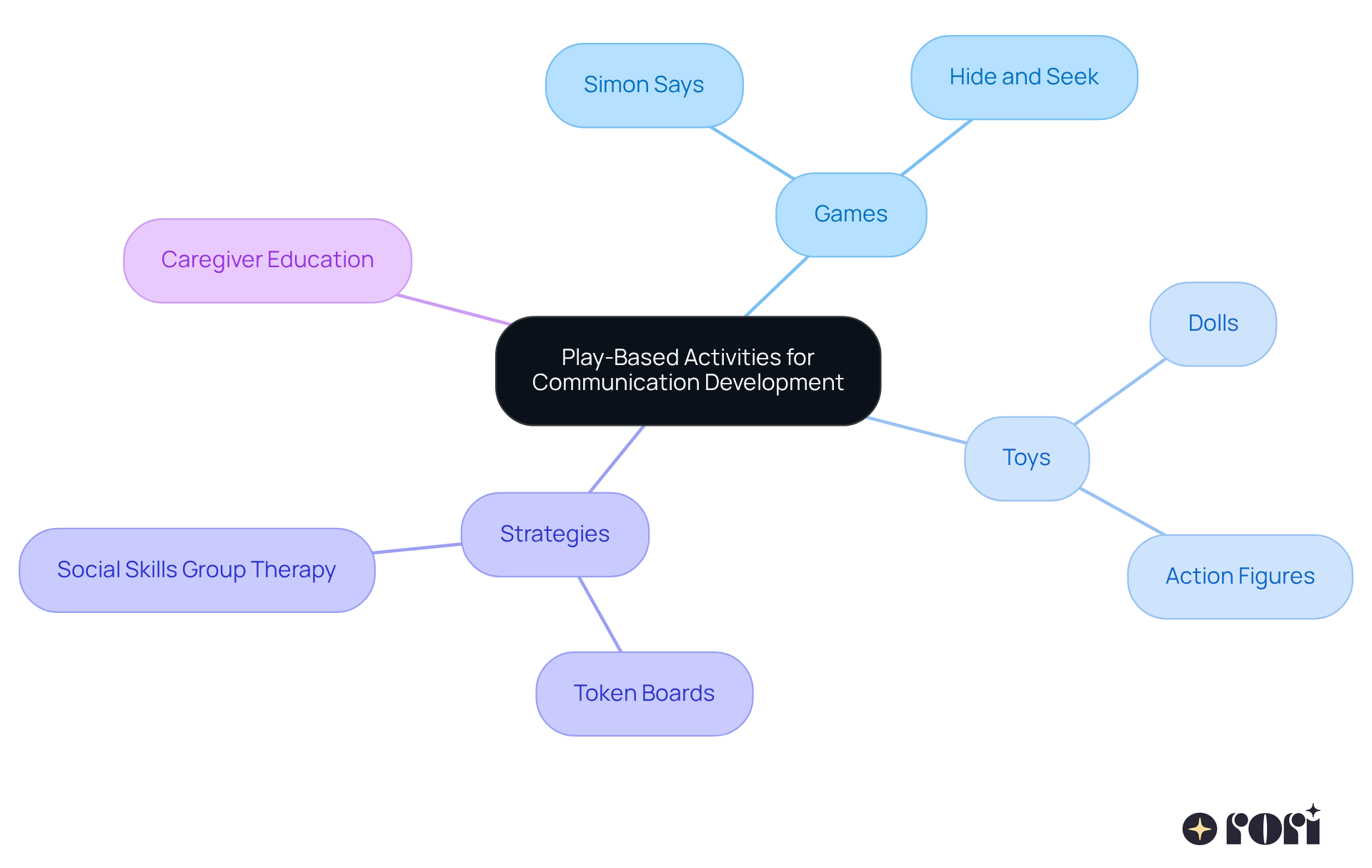
Have you ever felt a bit lost when trying to connect with your nonverbal child? Engaging in play-based activities can be a wonderful way to enhance interaction skills, particularly through ABA activities for nonverbal communication. Games like ‘Simon Says’ are a fun way for kids to learn how to follow actions and communicate, both with words and without. And then there’s ‘Hide and Seek’ – what a great way for children to express their desire to find or be found! These games really foster interaction and expression.
Toys that encourage engagement, like dolls or action figures, can also help kids start conversations and express their thoughts. You might be surprised to learn that play isn’t just for fun; it’s actually key to helping kids improve their interaction skills through ABA activities for nonverbal communication. Studies show that young ones learn to communicate effectively through play, as it provides a natural setting for practicing language and social interactions.
Incorporating strategies like token boards during play can enhance engagement and offer visual support for communication as part of ABA activities for nonverbal communication. Plus, social skills group therapy, led by qualified therapists, can create organized opportunities for kids to practice their skills in a nurturing environment. And let’s not forget about caregiver education! It’s so important for parents to have strategies to reinforce these skills at home.
Remember what Fred Rogers said? He believed that play is serious learning for kids, and he was right! By embracing play and seeking support, you can help your child find their voice in a world that sometimes feels silent. We’re here to help you every step of the way!
Teach Basic Sign Language to Facilitate Communication
Have you ever felt the struggle of wanting to communicate but not having the right words? Engaging in ABA activities for non-verbal individuals can significantly aid in teaching fundamental sign language, helping them express their needs and feelings. Here are some friendly strategies to get started:
- Start Simple: Let’s kick things off with basic signs that represent everyday needs, like ‘more,’ ‘eat,’ and ‘play.’ These are easy to remember and super useful!
- Consistent Reinforcement: Use these signs during daily routines to reinforce learning. For example, when you’re giving a snack, use the sign for ‘more’ to encourage your little one to ask for more food. It’s a great way to make learning fun!
- Empower Expression: This approach not only helps kids express themselves but also gives them a sense of achievement. It’s amazing to see their confidence grow!
- Involve Caregivers: Engaging caregivers in this process, as highlighted in ABA activities for non-verbal therapy, can significantly enhance the effectiveness of these strategies. It leads to better social interactions and stronger relationships.
- How about joining a group therapy session? It can be a fun way to practice together! Participating in social skills group therapy offers kids a chance to improve their interaction and social behaviors in a supportive environment.
Let’s work together to give our children the tools they need to express themselves and connect with the world around them!

Leverage Technology and Communication Apps for Enhanced Interaction
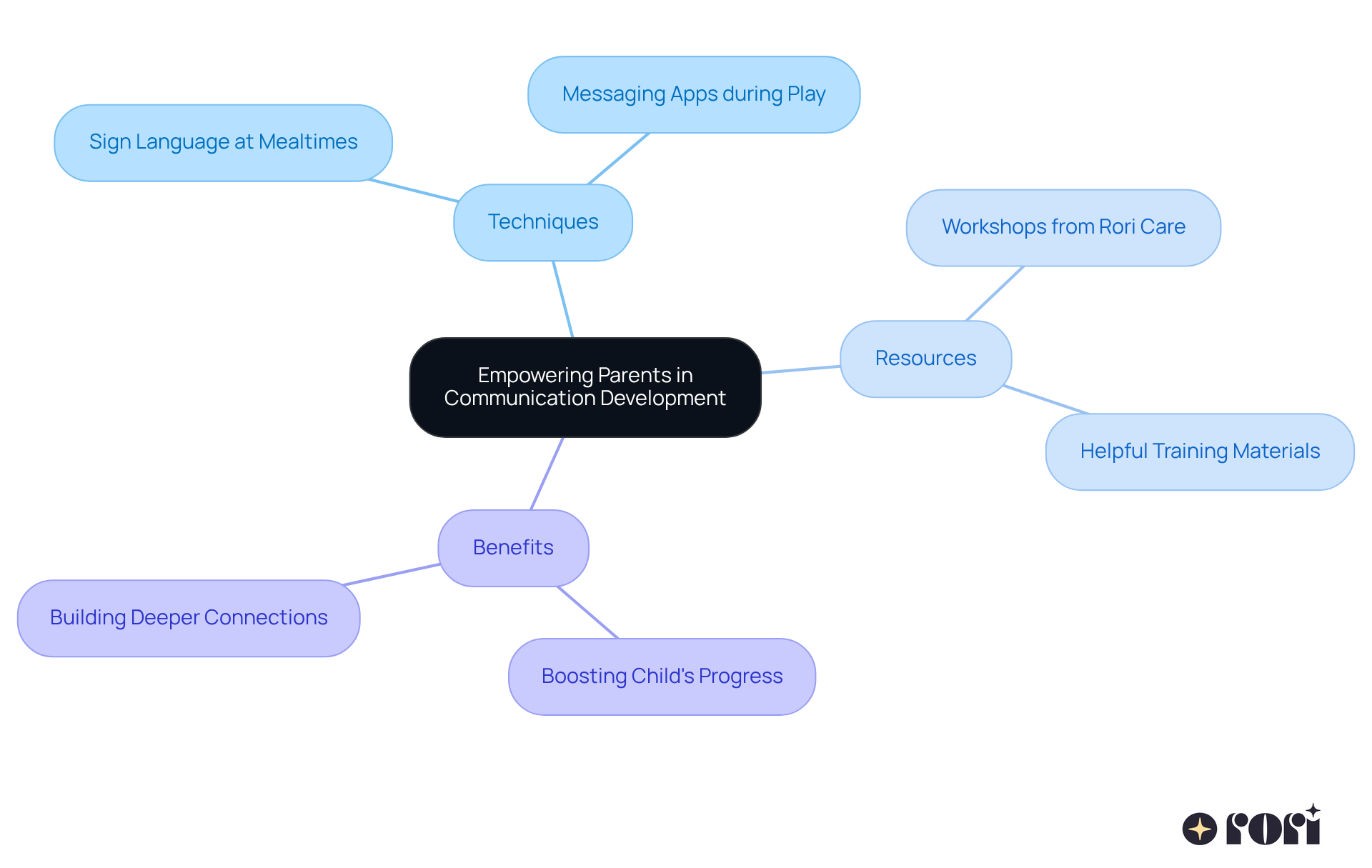
Many parents feel overwhelmed when trying to find effective ways to help their children express themselves through ABA activities for non-verbal communication. Technology plays a crucial role in improving communication for these kids, with apps like Proloquo2Go and TouchChat leading the way. These apps help kids share their thoughts using symbols and even speak out loud, all tailored just for them.
Kids who use these apps often find it easier to start talking and sharing their thoughts. Parents can encourage their children’s independence and self-expression by using these tools in everyday situations, like letting them choose meals or express their feelings. This not only boosts their communication skills but also enhances family interactions. Families often notice fewer challenging behaviors and more meaningful connections when they incorporate these technologies.
The customization features of these apps ensure they adapt to each child’s unique learning style, making communication more accessible and effective. Plus, Rori Care’s behavioral intervention services equip caregivers with ABA principles and strategies, specifically incorporating ABA activities for non-verbal children, helping them support their child’s development more effectively. Imagine the joy of watching your child communicate their thoughts and feelings with confidence. As Dr. Charlotte DiStefano puts it, ‘These devices can really change a young person’s life for the better.’ Let’s explore this together!
Establish Structured Routines to Support Communication Learning
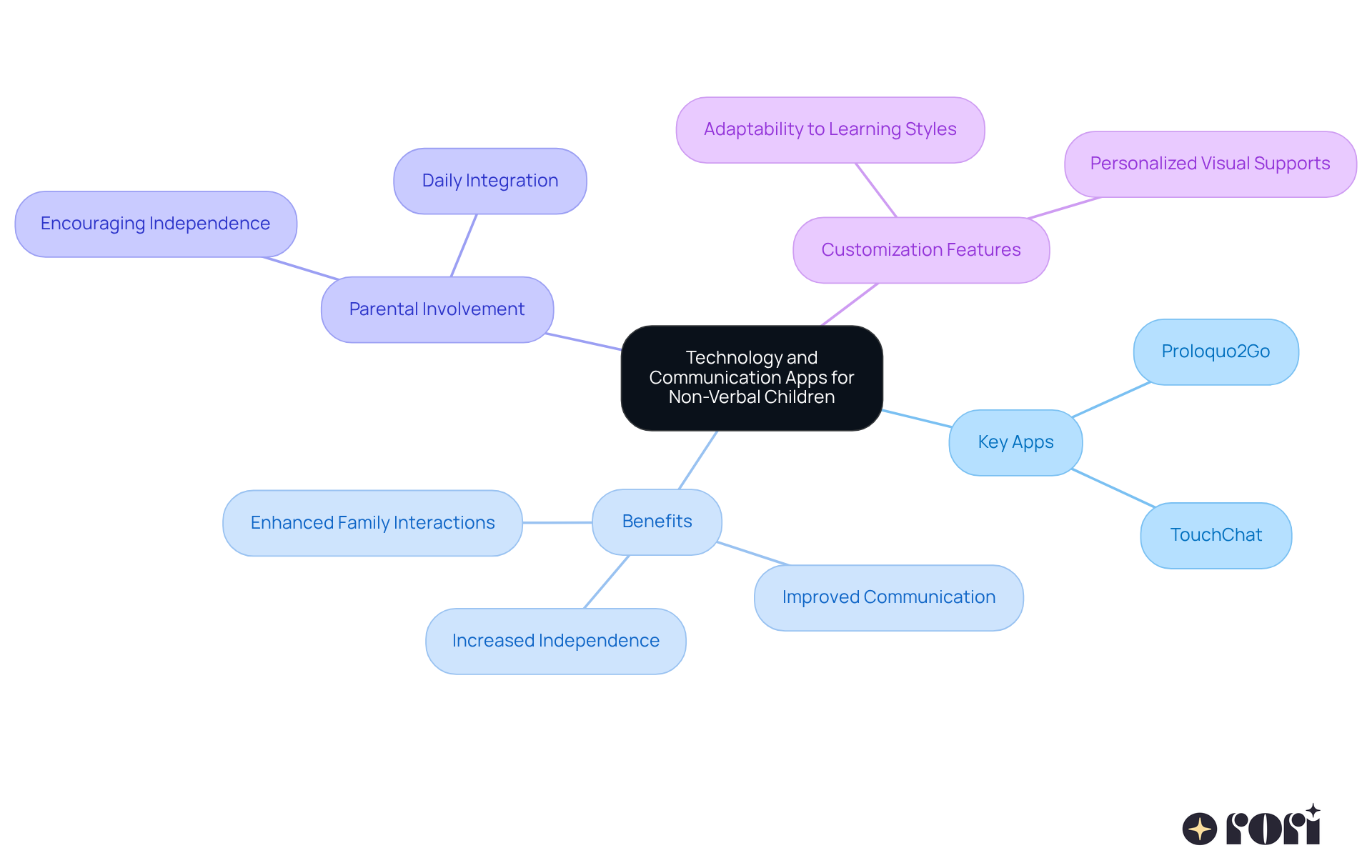
Have you ever noticed how a little structure can make a big difference for our kids? Organized routines are essential in supporting ABA activities for non-verbal kids to enhance their interaction skills. When we set up daily routines, our kids can start to anticipate what’s coming next, which helps them feel safe and secure. For example, having specific times for meals, play, and learning creates opportunities for interaction. During these routines, we can model language, encouraging our little ones to express their needs and desires, fostering a natural environment for connection.
You might be surprised to learn that having routines can really boost our kids’ learning and interaction skills! Research shows that kids who follow organized routines often display better interaction abilities. These consistent environments can reduce anxiety and encourage participation. Plus, using visual aids like schedules and timers can make daily activities easier to understand and complete.
Routines not only clarify expectations but also help with emotional regulation, which is key for effective interaction. By regularly implementing routines at home, school, and in therapy, our kids can transfer their skills, leading to better interactions in various situations. This organized approach not only supports their expressive growth but also strengthens our bond with them, as being involved in routines fosters connection and understanding.
Incorporating ABA activities for non-verbal communication into these routines can make them even more effective. ABA is a personalized therapy that adapts to each child’s unique needs, using the science of learning and behavior to enhance interaction skills. Additionally, social skills group therapy led by trained therapists can provide more chances for our kids to practice interactions in a supportive environment, helping them build relationships. And let’s not forget about us, the caregivers! We can use strategies like visual aids, modeling language during routines, and creating opportunities for our kids to express their needs, reinforcing these skills at home.
By embracing routines, we’re not just helping our kids; we’re building stronger connections with them every day.
Encourage Collaborative Activities to Build Social Communication Skills
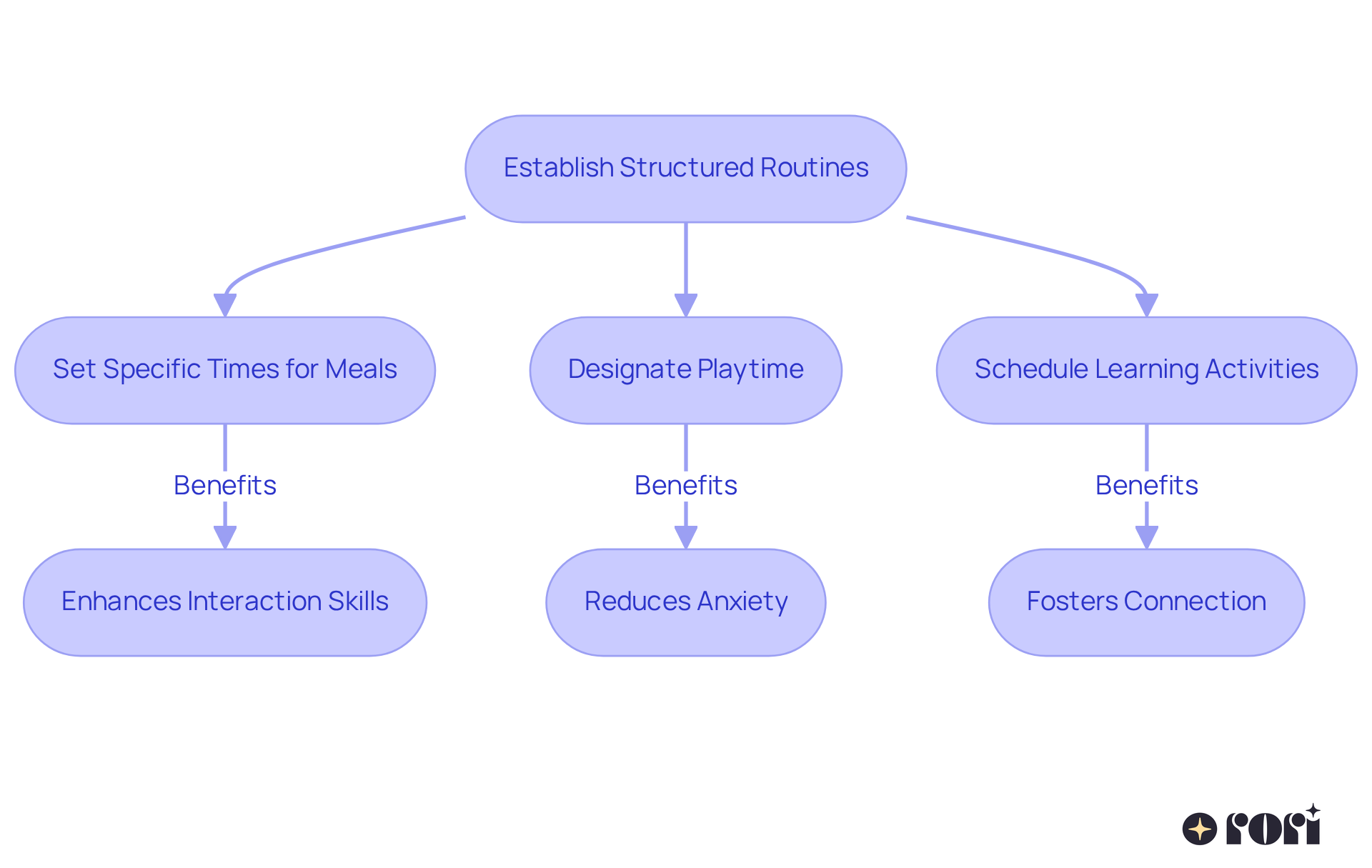
Let’s think about how group games or team projects can really assist kids through ABA activities for non-verbal communication. Activities such as:
- Building a tower with blocks
- Participating in ABA activities for non-verbal communication
foster interaction and idea sharing among kids. These moments help kids share their thoughts, figure out their roles, and connect with each other in a supportive environment. Plus, when kids join social skills groups led by caring therapists, they get even more chances to practice ABA activities for non-verbal communication skills. And when we help parents understand ABA principles, they can better support their kids’ growth. By fostering these connections, we can help our kids thrive in their social worlds.
Empower Parents to Actively Participate in Communication Development
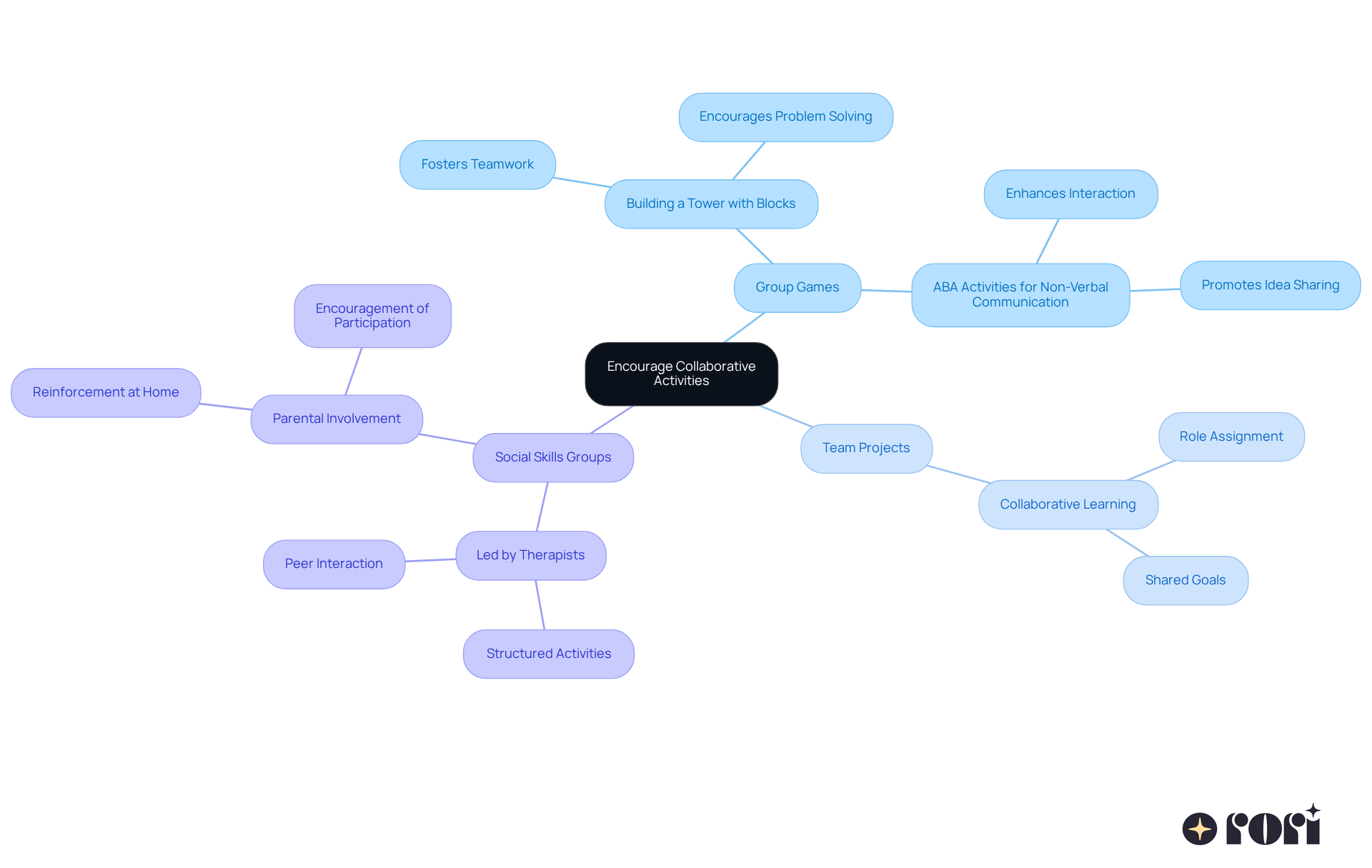
Have you ever felt overwhelmed trying to support your child’s development? When parents weave in techniques from therapy into everyday life, it can really boost their child’s progress. For example, using sign language during mealtimes or encouraging the use of messaging apps during play can reinforce these skills effectively.
Research shows that when parents take the lead, it can make a big difference for kids with autism. It highlights just how important your involvement is! Offering parents helpful resources and training, like workshops from Rori Care, boosts their confidence and gives them the tools to support their child’s growth.
Plus, when you actively participate, you’re not just helping your child grow; you’re building a deeper connection that lasts a lifetime. Let’s explore this together!
Conclusion
Navigating the world of communication with nonverbal children can feel overwhelming at times, can’t it? It’s a journey filled with tailored activities, creative strategies, and the steadfast support of caregivers. This article has explored a variety of effective ABA activities designed to enhance communication, emphasizing the importance of personalized approaches that cater to each child’s unique needs.
By integrating tools like the Picture Exchange Communication System (PECS), sensory play, visual supports, and technology, parents and caregivers can create enriching environments that foster expression and connection. Engaging in play-based interactions not only makes learning enjoyable but also provides natural opportunities for children to practice their communication abilities.
And let’s not forget how empowering it is for parents to actively participate in their child’s development! This involvement can significantly enhance progress, reinforcing the bond between caregiver and child while promoting independence and confidence.
Ultimately, these strategies can truly change how nonverbal children connect with the world around them. By embracing these methods together, we can help every child find their voice and connect with the world around them.
Frequently Asked Questions
What is Rori Care and what services do they offer for nonverbal children?
Rori Care specializes in creating tailored activities for nonverbal children, focusing on their unique strengths and preferences to help them express themselves and develop important interaction skills through organized play.
How do personalized activities benefit nonverbal children?
Personalized activities help nonverbal children show growth in self-expression and interaction with others, boosting their confidence and independence while allowing them to connect better with their peers.
What is the Picture Exchange Communication System (PECS) and how does it help nonverbal children?
PECS is a communication tool that allows nonverbal children to express their needs and desires through pictures, making it easier for them to participate in activities and reducing frustration for both the child and their caregivers.
How can parents get started with PECS?
Parents can start with a few simple pictures representing common requests like ‘more,’ ‘help,’ or ‘play,’ and gradually expand their child’s picture vocabulary as they become more comfortable using the system.
What types of sensory activities can help foster communication skills in nonverbal children?
Sensory activities such as sensory bins filled with rice or beans, water play, and using textured materials can engage children’s senses and create opportunities for expression, encouraging them to respond through gestures or sounds.
Why are ABA activities important for nonverbal children, especially those with autism?
ABA activities can significantly boost expressive skills and improve language abilities and social interactions for nonverbal children, making them essential tools for parents and caregivers.
How can caregivers be educated to support their child’s communication skills?
Caregiver education is crucial for learning ABA activities and strategies, empowering parents to effectively support their child’s behavioral goals and reinforce the skills learned during therapy.
What role do occupational therapists play in the development of communication skills for nonverbal children?
Occupational therapists emphasize that play is a natural way for children to express themselves and often lead group therapy sessions to provide structured opportunities for communication practice in a supportive environment.
List of Sources
- Rori Care – ABA Therapy: Tailored Activities for Nonverbal Communication
- Success Rates of ABA Therapy | Advanced Autism Services (https://advancedautism.com/post/success-rates-of-aba-therapy)
- Success Rates of ABA Therapy – Up & Up ABA (https://upandupaba.com/faqs-resources/success-rates-of-aba-therapy)
- The Numbers Don’t Lie: Revealing Autism Therapy Statistics | Above and Beyond Therapy (https://abtaba.com/blog/autism-therapy-statistics)
- alumacare.com (https://alumacare.com/blog/success-rates-of-aba-therapy)
- Utilize Picture Exchange Communication System (PECS) for Effective Interaction
- 150+ Quotes for speech therapists: Inspiration, Communication, and Growth (https://nataliamaganda.com/150-quotes-for-speech-therapists-inspiration-communication-and-growth)
- Frontiers | Effectiveness of picture exchange communication system in developing requesting skills for children with multiple disabilities (https://frontiersin.org/journals/psychology/articles/10.3389/fpsyg.2024.1434478/full)
- Incorporate Sensory Activities to Foster Communication Skills
- Play Therapy Quotes | Core Wellness (https://corewellceu.com/blog/play-therapy-quotes)
- The Best Occupational Therapy Quotes – The OT Toolbox (https://theottoolbox.com/occupational-therapy-quotes)
- UCLA-led study finds personalized approach enhances communication skills in children with autism (https://uclahealth.org/news/release/ucla-led-study-finds-personalized-approach-enhances-communication-skills-in-children-with-autism)
- Implement Visual Supports to Enhance Understanding and Expression
- Visual Schedules for Children with Autism | Links (https://linksaba.com/visual-schedules-for-children-with-autism)
- The use of visual schedules to increase academic-related on-task behaviors of individuals with autism: a literature review (https://tandfonline.com/doi/full/10.1080/20473869.2024.2402124)
- Using Visual Aids in Autism (https://crossrivertherapy.com/articles/using-visual-aids-in-autism)
- Visual Aids Quotes (1 quote) (https://goodreads.com/quotes/tag/visual-aids)
- Engage in Play-Based Activities to Encourage Communication Development
- 10 Quotes to Inspire Early Childhood Professionals (https://zerotothree.org/quotes-to-inspire-early-childhood-professionals)
- 72 Inspirational Learning Through Play Quotes — My Teaching Cupboard (https://myteachingcupboard.com/blog/inspirational-learning-through-play-quotes)
- Inspiring Quotes on Child Learning and Development (https://vincegowmon.com/inspiring-quotes-on-child-learning-and-development)
- Leverage Technology and Communication Apps for Enhanced Interaction
- 80 Digital Communication Secrets From Tech Giants Like Gates & Jobs (https://deliberatedirections.com/digital-communication-quotes-tech-leaders)
- Study Reveals Wide Gap in Awareness of AAC Devices for Children With Autism (https://chla.org/blog/experts/research-and-breakthroughs/study-reveals-wide-gap-awareness-aac-devices-children-autism)
- iPads and the Use of “Apps” by Children with Autism Spectrum Disorder: Do They Promote Learning? – PMC (https://pmc.ncbi.nlm.nih.gov/articles/PMC5004059)
- AAC in English-speaking countries: Survey Results – AssistiveWare (https://assistiveware.com/blog/survey-aac-in-english-speaking-countries)
- Establish Structured Routines to Support Communication Learning
- The Numbers Don’t Lie: Revealing Autism Therapy Statistics | Above and Beyond Therapy (https://abtaba.com/blog/autism-therapy-statistics)
- Inspiring Quotes on Child Learning and Development (https://vincegowmon.com/inspiring-quotes-on-child-learning-and-development)
- 10 Quotes to Inspire Early Childhood Professionals (https://zerotothree.org/quotes-to-inspire-early-childhood-professionals)
- The Benefits of Structured Routines in ABA Therapy | Intellistars – ABA Therapy (https://intellistarsaba.com/blog/the-benefits-of-structured-routines-in-aba-therapy)
- Creating Predictable Daily Routines for Children with Autism: Effective ABA Therapy Strategies | Mestre Behavior (https://mestrebehavior.com/daily-routines-aba-therapy)
- Encourage Collaborative Activities to Build Social Communication Skills
- TOP 25 TEAMWORK IN EDUCATION QUOTES | A-Z Quotes (https://azquotes.com/quotes/topics/teamwork-in-education.html)
- The Benefits of Social Skills Programs for Children with Autism – Behavioral Innovations (https://behavioral-innovations.com/blog/the-benefits-of-social-skills-programs-for-children-with-autism)
- 56 Inspiring Team Communication Quotes To Motivate Your Team (https://indeed.com/career-advice/career-development/team-communication-quotes)
- Empower Parents to Actively Participate in Communication Development
- The Importance of Parent Training in ABA Therapy Programs: Evidence-Based Benefits for Children with Autism – RightWay ABA (https://rightwayaba.com/the-importance-of-parent-training-in-aba-therapy)
- Parent Engagement with Autism Children: Essential Family Guide (https://abcachieve.com/parent-engagement-with-autism-children)
- 20 Inspiring Quotes About Autism Every Parent Must Read Today (https://circlecareservices.com/blog/20-quotes-about-autism-and-parenting)
- New Research: Parent Involvement Helps Autistic Children with Communication (https://expressable.com/learning-center/autism/new-research-parent-involvement-helps-autistic-children-with-communication)
- 53 Motivational Quotes to Inspire Special Needs Parents – Parenting Special Needs Magazine (https://parentingspecialneeds.org/article/53-motivational-quotes-to-inspire-special-needs-parents)